Green Tea Feature
Zhuyeqing: not just a powerful brand name, but a green-tea route built on Emeishan tender buds, straight-flat shaping, and clean fresh order
Within Chinese green tea, Zhuyeqing is unusually easy to misread because the order of exposure is often reversed. Many readers first encounter it as a brand, and only later realize that it also refers to a tea expression built on the spring-tea environment of Emeishan, on very tender bud material, on straight-flat shaping, and on a clean fresh aesthetic. Because brand recognition often arrives first, Zhuyeqing is easier to misunderstand than many older famous teas. Some people reduce it to a marketing story. Some treat it as just another expensive tender green tea. Others place it vaguely somewhere between Longjing, queshes-style teas, and maofeng teas, as if it were only a visual category of premium green tea. None of those shortcuts is precise enough.
The real point is that Zhuyeqing is not a consumer symbol that can stand apart from origin and craft. Behind the name is the mountain spring-tea experience of Emeishan in Sichuan, a raw-material standard built around fine tender buds, a processing logic that turns those buds into a tea that is flat, smooth, upright, and bamboo-leaf-like, and finally a cup that looks light but does not drink hollow. Modern branding has certainly amplified Zhuyeqing enormously, but if we write about it only as a brand, we lose the most important layer: it is first a green tea that can be recognized, compared, brewed, and judged; only after that does it become a premium commercial narrative enlarged by a modern system.
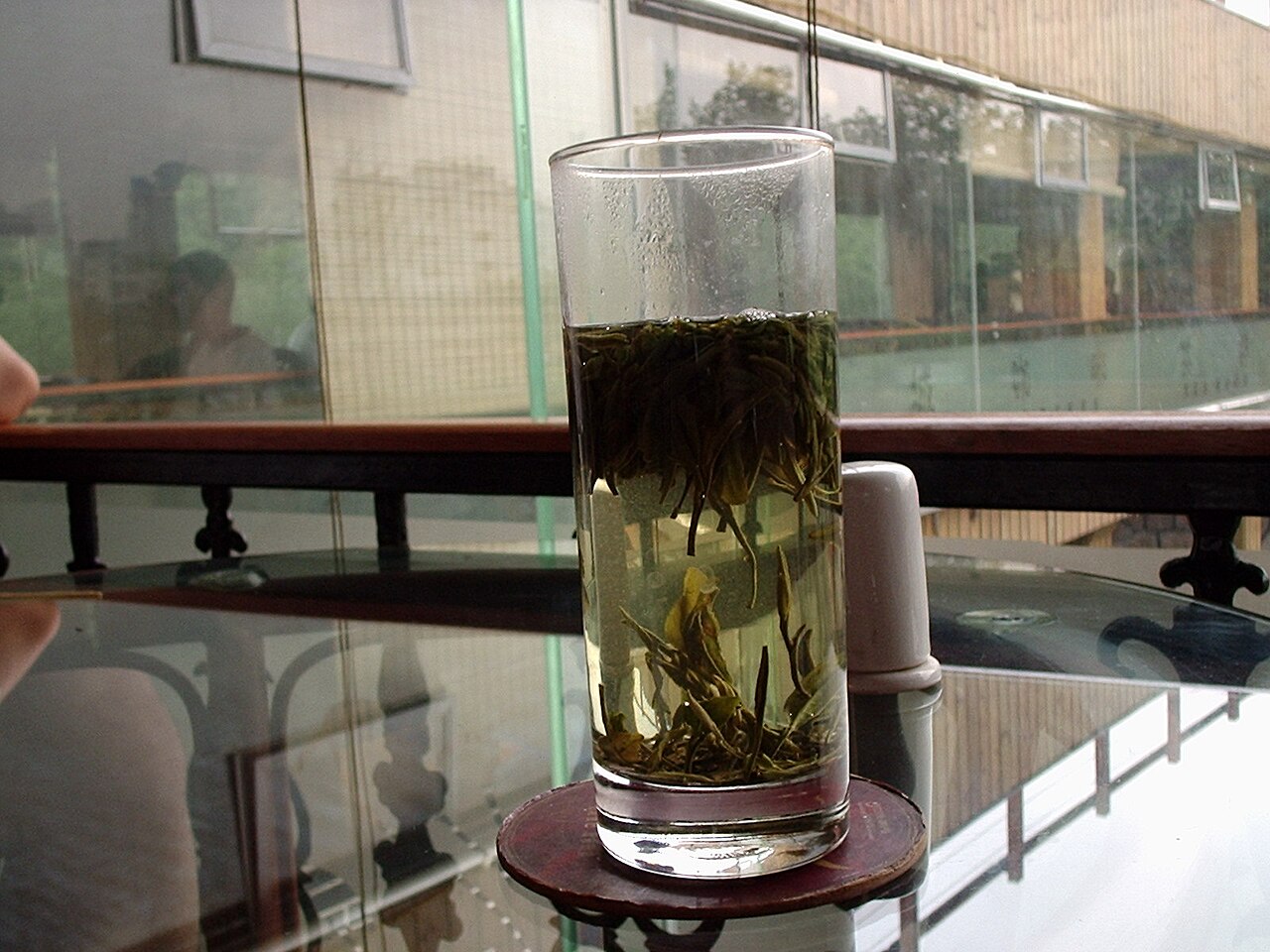
What kind of tea is Zhuyeqing? It is green tea first, not a commercial term detached from tea itself
Zhuyeqing belongs to the category of Chinese green tea. More specifically, it represents a famous-green-tea route associated with the Emeishan area of Sichuan, built on very tender bud material and defined by an aesthetic of straight elegant leaf form and bright clean liquor. This starting point matters because once the name is understood first as a brand, later judgments about raw material, craft, aroma, and taste become distorted, as if packaging and retail systems mattered more than the tea itself. In reality, Zhuyeqing can endure only because it first has a real tea identity: it is a green tea with unusually high demands for tenderness, cleanliness, evenness, and early-spring character.
Its place inside the wider green-tea map is also worth stating clearly. If Longjing helps many readers understand the logic of flattened pan-fired tea, and Bi Luo Chun shows a curled fine-leaf route built on vivid tenderness, then Zhuyeqing offers another Sichuan answer: more bud-centered, more linear, more elegant, and more openly committed to order and cleanliness. It is not a local substitute for Longjing, and not a vague label for “high-mountain tender green tea.” It is a distinct branch with a concrete production background, a concrete shaping goal, and unusually strong visibility in the modern market. Writing it well also helps readers see that Chinese green tea cannot be understood only through Jiangnan examples. Sichuan has its own mature and stable elite-green-tea story.
Why is Emeishan so important? Its local grounding is more than “high mountain and mist”
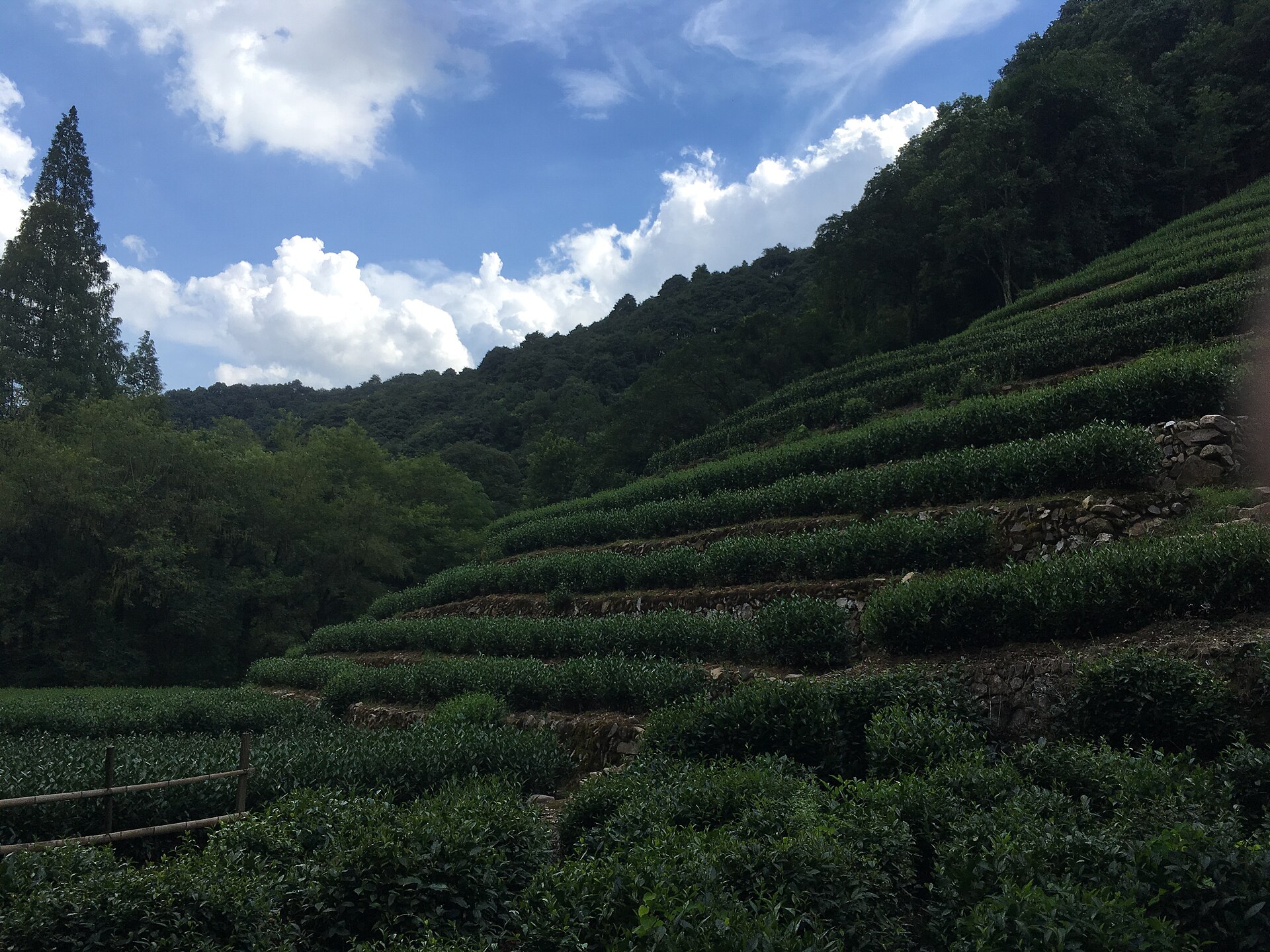
In writing about mountain green tea, the laziest sentence is usually some version of “misty high mountains produce good tea.” That is not false, but it is far from enough here. Emeishan is not just a famous mountain and not merely a scenic backdrop used to add prestige. What makes it important is that Emeishan has long supported a concrete spring-tea environment: humid mountain conditions, frequent cloud and mist, clear vertical climate differences, and a spring warming rhythm that gives tea bushes their own mountain timetable. Public materials often place Zhuyeqing within an Emeishan golden tea belt of roughly 600 to 1500 meters, with places such as Wannian Temple, Qingyin Pavilion, Bailong Cave, and Heishui Temple repeatedly appearing in the production context.
That local grounding eventually becomes a sensory effect in the cup. Zhuyeqing’s aroma is usually not loud or overwhelming. It is more often clean, lifted, tender, and neat. Its liquor usually does not aim for heavy weight on the tongue, but for brightness, quick freshness, easy flow, and a returning sweetness that arrives clearly. In other words, Emeishan does not simply make Zhuyeqing “more premium.” It helps create a very specific mountain spring-tea order: the buds must be tender, the timing must be right, the aroma must be clean, the liquor must be bright, and the whole tea must feel orderly. Remove Zhuyeqing from that place, and it collapses into the abstract image of a pretty green tea. Put it back into Emeishan, and it becomes a tea with real mountain logic again.
Why is it always described through words like tender, straight, elegant, and bamboo-leaf-like? Because these are craft targets, not decorative language
Public tea materials and market descriptions repeatedly stress that Zhuyeqing depends on very fine buds, often within standards such as single buds, one bud with one just-opened leaf, or one bud with two just-opening leaves, and that the fresh leaves must be tender and even in size. This is not simply a way to make the tea “look premium.” It matters because Zhuyeqing’s shaping logic is unusually demanding. If the raw material is not tender enough, the line cannot become slim. If the leaves are not even enough, the finished tea cannot become orderly. If the leaf condition is unstable, later shaping and setting quickly become coarse, loose, messy, or marked by harsh fire.
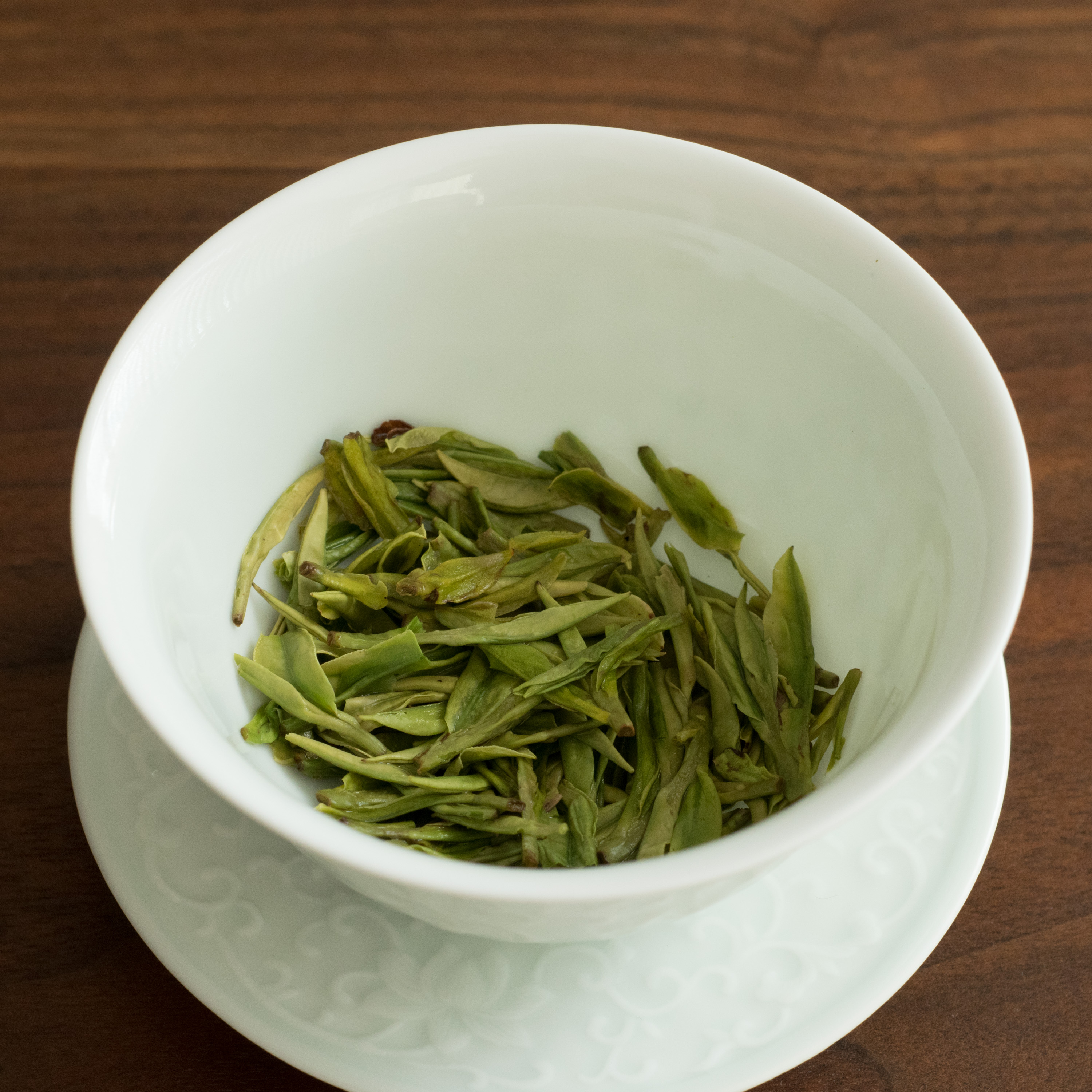
That is why the phrase “shaped like bamboo leaves” should not be understood as a casual metaphor. It points to a full finishing standard: the dry tea should be flat and smooth, upright and elegant, green and glossy, with a light, slim, well-defined visual order. The quieter and lighter a tea looks, the less room it has to hide faults. Unlike some teas that can seize attention first through a forceful aroma, Zhuyeqing exposes mistakes quickly. The more composed it appears, the more stable the underlying craft must be. Shape, tenderness, wok control, and final drying all show up directly on the leaf.
How is Zhuyeqing made? Why is its straight-flat logic still different from Longjing?
As a green tea, Zhuyeqing also passes through familiar steps such as resting, kill-green heat treatment, shaping, and drying. Public descriptions often emphasize very careful line-shaping and setting; traditional explanations may even mention repeated rounds of heating and cooling, along with motions used to gather, lift, press, and lead the buds into shape. All of these point to the same goal: to organize extremely tender buds into a tea that is flat, smooth, upright, even, and visually close to a bamboo-leaf line. While non-specialists may therefore group Zhuyeqing and Longjing together under the broad idea of “shape-conscious premium green tea,” their actual targets are different.
Longjing emphasizes flattening, broad pressed leaf form, and the bean-like or chestnut-like signatures associated with the classic pan-fired route. Zhuyeqing, by contrast, is closer to a line of fine-bud arrangement. What matters more is the slender bud form, the smooth surface, the strong sense of order, and a cleaner, finer, more upright overall expression. With Longjing, many drinkers are first caught by wok aroma and flat leaf form. With Zhuyeqing, many first notice something else: why is this tea so neat, so clean, and so quick and bright in the mouth? Both care deeply about shape, but the similarity stops there. They cannot be treated as geographic versions of the same tea.
What does Zhuyeqing usually smell and taste like?
Good Zhuyeqing usually shows dry leaves that are flat, upright, even, elegant, and tender green with some gloss. When warmed, the aroma is usually led by clean freshness, tender green notes, and a lifted fine fragrance. Some lots may carry a little chestnut or bean-like warmth, but the style rarely depends on exaggerated aromatic drama. Its real value is not that it fills the room with scent, but whether the aroma remains clean, free of harsh fire, and properly integrated with the liquor. Once brewed, the tea should feel bright, lively, smooth, and quick on the palate, with gentle but clear returning sweetness. Weaker Zhuyeqing often fails in visible ways: the shape may be impressive while the cup tastes thin, woody, or messy; or the surface aroma may seem tender while the liquor lacks real freshness and roundness.
That is why Zhuyeqing should never be judged only by whether it looks young and fine. Tenderness is the condition, not the conclusion. The real conclusion lies in the cup: is it fresh without drifting, clear without becoming meager, smooth without feeling empty, and does it leave behind a clean finish instead of blankness or fire? Its charm is not based on one extreme memory point. It depends on order across the whole tea: the appearance is neat, the aroma is clean, the first sip is quick and bright, and the finish is precise. The more lightweight a tea appears, the more it demands high completion overall. Zhuyeqing is exactly that kind of green tea.
How is it different from queshes-style teas, Longjing, and maofeng teas that are often compared with it?
Zhuyeqing is often compared with queshes-style green teas because both can emphasize very tender buds and elegant appearance, and in non-specialist settings the two are sometimes blurred together. The safer way to understand them is that they are aesthetically adjacent, but not interchangeable. Zhuyeqing is tied much more specifically to Emeishan and to a highly standardized modern elite-green-tea expression, so market understanding around it often stresses grade, cleanliness, visual consistency, and regional-image unity. “Queshe,” by contrast, can point to a broader set of fine bud-shaped green teas across different regions and systems.
The contrast with Longjing is clearer still. Longjing is the more classic flattened pan-fired route, built around Hangzhou and West Lake associations, wok aroma, and broad pressed leaves. Zhuyeqing is finer, straighter, more bud-like, and more line-oriented. Compared with maofeng-style teas, Zhuyeqing also tends to show less loose downy liveliness and more order, more shape discipline, and more visual linearity. In other words, the most important thing to remember is not which tea it resembles, but what allows it to stand on its own: fine buds, Emeishan, shape discipline, aromatic cleanliness, and a complete execution of bright fresh order.
Why must any serious article explain the tea before the brand?
Because in modern communication the brand layer is genuinely loud enough to cover people’s understanding of the tea itself. But that does not mean the tea character disappears. It means the writer has to separate the brand layer from the tea layer with extra care. The brand can govern pricing, grading, retail presence, gift logic, and nationwide visibility. The tea still has to answer more basic questions: what kind of tea is it, where does it come from, why does it look like this, and why does it smell and drink this way? If those questions are skipped, readers will remember only a consumer term rather than a green tea that can actually be understood and judged.
This is especially important in bilingual editorial work. For English-language readers, if the piece begins by saying “Zhuyeqing is a famous Chinese tea brand,” the article immediately tilts in the wrong direction and turns into brand writing instead of tea writing. The more accurate order is this: Zhuyeqing is first a tea expression built on the fine-green-tea context of Emeishan, and only then something amplified enormously by a strong modern commercial system. The sequence matters. If it is reversed, the English article drifts away from the Chinese source and becomes a different piece with a different center of gravity, which is exactly what must be avoided.
How should Zhuyeqing be brewed? Why is rough high heat the wrong approach?
Like most fine green teas, Zhuyeqing works well in a glass or a gaiwan. A glass displays its long upright bud shape and bright liquor clearly, while a gaiwan offers better control over pouring and aroma. Water temperature is usually better kept moderate, often around 80°C to 85°C as a stable starting point. If the water is too hot, the tea’s most valuable qualities—its clean freshness and fine tenderness—are easily broken apart, and what should feel bright and neat can turn bitter, harsh, and thin.
In a gaiwan, a practical starting point is around 3 grams of leaf for 100 to 120 ml of water, with the first infusions kept short and later ones extended gradually. The point is not whether the tea can be forced into many infusions, but whether the first cups are good enough: aroma clean, liquor bright, entry quick and fresh, and aftertaste clear. Zhuyeqing is a tea that rewards a light hand. The heavier the approach, the easier it is to destroy its advantages; the steadier the hand, the easier it becomes to read the tea’s real internal structure.
Why does Zhuyeqing matter as an entry point for understanding modern Chinese elite green tea?
Because it connects two things that are often discussed separately. On one side are very traditional Chinese green-tea criteria—tenderness, cleanliness, shaping, heat control, and spring character. On the other side are very modern systems of branding, grading, and national market recognition. What makes Zhuyeqing interesting is that these two sides overlap inside it: the tea cannot be understood apart from Emeishan spring tea and fine green-tea craft, yet it also cannot be fully separated from the modern commercial system that reorganized the image of premium green tea.
That makes Zhuyeqing especially useful for readers. It shows that Chinese tea is not only old narrative without modern systems, and not only branding without tea underneath. Zhuyeqing works because it is first a green tea that makes sense in the cup, and only afterward a commercial language that speaks loudly. Once that sequence is clear, readers can understand much more easily how modern Chinese elite green tea actually operates.
Further reading: Longjing: spring in Hangzhou, pan-fired craft, and the local life inside one cup, Why Bi Luo Chun is so closely tied to tenderness, aroma, and freshness, and Huangshan Maofeng: from Huangshan’s cloud and mist to a cup of fresh green tea.
Source references: synthesized from public Chinese-language tea materials on Emeishan Zhuyeqing, including production area, elevation context, tender-bud picking standards, straight-flat shaping craft, common sensory characteristics, and the dual communication context of tea name versus brand name.