Oolong Tea Feature
Yongchun Fo Shou: don’t reduce it to “an oolong that smells like citron” — this Minnan tea is really about leaf cultivar, fruit-toned aroma, and bruising craft
In Chinese tea writing, Yongchun Fo Shou occupies an oddly unstable position. It is not obscure; many people who drink southern Fujian oolong have at least heard the name. Yet it is also regularly flattened into a few overly convenient lines: “it carries a citron-like fragrance,” “the leaves are large,” “it is a very distinctive Minnan oolong,” or “it is a more fruit-toned relative of Tieguanyin.” None of those descriptions is entirely wrong, but all of them are too small for the tea. What really makes Yongchun Fo Shou worth reading carefully is not only whether it smells somewhat like citron, Buddha’s hand fruit, or pear. It is how the large, thick-leaf Fo Shou cultivar, the mountain environment of Yongchun, the bruising logic of southern Fujian oolong, and the later stages of rolling and baking come together to create a tea with obvious aromatic individuality that still remains more than a simple “fragrant type.”
That is also why it deserves its own page in the tea section. It helps readers see something that is often hidden by the dominance of Tieguanyin: southern Fujian oolong has never been only one stylistic road. Tieguanyin became the loudest and most repeatedly amplified name in this family, but Yongchun Fo Shou preserves another route inside Minnan tea — larger leaves, thicker leaf substance, more explicit fruit-toned fragrance, and a liquor that often leans toward rounder, fuller, more settled expression. In other words, the most useful thing about Yongchun Fo Shou is not that it resembles something else. It is that it proves southern Fujian oolong always contained multiple internal aesthetics.
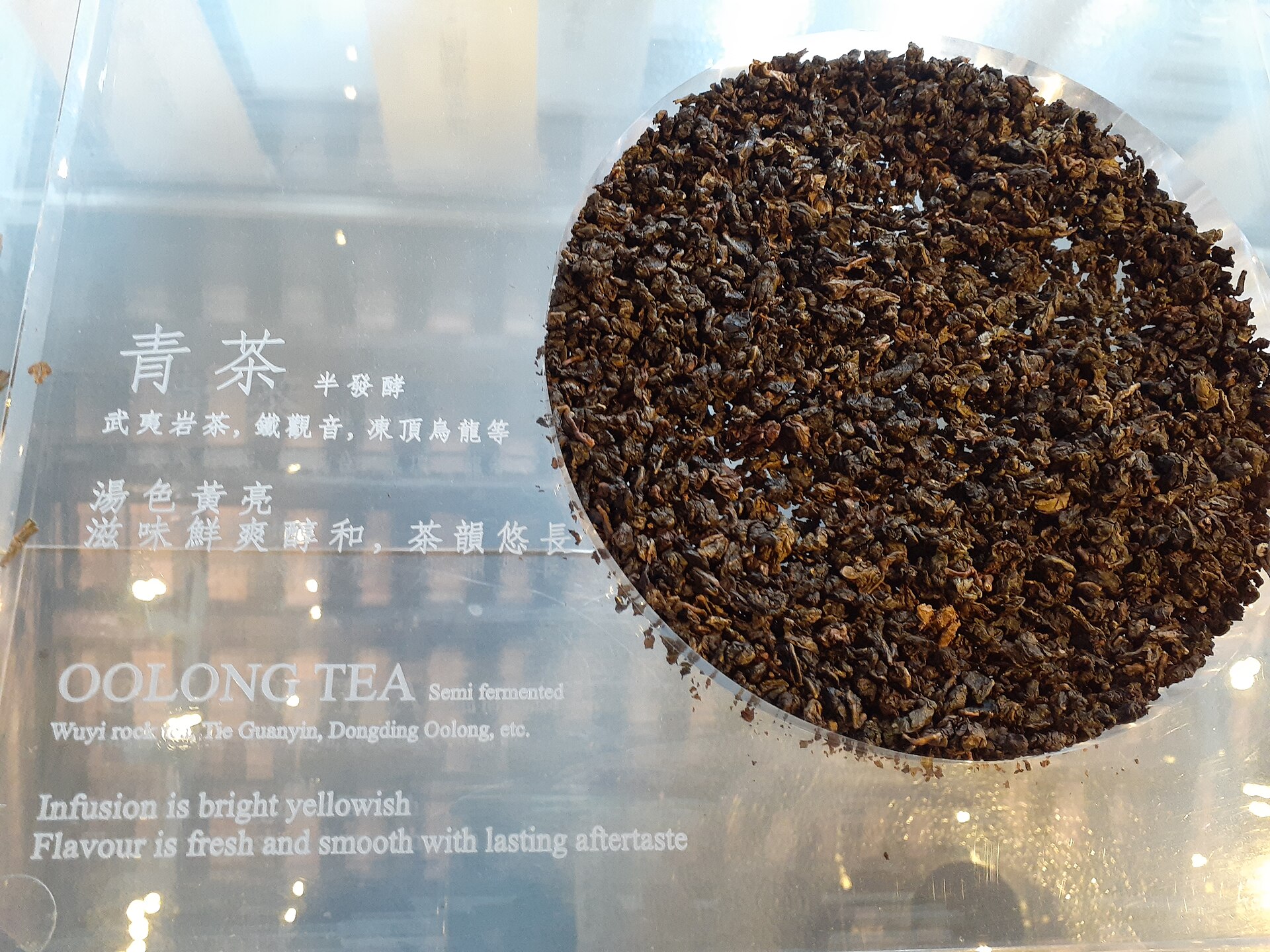
What kind of tea is Yongchun Fo Shou?
Yongchun Fo Shou belongs to the category of Chinese oolong tea and is traditionally understood within the southern Fujian oolong system, with its core origin context in Yongchun, Quanzhou, Fujian. Its key identity feature is that “Fo Shou” is both a cultivar name and the basis of the finished tea name. Public Chinese materials often connect it with the idea of citron or Buddha’s hand fruit because the leaves are relatively large and thick and the finished tea often shows a recognizable fruit-toned, floral, and sweet aromatic profile. In that sense, the name works both as botanical image and as flavor memory.
For readers, though, the more reliable way to understand it is not to memorize the naming story but to focus on something more basic: Yongchun Fo Shou is not a vague idea of “an oolong with fruity aroma.” It is a local famous tea built on a specific large-leaf cultivar and on southern Fujian oolong craft. Without the physical conditions of the Fo Shou cultivar, it is hard to achieve the broad, full aromatic structure that people associate with it. Without bruising, rolling, and baking in the Minnan oolong tradition, it can easily collapse into a shallow impression of “big leaves and heavy fragrance” without becoming a fully convincing tea.
Why is Yongchun so important? It is more than a place-name label
Many introductions begin by saying that Yongchun Fo Shou comes from Yongchun in Fujian. That is true, but too thin on its own. Yongchun matters not because the place-name adds prestige by itself, but because it provides the mountain environment, climate rhythm, and local processing continuity that the tea needs in order to become itself. Public materials often describe Yongchun as part of the southern reaches of the Daiyun mountain system, with hilly terrain, relatively high humidity, generous rainfall, and clear day-night temperature differences. Such conditions are well suited to building thicker leaf substance and stable aromatic potential in oolong raw material.
More importantly, Yongchun is not merely a source of leaves. It is also a source of method. Yongchun Fo Shou developed together with local southern Fujian oolong experience: sun-withering, shaking, resting, fixation, cloth-wrapping and rolling, and baking are not just steps on a list. They are a local way of pushing large, water-rich, strongly green-smelling leaves toward mature aroma, recognizable fruit-toned character, and a liquor that actually holds together. What Yongchun really contributes, then, is not just origin prestige. It contributes the local ability to turn the Fo Shou cultivar into a serious oolong. Remove that ability and Fo Shou can become only a cultivar with unusually large leaves. Put it back into Yongchun craft context and it becomes a tea worth discussing on its own terms.
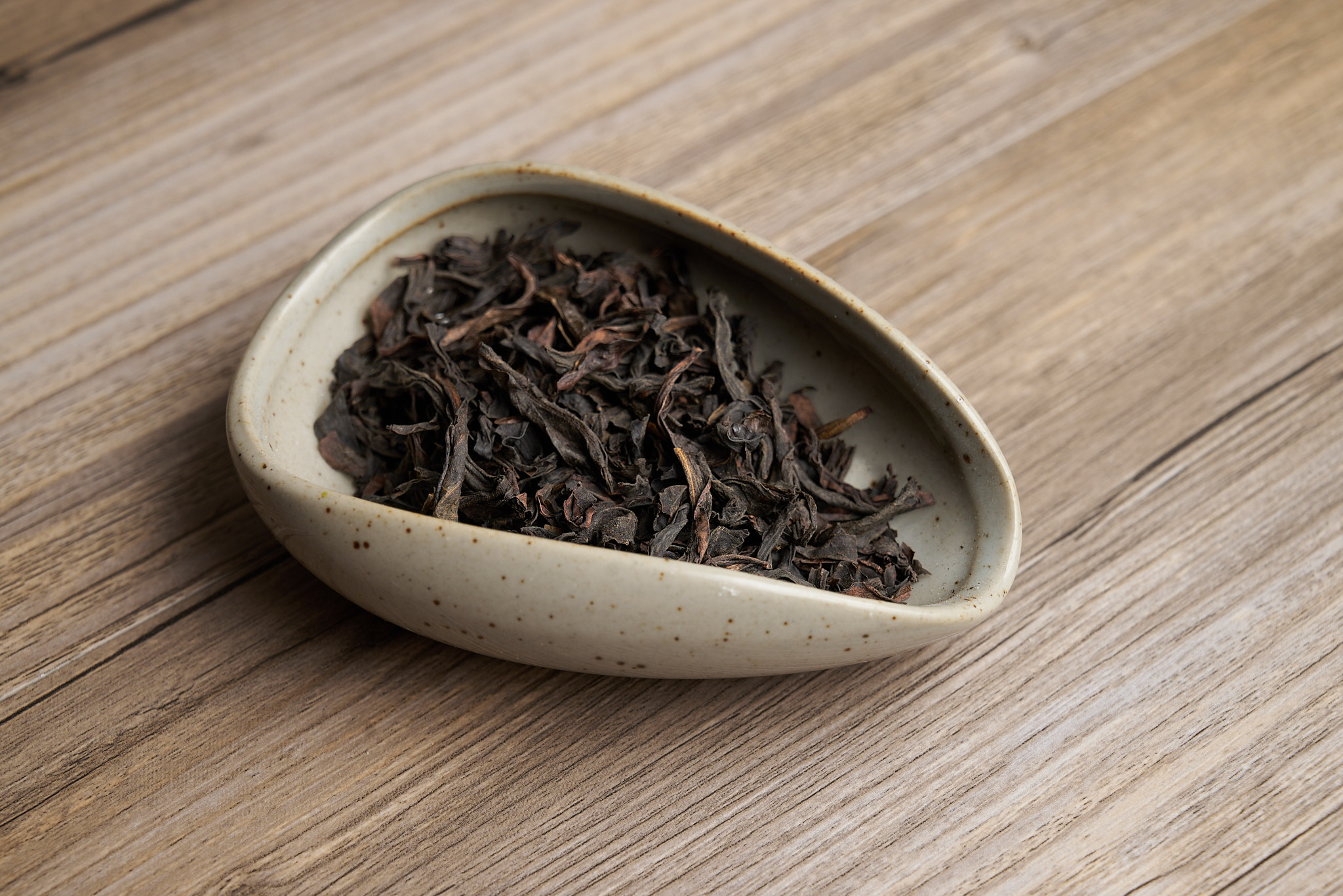
Why do people keep emphasizing that the Fo Shou cultivar has large, thick leaves?
Because this is not trivial botanical trivia. It is the first structural fact behind the tea’s style. Compared with many oolong cultivars associated with finer, tighter leaf expression, Fo Shou fresh leaves are broader, thicker, and more substantial. This gives the tea two things at once. On the positive side, it offers a larger aromatic field and makes it easier for the tea to develop mature floral-fruit notes. On the difficult side, it also increases the risk: if processing is not controlled well, the tea can easily turn heavy, green, dispersed in aroma, woody in body, or unable to carry its baking.
So when people say the leaves are large and thick, what they should really mean is not that the tea is automatically superior, but that it has a different set of demands. Large leaves give Fo Shou its aromatic volume, its mid-palate support, and part of its durability across infusions. But they also magnify every mistake. Made well, Yongchun Fo Shou can show something other southern Fujian oolongs do not express in quite the same way: fragrance with weight and volume, not only perfume floating above the cup, and a liquor with visible middle structure rather than only high aroma. Made poorly, it turns into a tea with loud surface fragrance and weak detail underneath.
Why is its aroma so often described as citron-like, pear-like, or fruit-toned? Is that poetic language, or a real style fact?
The most memorable thing about Yongchun Fo Shou for many drinkers is indeed its fruit-toned aromatic side. Public Chinese materials often use phrases such as citron fragrance, pear-like sweetness, natural fruit aroma, or rich lingering perfume. These phrases recur not only because they are commercially useful, but because the tea really does often show a more directly legible fruit-sweet aromatic direction than some Minnan oolongs whose identity leans more narrowly toward lifted floral expression. For new drinkers, Fo Shou can therefore leave a more immediate impression of aromatic distinctness.
But what matters more is that this fruit-toned side should never be mistaken for flavoring or for a one-dimensional fruit note. In a strong sample, the aroma should be layered: the opening may feel bright and floral-fruit-like, the middle may become rounder and sweeter, and the finish should fall back into the liquor itself, leaving a moist, sweet after-extension in the throat. If the aroma remains only on the lid or in the aroma cup while the liquor tastes thin or scattered, that does not prove the tea is especially “Fo Shou.” It often proves the opposite: the fragrance was not really made part of the water. Citron and pear-like language can serve as a helpful entry point, but they cannot replace judgment about completion.
How is Yongchun Fo Shou made? Why does the bruising stage almost decide whether the tea has a soul?
Like other southern Fujian oolongs, Yongchun Fo Shou broadly follows the sequence of sun-withering, shaking, resting, fixation, cloth-wrapping and rolling, and baking. The most decisive stage is still bruising and oxidation management. Because the fresh leaves are large and thick, judgment about moisture movement, edge disturbance, and aromatic progression becomes especially important. If bruising is too light, the tea can remain trapped in a relatively superficial fragrant layer while the green heaviness of the leaf becomes more obvious. If bruising is pushed too far, the tea may smell more mature, but the freshness and animation that should keep it alive can collapse.
A truly good Fo Shou should emerge from bruising in a very specific state: the aroma has opened, but not scattered; the leaf substance has ripened, but not become dull; the fruit-toned character has started to form, but the liquor still retains life. This is one of the key differences between Yongchun Fo Shou and many fast-commercialized “fragrant style” oolongs. The latter often chase only the kind of high aroma that can impress in one sniff. Fo Shou, if it is to stand as itself, must bring aroma, leaf substance, and liquor into maturity together. That is exactly why it is such a useful teaching tea: the difficulty of oolong is never only making tea smell good, but making aroma, liquor, mouthfeel, and leaf condition all complete one another.
Why can’t it be treated as a substitute for Tieguanyin, even though both belong to the Minnan oolong family?
This is the most important interpretive step. It is easy to write Yongchun Fo Shou as “a more fruit-toned Tieguanyin” or “Tieguanyin with larger leaves,” because both belong to southern Fujian oolong, both often appear in rolled form, and both rely on bruising and multi-infusion drinking. But the more accurate statement is that they share a processing family without following the same stylistic line. Tieguanyin, especially in public memory, tends to gather around orchid-like fragrance, the idea of Guanyin yun, and the strong cultural and commercial weight of its name. Yongchun Fo Shou more obviously pulls attention back toward cultivar personality and fruit-sweet aromatic structure, and the liquor often develops in a rounder, fuller, slightly more settled direction.
Put differently, Tieguanyin often occupies the center of Minnan oolong through brightness, clarity, and a strong sense of style standardization. Yongchun Fo Shou is more like a parallel branch with wider boundaries and more room for surprise: it allows fruit-toned fragrance to be more explicit, allows leaf substance to be more strongly felt, and allows aroma to move from floral toward fruit and then settle into sweetness, body, and throat extension. That is exactly why it is so useful for readers. It shows that southern Fujian oolong is not a single-channel world. Even under closely related craft logic, different cultivars and different local experience can push tea toward very different personalities.

What should Yongchun Fo Shou smell and taste like?
If summarized in one line, a good Yongchun Fo Shou should show mature, sweet, layered floral-fruit aroma, with liquor that is full but not stuffy, thick but not woody, and finishing sweetness that arrives clearly. It should not only be “very fragrant,” and it should not only be “very heavy.” In a strong sample, the opening gives a clear aromatic signature, the middle of the liquor supports that impression, and the finish leaves moist sweetness and cleanliness rather than only roast, roughness, or an empty shell of perfume.
Because the leaf substance is relatively thick, Yongchun Fo Shou often has more obvious “drinkability” than some lighter, more aerial southern Fujian oolongs. That does not mean heaviness. It means that the liquor has clearer presence in the mouth, with a real middle section, returning moisture, and a degree of durability across infusions. If a Fo Shou smells explosive but quickly turns hollow in the cup, its completion is usually not high. If, on the other hand, it shows only roast and settled heaviness without fruit-toned character or liveliness, it has also drifted away from what makes the tea interesting in the first place.
How should Yongchun Fo Shou be brewed? Why should it not be judged through one rough infusion?
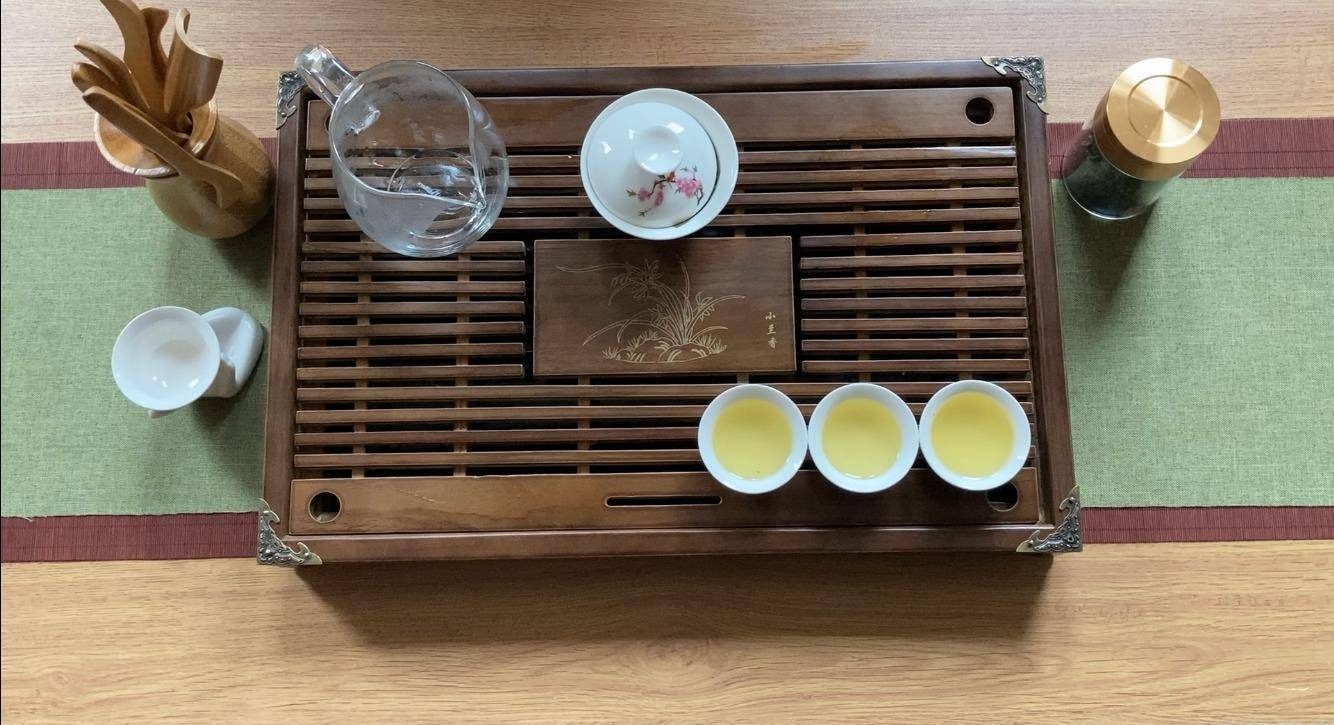
Yongchun Fo Shou is especially well suited to a gaiwan or a small pot in gongfu-style brewing. The reason is simple: neither its aroma nor its leaf substance can be fully read in one instant. The rolled or semi-rolled dry leaf needs time to open in water. The first infusions are useful for judging aromatic cleanliness and whether there is real fruit-sweet lift. The middle infusions are where one checks whether the liquor truly holds together. The later infusions reveal aftertaste, durability, and finish. For most samples, water near boiling brings out aroma and liquor together more effectively, but the pouring rhythm should not be too slow, or the rougher side of the thick leaves can become exaggerated.
As a practical starting point, 5 to 8 grams of tea for 100 to 120 milliliters of water works well. Keep the first two or three infusions short and let the leaves open gradually while checking whether the fragrance remains merely superficial. Then extend later infusions slightly to see whether the fruit-toned character really moves into the liquor. Do not judge Yongchun Fo Shou only by whether the first infusion smells attractive. The more important question is whether the tea remains structurally whole by the third or fourth infusion: whether the aroma collapses, whether the liquor disperses, whether the opened leaves are thick, soft, and fairly even, and whether the reddish edge associated with bruised oolong processing appears natural. This is a tea that rewards continuous reading rather than one-sip verdicts.
What are the most common buying mistakes?
The first is treating “the more explosive the fruit aroma, the better” as the only criterion. Yongchun Fo Shou is indeed known for floral-fruit character, but if the aroma feels excessively sharp, floating, or detached from the liquor, that is not necessarily a strength. The second mistake is looking only at leaf size. The Fo Shou cultivar really does produce large leaves, but large leaves do not automatically mean a better tea. What matters is whether that large-leaf material was processed into something mature, coordinated, and clean.
The third mistake is treating it as a simple replacement for Tieguanyin. The two can be compared, but they should not overwrite one another. The fourth is ignoring roast and finish. Many buyers focus only on the opening aroma and fail to examine whether the middle and later infusions remain complete; in reality, Yongchun Fo Shou often exposes its real quality more clearly as the session continues. The fifth is treating it as merely an old local curiosity. It certainly has local famous-tea status, but what gives it lasting value is not nostalgia. It is the fact that it still stands today as another clearly legible style line within southern Fujian oolong, one that helps readers understand how cultivar and craft work together to shape flavor.
Why does Yongchun Fo Shou deserve its own place in the tea section?
Because if one writes only about Tieguanyin, Phoenix Dancong, and Wuyi rock tea, readers can easily assume the main narrative of Chinese oolong is already complete. But teas like Yongchun Fo Shou — familiar enough to have public recognition, yet too often handled too quickly — are exactly what fill in the finer structure of the map. It shows that southern Fujian oolong is not exhausted by the modern memory of light-style Tieguanyin, and that not every rolled oolong revolves around the same aromatic logic. Different cultivars, different leaf substance, and different local experience produce different aromatic structures and different orders of liquor.
It also fits naturally into the site’s existing architecture. It can be read alongside Tieguanyin to help readers understand internal variation within southern Fujian oolong, and it can answer back to the broader oolong overview as a concrete case of cultivar and craft shaping style together. Its value is not just that it adds one more famous tea page. Its value is that it reminds readers where some of the most interesting parts of Chinese tea actually live: inside names that everyone has heard before, but that are almost always written too quickly.
Further reading: Tieguanyin is more than a familiar name: Anxi, cultivar identity, oolong craft, and the divide between lighter and traditional styles, What kind of tea is oolong? From semi-oxidation and bruising logic to the differences between rock tea, dancong, and Tieguanyin, and Why Phoenix Dancong so often feels both intensely aromatic and unusually complex.
Source references: synthesized from public Chinese-language materials on Yongchun Fo Shou covering production environment, cultivar traits, geographical-indication technical standards, southern Fujian oolong processing logic, common sensory descriptions, and local tea-industry narratives.