Oolong Tea Feature
Tieguanyin is more than a familiar name: Anxi, cultivar identity, oolong craft, and the divide between lighter and traditional styles
In the Chinese-speaking tea world, Tieguanyin is one of the few tea names that seems to need no introduction. Plenty of people who have never studied Chinese tea in any serious way still recognize the name. For many drinkers, their first mental picture of oolong does not begin with southern Fujian processing, bruising, or rolled leaf shape. It begins with the words “Tieguanyin.” Precisely because the name is so famous, so common, and so socially familiar, it is also one of the teas most often explained too shallowly. It gets reduced to “a very fragrant oolong,” “a common gift tea,” “the classic rolled oolong,” or “the Anxi tea with orchid aroma.” None of those labels are entirely wrong. None of them are enough.
What makes Tieguanyin worth reading carefully is that it is not a thin commercial label but a tightly connected system. It is both a cultivar name and a finished tea name. It is closely tied to Anxi in Fujian and to the broader southern Fujian oolong tradition, yet it has also been reshaped repeatedly by modern market taste. It carries the aromatic lift associated with bruising and oxidation management, but it also depends on rolled shaping, baking, and re-roasting for body, endurance, and completion. If Tieguanyin is reduced to “fragrance,” one misses the deeper point. It became a national-level tea name not because it has one simple strength, but because it gathers several of the most important questions in Chinese oolong—cultivar, origin, craft, style division, and market reinterpretation—into one cup.
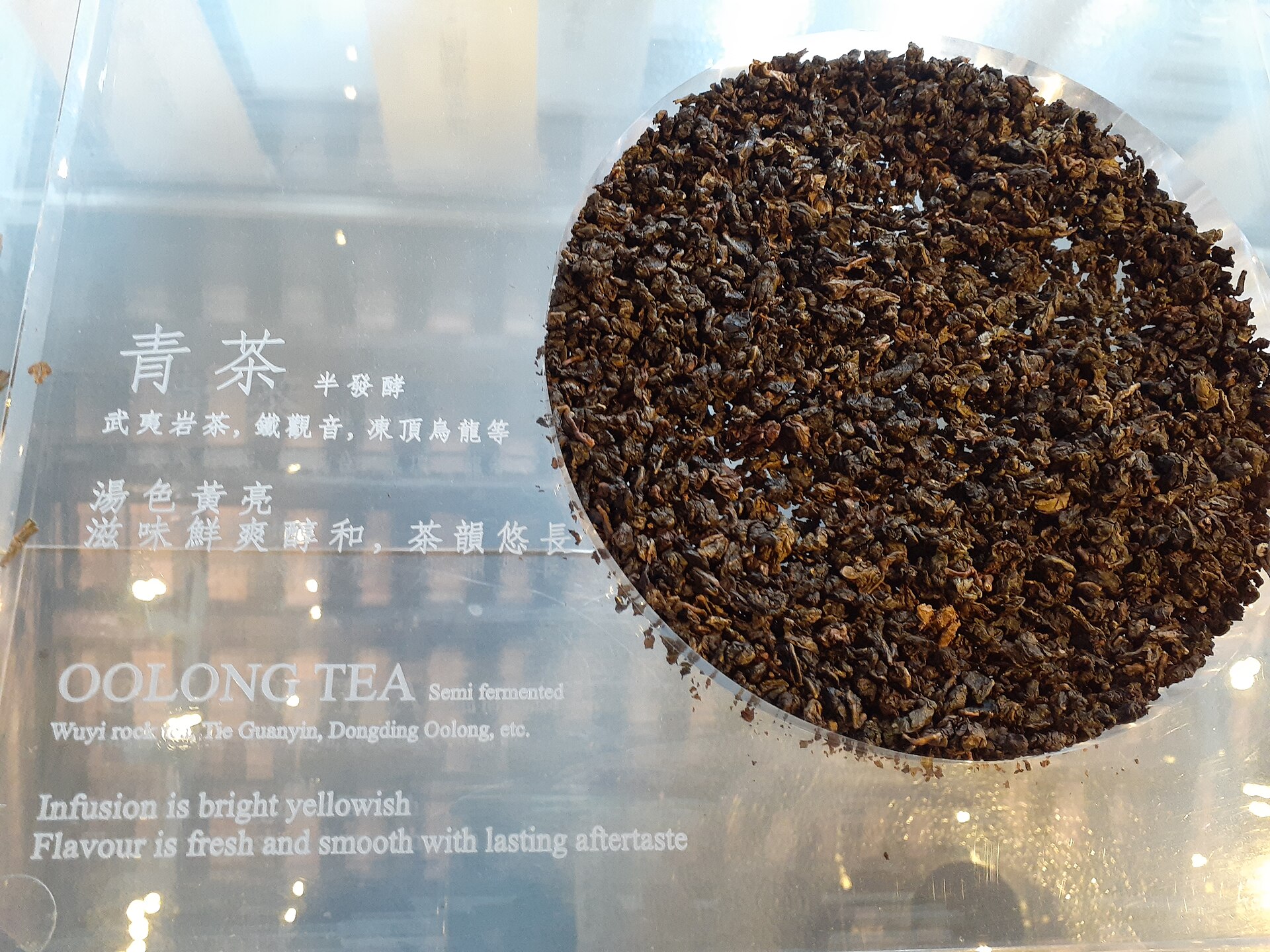
What kind of tea is Tieguanyin, and why is it both a cultivar name and a finished tea name?
Tieguanyin belongs to the broad family of Chinese oolong tea and, in traditional classification, sits inside the southern Fujian oolong system, with its core identity long tied to Anxi. One of the most important things to explain clearly is that “Tieguanyin” can refer both to a tea plant cultivar and to an oolong made from that cultivar. That dual identity matters because it helps explain why the name works in two ways at once. Sometimes people use it to refer to a specific plant source. Sometimes they use it to describe a finished tea style with a long-established cultural identity. If this distinction is skipped, newcomers can easily assume that Tieguanyin works like a straightforward finished-tea label and miss part of what gives it its unusual status.
In fact, Tieguanyin became such a powerful tea name precisely because these two layers overlap. On the cultivar side, people talk about leaf substance, aromatic tendency, and suitability for oolong making. On the finished-tea side, they talk about Anxi, processing, lighter fragrant styles, more traditional roasted styles, endurance, gift-tea culture, and the idea of “Guanyin yun” or Tieguanyin’s special after-feel. That makes Tieguanyin more than one tea. It becomes an entry point built jointly by plant identity, local processing, trade circulation, and public memory. Many people believe they know Tieguanyin when what they really know is only the social life of the name.
Why is Tieguanyin always discussed together with Anxi?
Tieguanyin is almost impossible to discuss without Anxi. This is not just a matter of geographical prestige. Tieguanyin as a classic oolong example is deeply rooted in Anxi’s mountain environment and local tea-making tradition. The county’s hilly terrain, humidity, temperature rhythm, garden distribution, and long accumulation of oolong craft all helped shape what people mean when they say “Anxi Tieguanyin.” In other words, Anxi matters not only because an origin label helps sell tea, but because it provides a full local framework: what sort of leaf is suitable for bruising, what kind of fragrance counts as clean, what kind of finished tea reads as round, smooth, aromatic, and alive.
For readers, the more important point is that Tieguanyin is not a placeless industrial flavor profile. Even when modern markets pushed many versions toward greener appearance, brighter lift, and stronger floral expression, those versions still relied on the authority of “Anxi Tieguanyin” to justify themselves. The place-name matters because it reminds us that Tieguanyin does not become real through ball shape and a famous name alone. It still has to be judged through mountain context, fresh leaf quality, bruising logic, and cup performance.
How is Tieguanyin made, and why does bruising and oxidation management give it its soul?
As an oolong, Tieguanyin broadly follows the sequence of sun withering, resting, bruising, fixation, rolling, cloth-wrapping and shaping, and baking. The most important stage, and the one that reveals the greatest difference in skill, is the bruising-and-resting phase often described in Chinese as doing qing or making the leaf ready through repeated handling and observation. This is not one isolated action. It is a chain of judgments. Through shaking and resting, the leaf slowly changes at the edge and surface, aroma moves away from simple green freshness toward something more developed and dimensional, and yet the tea must not be pushed so far that it loses vitality.
This is why Tieguanyin is difficult to make well. It must be aromatic, but not only superficially aromatic. It must retain life, but not remain raw and green in an unfinished way. It must enter the partially oxidized world of oolong while still preserving room for later shaping and baking. Too light a hand and the tea may smell high but taste hollow. Too heavy a hand and it may lose its lifted grace and become dull or woody. In that sense Tieguanyin teaches a fundamental lesson: the quality of oolong is never just a recipe problem. It is the result of continuous judgment about leaf rhythm. If something like “Guanyin yun” truly exists, it is not a slogan but the final integrated effect of those judgments in the cup.
Why is rolled ball shape so important? It is not just about looking neat
Many drinkers first remember Tieguanyin as a tightly rolled or semi-ball-shaped oolong. That visual identity is real, but it means more than appearance. Rolled shaping in Tieguanyin is not simply about tidiness, transport, or gift presentation. It is deeply tied to the drinking logic of this southern Fujian oolong family. The compressed dry leaf stays gathered before brewing and then gradually opens in hot water, so aroma, taste, and leaf structure do not appear all at once. They unfold across repeated infusions. That gradual opening is part of how Tieguanyin is meant to be read.
For that reason, the shape is not decorative. It is structural. If rolling is too light, the leaf can feel scattered and extraction becomes unstable. If rolling is too heavy, the tea can lose life and the liquor may feel rigid. Good Tieguanyin should balance compactness with later expansion: dry leaves should look substantial and even, brewed leaves should open gradually, and aroma should move forward in stages rather than explode once and collapse. This is also why Tieguanyin fits a small gaiwan or small pot so naturally. Its craft was never designed around one oversized mug infusion.
What exactly is being divided when people say “lighter fragrant” versus “traditional roasted” Tieguanyin?
Today many drinkers immediately classify Tieguanyin into a lighter fragrant style and a more traditional roasted or fuller style. That distinction is useful, but it becomes misleading if handled too crudely. The real difference is not simply that one is lighter and the other heavier. They are different stylistic directions. Lighter fragrant Tieguanyin usually emphasizes bright lift, a greener-feeling freshness, and a more immediate floral impression, often with a clearer liquor and a more obvious first impact. More traditional roasted styles emphasize baking-derived stability, greater body, stronger integration between aroma and liquor, and a more settled sensation after drinking.
This is not just a matter of preference. It reflects the way Tieguanyin has been repeatedly rewritten by modern markets. The lighter fragrant style gained wide popularity partly because it leaves a quick and memorable first impression. More traditional roasted styles are often preferred by drinkers who care more about completion, because they ask different questions: has the fragrance actually entered the liquor, has baking gathered the tea into itself, and does the tea still stand up after several infusions? Put side by side, these styles reveal something essential. Tieguanyin is not one flavor word. It is an oolong route already divided into multiple internal aesthetic lines.
What should Tieguanyin smell and taste like?
If one had to summarize it in a single sentence, good Tieguanyin should be lifted in aroma but not floating, rounded in liquor but not heavy, and long in aftertaste without depending on roast alone. Many people describe Tieguanyin through orchid-like fragrance. That comparison has some basis, but it also becomes formulaic very quickly. A stronger floral smell does not automatically mean the tea is complete. What matters more is whether the aroma is clean, natural, and actually enters the liquor rather than staying only on the lid or in the aroma cup.
On the palate, Tieguanyin should never become merely scented water. Whether one is drinking a lighter fragrant style or a more traditional roasted one, high-quality Tieguanyin should have support, continuity, and a sense of shape in the mouth. Lighter styles should not turn thin and scattered, while fuller styles should not become dull and heavy. The first should retain freshness and lift; the second should carry calmness, roundness, and the completion that comes from careful baking. The real difference is not which one is more attractive at first sip, but whether each style fully completes its own path: whether aroma and liquor are unified, whether the early and late infusions connect, and whether the drinker is left with an open, extended sweetness rather than only a sharp aromatic impression.

Why is Tieguanyin so often misread as just “a very fragrant oolong”?
Because Tieguanyin is unusually easy to circulate. The name is memorable, the stories are plentiful, the aroma can be vivid, and the ball-shaped appearance is easy to turn into a product image. For retail culture, that is a strength. For understanding, it becomes a trap. Many teas are hard to flatten because they resist quick commercial description. Tieguanyin is the opposite. It slips too easily into shopping language: orchid fragrance, Anxi oolong, very aromatic. Once that happens, readers and buyers quickly feel they have understood it.
But inside a serious knowledge structure of Chinese oolong, Tieguanyin is much less simple. It involves the dual relationship between cultivar and finished tea name. It involves Anxi’s local experience. It involves delicate decisions in bruising and oxidation management. It involves rolled shaping, baking, and re-roasting. It also involves the way modern markets have repeatedly pushed a classic oolong toward brighter, greener, more obviously fragrant directions. That is exactly why it deserves a dedicated place in the tea section. It is one of those teas that are easiest for the public to recognize and easiest for the public to misunderstand. To explain Tieguanyin well is not only to add a famous tea article. It is to restore one of the central trunk lines in the understanding of Chinese oolong.
How should Tieguanyin be brewed, and why does high heat with short infusions reveal more than a large mug infusion?
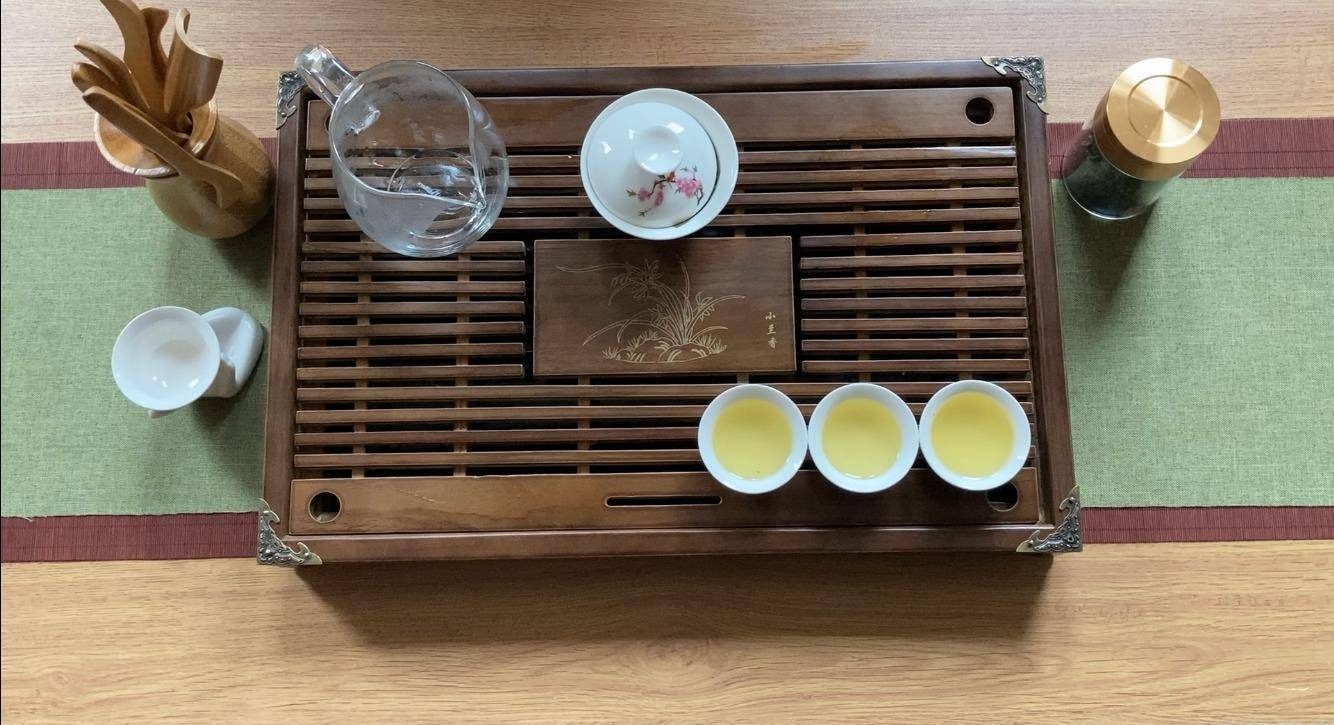
Tieguanyin is especially well suited to a gaiwan or a small pot in gongfu-style brewing. This is not just because tradition says so. Its shape and craft logic are genuinely built for repeated short infusions. The rolled dry leaf needs hot water to open gradually. If one starts with too little tea and long steeping in a large mug, one often extracts surface aroma but scrambles the more layered parts of the tea. For most samples, water near boiling brings out aroma and body together more clearly. Quick pours in the early rounds make it easier to tell whether the tea is lifted without floating, or whether it has fragrance without liquor.
As a practical starting point, 5 to 8 grams of tea for 100 to 120 milliliters of water works well. Lighter fragrant styles are usually more sensitive to oversteeping and need a brisker early rhythm. Traditional baked styles can tolerate a little more extraction, but should still not be dragged into heaviness. The key question is not whether the first infusion smells attractive. It is whether the tea remains whole by the third or fourth infusion: whether the aroma collapses, whether the liquor thins out, whether the leaves open evenly, and whether the late rounds still hold together. Good Tieguanyin should become clearer as it is brewed, not peak immediately and then fall apart.
What are the most common buying mistakes?
The first is to treat “the more fragrant the better” as the only standard. Aroma can be a strength, but if it is sharp, floating, and disconnected from the cup, the tea may not be well finished. The second is to assume that a greener appearance automatically means a higher grade. Greener color often reflects a particular modern style choice, not a universal quality judgment. The third is to rely on name and packaging instead of actual brewing performance. Because Tieguanyin is such a famous tea name, it is easy for branding and gift culture to magnify the surface story. But the tea still lives or dies in the cup.
The fourth mistake is to treat lighter fragrant and more traditional roasted Tieguanyin as a simple hierarchy. They are first of all different style directions, not automatically higher and lower levels. What really matters is whether each has completed its own style convincingly. The fifth mistake is to assume that Tieguanyin is mainly a tea for smelling rather than a tea for close drinking. In fact, its real threshold appears only when one drinks attentively: whether aroma enters the liquor, whether flavor forms a complete phrase, and whether the finish still stands up. Those things cannot be judged by a quick sniff alone.
Why does Tieguanyin deserve its own place in the tea section?
Because in the wider knowledge structure of Chinese tea, Tieguanyin functions like a major junction. Upward, it connects to oolong as a broad family and helps readers understand bruising, rolling, baking, and style division. Downward, it connects to Anxi, southern Fujian gongfu tea, cultivar thinking, local aesthetics, and modern market rewriting. Many teas stand for one branch. Tieguanyin cuts across cultivar, origin, process, consumer history, and public recognition all at once. Without it, the map of oolong loses one of its most familiar and most necessary entrances.
It is also especially valuable on this site because it can illuminate the existing structure around it. It naturally answers back to the broader oolong overview as a central southern Fujian node, and it works alongside Phoenix Dancong and Wuyi rock tea to show why oolong contains radically different aesthetic lines inside one category. To write Tieguanyin well is not only to add another famous tea page. It is to restore a page that the structure of Chinese oolong cannot really do without.