Black Tea Feature
Why Xinyang black tea deserves its own article: it is not just Xinyang Maojian turned into black tea, but a modern Dabie Mountain black-tea route built on honeyed sweetness, brisk clarity, and everyday drinkability
Many people hear about Xinyang black tea for the first time and instinctively translate it into a very easy sentence: Xinyang Maojian is famous, so of course Xinyang also makes black tea. That is not exactly wrong, but if we stop there, we make the tea too shallow. What really matters is not merely that black tea exists in Xinyang. What matters is how a region long dominated by the prestige of green tea managed to establish a black-tea route that can stand on its own. Its importance does not lie in simply flipping the Maojian logic over, nor in taking leaves meant for green tea and “fermenting them instead.” It lies in using the mountain ecology of southern Henan and the northern edge of the Dabie range, with its seasonal rhythm and tea-growing experience, to build a modern black-tea expression in a place more commonly narrated through green tea.
That is also why Xinyang black tea is easy to miswrite in two ways. The first is to present it as “the black-tea version of Xinyang Maojian,” as if it were only a dependent extension of a more famous tea. The second is to write it off as “a newer local black tea,” as if it were enough to know that it is relatively recent and somewhat sweet and smooth. A steadier reading is this: Xinyang black tea absolutely depends on the same broader tea-region foundation, leaf resources, and tea-making skill that made Maojian possible, but once it stands as black tea, it has to be judged by black-tea standards—whether its sweetness is clean, whether its aroma is integrated, whether its liquor is bright, whether its finish is neat, and whether it can still make sense in the cup even after the name “Xinyang” stops doing all the work for it.
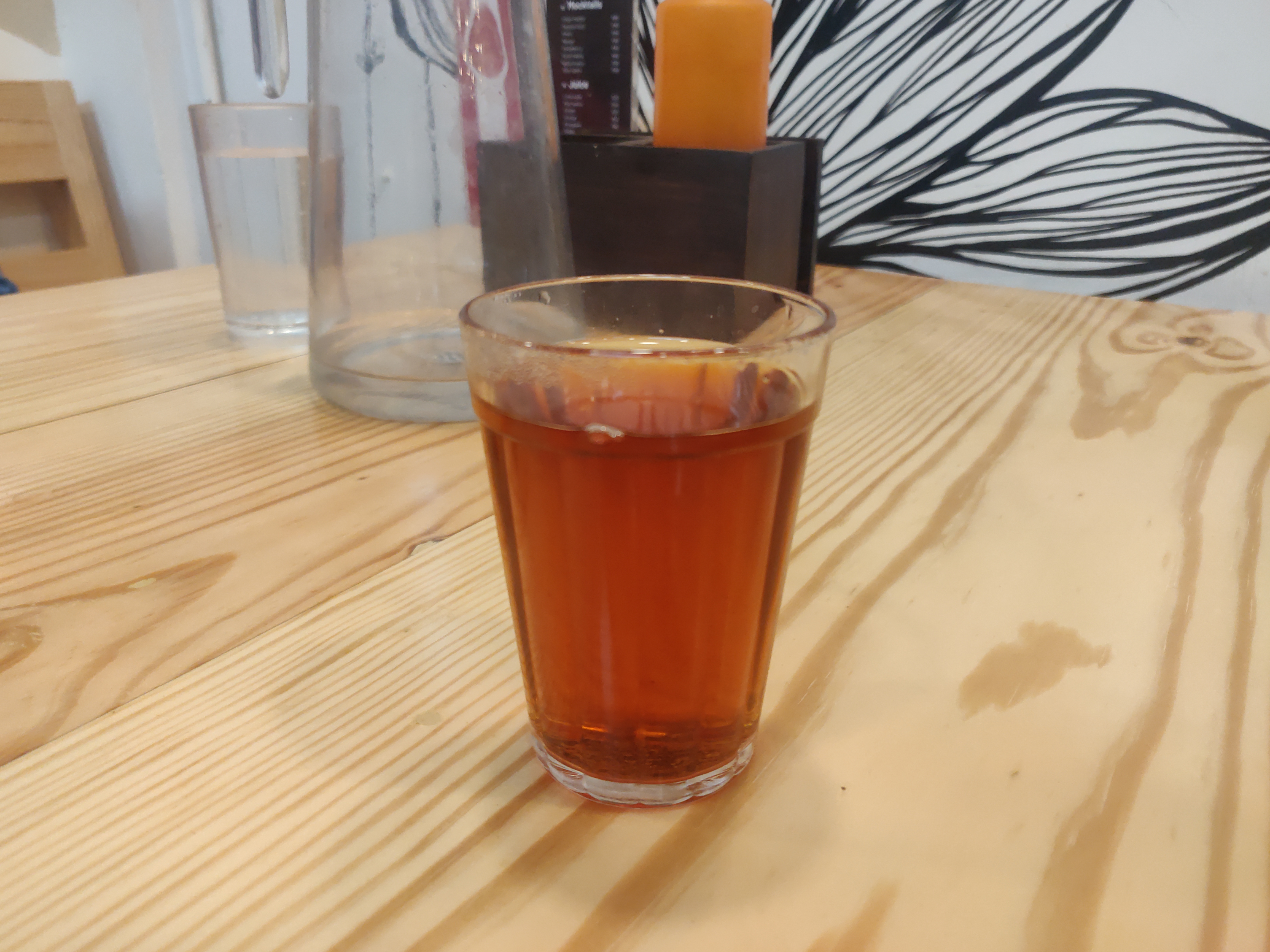
What kind of tea is Xinyang black tea, and why is it more than just Maojian made differently?
Xinyang black tea belongs to the family of Chinese black tea. More specifically, it is a modern congou-style black-tea branch developed by the Xinyang tea region beyond its older fame in elite green tea. Its starting point is of course tied to the same larger tea geography as Xinyang Maojian: southern Henan, Dabie-related mountain landscapes, local tea gardens, relatively tender spring material, and mature tea-making knowledge. But once the tea enters black-tea logic, the judging standards change completely. Green tea emphasizes kill-green heat treatment, retained freshness, and the locking-in of spring character. Black tea depends on withering, rolling, oxidation, and drying, and has to reorganize the fresh leaf into sweetness, fragrance, body, liquor color, and finish. In that sense, Xinyang black tea is not just Maojian with one step removed or added. It is the same region speaking in a different tea language.
That is exactly why it deserves its own article. Many Chinese tea regions produce both green tea and black tea, but not every region turns its black tea into a stable, readable local category. Xinyang black tea stands because it has gradually formed a recognizable style spine: bright red liquor, a relatively sweet and polished aroma, often some honeyed, floral-sweet, or ripe-fruit sweetness, and a palate that is brisk and smooth rather than aggressively heavy. In other words, it does not stand through novelty alone. It stands through completion.
Why can a strongly green-tea region like Xinyang still produce a convincing black-tea branch?
On the surface, Xinyang is of course best known for Maojian, and for many readers the name Xinyang first means early spring, white down, tight strands, and green tea. But from another angle, that is exactly why it can support a good modern black tea. A region that has long had disciplined picking systems, strong fresh-leaf grading habits, mountain tea-garden management, and sensitivity to tender raw material often has a stronger foundation for black tea than people assume. Making good green tea does not automatically mean making good black tea. But if a tea region already possesses stable leaf supply, high raw-material standards, and mature making skill, it has a better chance of establishing a black tea with its own order.
That is where Xinyang black tea becomes interesting. It did not grow out of an empty industrial space. It grew out of a place that already knew how to manage leaf, season, and value in tea. Maojian directed those abilities toward freshness, down, line, and spring-green expression. Xinyang black tea redirects them toward sweetness, brightness, smoothness, and briskness in black tea. Once that relationship is made clear, readers are less likely to misread Xinyang black tea as a late opportunistic product riding on Maojian’s fame, and more likely to understand it as a reorganization of the same tea-region capacity under a different tea-class goal.
Why is it often summarized as honey-sweet and brisk? What do those words actually mean here?
Many local black teas are described through familiar high-frequency adjectives, and “honey-sweet and brisk” can become empty if repeated without explanation. More concretely, “honey-sweet” here does not mean sugary heaviness or added sweetness. It points to a natural sweet-polished quality in aroma and liquor, something in the range of honeyed softness, mild fruit sweetness, or refined sugar-like lift. “Brisk,” meanwhile, means the tea keeps clarity and movement in the mouth rather than collapsing into thickness or dull heaviness. The strength of Xinyang black tea, then, is not that it becomes especially weighty, but that it lets sweetness and brightness, smoothness and liveliness, stay together.
That matters because it separates Xinyang black tea from many red teas that depend primarily on density. It does not usually win by extreme malt, caramel, or pressing heaviness against the tongue. It is closer to a structure that feels clean, approachable, bright, and suitable for repeated drinking. Better examples should smell integrated rather than scattered, show bright red liquor rather than dark opacity, enter smoothly but not weakly, and close with a clear finish rather than sticky sweetness. That degree of completion is what the phrase should really be pointing toward.

How does it differ from better-known Chinese black teas like Keemun and Dianhong?
Once we place Xinyang black tea back inside the wider Chinese black-tea map, its position becomes clearer. Compared with Keemun, Xinyang black tea usually does not emphasize such inward, fine, layered, restrained aromatic complexity, nor does it depend on a highly distinctive “Keemun fragrance” type of signature. Keemun often wins through line, refinement, and aromatic subtlety. Xinyang black tea tends to move more through sweetness, brightness, briskness, and direct drinkability. Both can be appreciated plain, but one asks for slower aromatic reading while the other often presents itself more openly.
Compared with Dianhong, the difference moves in another direction. Dianhong is often closely tied to large-leaf material, plateau atmosphere, honeyed thickness, and a more substantial kind of body. Xinyang black tea generally does not rely on that same volume. Instead, it often feels lighter on its feet, clearer, and more oriented toward balance and everyday plain drinking. Both can be sweet; but one sweetness tends to feel thicker, while the other feels cleaner. Both can be smooth; but one smoothness leans toward depth, while the other leans toward brightness.
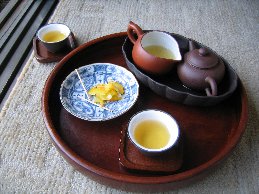
What does Xinyang black tea actually taste like when it is good?
Good Xinyang black tea usually begins with tight, well-formed dry leaf and a dark, healthy sheen. Once brewed, the liquor should be bright red and transparent rather than cloudy or darkened for effect. The aroma should gather itself into a coherent sweet profile—possibly floral-sweet, honey-sweet, fruit-sweet, or gently sugary—but it should feel integrated, not merely loud on the surface. In the mouth, the first feeling should not be force, but ease. Then the tea should show that it has real content: not thin, not blank, with enough brisk lift to keep the liquor lively instead of merely soft. After swallowing, the best examples leave a clear finish and a recognizable returning sweetness rather than a muddy after-heaviness.
Average examples usually fail in predictable ways. Some are sweet but flat. Some smell promising but taste hollow. Some have color without brightness. Some feel smooth but leave no impression and disappear too quickly. That is why Xinyang black tea, although very suitable for everyday drinking, should not be reduced to a “safe, easy, harmless” black tea. The examples worth writing about should have more than friendliness. They should have structure, identity, and a mountain-tea-region brightness that still belongs recognizably to Xinyang.
Why is it well suited both to plain drinking and to serving as an entry bridge into Chinese black tea?
One practical strength of Xinyang black tea is that it usually does not demand a very high interpretive threshold. Compared with black teas that ask readers first to understand intricate aroma taxonomies, regional history, or cultivar background, Xinyang black tea can often bring people in through a simpler first set of virtues: smoothness, sweetness, brightness, and briskness. That accessibility is not a weakness. It is one of its real strengths. For many new readers, if Chinese black tea begins only with very dense flavor language, the whole category becomes harder to approach. Xinyang black tea provides a natural doorway: first understand what a clean sweet-polished black tea can be, then compare how different black teas balance sweetness, body, brightness, and fragrance in different ways.
At the same time, it is especially worth drinking plain. The phrase “modern local black tea” can tempt people to imagine it mainly in milk tea, flavored tea, or mass-market blending contexts. But Xinyang black tea is more revealing when tasted without those additions. Only plain drinking really shows whether its aroma is integrated, whether its liquor has brightness, whether its middle section retains liveliness, and whether its ending stays neat. If a Xinyang black tea works only once sugar, milk, or other flavoring enters the picture, then its completeness as a local black tea is limited. The steadier examples should still be able to explain themselves in a gaiwan, a small pot, or a tasting cup.
What is the most important relationship to remember between Xinyang black tea and Xinyang Maojian?
The most important thing is not simply that they come from the same place, but that they allow the same tea region to speak in two different voices. Xinyang Maojian turns the region’s strengths into the freshness, straightness, white down, and mountain spring quality of elite green tea. Xinyang black tea turns the same land, resource discipline, and making ability into sweetness, brightness, and briskness in black tea. The first helps readers understand a mountain-shaped strand-style green tea route inside China. The second reminds readers that a strong green-tea region does not have to tell only green-tea stories. Under modern conditions, it may also write a new black-tea chapter.
This is especially important to protect in bilingual work. For English-language readers, it is very easy to reduce Xinyang first to “a famous green-tea region” and therefore to treat the black tea as secondary. But the more accurate order is this: yes, Xinyang is famous first for Maojian; but once Xinyang black tea stands, it cannot remain only an appendix to Maojian. It has to be handled as a full black-tea article. That means the Chinese source is not saying “Maojian is famous, so let us mention the black tea in passing,” and the English article cannot drift into “a black tea made in a famous green-tea place” and stop there. The spine has to stay aligned: Xinyang black tea is an independent local black-tea route inside the modern transformation of the Xinyang tea region.
Why does Xinyang black tea deserve to be a stand-alone tea-section article?
Because it fills in the idea of one tea region speaking through more than one tea class. Many readers know a place only through its most famous tea, and therefore tend to imagine the whole region as a single-product identity. The real Chinese tea world is much more complex than that. Xinyang does not stop at green tea just because Maojian is dominant. In fact, the mature raw-material system, mountain order, and making skill behind Maojian are exactly what make Xinyang black tea worth reading as a modern and systematized black-tea answer. It reminds us that a tea region is not just a label. It is a field of capacity. The same land can speak differently through different tea categories.
That is why Xinyang black tea deserves its own page. Not because it needs to compete with Xinyang Maojian for the leading role, but because it helps readers see Xinyang more completely—and Chinese black tea more completely too. Within the section structure, it becomes a useful bridge between Xinyang Maojian, Keemun, Dianhong, and other pieces already on the site. It supports both internal origin comparison and cross-black-tea style comparison. The clearer that article becomes, the less the site ever needs hand-edited index patchwork: the collections themselves can grow into a more complete map.
Further reading: Xinyang Maojian: why one early-spring green tea leads to harvest timing, mountain origin, white down, and fake new-tea disputes, Keemun black tea, and Dianhong.
Source references: synthesized from public Chinese-language tea materials on Xinyang black tea’s local tea-region background, black-tea development path, common summaries of its honey-sweet and brisk style, its tea-class difference from Xinyang Maojian, and its place inside the modern Xinyang tea industry.