Black Tea Feature
Why Dianhong is more than “Yunnan black tea is strong and sweet”: from the Fengqing trial run and large-leaf raw material to golden-tip aesthetics and a modern Chinese black tea model that works both plain and with milk
Dianhong is almost always the first name people think of when Yunnan black tea comes up, and that is exactly why it is so easy to flatten. The most common short version usually sounds like this: a black tea made from Yunnan large-leaf material, red in the cup, strong in taste, obviously sweet, and often attractive because of its golden tips. None of that is invented. But if the explanation stops there, the part that really makes Dianhong worth a full article disappears. Dianhong is not just proof that Yunnan also makes black tea, and it is not merely a red tea that feels thicker or sweeter than average. It is one of the clearest and most successful modern samples in Chinese black tea history: a tea built on the physical capacity of Yunnan large-leaf material, rapidly organized into its own mid-20th-century congou black tea system, commodity aesthetics, and flavor language, and able to stand for decades in clear drinking, gift retail, blending, and milk-tea use alike.
That is also why Dianhong is especially vulnerable to two kinds of misreading. The first is to treat it as nothing more than “a premium black tea with lots of golden tips,” as if visible tips were the whole point. The second is to treat it as “a thick Yunnan tea that works well with milk,” as if its meaning were only about strength and application. A more accurate reading is this: Dianhong is indeed deeply tied to Yunnan large-leaf material, the Fengqing trial run, visible golden tips, a rich and brisk body, honeyed sweetness, floral-fruit aroma, export and blending history, and modern retail language. But it is not the servant of any one of those labels. It is a modern Chinese black tea model built on large-leaf raw material, structured through modern congou black tea craft, recognized through golden-tip aesthetics and bright sweet liquor, and stabilized through highly successful commodity expression.
What kind of tea is Dianhong?
Dianhong belongs to the Chinese black tea family, and more specifically it stands as a representative modern congou black tea built on Yunnan large-leaf raw material. Today, when people say “Dianhong,” they usually mean black tea made in Yunnan—especially with Fengqing and nearby areas as core historical reference points—using the large-leaf tea resources for which Yunnan is famous. Public materials often mention the successful Fengqing trial production around 1939, and that detail matters because it defines the tea’s identity: Dianhong is not an old tribute-tea name that naturally survived unchanged into the present, but a regional black tea clearly established in modern Chinese tea history.
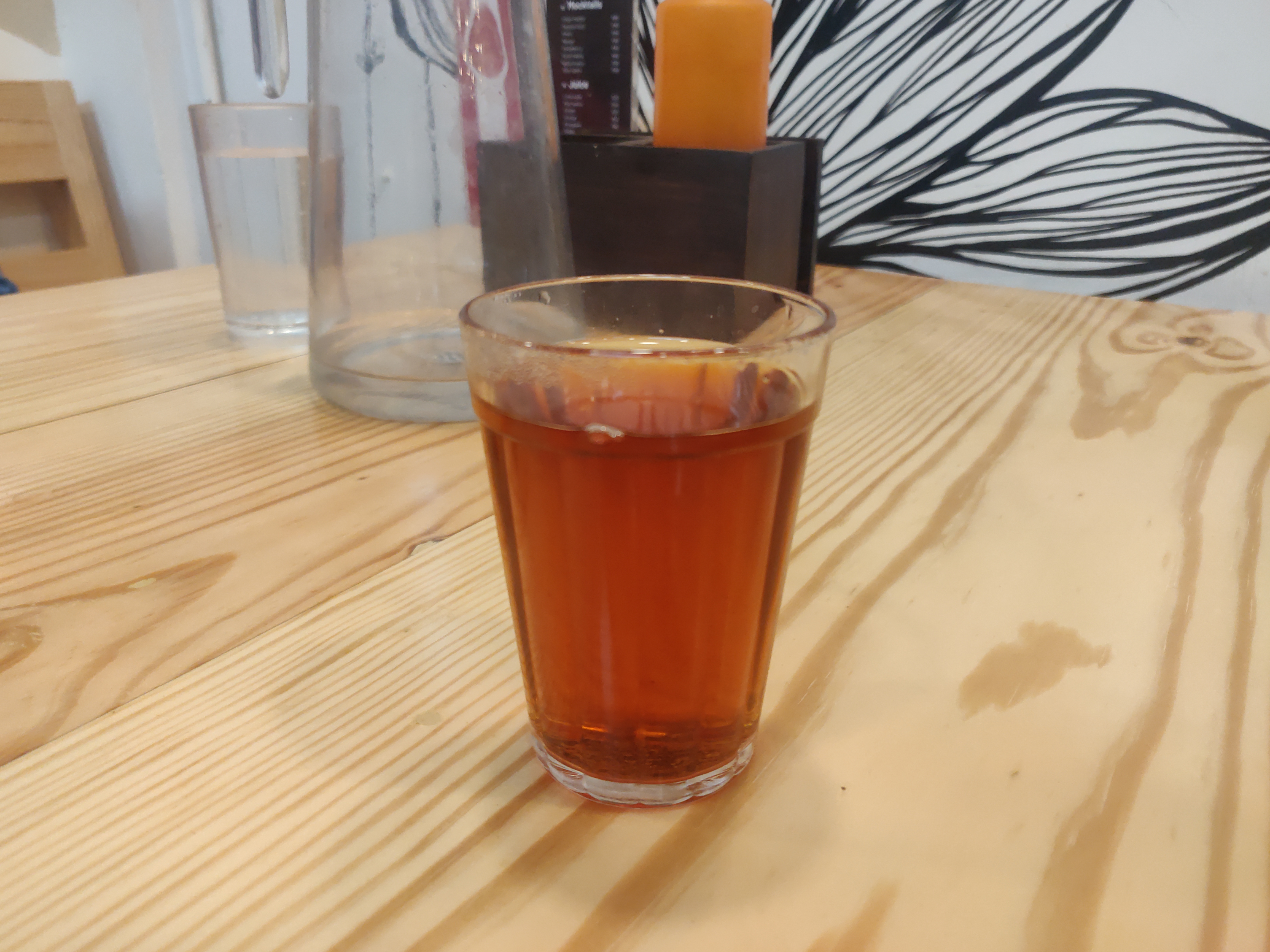
The easiest traits to recognize are dark, lustrous dry leaf, visible golden tips in many higher grades, a bright red cup, and a palate with strong support often accompanied by clear honeyed sweetness, floral notes, fruity tones, or ripe-sugar warmth. The important point here is that Dianhong’s “strength” and “sweetness” should never be reduced to crude heaviness. Good Dianhong should be thick without turning dull, sweet without becoming cloying, powerful without becoming blunt, and bright without becoming hollow. In other words, its strength lies not in pushing black tea toward simple weight, but in organizing the natural thickness, sweetness, brightness, and activity of large-leaf material into a highly complete whole.
Why is the Fengqing trial run such an important way into Dianhong?
Because that is where Dianhong’s modern history was truly opened. Publicly available regional material, encyclopedic references, and industrial accounts all treat the successful Fengqing trial production in 1939 as one of the key starting points for Dianhong. This date deserves emphasis because it reminds us that Dianhong is not the kind of tea that needs age alone to justify itself. On the contrary, it is a classic success story of modern tea construction in China: under the combined force of national needs, trade conditions, technical work, regional resources, and market demand, a local black tea that had not previously existed as a nationally recognized identity was tested, expanded, standardized, and widely circulated.
That is not a weakness. It is one of Dianhong’s most valuable layers. Chinese tea history is not only a classical history; it also includes an important modern history of reconstruction. Which teas were reorganized, renamed, and expanded in the 20th century? Which teas formed stable flavor and brand language inside the modern market? Dianhong is one of the clearest examples. Its value lies precisely in the fact that it was not simply “already there in the old books,” but “successfully made” within a modern system. Once that is understood, readers stop seeing Dianhong as merely “a famous Yunnan black tea.”

Why is Dianhong always discussed together with Yunnan large-leaf material?
Because this is almost the material precondition of its existence. One cannot discuss Dianhong without discussing Yunnan large-leaf tea. Compared with many black teas built on smaller-leaf material and valued for fineness and restraint, Yunnan large-leaf tea naturally offers stronger extractive power, more obvious body, and a clearer base for sweetness. That is why Dianhong was never built primarily on a logic of delicacy and lightness. It was built on a logic of thickness, brightness, sweetness, liveliness, and visible golden tips.
This also explains why so many Dianhong teas present a striking golden-tip appearance. Golden tips do bring very strong commodity aesthetics, but they are not an isolated ornament. They are the visible result of bud-heavy picking, cultivar character, oxidation control, and drying completion working together. The real question readers should ask is not “does more golden tip automatically mean better tea?” but rather: why did Dianhong develop a product language that values bud-leaf ratio, liquor strength, sweetness, and visual beauty all at once? The answer is that large-leaf black tea in Yunnan is naturally suited to becoming a black tea product that is visually impressive, satisfying to drink, and easy to recognize in the market.
What does “golden tip” really mean in Dianhong? Why does it matter, but still not settle everything?
Many people meet Dianhong first through the sight of obvious golden tips. The market is also full of products named around golden thread, golden needle, golden bud, or golden tip language. That reflects a real fact: inside the Dianhong system, bud proportion, visible tip color, and external beauty have long mattered a great deal. Dianhong is not only drunk. It is also displayed, packaged, gifted, and used to represent the visual luxury of Yunnan black tea. In that sense, golden tip is both a raw-material signal and a commercial recognition device.
But if one looks only at golden tips, Dianhong is very easy to buy badly. Golden tip can tell you something about picking and appearance, but it does not automatically tell you whether the tea is complete. Truly good Dianhong must also show bright liquor, clean aroma, real but not dull force, natural sweetness, and a finish that remains tidy. In other words, golden tip is an important entry point into Dianhong’s aesthetics, but it is not a universal proof of quality. A tea that looks glamorous but drinks hollow or cloying is not showing Dianhong at its best.
Why is Dianhong so often summarized as “rich, strong, brisk, honeyed, floral-fruity”?
This is a relatively accurate description of its main style line, but it is also easy to turn into empty formula language. More concretely: “rich” means the cup has substance and does not feel empty; “strong” means the taste has support and does not collapse easily in large cups, milk use, or blending; “brisk” means that despite its thickness it should not become stuffy or flat, and should retain some brightness and activity; while “honeyed floral-fruit aroma” means the sweetness is not just caramel-like heaviness, but often accompanied by clear honeyed lift, floral notes, ripe-fruit tones, or a soft syrup-like warmth.
This whole structure matters because it explains why Dianhong has remained convincing across so many use cases. Many heavy black teas can do “rich” and “strong,” but fail at “brisk.” Many aroma-led black teas can do “floral-fruit,” but fail at body. Dianhong’s importance lies in the way it tries to keep all of these together: the power of large-leaf black tea, but also sweetness and brightness; a flavor profile easy for broad audiences to understand, but not so crude that it becomes one-dimensional. That is one reason it stands as a representative modern Chinese black tea.
What does Dianhong actually taste like in the cup?
Good Dianhong usually begins with dark, lustrous dry leaf, and many higher grades show eye-catching golden tips. Once brewed, the liquor should be bright red, not dull and not cloudy. The first impression is often not the fine, inward floral-wood line of Keemun, but a more direct black tea presence: body, sweetness, and very obvious support. Over the next few sips, if the tea is good, the honeyed sweetness becomes clearer, the floral-fruit aroma opens both from the cup and from the liquor itself, and the finish stays smooth and clean rather than dull, muddy, or greasy.
When the tea is off, the problems are also easy to see. Some Dianhong has only sweetness and no real life, drinking like sweet liquid with a little black tea flavor wrapped inside. Some looks beautiful in dry leaf but drinks hollow, thin, or loose. Others brew dark but not bright, using color to fake body. The best Dianhong is worth buying not because one single trait is exaggerated, but because thickness, sweetness, brightness, and liveliness remain relatively balanced.

How is Dianhong different from Keemun and Yingde black tea?
Once Dianhong is compared within the broader Chinese black tea family, its place becomes much clearer. Compared with Keemun, Dianhong usually does not win through fine line, quiet elegance, or a more restrained composite aromatic structure. It leans more openly toward thickness, sweetness, brightness, and bodily presence. Keemun is more about proportion, subtle aromatic layering, and inward refinement; Dianhong is more about what large-leaf black tea can do when body, honeyed sweetness, and visible aesthetic appeal are all allowed to come forward. Both can be drunk plain, but they ask to be read differently: Keemun through detail and line, Dianhong more immediately through body, sweetness, and brightness.
Compared with Yingde black tea, the two share deep kinship with the large-leaf route and both can show strong flavor and high extraction. But Yingde black tea more often emphasizes the “bright, brisk, forceful” side associated with a South China modern commodity black tea system, while Dianhong more often presents itself through honeyed sweetness, body, golden-tip beauty, ripe-fruit warmth, and a fuller highland large-leaf black tea atmosphere. One rough way to put it is this: Yingde often reads as “the brightness and force of modern South China large-leaf black tea,” while Dianhong often reads as “the thickness and sweetness of Yunnan plateau large-leaf black tea.” Both routes matter, but they are not the same route.
Why does Dianhong work both for clear drinking and for blending or milk tea?
This is one of the reasons Dianhong is so commercially powerful. Because it already has enough body, sweet support, and visual brightness, it does not disappear easily when placed in milk tea, blending, or larger-cup everyday use. Many modern consumption settings like exactly this sort of black tea that can “carry weight,” and Dianhong has long been very good at that role.
But if a Dianhong tastes good only after milk or sugar is added, then it has not actually completed itself well as a local black tea. A really good Dianhong should also stand in clear drinking: bright liquor, clean aroma, real support on entry, natural sweetness, and a finish that does not turn dull. In other words, it works for milk tea and blending not because it is crude, but because its structure is complete. Recognizing this helps prevent Dianhong from being flattened into “a Yunnan breakfast-tea base.”
How should beginners understand common market terms like “Dianhong gongfu,” “golden thread,” “golden needle,” and “broken tea”?
For beginners, Dianhong market language can become confusing very quickly. Some sellers stress “Dianhong gongfu”; some sell “golden thread,” “golden needle,” or “golden bud”; others discuss Yunnan broken black tea in the context of blending and teabags. The simplest way to understand this is that Dianhong does not exist in only one shape or one aesthetic. From the beginning it has been closely tied to modern black tea grading, retail, gift presentation, export, and application scenarios. What you are seeing are not mutually exclusive truths, but different routes inside one large system: some products lean toward bud-heavy gift expression, some toward more traditional congou-style black tea, and others toward functional blending or industrial uses.
The most useful question, then, is not “which one is the only real Dianhong?” A better question is: which route inside the Dianhong system is this product following, what is it built for, and how well has it completed that goal? High-bud golden-thread or golden-needle teas can offer very strong visual luxury and premium retail language, but not every Dianhong needs to look like that. Broken-tea directions emphasize efficiency and application, and are not therefore automatically inferior. What is most worth understanding is Dianhong as a modern black tea system that naturally contains aesthetic, gift, blending, and mass-consumption expressions at the same time.
What are the easiest buying mistakes with Dianhong?
The first is to assume that “more golden tips” automatically means better Dianhong. Golden tips matter, but they do not replace all other judgment. The second is to mistake “sweet” for “high quality.” Many teas can be pushed toward sweetness through roast style, selection, or market-facing presentation, but that does not guarantee life or cleanliness. The third is to want only “heavier” and ignore “brighter.” Truly good Dianhong should be bright red, not merely dark; thick, not stuffy. The fourth is to judge it only through milk-tea logic. Being able to take milk is a strength, but if the tea is coarse, empty, or greasy when drunk plain, that only tells us it may be more functional than excellent.
The fifth is to blur all “Yunnan black tea” together as Dianhong. Yunnan certainly has other black tea expressions, but Dianhong has a distinct historical path, origin recognition, and commodity system. The sixth is to compare it with Keemun or Yingde using only one ruler. Keemun’s refinement, Yingde’s bright force, and Dianhong’s thick honeyed sweetness are not the same aesthetic route. If one compares only “which is more fragrant,” “which is sweeter,” or “which shows more golden tip,” it becomes very easy to miss what really makes Dianhong stand up.
Why does Dianhong deserve to be a key article in the tea section?
Because it fills one of the most important gaps in the modern history of Chinese black tea. If a site has only a Keemun-type representative—more congou, more refined, more export-history-facing—it still does not show readers the full internal diversity of Chinese black tea. Dianhong adds a second major line: a black tea built on large-leaf material, plateau ecology, modern trial production, and highly successful commodity expression. It is one of the clearest examples of that route.
It is also naturally suited to bilingual treatment. Chinese readers often enter through Yunnan black tea, Fengqing, golden thread, golden needle, or large-leaf tea. English readers are more likely to enter through Yunnan black tea, golden tips, honeyed Chinese black tea, or strong black tea for milk. No matter which side provides the entrance, the same spine should remain intact: Dianhong is a modern Chinese black tea sample that rose quickly in the mid-20th century, is built on Yunnan large-leaf material, is recognized through thickness, sweetness, brightness, liveliness, and golden-tip aesthetics, and works both plain and in milk or blending contexts. As long as that core remains aligned between Chinese and English, the article functions as a very stable bilingual bridge rather than two different pieces pulling in different directions.
Source references
- Chinese Wikipedia: Dianhong
- Baidu Baike: Dianhong congou tea
- Synthesized public Fengqing regional material, commonly cited Yunnan tea references, and geographical-indication style descriptions covering the 1939 trial production, Yunnan large-leaf tea, golden-tip appearance, the rich-brisk honeyed floral-fruit style line, and both gift-retail and blending applications.