Green Tea Feature
Why Wuniuzao deserves its own article: not just an “early-to-market” tea, but a green-tea route built on an extra-early cultivar, the Jiangnan spring window, and the rhythm of flat-shaped greens
If Wuniuzao is reduced to a single line like “a green tea that appears on the market very early each year,” that is not exactly wrong, but it misses the point. What makes Wuniuzao worth a full article is not simply that it comes early. Its earliness is tied to a very specific tea logic. First, it is an extra-early tea cultivar. Second, it developed a clear production identity in and around Wuniu in Yongjia, near Wenzhou in Zhejiang. Only after that does it become the annual market story of “the first spring tea,” “ultra-early harvest,” or “抢鲜” excitement that begins in late winter and very early spring. In other words, Wuniuzao is not a vague seasonal sales phrase. It is a green-tea route shaped by cultivar behavior and then amplified by the early-spring market.
That is also why it is so easy to describe badly. Some people write it as a cheaper substitute for Longjing. Others use it as a catch-all name for any very early green tea. Still others focus only on timing and stop looking seriously at the tea itself: is it really the Wuniuzao cultivar, is it tied to the Wuniu production context, does it fit the logic of flat-shaped green tea, and can the aroma and liquor actually support the promise of such early release? If those questions are skipped, readers remember only a time label rather than understanding why Wuniuzao has its own place on the map of Chinese green tea.
What kind of tea is Wuniuzao? It stands on cultivar identity and local production context before it becomes a market story
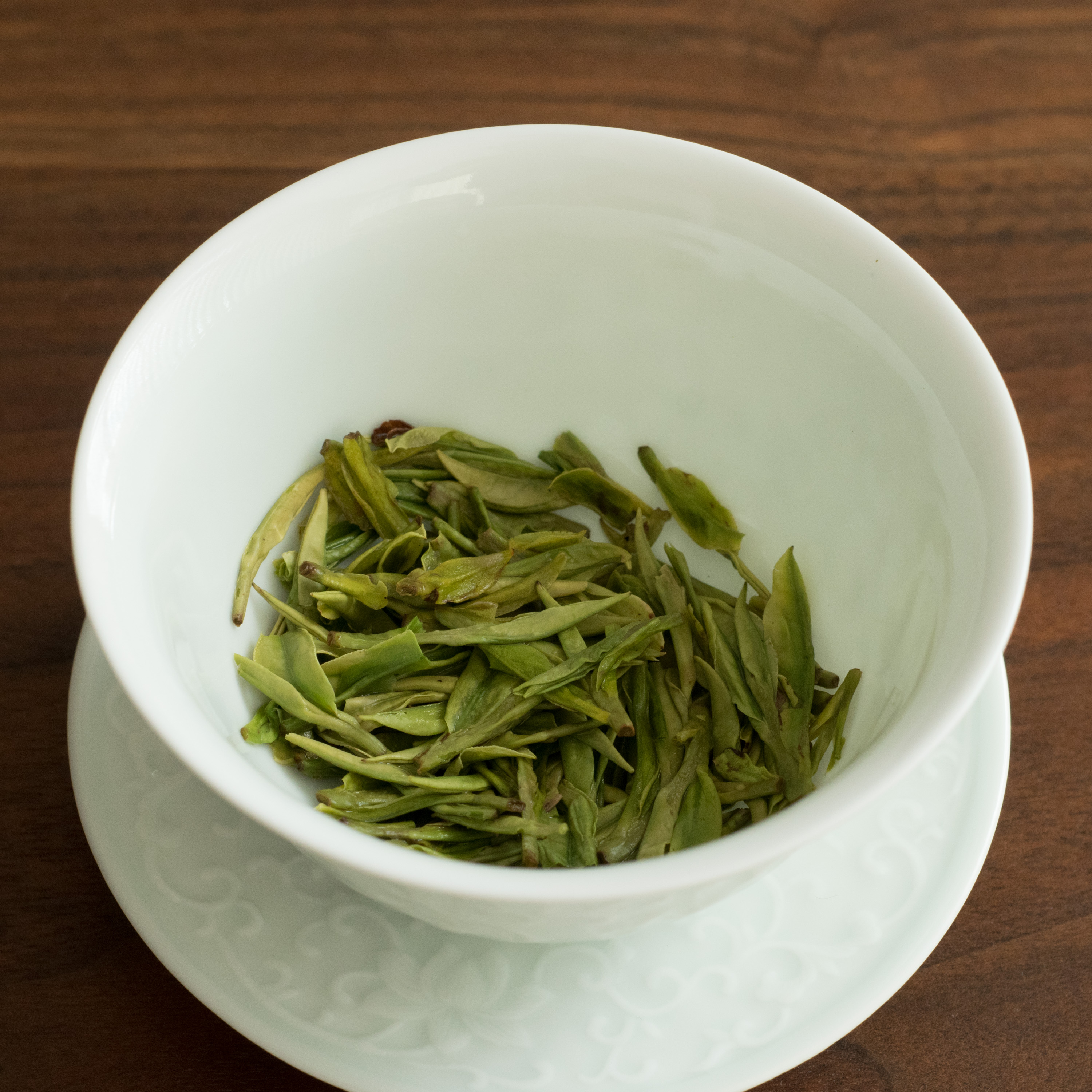
Wuniuzao belongs to the category of Chinese green tea. More specifically, public reference material usually places it in the famous-green-tea context of Wuniu in Yongjia County and nearby areas in Zhejiang, while repeatedly stressing that one of its core identities is that it is an extra-early cultivar. In practical terms, its buds often emerge noticeably earlier than those of many other common green-tea cultivars in Jiangnan. This starting point matters because it shows that Wuniuzao is not a marketing phrase retroactively attached to whichever batch of green tea happens to appear first. It begins with genuine cultivar and phenological difference, and only then becomes regionalized, commercialized, and widely circulated.
Its position inside the broader green-tea map is especially interesting. If Longjing helps many readers understand the larger route of flat-shaped pan-fired green tea, then Wuniuzao offers a version of that route that is more tightly bound to the early-spring window, more dependent on the advantage of early budding, and more obviously tied to seasonal timing. It is not just “another Zhejiang green tea,” and it is certainly not a blanket name for all flat teas sold before the main spring season begins. Its real distinction is that while many other green teas are still waiting for a safer and fuller spring flush, Wuniuzao has already moved into view because its cultivar rhythm starts earlier. Any serious article about it therefore has to explain both what kind of tea it is and why it consistently appears ahead of others.
Why is it always earlier than others? The key is not just weather, but the extra-early cultivar itself
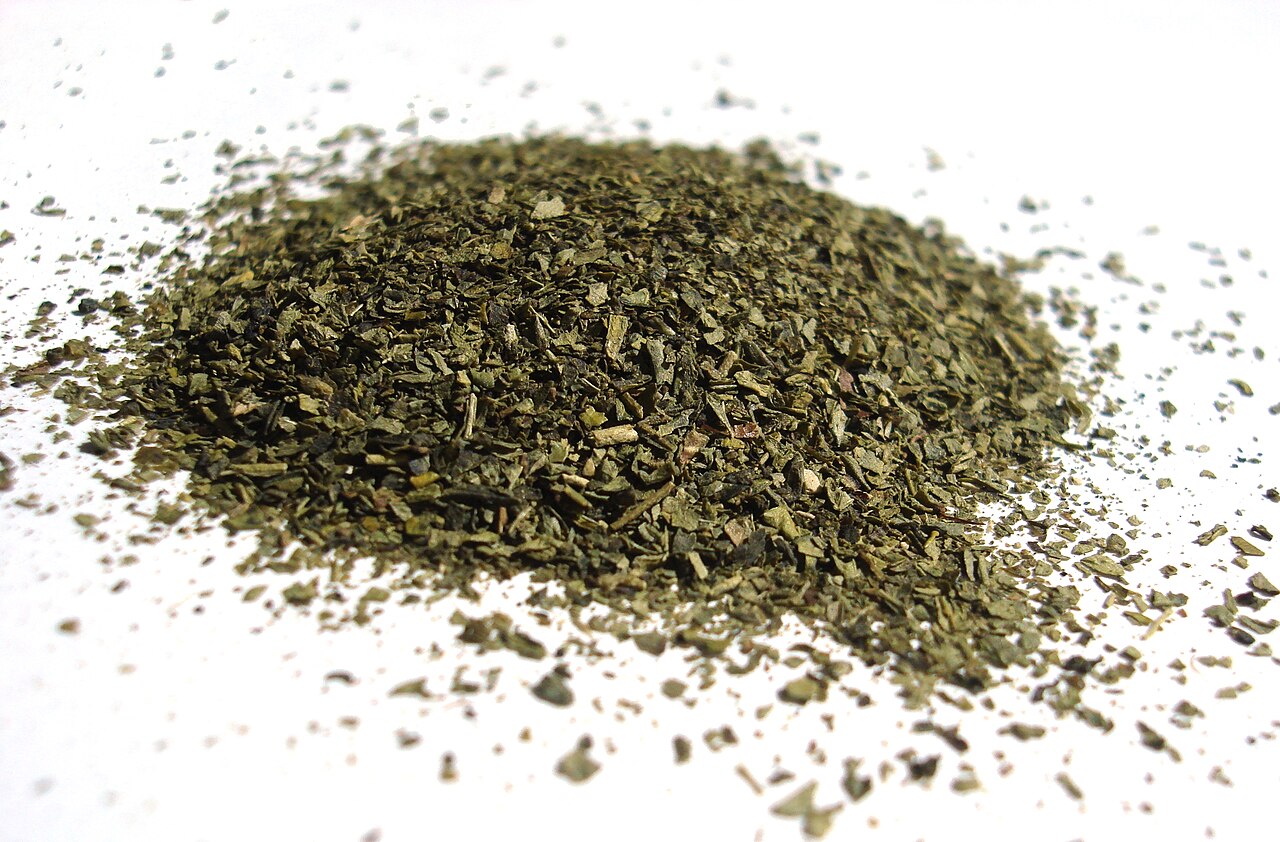
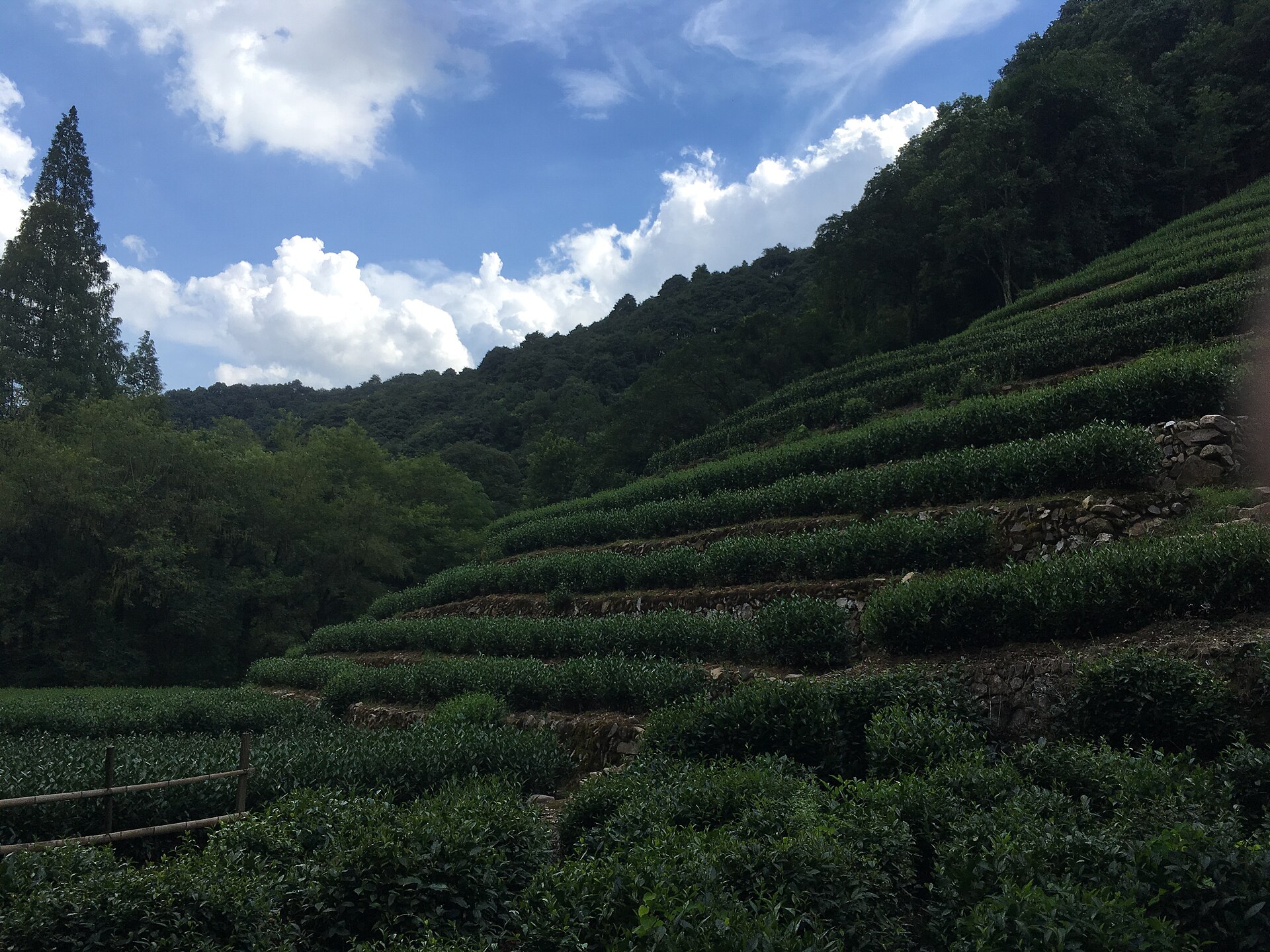
When people first hear about Wuniuzao, many assume the explanation is simply that Wenzhou is warmer, so its green tea comes to market earlier. That is only half the story. Climate certainly matters. Southern Zhejiang warms earlier at the turn from winter to spring, and that gives Wuniuzao a geographic advantage in entering the early market. But if climate is the only thing mentioned, the most important part is lost. Wuniuzao keeps returning to that extra-early position because the cultivar itself buds early. In other words, even within the same early-spring environment, different cultivars do not start on the same schedule. Wuniuzao becomes Wuniuzao because, compared with many traditional bush populations and widely planted cultivars, it simply gets moving earlier.
That cultivar advantage changes more than harvest date. It reshapes the rhythm of the whole market chain. Earlier picking means Wuniuzao can become one of the first emotional entry points into each spring tea season. Price expectations, gift buying, livestream selling, and all the talk about “the first cup of spring tea this year” begin circling around it sooner than around many others. Over time, Wuniuzao stops being only a local cultivar name and becomes one of the symbols of timing leadership in the Jiangnan green-tea market. Precisely because that symbolic layer is so strong, a serious article has to remind readers that timing is one of its values, but never its only value.
Why is Wuniuzao so often made as a flat-shaped green tea? Is that basically the same thing as Longjing?
Public descriptions of Wuniuzao often place it within the logic of flat-shaped green tea. The reason is straightforward. Its fresh leaves are tender and strongly associated with very early spring, while Zhejiang already has a mature aesthetic and processing pathway for flattened pan-fired green teas. As a result, Wuniuzao naturally entered that visual and craft system. The finished tea is often described through terms such as flat, upright, even, tender green, and glossy, while the cup is expected to feel clean, fresh, quick, and recognizably spring-like. In that sense, it does share part of the language of Longjing.
But sharing part of the language does not make them the same tea. Longjing stands on a far more layered system of regional identity, cultivar history, famous-tea prestige, and wok-aroma aesthetics tied to West Lake, Qiantang, and Yuezhou traditions. Wuniuzao, by contrast, is a tea whose identity pushes the advantage of an extra-early cultivar to the foreground within the broader flat-shaped route. Put another way, Longjing is remembered through the fullness of its established famous-tea system, while Wuniuzao is remembered through the combination of extra-early budding, early-spring market timing, and the completion of a flat-shaped green tea style. It is not enough to call Wuniuzao merely “an early tea that looks somewhat like Longjing,” because that would erase the time logic and cultivar logic that actually define it.
What does Wuniuzao usually taste like? Its strengths are quickness, freshness, and clarity, not heavy complexity
If its style has to be reduced to one short phrase, Wuniuzao is often best understood as quick, fresh, and clean. “Quick” means that its early-spring feeling, tender aroma, and fresh palate usually appear directly and early in the cup. “Fresh” means it builds much of its appeal on the lively brightness of very early buds. “Clean” means that a good Wuniuzao should not show obvious muddiness, stale heaviness, or coarse old-leaf roughness. The liquor should lean bright, smooth, and neat. In most cases, it does not win by great depth, heavy body, or long dramatic layers. It is better understood as a tea that delivers the first wave of spring into the cup as quickly and cleanly as possible.
That also determines how it should be judged. Good Wuniuzao does not need to be outrageously aromatic, and it does not need an exaggerated chestnut-note or bean-note identity to prove itself. Nor should it be forced into a fake sense of thickness. What matters most is whether the buds were tender enough, whether the heat work was clean enough, whether the liquor is bright enough, and whether the finish is clear enough. If a supposed Wuniuzao has nothing left except the selling point that it appeared early, while the cup feels woody, stuffy, grassy in the wrong way, or simply hollow behind a tender-looking surface, then it has failed to produce the part of Wuniuzao that is actually worth drinking.
Why does Wuniuzao so easily create a timing illusion? Buying earlier does not automatically mean buying better
The most interesting and most easily misunderstood thing about Wuniuzao is exactly how tightly it is tied to time. Every year, as soon as someone drinks “the first cup of spring tea,” Wuniuzao is pushed naturally to the center of the stage. This encourages a timing illusion: the earlier you get it, the more premium, rare, or delicious it must be. But tea is not only a race. Early appearance proves that it leads in phenology. It does not automatically prove that the tea is better. Whether a given lot is worth buying still depends on the picking condition, weather stability, processing pace, and final finished quality.
This matters especially for first-time buyers. Because Wuniuzao is so easily drawn into the emotional rush of “the earliest harvest,” “the first wok batch,” or “the very first spring tea on the market,” buyers tend to overvalue temporal leadership and undervalue whether the tea itself is mature enough. In the very earliest stage, if the weather is unstable, moisture conditions are inconsistent, or processing is rushed, the tea may not be as complete, as clean, or as balanced as tea made a few days later. In other words, Wuniuzao is valuable not because it is ever earlier without limit, but because it can still become a complete tea while being early. That is what makes it difficult, and what makes it worth writing about carefully.
How is it different from generic “early-spring green tea”? Not every early tea can be called Wuniuzao
In consumer language, “early-spring green tea” is often an extremely broad phrase. If a tea appears early, looks tender, and feels new, it can easily be marketed that way. But Wuniuzao should not be treated as an endlessly expandable adjective. The safer understanding is that Wuniuzao should first refer to the Wuniuzao cultivar and the related local production and processing context, whereas “early-spring green tea” is only a market description of timing. The two can overlap, but they are not interchangeable.
That means not every green tea sold in February can be pulled toward the Wuniuzao label, and not every flat-shaped tender green tea should borrow its name as a selling point. A real Wuniuzao should answer at least a few basic questions at once: is it based on the Wuniuzao cultivar, is it tied to the relevant southern Zhejiang production context, and does it actually show the early-spring tenderness and flat-shaped green tea completion associated with it? If all of that remains vague and only the word “early” is left behind, then what is really being sold is seasonal emotion rather than a specific tea.
How should Wuniuzao be brewed? Why is it the wrong kind of tea for a “steep it hard for strength” approach?
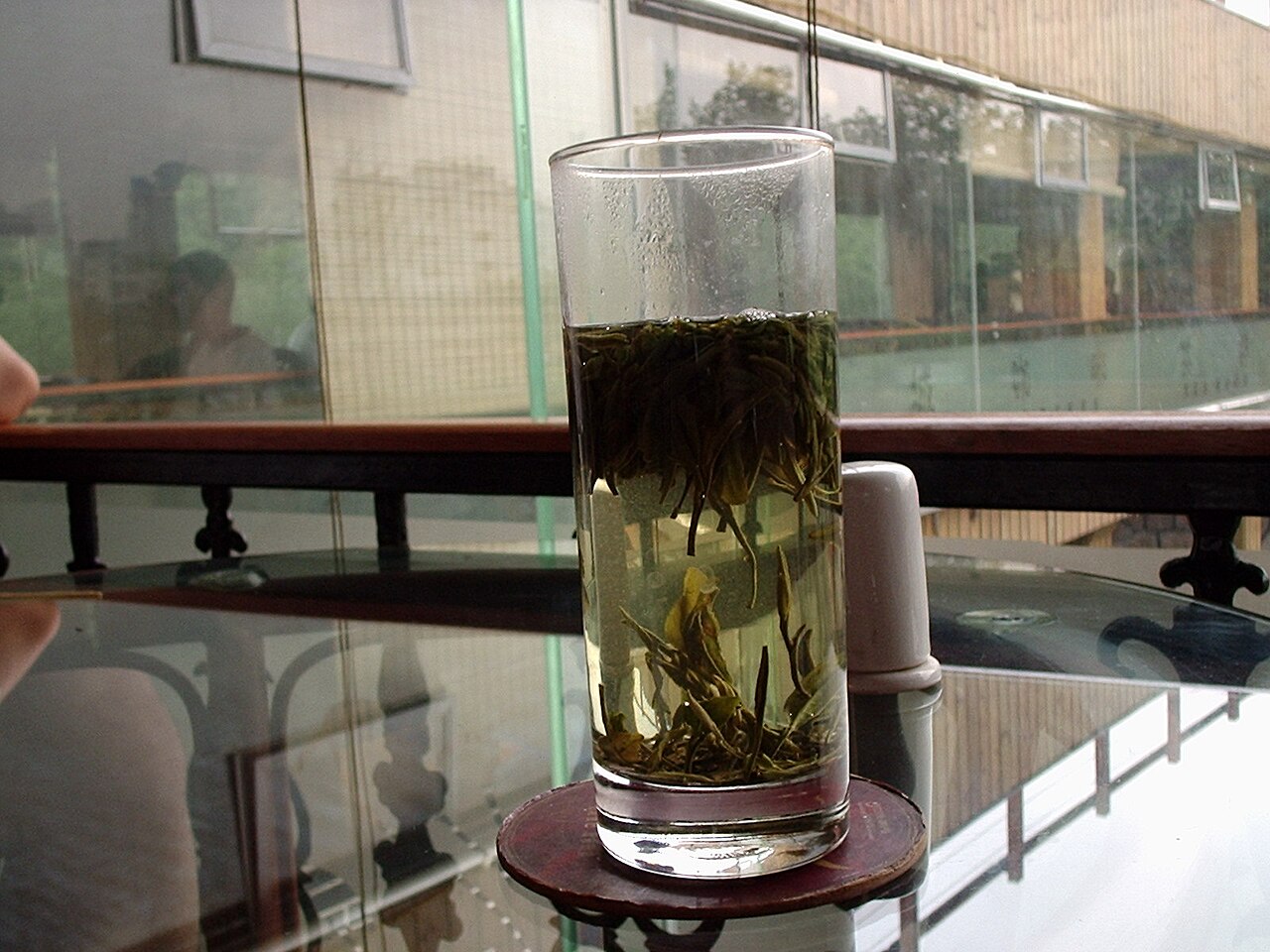
Like many tender early-spring green teas, Wuniuzao responds best to a lighter touch in a glass or gaiwan. Water temperature is usually better kept moderate, around 80°C to 85°C, because that helps preserve its freshness and tenderness. If it is hit immediately with near-boiling water and long steeps, the tea can lose the quick clean liveliness that makes it worth drinking, and the liquor can turn bitter, heavy, coarse, or awkwardly green in the wrong way. Brewed in a glass, the buds and leaves can open slowly while the drinker watches that transition from light dry leaf to bright early-spring liquor. In a gaiwan, the main advantage is control over the first few short infusions.
The real point of Wuniuzao is never to force out a very strong concentration. What it is worth drinking for is the immediate sense of newness, tenderness, freshness, and clarity, followed by a light and fairly quick returning sweetness. If it is handled too heavily in an attempt to make it perform like a denser and more weight-driven green tea, the result is usually a distortion. The more a tea depends on early-spring tenderness and timing, the more it benefits from being read with a lighter, steadier, and more restrained hand.
What are the most common mistakes when buying Wuniuzao?
The first mistake is to treat “earlier” as automatically equal to “better.” As already noted, earliness is a natural phenological advantage, not a finished quality judgment. The second mistake is to treat Wuniuzao as a lower-priced stand-in for Longjing. Although both may appear in flat-shaped green tea form, the underlying famous-tea systems, selling logic, and judgment standards are not the same. The third mistake is to look only at tenderness and appearance while ignoring whether the liquor is actually bright and clean. Many teas can look tender, but if the cup is not clear, if the heat is rough, or if the finish is muddy, then the tea has displayed “tenderness” only on the surface without truly delivering good early-spring drinking.
A fourth mistake is to let “Wuniuzao” expand into a limitless commercial label. Once every early flat green tea begins borrowing the name, readers become less able to understand what Wuniuzao really is. That is exactly why it becomes more important, not less, to return to the basics: is this actually the tea built on that extra-early cultivar, in that southern Zhejiang spring window, with that style of quick, fresh, and clean expression? Only then can Wuniuzao avoid being swallowed whole by its own time myth.
Why does Wuniuzao deserve a place in the tea section now?
Because it fills a very important angle that is easy to miss in writing about Chinese green tea. Not every famous green tea derives its central value from old prestige or heavy historical weight. Some teas matter because they sit where phenology, cultivar advantage, and market rhythm meet. Wuniuzao is exactly that kind of tea. It helps readers see that beyond Longjing, Bi Luo Chun, maofeng, and maojian — all of which are often told through more settled famous-tea narratives — there is also a green tea whose key entry point is that spring arrives in it earlier than elsewhere, yet which cannot be reduced to “earlier” alone.
More importantly, Wuniuzao naturally forms a useful contrast with the site’s existing pieces on Longjing, Bi Luo Chun, Huangshan Maofeng, and Xinyang Maojian. Once readers have those in mind, Wuniuzao makes it easier to understand that Chinese green tea can be established in very different ways: some through regional history, some through craft aesthetics, some through classic aroma-and-shape templates, and Wuniuzao through a combination of extra-early cultivar behavior, an early-spring timing window, and the completion of a flat-shaped green tea style. Adding it is not just adding one more tea name. It adds the time dimension back into the map of Chinese spring tea.
Further reading: Longjing: spring in Hangzhou, pan-fired craft, and the local life inside one cup, Why Bi Luo Chun is so closely tied to tenderness, aroma, and freshness, and Huangshan Maofeng: from Huangshan’s cloud and mist to a cup of fresh green tea.
Source references: synthesized from publicly available Chinese-language tea materials on Wuniuzao in Zhejiang Yongjia, including its local production context, extra-early cultivar identity, spring budding period, flat-shaped green tea processing traits, common sensory descriptions, and market communication around early-spring tea. This article uses a cautious factual frame: Wuniuzao is first an extra-early tea cultivar and its representative green-tea expression within the famous-green-tea context of southern Zhejiang; its earliness comes from both regional climate timing and cultivar budding behavior; and finished tea is commonly described as flat and elegant, tender green and even, with a fresh aroma and brisk taste. Specific claims about the absolute earliest harvest dates, extreme prices, or isolated promotional language are not treated here as unquestioned conclusions.