White Tea Feature
Why Shoumei is more than “cheap white tea for boiling”: from leaf ratio and daily drinking to aging potential, understanding the most underestimated branch of white tea
Shoumei is probably one of the easiest white teas to undervalue in a single sentence. In broad tea language, the most common explanation is that it contains more leaf, sits lower in the formal grade order, costs less, and is good for boiling, aging, and making old white tea. None of that is entirely invented. But if that becomes the whole definition, everything genuinely worth writing about Shoumei disappears. Because its value is not merely that it is cheaper, tougher, or more convenient. What it really represents inside white tea is a complete and very realistic route of its own: using a higher leaf proportion to build the body of the liquor, using sweetness, endurance, and day-to-day drinkability to establish presence, and then letting time amplify a transformation potential that already exists in the tea itself.
That is exactly why Shoumei deserves a dedicated page in the site’s white tea line. The site already has a broader white tea overview, along with more focused articles such as Bai Mudan and Baihao Yinzhen. Without Shoumei, readers are still likely to imagine white tea through only two exaggerated poles: either the fine, precious delicacy of Silver Needle, or the marketing mythology of old white tea and automatic age value. Shoumei fills the large and very real territory between them. It reminds readers that white tea is not worth serious attention only when it is the earliest spring bud, and not worth serious discussion only after many years in storage. In practice, the white tea that most often brings the category into daily life, repeat purchase, thermos brewing, boiling, and long-term observation is often Shoumei.
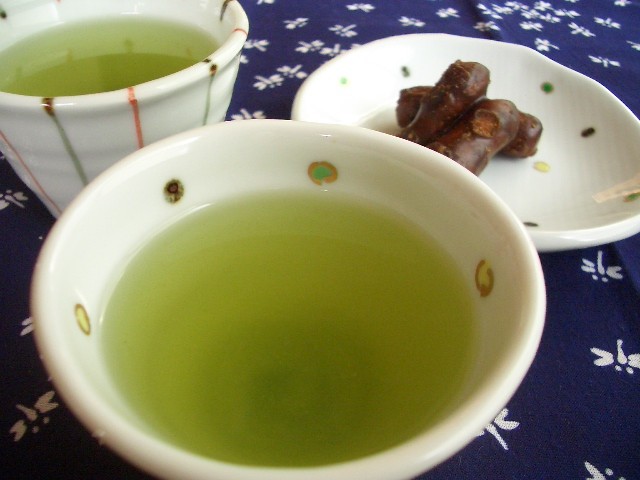
What exactly is Shoumei? Why should it not be reduced to the bottom of the white tea ladder?
At the basic level, Shoumei belongs to the Chinese white tea family, and in today’s public references and tea market it is commonly associated with the Fujian white tea world, especially areas such as Fuding, Zhenghe, Jianyang, and Songxi. Its material grade usually sits later than Baihao Yinzhen and Bai Mudan, with a visibly higher proportion of leaf and a less dominant bud presence. That is exactly why many people immediately place it into an overly simple order: Silver Needle is the finest and most expensive, Bai Mudan sits in the middle, and Shoumei is the more everyday, cheaper option. That sequence may explain some price facts, but it does not explain Shoumei’s real stylistic facts.
Inside white tea, the amount of bud does not automatically tell you how much value a tea has. More accurately, it tells you where the style is trying to place its center of gravity. Silver Needle emphasizes delicacy, clarity, downy fragrance, and lightness. Bai Mudan lets buds and leaves work together, emphasizing floral lift, layering, and a fuller but still graceful body. Shoumei shifts the center more clearly toward leaf proportion, liquor support, endurance across infusions, transformation potential, and broad daily drinkability. In that sense, Shoumei is not the leftover part of the white tea sequence. It is one very clearly defined end of the white tea spectrum. It does not exist to serve as the secondary version of higher-grade white tea. It follows another valid logic entirely: not winning through extreme tenderness, but through completeness, stability, sweetness, and durability.
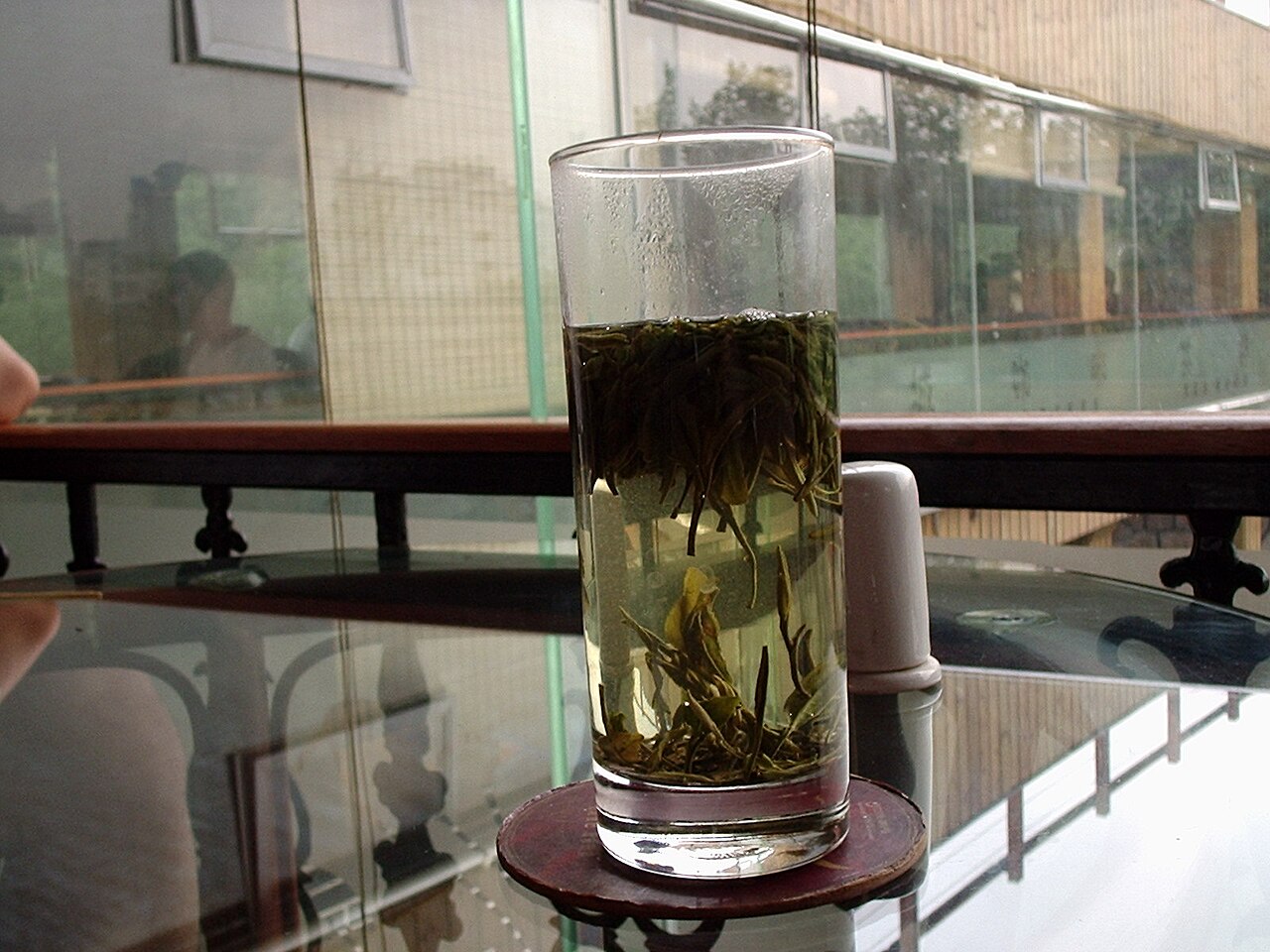
Why does leaf proportion matter so much? What does “more leaf” really mean in Shoumei?
The most commonly mentioned external feature of Shoumei is its higher leaf proportion. That matters not because it provides an easy visual label, but because it directly rewrites where white tea places its weight in the cup. White tea is already a low-intervention family. It does not rely on strong rolling, obvious roast, or overt fermentation to build its main line. That means the composition of the raw material gets amplified in the finished result. Bud-heavy teas often move toward lightness, fineness, freshness, and delicacy. Teas with more leaf are more likely to build a clearer body, more obvious infusion endurance, and a steadier sweetness and leafy-herbal rhythm in later stages of the session.
But “more leaf” never automatically means “coarser tea.” This is one of the most important misunderstandings to correct. Truly well-made Shoumei is not a category that lowers standards and hides behind affordability. It still has to get the essential things right: cleanliness, naturalness, smoothness, sweetness, and a finish that holds together. If a Shoumei tastes rough, empty, thin, or green-muddled, that is not the fault of the Shoumei route itself. It is a problem of raw material and process completion. Leaf proportion is a direction, not an excuse.
How is Shoumei really different from Silver Needle and Bai Mudan? Why is it not just “Bai Mudan with fewer buds”?
If Shoumei is understood only as Bai Mudan with fewer buds, then the structure of white tea gets flattened immediately. The differences among Baihao Yinzhen, Bai Mudan, and Shoumei are not just differences in bud-to-leaf ratio. They are differences in the tea’s whole stylistic goal. Silver Needle focuses on fineness, clarity, downy fragrance, and lightness in a single-bud world. Bai Mudan allows buds and leaves to work together, creating a style where floral aroma, bud fragrance, clean sweetness, and a fairly complete body can balance one another. Shoumei more clearly gives the center of attention to the structure created by leaf material, to endurance across infusions, to sustained release, and to later directions such as honeyed sweetness, woodier texture, jujube-like notes, or herbal maturity.
In other words, Shoumei is not a reduced Bai Mudan. It is another clearly aimed way of writing white tea. And one of the most useful things about it is that it pulls white tea out of the narrow imagination of premium fine buds. Many people understand white tea more fully for the first time not through Silver Needle, but through Shoumei. It is easier to feel what it means for white tea to have real content in the cup, what it means for a new tea already to show sweetness and body, and what it means for the position of aroma to shift over time while the basic structure still holds. It relies less on abstract subtlety and more on a kind of total completion that can be repeatedly experienced.
Why does Shoumei enter everyday drinking so easily?
Because it is naturally good at daily life. Compared with Silver Needle, Shoumei usually has a friendlier price threshold, better endurance across infusions, and greater tolerance toward different brewing methods. Compared with some younger Bai Mudan styles that depend more on floral lift and finer detail, it is also more likely to stand up in office mug brewing, thermos brewing, large-pot home brewing, shared drinking, and later boiling. That does not mean it is only suitable for casual drinking. It means it is especially good at bringing white tea back into the rhythm of ordinary life. It is not as often confined to the frame of “serious one-time tasting” like Silver Needle, and it does not need to depend entirely on age storytelling the way some market-facing old white tea products do. Good Shoumei can prove itself in ordinary settings: the aroma is natural, the liquor is sweet and smooth, the later part of the session stays stable, and the drinker feels comfortable at the end.
This is also the point at which Shoumei is most easily underestimated. Many people assume that the more everyday a tea is, the less worthy it is of serious discussion, as if only rare, expensive, delicate, or highly complex teas deserve a full article. In reality the opposite is often true. A tea that can be repeatedly drunk, can survive different situations, and can still remain readable both as a new tea and as an older tea is often even more worth writing about. Shoumei is not a side page in the white tea system. It may be one of the best pages for explaining how white tea moves from knowledge into lived habit.

What does new Shoumei actually offer in the cup? Why should it not be treated as unfinished future old tea?
This is one of the most neglected layers of Shoumei. Because the discourse around old white tea is so strong, many people hear “Shoumei” and immediately think of compressed cakes, boiling, mature aroma, medicinal notes, jujube-like sweetness, age statements, and collecting. As a result, new Shoumei is treated as if it were simply a half-finished material waiting to become old tea. That is a real loss. Good new Shoumei already has a very clear and persuasive drinking value of its own. It often carries the clean sweetness, light herbal-woody freshness, soft downy texture, and a more grounded liquor outline than Silver Needle, and in many cases a more stable body than some finer Bai Mudan examples. It may not win through overt floral perfume, but over several infusions it can deliver sustained sweetness and a very steady finish.
And precisely because its leaf proportion is higher, new Shoumei often has more content than readers expect. It should not be only a thin layer of pale freshness, and it should not remain a vague “healthy but light” impression. Good new Shoumei should feel lively, clear, moist, and structurally present, with a relatively stable back end. Its appeal as a new tea is not extreme delicacy, but naturalness, repeatability, and honesty. To treat Shoumei only as raw material for future old tea is to give away half of its most convincing value in the present.
Why is Shoumei so tightly linked to “old white tea”? Is it really better suited to aging?
Shoumei really does enter discussions of aging more easily than many finer white teas, and that is not baseless. The reason is practical: it has a higher leaf proportion, a broader internal structure, and, when properly made and dried, often a better ability to absorb the movement of time without collapsing. When stored well, some Shoumei moves from the clean sweetness and light herbal feel of the new-tea phase toward something rounder, deeper, softer, more honeyed, woodier, and in some cases toward the jujube-like, medicinal, or mature aromas that people strongly associate with old white tea. That is why so much of the “old white tea” narrative eventually lands on Shoumei.
But being easier to discuss in aging terms does not mean it naturally becomes better with age no matter what. This boundary has to be stated very clearly. Whether Shoumei transforms well still depends on solid raw material, clean withering and drying, proper moisture control, and stable storage without intrusive odors. Time can only amplify what the tea already possesses. It cannot teach the tea what it failed to learn at the start. If a Shoumei is already green-muddled, stuffy, sour, empty, or insufficiently dried as a new tea, later years are just as likely to enlarge those weaknesses as to create depth. Shoumei is suitable for aging, but aging is not an automatic success program. Shoumei often becomes old white tea, but “old” never automatically means “good.”
Why is Shoumei especially suitable for boiling? And why is “good for boiling” still not the highest praise?
It is true that Shoumei often suits boiling very well, and that fact has real practical meaning. A higher leaf proportion, a broader structure, and, in some rested examples, a more obvious sweet-smooth texture all make it easier for the tea to release a rounded, warming, soft, and glutinous quality under sustained heat. Especially in autumn and winter, in shared settings, around the stove, or in home warming-drink situations, Shoumei often works beautifully. That is one reason it is repeatedly pulled into the role of an ideal boiling white tea.
But this must also be said clearly: being suitable for boiling does not mean that boiling is its only value, or that any tea that turns darker, sweeter, and stronger under boiling is therefore automatically superior. Many teas can be boiled into “having flavor.” What is actually difficult is remaining clean, smooth, and free of muddiness or stale heaviness after boiling, with sweetness that is not just flat sugary density but still carries layers of white tea character. In other words, boiling is one scene Shoumei often handles well. It is not the only aesthetic standard it must meet. A good Shoumei should first stand up in ordinary brewing, and then continue to stand up in boiling. If a Shoumei only seems to gain presence when boiled very hard, that may not be a strength at all. It may mean that in finer reading through normal infusions, the tea is not complete enough.
How do you tell whether a Shoumei is sweet, smooth, and durable, or simply thicker but stuffy?
The most useful way to judge Shoumei is not to begin with age, but with a few very plain cup signals. First, ask whether the aroma is clean. Whether new or somewhat rested, Shoumei should not smell muddy, stuffy, sour, or heavily storage-marked. A new tea may show light herbal freshness, downy sweetness, or clean sweet scent; a transformed tea may become deeper, woodier, or more honeyed, but in all cases the basic requirement is cleanliness. Second, ask whether the liquor is smooth. Good Shoumei may have more presence than Silver Needle, but that presence should feel moist and easy rather than rough, blocking, or aggressively drying. Third, ask whether the later infusions still stand up. Many teas that initially seem “very old white tea-like” are only propped up by warmth and front-loaded thickness, then quickly collapse into dullness and dryness later. Those are worth treating with caution.
Another point people often miss is the nature of sweetness itself. The sweetness in Shoumei should not be only concentration-created sweetness. It should be a natural returning sweetness that comes together with the body of the liquor, a sense of throat relaxation, and a slight mouth-watering response. If there is only sweetness without freshness, activity, and a clean finish, that usually does not count as a truly mature good state. The best Shoumei is not most attractive because it is “heavier” than other white teas. It is attractive because even while being more present, it still keeps the clear boundary that white tea should have.
What are the easiest buying mistakes with Shoumei?
The first mistake is to treat affordability as the whole meaning of Shoumei. That leads many buyers not to judge raw material, processing, or storage at all. They simply assume that because the tea is meant for boiling, small defects do not matter. That is one of the worst ways to buy it. Shoumei is actually very good at magnifying problems: rough raw material, incomplete drying, and off storage do not disappear in it. They often become more obvious later. The second mistake is the reverse one: treating every Shoumei as a potential old white tea investment, and assuming that once a tea has an age statement or is pressed into a cake it automatically becomes more valuable. In reality, age is information, not quality itself.
The third mistake is to treat terms such as jujube aroma or medicinal aroma as automatic positive proof. Such notes can indeed appear in some Shoumei samples, but if a tea has only those labels while the cup lacks cleanliness, liveliness, and smoothness, then the labels mean very little. The fourth mistake comes from market language piling up too many claims at once: high mountain, wild, old tree, sun-dried, aged, old white tea, private reserve, rare collection, ten years, medicinal aroma. Any of those may make sense in a specific case, but once they are stacked indiscriminately onto one tea, the reader should return to the simplest question: does it actually drink cleanly, smoothly, naturally sweetly, and with a finish that still holds? Shoumei is not a tea that wins through story. It wins through completion.


Why does Shoumei deserve its own article in the white tea section?
Because it fills the part of white tea structure that is most often simplified by the market and yet is actually one of the most important. If one writes only Silver Needle, white tea starts to look like a premium fine-bud category. If one writes only old white tea mythology, white tea starts to look like a game of age statements and storage logic. Shoumei stands exactly between those distortions and brings white tea back to a fuller, more testable route: different raw material creates different style; changing leaf proportion changes drinking context; new tea has its own value, and later transformation has its own value, but both depend on the tea already being correctly made in the present.
More importantly, this subject is naturally well suited to a tightly aligned bilingual treatment. One of the most common misunderstandings among English-language readers is to treat Shoumei as lower-grade white tea mainly used for aging or boiling. That description is not wholly false, but it is nowhere near enough. Once the Chinese article has made Shoumei’s actual position clear, the English article can stay strictly on the same spine: why it is not simply lower white tea, why it serves as an important bridge between daily drinking and later transformation inside the white tea system, and why it must first succeed as a tea worth drinking now before one can seriously discuss whether it will become better old tea later. For a bilingual site, that is extremely useful, because the article does not merely add one more name. It makes the whole white tea line more complete.