White Tea Feature
Why Bai Mudan Best Represents White Tea Balance: from one bud with one or two leaves, Fuding and Zhenghe, to the full structure between floral aroma, bud fragrance, and aging potential
If Silver Needle represents the finest, lightest, and most easily mythologized end of white tea, and Shoumei represents the more everyday, more boilable, and more obviously age-friendly end, then Bai Mudan often stands between them as the tea that makes white tea easiest to understand as a whole. It still has buds, so it does not move immediately toward the leaf-heavy logic of Shoumei. But it also has leaves, so it does not compress every judgment into the extremely light and delicate single-bud world of Silver Needle. That is why many experienced drinkers treat Bai Mudan as the most complete branch of white tea: it shows the bud fragrance, freshness, floral lift, and soft sweetness associated with white tea, while also developing more visible layering, body, and later-stage potential through the presence of young leaves.
Yet in broad tea language, Bai Mudan is also one of the easiest white teas to flatten. Some people reduce it to “white tea one grade below Silver Needle,” as if it were simply the less expensive fallback after premium buds. Others treat it as a transitional product that has not yet reached the leaf-driven, storage-friendly, boilable world of Shoumei. Both readings are too narrow. What really matters is that Bai Mudan is not just the middle option within white tea. It is often the tea that best reveals how bud-and-leaf proportion, aroma development, liquor structure, and aging potential work together in one coherent white tea. It is not a compromise between two extremes. In many ways, it is the cup with the strongest explanatory power.
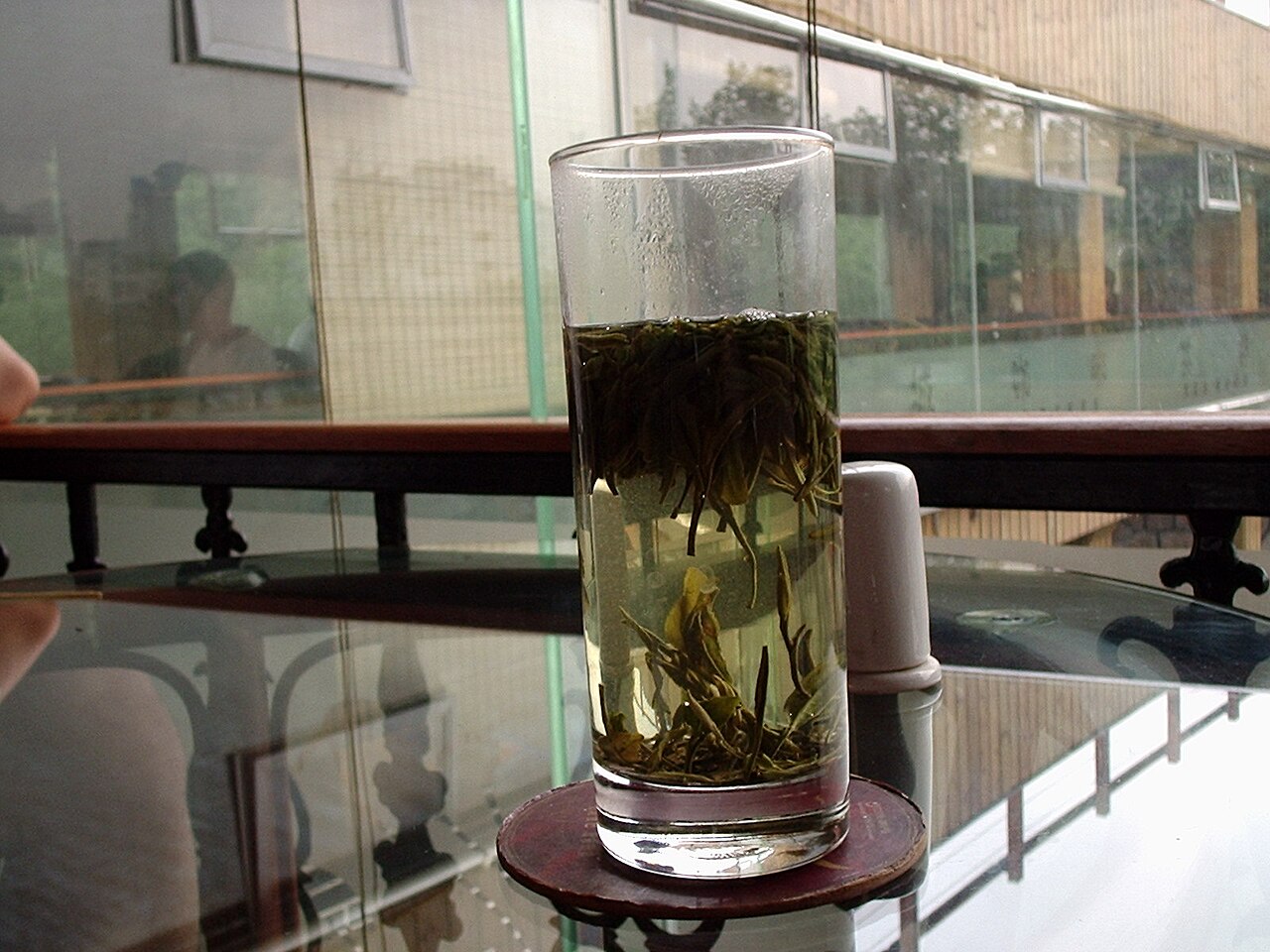
What exactly is Bai Mudan, and why is it so often treated as the most structurally complete white tea?
Bai Mudan belongs to the category of Chinese white tea, and its picking standard usually centers on one bud with one or two leaves. Unlike Silver Needle, which is built mainly from single buds, Bai Mudan is defined by the simultaneous presence of bud and leaf. That may sound like a small technical difference, but in the cup it changes everything. White tea does not rely on aggressive pan-firing, rolling, or strong finishing fire to create shape and flavor in the way many other tea families do. Because of that, changes in raw material composition have an especially direct effect on the finished tea. Once leaves enter alongside buds, the tea's entire center of gravity shifts.
That is precisely why Bai Mudan makes such a useful anchor within white tea. Silver Needle can be stunning, but it is so light and so delicate that beginners often misread white tea as a category in which refinement simply means thinner, finer, and more expensive. Shoumei, by contrast, is often dragged quickly into the discourse of everyday drinking, boiling, age, and compressed storage. Bai Mudan sits in a position where the whole map becomes easier to read. It still keeps the freshness, bud aroma, floral lift, and soft sweetness expected from white tea, but it also begins to show a fuller progression, clearer body, and a more visible internal structure. If the goal is to understand why white tea is more than a category built on age slogans, Bai Mudan is often easier to read than either extreme.
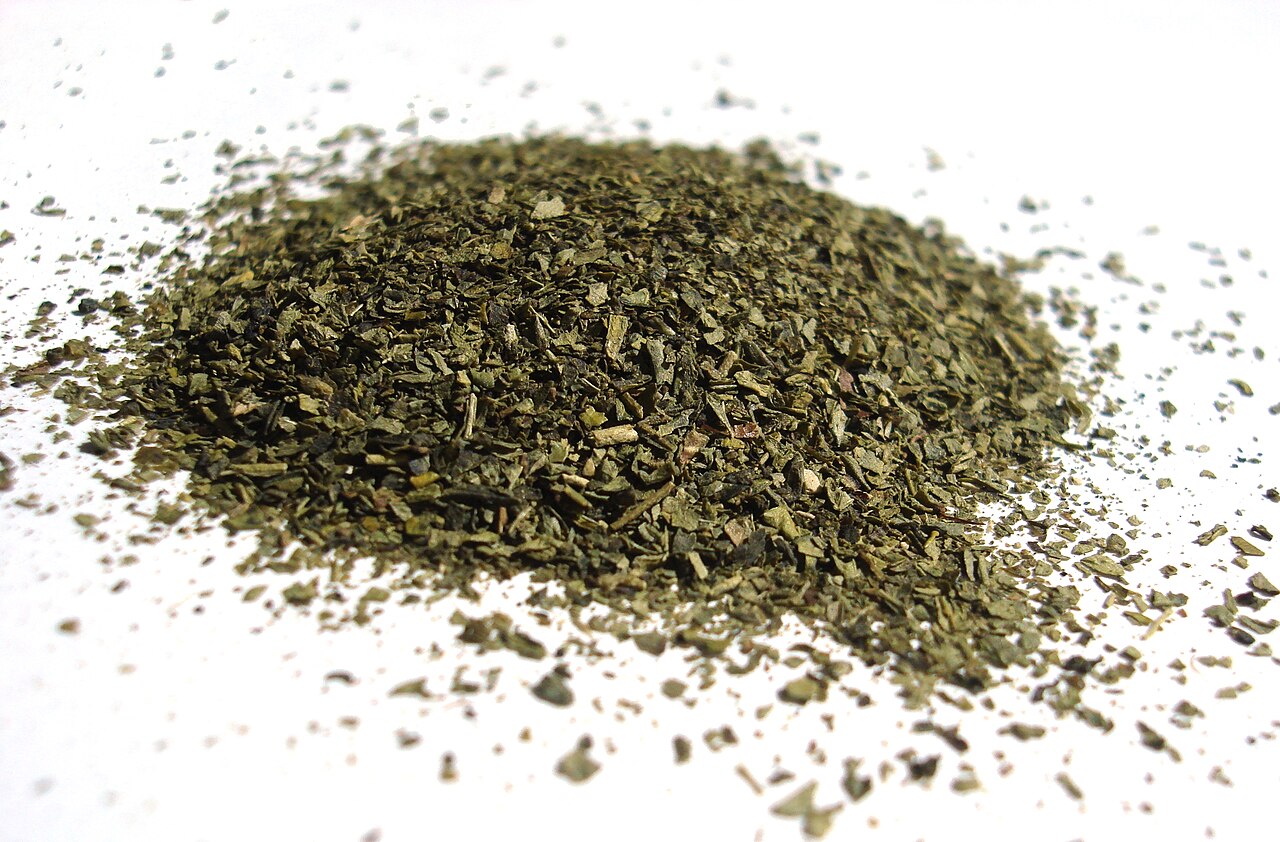
Why is it called Bai Mudan, or White Peony? What is the shape actually telling us?
The name itself is strongly visual. With buds connected to opening leaves, the finished tea is often described as resembling a flower in partial bloom, which is why the peony image became attached to it. Of course there is some traditional poetic naming at work here, but the idea is not empty decoration. Unlike Silver Needle, whose form directs attention almost entirely toward single-bud straightness and down, Bai Mudan tells you from the start that this is not a tea built on buds alone. Its identity depends on how bud and leaf hold the shape together.
That means the useful question is not whether the tea literally resembles a peony blossom. The useful question is whether the buds and leaves sit in a believable and orderly relationship. Are the buds intact? Are the leaves young, whole, and naturally attached? Does the dry leaf color look clean, coordinated, and plausible? Good Bai Mudan should feel natural without looking messy. It should remain open and relaxed, but not loose or careless. That “natural but still ordered” quality says a great deal about the tea's actual finish.
Why are Fuding and Zhenghe equally important to Bai Mudan?
As with white tea more broadly, any serious discussion of Bai Mudan quickly returns to Fujian, especially to Fuding and Zhenghe. These two places are often mentioned together not because they are interchangeable, but because together they form the most important geographic and stylistic frame for understanding white tea. Fuding carries stronger name recognition in the wider market, and for many consumers “Fuding white tea” functions almost as a shorthand for white tea itself. Zhenghe, however, remains crucial in more detailed tea discussion, especially when people start talking about mountain environment, cultivar background, and styles that feel a little deeper, steadier, or more inward.
Bai Mudan makes those differences especially legible. Because it is neither a pure single-bud tea nor a more leaf-driven tea, it often reveals origin through a broader range of cues. Some examples feel more floral, sweeter, brighter, and more lifted. Others feel firmer, more grounded, and more integrated through the middle of the cup. Bai Mudan is therefore a strong reminder that white tea is not a vague ageable category that floats free of place. Even in a low-intervention tea, mountain context, climate, leaf material, and local processing habits remain decisive. White tea may look quiet, but it is still deeply honest about where it comes from.
How is Bai Mudan really different from Silver Needle and Shoumei? Why is it not just a middle grade?
The laziest explanation is to put the three on a simple line: Silver Needle at the top, Bai Mudan in the middle, Shoumei as the more ordinary tea. That ranking can explain some aspects of price and scarcity, but it does not explain white tea very well. Because the real difference is not only the amount of bud versus leaf. Each tea represents a different aesthetic center within white tea.
Silver Needle emphasizes fineness, cleanliness, freshness, and delicacy through single buds. Shoumei emphasizes higher leaf ratio, broader everyday use, and easier movement into stronger extraction, boiling, and later aging contexts. Bai Mudan sits between them, but not as a compromise. What makes it special is that it keeps enough bud material to preserve white tea freshness, downy sweetness, and aromatic lift, while also introducing enough leaf structure to create clearer layering, more obvious body, and a stronger sense of progression in the cup. In other words, Bai Mudan is not simply the middle tier of white tea. It is often the tea that most clearly shows how white tea can be both graceful and structurally complete at once.
Why do so many drinkers eventually make Bai Mudan their most frequently repurchased white tea?
Because it is unusually good at balancing serious drinking and everyday drinking. Silver Needle can be exquisite, but its price, rarity, and extreme lightness mean it is not always the white tea people most often choose for repeated daily purchase. Shoumei can be deeply satisfying and very practical, but it can also pull the whole white tea category too quickly toward the language of boiling, storage, and mature flavor. Bai Mudan fills the space in between. It is clearly a white tea, clearly worth close attention, but also broad enough in structure to work well beyond highly formal tasting.
That repeatability is not just about price. It is about shape of experience. Bai Mudan gives floral aroma, bud fragrance, and sweet freshness without forcing every judgment into the finest possible differences, as Silver Needle often does. At the same time, it can develop over time without making later transformation the only story. It offers a rare kind of completeness inside white tea: new tea already matters, aging can be meaningful, and daily drinking still feels natural.
What should one be looking for in new Bai Mudan? Why is its floral layering often easier to read than Silver Needle's?
One of the most attractive things about fresh Bai Mudan is its floral lift and soft sweetness. Because it contains both buds and young leaves, it often develops a more explicit aromatic layering than Silver Needle. Alongside the fresh bud fragrance and soft sweetness expected from white tea, good Bai Mudan can also show clearer floral notes, young-leaf character, and a gentle herbal-green sweetness. This floral dimension is not like the dramatic room-filling perfume of some oolongs. It is more like a soft expansion built on top of white tea's own clean sweet base. It does not need to be exaggerated in order to be persuasive.
At the same time, new Bai Mudan usually has more body than many people expect. It still belongs firmly to the white tea family and will not resemble a heavily roasted oolong or a strong black tea. But if the material and processing are sound, it should never collapse into mere flavored water. Good new Bai Mudan should have a clear entry, a soft but continuous liquor, a natural returning sweetness, and a clean finish. Its best quality is often exactly this: light but not empty, aromatic but not floating, sweet but not sticky. That is one reason many beginners find it easier than Silver Needle as an entrance to white tea. It is more legible without becoming simple.
Is Bai Mudan suitable for aging? Why do many drinkers see it as easier to store than Silver Needle and more detailed than Shoumei?
In actual tea practice, Bai Mudan is often treated as a very good white tea for watching over time. The reason is straightforward. Compared with Silver Needle, it contains more leaf, so its internal structure is often broader and its later development can feel more stable. Compared with Shoumei, it still keeps more obvious bud participation, so even after some transformation it can preserve finer aromatic lines and more visible detail. For many drinkers, it becomes the natural white tea to buy when they want something enjoyable as a new tea but also worth following over time.
But that does not mean Bai Mudan is naturally “more valuable the older it gets.” Like all white tea, its future depends first on the quality of the starting material, the cleanliness of the making, the final moisture control, and the health of storage. Time is an amplifier, not a repair mechanism. The mature way to say it is simple: Bai Mudan has real aging potential, but potential is not a promise, and age is not an inspection-free label. If a tea is already stuffy, sour, or hollow in its youth, later years are unlikely to save it.
Why does Bai Mudan help people understand that white tea is not built only on age?
Because Bai Mudan is already structurally complete in its new-tea phase. Silver Needle is easily pulled toward the image of premium fine buds. Shoumei is easily pulled toward the image of old white tea, boiling, and storage. Bai Mudan naturally stands where both early-stage and later-stage white tea can be seen together. As a new tea it already shows floral lift, bud fragrance, sweetness, leaf character, and body. With some time, it may grow rounder, steadier, and more inward. It therefore offers one of the clearest answers to the mistaken idea that white tea matters mainly after aging.
That also makes it one of the best white teas for introduction and education. It is not so subtle that beginners mistake it for “tea with almost no taste,” and it is not so obviously oriented toward boiling and old-tea imagination that white tea gets reduced to a storage project. Bai Mudan shows that white tea already has complete content as a new tea, and that later change is an extension of that content, not the only valid destination.
How should Bai Mudan be brewed? Why is it more tolerant than Silver Needle but still unsuited to rough handling?
Bai Mudan is usually excellent in a gaiwan. A stable starting point is often around 4 to 5 grams for 100 to 120 ml of water, with water around 90°C to 95°C, short early infusions, and gradual extension afterward. Because it includes both buds and leaves, it is a little more tolerant than Silver Needle. It usually does not collapse immediately just because the water is slightly hotter or the extraction slightly fuller. But that extra tolerance should not be confused with a license for rough brewing. Bai Mudan's most interesting qualities still lie in the detailed balance among floral aroma, bud fragrance, sweetness, and liquor structure. Overlong stewing flattens that balance and turns the tea dull, stuffy, or coarse.
It also works in a glass, especially for easy everyday drinking and for watching the leaves open. In that context the emphasis shifts toward direct sweetness and drinkability rather than close comparison. A gaiwan, by contrast, makes it easier to compare origins, grades, and different stages of age. For slightly rested, structurally sound Bai Mudan, water can be pushed more fully. But the real judgment should never be only whether the tea is strong enough. The better questions are whether the aroma remains clean, whether the floral notes feel natural, whether sweetness keeps up, whether the leaves give the liquor real support, and whether the finish closes properly.
What are the easiest buying mistakes with Bai Mudan?
The first is to treat it as “budget Silver Needle.” Once that assumption is fixed, all later judgment goes wrong. The buyer keeps staring at how many buds appear and how white the down looks, while missing the actual center of Bai Mudan: bud-leaf ratio, aromatic development, liquor structure, and overall completeness. The second mistake is the reverse one: treating it as a not-yet-Shoumei transitional tea whose real value only appears later. That undervalues Bai Mudan as a new tea and makes it seem as if aging were the only serious reason to buy it. The third mistake is to oversell its floral notes. Bai Mudan certainly often carries floral lift, but floral does not mean perfumed in an artificial or free-floating way. In strong examples, floral aroma stays attached to white tea's own sweet, downy structure rather than hovering separately over the cup.
The more practical buying method returns to fundamentals: is the origin clearly stated, is the grade understandable, is the tea new or somewhat aged, do the dry leaves look natural and clean, does the bud-and-leaf shape make sense, and once brewed, do aroma and liquor stay connected? Bai Mudan is a tea of balance, so no single label is enough. The more a product relies on stacked phrases like floral, aged, high mountain, wild, or special old-garden language, the more useful it becomes to step back and ask whether the tea itself is actually coherent.

Why does Bai Mudan deserve a standalone article in the white tea section?
Because it functions like a hinge inside the white tea system. Any general article on white tea has to mention it, but if Bai Mudan remains only a passing middle term between Silver Needle and Shoumei, readers are left with a distorted map in which white tea seems to have only two poles: refined premium buds on one side and boilable age-worthy leaf tea on the other. Bai Mudan connects those lines and shows that white tea unfolds across a fuller spectrum. It helps readers see that what matters is not just simple rank, but how bud-and-leaf proportion changes aromatic focus, liquor structure, and drinking context.
It is also naturally well suited to bilingual treatment. In Chinese tea culture, Bai Mudan is longstanding and important, yet often overshadowed by the prestige of Silver Needle and the popularity of aged Shoumei. In English, White Peony is also one of the easiest white teas through which to explain what white tea is beyond Silver Needle. As long as both language versions stay on the same central spine—why Bai Mudan represents white tea balance, why it is not simply a middle grade, and why it matters both as a new tea and as a tea worth following over time—the article can serve both Chinese tea knowledge and English-language understanding without splitting into two unrelated essays.