Green Tea Feature
Mengding Ganlu: why it matters as a key entry into China’s curled green tea tradition, from Mengshan, early spring buds, and a cup built on freshness and returning sweetness
If Longjing makes it easy to imagine Chinese green tea as a world of flattened leaves, wok-shaped aroma, and restrained clarity, then Mengding Ganlu opens the map in another direction. It is not one of those tea names endlessly recycled through generic national prestige slogans, yet it remains firmly inside the core system of famous Chinese green teas. Many first-time readers know only a few tags: Sichuan, Mengshan, historical famous tea, Ganlu, tender buds. But once you really drink through it, its importance becomes clearer. Mengding Ganlu is not simply “another famous green tea.” It helps explain that Chinese green tea is not a single flavor world. Beyond the flattened Longjing route, there is also a classical direction built on fine spring material, curled leaf shape, a fresh yet rounded liquor, and a returning sweetness that keeps developing after the swallow.
It also deserves a full article because it is easy to describe too vaguely. Some people reduce it to “a high-mountain green tea from Sichuan.” That is true, but too empty. Others present it only as an old tribute tea, which turns it into a historical label more than a living cup. And because the name includes the idea of “sweet dew,” some readers assume it must be especially soft, especially sweet, and almost without structure. That is already a mistake. What actually makes Mengding Ganlu work is its Mengshan context, early spring fine picking, curled green-tea craft, aroma that is fresh without floating away, liquor that is rounded without becoming stuffy, and a returning sweetness that unfolds step by step after drinking. It is not a tea that wins only by lightness, and not one that needs history alone to justify itself. It is a mature and stable line within Chinese green tea that is often underexplained today.
What kind of tea is Mengding Ganlu? Where does it sit inside Chinese green tea?
Mengding Ganlu belongs to the category of Chinese green tea. More specifically, it is one of the historically important curled famous green teas, usually tied to the tea culture and production tradition around Mengshan in today’s Ya’an, Sichuan. For many readers, establishing that place in the map matters first. When people think of Chinese green tea, the names that come up most easily are often Longjing, Bi Luo Chun, Huangshan Maofeng, or Xinyang Maojian. Mengding Ganlu belongs to the same broad category, but it is not just an interchangeable alternative. It has a very clear stylistic identity. It is not built on the flattened pan-fired aesthetic of Longjing, and it is not identical to the especially floral, highly animated curled style of Bi Luo Chun. Mengding Ganlu is more about a balance of tight curl, fineness, freshness, roundness, and returning sweetness.
That is exactly why it deserves a place in the tea section. Without it, readers can end up understanding Chinese green tea too narrowly through Jiangnan-centered examples, as if major famous green teas all emerged from similar eastern or southeastern settings. Mengding Ganlu reminds readers that Sichuan is not a side note but a historically meaningful tea region; and that green tea is not limited to a few visual styles such as flat leaves, straight strips, or obvious fuzz. It also includes a mature route built on curled shaping, fresh rounded liquor, and a mountain-spring context.
Why does “Mengding” matter so much? Mengshan is more than a location tag
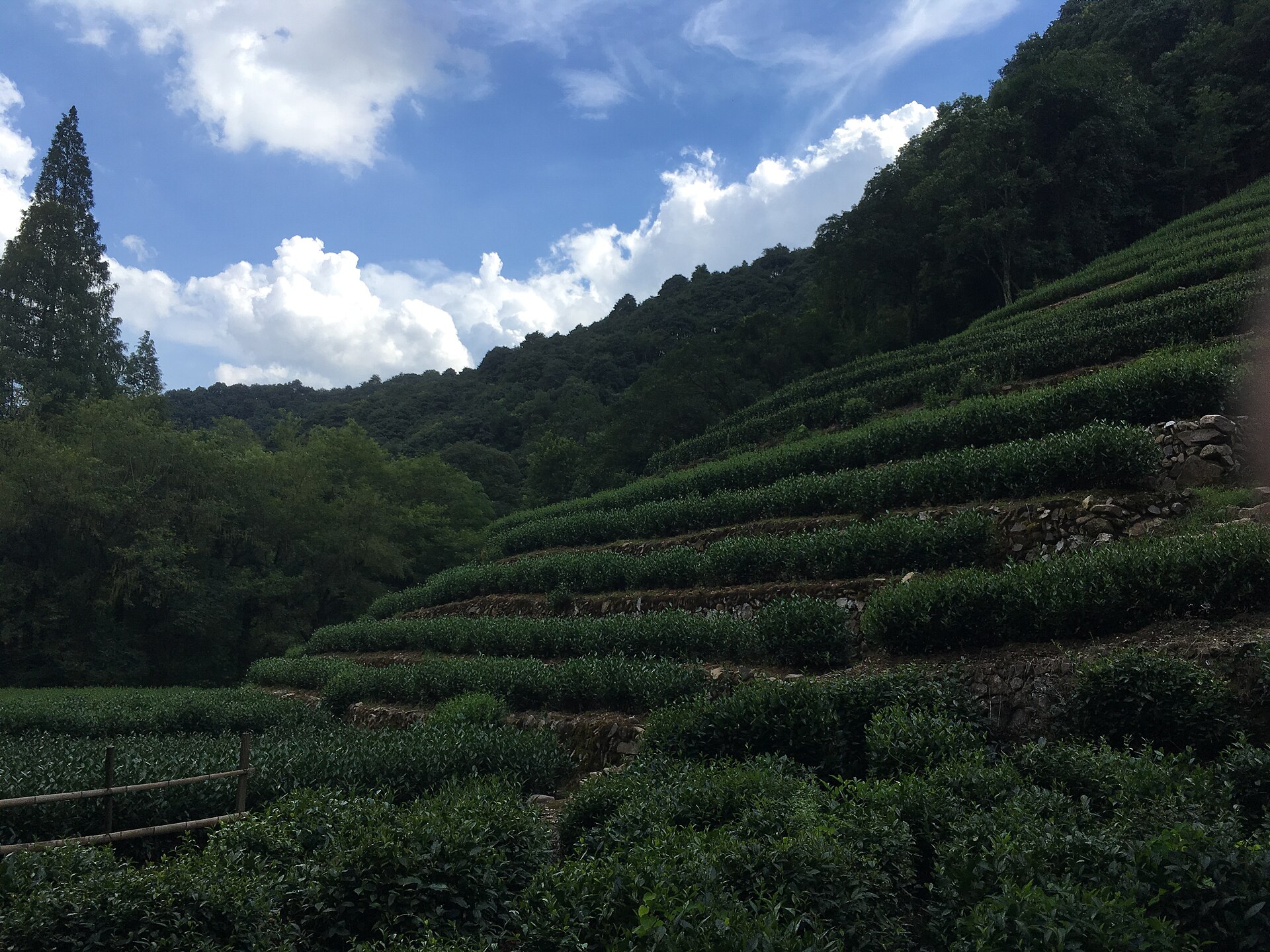
The “Mengding” in Mengding Ganlu points to Mengshan, the famous tea-region context in today’s Mingshan district of Ya’an, Sichuan. Many tea articles stop at generic lines like “high mountain, misty climate, ideal environment,” but Mengding Ganlu deserves more than that. Mengshan holds a special place in Chinese tea history. It has long been treated as an important historical tea area, tied to famous tea production, mountain tea gardens, tribute tea memory, and local tea culture. Most drinkers do not need to memorize every old anecdote, but one thing is worth keeping in mind: Mengding Ganlu is not a generic green-tea template that can be abstracted away from place. Its style feels stable because it belongs to a long-running local tea tradition.
This local grounding also matters in a practical sense. It helps you read the tea as a compressed mountain spring-tea experience rather than a floating product name. The good impressions people get from Mengding Ganlu often connect directly to that logic: fine leaves, freshness, clean aroma, liquor with some body but no heaviness, and a returning sweetness that appears quickly yet does not disappear at once. It does not establish itself through strong roast, deep oxidation, or loud floral perfume. It stands through the way fresh spring material and green-tea craft work together to support a particularly clean kind of freshness and roundness. Without the Mengshan background, many readers would misread it as just another “tender green tea.” In fact, it is more like a stable crystallization of the Mengshan tea tradition within the modern famous-green-tea system.
What does “Ganlu” really mean? Does the name mean the tea must be especially sweet and soft?
The name “Ganlu,” usually rendered as “sweet dew,” naturally pushes people toward ideas of sweetness, softness, and moisture. But reading it only literally also leads to confusion. Good Mengding Ganlu often does show a fresh rounded sweetness, and after swallowing, a clear returning sweetness can rise in the mouth. In that sense the name does resonate with the drinking experience. But “Ganlu” does not mean a tea with no frame and no structure. On the contrary, truly good Mengding Ganlu must first have freshness, cleanliness, and a clearly green-tea core. Only when that core is properly organized through craft does it become rounded and sweet. If a tea is merely sweet and light, without liveliness, aromatic cleanliness, or the step-by-step development of aftertaste, it is not refined Mengding Ganlu. It is simply thin.
So the best way to understand the name is not to begin with sweetness alone, but with the sequence of freshness first, roundness next, then returning sweetness. Its sweetness should grow out of fine spring material and proper green-tea making. Its “dew-like” quality should mean brightness and clarity, not weightless emptiness. This way of judging it matters because it avoids a common misunderstanding: assuming that every tea whose name suggests sweetness must value sweetness above freshness. Mengding Ganlu is not like that. It is first and foremost a green tea, and one that places high demands on freshness, cleanliness, and the balance between freshness and body.
How is Mengding Ganlu made? Why does it represent a classical curled green tea route?
Public reference materials often note Mengding Ganlu’s connection to curled shaping and kneaded green-tea craft, and this is exactly what gives it a distinctive place inside Chinese green tea. Unlike Longjing, which clearly pursues a flattened leaf profile, Mengding Ganlu emphasizes tight, fine, curled strands. Visually, it already separates itself from the flattened pan-fired logic. Its core process still follows the green-tea family pattern: leaf withering or resting, kill-green heat treatment, kneading, shaping, and drying. But the goal here is not to produce flat, wide, pressed leaves. It is to gather fine raw material into tight curled shape while preserving spring tenderness and freshness, so that the cup feels both lively and ordered rather than rough, grassy, or thin.
This is especially useful to explain for English-language readers. In many English accounts of green tea, the first known examples are either Japanese steamed styles or strongly shape-defined Chinese teas like Longjing. Mengding Ganlu offers another Chinese answer. A green tea’s refinement does not always rely on especially obvious wok aroma or on a dramatic leaf silhouette. It can also come from a more inward, denser organization of flavor behind a curled leaf shape. Good Mengding Ganlu is not noisy. Its aroma should not float away. Its liquor should be fresh and rounded. Its sweetness should become clearer after drinking. Its technical difficulty lies in preserving the vitality of fine spring material while keeping the shaped tea from becoming rough, grassy, or scattered.
How is it different from Longjing and Bi Luo Chun?
Compared with Longjing, the most immediate difference lies in both shape and aromatic logic. Longjing is a classic flattened pan-fired green tea with very strong visual identity and a clear wok-aroma route. Mengding Ganlu, by contrast, gathers fine spring material into curled strands, then uses shaping and drying to present a more inward and more rounded kind of freshness. With Longjing, many drinkers enter first through flat leaf shape, bean or chestnut-like aroma, and bright spring clarity. With Mengding Ganlu, they often enter through a different feeling: why is this tea so fresh yet so smooth, and why does the sweetness return so naturally?
The contrast with Bi Luo Chun shifts in another way. Bi Luo Chun often emphasizes lively curl, floral-fruity lift, and the especially animated delicacy of a Jiangnan spring tea. Mengding Ganlu usually feels steadier and denser. It may not burst outward with the same immediate floral-fruity associations, but it often offers a more grounded fresh-rounded base and a calmer returning-sweetness line. Put simply, Bi Luo Chun often reads as especially agile and vivid, while Mengding Ganlu often reads as especially fresh and rounded. Both are high-level green teas, but they speak in different ways.
What aroma and flavor should Mengding Ganlu have?
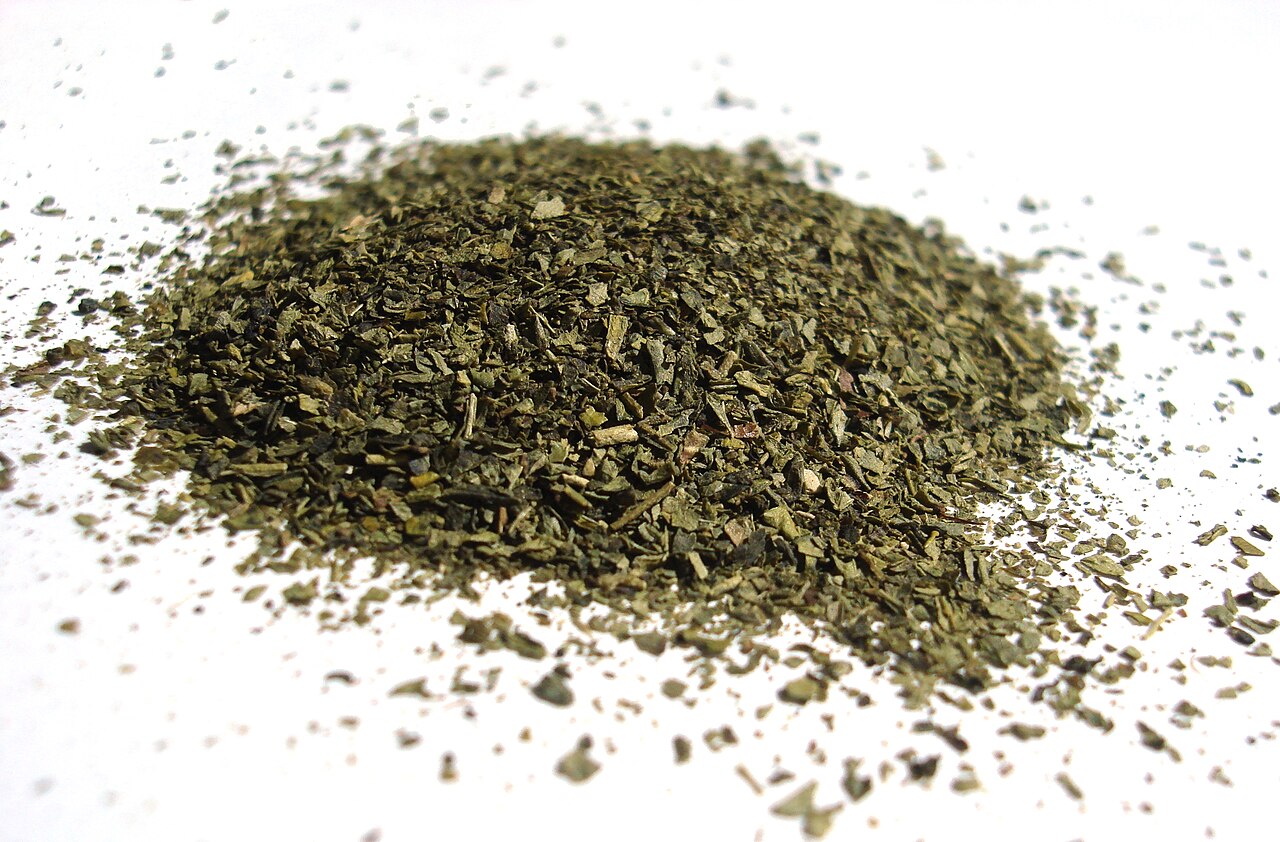
Good Mengding Ganlu usually shows fine, tight, evenly curled dry leaves with a tender green or soft yellow-green gloss. The hot aroma should not be aggressive, but it should be clean, fresh, and distinctly tender, often with notes of young-leaf aroma, clear green-tea fragrance, and in some lots a light floral lift or softly sweet chestnut-like warmth. Still, the real point is usually not whether it is extremely aromatic, but whether the aroma is clean, whether it stays attached to the liquor, and whether the tea remains lively rather than perfumed on the surface only.
In the mouth, the strengths of a good Mengding Ganlu are often easy to summarize: fresh in the opening, rounded in the middle, sweet in the finish; low bitterness and astringency, but not a hollow structure; and a returning sweetness that appears quickly and lingers with clear tenderness in the mouth. The faults are equally clear. Once the material gets coarser or the process loosens, the tea can become scattered, grassy, thin, woody, or dull. In other words, Mengding Ganlu is not a tea that automatically becomes elegant just because the name sounds refined. It reveals process very quickly. Good examples feel fresh, rounded, and sweet. Weak ones feel pale, loose, and messy.
Why is it so closely tied to early spring picking?
Because Mengding Ganlu depends heavily on fine spring material. Public reference descriptions commonly mention standards like single buds or one bud with the first leaf just opening. That matters enormously. It explains why the tea can feel fresh, why it can feel fine-textured, and how it can still hold real flavor without heavy roasting or deeper processing. The more a green tea depends on tenderness, the more accurately the harvest window has to be handled. Too early, and the material may still be too slight; too late, and the leaves begin to lose the delicate density that this tea needs.
But “early spring” should not be worshipped as a price tag by itself. Mature judgment still returns to the tea in the cup: Is it lively? Is it clear? Is the aftertaste natural? Do the infused leaves look even and tender? Those questions matter more than the simple logic that earlier must be more expensive and therefore better. What makes Mengding Ganlu interesting is not that it can endlessly inflate scarcity, but that it can turn fine early-spring material into order in the cup. Without good craft, early leaf alone means very little.
How should Mengding Ganlu be brewed? Why is rough high heat a mistake?
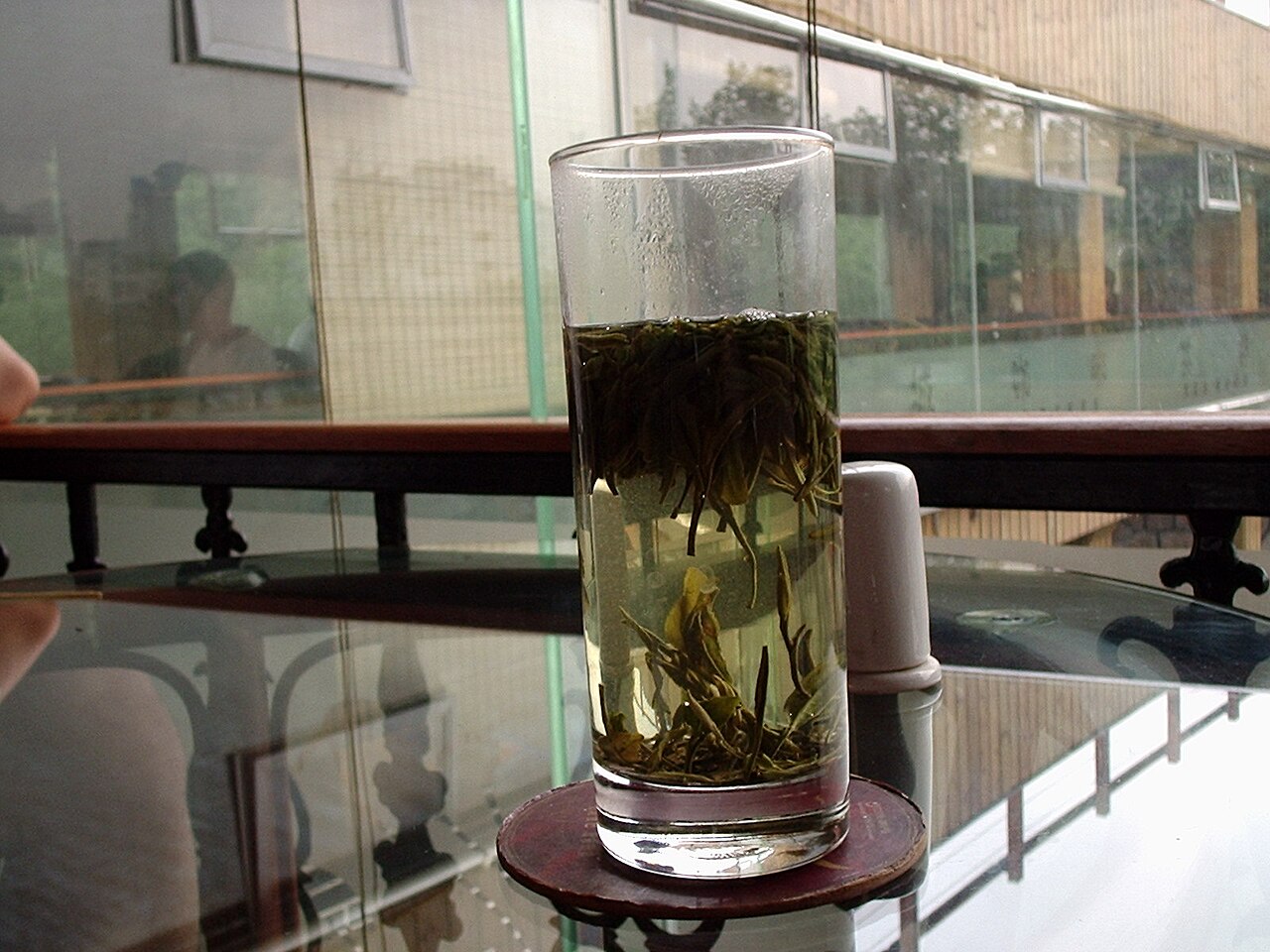
Mengding Ganlu works very well in a glass or a gaiwan. A glass makes it easy to observe the opening of the curled strands and the brightness of the liquor. A gaiwan makes it easier to read each infusion’s aroma and texture with more precision. As a fine green tea, it usually does not respond well to aggressive boiling-water treatment. A stable starting point is often around 80°C to 85°C, adjusted slightly according to leaf quantity, vessel, and personal taste. Water that is too hot, or steeping that is too long, can easily break apart the tea’s intended freshness and balance, burning off the first-layer delicacy and leaving bitterness or hollowness behind.
In a gaiwan, around 3 grams for 100 to 120 ml of water is a practical place to begin. Keep the first several infusions relatively short, then extend gradually. The point is not whether the tea can be forced into many infusions, but whether the early and middle infusions are good enough: aroma clean, liquor fresh and rounded, sweetness natural, infused leaves fine and intact. With this kind of tea, a lighter hand is often more important than a stronger hand. It does not prove itself through force. It proves itself through density of detail.
What are the most common mistakes when buying Mengding Ganlu?
The first mistake is buying it as a historical story rather than as tea. In other words, the buyer trusts grand language like “ancient famous tea,” “tribute tea legacy,” or “famous Sichuan mountain tea,” while ignoring whether the tea in front of them is actually good. Mengding Ganlu does have a strong historical narrative, but history does not automatically turn into freshness and roundness in today’s cup. The second mistake is to misread “Ganlu” as “the sweeter the better.” If a tea is sweet but not lively, sweet but not bright, sweet but structurally flat, that usually signals weakness rather than refinement.
The third mistake is judging it with Longjing-style expectations. Some buyers look too hard for straightness or a kind of pressed regularity that belongs to another aesthetic. Mengding Ganlu is not built that way. What matters more is whether the strands are fine, tight, and even; whether the color looks tender and natural; whether the aroma is clean; whether the liquor feels fresh and rounded; and whether the infused leaves are fine and even. A fourth mistake is to flatten all “high-mountain green tea” into one taste category. Chinese mountain green teas differ enormously. Mengding Ganlu is not a vague template. It is an independent famous-tea line with a clear historical and technical path.
Why does it matter so much for English-language readers trying to understand Chinese green tea?
Because it fills an obvious gap in many English-language narratives about Chinese green tea. International readers often first learn Longjing, then maybe Bi Luo Chun, and from there form a narrow impression: Chinese green tea is either flattened and pan-fired, or especially fragrant and delicate in a Jiangnan way. Mengding Ganlu helps break that narrow frame. It shows that Chinese green tea can also be built through curled shaping, fine mountain spring material, and a flavor structure centered on fresh roundness and returning sweetness. And this is not a recent commercial style. It has a long historical thread behind it.
More importantly, it teaches that refinement in Chinese green tea does not always come from the loudest aromatic label. Sometimes the real achievement lies in aroma that does not float, liquor that is not thin, low bitterness without emptiness, and a returning sweetness that feels natural and long. Mengding Ganlu is exactly that kind of tea. It may not be the loudest green tea in the room, but once understood, it can force a reader to reorganize the whole map of Chinese green tea.
Further reading: Longjing: spring in Hangzhou, pan-fired craft, and the local life inside one cup, Why Bi Luo Chun is so closely tied to tenderness, aroma, and freshness, and Huangshan Maofeng: from Huangshan’s cloud and mist to a cup of fresh green tea.
Source references
- Baidu Baike: Mengding Ganlu
- Wikipedia (Chinese): Mengshan tea
- General public Chinese-language reference material on Mengshan tea history, Mengding Ganlu production, and the craft logic of curled Chinese green tea.