Green Tea Feature
Why Lu’an Guapian is special: a Chinese green tea famous for leaf pieces rather than buds
Many famous Chinese green teas are introduced through the same opening move: how tender the buds are, how early they were picked, how fine and delicate they look. What makes Lu’an Guapian so interesting is that it feels slightly rebellious inside that framework. It is certainly a famous tea, and it still cares about mountain origin, season, and firing skill, but its clearest visual identity is not a crowd of delicate buds. Instead, it is known for being made mainly from single leaf pieces, with little obvious bud or stem. The first time many readers really look at Lu’an Guapian, they immediately sense that this is not a green tea trying to win through tiny downy shoots. It is a tea that takes leaf material itself—its cleanliness, sorting, shape, and later fire work—seriously enough to build an entire classic style around it.
That is exactly why Lu’an Guapian deserves its own article. It helps correct a very common misunderstanding: not every high-grade Chinese green tea has to look like a bud tea. Inside Chinese green tea there are routes such as Longjing, Bi Luo Chun, and Huangshan Maofeng, where early spring tenderness and fine bud-leaf aesthetics dominate the story. But there is another route as well: one that does not avoid more mature leaf material, and instead turns sorting, shaping, roasting rhythm, and balanced fire work into elegance. Lu’an Guapian is one of the strongest classic examples of that route.

What kind of tea is Lu’an Guapian? How is it different from familiar bud-focused green teas?
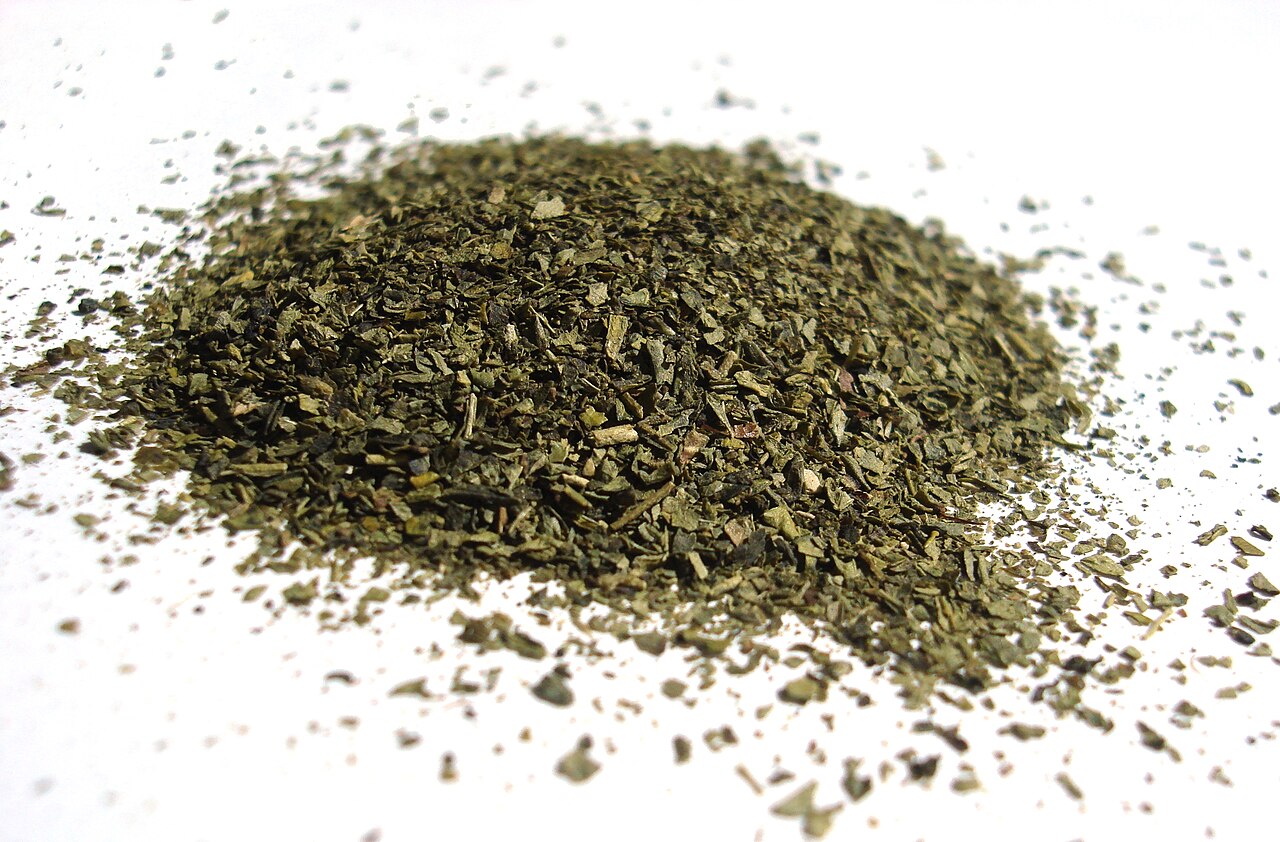
Lu’an Guapian is a Chinese green tea, and within the traditional famous-tea canon it is one of the most visually distinctive. Its importance lies not only in being made in the Lu’an area of Anhui, but in the fact that both its material and its finishing goals are unusually clear. It is a tea centered on leaf pieces, then refined through sorting, kill-green heating, shape work, and several stages of drying and firing to produce a tea with open leaf shape, clean mature aroma, fresh-sweet liquor, and a returning finish. Unlike many green teas whose commercial language revolves around buds and extreme tenderness, Lu’an Guapian does not build its identity around the idea that “more buds means higher grade.”
This matters because many beginners carry a single measuring stick into all green tea: earlier, smaller, more buds, therefore better. That rule can be useful in some cases, but it distorts Lu’an Guapian almost immediately. What is remarkable here is not that it resembles other famous green teas, but that it follows the leaf-piece route all the way through. The leaves must lie naturally open, visible stem material should be minimized, the fire must not become crude, chestnut-like warmth must not bury freshness, and the cup must hold both brightness and body. In other words, Lu’an Guapian does not reject tenderness as such; it proves that Chinese green tea has more than one valid form of refinement.
Why do descriptions of Lu’an Guapian keep stressing “no buds, no stems, single leaf pieces”?
Because that is not just a slogan. It is central to the tea’s process identity. Public reference material repeatedly notes that after the fresh leaves are picked they are sorted and separated, with tender leaf material, larger pieces, and stems treated differently. For ordinary readers, it is not necessary to memorize every traditional term. What matters is the principle: Lu’an Guapian looks like open leaf pieces rather than bud-and-leaf combinations because the tea actively creates that result through sorting at an early stage.
This changes the whole direction of the craft. Bud-heavy green teas often revolve around preserving the ideas of delicacy, softness, spring freshness, and visual grace. Lu’an Guapian, because it relies on leaf pieces, has to solve a different problem: how to let leaf material go through heat without turning rough, woody, old, or lifeless. That is why its quality depends so much on clean sorting, successful leaf shape, and fire work that makes the tea feel both mature and alive. This is what makes it special in the green-tea world. It does not win through bud prestige. It wins by making leaf pieces behave like a famous tea.
Why is it called “Guapian”? Is the name about shape, origin, or old stories?
Based on currently available public research and standard reference material, the name “Lu’an Guapian” was clearly in use by the late Qing to early Republican period, but more than one explanation survives regarding how the name and category were first established. One common line of explanation connects it to the finished tea’s resemblance to melon-seed pieces. Another ties it to local tea merchants’ improved sorting practices and the deliberate use of leaf pieces. There are also widely repeated local anecdotes about tea firms and makers in places such as Qishan Houchong and nearby tea-producing areas. Strictly speaking, these narratives do not collapse into one universally accepted founding story.
For a content site, however, the useful structure is clearer than the legend debate. First, Lu’an Guapian is deeply tied to tea history in the Lu’an region of Anhui. Second, the “gua” or “melon-seed” part of the name obviously matches the visual logic of a flat, open, single-piece leaf tea. Third, this is not a modern marketing invention but a historically rooted famous green tea whose identity gradually stabilized from the late Qing into the Republican period. Once those points are clear, readers do not need a single heroic origin myth in order to take the tea seriously.
Where does Lu’an Guapian come from? Why does the Dabie Mountain foothill context matter?
Most public descriptions of Lu’an Guapian return to the Lu’an area and its related mountain zones in Anhui, especially the northern foothills of the Dabie Mountains. Standard summaries often mention places linked with today’s Lu’an, Jinzhai, Yü’an, and Huoshan areas, and may distinguish between inner-mountain and outer-mountain production zones. For general readers, the most practical point is not to memorize a long chain of place names, but to understand that this is not a flatland tea and not a sea-breeze tea. It is closely connected to mountain and hill environments, relatively humid spring conditions, and seasonal plucking rhythms. That ecological background affects leaf texture, internal composition, spring growth timing, and ultimately the cup’s particular mix of freshness and slightly firmer structure.
This origin story also matters because it keeps Lu’an Guapian from floating free as “just a process tea.” Its style comes from the meeting of place and technique. If one talks only about craft, the tea becomes abstract technology. If one talks only about famous mountains, the tea collapses into branding. The valuable reading is to connect the ecology of the Dabie foothills, the state of spring leaf material, and the later discipline of sorting and fire work. Then the tea’s flavor begins to make sense as a long-term local achievement rather than an accident.

What do terms like tipian, guapian, and meipian mean? Are they about timing and grade?
Yes. Behind these names lies a real difference in picking season, leaf maturity, and finished style. Standard public summaries often explain them in a broad way like this: earlier and finer tea made around the Guyu period may be called tipian; the main body of the category is what most people simply know as guapian; and later tea made closer to the plum-rain season, from slightly coarser material, is often described as meipian. Different local or commercial usages may vary in detail, but the larger structure is stable: these terms point to differences in harvest timing, material maturity, and final style.
This is worth explaining because it shows again that Lu’an Guapian is not one flat product. It has internal seasonal and quality distinctions of its own. But the hierarchy is not built in exactly the same way as many bud-focused green teas. Instead of measuring everything by visible tenderness, the tea is judged by whether the picking window was appropriate, the sorting was clean, the fire work was mature, and the aroma and liquor are well resolved. For consumers, that means the name alone is not enough; what matters is which stage of the season and which degree of completion the tea actually represents.
What is the real craft focus of Lu’an Guapian? Why is everyone so concerned with fire work?
The key is not the individual traditional term, but what the whole chain is trying to accomplish. After plucking, the leaves are sorted so that the material heading into the final tea becomes more uniform. Then kill-green heating halts enzyme activity, after which shaping and several stages of drying or roasting gradually stabilize moisture, aroma, and leaf form. Public descriptions often summarize the sequence with terms such as raw-pan, ripe-pan, first fire, small fire, and old fire. Even if readers do not memorize the names, they should understand the logic: these are not repetitive motions, but a series of steps that turn fresh leaves into a stable and expressive leaf-piece green tea.
Fire work matters so much because the leaf-piece route is unforgiving. Too little fire, and the tea feels green, raw, and loose. Too much, and it turns charred, woody, or dull, losing the freshness that still has to define it as green tea. The difficult part is not whether fire is present, but whether it arrives at exactly the right point. Good Lu’an Guapian often shows a clean mature aroma with chestnut-like warmth, a little pan fragrance, or a gently organized roast tone, but that mature scent should not be heavy-handed. In the mouth it should remain fresh, bright, sweet, and returning, with a little more support than a pure bud tea but without roughness. Its refinement lies in making leaf tea feel mature without making it dead.
What does Lu’an Guapian taste like? Why is it often described as chestnut-like, fresh, and sweet?
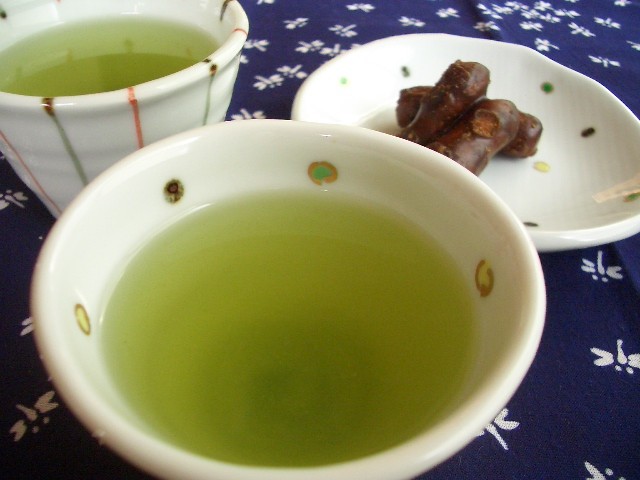
Lu’an Guapian is usually not a tea of explosive floral perfume. Its more typical route is restrained maturity. Many public descriptions mention “chestnut-like aroma,” “clean high fragrance,” and “fresh mellow sweetness.” In more practical drinking language, that means the tea often smells gently organized by fire: warm leaf aroma, a chestnut-like cooked nuttiness, perhaps a touch of pan warmth, but all of it should remain clean rather than heavy. In the mouth, the tea should still behave like green tea—bright, fresh, clear, and with a quick returning sweetness.
This matters because it shows that Lu’an Guapian is not just “a more roasted green tea.” Weak tea can also smell more obvious if the fire is pushed. Truly good Lu’an Guapian keeps freshness and mature aroma moving together. One gives the tea life, the other gives it shape. In a strong version of the style, you feel the support of leaf material, the brightness of green-tea processing, and the steadiness of later fire work at the same time. Holding all three together is where its value really lies.
How should Lu’an Guapian be brewed? Why should it not be treated exactly like very tender bud green tea?
Lu’an Guapian works well in both a glass and a gaiwan. A glass is especially useful for beginners because it lets them watch the leaf pieces open and directly see the visual difference between a leaf-piece tea and a bud-heavy tea. A gaiwan gives more precise control over timing and aroma observation. In terms of water temperature, 85°C to 90°C is often a practical place to begin. That can be a little higher than for the most delicate bud teas, but there is still no reason to abuse it with harsh boiling from the start. It remains a green tea, and its beauty lies in the balance between freshness, brightness, and mature aroma.
In a gaiwan, around 3 grams for 100 to 120 ml of water is a stable starting point. Keep the first infusions relatively short. The key is whether the tea begins clean, clear, sweet-fresh, and steady, and whether its aroma feels settled rather than dry or coarse. Lu’an Guapian often rewards slow drinking over several rounds: the first infusion shows brightness, the second opens the aroma, and later ones reveal whether the finish keeps its sweetness and composure. A truly good tea should not collapse quickly or expose obvious woody roughness in the back half of the session. Endurance here does not mean “many cups at any cost,” but “each cup still behaves properly.”
What are the easiest mistakes to make when buying Lu’an Guapian?
The first is judging it by the rule that all great green tea must be full of visible buds. The second is chasing “high aroma” without asking whether the aroma is actually clean or just overfired and dry. The third is relying on phrases such as Dabie Mountain, old fire, or pre-Qingming without checking actual leaf shape, cleanliness, and brewed performance. Lu’an Guapian is a tea that does not respond well to advertising language alone, because its strengths and weaknesses reveal themselves almost immediately in the cup.
A more useful buying method is to return to hard basics: do the leaf pieces look naturally open, are stems and broken material minimized, does the aroma feel mature and clean rather than scorched, is the liquor fresh-mellow rather than hollow and woody, and after several infusions does the tea still carry sweetness and clarity? If those fundamentals fail, historical prestige, intangible-heritage labels, and luxurious packaging do not rescue the tea. Lu’an Guapian deserves respect precisely because it is so honest: if the basics are weak, the cup shows it quickly.
Why is Lu’an Guapian worth adding to the tea section now?
Because the site already has Longjing, Bi Luo Chun, Huangshan Maofeng, Xinyang Maojian, Taiping Houkui, and Anji White Tea, which together already sketch several important green-tea routes. But without Lu’an Guapian, the map still leans too heavily toward the bud-oriented side of famous green tea. Lu’an Guapian completes that map by showing readers that Chinese green tea does not only compete through earliness, tenderness, and visual fineness. It can also compete through leaf handling, sorting, shape discipline, and fire work. That is not a secondary route. It is a fully established and historically important one.
More specifically, this article builds good structure with the existing site. Sideways, it supports comparative reading with Longjing and Huangshan Maofeng as different solutions to green-tea style. Forward, it opens the door to more Anhui and process-based tea entries. At the practical level, it also performs a very useful teaching job: it helps break the simplistic assumption that greener tea sophistication always means smaller and earlier buds. Once that assumption is gone, the larger map of Chinese tea becomes much clearer.
Source references: public summary material from the Chinese Wikipedia entry on Lu’an Guapian, public summary material from the Baidu Baike entry on Lu’an Guapian, and publicly available reference material on traditional Lu’an Guapian processing. This article uses a deliberately cautious fact frame: Lu’an Guapian comes from the tea-producing areas associated with Lu’an in Anhui, its green-tea making technique (Lu’an Guapian) was listed as a national-level item of intangible cultural heritage in 2008, and both the name “Lu’an Guapian” and its precise origin story appear in multiple versions in public research, so no single folk narrative is presented here as uncontested fact.