Green Tea Feature
Why Jingting Lvxue should not be treated as just another “famous green tea from Xuancheng”: Jingting Mountain, revival history, and the full logic of a sparrow-tongue baked green tea
If one lines up the public memory of Anhui’s famous teas, most people think first of Huangshan Maofeng, Lu’an Guapian, and Taiping Houkui. Jingting Lvxue usually comes later. Its name is real, but it does not dominate the way those teas do. That is exactly why many introductions flatten it too quickly into one sentence: a historic green tea from Jingting Mountain in Xuancheng, sparrow-tongue in shape, with visible down and a cup that looks like snow drifting in green liquor. None of that is false. It is simply too shallow. What really deserves attention is the way Jingting Lvxue compresses the cultural mountain setting of Jingting, Ming-Qing tribute-tea memory, modern revival after disappearance, and a process logic centered on tender plucking, careful shaping, and baked-green completion into one cup.
It is also easy to misread. One common mistake is to treat it as just another generic baked green tea from Anhui. Another is to go in the opposite direction and treat it mainly as a revived historical label, as if it survives by story more than by tea. A more mature reading is more exact: Jingting Lvxue is neither an empty old name nor a label that can be applied loosely to any green tea from around Xuancheng. It is a famous tea with a relatively clear origin, process path, visual goal, and aesthetic standard. And its modern form exists precisely because historical tea memory and modern reconstruction were made to meet.
What kind of tea is Jingting Lvxue, and why does it deserve its own place in Anhui’s green-tea map?
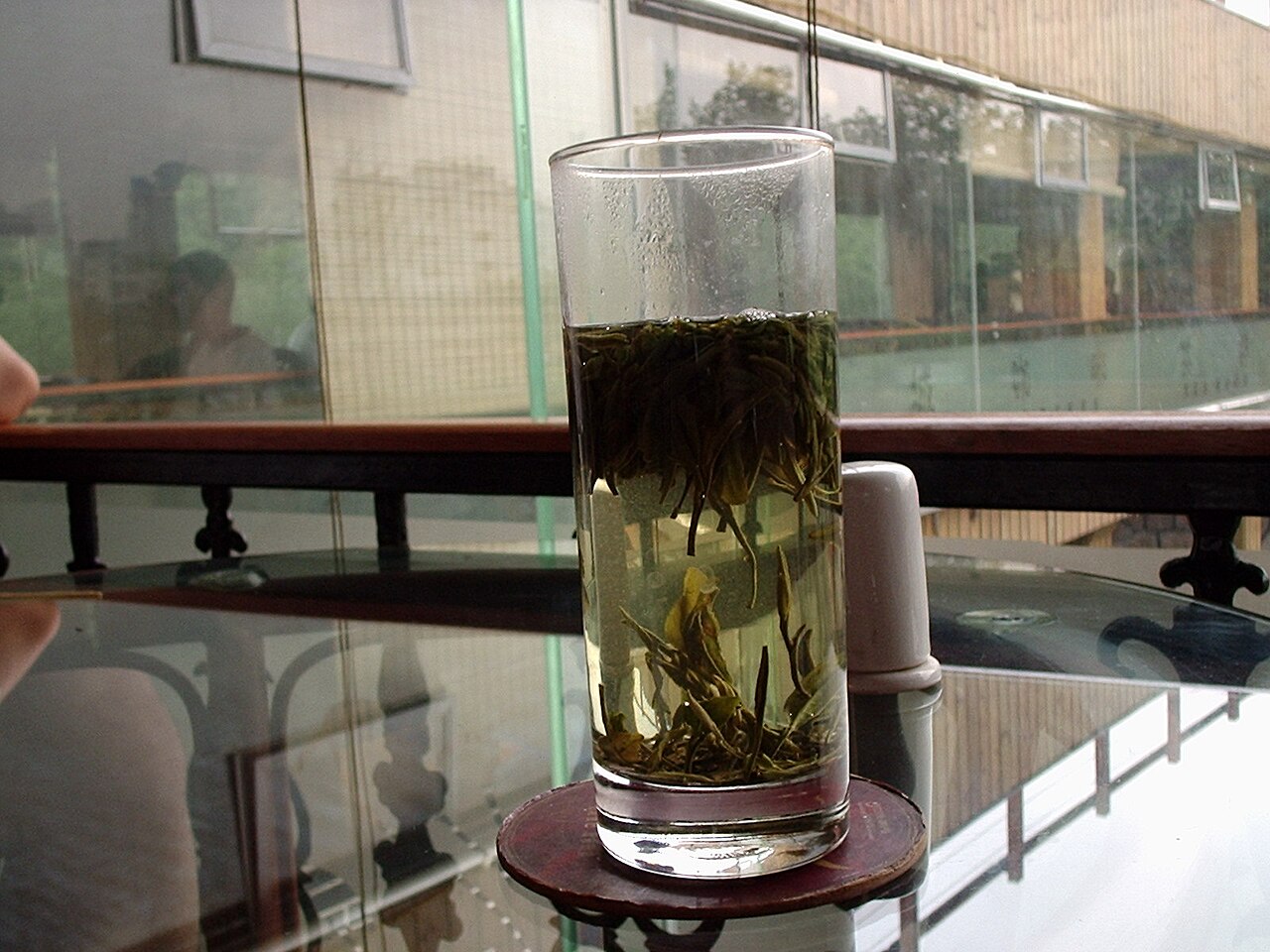
Jingting Lvxue belongs to the family of Chinese green tea, more specifically to the baked-green famous-tea route, with its core origin centered on Jingting Mountain in Xuancheng, Anhui. Its typical finished style points toward joined bud-and-leaf material, an upright sparrow-tongue-like shape, bright green color, and visible down. Once brewed, the buds sink and the fine hairs drift in the cup, producing one of the tea’s best-known visual effects. In process terms, it is not like Longjing, whose identity depends on flat wok shaping, and it is not like Lu’an Guapian, whose identity depends on leaf slices without buds. Instead it emphasizes tender buds and young leaves, then combines kill-green, shaping, and baking into a style that feels elegant, even, fresh, and sweet.
It deserves a separate place in Anhui’s green-tea map for two reasons. First, it has long appeared inside Anhui famous-tea discourse beside Huangshan Maofeng and Lu’an Guapian. Second, it represents another clearly different answer within Anhui green tea: not flat, not giant-leaf dramatic, not leaf-slice based, but tender bud-and-leaf material, upright sparrow-tongue shape, visible down, drifting “green snow,” and baked-green freshness. Once a site already contains Huangshan Maofeng, Lu’an Guapian, and Taiping Houkui, adding Jingting Lvxue completes the internal contrast much more fully.
What does the name “Lvxue,” or “green snow,” actually mean?
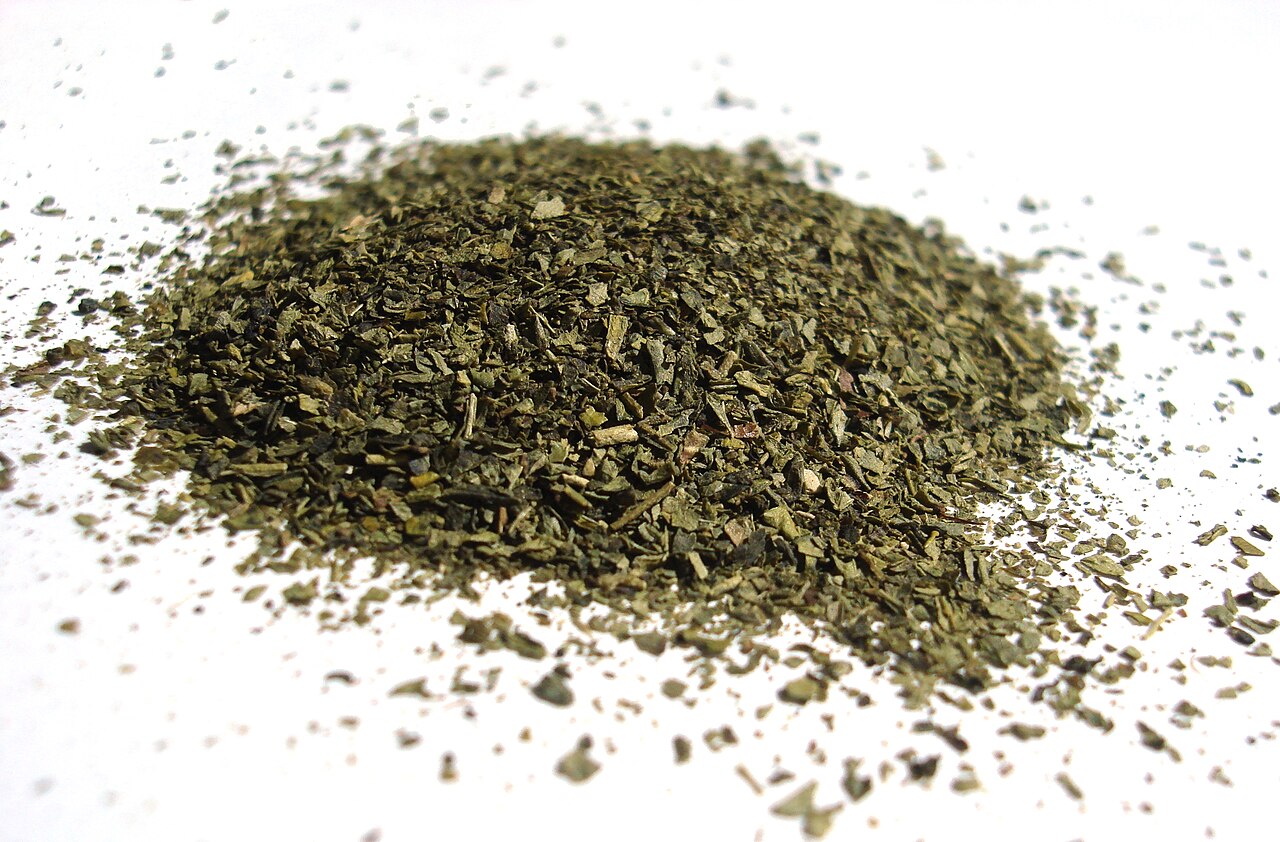
The name has strong descriptive force. “Green snow” usually does not mean that the tea is literally white like snow. It refers instead to the visual effect after brewing: the buds sink, while the fine white down attached to the leaf surface drifts slowly in the water, creating an image of snow moving within green tea. In other words, the name is grounded first in a real cup behavior rather than in empty poetic decoration.
That is one reason the name has lasted. It is not memorable only because it sounds elegant. It works because it captures the tea’s actual sensory identity: bright green color, visible down, clear liquor, and a light graceful movement in the cup. So the name was not invented first and explained later. The tea’s appearance, brewing behavior, and mountain aesthetic all support it. That is why the name could survive from historical famous-tea discourse into modern revival and still make sense.
Why is Jingting Mountain more than decorative geography?
Jingting Lvxue cannot be separated from Jingting Mountain itself. Jingting sits near Xuancheng in Anhui and carries an unusually dense literary presence in Chinese cultural memory. Poets such as Xie Tiao and Li Bai are repeatedly associated with it, and the mountain is often referred to as a “poetic mountain of Jiangnan.” That means Jingting Lvxue is not a tea growing in anonymous agricultural space. It developed on a mountain that had already been written, remembered, and culturally enlarged for centuries.
But Jingting’s value is not literary atmosphere alone. Public descriptions also stress the area’s mild climate, suitable rainfall, and favorable soil conditions for tea growth. That matters because the tea is not carried by poetry in place of quality. It is produced in a real environment suited to fine green tea, and the mountain’s cultural prestige then amplifies what is already there. Jingting Mountain therefore works in two ways at once: as ecological foundation and as cultural magnifier.
Why do sources call it both a historical famous tea and a tea revived in the 1970s?
Because its history genuinely has two lines, and both matter. The first is the historical famous-tea line: public sources usually trace it back to the Ming period, note its tribute-tea status in the Ming and Qing eras, and point to local records and commentary about it. The second line is the line of loss and revival: the same public material commonly says that Jingting Lvxue was lost around the late Qing period, then revived through research and trial production at the Jingting Mountain tea farm in Anhui during the 1970s, with a relatively stable revived form achieved around 1978.
Those two lines make more sense together than apart. If one speaks only of tribute-tea history, readers may imagine that the current tea continued without interruption in exactly the same form. If one speaks only of revival, readers may undervalue the historical name and local tea memory behind it. The more accurate reading is that today’s Jingting Lvxue is a famous green tea rebuilt in modern times on top of an older regional tea identity. That makes it one of the clearest examples of continuity through reconstruction in Chinese tea culture.
What is the core plucking standard, and why is “one leaf embracing one bud” so important?
Public descriptions usually summarize the plucking standard of Jingting Lvxue as tender, even, clean, and neat. Harvesting is concentrated between Qingming and Guyu, with the preferred material described as “one leaf embracing one bud,” or very tender combinations such as one bud with one leaf or one bud with two just-opening leaves. The key point is not only early spring. It is the tea’s demand for a very specific kind of organized tenderness: young, even, intact bud-and-leaf structure rather than random softness.
This is one of the clearest ways Jingting Lvxue differs from other Anhui teas. Lu’an Guapian’s classic logic is to remove the buds and focus on leaf slices and fire. Jingting Lvxue belongs firmly to the bud-and-leaf route, where tenderness, elegance, visual unity, and visible down all matter. Coarser leaf makes it much harder to achieve the joined structure, upright elegance, and clean freshness the tea needs. For Jingting Lvxue, the best leaf is not the leaf picked in the greatest quantity, but the leaf picked with the greatest precision.

What part of the process really shapes Jingting Lvxue?
Its process is usually summarized in three main stages: kill-green, shaping, and drying, which places it clearly in the baked-green family. But the words alone are not enough. The crucial stage is shaping, and more precisely the way shaping is balanced against the stages before and after it. Public material often refers to hand motions that gather and straighten the leaf after kill-green, creating an early sparrow-tongue form, followed by rough baking and final baking that stabilize aroma, moisture, and structure. The real challenge is not any single movement in isolation. It is getting the leaf to become upright and elegant without blackening, scorching, losing its down, or breaking apart.
In temperament, Jingting Lvxue is a tea that suffers quickly from excess. If the handling is too heavy, the buds break and the tea loses its grace. If the heat is too strong, the aroma turns dull and woody rather than fresh and lifted. If the shaping is too weak, the strands look loose and the cup loses visual coherence. Good Jingting Lvxue often looks quiet rather than dramatic, but that calm balance is itself a sign of high completion: shape is intact, down remains lively, aroma stays clear, liquor tastes fresh and sweet, and the later infusions still end cleanly.
Why is it so often described as “sparrow-tongue” and “down like snow”?
“Sparrow tongue” describes form, while “snow-like down” describes cup behavior. When Jingting Lvxue is called sparrow-tongue shaped, the idea is not that it is identical to every other tea ever described that way. The point is that its finished leaf should look compact, upright, tender, and pointed, with the bud and leaf still joined in a small elegant structure. In other words, the term identifies it as a classic bud-and-leaf famous green tea with a very specific kind of visual discipline.
“Snow-like down” is more dynamic. Once brewed, the fine hairs attached to the leaf drift in the water and create the green-and-white visual effect that makes the name Lvxue fully convincing. So its aesthetics are not complete at the dry-leaf stage alone. One has to read dry leaf, cup movement, and liquor appearance together. In the better examples, those layers remain connected: the tea does not look beautiful only when dry and then collapse once brewed. It stays fine, even, and lively from dry leaf through the leaf base.
What does Jingting Lvxue actually taste like, and why does “fresh and sweet” matter more than simple fragrance?
Many first-time drinkers remember Jingting Lvxue first through its cup image, so they file it away as a tea that is mainly nice to look at. That misses the deeper point. Its real gustatory center lies in being fresh, brisk, sweet, clear, and clean in the finish. Public descriptions often mention aromatic sweetness and refreshing return, which shows that the tea is not supposed to be only lightly fragrant. It should give a real sense of liveliness in the front of the sip and real sweetness after it.
In its better form, the liquor should be bright and clean, the taste should feel fresh without becoming sharp, sweet without becoming heavy, and the aroma should stay integrated with the cup rather than floating on top of it. Good Jingting Lvxue often looks visually delicate but does not drink thin. If a tea has only elegant appearance and a nice glass presentation but tastes hollow, rough, overly bitter, or fire-heavy, then it has not truly achieved what this tea is supposed to achieve. A practical rule for readers is simple: Jingting Lvxue may be refined, but it should never be empty.
How is it different from Huangshan Maofeng, Lu’an Guapian, and Taiping Houkui?
Compared with Huangshan Maofeng, Jingting Lvxue also values tender buds, visible down, and fresh clarity, but Huangshan Maofeng leans more strongly toward the classic mountain-tea identity of Huangshan, floral lift, and the aesthetic of “maofeng” bud elegance. Jingting Lvxue places more emphasis on the “green snow” cup effect, sparrow-tongue shaping, and the identity of a historically rooted but modernly revived famous tea. Both belong to Anhui’s elite green-tea world, but they are not the same answer.
Compared with Lu’an Guapian, the difference is much larger. Guapian is built around bud removal, leaf slices, and fire structure, while Jingting Lvxue belongs fully to the bud-and-leaf route of tenderness, elegance, visible down, and freshness. Compared with Taiping Houkui, Jingting Lvxue lacks the giant flattened leaf spectacle of Houkui and instead stays smaller, more restrained, and closer to the refined traditional line of elite green tea. Once these teas are read side by side, it becomes much easier to see that Anhui famous tea is not one simple category of fragrant green tea, but several distinct systems of value and making.
How should Jingting Lvxue be brewed?
Jingting Lvxue works very well in a clear glass and also in a gaiwan. The glass highlights exactly the cup behavior that matters here: drifting down, sinking buds, and the color of the liquor. The gaiwan gives more precision over timing and makes it easier to observe how the aroma and body move over several infusions. Public references usually recommend water around 80°C, and that advice makes sense. Tender bud-and-leaf green teas usually lose freshness and exaggerate bitterness when struck too hard by boiling water.
In a glass, common tea-to-water ratios often fall around 1:50 to 1:60. In a gaiwan, around 3 grams of tea to 100–120 ml of water is a very comfortable starting point. The first infusion should not be overly long; something around the first dozen to twenty seconds is often enough. Jingting Lvxue is not a tea that proves itself through force, heaviness, or extreme concentration. Its real charm lies in linking visual lightness to actual fresh-sweet substance.
What are the most common buying mistakes?
The first mistake is treating any ordinary green tea from Xuancheng or around Jingting Mountain as though it were automatically Jingting Lvxue. The second is relying only on the name, the legends, or the historical label while ignoring the actual tea in front of you: loose dry leaf, dark color, artificial-looking fuzz, or obvious fire defects should not be excused simply because the package says “revived historical famous tea.” The third mistake is imagining that earlier and more tender is always better. Jingting Lvxue certainly values early spring material, but maturity, evenness, and the completion of shaping and baking matter just as much.
Another common misunderstanding is to treat it as a purely visual tea. Good Jingting Lvxue should work both in sight and in taste. The glass should show drifting down, but the mouth should also receive fresh sweetness. The strands should look organized, and the aroma should also be clean. If the tea offers only a beautiful image but drinks thin, bitter, rough, or dull, then it has not really arrived. What is worth paying for in Jingting Lvxue is not the story itself, but the real raw-material and process completion behind the story.
Where does Jingting Lvxue belong in a Chinese tea knowledge system?
If a Chinese tea site writes only the most famous high-traffic teas, Anhui green tea can easily collapse into a thin impression: Huangshan Maofeng, Houkui, Guapian, and little else. Jingting Lvxue matters because it fills in another important piece. It combines deep historical tea memory with a modern revival story. It combines a culturally charged mountain with a reconstructed process standard. It shows readers that famous tea is not always something that continues forward unchanged from remote antiquity. Very often it is the result of regional memory, category standards, process reconstruction, and modern circulation working together.
More specifically, Jingting Lvxue belongs in the position of an internal Anhui green-tea contrast point. It is not a substitute for Huangshan Maofeng, not a reduced version of Lu’an Guapian, and not a lighter Houkui. It represents a greener, finer, more upright route centered on visible down, sparrow-tongue shaping, and tender bud-and-leaf making. Once readers understand that, they understand much more clearly how many genuinely different systems of value exist inside Chinese green tea.