Green Tea Feature
Why Hanzhong Xianhao Deserves Its Own Article: not just another southern Shaanxi bud tea, but a complete green-tea route shaped by the Qinba mountains, early-spring buds, and a fresh chestnut-like finish
Hanzhong Xianhao is the kind of tea name that people think they understand too quickly. Many readers first place it automatically under labels like “a famous green tea from Shaanxi,” “an early-spring bud tea from the Qinba mountains,” or simply “another Maojian-like tea from southern Shaanxi.” None of those labels is entirely wrong, but all of them flatten the tea. Once the explanation stops at “Shaanxi also makes good green tea,” the real reason Hanzhong Xianhao matters disappears: it is not a secondary example under some larger category, but a modern famous-green-tea route with its own clear aesthetic and processing goals.
What makes it worth writing about is the way it organizes several things that are often discussed separately: the ecology of the Qinba mountain region, the spring plucking rhythm around Hanzhong, strict demands for fine and even buds, the finished tea's neat upright form with visible down and clear bud tips, and the balance in the cup between clean aroma, a gentle chestnut-like note, freshness, and returning sweetness. In other words, Hanzhong Xianhao is not simply “tender material,” and not merely “a green tea from farther north.” It is a tea whose origin, process, and sensory language already hold together in a fairly complete way.
What kind of tea is Hanzhong Xianhao, and where does it sit within Chinese green tea?
The basic layer is simple: Hanzhong Xianhao is a Chinese green tea, and a typical example of the modern famous-green-tea system. It is not best understood as an ancient tribute tea whose name passed unchanged into the present. It is better understood as a regional representative tea gradually shaped and stabilized within modern standards of famous-tea production. Public materials usually connect it with Hanzhong in Shaanxi and the tea districts between the Qinling and Bashan mountain systems, and they often emphasize that its craft style, name, and public identity were clarified through modern process integration and regional branding.
That means one cannot understand Hanzhong Xianhao simply by saying it comes from Shaanxi. The real question is what route it chooses inside green tea. It is clearly not a leaf-piece tea like Lu'an Guapian, not a tightly curled Maojian route like Duyun Maojian, and not a flattened wok-shaped tea in the Longjing mold. Instead, Hanzhong Xianhao places its emphasis on fine bud material, a neat upright finished shape, a high clean aroma, and a palate that combines freshness with a clear sweet return. Its importance on the larger map of Chinese green tea lies in giving the Qinba mountain region a highly finished example of modern famous green tea.
What does the name “Xianhao” really emphasize?
The term “Xianhao” can sound purely literary, as if it existed only to make the tea seem airy or ethereal. In practice, it points very directly to two things: the tenderness of the raw material and the finished tea's visible down plus elegant bud form. The name is not just selling mood. It is naming an aesthetic target built on early-spring fine buds.
But the important point is that Hanzhong Xianhao does not treat tenderness as a single standard. Good examples need more than small buds and visible fuzz. They also require evenness, a clear and upright finished form, an aroma that rises cleanly without floating away, a liquor that feels fresh without becoming thin, and a sweet finish that arrives quickly and neatly. In that sense, “Xianhao” is not just decorative language. It is a compact way of tying together raw-material standards, appearance standards, and taste standards. Once that is understood, the tea is much less likely to be misread as just another generic tender-bud green tea.
Why are the Qinba mountains and the Hanzhong tea region so important?
Public descriptions of Hanzhong Xianhao almost always return to a larger background: the ecology between the southern Qinling slopes and the northern edge of the Bashan range. Hanzhong sits in a transitional climatic zone, with mountains, valleys, and basins interlocking. Spring warming tends to be relatively steady, rainfall is fairly abundant, mist conditions are common, vegetation cover is strong, and the wider tea environment remains comparatively intact. These points may sound like standard tea-marketing language, but in green-tea terms they matter a great deal: if a tea is meant to show freshness, clarity, softness, and liveliness, it usually depends on a stable small climate and a relatively slow early-spring growth rhythm.
That is also why Hanzhong Xianhao should not be written up as “Shaanxi's version of Longjing.” What really makes it work is not northern rarity. It is the fact that the Qinba tea region provides an ecological base capable of supporting fine raw material and a fresh bright palate. When a good Hanzhong Xianhao feels both refreshing and not hollow, that has a lot to do with mountain ecology. The tea is not manufactured into existence by craft alone. First there must be a growing environment that can support the style, and then craft translates that mountain logic into a stable finished tea.
From the perspective of site structure, this article is also worth adding because it pushes the geography of Chinese green tea a little farther northwest. Many readers still imagine famous green tea primarily through Jiangsu, Zhejiang, Anhui, Guizhou, or Fujian. Hanzhong Xianhao reminds us that the richness of Chinese green tea is not confined to the classic southeastern tea regions; the Qinba mountains also produced a mature and highly legible famous-green-tea expression.
How should its history be understood? Why is it better read as a modern regional famous tea?
The Hanzhong area certainly has a long history of tea cultivation and tea making. That is not in doubt. But if we focus specifically on the name “Hanzhong Xianhao” and the relatively stable product style recognized today, public materials usually place the emphasis on modern formation, especially process integration and branding in the later twentieth century. In other words, Hanzhong Xianhao is not best treated as a tea whose exact current name and form passed directly and unchanged out of old texts. It is better understood as a regional representative tea built on local tea tradition and then clarified through the modern famous-tea system.
That is not a weakness. In fact, it is important because it shows how many teas now treated as classic “Chinese famous teas” did not simply survive intact from an older tribute-tea list. Many of them passed through modern process trials, standardization, naming, and broader market circulation. Hanzhong Xianhao is a good example of that route. It is rooted in local mountains and a long tea-growing tradition, but it became widely legible in something close to its current form through the shaping power of the modern famous-green-tea framework.
So the most useful way to write about Hanzhong Xianhao is not to force it into a “thousand-year-old ancient tea” story. It is better to acknowledge its two layers at once: it continues a long Qinba mountain tea tradition, and it is also a clearly modern regional famous tea. Putting those two together helps readers understand why the tea today carries both strong origin language and strong standard language.
What kind of leaf material is used? Why do descriptions keep stressing single buds and one bud with one just-opened leaf?
Public references usually describe Hanzhong Xianhao through spring-picked fine buds and leaves. Higher grades often emphasize single buds or one bud with one just-opened leaf, along with demands for evenness, cleanliness, and freedom from coarse leaves or stems. That already tells us a lot about its route: it is not trying to become an ordinary green tea with a little spring freshness, but a tea whose material is narrowed from the start toward the famous-tea end of the spectrum.
This matters because Hanzhong Xianhao's appearance, aroma, and palate all depend heavily on raw-material consistency. If the finished tea is meant to look elegant, downy, and even, the fresh leaf cannot vary wildly in length. If the aroma is supposed to be high and clean, coarse and tender material cannot be mixed together. If the liquor is supposed to be fresh yet not empty, the material cannot be merely tender-looking while lacking substance. In that sense, the single-bud and one-bud-one-leaf standard is not just a prestige label. It is the condition that makes the whole style possible.
This also distinguishes Hanzhong Xianhao from green teas that rely mainly on later-stage processing to rescue or redirect the material. It does not begin by picking loosely and correcting later. Its boundary is drawn early and clearly: the leaves must be tender, even, and clean. Every later step in shape and aroma depends on that beginning.
What are the key process priorities? Why is it often reduced to a unified completion of elegance, visible down, high aroma, and fresh taste?
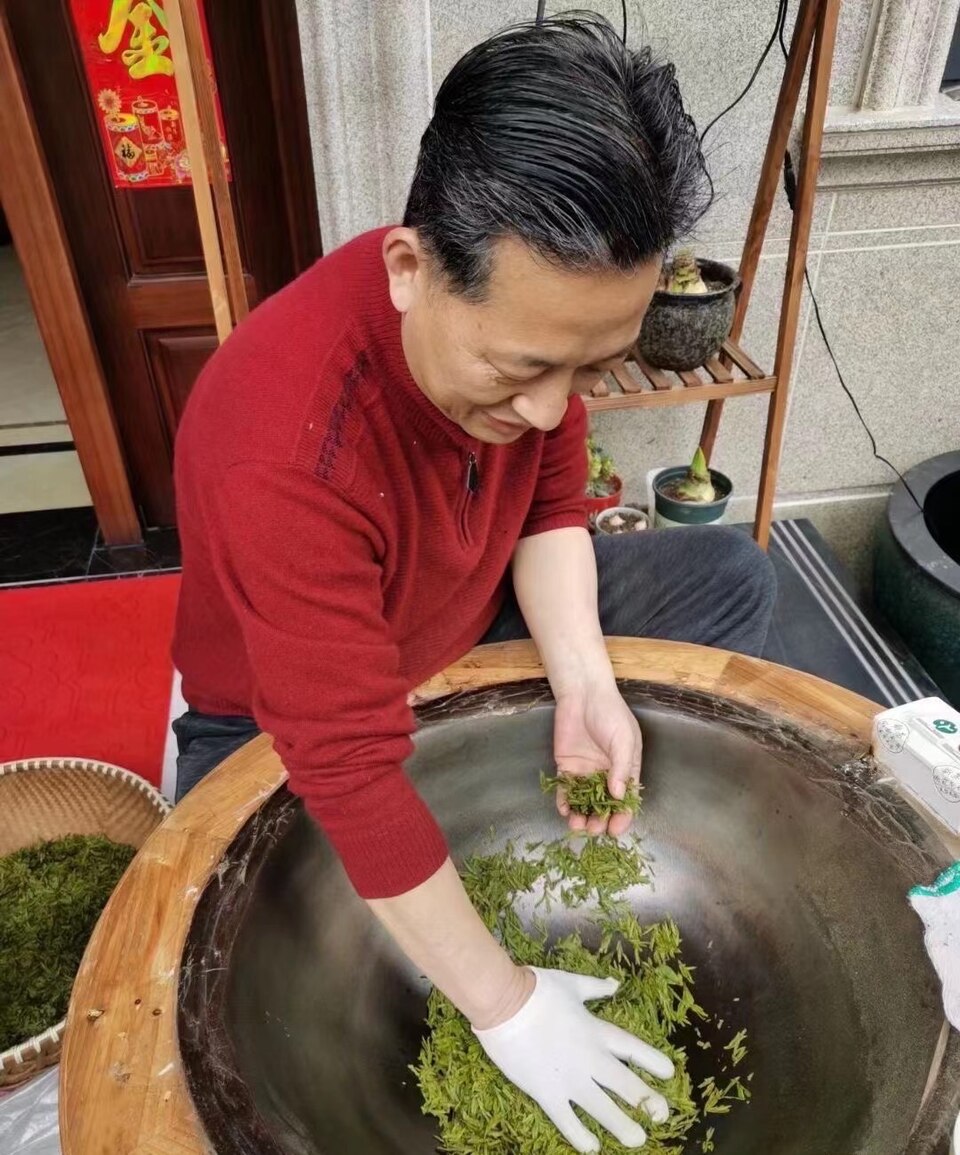
Process descriptions of Hanzhong Xianhao usually include resting the fresh leaves, kill-green heating, strip-forming and shaping, then drying and aroma finishing. The precise wording differs from source to source, but the core logic is stable: first stabilize the fresh-leaf condition, then use heat to stop enzyme activity and secure the green-tea direction, then shape the leaves into their finished form, and finally dry them in a way that supports both aroma and storage stability. What is difficult here is not that the process has many steps. It is that every step has to serve the same goal: turning fine spring buds into a finished tea that looks good, smells good, and drinks well in one unified package.
For readers, the most useful point is that Hanzhong Xianhao is not a tea built around one especially dramatic process keyword. It does not have something as forcefully distinctive as Lu'an Guapian's finishing-fire discourse or Duyun Maojian's repeatedly cited tuan-rou and down-lifting stage. It is better understood as a famous-green-tea process with very high overall completion: the shape has to be neat and elegant, the down must appear naturally, the aroma must be high and clean, the liquor must be fresh, and the finish must remain sweet and clear. If one of those drops away, the sense of refinement falls quickly.
That is exactly why the tea is interesting to write about. It does not win by spectacle. It wins by balance. And teas like that are often the best tools for helping readers understand that the real difficulty of fine green tea is not some bizarre special step, but the fact that no step can go badly wrong.
What does it usually taste like? What do clean aroma, a gentle chestnut-like note, freshness, and returning sweetness really mean here?
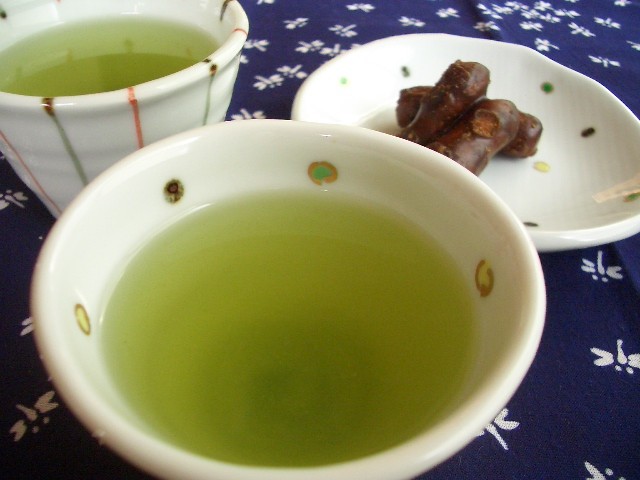
Public descriptions and drinking experience often summarize Hanzhong Xianhao in similar terms: a high and lasting clean aroma, often with tender and fresh notes and sometimes a light chestnut-like tone; a taste that is fresh, smooth, and clearly returning sweet; and a liquor that is bright green or yellow-green and clear. The phrase most likely to be written vaguely is “freshness.” For Hanzhong Xianhao, freshness points to a clear palate with tension: the entry feels alive, bright, and clean, but not so light that it collapses into thinness.
As for the chestnut-like note, it should not be mistaken for a heavy roasted-nut flavor. It is closer to a slightly more mature, slightly warmer, slightly gathered aromatic layer resting on top of a clean green base. It suggests that the tea has not been left raw and grassy, but has been brought to a more settled state without losing spring life. Truly good Hanzhong Xianhao is often not the tea that explodes most dramatically in the first second. It is the tea whose whole line remains smooth: clean on the nose, fresh in the mouth, sweet after swallowing, and finishing with a clear, mouth-watering cleanliness rather than fire or roughness.
When the tea is off, the problems show up clearly. Some teas look fine but the aroma is hollow. Some smell high but drink thin. Others push too hard on color and apparent tenderness and end up green, floating, and structurally weak. What makes Hanzhong Xianhao good is not any one adjective taken to an extreme, but the fact that clean aroma, a gentle chestnut-like note, freshness, and returning sweetness can all stand together.
How is it different from Longjing, Huangshan Maofeng, and Xinyang Maojian?
Compared with Longjing, the difference begins with shape and process goal. Longjing emphasizes flatness, smoothness, pan-shaped order, and its well-known bean-chestnut aromatic logic. Hanzhong Xianhao does not pursue that pressed-flat appearance. It puts more weight on elegant bud form, visible down, and a bright fresh overall structure. Longjing is recognized through flatness and wok aroma; Hanzhong Xianhao is recognized more through upright elegance, freshness, and cleanness.
Compared with Huangshan Maofeng, both belong to the family of fine bud-and-leaf famous green teas, but Huangshan Maofeng leans more strongly toward blossoming bud-leaf beauty, airy elegance, and the familiar floral-orchid narrative. Hanzhong Xianhao moves more toward gathered shape and a direct expression of freshness and sweet return. Huangshan Maofeng is more graceful and airy; Hanzhong Xianhao is more upright and composed. Compared with Xinyang Maojian, both belong broadly to the world of fine bud-based green tea, but Xinyang Maojian often stresses fine round tight strands and the sharper freshness of an early mountain spring, while Hanzhong Xianhao stresses a neater upright shape, a cleaner aroma with a gentle chestnut-like note, and a more balanced fresh structure.
That is why Hanzhong Xianhao is not a disposable addition. It helps make the site's green-tea map more complete: not every high-grade green tea pursues the same kind of tenderness, and not every famous green tea pursues the same kind of aroma. Hanzhong Xianhao represents a Qinba-mountain answer in which balanced completion matters more than any single dramatic feature.
How should Hanzhong Xianhao be brewed?
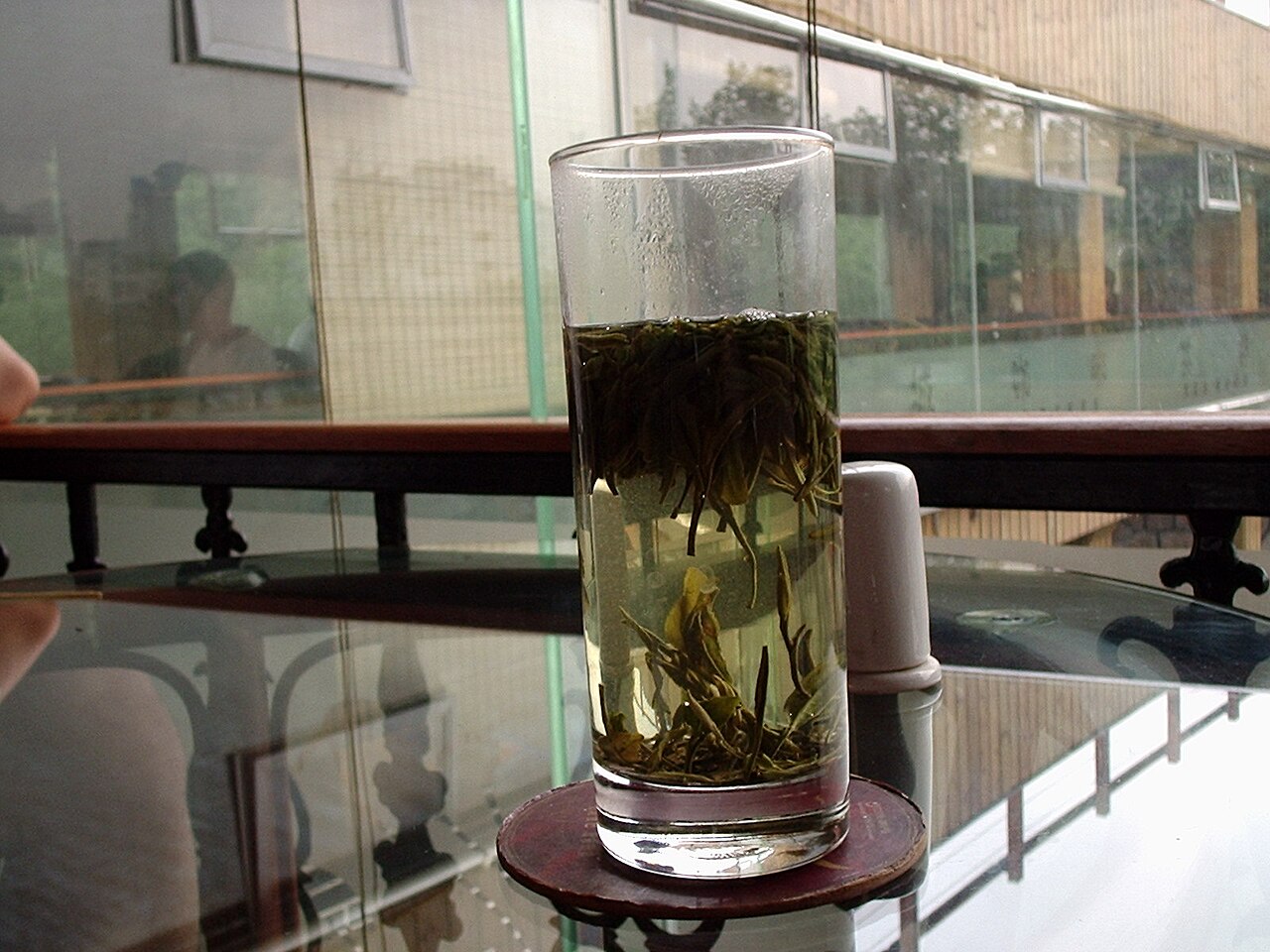
Hanzhong Xianhao works well in both a glass and a gaiwan. The advantage of a glass is that it lets readers watch the buds and leaves open and observe liquor changes clearly, especially when first getting to know this kind of fine green tea. A gaiwan is better for precise control. In most cases, 80°C to 85°C is a stable starting point. It tolerates heat slightly better than the most delicate single-bud teas, but it still should not be brewed with boiling water and long steeping from the start.
In a gaiwan, about 3 grams for 100 to 120 ml of water is usually a good ratio for seeing the structure clearly. The first couple of infusions should stay short, often just over ten seconds to begin with, then gradually lengthen. The judgment of success should not rest only on strength. It should ask whether the aroma is clear, whether the liquor is bright, whether the palate is fresh without becoming sharp or thin, and whether the sweetness in the finish rises naturally. If the temperature is too high or the steep too long, the roughness and stuffiness that do not belong in a fine bud tea will be forced out.
It is also excellent for side-by-side comparison. Brew Hanzhong Xianhao next to Longjing, Huangshan Maofeng, or Xinyang Maojian and the differences become very obvious: the interesting thing about Chinese green tea is not that all of them are green spring teas, but that their shape, aroma, liquor structure, and finish are fundamentally different.

What are the easiest mistakes when buying Hanzhong Xianhao?
The first mistake is treating it as a simple contest of “the tenderer the better.” Tenderness matters, but if there is only tenderness and no shape completion, no aromatic stability, and no support in the finish, the tea may only look expensive rather than actually drink well. The second mistake is buying it as if “a rare green tea from Shaanxi” were itself a quality guarantee. Like any fine green tea, it must finally be judged as tea: is the shape orderly, is the down natural, is the aroma correct, is the liquor stable?
The third mistake is assuming that the greenest color and the most aggressive aroma must indicate the highest grade. Good Hanzhong Xianhao should not smell raw and sharp, and it should not consist only of surface-level freshness. It should feel clean without floating away, fresh without thinning out, and sweet without becoming greasy. A fourth mistake is forgetting that this is also a modern famous tea and assuming that an old story is enough. In reality, the tea depends heavily on standardized raw material and process completion. Without that, only packaging language remains.
Why is this article worth adding to the tea section now?
Because it helps complete the site's green-tea section. Many accounts of Chinese green tea still cluster too heavily around Jiangnan famous teas, Anhui classics, and a small set of especially well-known names. Hanzhong Xianhao adds another convincing route. It is not a copy of the southeastern tea regions, and it does not exist mainly because “northern” green tea sounds unusual. Instead, it uses the Qinba mountain region as a base and turns modern famous-green-tea standards of raw material, form, aroma, and taste into a recognizable system of its own.
More importantly, it works very well as a bilingual bridge article. In Chinese, many readers have heard the name Hanzhong Xianhao without necessarily knowing why it works. In English, it can too easily be reduced to “a famous green tea from Shaanxi.” Writing the Chinese article first and then translating and rewriting the English article tightly along the same spine makes the real point clearer: this is not a secondary famous tea lifted mainly by region, but a mature regional green-tea route in its own right.