Green Tea Feature
Why Anhua Songzhen is more than a “needle-shaped green tea”: from Anhua mountain ecology and its 1950s modern shaping to the clean bright logic of a Hunan famous green tea
When Anhua is mentioned, many readers first think of Anhua dark tea, qianliang tea, or fu brick tea. Some almost turn the place-name itself into shorthand for dark tea. That is exactly why Anhua Songzhen deserves its own article. It is not a side branch inside the dark-tea world, and not a minor green tea riding on Anhua’s fame. It is a very clear needle-shaped famous green tea route. If it is remembered only as “a Hunan green tea that looks like pine needles,” then the interesting part is lost: how a tea from a county famous for dark tea can still stand as a green tea built on tender spring material, shaping precision, and a clean bright sweet-rounded order in the cup.
Anhua Songzhen is also easy to miswrite. One lazy version treats it as little more than a pretty needle-shaped green tea. Another notices that public materials often describe its systematic trial production and final shaping in the mid-twentieth century, and then writes it as if it were merely a modern invention with no real historical root in local tea culture. Neither is right. A stronger reading is this: Anhua Songzhen is a modernly defined famous green tea built on Anhua’s long tea history, mountain ecology, and fine spring leaf resources. It does have a relatively clear modern formation process, but that does not mean it was invented out of nowhere. On the contrary, only a strong tea-producing region could support this kind of highly disciplined needle-shaped green tea.
What kind of tea is Anhua Songzhen?
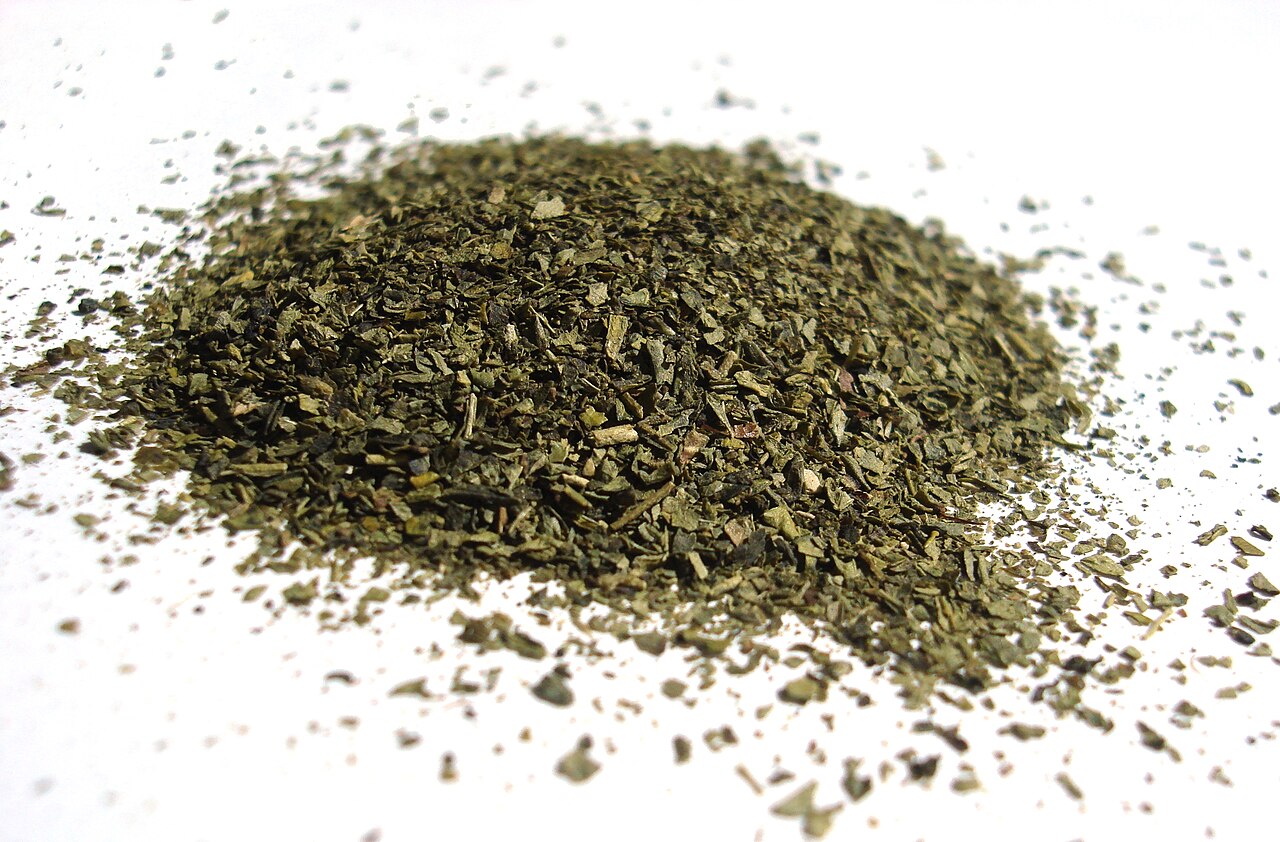
Anhua Songzhen belongs to the Chinese green tea category. More specifically, it is a representative entry in the needle-shaped fine green tea family. Its typical dry-leaf profile is long, fine, straight, rounded, and tight, with a pine-needle-like appearance and an even green color. Once brewed, it usually aims for a clear bright liquor, a clean focused aroma, and a sweet-rounded taste that does not feel coarse. In other words, its first identity is green tea; only after that come the labels of Anhua origin, needle shape, or Hunan famous tea.
That identity matters. Once readers let “Anhua = dark tea” lead the whole discussion, they can start judging Songzhen through the wrong standards. But its goals are entirely different. The material must be tender and even, the kill-green step must be clean, rolling cannot be rough, and shaping has to establish the needle form with real discipline. The finished tea should be clean, straight, fine, even, bright, and gently sweet-rounded in a green tea sense, not thick, aged, fermented, or heavy in the way dark tea is often read.
Why is it an “Anhua tea” without being swallowed by Anhua’s dark-tea identity?
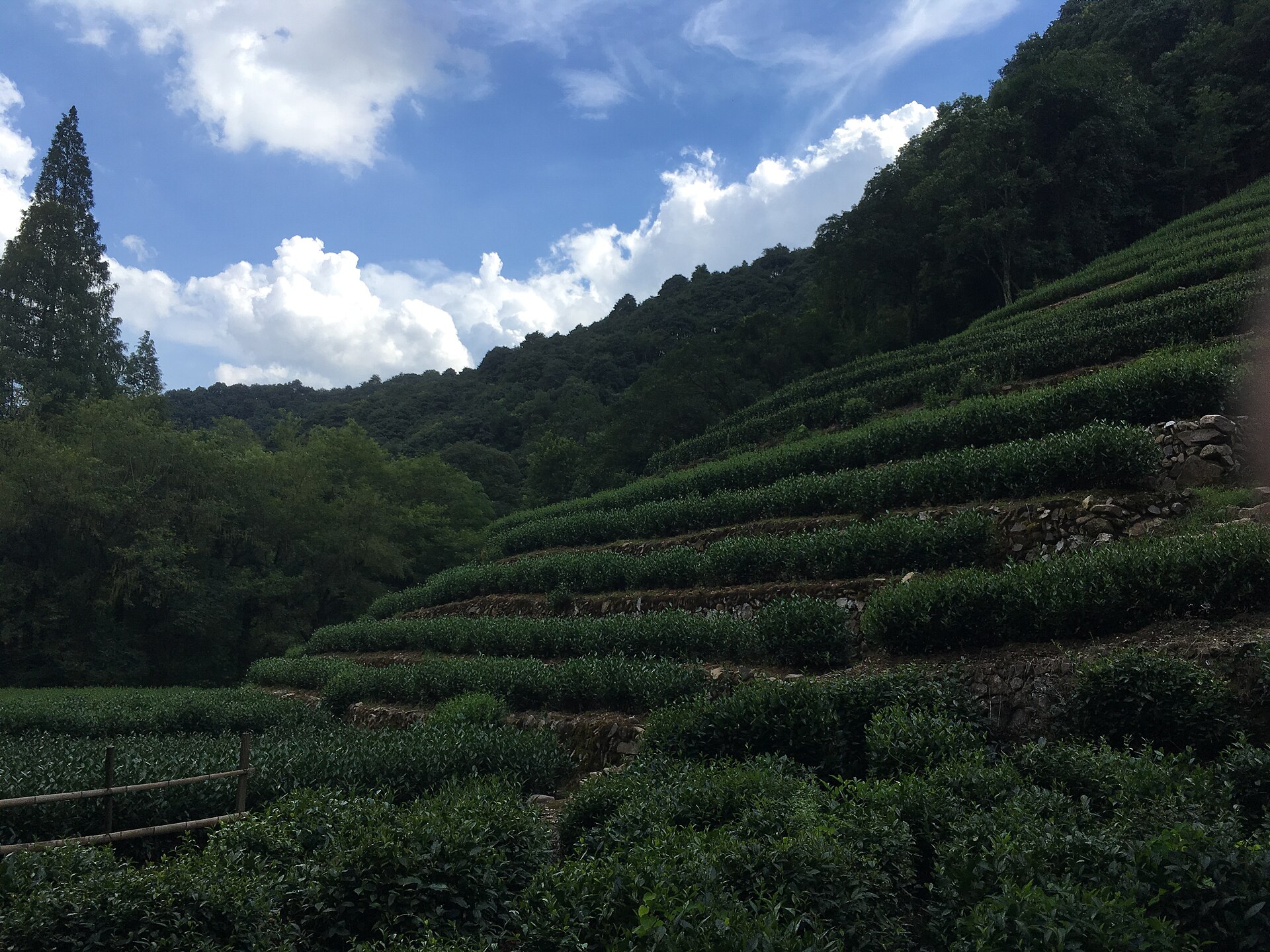
Because “Anhua tea” is broader than “Anhua dark tea.” Public material repeatedly stresses that Anhua sits in a major mountain region in Hunan, with strong rainfall, humidity, suitable soils, and a long tea-growing history. In other words, Anhua was not first a dark-tea county that later happened to make some other teas on the side. It was already a serious tea-producing region, and dark tea became its strongest and most famous line. Anhua Songzhen becomes possible because the region can also support high-grade tender spring material and the more exacting standards of fine famous green tea.
That is why one of the most useful things this tea teaches is that a place-name should not replace tea-category judgment. One region can have a dominant tea identity without forcing every tea made there into the same logic. Anhua dark tea explains how Anhua works inside post-fermented, compressed, and border-trade tea history. Anhua Songzhen explains how the same place can also organize tender leaf, green tea kill-green logic, and precise shaping into a completely different finished-tea goal. They share ecology and tea tradition. They do not share the same tea-category structure.
Why does it emphasize very tender material such as one bud with one opening leaf?
Because needle-shaped green tea depends heavily on consistency of raw material. Public references stress that Anhua Songzhen asks for very tender, even spring leaf, often one bud with one first opening leaf, and avoids insect-damaged leaf, purplish leaf, rain leaf, dew leaf, or overly coarse material. The reason is straightforward: if the starting material is uneven, later shaping will struggle to produce a leaf that is fine, straight, intact, and orderly.
More importantly, this tenderness is not only about attractive appearance. It affects aroma cleanliness, liquor brightness, and the fine texture of the finished tea. Anhua Songzhen is not a tea that can hide weak material under strong roasting or forceful aroma. Its strengths are built on the opposite logic: once the fresh leaf is sufficiently even, the process can progressively fulfill its promises. Even leaf supports even shaping; even shaping supports steadier moisture loss and heat handling; and that steadiness makes it easier for the final cup to show brightness, sweet-roundedness, and stable performance over several infusions.
Why is it called a modernly defined tea without being a rootless modern product?
This is one of the easiest places to go wrong. Public materials clearly indicate that around 1959, Anhua tea experiment stations systematically trialed and refined the tea over several years before the now-recognizable Anhua Songzhen form was fixed. That means it is not one of those teas whose exact present-day form can simply be projected backward into antiquity unchanged. Its current identity as a clearly defined needle-shaped famous green tea does carry a strong modern process of shaping and standardization.
But “modernly defined” does not mean historically thin. A better phrasing is that Anhua Songzhen is a concentrated modern expression of Anhua’s older tea-producing tradition inside the famous-green-tea era. It inherits local knowledge of mountain conditions, spring leaf, and tea-making rhythm, while also absorbing the modern demand for standardized shape, graded quality, and clear process targets. Holding both ideas together prevents two common mistakes: turning it into an ancient myth, or reducing it to a mere modern product.
Where is the process center, and why is shaping so important?
Public materials usually describe a chain including fresh-leaf spreading, kill-green, rolling, first drying or pan work, resting, shaping, final drying, and sorting. The most useful way to read this is not to memorize every step mechanically, but to ask what all of them are serving. The answer is very clear: the making of a fine, straight, needle-like, rounded, tight, bright, sweet-rounded green tea. Anhua Songzhen is not a tea that ends once the leaf is simply fixed and dried. It demands real completion in both form and cup.
The most decisive step is usually shaping. Public references repeatedly stress its importance to the tea’s tight, fine, straight, rounded appearance, and often mention careful control of temperature and hand method. The reason is not mysterious. If shaping is weak, the leaf can become loose, flat, bent, broken, or visually dull. If heat, hand movement, and moisture loss are coordinated well, the leaf gradually establishes the visual and tactile order of fineness, straightness, roundedness, and tightness. That order then affects brewing performance too: more even leaf often means steadier extraction, more focused aroma, and a cleaner liquor line.
Why is it so often described as bright, sweet-rounded, and capable of multiple infusions?
Because that is exactly what its material and process goals are meant to produce in the cup. An ideal Anhua Songzhen does not aim for extreme sharp freshness or heavy roast. It aims for a relatively concentrated clean aroma, a bright liquor, a sweet-rounded entry, and a tidy finish. The sweet-roundedness here is important. It is not sugary sweetness, and it is not dark-tea thickness. It is a green-tea kind of smoothness and composure that feels clean and quietly satisfying.
Its reputation for taking several infusions should not be read as “the stronger the better.” What matters is whether it can stay orderly across several brews without collapsing into dullness or hollowness. Good examples are often not the most explosive in the first cup. They are the ones that keep their line over several rounds: freshness and clean aroma early, more rounded sweetness in the middle, and a finish that does not turn woody, stuffy, or abruptly empty.
How is it different from Longjing, Bi Luo Chun, or Enshi Yulu?
Compared with Longjing, the most obvious difference is shape and process aesthetics. Longjing emphasizes flattened leaves and pan-fired fragrance, while Anhua Songzhen emphasizes a fine straight needle form, rounded tight lines, and the completion of shape discipline. Compared with Bi Luo Chun, it has less of the curled, downy, floral-fruity lightness and feels more upright, more linear, and more formally ordered. Compared with Enshi Yulu, even though both may be discussed in terms of fine elongated leaves, Enshi Yulu is fundamentally defined by a steamed route, while Anhua Songzhen remains a classic fine green tea organized through kill-green, rolling, drying, and shaping in a different logic. They should not be collapsed into one style merely because both appear slender.
That is why Anhua Songzhen matters not as a substitute for another tea, but as a way to make the site’s green tea coverage more complete. It shows readers that fine green tea can still differ sharply in form target, process center, mountain narrative, and cup standard. Not every high-grade green tea is pursuing the same aroma or the same visual ideal.
How should it be brewed so it does not become a tea that looks elegant but tastes hollow?
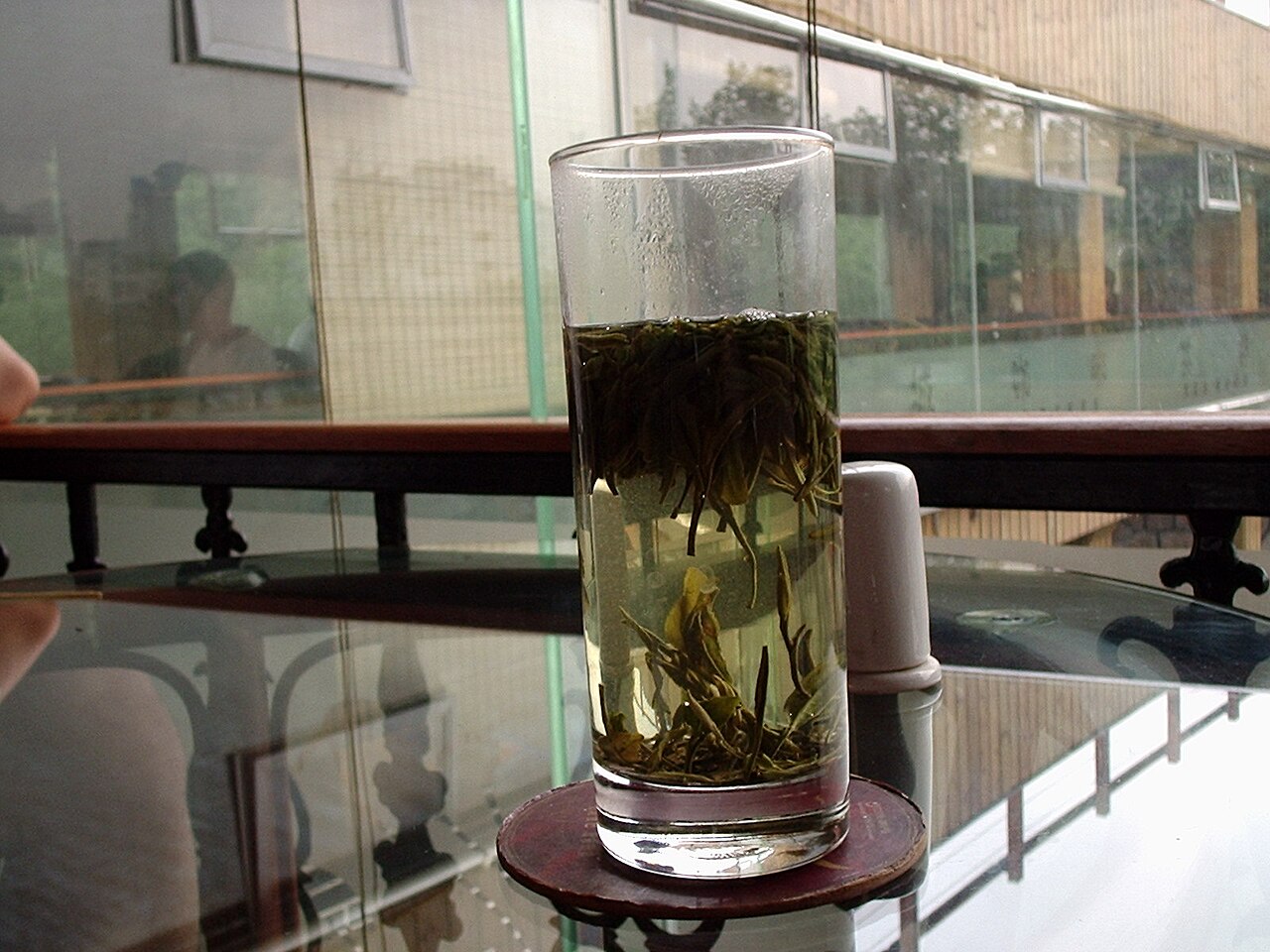
This kind of fine needle-shaped green tea works in either a glass or a gaiwan. A glass is good for watching the leaves open and the brightness of the liquor, while a gaiwan is better for comparing aroma and infusion structure. In practice, starting around 80°C to 85°C is usually sensible, rather than using boiling water and a long steep from the start. With a gaiwan of around 100 to 120 ml, roughly 3 grams of tea is a stable starting point.
The key is not to force concentration, but to protect brightness. The first infusion should not be long; let aroma, freshness, and sweetness unfold gradually, then lengthen later steeps a little step by step. If the water is too hot or the infusion too long, the tea can easily lose its natural cleanliness and sweet-rounded balance, turning stuffy, woody, or overly bitter. With Anhua Songzhen, good brewing does not mean squeezing out the strongest possible liquor. It means steadily reading the tea’s real completion: fine, straight, clean, and bright.
What are the easiest buying mistakes?
The first mistake is treating “more needle-like” as the only standard. Appearance matters, but if shape is not supported by aroma, liquor, and taste, then it is only display. The second mistake is reading “Anhua” automatically through dark tea and then judging this tea by thickness, age, or heavy flavor. That misses what the tea is actually trying to do as a green tea. The third mistake is assuming that because the tea was modernly defined, it must therefore have shallow history or weak cultural grounding. In reality, its successful modern shaping is precisely the result of a strong local tea tradition entering the modern famous-tea era.
A more useful framework is simple: are the dry leaves fine, even, and straight; is the color naturally green; is the aroma clean and refreshing; is the liquor bright rather than cloudy; is the taste sweet-rounded rather than hollow; and can the tea keep basic order over several infusions? If those points hold, then discussions of grade, reputation, and story become meaningful.
Why does the tea section benefit from adding Anhua Songzhen now?
Because if a tea site writes only the most nationally famous mainstream teas, readers easily come away thinking that Chinese green tea has only a few fixed routes. Anhua Songzhen helps correct that by pulling a green-tea branch out of a place-name otherwise dominated by dark tea. The same Anhua can lead toward compressed and post-fermented dark tea, but it can also lead toward tender spring material, needle-shaping discipline, and the bright sweet order of a fine green tea. That makes it especially useful for teaching more precise classification.
It also works well as a bilingual mirror article. Chinese readers are likely to enter through Anhua local tea history, Hunan famous tea, and needle-shaped green tea. English readers are more likely to enter through ideas like needle-shaped green tea, Anhua beyond dark tea, or modern famous green tea. As long as the English article stays tightly aligned with the Chinese source in facts, structure, and conclusion, it becomes a strong bilingual bridge instead of drifting into a different essay.
Source references
- Baidu Baike: Anhua Songzhen
- Cross-checked public material on Anhua geography and tea ecology, local tea history, the mid-twentieth-century trial and shaping of Anhua Songzhen, raw-leaf standards, shaping process, and quality profile.