History feature
Why Tea-Salt Law Was More Than “Managing Tea and Salt Together”: from high-frequency hard goods and frontier supply to how the state used one legal logic to press down routes, taxes, and private channels
When Chinese tea history is discussed today, readers usually remember the louder and more isolated terms first: tea law, tea taxation, the tea tax office, the Tea Salt Bureau, salt-tea exchange, and tea-horse law. But if these institutional terms are placed together, a deeper question appears: why did states so often bring tea and salt into a related legal field of vision at all? What makes “tea-salt law” worth rewriting is not whether there was a single stand-alone code with that exact title, but why tea and salt both came to be treated as goods requiring continuing taxation, document verification, transport, anti-smuggling control, and regional allocation.
Put differently, the central question here is not the narrow one of whether there was literally an ancient code called “tea-salt law.” The more important question is why tea, which is not salt, was increasingly handled through a harder governing logic closer to salt administration. Salt is easy to understand because it is tied naturally to daily subsistence, preservation, and basic supply. Tea looks different: more like a beverage, more like a market commodity, and more like cultural consumption. But once tea entered structures of high-frequency consumption, long-distance transport, frontier dependence, and stable fiscal extraction, it began to grow heavier in the eyes of the state. The real importance of “tea-salt law” lies in recording that increase in weight: tea was no longer merely a commodity that could be taxed, but had partly entered a world of hard goods whose routes and boundaries had to be watched continuously, much like salt.
That is also why this topic belongs naturally in the history section. It pulls tea back out of the softer narratives of vessels, flavor, and famous mountains and places it again inside institutional reality. It also helps connect the site’s existing essays on the Tea Salt Bureau, the tea tax office, tea monopoly policy, tea licenses, the territorial allotment system, and the tea-horse trade system into a clearer line. The state did not first happen to have many scattered agencies and then casually point them at tea. Rather, because tea had already come to be judged as something that required tighter control, stricter verification, route limits, and directed allocation, those institutions gradually grew around it.
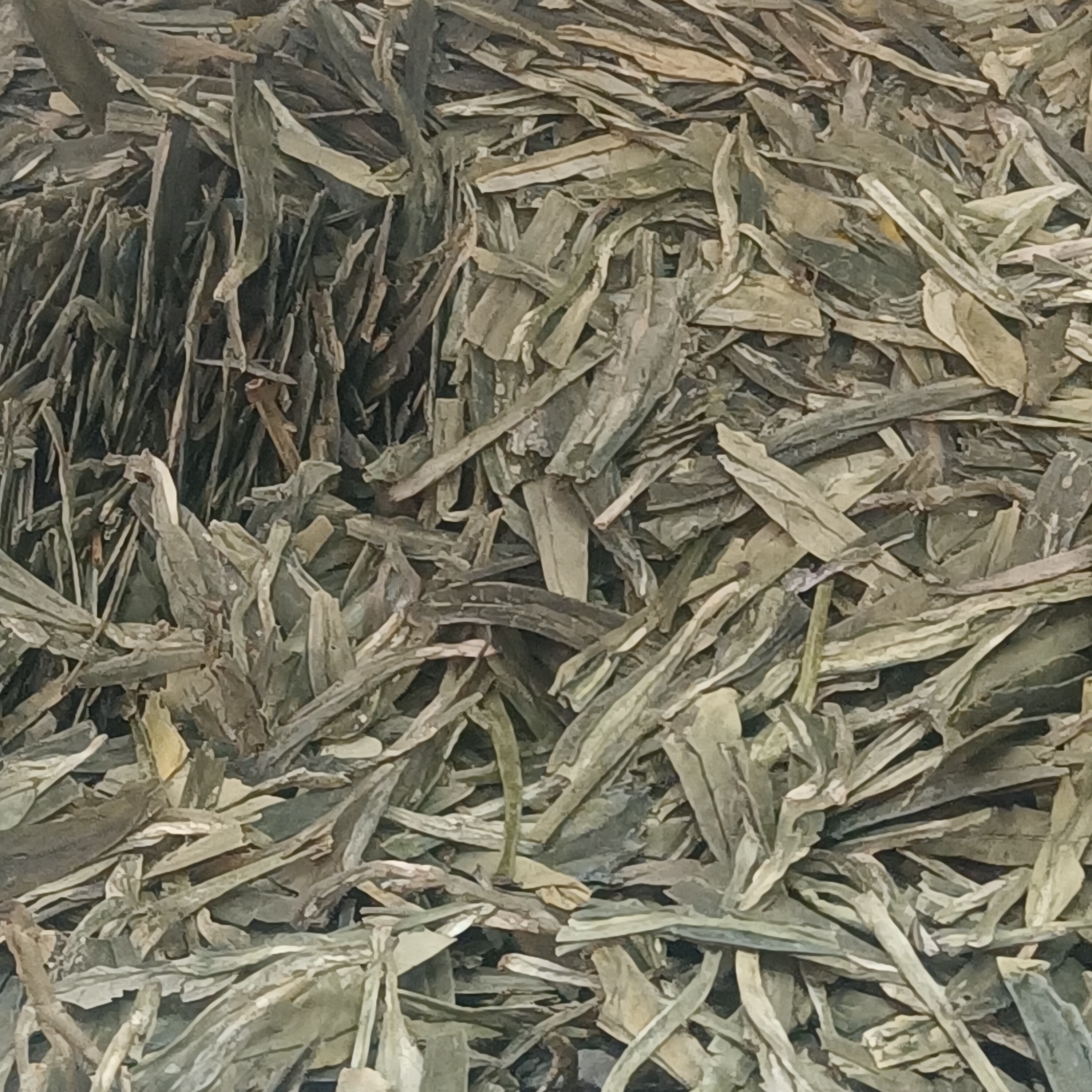
1. Why should “tea-salt law” not be treated as a stiff legal phrase? Because it really explains why the state began to see tea more and more like salt
Many old institutional terms become flattened into the shortest possible explanation when they enter modern discussion. “Tea-salt law” is easily flattened into the claim that premodern states had a joint management framework for tea and salt. That is not false, but it explains almost nothing. What matters is not the phrase “joint management” itself. What matters is why tea and salt, of all goods, were drawn into a similar legal frame. A state does not casually place two goods with different uses, different consumption settings, and different cultural meanings into one governing logic. If it does so, it means a deeper judgment is already in place: in matters of revenue, circulation, frontier supply, and the risks of illicit trade, tea had become sufficiently similar to salt.
That similarity does not lie in the fact that both could be consumed. It lies in the fact that both had become goods that moved constantly, produced revenue constantly, encouraged private rerouting constantly, and, once they slipped out of control, threatened more than a missing tax payment. Salt is easy to understand in this way because it is tied to daily subsistence. Tea was historically transformed into something heavier. As commercial expansion, consumption expansion, and frontier use deepened, tea became not just a drink but also a fiscal source, a long-distance transport good, a frontier supply good, and an object of internal allocation. Once that happened, tea ceased to be merely something in the cup. “Tea-salt law” is, in essence, the legal response to that transformation.
So this is not just a matter of cleaning up an obscure term. It is a shift of perspective. It forces us to admit that one major line in Chinese tea history is the long movement by which tea changed from a thing that could be drunk, sold, and written about into a thing that could be taxed, verified, controlled, and routed within state order. Once that line is visible, the pairing of tea with salt stops looking strange and starts looking inevitable.
2. Why did the state think tea and salt belonged inside a similar legal logic? Because both became high-frequency, long-chain goods that invited private channels and could reshape regional order
To understand “tea-salt law,” the first step is to admit that the state sees goods differently from ordinary consumers. An ordinary person looking at salt thinks of subsistence and flavor. Looking at tea, they think of drinking, taste, and sociability. The state often sees different things first: is this a high-frequency circulating good? Can it yield stable taxes? Does it encourage merchants to bypass official channels? Will price differences constantly redirect it across regions? If its routes escape control, will it affect frontier supply, local order, and fiscal accounts? Once the answers to those questions become increasingly similar for tea and salt, the two goods naturally drift into a related legal field.
Salt always had these features, which is why salt law, salt licenses, salt zones, and anti-smuggling rules appear easy to understand. Tea was not born in the same position; it became so historically. Especially after the Tang and Song, tea consumption widened, tea’s commodity character strengthened, interregional movement grew denser, some frontier societies came to depend on tea more steadily, and the state repeatedly tried to secure reliable fiscal gain from it. Tea thus moved from being merely a local product that could be taxed into a circulating good that had to be watched continuously. Once it reached that stage, tea began to resemble salt in governance terms. Not because their uses were identical, but because their governing problems were.
This is the real skeleton of “tea-salt law.” It does not require tea and salt to be culturally equivalent. It requires only that, in the eyes of the state, both satisfy a similar cluster of conditions: high frequency, profitability, leakiness, susceptibility to smuggling, cross-regional movement, and consequences for supply. Once those conditions are present, the state naturally tends to use related legal tools for both—verification documents, route limits, territorial allocation, anti-smuggling control, transport rules, and directed supply. In that sense, “tea-salt law” was not a way of pretending tea was salt. It was a way of admitting that tea had already been pulled closer to salt inside the logic of governance.

3. Why is tea-salt law not first of all a matter of tax detail, but of routes, boundaries, and visibility?
Today, when people see the word “law,” they often think first of tax rates, punishments, and prohibitions. But with tea-salt law, the point worth stressing is not a single tax figure. It is how the state used law to force tea and salt into routes and boundaries it could see, grasp, and calculate. In other words, tea-salt law was first of all a method for turning goods into system-internal goods. Taxation mattered, but it was only one outcome. More important was that the goods had first to be drawn into an order where they could be registered, verified, traced, transported, and checked against records. Only then did taxation really stand on firm ground.
This is also why tea-salt law naturally connects to tea licenses and territorial allotment systems. Documents, sales zones, and prescribed routes can look like small technical details of circulation, but they are among the most important legal expressions of tea-salt law. The state was not merely asking whether tea could be sold. It was asking who could sell it, on what basis, where it could be sold, and whether it could cross out of its assigned zone. Once tea enters that type of questioning, it is no longer an ordinary market good. It becomes a legal good assigned a legitimate destination.
In that sense, tea-salt law did not primarily govern tax. It governed visibility. The state wanted institutional ways to see which batch of tea, in which region, under which merchant status, with which documents, along which route, was ultimately moving toward which market. Once that visibility broke down, the damage was not only loss of revenue. Supply order, regional allocation, and frontier arrangements all became harder to hold. The center of law therefore shifted naturally from revenue collection alone toward boundary control.
4. Why was tea-salt law so deeply tied to frontier supply? Because in many frontier zones, tea and salt were not optional refinements, but stable resources of daily life
If tea had remained only an inland literati or urban-market drink, the state might never have pulled it so tightly into this kind of legal frame. What really increased its weight was frontier use. The site already has essays on salt-tea exchange, tea bricks, the Tea Horse Road, and the tea-horse trade system. All of them point toward the same fact: in many plateau and frontier societies, tea was not a decorative or occasional luxury. It had entered bodily routines, food habits, and exchange structures as a stable resource. Salt was even more obviously so. Once both goods entered the lower layers of everyday life, the state could no longer treat them as mere tax objects. They became problems of supply order.
This is why tea-salt law deserves to be distinguished from a simple history of tea taxation. A tax history can explain how the state drew money from tea. Tea-salt law explains why the state did not want to let tea behave like an ordinary profit-seeking commodity. If tea were left entirely to market logic, it could easily be pulled toward higher-priced markets, leaving frontier areas that were supposed to be supplied in weaker shape. Salt presents this problem more obviously; tea gradually came to present a similar one in frontier and plateau settings. Once both goods touched regional supply and stability, the legal response naturally began to look similar: not merely taxing them, but fixing routes, zones, quotas, and destinations.
So behind tea-salt law stands a hard political reality. The state was not thinking abstractly about beverages. It was handling resource allocation. Which places could absorb supply first? Which places could not be emptied by more profitable markets elsewhere? Which frontier regions could not be allowed to go short? Which cross-zone transactions had to be defined as illicit goods? As soon as those questions appeared, tea was pulled back out of cultural softness and into institutional hardness. Tea-salt law is one legal trace of that pull.
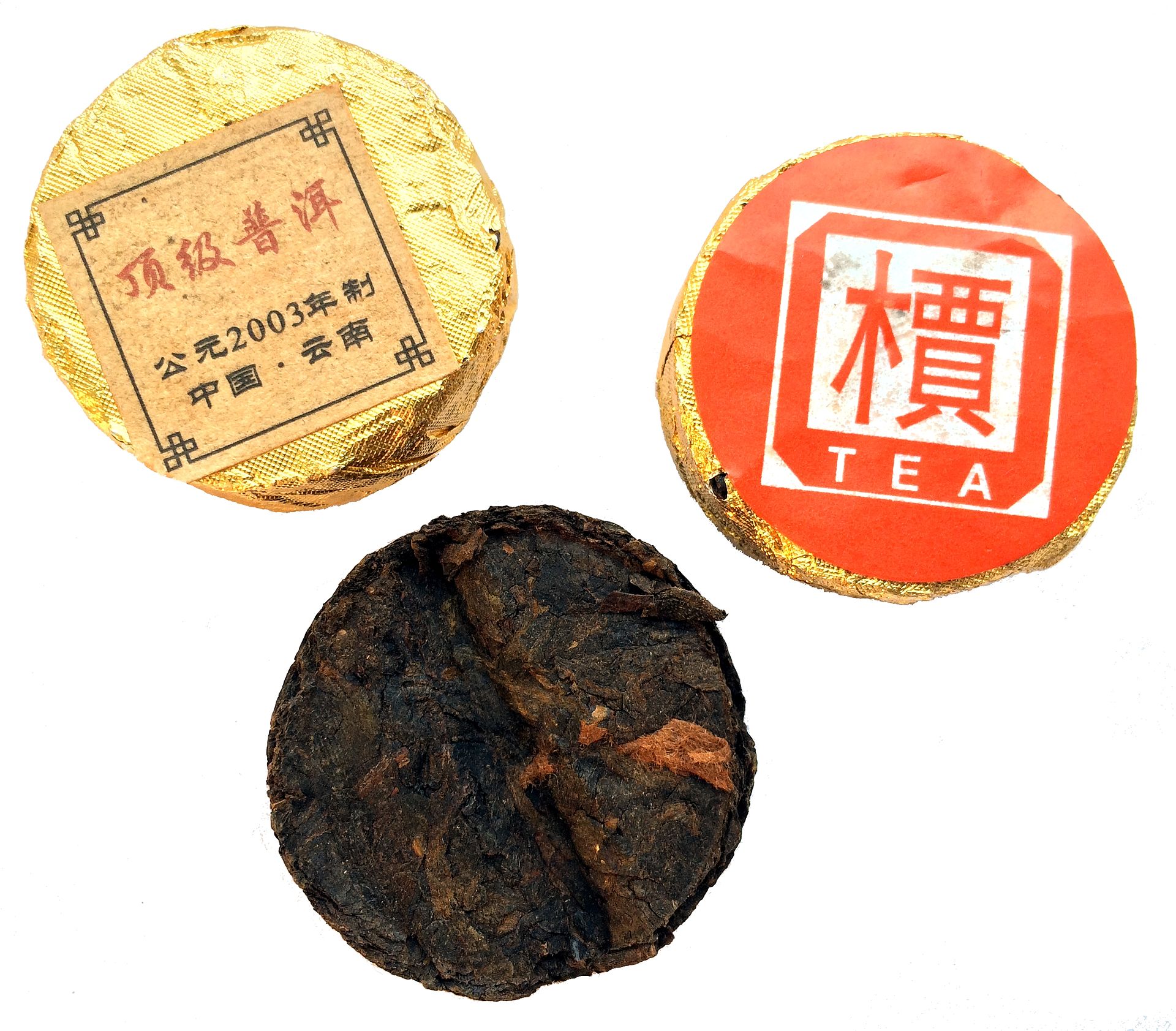
5. Why did tea-salt law inevitably run into the problem of illicit tea and illicit salt? Because what it defended was not a single tax line, but the boundary of lawful circulation
As soon as the state tried to handle tea and salt through a related legal logic, it had to face the same recurring problem: markets always search for routes that are faster, shorter, more flexible, and more profitable than official ones. Illicit salt and illicit tea were therefore not accidental deviations. They were the predictable counterforce created by strong institutional control. The more frequent a good, the more profitable it is, and the farther it moves, the more easily private channels grow around it. For the state, that certainly meant lost tax. But the deeper threat was not just a missing payment. It was the puncturing of the whole boundary of lawful circulation.
What does that mean in practice? It means the state no longer clearly knows which goods remain inside the system and which do not; which routes are recognized and which are gray; which supply is supposed to move toward frontier regions and which has been diverted halfway to higher-profit markets. Once this capacity to distinguish begins to erode, the state loses not only income but knowledge of movement itself. That is why anti-smuggling measures inside tea-salt law were never merely moral gestures or simple punishments for illegal profit. They were attempts to preserve the state’s ability to say: I can still see these goods, sort them, and press their movement back into my order.
This also explains why tea-salt law never stands alone. It naturally pulls in documents, licenses, inspections, transport offices, and territorial rules. Spoken prohibitions cannot defend boundaries by themselves. There must be a whole system that leaves visible institutional traces on moving goods. In that sense, illicit tea and illicit salt were not side topics outside tea-salt law. They were among its core reasons for existing. Because the state knew private channels would always grow, it had to write boundaries finely, specify routes finely, define credentials finely, and punish evasions finely.
6. Why does tea-salt law naturally connect to Tea Salt Bureaus, tea tax offices, and monopoly-goods offices? Because once law is meant to work, it must grow different layers of execution
Law does not operate by itself, and that is especially clear in tea-salt law. If the state had already decided to place tea and salt inside a related governing logic, it could not stop at abstract principle. It had to answer practical questions: who assesses them, who verifies them, who keeps the books, who arranges transport, who watches private channels, and who handles cross-zone leakage? That is why tea-salt law could never remain suspended at the level of “law” alone. It had to grow offices and interfaces of execution beneath it. The site’s existing essays on the tea tax office, the Tea Salt Bureau, and the Quehuowu can all be read as organizational results of the same legal logic at different levels.
The tea tax office sat closer to daily assessment, inspection, and bookkeeping. The Tea Salt Bureau expressed a middle-level frame of joint tea-salt administration. The Quehuowu operated more like a broader platform that brought multiple monopoly goods into one larger net. These were not duplicates of one another. They show that a single legal logic required institutions of different depth and different breadth in order to function. Law defines a boundary; offices make the boundary continue to exist. Law defines a legitimate path; offices make the path registerable, releasable, and blockable.
So the value of tea-salt law lies not only in helping us understand a legal principle. It lies in reconnecting principle and institution. Without that connection, institutional history collapses into jargon. Once we see how tea-salt law grows into bureaus, licenses, inspections, and transport procedures, the institutional world of tea becomes concrete again.
7. Why is tea-salt law not about “making tea more like salt,” but about admitting that tea had become heavy enough to deserve hard-goods treatment?
This point matters. When many people hear “tea-salt law,” they instinctively suspect a forced analogy, as if tea were being awkwardly turned into salt for the sake of institutional history. In fact the historical change ran the other way. Tea was not originally in the same position as salt. But as consumption widened, routes lengthened, frontier dependence deepened, taxation became steadier, and the state grew more concerned with where tea was actually going, the way tea was governed moved closer to the way hard goods were governed. That is not a rhetorical exaggeration. It is the result of a real shift in governing priorities.
Tea-salt law therefore did not erase tea’s cultural nature. It tells us instead that cultural meaning alone could not explain why the state grew increasingly uneasy about tea. What the state really saw was another side of tea: it could reliably produce revenue, but also reliably leak revenue; it could reliably feed frontier systems, but also reliably slip away from them; it could be caught by documents, but also slip through the cracks of documentation. Once all of those things became true at once, tea moved from being an elegant object to being a logistical object that had to be pressed into place. Treating it as a hard good was not a distortion. It was the closest possible description of political reality.
What tea-salt law corrects, then, is our modern habit of writing tea too softly. We too easily reduce it to flavor, aesthetics, and lifestyle, and forget that for long periods tea was also a core good in ledgers, laws, routes, frontier supply, and anti-smuggling systems. Only when tea is placed back inside that weight can we understand why the state kept returning to it as a matter of concern.
8. Why is it still worth rewriting tea-salt law now? Because it corrects our old habit of writing Chinese tea history as if it had tea tables but no institutional skeleton
Contemporary tea content still spreads most easily through famous mountains, vessels, mouthfeel, aroma, craft, and lifestyle. None of that is false or without value. But if Chinese tea history is left with only those layers, it gradually becomes a de-institutionalized history of consumption culture. Tea appears to sit quietly in cups, pots, paintings, and poems, as if it existed naturally to be tasted, admired, and photographed. Real history was not like that. Tea mattered partly because it repeatedly exceeded the position of a mere consumer good and entered fiscal systems, frontier supply, and state governance.
The greatest value of tea-salt law as a topic is that it forces us to restore these softened-away layers. It reminds us that tea was not only drunk, but also taxed; not only admired, but also verified; not only named, but also assigned routes; not only pursued by markets, but also pressed by law toward particular destinations. Once that layer becomes visible, the site’s essays on tea law, tea licenses, tea assessments, tea-horse trade, frontier tea, and illicit tea stop looking like parallel terms and start becoming different cross-sections of the same institutional line.
So rewriting tea-salt law is not about adding one more old legal label. It is about giving Chinese tea history its skeleton back. Tea culture is certainly fascinating, but what makes “tea history” historical rather than merely lifestyle content is very often exactly these less romantic but highly explanatory institutional nodes.
9. Conclusion: what tea-salt law really reveals is not merely that tea and salt were written into rules together, but that tea had become heavy enough to enter the world of hard governance alongside salt
If this essay has to be reduced to one short conclusion, it would be this: tea-salt law matters not because it proves that ancient states mentioned tea and salt together in regulation, but because it shows that the state had already judged tea to be a sufficiently heavy, high-frequency, and supply-sensitive good to justify forms of control closer to salt administration. What it handled was not only tax and not only cargo, but the continuing work of keeping goods inside the system: visible, verifiable, directed, protected against leakage, and guarded against private channels.
That is exactly why tea-salt law naturally connects to the Tea Salt Bureau, the tea tax office, monopoly-goods offices, tea licenses, territorial allotment, frontier tea, and the tea-horse system. It is not a footnote beside those institutions. It is one of the central axes explaining why they can connect to one another at all. Without this layer, we may know many institutional terms without seeing clearly why the state kept taking tea more seriously. Once this layer is restored, the main line of tea’s institutional history becomes much steadier.
So when we talk about Chinese tea history today, it is still not enough to remember only fragrance, vessels, and famous mountains. We also need to remember a long-running historical reality: tea was at times treated by the state as a sufficiently important hard good, and tea-salt law is one of the legal traces left by that reality.
Continue with: Why the Tea Salt Bureau Deserves Its Own History, Why the Tea Tax Office Was More Than an Agency for Collecting Tea Taxes, How salt-tea exchange linked frontier daily life and state allocation, Why Tea-Horse Law Was More Than Trading Tea for Horses, and Why the Territorial Allotment System Was More Than a Tea Distribution Method.
Source references: this essay is based on public Chinese-language material on tea law, salt law, joint tea-salt administration, Tea Salt Bureaus, tea tax offices, tea monopolies, tea licenses, frontier tea distribution, salt-tea exchange, and the relationship between these systems and frontier supply. It is also cross-checked against the site’s existing essays on tea taxation, tea law, the Tea Salt Bureau, the tea tax office, tea licenses, and tea-horse institutions. The emphasis here is not on reconstructing every dynastic clause one by one, but on explaining why the state gradually drew tea into a hard-governance logic closer to salt administration.