History feature
Why the Tea Salt Bureau Deserves Its Own History: from Song-era joint administration of tea and salt to why the state packed two everyday hard goods into the same fiscal and frontier-governance machine
When Chinese tea history is discussed today, readers are more likely to notice louder institutional terms first: tea law, tea licenses, the tea tax office, the Quehuowu, or the Tea Horse Bureau. But if we move one layer deeper into the state’s everyday operating machinery, we reach a more bureaucratic but equally revealing node: the Tea Salt Bureau. Many readers first take the term to mean simply “an old office that handled tea and salt together.” That is not wrong, but it is still too light. The real question is why tea and salt in particular would be placed inside one institutional logic at all. Why not assess them separately, supervise them separately, and leave them to separate channels? Once we ask that question seriously, the Tea Salt Bureau stops looking like a minor and obscure office title and becomes a key entry point for understanding how tea entered fiscal machinery and frontier governance.
So the real issue here is not whether the term itself sounds obscure. It is three harder questions. First, why did the state think tea and salt were suitable for joint administration instead of separate treatment? Second, what exactly was the relationship between the Tea Salt Bureau and other institutions such as tea taxation, tea monopoly policy, tea assessments, tea licenses, and tea-horse law? Third, why does the appearance of a joint institution like the Tea Salt Bureau mean that tea, in the eyes of the state, had moved beyond being a good that could merely be drunk, sold, and taxed, and had become something that could be allocated, regionally directed, protected against private channels, and used together with salt inside a long-running structure of governance? Once these three layers are clear, the Tea Salt Bureau becomes a solid mid-level institutional hinge rather than a dead bureaucratic phrase.
This is also what distinguishes it from institutional topics already covered on the site. The tea tax office leans more toward daily assessment, document checking, and bookkeeping. The Quehuowu leans more toward a broader machine linking tea, salt, aromatics, and other monopoly goods. The Tea Horse Bureau leans more toward frontier exchange and horse procurement. The Tea Salt Bureau addresses a more basic and revealing question: once the state had already concluded that tea and salt were both hard goods that could not simply be left alone, how did it draw them into one governing frame? That question may sound less dramatic than the Tea Horse Bureau, but it is just as important for giving tea history real structure.
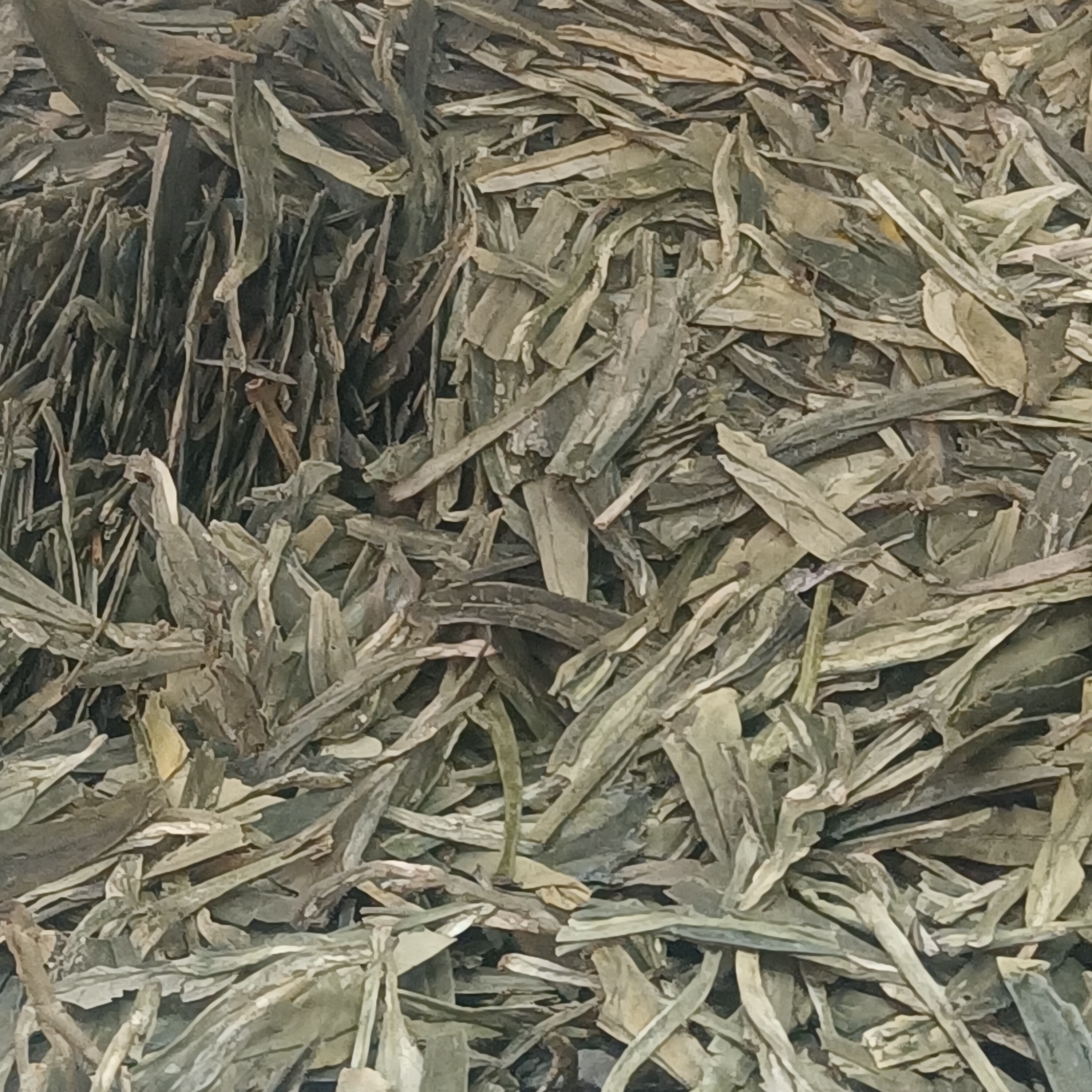
1. Why does the Tea Salt Bureau deserve its own article? Because it was not just “one more office,” but evidence that the state had begun managing tea and salt as comparable hard goods
Many old institutional names, once they enter modern discussion, are quickly reduced to the shortest possible gloss. The Tea Salt Bureau is often handled that way. The usual explanation is simply that it was an office managing tea and salt together. That is not false, but it hides the more important point. If a state chooses to place two different goods inside one administrative logic, it is never merely trying to save paperwork. It has already judged that those goods play comparable roles inside the machinery of rule. At a minimum, both must involve high-frequency circulation, continuing revenue extraction, strong incentives for private trafficking, cross-regional supply pressure, and the possibility that once control breaks down, the damage is not limited to a lost tax payment but spills into wider regional order.
Tea and salt do look different. Salt sits closer to the bottom line of daily subsistence, while tea also carries market and cultural meanings. But precisely because tea was not only an elegant beverage—because in many periods it had already become a high-frequency, long-distance, regionally significant good—it could gradually be drawn into a field of vision closer to salt administration. In other words, the importance of the Tea Salt Bureau does not lie in claiming that tea was the same thing as salt. It lies in showing that, for purposes of governance, tea had grown heavy enough to be treated partly under the same long-term control logic.
That is why the bureau matters. It shows a deeper state judgment: once a good can produce steady income, move across regions, and directly affect daily life and frontier order, the state no longer wants merely to stand outside the market and collect money. It wants to move inside the circulation of the good and rewrite the rules. The Tea Salt Bureau is one of the clearest signs that tea had already reached that stage.
2. Why were tea and salt brought into the same governing frame in the first place? Because both were high-frequency, long-chain goods that invited private routes and could shift regional order
To understand the Tea Salt Bureau, we have to understand why the state thought tea and salt belonged together at all. The basic reason is not mysterious. Both were goods of repeated demand. Both moved across regions. Both naturally generated gray or private channels that tried to bypass official control. Salt is the more obvious case. It was tied to everyday diet, storage, and subsistence, so once the state pulled it into monopoly and licensing systems it inevitably had to confront illicit salt traffic. Tea, in some historical settings, was not very different. Especially from the Tang and Song onward, tea was no longer a minor luxury. It had become a widely consumed, profit-bearing commodity linked to long routes and broad markets. In frontier and plateau regions, it could enter stable structures of daily life and supply as well.
So from the state’s point of view, what made tea and salt “jointly governable” was not identical use, but increasingly similar administrative difficulty. Neither was a good that could be controlled by one edict alone. The state had to care who produced, who resold, who transported, who verified, who crossed boundaries, and who was building alternative circulation networks out of price differences. Both goods could affect revenue, regional supply, and local order through changes in route and destination. As soon as those shared conditions existed, it made sense for the state to pull them toward the same administrative frame.
Seen this way, the Tea Salt Bureau tells us something even more revealing than many offices concerned only with tea. A purely tea-related office might still allow us to imagine tea as a narrow sectoral issue. But a joint tea-salt institution exposes the state’s judgment more directly: tea was no longer a light beverage trade that could be handled casually. It had become, like salt, a flow the state considered too important to leave loose. Once that judgment was in place, later arrangements around licensing, verification, territorial allocation, anti-smuggling enforcement, frontier distribution, and transport all follow more naturally.

3. How was the Tea Salt Bureau different from the tea tax office? The Tea Salt Bureau belongs more to the frame of joint administration, while the tea tax office belongs more to everyday assessment and verification
This site already has an article on the tea tax office, so the distinction matters. Put simply, the tea tax office sits closer to the daily point where tea assessments are made real. Its focus lies in assessment, document verification, ledgers, movement, and the routine grip points of system-internal circulation. The Tea Salt Bureau sits at a broader level. It does not merely handle tea assessment as such. It expresses why the state was willing to treat tea and salt as comparable problems and pull them into one administrative frame of assessment, anti-smuggling control, transport, and regional supply.
If the tea tax office is one set of gears directly meshing with tea accounts and tea circulation, then the Tea Salt Bureau is more like the middle structural frame explaining why those gears were mounted beside salt administration in the first place. The tea tax office answers questions such as: how is this shipment assessed, checked, recorded, and released today? The Tea Salt Bureau answers a harder one: why had the state already decided that tea and salt were heavy enough to be watched together under a similar logic of assessment, anti-smuggling control, movement, and allocation?
That is why the Tea Salt Bureau cannot be treated as just another name for the tea tax office. They are related, but they sit at different levels. The tea tax office is the finer execution interface. The Tea Salt Bureau is the wider interface of joint administration. Without the former, the system would float. Without the latter, we would miss why tea was being moved into such a heavy field of governance at all.
4. How was the Tea Salt Bureau different from the Quehuowu? The Tea Salt Bureau centered on the tea-salt pair, while the Quehuowu formed a broader machine for multiple monopoly goods
Another distinction that matters is the one from the Quehuowu. The two are often blurred because both point to the same broad state tendency: dissatisfaction with ordinary taxation and a move toward tighter machines for high-value circulating goods. But they are not the same thing. The Quehuowu belongs to a broader monopoly-goods system, connecting tea, salt, aromatics, and other high-value goods into a more comprehensive fiscal and accounting structure. The Tea Salt Bureau is more concentrated on tea and salt as a pair—two high-frequency, long-chain goods that were especially sensitive in daily life and frontier supply.
In other words, the Quehuowu is closer to a broader managerial platform, while the Tea Salt Bureau is a more focused node built around the tea-salt problem itself. The former shows that the state had the capacity to organize many monopoly goods together. The latter shows that the pairing of tea and salt by itself had already become a stable and important unit of governance. Distinguishing them keeps tea institutional history from collapsing into a pile of office names. The real logic is not that old states loved multiplying agencies, but that they moved step by step from tea assessments and tea-salt joint administration toward broader machines of monopoly-goods governance.
That is exactly why the Tea Salt Bureau is so worth writing on its own. It sits in a middle layer: broader than the tea tax office, narrower than the Quehuowu. Many institutional changes happen not at the most abstract level of principle and not at the tiniest level of paperwork, but in this middle layer where the state repackages problems, reclassifies goods, and decides which goods deserve to be watched together. The Tea Salt Bureau is unusually clear evidence of that kind of repackaging.
5. Why does the Tea Salt Bureau naturally connect to tea licenses and territorial allocation? Because once tea and salt are treated as hard goods, the state stops asking only whether they can be sold and begins asking where they are supposed to go
Once the state placed tea and salt inside a more intensive field of control, it almost inevitably encountered a more concrete question. It had to decide not only how to assess them, but how to verify them, not only how to verify them, but how to stop them from flowing across regions in unauthorized ways, and not only how to stop those flows, but how to keep certain areas from being emptied by more profitable markets elsewhere. At that point, institutions such as tea licenses, the territorial allotment system, and directed frontier supply grow almost naturally out of the same governing logic.
The deeper point is that the state was not merely managing tax. It was managing destination. Once it had concluded that both tea and salt could affect regional order, it could no longer be satisfied with collecting money and stepping away. It wanted to know where a shipment should go, whether it must move under prescribed documents and prescribed zones, whether merchants would draw frontier supplies away into more profitable markets, and whether ordinary profit-seeking would leave some areas undersupplied. Those questions align closely with salt-administration logic around territorial division, licensing, and anti-smuggling rules. So the relation between the Tea Salt Bureau and later systems of tea licenses, territorial allotment, and regional distribution is not loose coincidence. It is a chain of institutional deepening.
That means the Tea Salt Bureau is valuable not only for what it did directly, but for what it reveals about the state’s position. Tea was no longer merely a market good free to chase the highest price. It was increasingly a good assigned a destination inside a governing map. That point matters enormously for understanding frontier tea, regional sales zones, cross-zone violations, and illicit tea channels later on.
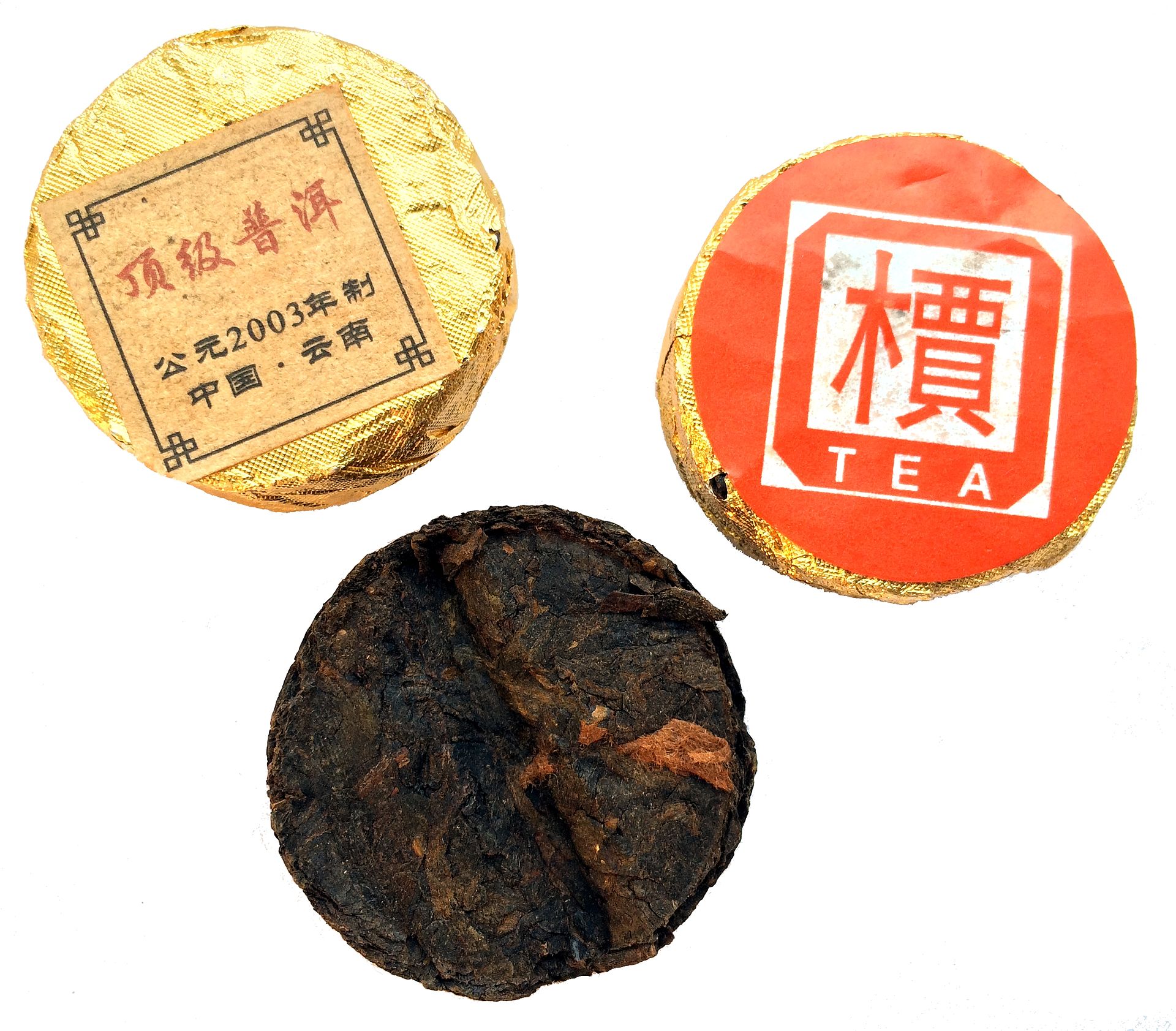
6. Why was the Tea Salt Bureau also tied to frontier governance? Because on the frontier, both tea and salt were everyday stabilizers rather than decorative luxuries
If tea had remained only an inland literati drink, the state might still have taxed it, but not necessarily with the same intensity that brought it toward salt administration. What made tea heavier was frontier reality. The site’s articles on salt-tea exchange, tea bricks, the Tea Horse Road, and tea-horse exchange all circle the same fact: in many frontier societies, both salt and tea were not light or occasional goods. They entered daily life, bodily need, and exchange structure in durable ways. One underpinned taste, preservation, and basic diet; the other entered hot drink routines, food habits, and long-term social life. Once both goods are embedded that deeply in everyday life, the state is far less willing to let them drift completely outside institutional vision.
This is why the Tea Salt Bureau cannot be understood only from the angle of inland fiscal history. It was not just a matter of revenue. It was also a matter of supply. And beyond supply, it was a matter of frontier order. If the state worried that some regions might face salt shortage, it could also worry that some regions might face tea shortage. Especially where tea had become bound to the stability of daily frontier life, tea’s destination ceased to be just a matter of merchant preference and became a regional concern the state wanted to keep watching.
Put differently, the Tea Salt Bureau shows that the state was not governing the frontier separately from material life. It often governed through materials such as tea and salt. Who supplied them, in what quantity, by which route, across which boundaries, with what interruptions or stability—once those questions existed, the bureau could no longer be treated as a mere revenue office. It naturally carried the weight of frontier governance.
7. Why did illicit tea and illicit salt make institutions like the Tea Salt Bureau even more necessary? Because what they defended was not a single tax amount, but the boundary of lawful circulation itself
Any institution that genuinely tried to manage tea and salt together would inevitably face problems of illicit tea and illicit salt together. The reason is simple. Once the state turns tea and salt into high-frequency hard goods and tries to retain lasting control over their circulation, private actors will keep looking for routes that are shorter, faster, cheaper, or more flexible. For the state, that certainly means lost income. But the deeper loss lies elsewhere: the boundary of lawful circulation starts to break down. What counts as system-internal goods and what counts as off-system goods, which areas are supposed to be supplied by which channels, which merchants have standing, and which transport stages are already slipping out of hand—all these distinctions become blurred.
That means the Tea Salt Bureau was defending not a static tax item, but a moving line of administrative boundary. It had to keep distinguishing lawful from unlawful, registered from unregistered, in-zone sales from cross-zone leakage, and official transport from private detours. Once that distinguishing power erodes, the state can no longer treat tea and salt as governable goods. In that sense, illicit tea and illicit salt were not side issues outside the Tea Salt Bureau. They were among the central reasons such a bureau existed at all. Without continuing pressure from smuggling and unauthorized routes, the state would not have needed to place tea and salt so deliberately inside one machine.
Seen from this angle, the Tea Salt Bureau also helps explain why institutions become so fine-grained. It is not because bureaucracies naturally enjoy complexity. It is because if the state wants to preserve boundaries around the destination, revenue, and supply of tea and salt, it must write those boundaries narrowly, verify them narrowly, and watch them narrowly. The more frequent, profitable, and geographically extended a good becomes, the more it pushes institutions in that direction.
8. Why is the Tea Salt Bureau still worth rewriting now? Because it corrects our habit of reducing Chinese tea history to tea tables, famous mountains, and flavor
Much tea writing today still spreads most easily through mountain terroir, teaware, craft, aroma, texture, and lifestyle. None of that is wrong. But if Chinese tea history is reduced to those layers alone, it starts to look like a de-institutionalized consumption culture history. Tea seems always to live quietly in cups, on tables, and in poems, rarely seen as something that entered finance, supply systems, frontier order, and state machinery. The value of a topic like the Tea Salt Bureau is that it presses tea back into institutional reality. Tea was not only drunk; it was managed. It was not only praised; it was assessed. It was not only aestheticized; it was routed, verified, protected against private channels, and directed toward specific regions.
This does not make tea history dry. It makes it complete. A mature history of tea should include not only cultural brilliance but institutional weight. Tea stood near the center of Chinese history not only because it was enjoyable, elegant, or marketable, but because it grew heavy enough to be repeatedly calculated, seized, and fitted into governance. The Tea Salt Bureau is one of the harder pieces of evidence showing just how seriously the state had begun to take tea.
So revisiting the Tea Salt Bureau is not just a matter of adding one more obscure office term to the history section. It fills in an important structural layer. The state did not understand tea through a single law, a single license, or a single bureau. In some periods, it directly learned to see tea together with salt as part of one hard-governance problem. Once that layer is restored, many of the site’s existing institutional essays—on tea assessments, tea monopoly policy, tea licenses, territorial allotment, frontier tea, and tea-horse systems—connect more clearly with one another.
9. Conclusion: what the Tea Salt Bureau really reveals is not merely that an old office managed tea and salt together, but that tea had become heavy enough to enter hard state governance alongside salt
If this essay has to be reduced to one short conclusion, it would be this: the Tea Salt Bureau matters not because it proves that premodern governments once had an office that handled tea and salt under one name, but because it shows that the state had already come to treat tea as a sufficiently “hard” good to be placed beside salt inside a continuing framework of assessment, document verification, transport, anti-smuggling control, and frontier supply. What it managed was not only tax, and not only cargo, but the whole boundary that kept those goods recognizable as lawful goods inside the system.
That is exactly why the Tea Salt Bureau connects so naturally to the tea tax office, the Quehuowu, tea licenses, territorial allotment, frontier tea distribution, and tea-horse institutions. It is not a footnote beside those topics. It is part of the middle structural frame that explains why they could connect to one another in the first place. Without this layer, we may know many institutional names without understanding why the state kept giving tea more and more weight. Once this layer is restored, the main line of tea’s institutional history becomes much steadier.
So when we look at the Tea Salt Bureau today, the most important thing to remember is not the title itself, but the state judgment it exposes: tea was no longer merely something in the cup, and not merely something that could be taxed. It had moved partly into the same category as salt—a good that had to be watched, pressed, allocated, and defended continuously. Any mature history of Chinese tea has to be able to see that layer too.
Continue with: Why the Tea Tax Office Was More Than an Agency for Collecting Tea Taxes, Why the Quehuowu Deserves Its Own History, Why Tea Licenses Deserve a Closer Reading, Why the Territorial Allotment System Was More Than a Tea Distribution Rule, and Why the Tea Horse Bureau Was More Than an Office for Trading Tea for Horses.
Source references: this essay is based on public Chinese-language outline material on joint tea-salt administration after the Song, Tea Salt Bureau-type offices, the treatment of tea and salt as key objects of state assessment and circulation control, and the way these institutions intersected with tea assessments, tea licenses, monopoly-goods administration, frontier tea distribution, and tea-horse systems. It is also cross-checked against the site’s existing articles on the tea tax office, the Quehuowu, tea law, tea licenses, territorial allotment, tea-horse law, and frontier tea. The emphasis here is on the institutional logic of why the state placed tea and salt inside the same hard-governance frame rather than on reconstructing every dynastic office detail line by line.