Why the Tea Tax Office Was More Than an Agency for Collecting Tea Taxes: From Revenue Assessment and Transport to License Verification and Frontier Supply, How the State Turned Tea into a Durable Fiscal Machine
Published: · Updated:
When Chinese tea history is discussed today, the most visible terms are often the most dramatic ones: tea law, tea licenses, the tea-horse office, the tea-horse trade, or the territorial allotment system. But if we move one step deeper into the daily workings of the state, we arrive at a much more bureaucratic term: the tea tax office. Many readers first assume it was simply an office that collected tea taxes. That is not wrong, but it is too thin. What makes the tea tax office historically important is that it shows the state was not satisfied merely to know that tea could be taxed. It wanted a standing administrative machine that could assess tea, verify documents, move shipments, monitor leakage, and ensure that certain tea supplies continued to reach the regions the state cared about most.
In other words, the tea tax office is not a minor footnote in tea history. It is one of the best entry points for understanding how tea was woven into fiscal and governing structures. Once we look closely, many topics already covered on this site—such as tea law, tea monopoly, tea licenses, and tea-horse law—stop looking like isolated institutional slogans. To function in reality, they needed regular administrative bodies to carry them forward. The tea tax office was one of the places where grand principles were turned into daily operations.
That is why this topic belongs naturally in the history section. It pulls Chinese tea back out of abstract institutional language and into the machinery of government itself. The real question is not whether premodern states had officials who handled tea revenue. The real question is why tea was important enough to justify a dedicated office, dedicated ledgers, dedicated verification, dedicated transport arrangements, and sustained coordination with frontier policy, trade routes, and anti-smuggling enforcement. Once that layer becomes visible, many tea-history issues that can seem abstract suddenly become concrete.
Once tea enters the view of the tea tax office, it is no longer simply something to drink. It becomes a commodity that must be counted, assessed, verified, moved, and allocated—exactly the condition that allowed tea to become part of a durable fiscal machine.
tea tax officetea taxationtea licensestransporttea history
1. Why should the tea tax office not be understood only as a tax-collecting bureau? Because it handled the entire operational order created when tea entered state finance
Many institutional terms are flattened into the shortest possible definition when they enter modern discussion. The tea tax office is a good example. The usual gloss is simple: it was a bureau responsible for collecting tea taxes. That is true, but narrow. If a commodity is important enough to require its own office, the state is never interested only in the moment when money finally changes hands. It also needs to know where the taxable tea comes from, who is allowed to handle it, what authorizes its movement, how it is inspected, how it is transported, how leakage is prevented, and how some supplies continue to reach designated markets or frontier zones.
So the tea tax office was not standing outside the market like a passive revenue window. It sat inside the circulation of tea itself. If tea had remained merely a scattered local product, the state would not have needed a dedicated office for it. Such an office became necessary only when tea had already become a stable source of revenue, a regularly circulating commodity, and in some contexts a resource linked to frontier supply and regional order. The deeper meaning of the tea tax office lies exactly there: it helped turn tea from a commodity that could be taxed into one that deserved constant administrative handling.
From this angle, the relation between the tea tax office and tea law becomes clearer. Tea law expressed the state’s general judgment that tea was important enough to justify special law, special restriction, special licensing, and special offices. The tea tax office translated that judgment into daily action: which shipments entered the books, which tea should be assessed, which merchants or transport stages needed verification, and which abnormal flows required scrutiny. Without that routine layer, even the most impressive legal framework would have struggled to function for long.
2. Why did the state think tea deserved a dedicated office at all? Because tea had become a shared object of finance, circulation, and frontier order
Not every taxable commodity produces a specialized and lasting administrative apparatus. Tea did, and that alone tells us something important. In Chinese history, tea long occupied a very unusual position. It was a mass-consumption good, but also an interregional trade good. It could deliver stable fiscal revenue, yet it could also be tied to frontier supply. It circulated in ordinary markets, but it could also be directed, licensed, and strategically allocated by the state. Once a commodity touches all of those levels at once, a government is unlikely to be satisfied with rough extraction alone.
This helps explain why tea accumulated such a dense cluster of institutional vocabulary: tea tax, tea monopoly, tea licenses, territorial allotment, frontier tea, tea-horse administration, tea inspection, and tea tax offices. These were not simply signs that old bureaucracies liked multiplying categories. They reflected the fact that tea had become too important to manage through one office, one rule, or one form of levy alone. The state wanted revenue from tea without fully losing control of tea. It wanted markets to remain active without surrendering authority. It wanted tea to move through trade routes, but feared smuggling, cross-boundary selling, and frontier undersupply. Those goals pulled in different directions, and the result was a finer administrative architecture.
That is why the mere fact of a dedicated office matters. It shows the state no longer treated tea as a casual local product handled incidentally through general arrangements. Tea had become a commodity important enough to absorb ongoing administrative attention. In that sense, the tea tax office was never trivial. It reflects tea’s place in the state’s field of vision: not a good that could simply drift through markets on its own, but one that had to be recorded, assessed, verified, moved, constrained, and continually integrated into fiscal order.
3. What exactly did the tea tax office “assess”? Not just revenue, but the legality, direction, and traceability of tea
When modern readers see the word “tax” or “assessment,” the first thought is usually money. That layer certainly mattered. But if we stop there, we still underestimate the office. For the state, the real issue was not merely how much revenue a shipment produced. The more important question was whether that tea had entered a system in which it could be recognized, documented, and lawfully moved. In other words, the “assessment” handled by the tea tax office was not only fiscal. It was also about making tea visible and legible inside a regulated administrative order.
That is precisely why the office naturally connects to tea licenses and related institutions. Tea licenses addressed how merchants and goods acquired legal status within authorized circulation. The tea tax office stood closer to the everyday execution side of the process: which tea had to enter the tax-and-verification system, which shipments counted as recognized circulation, which cargoes might involve smuggled or unassessed tea, and which batches had to be processed, verified, or forwarded. Seen this way, “tax assessment” was never a purely fiscal act. It was a combined act of revenue control, documentary recognition, and circulation management.
In that sense, the office did not merely process numbers. It processed the institutional condition of tea. Once a shipment had been recorded, assessed, inspected, and recognized, it became tea inside the system. If it bypassed those steps, the state did not see only lost revenue. It saw the breakdown of a chain of recognition. That is one reason why smuggled tea could be treated so seriously. What was lost was not just a small payment, but a whole batch slipping outside the state’s capacity to identify and track it.
Today we usually encounter tea first as a drink and an aesthetic object. The tea tax office reminds us that once tea entered government machinery, what was seen first was not aroma but quantity, destination, revenue, and inspectability.
4. Why was the tea tax office so closely tied to transport? Because the state cared not only about collecting tea, but about getting it where it needed to go
If we think of the tea tax office only as a tax bureau, we also risk missing the transport question. But in real institutional settings, the state was rarely satisfied with simply extracting value and stopping there. As long as tea still served regional supply, frontier provisioning, designated markets, or military-administrative arrangements, “where it went,” “how it got there,” and “who moved it” mattered as much as assessment itself. That is why tea tax offices did not stand alone. They were often linked to transport offices, route inspection, release procedures, and broader chains of movement.
This relationship is crucial. A state that can only tax tea near its place of origin controls very little. A state that can assess tea, maintain documentary order along the route, and sustain transport procedures has something much stronger: the ability to turn tea into an interregional institutional resource. Tea no longer remains just a source of local revenue. It becomes something that can be moved and allocated over distance. For frontier tea, tea-horse exchange, territorial allotment, and other regionally directed systems, that capacity is indispensable.
So the tea tax office did not sit only at the end of a fiscal process collecting money. It stood in the middle of moving circulation, ensuring that the state could keep hold of tea as it traveled. Who matched recorded quantities to physical cargo? Who made sure assessed tea did not dissolve into untraceable gray flows while in transit? Who reduced the risk that more profitable markets would pull tea away from the routes the state preferred? These are all transport questions, and they show that the office dealt not with static tax categories but with tea in motion.
5. Why does the Ming period make the importance of the tea tax office especially visible? Because tea had by then become a joint fiscal and frontier machine
In public Chinese-language summaries, the tea tax office is often easiest to notice in the Ming period. That makes sense. By then tea was no longer merely a local product or ordinary market good. It had been more clearly folded into fiscal extraction, frontier supply, anti-smuggling regulation, and tea-horse administration. As long as the state still treated tea as a frontier resource, it could not maintain order through broad legal language alone. It needed standing institutions to assess, inspect, record, release, and move tea on a continuing basis.
This also helps explain why the tea tax office often appears in Ming institutional history not as a tiny fiscal bureau but alongside tea-horse offices, transport offices, inspection officials, and anti-smuggling supervision. These bodies were not handling unrelated matters. They were different components of the same administrative machine. The tea tax office leaned toward assessment, bookkeeping, and routine control; the tea-horse office toward frontier exchange and horse procurement; transport offices toward logistics and shipment; inspection officials toward supervision and correction. As long as these parts operated together, tea was clearly still being treated as a resource that had to be actively organized rather than left entirely to open market flow.
From this angle, the Ming period makes the office’s real weight especially visible. It was not merely another office added to a crowded bureaucracy. It was a necessary gear in a larger fiscal machine built around tea. Without it, accounts would drift, documents would lose reliability, transport chains would weaken, frontier supply could become unstable, and smuggled tea would find more openings. The more modest and routine an office appears, the more clearly it can reveal how deeply a system has penetrated the capillaries of everyday circulation.
6. Why can the tea tax office not be treated as interchangeable with tea-horse offices, tea licenses, or tea law? Because each addressed a different layer of the system
A common mistake in institutional history is to write closely related terms as if they referred to the same thing. The tea tax office is especially vulnerable to this. It can be misread as another name for the tea-horse office, as the executive arm of tea law, or as a bureaucratic appendage to tea licenses. In fact, these belong to different levels. Tea law addresses why the state kept legislating around tea. Tea licenses address how merchants and cargo obtained legal circulation status. Tea-horse offices address who organized frontier exchange and horse-related governance. The tea tax office addresses how daily assessment, registration, verification, and system-internal circulation were kept in hand.
In other words, the tea tax office is not a duplicate name for a larger institution. It is one of the ordinary administrative points at which larger institutions become real. Without tea law, it lacks higher justification. Without tea licenses, it cannot reliably connect merchants and cargo to legal recognition. Without tea-horse offices, it cannot directly bind tea into frontier governance. But the reverse is also true: without tea tax offices and comparable routine bodies, those grander institutions would lose their everyday grip.
That is exactly why the tea tax office deserves its own article. It helps us distinguish between how a system was stated and how it was actually run. Historical writing often prefers principle-level language because it is neater and easier to narrate. But states do not govern commodities through elegant principles alone. They govern them through offices that look unromantic and repetitive but keep pushing the system forward day after day.
7. Why does the tea tax office also help explain the problem of smuggled tea? Because smuggling threatened not only revenue, but the state’s entire capacity to identify tea administratively
When smuggled tea is discussed, the first modern instinct is to see it as tax evasion. That is reasonable, but still too narrow. For the tea tax office, the most dangerous feature of smuggled tea was not simply the loss of a payment. It was the fact that whole shipments slipped outside the state’s chain of recognition. They had not been entered properly in the books, had not passed through normal verification, and no longer stood in a stable relation to licenses, assessments, and transport records. The state thus lost not only fiscal information but also knowledge of where tea was actually going.
That loss was larger than a missed levy. Once tea slipped outside the institutional chain, it could bypass designated sales zones, bypass frontier supply arrangements, bypass authorized routes, and disrupt the regional balances the state was trying to maintain. That is why tea tax offices, inspection agencies, and anti-smuggling rules often persisted together. What had to be protected was not just revenue, but the state’s capacity to keep tea visible in motion. Once that capacity eroded, the state might still know that tea was abundant in the market, but it would no longer know which tea remained inside the system, which had escaped it, and which flows were already undermining intended arrangements.
In that sense, the tea tax office also managed visibility itself. It did not merely manage tax levels, licenses, registers, and release procedures. It managed whether the state could continue to see tea clearly as an object of administration. As soon as that point becomes clear, smuggled tea ceases to be only an economic offense. It becomes evidence that institutional boundaries have been pierced.
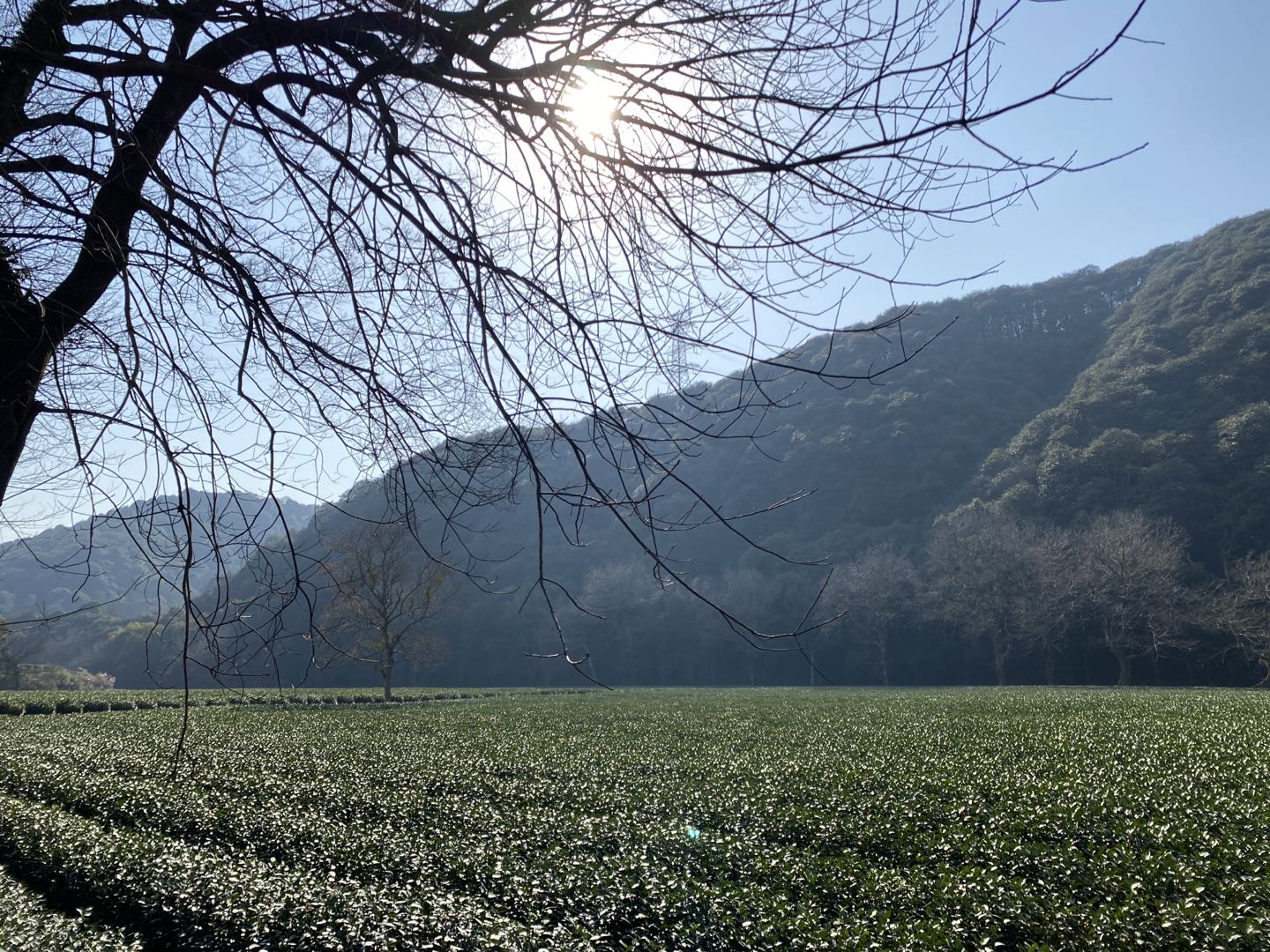
Producing regions did not automatically feed the markets the state wanted. For tea inside systems of assessment and verification, the route from mountain production to distant circulation always passed through layers of administrative connection, and the tea tax office was one important part of that chain.
8. Why is it still worth revisiting the tea tax office now? Because it corrects our habit of writing tea history as if it were only cultural consumption history
Contemporary tea writing is still most comfortable with flavor, vessels, aesthetics, mountain terroir, and lifestyle. All of that matters. But if Chinese tea history ends there, it becomes too light. Tea begins to look as if it always lived only in cups, poems, and elegant scenes. A topic like the tea tax office restores institutional reality. Tea could be tasted, but it could also be booked. It could be brewed, but it could also be assessed. It could appear at a tea table, but it could also appear in office registers and route inspections.
This does not make tea history dry. It makes it complete. A mature history of tea should include cultural brilliance, but also institutional weight. Why did tea remain in the state’s field of attention for so long? Why did it accumulate so many arrangements around assessment, licenses, transport, frontier distribution, and anti-smuggling enforcement? A subject like the tea tax office forces us to answer those questions instead of leaving them in the background.
That is why the tea tax office should no longer be hurried past as a dull old bureaucratic phrase. It is one of the clearest entry points for understanding how Chinese tea moved from local product into a component of fiscal machinery. Without it, we see only tea’s life in culture. With it, we also see tea’s weight inside the state.
9. Conclusion: the tea tax office handled not only tea revenue, but the state’s effort to keep tea inside a taxable, verifiable, movable, and governable order
If this essay has to be reduced to one short conclusion, it would be this: the tea tax office matters not because it proves that premodern states had offices for collecting tea taxes, but because it shows that tea had already become a commodity requiring ongoing administrative treatment. What it managed was not revenue alone, but the way revenue, cargo, documents, movement, legality, transport, and regional supply were all held together inside one order.
That is why the tea tax office naturally links to tea law, tea licenses, tea-horse law, frontier tea distribution, inspection, and anti-smuggling enforcement. It was not an isolated minor bureau. It was a very concrete, very routine, and very important administrative grip-point within the deeper fiscal and governing history of Chinese tea. Without it, larger institutions float in abstraction. With it, we can finally see how the state made tea into a machine that could keep running.
So when we speak about Chinese tea history today, it is worth remembering not only tea’s fragrance, vessels, and stories, but also the institutional points that seem less romantic. Some of the real complexity and fascination of tea history lies not only in the cup, but also in the ledgers, inspections, and offices around it.
Source references: this essay synthesizes publicly available Chinese-language overviews on tea law, tea-horse law, tea tax offices, tea licenses, transport administration, tea inspection, and anti-smuggling regulations, especially the commonly cited institutional outline that in the Ming period standing tea tax offices, tea-horse offices, transport arrangements, and inspection mechanisms operated together across tea administration. It also builds on the institutional lines already developed in this site’s essays on tea law, tea licenses, tea-horse law, and territorial allotment, with the emphasis placed on the tea tax office as the kind of office that translated fiscal principles into everyday administrative action rather than on reconstructing every dynastic office detail article by article.