History feature
Why Tea in the Daily Rhythm of the Monastery Deserves Its Own Place in Chinese Tea History: from meditation, post-meal tea, night sitting, and receiving guests to how tea became a stable infrastructure of wakefulness in monastic life
When Chinese tea history is discussed today, readers usually notice The Classic of Tea, the spread of tea drinking, boiled and cooked tea, teahouses, tea dao discourse, or especially memorable cases such as Zhaozhou’s “have tea”. By contrast, tea in monastic daily life is often flattened into a passing background sentence: monks also drank tea, monasteries also cultivated tea, Chan and tea had a close relationship. But if we stop there, the most important historical layer disappears. A monastery was not simply a place where monks happened to drink tea. It was a highly ordered machine of time, and tea grew inside that rhythm into a low-drama but indispensable infrastructure of wakefulness.
So the real issue here is not simply whether Buddhism liked tea. It is four larger questions. First, why was tea especially suited to entering monastery routine rather than remaining only an occasional offering, medicinal substance, or guest drink? Second, why does the real importance of monastery tea history lie not in mystery, but in the way tea was inserted into repeated actions such as meditation, post-meal pause, night sitting, receiving visitors, labor, and daily rising and resting? Third, why did tea, once stabilized inside monastic rhythm, deeply shape later understandings of tea and practice, tea and wakefulness, and tea and order? Fourth, why does rewriting monastery tea history help correct an old weakness in tea history writing: too much vessel history, flavor history, and trade history, and too little attention to tea as a tool for organizing time and bodily state?
This is also why the topic relates to, but cannot be replaced by, other essays on the site. “Have tea” treats the way one phrase condenses tea into a shared language between practice and everyday life. Teahouses treats tea as organizer of public space. Tea dao treats the later elevation of tea into spiritual discourse. But monastery tea history addresses a lower and harder level: when a highly ordered communal life needs steady wakefulness, transition, hospitality, and rhythm, why does tea become the most suitable, most repeatable, and least theatrically excessive act?

1. Why does tea in monastery life deserve its own place in tea history? Because it illuminates not what tea meant in the abstract, but why tea was so well suited to become a stable daily act
A great deal of tea history focuses on what tea is: what tree, what leaf, what process, what vessel, what fragrance, what rank, how it is boiled, how it is brewed, how it is sold. Tea in monastery life is connected to all of that, of course, but its real historical weight lies elsewhere. It answers a different question: why, in a communal space with unusually high demands on daily order, did tea become such a natural, high-frequency, and low-explanation act? For that to happen, the precondition was not simply that monasteries were “cultured.” Tea had to be stable enough, intelligible enough, and low-key enough to enter timetables, chains of action, and the fine grain of common life.
This matters enormously because it reminds us that tea history is not only the history of things, but also the history of actions; not only the history of flavor and utensils, but the history of rhythm and bodily condition. The monastery is one of the best places to see this magnified. Once an act can recur stably inside monastic rhythm, it ceases to be a personal preference and begins to acquire structural meaning. Tea deserves to be written into monastery history not because it gave Buddhism an extra layer of elegance, but because it lets us see that tea in China very early acquired the capacity to enter highly ordered systems of common life.
So what matters most here is not “monks also understood tea,” but “why tea could be made into routine here.” Once that step is clear, many later developments become easier to understand: why tea became linked to wakefulness, why tea became linked to meditation, and why tea became linked to orderly action, emotional restraint, and rhythmically managed bodily life. Those later spiritualized readings did not appear from nowhere. They stand on the hard foundation of monastic daily practice.
2. Why tea rather than something else fit monastic rhythm so well? Because tea combined wakefulness, lightness, repeatability, hospitality, and non-disruption of order
If we ask seriously why tea, rather than some other substance or act, became so well suited to monastic life—to keeping people alert, helping transitions, receiving guests, easing the post-meal shift, and sustaining clarity in night sitting—the answer is not mystical at all. Tea fit monasteries not because it came with an inherent religious aura, but because it gathered several very practical conditions at once.
The first was wakefulness. Monastic time is not loose and drifting; it is cut into fine segments by meditation, chanting, meals, receiving people, labor, and night practice. Such a life places high demands on bodily state: not too dull, not too scattered, not overstimulated. Tea occupies an unusually good position here. It supports clarity without pushing emotion upward the way alcohol might. It refreshes without turning the scene into excitement. The second was lightness. Monastic life demands actions that can fit into the fine grain of common order. Anything too heavy, too full, or too dramatic fits badly. Tea is light enough to appear at many points without breaking the rhythm. The third was repeatability. Tea is not only a grand single ritual; it is an act that can be carried out day after day, copied, and understood again and again. The fourth was hospitality. A monastery is never only an internal world of solitary practice. It must receive outsiders, shift scenes, and allow strangers to enter an understandable order. Tea does this naturally. The fifth was non-disruption. Once tea enters a space, it does not radically alter the ethical temperature of the scene. It can be drunk alone or together; it can be quiet and it can receive.
These layers taken together made tea especially fit for monastic routine. It was not the most expensive thing, the loudest thing, or the strongest thing; it was stable enough, low-key enough, and repeatable enough. In other words, tea could stand firmly in the monastery not because it was first sacralized, but because it was especially suitable for dailyization. It first worked as action, and only later could it be elevated in meaning.

3. Why does the real importance of monastery tea history lie in rhythm rather than doctrine alone? Because tea entered the timetable before it was elevated into spiritual language
Later writing about tea and Chan, or tea and practice, often jumps too quickly to the level of ideas, as if tea were already from the beginning a symbol of higher spiritual meaning. But if we return to monastery life itself, what matters first is rhythm. A monastery is not a pure thought-space. It is above all a place where life is divided by time, advanced by acts, and held together by common routine. Once an act appears there stably enough, it will eventually acquire larger meanings. Tea first found its place not in concept, but in time.
After meals there had to be a transition from eating toward a calmer state. Night sitting required clarity without collapse into dullness. Before and after meditation, body and mood needed a shift that was clear but not overstated. Receiving visitors required an entrance that was courteous without being extravagant. Tea fits all of these nodes with unusual ease. It does not first appear in order to “express a doctrine.” It first appears as an act inside time. Because it recurs at these points, later understanding finds it increasingly easy to connect tea with wakefulness, restraint, return to the present, and everyday practice.
This is crucial for tea history because it shows that much of tea’s spirituality in China did not begin with large theory and then recruit tea as illustration. Often the sequence ran the other way: first a practical act repeated, understood, and stabilized in daily life; only later did people name it, summarize it, and elevate it. The strongest historical feeling in monastery tea history comes exactly from this. Tea did not first enter monasteries as “deep thought.” It entered first as “fitting action.” Once that action became stable enough, spiritual explanation naturally thickened around it.
So if we write monastery tea only as proof that Buddhism saw something profound in tea, we miss the more historically real layer: tea could later be seen as deep because it had earlier been used in stable ways. Stable in time, stable in action, stable in the structure of daily life. That is exactly why monastery tea history deserves to be written on its own.
4. Why did monasteries turn tea into an infrastructure of wakefulness rather than leaving it as an occasional drink? Because communal practice fears less the lack of meaning than the loosening of order in small details
Once we look seriously at monastic life, we see that it naturally favors things that are steadily executable. The reason is simple: communal practice often fears not the absence of grand principle, but the gradual loosening of order in small details. Bodies become tired. Attention scatters. Rhythms break. Transitions grow sloppy. Receiving visitors becomes awkward. Night practice becomes dull. If a communal space wants to sustain itself over time, it needs a set of low-drama but continually effective supports. Tea is especially suited to play that role.
Calling tea an “infrastructure” is not an exaggeration. It really does perform infrastructural work: making wakefulness more sustainable, transitions smoother, hospitality more natural, and certain key nodes of communal life more stable through a low-cost act. Tea is not as visible as bells and drums, not as explicitly written as monastic rules, and not as doctrinal as scripture. Yet it participates in the daily running of life in concrete ways. Things of this kind are exactly what historical writing often misses, because they are not spectacular enough. But in history, what allows a structured communal space to run over time is very often this kind of quiet tool.
This also helps us understand why later centuries so naturally tied tea to wakefulness. In the monastery, wakefulness was not an abstract adjective but a real bodily and temporal requirement. Tea here was not a poetic object but a solution. It was not brought out primarily so people could admire its “Zen mood.” It was used repeatedly to keep order from loosening. That is why the real force of monastery tea history lies not in poetry, but in utility—and in utility repeated long enough that it eventually became a powerful cultural impression.
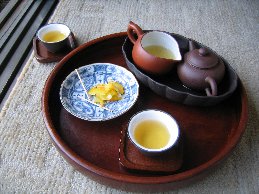
5. Why did monastery tea history deeply shape later imaginations of tea and practice? Because what later generations remember best is not detailed regulation, but actions that have already been stabilized through repetition
Very few historical facts pass through time in full detail. What survives most strongly is often not the densest operating detail, but acts that were already stabilized in life and then compressed in language. Tea in the monastery belongs exactly to this category. Later generations may not know the exact daily schedule of a particular temple, nor the precise supply arrangements of monastic tea at a given time. But once relations such as tea and wakefulness, tea and meditation, tea and hospitality, tea and ordinary mind have been stabilized, cultural memory can seize them very easily.
This is also why cases like Zhaozhou’s “have tea” gained such long afterlives. The phrase did not invent from nothing the relation between tea and practice. It captured an action structure already stabilized inside monastic routine. Put differently: without a broader and longer background of monastic tea practice, “have tea” would not have been so immediately legible or so durable. Koans can compress history only because they compress not empty concepts, but acts already performed again and again in common life.
Later imaginations of tea and practice became so firm largely for this reason. What people remembered was not “some monastery supplied tea to monks,” but that tea somehow seemed naturally tied to clarity, rhythm, restraint, and ordinary mind. Behind that impression lies not pure transmission of ideas, but the accumulation of repeated daily action. Once monastery tea history is clearly written, many later abstract formulations suddenly land on the ground: they are not groundless inventions, but growths from long-stabilized structures of life.
6. Why does monastery tea history also help us reread the everyday history of Chinese tea? Because tea’s force often came from how it was used, not only from what it tasted like
Today it is easy to write tea history as flavor history, classification history, and famous-product history: which tea smells higher, which liquor tastes sweeter, which mountain is more valuable, which vessel fits which method. Monastery tea history forces us to face another fact: tea mattered not only because of what it tasted like, but because of how it was used. Once tea enters monastic life, it rarely appears as a pure aesthetic object. It appears more often as a temporal act and a means of bodily adjustment. It helps people move from one state into another, from scattered to gathered, from sleepy to clear, from strangeness to settled reception, from meal to restored rhythm.
This history of use is crucial because it corrects a common bias in tea writing: the assumption that only famous teas, famous vessels, and famous methods deserve sustained treatment, while low-key, repetitive, and seemingly modest modes of use belong only in the background. In fact, Chinese tea could live so long and so steadily precisely because it could enter both high-aesthetic scenes and low-key everyday structures. Monastery tea history shows that second layer especially clearly. It reminds us that in many key historical settings, tea mattered not because it was glamorous, but because it was extraordinarily suitable for daily use.
This also lets monastery tea history connect more fully with teahouses, the spread of tea drinking, and tea dao discourse. Teahouses show how tea organizes public space. The spread of drinking shows how tea enters wider social life. Later tea-dao discourse shows how tea was spiritually rewritten. Monastery tea history adds a crucial middle layer: how tea, within the disciplined rhythm of common life, was first made into an executable, repeatable, and dependable act. Without that layer, many later higher expressions float too freely.

7. Why is it still worth rewriting tea in monastic daily life now? Because it corrects our habit of making tea and Chan too mystical while writing tea and lived order too thinly
One problem in present-day writing about tea and Chan is that it very easily becomes more and more mystical. By the end, tea begins to look as if it were naturally a symbol of higher metaphysical truth, and monasteries look like places whose main purpose was to add spiritual glow to tea. Such writing is convenient and easy to circulate, but it lacks historical density. Stable cultural relations do not first stand on floating grand words; they stand first on repeated life. What mattered most about tea in monasteries was not how deeply it was later described, but how steadily it first functioned inside daily life.
Rewriting this topic allows us to press tea and Chan back into history. We see much more clearly that the relation between tea and monasteries was first not a philosophical slogan, but a practical logic of communal life. Tea helped maintain clarity, join one segment of order to the next, receive visitors, support night practice, and sustain a low-drama but effective bodily rhythm within ordinary living. Because these layers were stabilized for long enough, later generations could more easily understand tea as an act carrying spiritual significance.
So rewriting monastery tea history is not about adding one more beautiful gloss to “tea and Chan.” It is about making that relation more real. Once written more realistically, the relation does not become shallower. It becomes firmer, because we understand that it did not rise by rhetoric alone. It rose because it was done every day.
8. Conclusion: what tea in monastic daily life really shows is not merely that Buddhist temples also drank tea, but why tea could become a shared act between wakefulness, order, and everyday practice in Chinese history
If this whole article had to be reduced to one shortest conclusion, it would be this: tea in the daily rhythm of the monastery deserves its own place in Chinese tea history not because it proves that Buddhism and tea were closely linked, but because it reveals one of tea’s most important historical capacities in China—its ability to enter highly ordered communal life and there perform a sustained, repeatable, low-key but highly efficient work of wakefulness. Tea was first a fitting act, and only later was it repeatedly interpreted into thicker cultural and spiritual language.
Once this is understood, many apparently separate topics begin to connect more clearly: “have tea”, tea dao, teahouses, and later narratives of tea and self-cultivation. What they jointly explain is not that tea was somehow naturally profound, but that tea was exceptionally suited to becoming a stable act. Once an act is stable enough, clear enough, and repeatable enough, it enters language, concepts, and cultural memory, until it comes to seem self-evident.
So monastery tea history should not remain only in the background, nor should it be flattened into a slogan such as “tea and Chan are of one flavor.” It deserves to be restored to Chinese tea history as a highly weighty middle structure. Through it we can see more clearly that tea entered not only taste and aesthetics, but rhythm and order; not only utensils and trade, but the fine-grained management of bodily life within common routine; not only the world of consumed things, but the world of repeated actions that can therefore live for a very long time in history.
Continue reading: Why Zhaozhou’s “Have Tea” Deserves Its Own Place in Chinese Tea History, What “Tea Dao” Really Meant in China, Why Teahouses Became Important Again, and Why Fengshi Wenjianji Is Crucial for Understanding the Spread of Tea in the Tang.
Source note: this article is based on standard historical knowledge concerning the relationship between Chinese tea and monastic life. Core judgments include the broad post-Tang integration of tea into monasteries, literati life, and wider daily society; the continuing need within highly ordered communal religious life for wakefulness, transition, hospitality, and rhythm management; and the particular suitability of tea, because of its lightness, repeatability, and low dramatic temperature, to serve those functions. The emphasis here is on the structural significance of tea in monastic daily life for Chinese tea history rather than on reconstructing every clause of monastic regulations or offering doctrinal exegesis.