History feature
After Tea Was Inscribed as Intangible Heritage, What Are Young People Actually Reviving? From Traditional Tea Processing to the Reinvention of Tea Life
In recent years, Chinese-language discussion of tea has shifted in a revealing way. People are no longer talking only about which tea tastes better, nor only circling around visually striking topics such as Song-style whisked tea, tea froth art, or stove-boiled tea. Increasingly, a much larger phrase keeps appearing: “tea intangible heritage.” Since “Traditional tea processing techniques and associated social practices in China” was inscribed on UNESCO’s Representative List in 2022, debate has continued over how tea should be protected, how younger people are reinterpreting it, and how it can genuinely return to contemporary life. The real question is therefore not whether the inscription created attention. It is what, exactly, is being revived.
At first glance the answer seems obvious: old craft, tea etiquette, vessels, ancient methods, cultural chic, and a more photogenic “Chinese-style lifestyle.” But once we widen the lens, the subject becomes much richer. The UNESCO-listed project was never about one tea, one process, or one local custom. It concerns an entire system of knowledge, skills, and social practices connected to tea gardens, harvesting, hand processing, drinking, sharing, and community life. It spans 15 provincial-level regions and 44 national-level heritage items, covering green tea, black tea, oolong, white tea, dark tea, yellow tea, scented tea, along with customs of serving tea, tasting tea, festive use, and everyday transmission.
That is exactly why this is such a strong subject for a long-form history essay. It is different from simple nostalgia, and it is broader than a single consumer trend. What it really asks is this: in a fast, visual, platform-driven society, how can a tea culture once sustained by families, apprenticeships, local communities, and long practice be brought back not only as something admired, but as something lived? What younger people are reviving may not be one old movement of the hand. It may be tea’s ability to reorganize time, relations, space, and the texture of everyday life.
1. Why does “tea intangible heritage” remain such an active topic? Because it sits at the intersection of inscription, cultural revival, youth expression, and the rebuilding of everyday life
If we map recent Chinese-language tea discussions, it becomes clear that the topic remains active not only because the 2022 inscription was major news, but because it intersects with several powerful currents at once. One is heritage inscription itself: UNESCO recognition dramatically expands public visibility. Another is the return of interest in traditional culture among younger generations. A third is lifestyle anxiety: many people are asking what, in a fast and highly monetized world, can still restore rhythm, attention, and ordinary depth to life. A fourth is the overlap between commerce and culture. Tea can be studied and performed, but it can also become brand language, social space, design, and contemporary consumption.
Because all of these currents meet here, tea heritage has more staying power than a single technical trend. It can enter mainstream media, short video culture, exhibitions, competitions, local events, tea spaces, and “renewed tea life” narratives. But visibility does not automatically produce depth. Precisely because the phrase is now so easy to use, it needs to be opened up carefully. What is the real core of this heritage item? What do words such as “inheritance,” “renewal,” and “youthful expression” actually mean in practice?
2. What is “Traditional tea processing techniques and associated social practices in China”? From the beginning, it was not a single craft but a total life system around tea
Many people hear the phrase and assume it simply means “tea-processing craft was listed as intangible heritage.” That is understandable, but incomplete. The title itself matters. It includes not only processing techniques, but also associated social practices. In other words, what is recognized is not an isolated manual skill but a broader system of knowledge, making, drinking, sharing, and living around tea.
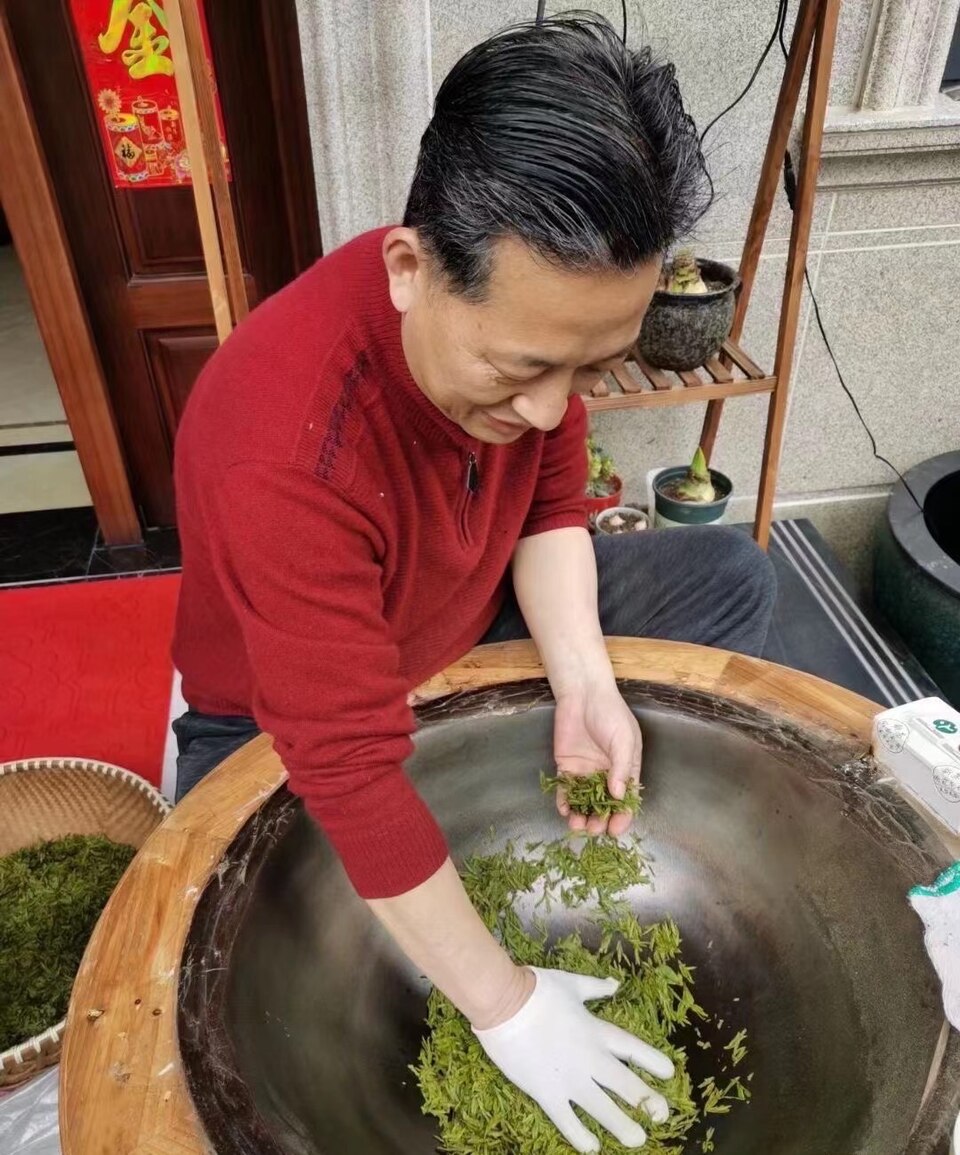
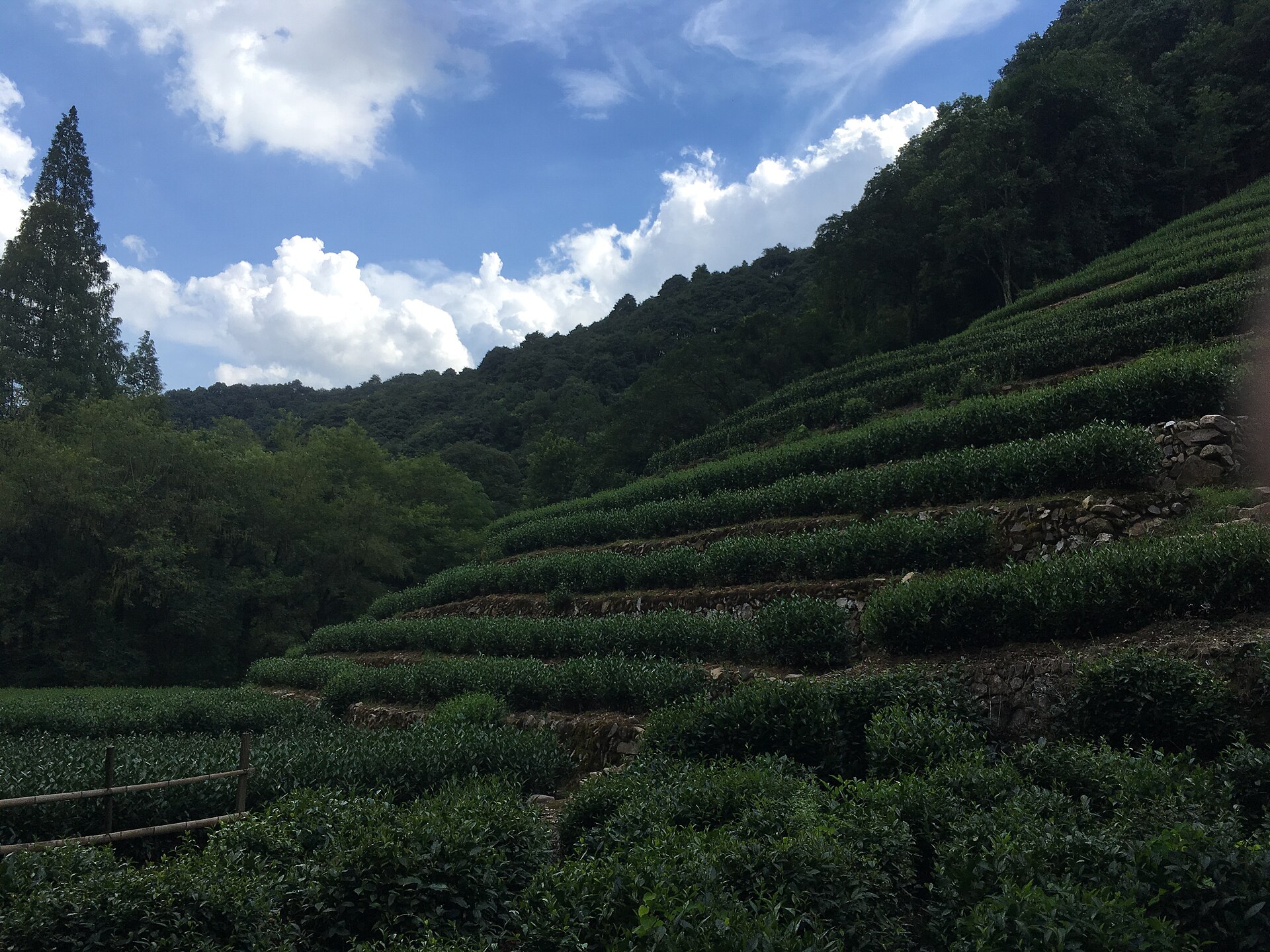
Official descriptions emphasize tea garden management, harvesting, selection, hand processing, tea drinking, tea sharing, and customs linked to ritual, festivity, and community life. Tea is not treated merely as an agricultural commodity, nor only as a performance skill to be displayed by master makers. It is understood as a lived cultural system connecting mountains, labor, hospitality, ritual, identity, and transmission.
This matters enormously. It means that when we ask what is being revived today, we cannot focus only on the most photogenic surface. What entered the UNESCO framework was not just a set of “ancient moves,” and not just a few camera-friendly utensils. It was a whole network of living relationships. That is why current tea-heritage discussion has real historical weight. It is not simply about preserving objects. It is about whether tea can continue to function as a civilizational everyday form.
3. Why did discussion become more complicated after inscription? Because once tea entered broad public view, it stopped being only tea people’s business
Before a cultural item enters large-scale public discussion, most debate tends to stay within specialist circles: technique, lineage, local continuity, preservation, documentation, training. But after inscription, the field becomes much wider. Media organizations, local governments, curators, brands, designers, educators, event organizers, platforms, and younger audiences all begin to participate. Tea is no longer discussed only by tea scholars, craft masters, and dedicated drinkers. It becomes a public cultural subject.
This creates a double effect. On one side, public visibility expands dramatically. Many people who previously knew little about the deeper structure of Chinese tea culture suddenly realize that tea involves far more than taste. On the other side, public translation begins to compress complexity. Heritage becomes headlines, exhibition labels, short-video hooks, spatial concepts, and brand language. The most visual, narratable, and easily shareable elements tend to get amplified first.
That is why post-inscription tea discussion is both richer and more unstable. Some people genuinely move toward deeper learning. Others use the heritage label as a shortcut for cultural prestige. This tension is not unique to tea; it is built into the contemporary circulation of public culture. But it means we need to keep distinguishing between what is merely being displayed and what is actually being reactivated.
4. What younger people revive first is often not the full technique, but the pathway into the technique
When people talk about “traditional revival,” they often imagine the complete recovery of an old method, as if real inheritance requires exact restoration from the past. But if we look closely at how younger urban audiences encounter tea heritage today, their first entry point is rarely the full technical chain. More often it is space, atmosphere, storytelling, vessels, experience classes, social media, themed events, or a friend bringing them into a tea room.
That does not make these pathways trivial. In fact, they are essential. Older tea knowledge often survived inside families, villages, workshops, mountain communities, and stable local networks. Many contemporary urban young people do not live inside those structures. They need new portals. Experience classes, tea spaces, cross-disciplinary heritage events, seasonal activities, and more accessible cultural storytelling become transitional forms that make approach possible.
So what is revived first is often not the entirety of the technique, but the possibility of entering it. This is a very contemporary reality. Without entry points, there is no widening of participation; without widening of participation, heritage can easily become a small circle’s isolated guardianship. The crucial question is not whether the entry point is perfectly traditional. It is whether it can lead people toward greater depth rather than leaving them at the level of visual consumption.
5. So what, exactly, is being revived? “Ancient method” is part of the answer, but only part
Current tea-heritage language often loves the phrase “ancient method.” It is attractive because it suggests handwork, slowness, continuity, and resistance to industrial standardization. But if we treat revival today as nothing more than the return of “old methods,” we miss the larger shift. What is returning is not only a sequence of old gestures. It is also a renewed respect for the values those gestures embody.
Hand-firing tea matters again not only because it looks beautiful on camera, but because contemporary audiences are rediscovering respect for embodied skill—for forms of labor that cannot be entirely replaced by machines and that depend on sensory judgment, trained memory, and lived experience. Tea serving and tea sharing matter again not only because etiquette appears elegant, but because many people feel that what is scarce in modern life is not stimulation but measured, low-pressure forms of being together. Tea rooms, trays, cups, and spatial order matter again not only as aesthetic props, but because they help rebuild a tangible sense of sequence and relation.
So yes, “ancient method” returns. But deeper than that, what returns is respect for slowness, proportion, locality, shared attention, non-standardized expertise, and forms of ordinary order that modern life often erodes.

6. Why is tea heritage a stronger long-form history topic than another Song-style trend piece? Because it puts tea back into social history
Many of the most visible tea-culture topics of recent years have centered on Song-style whisking, tea froth art, stove-boiled tea, or specific utensils and aesthetics. Those topics matter, and some are already represented on this site. But if discussion stays only there, tea history risks becoming a chain of attractive fragments. Tea heritage forces the lens wider. It requires us to think not only about table-top gestures, but about mountains, agriculture, making, local communities, pedagogy, markets, ritual, space, and modern systems of transmission.
In that sense, it returns tea from a “beautiful moment” to a long-standing social system. It echoes this site’s existing essays on the return of the teahouse and the Wanli Tea Road, but it is clearly distinct from both. The teahouse essay is about the return of a social space. The Wanli Tea Road essay is about trade and circulation. This essay is about how a cultural system itself is reorganized and reinterpreted in the present.
That is why it is especially suited to long-form treatment. It has both current public relevance and genuine historical thickness. Compared with writing yet another near-variant on Song aesthetics, this subject has much greater distinction and adds a missing piece to the history section.
7. Why is tea heritage so often linked to phrases like “renewed tea life”? Because the hardest part is not preserving it, but putting it back into use
If preservation is understood only as documentation, heritage work can easily become display: archives, labels, exhibitions, museums, and official recognition. All of that matters, but for tea it is insufficient. Tea was never a static relic. Its vitality has always depended on repeated harvesting, making, brewing, serving, and sharing. That is why current public language around tea heritage keeps returning to expressions such as “renewed tea life,” “heritage tea living,” and “youthful translation.”
The real challenge is practical. Too much conservatism, and tea heritage risks becoming the possession of a narrow specialist world. Too much accommodation to trend culture, and it gets diluted into a floating prestige label. The hard work lies in holding a middle line: not flattening tradition into decorative “national style” surfaces, but also not sealing it off in inaccessible expert language.
Tea has unusual potential here because it is inherently usable. It can enter daily life more easily than many other forms of heritage. But that is also why it is unusually vulnerable to emptying-out through lifestyle branding. The public debate remains active because that balance has not been settled. Tea heritage is still being negotiated between archive and life.
8. What younger people may really be reviving is a low-pressure but ordered way of living together
If I had to compress the entire subject into one sentence, I would say that many young people are not simply reviving a craft. They are reviving a low-pressure but ordered way of being together. What many people lack today is not information or novelty, but forms of shared life that allow people to sit down, slow down, and share attention without constant performance. Tea offers exactly that structure.
This helps explain why tea heritage so often connects with teahouses, tea spaces, seasonal events, vessel culture, local tea travel, and even the cultural storytelling around modern tea brands. On the surface these belong to different domains. Underneath, they all answer the same modern question: how can people recover a form of ordinary life that is not entirely governed by speed and output?
Tea remains powerful here not because it is mystical, but because it is concrete. There is water, sequence, waiting, vessels, and shared movement. Silence becomes easier. Attention becomes more stable. Social relations become less forced. In this sense, the most alive part of tea heritage today may not be its most ancient surface, but its continuing power to structure real life.
9. Could all of this collapse into marketing? The concern is valid, but it does not erase the reality of cultural return
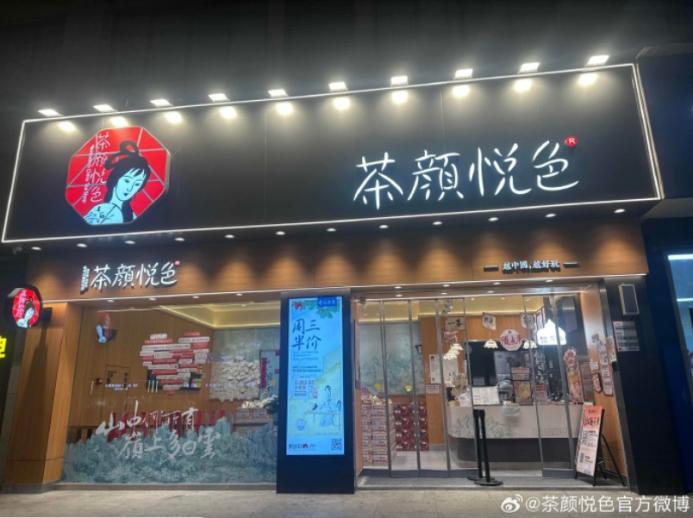
The most common criticism of the tea-heritage boom is straightforward: isn’t it all just marketing? The concern is entirely legitimate. In practice, many people do use “intangible heritage” as a prestige device—something to print on packaging, hang on a wall, or mention in a campaign without any deeper engagement. Whenever public attention intensifies, shallow use follows quickly.
But it would still be too crude to dismiss the entire movement as branding theater. Real things are happening underneath the slogans. More people now understand that Chinese tea culture is not a single tea category but a many-layered tradition. More younger audiences are entering tea courses, heritage exhibitions, regional experiences, and tea spaces. Even brands acting from commercial motives increasingly have to learn actual local craft logic, historical narratives, and object cultures if they want to be persuasive.
So the more accurate judgment is that the current wave contains both shallow packaging and real return. The challenge is not to pretend one side does not exist. It is to keep pushing attention from the surface toward the more durable layers underneath.
10. After inscription, the crucial task is not to make tea sound more sacred, but to make more people actual users of tea culture again
At bottom, the most important outcome of tea’s inscription should not be that “tea culture” sounds grander, more official, or more globally validated. The crucial outcome would be that more people become actual users of tea culture again rather than spectators of it. Living traditions do not survive because they are praised. They survive because they are used, learned, translated, adapted, and woven back into everyday order.
That is why the question “what are young people reviving?” should not be answered too narrowly. Are they reviving technique? Certainly. Ritual? Yes. Vessels, seasonal rhythms, spaces, forms of hospitality, and local identities? All of those too. But if the answer has to be compressed one step further, I would say this: they are reviving tea as an organizing power of life. A way of reordering time, slowing relations, and returning tradition from books and stages back to tables and ordinary days.
If you want to continue along this line, read Why Teahouses Matter Again Today, Why the Wanli Tea Road Is Being Discussed Again, and Why Modern Tea Brands Rewrote Young People’s Drinking Habits. Together, they show that what has been relit after inscription is not a slogan, but a whole tea life still growing in the present.
Source references: China.com.cn Culture: Ministry of Culture and Tourism on the successful inscription of Traditional tea processing techniques and associated social practices in China, China Intangible Cultural Heritage Network: 2025 “Renewing Tea Life” co-creation competition launch, China Intangible Cultural Heritage Network, Baidu search: tea intangible heritage young people 2025.