Fresh tea drink feature
Why Regional Flavor Became a Key Tea-Drink Language in 2026
If one side of 2026 tea-drink language is about being lighter, cleaner, and lower-burden, another side is increasingly about becoming more specific. That specificity now shows up not only in tea-base identity, floral naming, or ingredient transparency, but also in regional flavor: Yunnan, Guizhou, southern Fujian, Guangxi, Menghai, Leshan, ice-slush inspiration, glutinous-rice aroma, litsea cubeba, truffle, and mushroom notes that now appear more often in menu copy. The real question is not whether brands are chasing another short-term topic. It is why, by 2026, so many of them have started treating “the taste of somewhere” as a usable menu language.
This topic connects directly to several trend lines already tracked on the site: the rise of savory milk tea, floral language as brand language, and tea bases gaining product identity. Savory milk tea shows how brands are bringing heavier flavor structures back into the cup. Floral tea shows how brands turn abstract freshness into named, memorable sensory tags. Tea-base identity shows how menus increasingly translate insider knowledge into public-facing consumer language. Regional flavor pushes all of that one step further. It does not only tell consumers what tea or aroma is in the drink. It makes the drink feel as if it comes from a place, or at least from an imagined relationship with a place.
That is why regional flavor deserves its own feature in 2026. It is not just selling novelty. It is selling a fuller narrative that consumers can repeat more easily: this drink feels like Yunnan, or Guizhou, or mountain ingredients, or local specialties, or a portable trace of somewhere beyond the generic milk-tea menu. In other words, brands are no longer satisfied with sounding simply cleaner or less sweet. They want to sound sourced.
What this feature is tracking
Main question: why more tea-drink brands in 2026 are turning regional flavor into a full menu language Key threads: Hongcan's observation about regional ingredients, the use of Yunnan and Guizhou references, glutinous-rice aroma and local flavor borrowing, and the way tea-base identity is being tied to place-based storytelling For readers who want to understand how tea drinks are shifting from “new flavors” toward “managed place-feel”
1. Why did regional flavor become a clearer trend line in 2026?
Because the industry has reached a point where “a little better tasting” is no longer enough to create meaningful separation. Over the last few years, brands have already pushed through most of the upgrades that are easy for the mass market to understand: lighter milk, lower sugar, truer tea, cleaner labels, more hydration-coded drinks, fruit-forward freshness, cold-brew feeling, and everyday office friendliness. Those directions still matter, but as more brands move in roughly the same direction, a new problem emerges: how do you make a product feel different before the customer even orders it?
Regional flavor offers a strong answer. It is easier to understand than technical process language. If you tell ordinary consumers about roast levels, blending ratios, aroma lift, or finish length, many will not immediately react. But if you say Yunnan, Guizhou ice-slush inspiration, litsea cubeba, glutinous-rice aroma, mountain gardenia, Leshan, Menghai, or southern-Fujian oolong, people quickly form a picture. Place words naturally carry scene, food memory, travel association, and the feeling that the drink has a reason for existing.
More importantly, regional flavor helps brands manage two anxieties at once. First, it makes innovation look more grounded rather than merely decorative. Second, it gives brands a reusable communication framework that behaves more like content planning than one-off product launching. Once a place, local ingredient, or regional flavor logic is accepted, it can expand into a series, collaboration, seasonal set, regional special, or store atmosphere.
2. What does Hongcan’s discussion of “regional ingredients” actually tell us?
It suggests that ingredient innovation is no longer satisfied with circulating only inside standard fruit, dairy, and tea-base systems. According to reporting around Hongcan Industry Research Institute’s Tea Drinks Category Development Report 2026, ingredients with stronger local character—such as litsea cubeba, beetroot, cassava, and glutinous rice—have been entering tea-drink R&D more often. That matters because it means regional flavor is not only a copywriting trick. It is becoming a product-design direction.
The key point is not whether these ingredients are absolutely new. It is that they reconnect taste with origin. Earlier ingredient trends often became hot because of function or appearance: greener, redder, healthier-looking, more textured, more visibly premium. Regional ingredients work differently. They often arrive carrying local memory, culinary context, and a stronger claim that the product is not just another menu reshuffle. Litsea cubeba is not just “freshness.” Glutinous-rice aroma is not just “grain.” Guizhou ice-slush inspiration is not just “sweet and sour.” These cues point beyond flavor alone.
So the biggest value of regional ingredients is that they help upgrade a drink from “one taste” into “one entrance into a place-feel.” Brands are not merely adding an ingredient. They are using it to suggest a fuller geographic and lifestyle scene behind the cup.

3. Why are brands increasingly willing to name places like Yunnan or Guizhou directly?
Because place names are efficient interpreters. A brand can say its drink is more fragrant, fresher, lighter, or more layered, but those claims have become common. Place names work differently. Once Yunnan, Guizhou, Menghai, Leshan, or southern Fujian enter the product page, the drink suddenly feels anchored in a spatial imagination. Even if consumers do not know exactly what each place produces, they still register that the flavor sounds traceable rather than invented out of nowhere.
That is also why regional flavor has more staying power than ordinary gimmick launching. Gimmicks are good for one round of clicks. Place-based narrative is better at creating long-term menu order. Today a brand can talk about Yunnan glutinous-rice aroma or Yunnan rose pu’er. Tomorrow it can talk about Guizhou ice-slush inspiration or a southern-Fujian oolong base. Once the framework is accepted, brands can keep borrowing flavor authority from different places without inventing an entirely new worldview each time.
4. How does this connect to the idea that tea bases now have product identity cards?
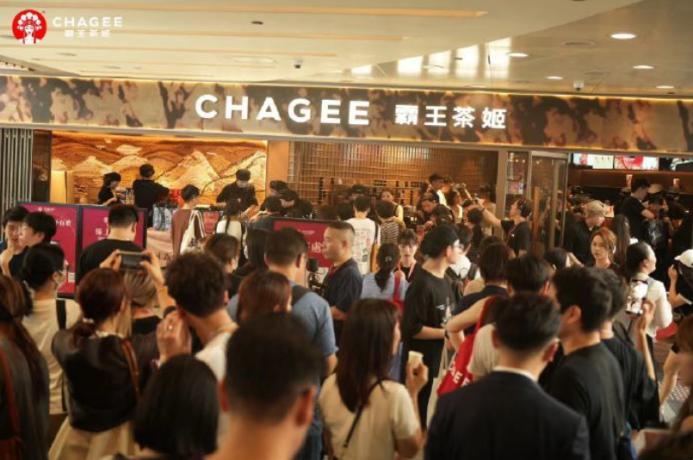
The connection is very direct. Tea-base identity solves the question of what tea is actually in the cup. Regional flavor solves the question of why the cup sounds more grounded and place-aware. Put together, they greatly increase menu explanatory power. Product-page language from brands like CHAGEE increasingly does both at once: it specifies tea bases while also specifying regional flavor cues. Once words like Yunnan blends, Leshan green tea, Menghai pu’er, Guangxi osmanthus, or glutinous-rice aroma leaves appear next to named teas, a drink stops sounding like generic milk tea and starts sounding like a product with lineage.
This is one of the clearest changes in 2026 tea-drink copy. Brands no longer seem satisfied with saying “this is oolong” or “this is red tea” or “this is jasmine milk tea.” They increasingly want to explain where the tea sits, what direction the aroma leans toward, why a grain or floral note is there, and why the milk tea should feel different from a standard sweet retail formula. Consumers may not memorize every line, but they absorb the general impression that the drink has more information density and more intentional design.
So regional flavor is not a replacement for tea-base identity. It is a stronger companion to it. Tea-base identity makes tea drinks more legible. Regional flavor gives that legibility more emotional warmth and more visual imagination. One provides the identification frame; the other supplies narrative temperature.
5. Is regional flavor really selling local culture, or just a more premium kind of freshness?
More precisely, it sells freshness that has been packaged through place-feel. Most chain tea brands are not, and cannot be, fully transplanting local food systems into urban retail stores. More often, they borrow part of a place’s ingredients, part of its aroma, part of its naming style, and part of its imagined atmosphere. In other words, menu references to Yunnan, Guizhou, mountain notes, glutinous-rice aroma, or ice-slush inspiration do not usually mean a complete reconstruction of the original local context. They mean a translation into the language of malls, delivery apps, social media, and high-frequency urban ordering.
But that does not make the trend empty. Precisely because brands are trying to translate place-coded flavor into mass retail form, they have to balance two things: the drink must feel meaningfully different, but it cannot become too difficult or too alienating. If regional flavor exists only in the name, consumers will quickly read it as a gimmick. But if the name, taste structure, tea base, visuals, and story align well enough, the drink will leave a deeper impression than an ordinary launch.
So it is best understood as a commercial borrowing of place-feel. Brands are not primarily doing local-food scholarship. They are borrowing local culture and local ingredients to build a thicker flavor background for their menus. The goal is not purity. The goal is transmissibility, recognition, and serial expansion.
6. Why is this kind of place-borrowing especially suited to the Chinese internet?
Because the Chinese internet is exceptionally good at translating taste into geography and scene. If you only say a drink is sour, sweet, fragrant, or light, the discussion ends quickly. But once you say it feels like Yunnan, or like a roadside Guizhou summer ice dessert, or like mountain wind carrying floral notes, or like glutinous-rice steam, or like upland savory fragrance pressed into milk tea, the conversation becomes more concrete and easier to spread.
Regional flavor also carries a major virality advantage: it naturally invites argument. Some people read this borrowing as sophisticated; others find it over-staged. Some say it finally moves beyond standardized sugar drinks; others say it turns local ingredients into branding props. Some think litsea cubeba, glutinous-rice aroma, and mushroom-like structures expand tea-drink boundaries; others think they are just social-media taste theater. For brands, that disagreement is not merely a side effect. It is part of the asset. Compared with a drink that is simply “solid and pleasant,” a drink that makes people ask whether the flavor logic is reasonable is far more likely to break out.
Regional flavor also fits short-video and image-led platforms extremely well. One place word, one ingredient word, and one tea-base word are often enough to create a memorable title, thumbnail hook, or caption. It is easier to understand than abstract process rhetoric, more textured than pure health framing, and more event-like than a standard fruit-tea launch.
7. What is likely to last from this trend, and what is likely to remain short-term noise?
The short-term noise will most likely stay at the level of exaggerated naming and stacked place keywords. Once one region or one local ingredient proves easy to circulate, many followers appear quickly: longer names, more place references, heavier flavor claims, fuller stories. But much of that will not last, because it borrows place words without creating a genuinely repeatable sensory structure. Consumers may order once out of curiosity, but not necessarily come back.
What is more likely to last are several deeper methods. First, brands will keep writing flavor in more source-conscious ways instead of using only broad taste labels. Second, local ingredients will remain useful differentiation tools in R&D, but the most successful versions will probably become gentler and more repeatable rather than purely stunt-like. Third, place names and origin stories will work more closely with tea-base identity, series naming, and store visuals, forming full brand systems rather than isolated single-product copy.
In other words, not every “Yunnan flavor” or “Guizhou-inspired” cup will become a permanent menu item. But the menu method introduced by regional flavor is likely to stay: more specific ingredient sourcing, clearer place-feel, stronger story frameworks, and product design that feels more like flavor curation than random novelty stacking.
8. Why is this worth tracking continuously in the drinks section?
Because it is not an isolated event. It sits at the intersection of several major 2026 tea-drink changes. It relates to the heavier-flavor logic behind savory milk tea, the nameability of floral narratives, the specificity of tea-base identity, and the broader anxiety of differentiation after menu sameness. If you look only at single products, it may seem like another round of local-element borrowing. But over a longer timeline, it becomes clear that brands are turning place-feel into a new kind of menu asset.
This line is also worth tracking because it has obvious expansion potential: local grains, local florals, local sour-sweet systems, local fermentation cues, local snack inspirations, local frozen drinks, and local seasonal rituals. Today the focus may be Yunnan, Guizhou, litsea cubeba, and glutinous-rice aroma. The next stage could involve more explicit southwestern flavor systems, southern seasonal systems, borderland spice systems, or stronger links between tea drinks and local breakfast, snack, or late-night consumption. This is not just a one-off hot post. It is a growing entrance into a wider shift.
Continue reading: Why Salty Milk Tea Suddenly Took Off in 2026, Why Floral Language Became So Important in 2026 Tea Drinks, Tea Bases Are Starting to Get Identity Cards, and Why Product Identity Cards Became a New Tea-Menu Format.
Source references
Hongcan Industry Research Institute: Tea Drinks Category Development Report 2026, Hongcan coverage: If tea drinks are not only turning salty, is regional ingredients the next opening?, and CHAGEE official site: fresh milk tea series.