Modern Tea Drink Watch
Why a “Longjing Spring Tea Light Milk” Line Is Starting to Make Sense in 2026 Tea Shops: From Spring Longjing Bean Notes to a Daytime Signature Cup Rewrite
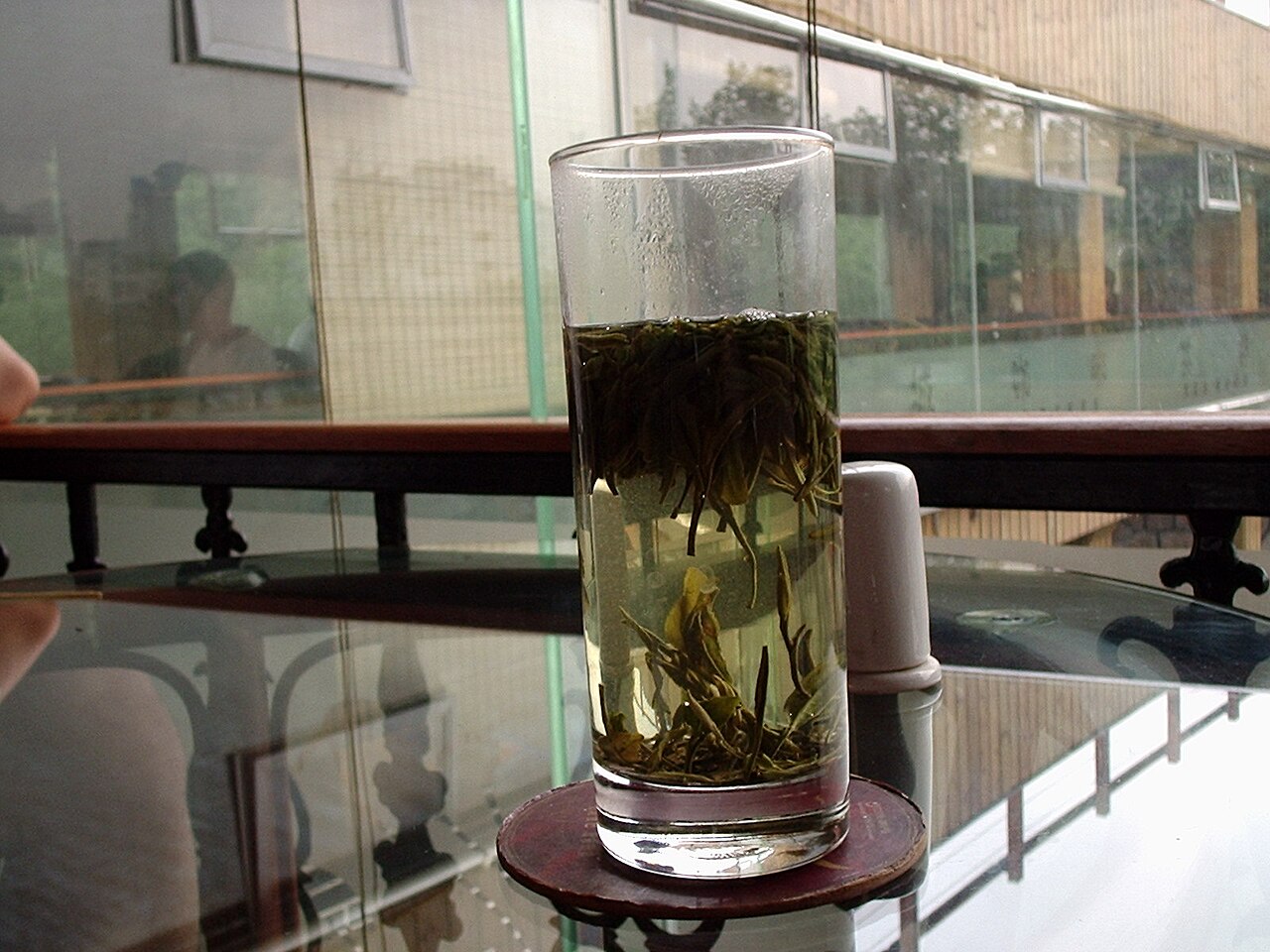
If I had to pull out one 2026 tea-drink subtrend that is easy to miss but clearly worth its own article, I would choose the “Longjing spring tea light milk” line. It does not have matcha’s built-in hype, and it is nowhere near as instantly seasonal as bayberry, lychee, or grape. But this year it has become much clearer what shops are doing with it: they are no longer occasionally releasing a “Longjing milk tea” just to fill out a spring menu. They are starting to write spring Longjing as a full product identity—emphasizing spring tea, emphasizing the pan-fired bean-like aroma and clean freshness, emphasizing that milk should support the tea rather than bury it, and emphasizing that this kind of drink works especially well in daytime, at office desks, during the spring transition, and in high-repeat purchase scenarios. That is why the 2026 Longjing spring tea light milk line deserves to be treated as a distinct drinks branch rather than just another green tea milk tea.
This shift matters not because Longjing has suddenly become the trendiest tea base, but because tea chains increasingly need a middle-ground answer: a light-milk drink that does not feel flimsy, a green-tea drink that does not read as plain tea, and a spring drink that is not just another floral filter. Jasmine light milk, gardenia light milk, white-magnolia-leaning oolong, matcha, and coconut water drinks all have their place. But for many high-frequency daytime situations, shops still need a calmer, cleaner, more workday-shaped structure. Longjing fills that gap. It is less flower-led than jasmine, lighter than roasted oolong, more clearly tea-driven than generic green milk tea, and more immediately legible than plain cold tea.
Just as important, a Longjing spring tea light milk line fits today’s consumer who has already been trained to want drinks that feel truer, lighter, and clearer. The industry now has to answer a more difficult question: once everyone is selling light milk, real tea bases, and “lower burden” drinks, how do you write real difference into a daytime signature cup? Longjing’s answer is not more thickness, more sugar, or more toppings. It is a more specific kind of tea character. It lets shops keep selling smoothness, daytime drinkability, desk-side refill logic, and springtime mood—while making it much clearer that this is still a tea-based drink with actual structure.
What this article is looking at
Core question: Why a “Longjing spring tea light milk” line in 2026 deserves to be understood as its own product branch Key signals: CHAGEE’s Xing Shi Chun Shan, spring Longjing, pan-fired bean aroma, light milk support, daytime clarity, desk-side repeat drinking, spring mood products, high-repeat purchase logic Who this is for: Readers trying to understand why shops are starting to rebuild a greener, clearer, more tea-forward kind of light milk tea as a daytime mainstay
1. Why is 2026 the moment when a Longjing spring tea light milk line starts to stand apart from generic green milk tea?
Because the industry has entered a stage where even light milk tea needs further subdivision. The previous wave taught chains how to sell lightness again: light milk tea returned, “Oriental iced tea” was singled out, bottled unsweetened tea retrained consumers to notice tea character, spring floral lines became more systematic, and more chains started writing “real tea base” and product ID-style copy. At this point, brands can no longer stop at saying, “we also have a green tea light milk option.” They have to answer a finer question: what kind of green tea is yours? Is it more floral, more roasted, more fruity, or more like a spring daytime main cup? Longjing reappears exactly at that more detailed fork.
Its value comes from a very practical competition problem. Once refreshing light milk drinks are all described as “light” and “smooth,” they become interchangeable. Jasmine is a mature answer. Gardenia is a seasonal answer. White magnolia is an emotional answer. Roasted oolong is a mature, grounded answer. Longjing is closer to a “daytime clarity” answer. It lets a brand keep building distinction without making the drink thicker or sweeter. In 2026 that kind of distinction is especially valuable, because chains already know they cannot keep winning high-frequency consumers by making everything richer and denser. They need finer scene-based differences that support repeat orders.
Longjing happens to be especially good at this. It carries the bean-like note created by traditional pan-firing, the lifted freshness associated with spring tea, and a quiet but memorable line that sits somewhere between floral green tea and plain clean tea. It is not as sharp as lemon, not as forceful as matcha, and not as instantly spring-filtered as gardenia. But it has a very practical advantage: it is easy to turn into a drink people can imagine buying day after day. That is exactly the kind of cup format high-frequency chains want in 2026.
2. What this line really sells is not “Longjing as a famous tea name,” but a cleaner daytime structure built around spring freshness and pan-fired bean notes
When tea chains write about Longjing, they often fall back on vague language about prestige or famous-tea aura. But in 2026, what makes Longjing useful is much more concrete than that. It offers a specific way into the cup: pan-fired bean-like aroma at the front, fresh green-tea structure through the middle, light milk used only to soften the edges, and a finish that stays clean instead of dragging the drink into dessert territory. It does not rely on explosive fragrance, large fruit pieces, thick milk, or hard functional claims. It relies on clarity itself.
That matters because so many current products are moving toward lighter structures: less milk, fewer extras, lower sugar, more daytime use, more desk use, more “second cup” logic, more workday suitability, and longer sipping windows. That brings more chances for high-frequency drinking, but it also creates a side effect—the lighter the drink, the easier it is for it to feel forgettable. Longjing’s value is that it helps keep the lightness while preventing the drink from feeling empty. It does not provide heavy presence. It provides clear presence: not fuller, but cleaner; not sweeter, but more spring-tea-like; not more loaded, but more structurally complete.
That is why Longjing fits so naturally into product language like “spring tea bean notes,” “pan-fired freshness,” “bright at the front, clean at the back,” “smooth but not sticky,” and “stronger daytime feel.” These are not random adjectives. They describe one unified direction: the opening must be real, the finish must not collapse, tea must remain visible, and milk must not swallow the structure. Longjing is especially good at working inside exactly this kind of demanding light structure.
3. Why does it fit so naturally with light milk, desk-side refill logic, and spring “state” drinks?
Because Longjing does not need a heavy base in order to feel complete. That is one of the most interesting things about it. In a light milk drink, it helps “clean” feel more expressive. In a colder, leaner drink, it helps “clear” feel more substantial. The problem with many light milk products is not that they taste bad. It is that they blur together into the generic idea of a smooth light milk tea. Longjing helps create one more layer of distinction without losing the overall refreshing feel.
That is why a name like CHAGEE’s Xing Shi Chun Shan feels convincing. On its public product page, the brand explicitly writes it as spring Longjing from Zhejiang Longjing production areas, made with traditional pan-firing so that it carries a characteristic rich bean-like note, with lifted aroma and fresh, sweet clarity. That matters. The brand is not merely saying, “here is a milk tea that tastes like spring.” It is saying that spring Longjing is the lead actor, and that its bean-note freshness is being seriously placed at the front of the product identity. Light milk is there to make that legible to a broader audience, not to replace it.
For the same reason, this line fits neatly after themes like second cups, desk-side refills, and daytime signature drinks. In those scenes, what matters most is not “the most dramatic first sip,” but whether the cup still feels right after sitting beside you for an hour. Longjing is better suited to that than many heavier tea bases because it gives enough tea content without pushing the whole drink toward sweetness, stickiness, or one-off emotional consumption.
4. Why does it feel more like a daytime signature cup than many other light milk teas?
“Daytime signature cup” here does not mean bigger, cheaper, or more value-for-money. It means a very specific consumption mood: more stable, easier to carry through the day, more suitable for frequent use, but not boring. Jasmine light milk naturally carries stronger floral emotion. Roasted oolong carries a more mature sense of closure. Matcha brings stronger flavor presence. Longjing spring tea light milk feels more like a white-shirt product. It does not exist to produce a large emotional event. It exists to make a whole cup feel more orderly and more composed. That is exactly the kind of tone that works well in today’s urban tea chains, because it satisfies the demand for “a drink with style and brightness” without turning into a one-time seasonal prop.
This daytime quality matters more than ever because chains are no longer only selling thirst relief. They are also selling the question of what kind of cup someone wants to be seen carrying through the day. That is not pretentious. It is just how current consumption works. On workdays, in transit, before meetings, and during casual shopping, people are not only judging taste. They are also reading state: is this cup clean or draggy, alert or sticky, light or heavy, quiet or overdramatic? Longjing spring tea light milk is especially good at signaling “clear but not severe, light but not empty.” It does not lean on high sugar to create happiness or thick milk to create safety. It lets spring tea and bean-like pan-fired notes carry the message that “today I want to drink something cleaner” in a way that still feels substantial.
In that sense, this line is doing something both very Chinese and very modern. It does not treat Longjing as a purely classical object that must remain untouched. It treats Longjing as living material that can still enter mass daily life, still be rewritten through light milk, and still be consumed and reinterpreted in contemporary form. That obviously brings simplification risks, but it also gives Longjing a clearer entrance into high-frequency daytime chain-shop life than before.
5. How is it fundamentally different from traditional Longjing prepared as a straight tea?
Putting this line back into a broader tea continuum does not mean saying it is the same as traditional Longjing prepared and drunk on its own. The differences are still large. First, the goals are different. Traditional Longjing preparation emphasizes freshness, wok aroma, aftertaste, leaf grade, firework, and control over water temperature. A modern light milk line is designed for efficiency, consistency, smoothness, takeaway convenience, and a lower interpretation threshold. Second, the pacing is different. Traditional Longjing asks for attention and staying power. A chain drink compresses that experience on purpose. Third, the method of explanation is different. Traditional Longjing builds judgment through brewing, origin, seasonality, and experience. A chain-shop light milk line builds judgment through naming, product-ID copy, menu structure, and scene language.
Those differences should not be hidden, because they are exactly what allow both forms to exist. The point is not to erase difference. The point is not to automatically translate difference into high versus low. Longjing spring tea light milk is not the endpoint of traditional Longjing, and it is not its enemy. It is another interface, another speed, another daytime scene. Some drinkers may go deeper from here and become more curious about real Longjing origins and processing. Others may simply keep buying it as a clear, tea-forward office drink. Both outcomes are real.
More importantly, only by admitting the difference can we judge the strengths and weaknesses accurately. Its strength is that it broadens entry, increases the visibility of Longjing in urban daily life, and raises the presence of spring tea language in mass consumption. Its weakness is that it can easily be over-light-milked, emptied out by “spring naming,” or reduced to Longjing as a decorative label. That is exactly why “real tea base,” “product ID,” and “fewer additives” matter more and more: the market is asking again whether brands are truly bringing Longjing back, or simply borrowing it as set decoration.
6. For international readers, why is “continuity” a better frame than simple novelty?
Because overseas readers often fall into one of two misunderstandings. One is imagining Chinese famous tea as something that only belongs to classical utensils and ceremony. The other is imagining modern Chinese tea drinks as completely detached from tea culture. If you only tell the first story, Longjing becomes a static museum object. If you only tell the second story, contemporary Chinese tea drinking looks like a floating commercial trend. A more accurate explanation is that Chinese tea culture has both deep tradition and strong adaptive power, and that today’s Longjing spring tea light milk line is one contemporary urban version of that adaptive power.
This matters especially for understanding Chinese tea. “Continuity” does not mean that a Longjing light milk drink is the same thing as traditional Longjing straight tea. It means the relationship between Chinese daily life and tea has not been cut off; the interface has simply changed. Today that interface may be a takeaway drink named with spring mountain imagery, Longjing, bean notes, light milk, and real tea-base language. The form is new, but it is still training taste, building vocabulary, organizing social behavior, and structuring daily rhythm. What deserves attention is not just the headline fact that “Longjing became milk tea.” It is the deeper fact that Longjing is still being reorganized into modern daytime life.
If we only recognize the slowest, most classical, quietest forms as “real tea culture,” we miss one of the liveliest things about Chinese tea today: it is still present in commerce, still present in young people’s mouths, still present in high-frequency consumption, and still constantly translating itself. That may not always be elegant, but it is undeniably alive. This Longjing spring tea light milk line is one example of that living translation.
7. So how should this line be understood inside Chinese tea-drink culture?
The most accurate answer is probably neither to elevate it into “the traditional essence” nor dismiss it as “totally unrelated.” A better understanding is that it is a high-frequency branch of Chinese spring tea culture inside modern urban tea-drink society: a low-threshold interface and a highly visible redistribution system. It pulls Longjing once more out of mountain origins, tea tables, and traditional narrative, and places it back into phone orders, office towers, transparent takeaway cups, and desk-side repeat drinking—the real spaces of contemporary daytime life.
That means it has both cultural meaning and commercial limits. Its cultural meaning is that Longjing does not retreat into specialist-only language. It remains visible inside mass daily life. Its commercial limit is that it will always be compressed by efficiency, standardization, and marketing logic. Precisely because of that, it deserves careful writing rather than a dismissive line saying, “this does not count.” In many eras, culture continues not through its purest form but through the most expandable interfaces. In today’s Chinese city life, the Longjing spring tea light milk line is one such interface.
If you want to keep following this thread, read Why Light Milk Tea Became a Main Character Again, Why Tea Bases Suddenly Need an Identity, Why Shops Started Seriously Managing a Spring Floral Line in 2026, and Why Tea Drinks Started Competing for the Second Cup. Together they point to the same shift: 2026 competition in modern tea drinks is moving from “which single cup looks most like a hit” toward “which kind of tea best fits the more specific moments of your day.” And Longjing spring tea light milk is emerging as one of the strongest answers for a daytime signature cup.