Fresh tea drink observation
Why “cooling-factor lemon tea” deserves its own 2026 story: from lingering cooling sensation to tea chains turning “feel more awake now” into a made-to-order product line
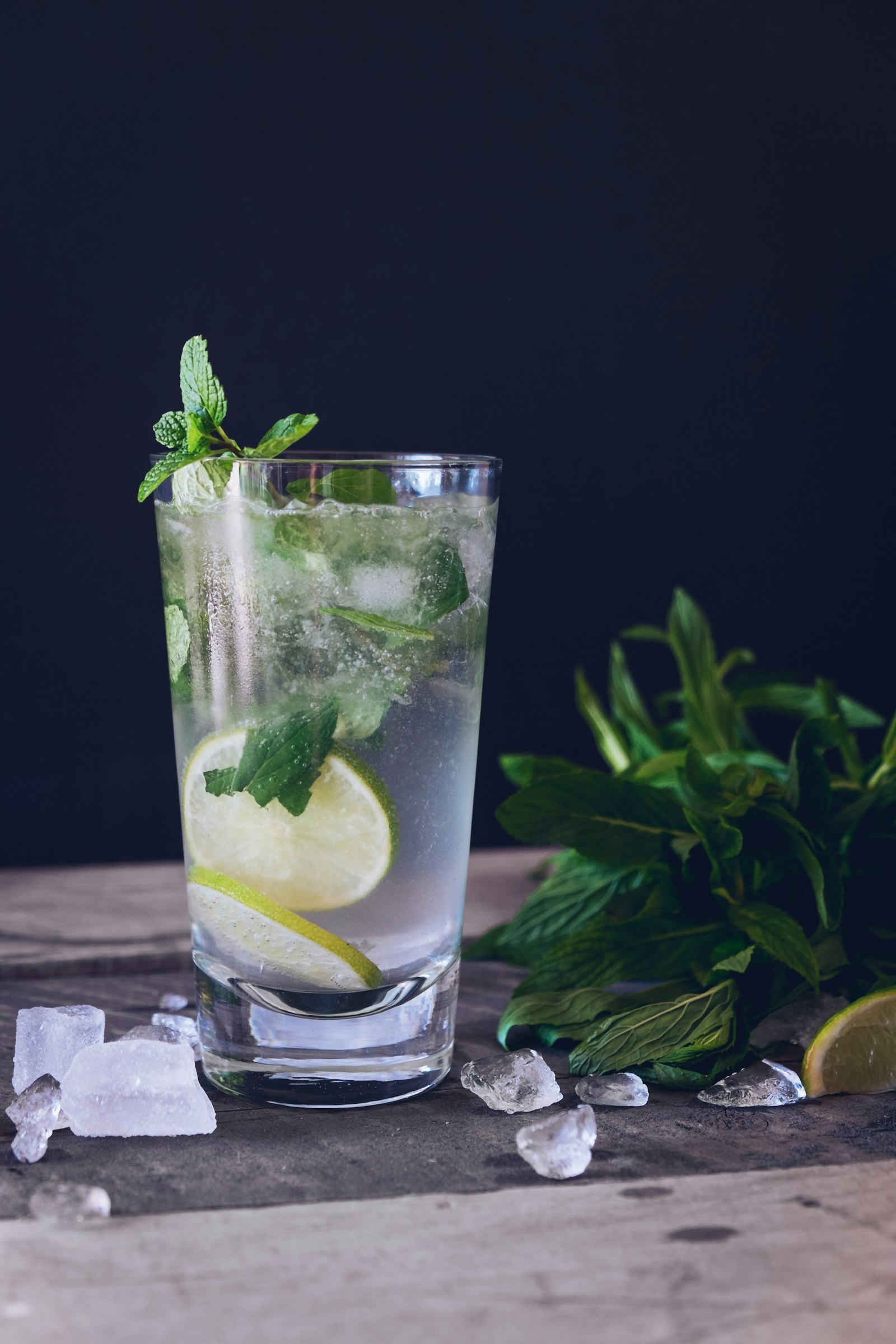
If electrolyte lemon tea in 2026 has already become a state product built around hydration feel and light recovery, then another finer branch worth isolating is cooling-factor lemon tea. This is not just ordinary high-ice lemon tea, and not simply “more ice.” It is a more deliberate bodily reading that brands are beginning to operate: lingering cooling sensation, a fresher wake-up effect, a quicker opening of the mouth and nose, and a more immediate sense of clearing damp heat and afternoon dullness. When CHAGEE writes “Cooling Factor Lemon Tea” directly as a drink with a special added cooling factor, a heart-cooling sensation, and lasting icy feel for summer vitality, it shows this is no longer just seasonal copywriting. Tea shops are turning “feel more awake right now” into an orderable, repeatable, explainable made-to-order product language.
This matters not because the word “cooling” suddenly became new, but because fresh tea is, for the first time, pushing lingering cooling sensation from a sensory assist into an explicit product proposition. Shops have always talked about refreshment, ice, thirst relief, and wake-up acidity, and they have long used ice level, lemon aroma, mint associations, or bright visual design to intensify coldness. But those elements mostly served ordinary summer refreshment. By 2026, brands are starting to make “a bit cooler” into a reason to order in itself: you are not only asking for lemon tea, but for something that can press down heaviness, dullness, stickiness, heat, and sluggishness together.
That is why cooling-factor lemon tea is not a minor gimmick. Behind it is a further subdivision of immediate state demand. Lemon tea is no longer just one classic big item. One version serves hydration feel, another serves closure after food, another serves spicy meals, and another more explicitly serves “help me feel awake right now.” The clearer this subdivision becomes, the more lemon tea transforms from a familiar staple into a bundle of solutions for different daily moments.

What this article is looking at
Core question: why cooling-factor lemon tea deserves to be treated as a distinct product language in 2026 Observation lines: CHAGEE’s Cooling Factor Lemon Tea, lingering cooling sensation, refreshing wake-up effect, muggy weather, afternoon dullness, commute reset, state correction, further subdivision of lemon tea Best for readers trying to understand why a lemon tea that seems to be merely “cooler” is being repackaged into a clearer, higher-frequency state-drink branch
1. Why are tea chains in 2026 suddenly taking “lingering cooling sensation” seriously?
Because fresh tea competition is no longer only about whether a drink tastes good. It is about why this cup should be the right one right now. Over the last few years, brands have become good at brighter fruit, smoother milk, more credible tea bases, stronger floral cues, and lower-sugar framing. Those grammars still matter, but they are no longer enough. Brands increasingly need to write products into very specific bodily moments: just left the house, just stepped out of the subway, afternoon dullness, humid air-conditioning fatigue, sticky mouth in muggy weather, or the desire for one more lift after heavy food. To catch those scenes, ordinary “refreshing” is too broad. Tea shops need a sharper vocabulary.
Lingering cooling sensation fits that gap perfectly. It is stronger than “refreshing,” faster than “hydrating,” softer than “energizing,” and less rigid than the language of functional drinks. A brand does not need to turn a tea drink into a hard-edged stimulant. It only needs to frame the cup as a little cooler, clearer, and more capable of nudging the body back into order. That finer reason structure is exactly what allows cooling-factor lemon tea to stand.
So when chains start operating lingering cooling sensation in 2026, it is not because coldness itself suddenly became scarce. It is because consumers increasingly choose drinks by immediate state rather than by broad category. Lemon tea, sparkling tea, Oriental iced tea, coconut-water tea drinks, and electrolyte lemon tea are all active at the same time for the same deeper reason: brands are getting more precise about what this cup is actually meant to solve today.
2. What it sells is not “colder” itself, but a faster, more legible instant state correction
This has to be stated clearly: cooling-factor lemon tea is not really selling physical temperature by itself. More ice can make a drink colder, but that only lowers temperature. A lingering cooling sensation sells something more immediately legible to the body: quicker entry, clearer nose, lighter throat, more open mouthfeel, and the sense that the head has been turned on a little. Consumers are not paying because they are analytically distinguishing sources of coolness. They are paying because the drink promises a more obvious “you will feel something right away” result than ordinary lemon tea does.
That is exactly what tea shops need. High-frequency state drinks do not win through complicated stories. They win because the first sip proves the point. Electrolyte lemon tea can sell hydration feel, sour plum drinks can sell closure, sparkling tea can sell cut-through texture, and cooling-factor lemon tea sells a more direct opening effect. It may not be the richest drink, and not the most substantial, but its first reaction is often sharper. In muggy weather, dull afternoons, and slightly heavy commutes, that sharpness matters.
That is also why these products work so well in fast decision-making. Consumers do not need to spend much time thinking. The moment they think “I feel stuffy,” “I feel dull,” “I want something that clears me out,” or “I want to wake up a bit faster,” this line can catch them immediately. That reaction speed is part of its commercial value.

3. Why is lemon tea especially suited to carry this cooling-factor branch?
Because lemon tea already has an ideal structure for the “first sip works” problem. Lemon acidity and aroma, chilled serving temperature, tea-base closure, and generous cup format all help pull a person out of stickiness and dullness quickly. Compared with milk tea, it is lighter. Compared with plain tea, it gives a clearer visual promise. Compared with functional drinks, it feels more everyday. Compared with ordinary fruit tea, it can produce a more precise wake-up effect and cleaner finish.
Even more importantly, lemon tea already has mature consumer education behind it. People do not need to learn from zero why lemon tea makes sense in muggy weather, commuting, after meals, or afternoons. Brands only need to push the already familiar structure half a step further—with language like lingering cooling sensation, cooling factor, or refreshing wake-up effect—and a normal “tart refreshment” drink becomes a more explicit state answer. For tea shops, that is a highly efficient subdivision strategy: they do not need to invent a completely unfamiliar drink in order to give an old category a new reason.
That is why cooling-factor lemon tea is easier to establish than many other cooling experiments. It does not invent a new flavor from nothing. It takes a form that is already stable and writes its mouth-clearing, brightening, heat-weather usefulness more directly.
4. Why is this kind of product especially suited to muggy weather, dull afternoons, and the second half of a commute?
Because all of those moments ask for almost the same thing: not too heavy, not too slow, not too sweet, and ideally something that produces a noticeable result immediately. In muggy weather, the consumer does not necessarily need sugar and may not really be looking for nutrition. What they need is a way to break apart the dragging feeling in the mouth and body. In the dull afternoon, many people do not want harsh stimulation. They want something that has more content than water, less force than coffee, but still gives a visible sense of clearing out. The second half of a commute follows the same logic: after the subway, after walking, after entering a mall or office, people often want a quick transition out of environmental fatigue.
Cooling-factor lemon tea feels especially natural in those moments because it promises a light but immediate change of state. It does not ask the consumer to enter reward mode, and it does not ask them to justify the order through “health” or indulgence. It behaves more like a small corrective move: today feels stuffy, so get the cooler one; I feel dull right now, so get the wake-up one. The more natural the ordering reason, the easier it is for the product to enter a high-frequency track.
From this angle, it belongs on the same map as earlier site features on the muggy-weather cup, office survival supply, and the second cup. None of these are really selling an abstract flavor. They are selling the idea that this cup makes unusually good sense at this exact moment.
5. How is it different from electrolyte lemon tea, and why can both lines stand at the same time?
Both are built around lemon tea, and both sell state. But they do not sell the same state. Electrolyte lemon tea leans toward hydration feel, light recovery, summer replenishment, and the idea that “this is the more reasonable drink today.” Its language is closer to light replenishment. Cooling-factor lemon tea leans more toward immediate sensation: cooling the chest, lingering icy feel, refreshing wake-up, and an instant opening effect. It does not say “this helps you recover.” It says “this will make you feel clearer right now.”
That difference matters because people do not have only one daytime need. Sometimes they want a replenishing drink; sometimes they want a wake-up drink. Sometimes the priority is hydration and low burden; sometimes the priority is whether the first sip is fast and vivid enough. By operating both lines, tea shops are effectively splitting one major staple—lemon tea—into two different ways of solving state problems.
That is why cooling-factor lemon tea does not replace electrolyte lemon tea. It thickens lemon tea’s menu position alongside it. One line serves “recover a little,” and the other serves “wake up a little.” One is replenishment-oriented, and the other is wake-up-oriented. For chains, that kind of parallel subdivision makes far more practical sense than pushing one supposed all-purpose lemon tea.
6. Why does this lingering-cooling language also show convenience-store and functional-drink vocabulary being absorbed into tea shops?
Because consumers were already trained by other beverage systems. Over the past few years, refrigerated drinks, sparkling waters, sports drinks, and “icy refresh” products have already made cooling sensation, freshness, and wake-up language highly legible. Tea shops are not inventing body-cooling rhetoric from zero. They are translating an already familiar bodily vocabulary back into made-to-order tea.
This is especially efficient for tea shops. They do not need to sound as rigid as functional drinks, and they do not need to stay trapped in the ordinary “tart and thirst-quenching” reading of lemon tea. They can stand in the middle: made to order, tea-based, store-specific, and better to drink, while also borrowing the instantly legible explanation that this is cooler, clearer, and faster in effect. That gives one cup of lemon tea a much stronger bodily direction than ordinary citrus refreshment alone.
That is also why it feels so distinctly 2026. It is not a newly invented flavor. It is a newly tightened pathway that connects already mature cooling language with already mature made-to-order tea structure.
7. Where are the limits of this trend?
First, lingering cooling sensation can become cheap very easily. If a drink offers only cooling stimulation with no tea base, no lemon aroma, and no proper finish, consumers will quickly read it as a boosted flavor drink rather than a made-to-order tea worth repeating. Second, this line can be short-lived if chains treat “cooler” as a seasonal gimmick without building the structure beneath it. Third, cooling sensation is not automatically better when it is stronger. Too much of it can flatten the tea and push the whole cup toward one-off stimulation rather than everyday repeatability.
That is why the real test is not whether a brand can write the words “lingering cooling sensation,” but whether it can keep the cooling effect in a range that is clearly noticeable without hollowing out the drink. The cup needs speed, but not only sharpness. It needs coolness, but not at the expense of tea. It needs wake-up effect, but not pure irritation. If that balance fails, the trend slips very quickly from “interesting” back into “gimmick.”
8. Why does this deserve a place in the larger chain of 2026 drinks change?
Because it shows once again that new tea competition is continuing to shift away from “whose launch is flashier” and toward “who handles small bodily states better.” From breakfastization, the second cup, office replenishment, the after-meal cup, and the muggy-weather cup to electrolyte lemon tea and cooling-factor lemon tea, shops are less and less selling broad milk-fruit-tea categories and more and more selling “which exact feeling do you need right now.” Cooling-factor lemon tea occupies a very small but very high-frequency square on that map.
It is also worth tracking because it points to a practical future direction: high-frequency drinks may not always win through being richer, thicker, or more substantial. Very often they may win by correcting small discomforts more quickly, more lightly, and more precisely. As long as muggy weather, dull afternoons, commute fatigue, and low-pressure office moments continue to exist, this product language will return to menus again and again rather than vanish as one short-lived slogan.
In the end, what chains are competing for is not only the phrase “cooling factor.” They are competing for the right to explain the sentence “I want to feel clearer and more awake right now.” The brands that make that feeling smooth, stable, and non-cheap are the ones most likely to turn this line into a long-term asset.
Continue reading: Why tea chains in 2026 are seriously building electrolyte lemon tea drinks, Why Hong Kong-style lemon tea became a high-frequency answer again, Why tea drinks are seriously competing for the muggy-weather cup, and Why CHAGEE separated Oriental iced tea into a standalone series.
Sources
- CHAGEE | Vitality fruit tea series
- CHAGEE | Oriental iced tea series
- Related in-site features on electrolyte lemon tea, the muggy-weather cup, office replenishment, the second cup, the return of Hong Kong-style lemon tea, and Oriental iced tea series logic (March–April 2026).