Why Tea Drinks Are Now Seriously Competing for the “Muggy-Weather Cup”: From Return-of-Humidity Days and Plum-Rain Season to the De-Stickifying Logic of 2026
Created: · Updated:
If fresh tea over the past two years has already become increasingly precise about “the breakfast cup,” “the second cup,” “the after-meal cup,” and “the rainy-day cup,” then another entry point worth isolating in 2026 is “the muggy-weather cup.” This is not just about summer thirst, and not simply about wanting something icy. It is about return-of-humidity days, plum-rain season, low-pressure wet heat, sticky air, a sticky mouth, and that feeling that your whole body wants to become a little cleaner and lighter, fast. Brands are starting to answer a very practical question much more seriously: when consumers are not necessarily burning hot, but do feel damp, heavy, and vaguely coated, what kind of tea drink is most easily understood as the right choice? The answer increasingly points toward drinks that feel cleaner, brighter, more mouth-clearing, and more capable of putting the body back into order.
This matters not because people in China discovered humidity for the first time in 2026, but because fresh tea brands are writing humid bodily experience into menu logic more consciously. In the past, brands of course knew that weather moved sales: more heat meant more cold drinks; rainy days favored warm drinks and easy refills. But “muggy” is not the same thing as “hot.” Very often the consumer does not need a dramatic cooling solution. They need to get rid of a coated, sticky, sluggish feeling in the mouth and body. In other words, this is not only a temperature problem. It is a problem of bodily order.
That is exactly why the muggy-weather cup is so useful as a managed consumption scene. It is not solved by ice alone, and it is not solved by heat alone. Muggy weather sits in a grey zone: the consumer may not want thick milk, may not want heavy juice texture, may not want another sticky layered dessert-drink, and may want something cooler, a little acidic, a little sparkling, and a little more tea-led. For stores, that demand is extremely valuable because it is both high-frequency and highly specific, and it connects easily to commuting, after-lunch sluggishness, mall wandering, office refills, and all the small real moments in city life.
The muggy-weather cup is not only competing for thirst. It is competing for the moment when the air feels sticky, the mouth feels sticky, and the whole body wants to reset.
Main question: why fresh tea brands in 2026 are seriously building the “muggy-weather cup”
Observation lines: return-of-humidity days, plum-rain season, low-pressure afternoons, sticky-mouth fatigue, lemon tea, Oriental iced tea, sparkling tea, sour plum drinks, light milk tea, after-meal and commute refills
Best for readers who want to understand why new tea menus are increasingly organized around weather + bodily sensation + time slot rather than only static milk/fruit/tea categories
1. Why is “muggy” suddenly being treated separately, rather than just “hot”?
Because muggy weather is harder to solve with a single answer. When it is truly hot, consumers can decide very quickly: they want cold, fast, obvious cooling. Muggy weather is different. Often the temperature is not extreme. Air conditioning may even be present indoors. Yet people still feel sticky skin, a sticky mouth, a not-clean-enough throat, and a dull head, as if everything is wrapped in wet air. In that state, simply “drink something cold” is not enough, and simply “drink something hot” is not automatically right either. What the consumer really wants is to take that sticky, dull, heavy coating down a notch.
That also explains why muggy weather asks something different from tea drinks than ordinary summer thirst does. It does not only ask for cooling. It asks for de-stickifying. It does not only ask for hydration. It asks for a cleaner mouthfeel. It does not only ask for refreshment. It asks for a more orderly body state. Once brands understand this, they stop dumping every warm-weather need into the same “fruit tea” or “iced drink” basket and begin to separate things: which drinks are best after sweating, which are best after meals, which work for low-pressure humid afternoons, and which are best when the weather is not brutally hot but the whole body still feels unclean.
From that perspective, muggy weather is not a side topic. It is a very real high-frequency terrain. It covers southern return-of-humidity days and plum-rain season, but also many ordinary urban workdays defined by low wind, heavy air, and indoor-outdoor dampness. Consumers may not describe their need as “I need a de-humidity tea drink,” but they will say the same thing in everyday language: my mouth feels sticky; I want something cleaner; I don’t want milk today; I don’t want something too juice-like; I want something that is clearer, faster, and closes better. What brands are really doing is translating those daily phrases into orderable menu structures.
The real consumption driver in muggy weather is not “I want a treat.” It is “I want to feel cleaner and lighter, quickly.”
2. The muggy-weather cup is not really selling cooling. It is selling a correction away from stickiness, heaviness, and drag
This is the key point. Many beverages can talk about cooling, but not all are good at talking about de-stickifying. In muggy weather, what consumers fear most is another layer of drag in the mouth: too thick, too sweet, too much pulp, too many toppings, too much of a dessert-like coating. In other words, they do not only want cold. They want clean movement. Once a brand understands that, it immediately becomes clear which structures are naturally disadvantaged in this scene and which feel naturally “right.”
What feels right usually has a few features. First, it has to be fast on the first sip. Ideally the drink should interrupt the sticky heaviness in the mouth immediately. Second, the back half cannot be empty. Ice and acid alone can be quick, but they can also turn into pure stimulation with no content. Third, the finish cannot drag. Even if a drink feels refreshing at first, if it still leaves the stomach, throat, or mouth feeling coated afterward, it is not truly suited to muggy weather. Fourth, the consumer should be able to explain it to themselves very easily: not as a novelty, not as a reward, but as the sensible drink for this kind of day.
That is why stores in muggy weather naturally lean toward products that look clear, smell open, and finish quickly. They are not selling an abstract idea of “freshness.” They are selling a state conversion: from sticky to clean, from dull to bright, from heavy to light, from drag to smoothness. Once that conversion is established, repeat purchase becomes natural, because muggy weather is not a one-time condition. It returns, repeats, and often appears multiple times within a single day.
What really matters in muggy weather is not making a drink more decorative. It is making it faster at removing stickiness, heaviness, and dullness.
3. Why is lemon tea almost naturally the number-one workhorse on this line?
Because it has an enormous advantage in the first-sip problem. The acid, aroma, chill, and tea base of lemon tea almost naturally serve the muggy-weather scene: it is fast, bright, mouth-clearing, and easy to understand. The consumer needs almost no explanation to feel why a lemon tea makes sense on a wet sticky day.
What is more interesting in 2026, though, is that lemon tea is no longer just one broad big product. It is being further subdivided. Some versions emphasize tea-base closure more strongly; some lean into electrolyte and cooling-factor language; some combine perfumed lemon with floral tea bases. Behind all of them is the same task: make lemon tea not merely “sour and cold,” but a better answer to different degrees of mugginess and different kinds of mouth fatigue. In other words, brands are not just selling lemon. They are selling different strengths and different styles of bodily reset.
That is exactly why lemon tea remains so stable. Muggy-weather consumers all want to feel cleaner, but they do not all want the same kind of cleanness. Some want a sharper acid cut to break apart stickiness. Some want a clearer tea-base finish. Some want a drink that looks like hydration but does not feel empty. Lemon tea stays central not because it is always the trendiest answer, but because it is exceptionally good at covering these high-frequency but slightly fragmented needs.
4. Why does Oriental iced tea keep getting stronger in this line?
Because it is better than ordinary fruit tea at carrying the task of “clear away the muggy heaviness, but don’t lose the tea.” In sticky weather, many consumers do not necessarily want something that tastes like juice. They want a cold drink that still reads as tea. That is where Oriental iced tea becomes especially valuable: it lets tea bases move forward, so freshness is not built only by fruit juice but by tea liquor, light fruit fragrance, subtle herbal suggestion, and a cleaner finish.
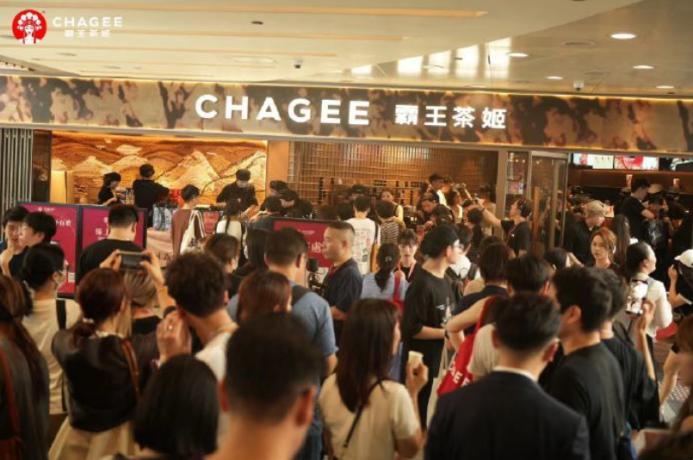
This is highly consistent with our earlier feature Why CHAGEE separated “Oriental iced tea” into a standalone series. Tea bases such as jasmine buds, slow-roasted tieguanyin, lightly roasted osmanthus oolong, sun-dried chenpi puer, and sticky-rice green tea are being pushed forward not merely to “talk about tea,” but because they are especially useful for the back-half of a clean-weather drink. In muggy weather, consumers often do not lack stimulation. They lack a proper finish. Oriental iced tea is unusually good at supplying one.
Its other strength is that it depends less on heavy fruitiness to establish legitimacy. Fruit tea can absolutely work in muggy weather, but once the juice texture becomes too dense, too pulpy, or too sticky, it recreates the very thing the consumer wants to escape. Oriental iced tea, by contrast, is more capable of writing “clear, open, light, tea-like, and not mouth-coating afterward” into a single complete structure. For high-frequency repeat purchase, that matters a lot.
In muggy weather, many people are not asking for stronger fruit. They are asking for a colder tea drink that still feels like tea and still leaves the mouth clean afterward.
5. Why does sparkling tea become newly useful in this “de-humidity feeling” scene?
Because sparkling structure is especially good at cutting through continuity. What feels so unpleasant in muggy weather is often not temperature itself, but a kind of cling: the air clings to the skin, and the mouth also feels coated. Sparkling texture breaks that. It gives the consumer not thick satisfaction, but a faster sense of reset.
That is why our earlier feature Why sparkling tea is back fits naturally into the muggy-weather framework. Sparkling tea does not only look modern and photogenic. It is especially practical in low-burden, fast-paced moments when consumers want a little stimulation without touching heavy milkiness. In muggy weather, sparkling texture + tea base + light tartness is very easily understood as something that helps rinse both the mouth and the mind.
Of course, sparkling texture is not a universal solution. It cannot replace the tea base, and it cannot automatically provide content. But if the tea base is clear, the sweetness restrained, and the auxiliary flavor sparse but accurate, sparkling tea can turn a drink from “light but flat” into “light but not empty.” That is exactly the kind of structural compensation muggy-weather consumption needs.
6. Why does sour plum tea feel so naturally right inside this line?
Because it is already a very mature Chinese mouth-clearing structure. The moment words like smoked plum, hawthorn, aged peel, roselle, and licorice appear, consumers almost automatically understand the scene: after meals, after heavy flavors, during sticky summer weather, when the mouth needs closing and resetting. For brands, that means extremely low education cost. For consumers, it means extremely high situational legitimacy.
More importantly, sour plum tea is not valuable only because it is “traditional.” In today’s store language, it also matches a very large demand zone: less milkiness, less juice density, but still not too empty. In Why sour plum drinks are being seriously picked up again by new tea brands, we already argued that its greatest strength is not nostalgia, but how easily it can be rewritten as a modern, high-frequency, mouth-clearing solution. Muggy weather is one of the steadiest scenes for that rewriting.
If lemon tea is sharper, Oriental iced tea is more tea-led, and sparkling tea is better at cutting through stickiness, then sour plum structure is better at a more Chinese kind of closure. It does not always produce the brightest possible reset, but it very steadily presses down damp heaviness and after-meal residue. For many consumers, that less aggressive but more reliable de-sticky feeling is exactly what works best for frequent repeat purchase.
The value of sour plum-style products is not “retro charm” by itself. It is that they can be rewritten as a cup with Chinese-style content and strong mouth-clearing usefulness.
7. Why are lighter milk teas not completely excluded from the muggy-weather cup?
Because not every muggy-weather moment demands maximum mouth-clearing. Some consumers still want a small amount of support, especially when they have gone too long without eating, feel slightly empty in the afternoon, or are sitting in overly air-conditioned interiors. What changes is that the milkiness cannot be thick, sugary, and dragging. It has to become light, smooth, real, and edge-supportive. In other words, the milk tea that can enter this line is not selling comfort through density, but through a softer kind of “I want some content, but please don’t press down on me.”
This is precisely how the line from Why light milk tea became a main character again extends into weather scenes. If a light milk tea has a clear tea base, restrained milkiness, controlled sweetness, and a finish that does not coat the mouth, it can still work in muggy weather. It is not the headline mouth-clearing answer on this line, but it is the answer for consumers who do not want to feel empty either.
So muggy weather is not rejecting milk altogether. It is redefining milk. If milk continues to mean thickness, it becomes hard to justify. If it is rewritten as a lighter form of support, it still keeps a place. That split itself is part of the increasingly fine-grained tea menu logic of 2026.
Muggy weather does not necessarily reject milkiness. It rejects milkiness that is thick, greasy, and dragging.
8. Why does this line reconnect after-meal logic, commuting, the second cup, and office refills?
Because the muggy-weather cup is not really a single-category problem. It is a state-management problem. After meals people want to clear the mouth. During commuting they want to feel more efficient. For the second cup they want something not too heavy. In office refills they want something not too stimulating. In low-pressure weather they want a slight brightening of the head. These all point toward the same thing: the consumer wants help moving from a sticky, dull, heavy, dragging condition to something cleaner and more workable, and tea drinks are especially good at inhabiting that small transition.
That is why previously written lines on the after-meal cup, the second cup, office survival supply, and small-cup logic all make even more sense when placed back under muggy-weather logic. They are not independent side stories. They are building one larger map together: how weather shapes bodily state, how bodily state shapes ordering, and how ordering rewrites menus in return.
That is also why, although “the muggy-weather cup” sounds like a small weather topic, it says a lot about the real competitive mode of fresh tea today. Brands are no longer fighting only with “new flavors.” They are increasingly fighting with “better descriptions of the little discomforts of daily life, plus one cup that feels like a credible solution.” Muggy weather is one of those discomforts: small enough to be overlooked, frequent enough to be commercially important.
9. Where are the limits of this trend?
First, a de-humidity feeling is not a medical concept. Brands can write “clear, light, bright, and de-sticky” very smoothly, but those are first of all consumption words, not formal health conclusions. Second, products that rely too heavily on cooling gimmicks, artificial tartness, or hollow sparkling texture are likely to be exposed quickly by the second or third sip. Muggy-weather consumers do not want only speed. They also want truth. Third, this line can become homogenous very fast. Once everyone begins talking about mouth-clearing, reducing heaviness, electrolyte language, and cooling factors, what decides who survives is still whether the tea base is clean enough, the finish dry enough, and the total structure genuinely non-coating.
In other words, muggy weather does create new product reasons for many brands, but it also forces drinks to become more honest. There is no thick milk to hide behind here, no giant fruit load to prop things up, and no mountain of toppings to create an illusion of value. The more a product claims to remove heaviness, the clearer its structure has to be. The more it claims to feel quick, the less it can survive on sharpness alone. The more it claims to be light, the more it has to prove it is not empty.
10. Why is this worth recording inside the longer chain of 2026 drinks change?
Because it once again shows that the deepest shift in fresh tea is not simply the multiplication of flavors. It is the increasing ability to organize products around weather, bodily feeling, and daily rhythm. Return-of-humidity days, plum-rain season, and wet low-pressure conditions used to be treated as background. Now stores are beginning to translate them into manageable consumption scenes. Brands are no longer only competing over “which cup tastes better.” They are competing over “which cup makes the most sense in this kind of sticky weather.”
That matters especially for the drinks section because it shows how many apparently small menu movements—subdividing lemon tea, pushing Oriental iced tea further forward, clarifying sparkling tea, modernizing sour plum drinks, restraining light milk tea, and normalizing small cups—are not isolated at all. Together they point toward the same larger change: consumers want not just pleasure, but a cup that feels more capable of taking care of their immediate state. The muggy-weather cup is a very typical and very trackable piece of that map.
Existing site features on after-meal drinks, post-spicy drinks, Oriental iced tea series logic, sparkling tea return, sour plum drink return, the second cup, office supply, and small-cup logic (March to April 2026).
Synthesized observation of Chinese chain tea-store consumption patterns during return-of-humidity days, plum-rain season, and wet low-pressure weather, especially around mouth-clearing, quick reset, refills, and high-frequency daily purchase.