Teaware feature
Why a teapot lid rest is more than a little pad for the lid: from lid retreat, steam, and leftover drips to how it truly stabilizes a pot-led tea table
Many people only begin to notice a teapot lid rest when the same small problem keeps slowing them down: once the lid is lifted, where exactly should it go first? Putting it directly on the table feels hot, damp, and risky. Leaning it on the edge of a pot stand steals space from the main vessel. Pressing it onto one corner of the tea cloth turns what should be a small rescue tool into a permanently damp soft obstacle. That is why the teapot lid rest, which looks at first like an optional minor accessory, becomes much more meaningful once one really enters frequent pot-led brewing. It does not pour, it does not distribute tea, and it does not carry the main narrative. What it handles is the transitional strip of time after the lid leaves the pot: one of the easiest places for the order of the brewing zone to loosen.
Because of that, the teapot lid rest is a remarkably honest test of whether a pot-led tea table is mature. A mature tea table is not only one where the main brewing vessel, the pot stand, and the jianshui each have clear jobs, nor only one where the pouring gesture itself looks neat. It must also answer a finer question: where does the lid go once it leaves the pot while still carrying heat, steam, moisture, and a little residual dripping? If that question has not been arranged in advance, the brewer begins improvising inside the movement itself: the hand hesitates, the eyes look for a place, the tea cloth gets borrowed, the table edge gets pressed into temporary service. None of these moments looks serious by itself, but under repetition the brewing zone slowly shifts from feeling stable to feeling slightly off.
That is why the teapot lid rest deserves a dedicated article. Not because it is exotic, but because it sits right at a growing intersection in contemporary Chinese tea-table discussion: dry brewing, object boundaries, specialized auxiliary roles, and the question of who receives the after-effects once an action has been completed. The teapot lid rest handles exactly those after-effects. It turns the lid from a hot damp object that must find somewhere to land into a high-frequency working piece with a dedicated landing point, a clear retreat route, and a local boundary of its own.
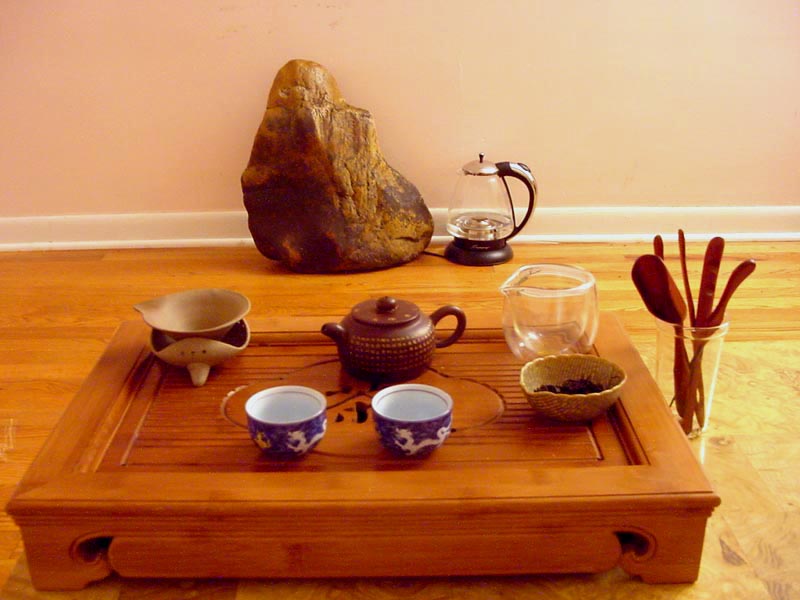
1. What exactly is a teapot lid rest? It serves not storage, but the lid’s mid-process retreat
At the simplest level, a teapot lid rest is a small tray, support, shallow dish, or perch for receiving the lid. Its form can be extremely restrained, even so restrained that it hardly looks worth naming. But once it is returned to an actual pot-led tea table, its real target becomes obvious. It is not dealing with a lid that has already been washed, finished, and put away. It is dealing with the lid while it is still inside the working sequence. In other words, it belongs to the middle of the process, not the end of it.
That middle state matters. In real brewing, the lid is not lifted only once. Smelling the aroma, checking the leaves, observing the inside of the pot, letting heat out briefly, brewing through multiple rounds, and pausing during repeated infusions all make the lid cycle through lifting, resting, returning, and lifting again. As long as it remains inside that chain, it is not a passive object that can simply be set anywhere. It is a transitional piece that continues to carry heat, moisture, fragrance, and drips. The value of the lid rest lies in giving that transitional object a predictable, repeatable, low-cost place to stop.
That is why a teapot lid rest is not the same as general storage. Storage belongs to the state after the action has ended. A lid rest belongs to the action while it is still underway. It does not make the lid disappear. It lets the lid retreat with order rather than by temporary luck. The difference sounds small, but in practice it determines whether the brewing zone becomes clearer as the session continues or turns into a worktable held together by constant small improvisations.
2. Why is a teapot lid rest not simply the same thing as a gai-zhi? One belongs more specifically to the pot-led brewing system
Many readers naturally understand a teapot lid rest as the teapot version of a gai-zhi. That is directionally fair, because both objects answer the question of where a lifted lid should go. But if the two are fully merged, the difference in movement scale gets lost. A gai-zhi is a broader lid-resting concept. It may serve a gaiwan lid, a teapot lid, or certain general hot-lid pause gestures. A teapot lid rest is narrower and more tightly tied to the pot-led brewing system. It specifically serves the lid that belongs to the pot mouth, the pot shoulder, the pot stand, and the main movement line of brewing.
Put differently, a gai-zhi is closer to a broad concept for receiving hot lids with dignity. A teapot lid rest is more clearly a dedicated node within a pot-led tea table. It focuses on how the lid exits the main brewing path without leaving the controllable range of that brewing system. It therefore forms more explicit cooperation with the pot stand, the jianshui, and the tea cloth: the pot stand manages the ground beneath the main vessel, the jianshui manages discarded water, the tea cloth manages local rescue, and the lid rest manages the short pause after the lid has been lifted.
So the more accurate statement is not that a teapot lid rest is simply a gai-zhi, but that it belongs to a more specialized branch of lid-landing logic within a pot-led brewing setting. It overlaps with the gai-zhi, but it emphasizes more strongly the heat, moisture, return path, and local edge of the main brewing zone.
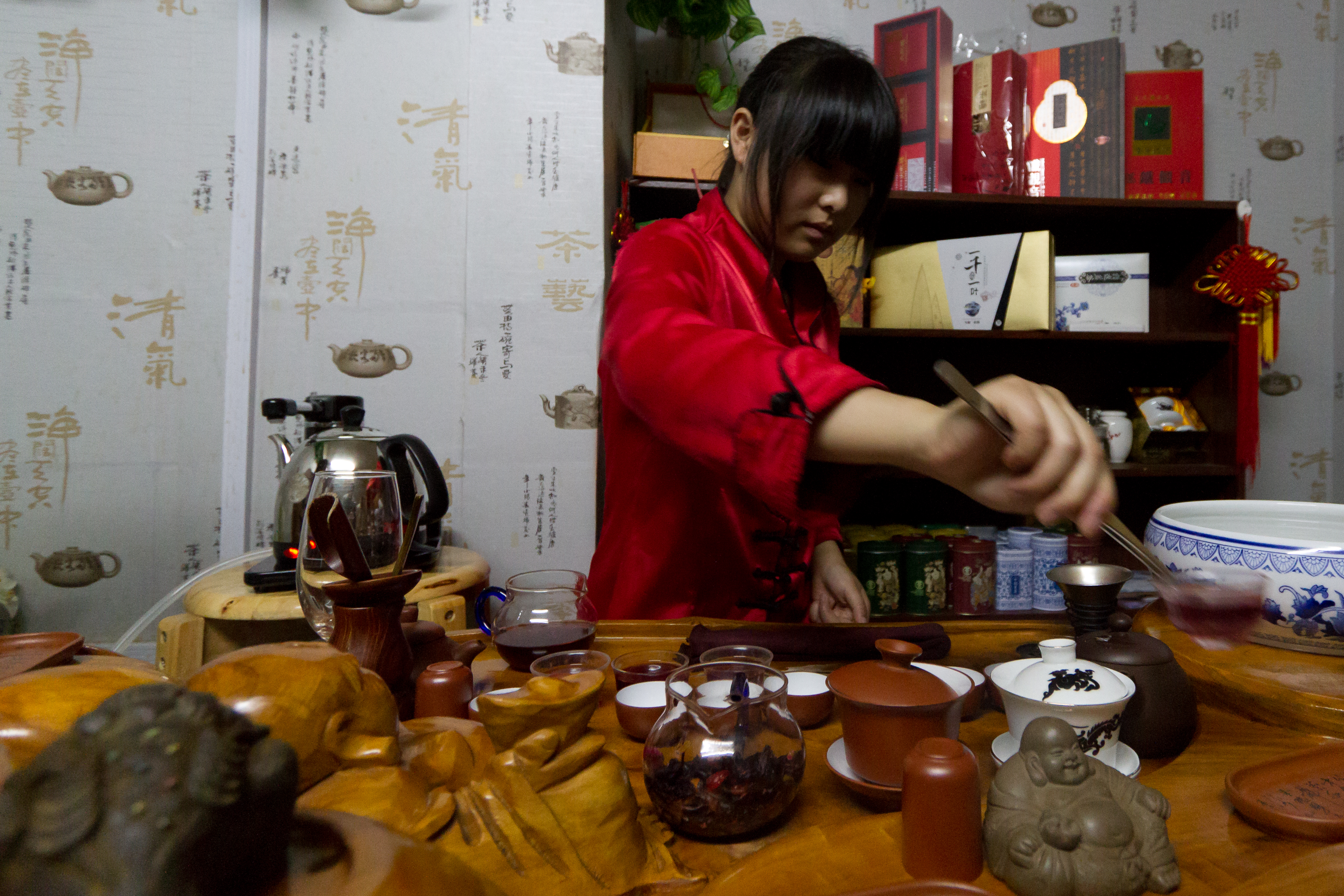
3. What does a teapot lid rest actually receive? Not only the lid itself, but steam, residual drips, and the tabletop consequences of a pause
If one thinks of the lid rest only as “the thing that holds the lid,” it is easy to underestimate it. What it really receives is the aftermath that remains once the lid leaves the pot mouth. First there is heat. A freshly lifted lid is often hotter than people remember, especially in small-pot, fast, repeated brewing and in hotter clay-pot contexts. It is not a neutral object that can simply be placed anywhere. Second there is moisture. The inside of the lid carries steam, condensation, and sometimes a faint line of tea liquor. Third there is the pause itself. The lid is not finished once lifted. It still has to be taken up again, returned, and reinserted into the flow. So the resting point must be both safe and convenient.
The function of the lid rest lies exactly here. It compresses these consequences into one local zone. Heat stops there first. Residual drips fall there first. The waiting time before the lid goes back also happens there first. The brewing zone no longer has to become generally hot, damp, slippery, or visually untidy because of this one small object. The lid rest does not erase consequences. It simply keeps them inside a much smaller boundary. That is one of the clearest strengths of mature tea-table objects.
This also explains why a true teapot lid rest is not fully equivalent to just any small dish. A temporary saucer can certainly work in a pinch. But a genuinely well-resolved lid rest takes into account drip-catching range, heat separation, lid stability, and the low-friction return of the lid to the pot, not merely the fact that there is now “something underneath.”
4. Why is the teapot lid rest especially suited to today’s dry-brewing pot table? Because dry brewing fears not water itself, but boundaryless hot-wet pauses
Many people understand dry brewing too narrowly as the wish that the tabletop should stay as dry as possible. But mature dry-brewing logic has never really meant zero water. It means clear boundaries. Where is heat allowed? Where is moisture allowed? If something gets damp, who receives it? And once it is received, where does it pause? All of that has to be arranged in advance. The teapot lid is one of the most typical and most easily overlooked hot-wet pause objects in the whole system. If it is not given a dedicated landing point, it will borrow retreat space from somewhere else, and other areas then begin carrying consequences that do not really belong to them.
In the era of large tea trays, many small problems were swallowed by the overall system. A little dripping along the lid edge, a brief pause on the tray rim, or a temporary landing point did not appear especially serious. But once the table becomes smaller, the equipment becomes lighter, and the border between brewing space and drinking space grows clearer, these seemingly minor hot-wet pauses are amplified very quickly. Today many tea tables do not permit their surrounding space to become generally damp, nor do they want to rely on a tea cloth constantly chasing after every trace just to preserve appearances. That is exactly why the lid rest shifts from “nice to have” to “this makes the whole table easier.”
So the teapot lid rest is not an unnecessary leftover from an older setup. If anything, it suits the contemporary pot-led table extremely well: fewer objects, a cleaner surface, shorter movement lines, clearer boundaries, and therefore a stronger need for a dedicated object that handles the consequences of short pauses.
5. Where exactly is the boundary between the teapot lid rest, the pot stand, the jianshui, and the tea cloth?
The most common substitutes for a teapot lid rest are to lean the lid temporarily on the edge of the pot stand, press it onto one corner of the tea cloth, or move it near the jianshui. None of these choices is absolutely unusable. The problem is that they borrow another object’s workstation and force it to double as the lid’s retreat point. The pot stand serves the hottest and most stability-critical area directly beneath the main vessel. The jianshui serves the disposal and recovery of water. The tea cloth serves local rescue and absorption. If all of these are continually drafted into receiving the lid, the distinct responsibilities of different objects slowly collapse into each other.
Pressing the lid onto the tea cloth means one corner of the cloth becomes the first place to turn damp, hot, and marked, so the cloth itself starts becoming a soft damp zone whose presence keeps spreading. Leaning the lid on the edge of the pot stand looks convenient, but it steals working space from the main vessel and interrupts the return path of the pot. Pushing the lid toward the jianshui may feel practical, but it drags what should remain a brewing-zone pause closer to the discarded-water logic, lengthening the route and adding visual noise. The real value of the lid rest is not that it invents a new action. It gives borrowed workstations back to the objects that actually belong there.
In other words, the teapot lid rest is not an unnecessary extra object. It is a way of reducing cross-zone interference. It lets the pot stand remain a pot stand, the jianshui remain a jianshui, and the tea cloth remain a rescue tool rather than a semi-permanent lid platform. The order of a mature tea table is often built precisely on this principle: do not borrow someone else’s place to do your own work.
6. What kind of teapot lid rest is genuinely good to use? First ask whether it is stable, then whether it is easy to clean, and only then whether it looks right
The easiest mistake when choosing a lid rest is to look at style first and function second. But it is a working object before it is anything else. Stability comes first. Once the lid is put down, it should not slide, tip, wobble, or force the user to search for the right angle every single time. Many lids have knobs, curved profiles, and damp inner edges. If the support relationship is wrong, the lid feels suspended rather than seated. A truly convenient lid rest lets the lid settle at once. It should not require the user to keep correcting it after it is placed.
Second comes cleanability. A teapot lid rest does not receive pure cold water. It receives local traces formed by condensed steam, a little tea marking, and heat. If the surface is full of grooves, awkward corners, or materials that stain too easily, it quickly stops being a helpful finishing tool and becomes another object that constantly needs special attention. The more frequently it is used, the more important it is to choose a structure that wipes clean quickly and washes without fuss.
Only then comes proportion and style. If the lid rest is too large, it steals the visual center from the main vessel and starts to look like a decorative object of its own. If it is too small, its support relationship becomes weak and its hot-wet boundary too fragile. The best lid rests tend to be restrained and low-volume, but not weak. They do not need to announce themselves loudly, but beside the main pot they must provide a sufficiently clear and reliable landing point.
7. Why does material change the whole experience of a teapot lid rest? Wood, porcelain, clay, and stone are not merely style options
Wooden teapot lid rests have become common in recent years because they suit the contemporary tea-table preference for naturalness, negative space, and softness. Wood also makes a hot lid feel visually gentler rather than cold. But once wood enters a long-term hot and damp environment, questions of water absorption, color change, and maintenance frequency begin to matter. If the user is happy to treat those traces as part of use and aging, wood can become more attractive over time. If the goal is a low-maintenance working object, wood is not always the easiest answer.
Porcelain and glazed ceramic lid rests offer cleaner boundaries, easier washing, and a visually crisp look, especially in white-porcelain systems or lighter modern tea tables. They state very clearly that the hot lid has stepped away from the main brewing position. But because they are so visually honest, they also display water marks and tea stains more directly. Rougher clay, stone-like surfaces, or heavier materials are often better at quietly digesting those traces and giving the lid rest a calmer long-term presence. Yet if they become too heavy in proportion, they can also make the brewing zone feel unnecessarily dense.
So material never simply answers the question of which choice is “more advanced.” It answers a more practical question: should this little hot-wet pause zone behave more like a visibly clean workstation, or more like a muted buffer area that absorbs marks without complaint? Material is not clothing. It is part of the object’s working method.
8. Common misunderstandings about the teapot lid rest
Mistake one: a teapot lid rest is only a refined extra. It can certainly make the table look more complete, but its first job is to resolve heat, moisture, temporary pause, and return-path problems after the lid is lifted, not simply to improve appearances.
Mistake two: any empty spot can replace a lid rest. Temporarily, perhaps. In long-term use, the difference becomes obvious. If there is no fixed landing point, no dedicated boundary, and no stable support relationship, the movement gets interrupted again and again.
Mistake three: the smaller and more delicate the lid rest, the higher-level it must be. Too small often means insufficient support, a weak boundary, and hot-wet consequences that escape too easily. A good lid rest is not necessarily the daintiest one, but it always lets a commonly used lid sit securely.
Mistake four: only traditional Yixing-pot brewing needs a teapot lid rest. In fact, whenever lifting the lid is a frequent action, whenever tabletop boundaries matter, and whenever pause consequences matter, the lid rest has clear value. Modern small tables, desk tea setups, and photography tables can all benefit from it.
Mistake five: a teapot lid rest is only about hygiene and has nothing to do with aesthetics. It absolutely participates in aesthetics, but not by competing for attention. It participates by reducing noise. It removes that repeatedly damp patch that keeps reminding the eye, “a hot lid was just placed here.”
Why is the teapot lid rest still worth understanding seriously today?
Because it reminds us with unusual honesty that a mature tea table is judged not only by its starring vessels, but also by who receives the consequences after an action has been completed. A teapot lid rest does not improve aroma, change the tea liquor, or create a dramatic narrative peak. It is responsible for the smallest, most frequent, and most easily overlooked layer of local order that begins the moment the lid is lifted. The more a tea table values dry brewing, negative space, object reduction, and visual quiet, the more clearly the need for such a small object appears.
To understand the teapot lid rest is also to understand an important principle in Chinese tea-table object logic: good objects do not only complete the action itself; they also complete the retreat after the action. The pot has its stand, discarded water has its jianshui, cups have cup stands, and tea cloths may have tea-cloth rests. It is therefore perfectly reasonable that the lid, too, should have a small retreat point of its own. The teapot lid rest deserves to be written about not because it is grand, but because it is honest. It stands quietly and almost unromantically between heat, dampness, pause, and order, and it does one of the most repetitive and least glamorous jobs on the tea table well.
Related reading: Why a gai-zhi is more than the little thing that holds a lid, Why the pot stand matters again today, Why jianshui returned to the center of the tea table in the age of dry brewing, and Why a tea-cloth rest is more than a little support for the tea cloth.
Source references: synthesized from public Chinese-language teaware references and discussion trails around topics such as “teapot lid rest,” “where a teapot lid should land,” “lifting the lid during pot-led brewing,” “dry-brewing tabletop boundaries,” “temporary placement of hot lids,” and “pause objects in the main brewing zone,” then aligned against this site’s existing object-logic articles on the gai-zhi, pot stand, jianshui, tea cloth, and tea-cloth rest. The focus here is on explaining the real working boundary of the teapot lid rest on today’s pot-led tea table rather than reconstructing one single historical label.