Teaware feature
Why a tea boat is more than a stand under the teapot: naming history, support logic, and its real boundary from the pot stand and tea tray
For many readers today, the term tea boat sounds slightly old-fashioned. In contemporary Chinese teaware discussion, people are more likely to say pot stand, tea tray, teapot stand, or simply “the thing under the pot.” Because of that, tea boat can seem like a leftover label from older books rather than a living category. But once you place it back into actual tea-table use, the reason it never quite disappeared becomes much clearer. It points to a very specific support logic: the small working zone under the main brewing vessel that must catch a little water, stabilize a pot, and give that vessel a clear place to sit.
That is also why the object is so often misunderstood either as “just a small tea tray” or as “merely an old name for the pot stand.” Both ideas are partly true, but neither is complete. A tea boat overlaps heavily with what many people today call a pot stand, and it certainly supports and catches runoff. But compared with a generic stand, the tea boat usually carries a stronger sense of vessel form and enclosure. Compared with a full tea tray, it is more local, more concentrated, and much closer to the main brewing object itself.
If the large tea tray manages the water and order of the whole table, if the waste-water vessel manages discarded liquid, and if the cup saucer manages the resting point of a single cup, then the tea boat manages a narrower but crucial question: how exactly the teapot is held. That question sounds small, but it sits where heat, water, balance, movement boundaries, and object aesthetics all meet. That is why the older term still deserves a clear explanation today.
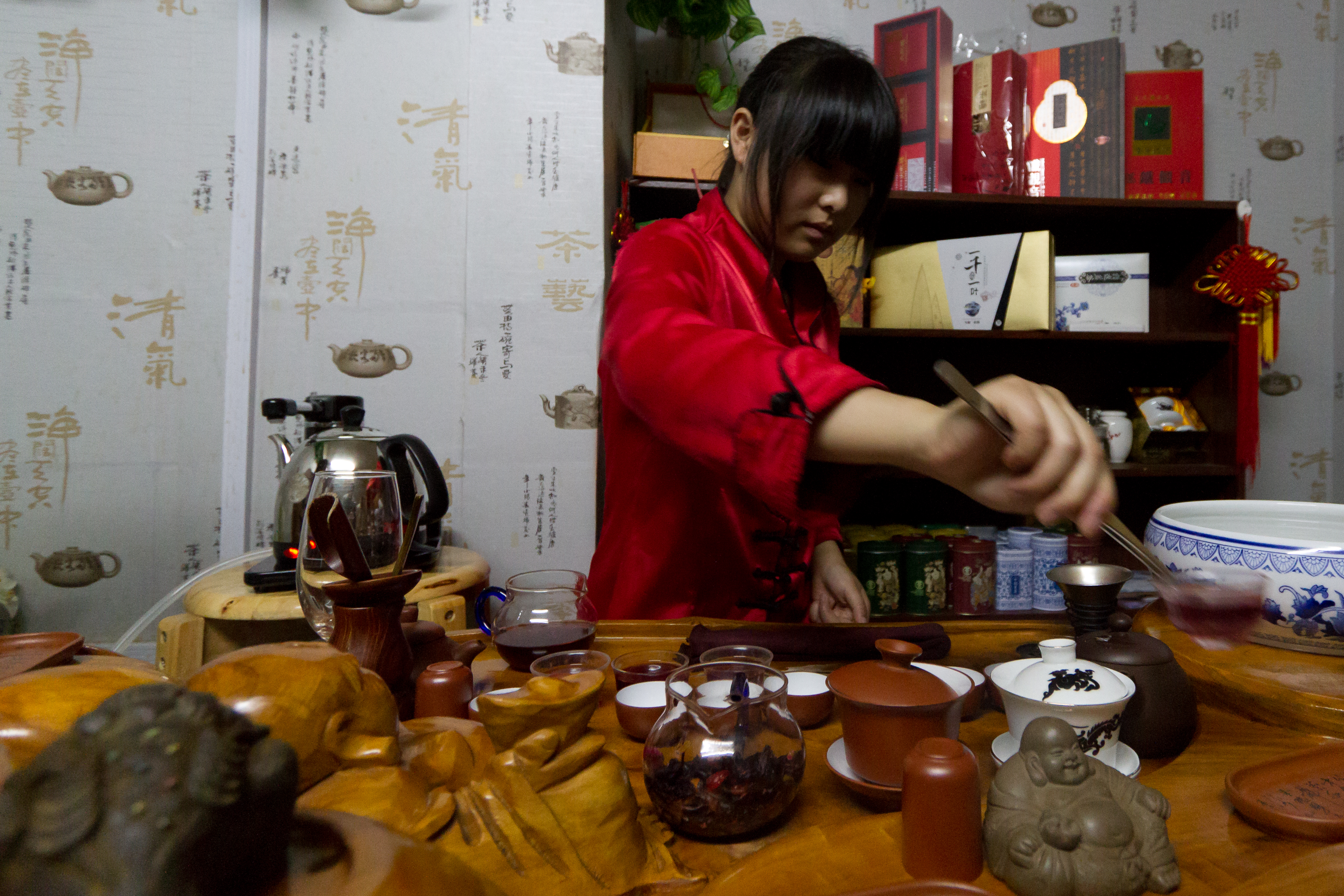
1. What a tea boat is, and why the name is still worth keeping
Even at the level of language, tea boat suggests more shape and containment than a purely functional term like pot stand. It implies an object with edges, a holding surface, and a degree of enclosure rather than a flat and neutral base. In publicly accessible traditional tea references, the term often appears alongside related names such as tea mat, pot stand, or teapot support, all pointing toward roughly the same kind of work: holding the teapot, receiving spilled water, and protecting the table from direct heat and moisture. So this is not just a literary flourish. It has long been tied to actual use.
The reason to keep the term today is not nostalgia for old wording. It is that the term helps us clarify an object that is otherwise easy to flatten into vagueness. Pot stand is a positional and functional term: it tells us that the object supports the pot. Tea boat makes it easier to see that this is not just a thin pad under a vessel, but a small support object with some degree of containment, catchment, and form. It is usually deeper or more enclosed than a simple saucer and much more focused than a full tea tray. The difference in naming reflects a difference in working boundary.
2. Is a tea boat the same thing as a pot stand?
In everyday contemporary use, the two overlap so much that many objects can be called either one. That is why people mix the terms so freely. If you approach the question through shopping language or ordinary conversation, that overlap is understandable. But at the level of teaware understanding, the terms are not entirely identical. Pot stand is a functional label. It asks whether the object serves the role of supporting the main pot. Tea boat feels more like a vessel-type term. It suggests a support object with tray-like or shallow-container character.
Put differently, pot stand is closer to the name of a job, while tea boat is closer to the name of a form. Not every pot stand strongly conveys the enclosed or vessel-like quality implied by tea boat. But many objects called tea boats are not simply flat stands. They often resemble a shallow dish, a low bowl, or a support object with inner and outer structure. That helps explain why the older term survived in traditional usage. Compared with a generic stand or tray, tea boat says more about the shape-conscious nature of the support object and the fact that it serves the main brewing vessel rather than the whole table.
So the more accurate position is not that the tea boat and the pot stand are fully separate, nor that they are exactly the same thing. A tea boat can be understood as one branch within the broader pot-stand family, especially one with stronger vessel form and clearer local containment.
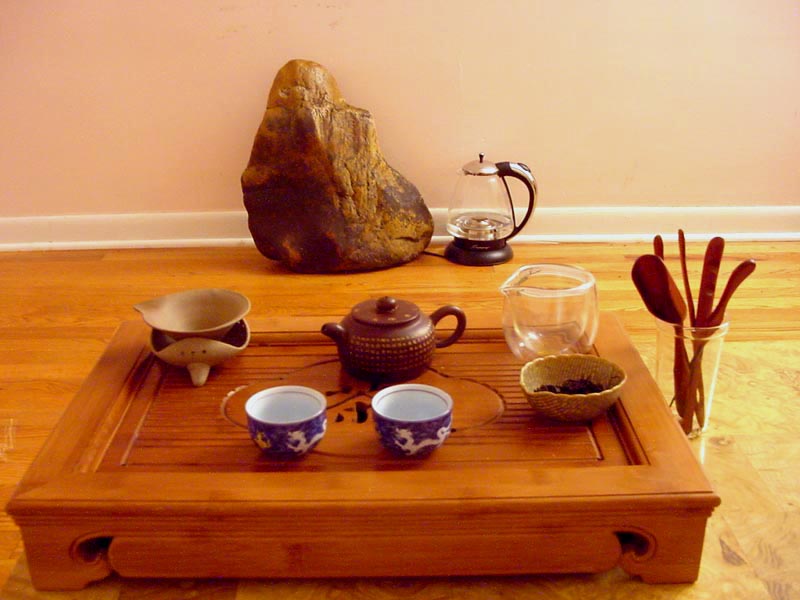
3. Where is the boundary between the tea boat and the tea tray?
This is the distinction that most needs to be made clearly. Many people see any vessel that can catch water and immediately call it a tea tray. But the tea tray manages the order of the whole table. It may carry the main brewing vessel, fairness pitcher, cup set, strainer, tea towel, and sometimes a wider drainage logic as well. It is a table-level platform. The tea boat is different. It serves only the small area under the main brewing vessel. It does not govern the full drainage logic of the table, nor the complete arrangement of all objects. Its job is narrower: where the teapot sits, how heat under the vessel is buffered, where local runoff from pouring or rinsing falls, and how the main vessel becomes visually settled.
That is why a tea boat is not simply a smaller tea tray. They may both look tray-like, but they operate at different scales. The tea tray is a table-level object. The tea boat is a vessel-level object. One solves the problem of the whole tea table. The other solves the problem of the main pot. If you mistake a tea boat for a miniature tea tray, you quickly begin asking it to do too much: hold the pot, catch major runoff, support cups, maybe even organize the whole scene. At that point, size, movement, and visual balance all start to fail.
The reverse mistake also happens. In dry-brewing or small-table settings, many people do not need a full drainage tray at all. They only need a local support object that makes the main brewer legible and controlled. If a large tray is imposed in that situation, the table may not look more mature. It may simply become heavier and less precise. One reason the tea boat still matters is that it offers a middle solution between placing the teapot directly on the table and putting the whole table onto a large tea tray.
4. Why the tea boat handles heat, water, balance, and boundaries, not just “holding the pot”
If all you needed was to raise the teapot off the tabletop, almost any flat surface could do the job. Real tea tables face more than that. The main brewing vessel is usually the point where small problems gather most quickly. It is the hottest object. It is the one most likely to drip. It is the one most likely to create a damp and visually unstable area when heat and moisture combine. The tea boat matters because it localizes those consequences. A little liquid hanging at the spout, a little water from rinsing, a little warmth and steam under the pot: these no longer fall directly onto the table. They are first received by a support object built for that local task.
It also handles balance. A teapot placed directly on the table can easily feel temporary, as though it has simply been set down somewhere. With a tea boat, the pot appears to sit within a place that belongs to it. That place is not theatrical decoration. It is a practical statement: this is the main brewing zone, and heat, water, movement, and attention all gather here. What the tea boat gives is not ornamental framing, but functional framing.
That sense of boundary changes movement as well. Once there is a clear local zone for the main vessel, many gestures become easier to discipline. Where does the pot return after pouring? Where do tiny drips from the lid edge go? If pouring hot water over the pot is done, what does that cost? A good tea boat does not make the gestures exaggerated. It keeps them from losing focus.
5. Why the tea boat regains importance in the age of dry brewing
At first glance, dry brewing might seem to reduce the need for a tea boat. There is less visible water, less rinsing over the pot, and generally a more restrained table. In practice, the opposite often happens. Dry brewing does not mean no water. It means water should not spread without boundary. When a full tea tray once absorbed all minor consequences, the small wet traces around the pot could disappear into a broader system. But once many tea tables move toward lighter furniture, fewer objects, and more visible negative space, even a small ring of moisture beneath the main brewer becomes obvious. The less you want the table to become messily wet, the more you need a mature local support object.
In this context, the tea boat does not restore old large-scale wet brewing. Instead, it pulls the inevitable local consequences back into a manageable zone. Even without pouring over the pot, there is still the occasional drip from the spout, a little moisture from the lid edge, or warmth and vapor under the vessel. The tea boat is exactly the kind of object suited to this local water-control task. It does not declare the whole table to be a drainage platform, but it preserves order at the most critical point.
That helps explain why many modern tea tables still place an independent support object under the main pot even when the setup looks much more minimal than older tea arrangements. Sometimes the object is called a pot stand, sometimes a tea boat. The label may shift, but the logic does not. Once the table stops depending on a large all-purpose system, local boundary-making tools become important again.
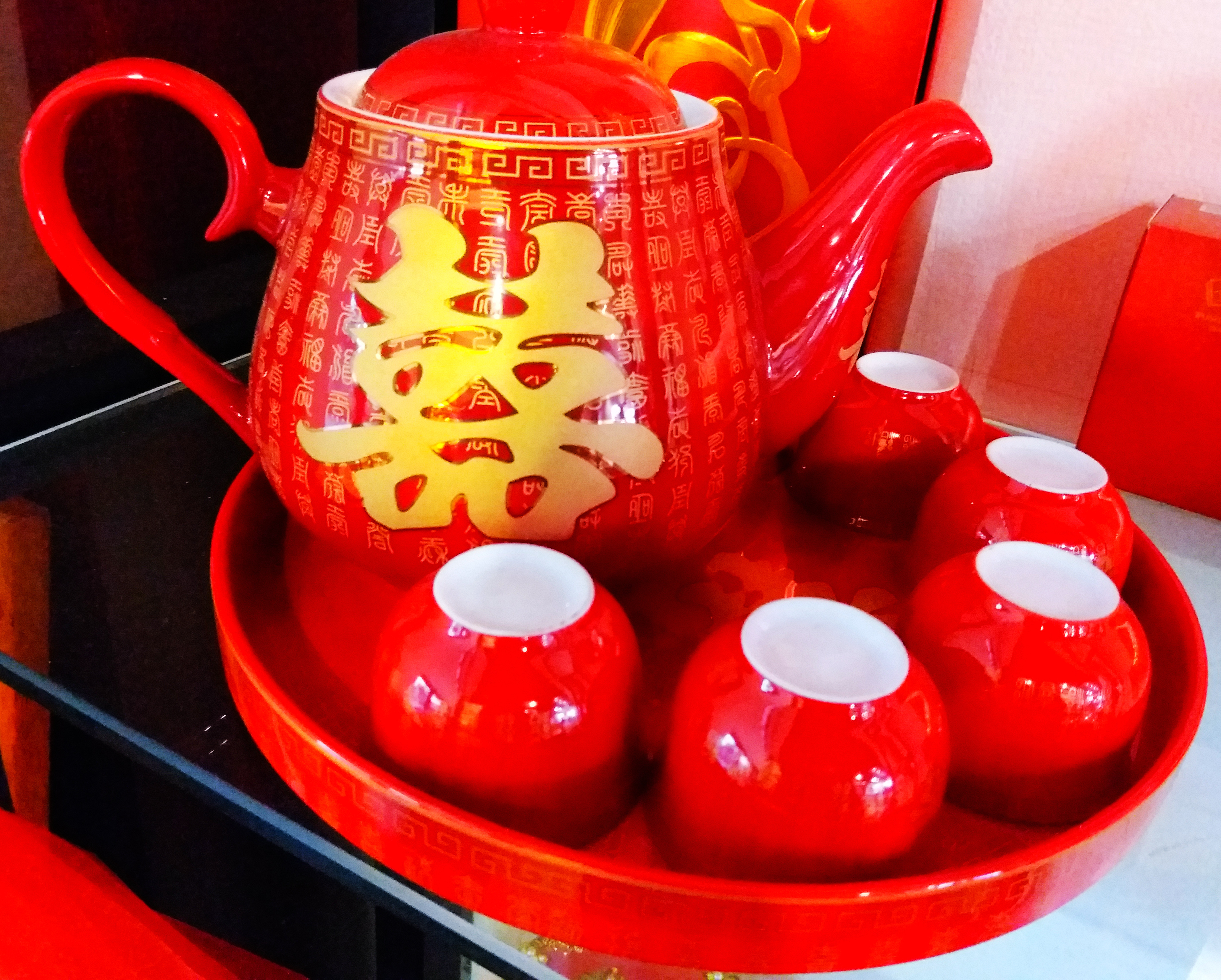
6. How is a tea boat different from a cup saucer?
Both are supporting objects, but they serve different kinds of vessels and very different levels of intensity. A cup saucer serves a single cup. It handles insulation, lifting, resting, and light protection for the table surface. A tea boat serves the main brewing vessel. It must deal with greater heat, more frequent small runoff, and a much stronger question of balance. One serves the drinking end of tea. The other serves the brewing end.
The difference in scale matters here. Even when a saucer has some depth, it rarely needs to manage repeated hot-water gestures around the same vessel. A tea boat does. It must withstand the teapot being returned again and again after pouring, occasional runoff, residual heat, and repeated contact with the central brewing action. That is why tea boats usually emphasize containment, stability, and local water tolerance more than saucers do. They are built not merely for one placement, but for repeated return.
Aesthetically, the tea boat also belongs more clearly to the main-vessel system than to the world of dining accessories. A saucer can be lighter, more decorative, even more sociable in tone. A tea boat rarely escapes functional seriousness. If it becomes too playful or too light, the teapot starts to look unsupported. On a good tea table, the first feeling a tea boat should give is steadiness. Beauty comes after that.
7. What kinds of forms feel most like tea boats?
In use, tea boats tend to fall into a few recurring tendencies. A shallow dish-like tea boat marks out a light and restrained main-vessel zone. It suits tables with controlled movement, little rinsing over the pot, and a strong emphasis on negative space. A deeper body or more enclosed form behaves more like a true local container. It offers more tolerance for hotter and wetter action. Some perforated, layered, or two-level structures try to keep the pot base drier, though they can become harder to clean thoroughly over time.
These differences are not merely visual. They directly shape use. A flatter and shallower tea boat may feel more contemporary and visually clean, but it forgives less. A deeper and more bounded tea boat feels more stable and often better suits traditional gongfu contexts, but if the proportions are wrong it can weigh the whole main-vessel area down too much. A full-dish form is often easier to understand and wash, while a perforated form may separate functions more clearly at the cost of maintenance. The mature question is never simply which one is “higher level.” It is which one best matches the movements you actually repeat.
That is why a tea boat cannot be judged only through photographs. Whether it works depends on how you really make tea: whether the setup is gaiwan-led or teapot-led, whether you serve one person or several, whether you almost never rinse over the vessel or still preserve some of the hotter action found in older gongfu traditions. Form is not an isolated aesthetic label. It is the outer shell of movement logic.
8. Why the tea boat is also an aesthetic statement
Because it sits directly under the main brewing vessel. That position is too important to be neutral. It is where the eye repeatedly returns, and it is the starting and ending point of many brewing gestures. If the tea boat is too weak, the main vessel appears to hover without grounding. If it is too loud, the vessel is pushed into performance. The tea boat is not the main star in the way a teapot or gaiwan might be, but it often decides whether the star looks properly placed. That is why it influences whether the table reads as calm, old-world, practical, or merely theatrical.
Even more importantly, much of the tea boat’s beauty comes from order rather than from ornament alone. A truly beautiful tea boat is often not the most heavily patterned or most decorated one. It is the one that makes the relationship between teapot and table feel most coherent. It lets the viewer understand why the pot sits here, why this little margin is needed, and why local wet gestures do not spread into general disorder. In other words, the tea boat’s beauty is not an extra layer added after function. It appears when function has been arranged clearly enough.
9. Common misunderstandings
Mistake one: tea boat is just an antique label with no present use. In fact, the name remains useful because it helps us see the boundary between form and function more clearly.
Mistake two: tea boat simply means a small tea tray. A tea boat serves the main pot, while a tea tray serves the whole table. The difference is not only scale but level of responsibility.
Mistake three: tea boat is basically the same as a cup saucer. A saucer handles the resting point of a cup. A tea boat handles repeated heat, local runoff, and balance under the main brewing vessel.
Mistake four: if it catches a little water, it is already a good tea boat. Catching water is only the minimum. Stability, cleanability, visual grounding, and proportion all matter.
Mistake five: dry brewing no longer needs a tea boat. The less a table depends on a full tea tray, the more important a mature local support system becomes.
Why the tea boat is still worth understanding seriously today
Because it sits exactly where many contemporary tea-table questions meet: how older names become simplified in modern speech, how traditional local support objects find new relevance in the era of dry brewing, and why the small area beneath the main brewer can concern heat, water, boundary, balance, and aesthetics all at once. Tea boat is not a term that needs to dominate everyday conversation, but the problem it names remains very real.
To understand the tea boat is to understand a central principle of Chinese tea practice: good objects do not merely solve the lowest-level question of whether something can be placed somewhere. They organize the consequences of movement, the order of the table, and the visual center at the same time. The tea boat is more than a stand under the teapot because what it supports is more than the pot itself. It supports the way the main brewing vessel truly takes its place on the tea table.
Related reading: Why the pot stand matters again today, Why a tea tray is not just a tray, and Why jianshui became central again in the age of dry brewing.
Source references: public tea-reference discussions in which names such as tea mat, pot stand, tea boat, and teapot support overlap; the Chinese Wikipedia entry on tea mats / pot supports as a concise summary of form and use; and public Chinese-language tea-table discussions around dry brewing, main-vessel support, rinsing over the pot, and local water control, checked 2026-04-04.