Teaware feature
Why a pot coaster is more than a pad under the teapot: from poured-pot supports, heat buffering, and visual grounding to its real boundary from the pot stand, tea boat, and cup saucer
Many readers first notice a pot coaster not because it is visually dramatic, but because it is so easy to underestimate. It sits beneath the pot, small and quiet, looking like a leftover piece from a tray, a slightly enlarged cup saucer, or a miniature version of a pot stand or tea boat. It therefore gets reduced to one sentence: it prevents heat, cushions the pot, and looks nice. But once the tea table is reduced to the scale now common in everyday life—a writing desk, a narrow tea mat, one small pot, a few cups, less equipment, more negative space, and no dependence on a full drainage tray—the pot coaster begins to look much more specific. It answers a very practical question: where exactly does the main pot sit, where is heat buffered, where do tiny drips and traces of moisture land, and how is the pot visually and physically grounded instead of seeming merely parked on the table?
Because of that, the pot coaster is easily trapped between two misunderstandings. The first treats it too lightly, as if it were only a small pad whose job ends with preventing heat damage. The second fully merges it into the pot stand or tea boat, assuming that if all of them support the pot, catch some warmth, and handle a little liquid, then the difference is only in naming. The first mistake ignores the coaster’s role in visual grounding and local edge control on modern tables. The second erases the pot coaster’s tighter scale: closer to the base of one pot, more intimate than a local drainage object, and more concerned with transition than with building a whole support zone.
Public Chinese materials suggest at least two stable clues. One comes from ceramic vocabulary around the support of a pouring vessel: the pot sits inside or on a support element that increases stability, lowers the apparent center of gravity, and completes the form. The other comes from broader tea-table discussion, where the object under the pot handles heat separation, protects the tabletop, and fixes the main vessel in place. Put together, these clues show that the pot coaster is not an optional decorative pad. It is a micro-support object: it does not manage the whole table and it does not recover large quantities of waste water, but it serves the hottest, most mark-prone, and most easily neglected point directly under the working pot.
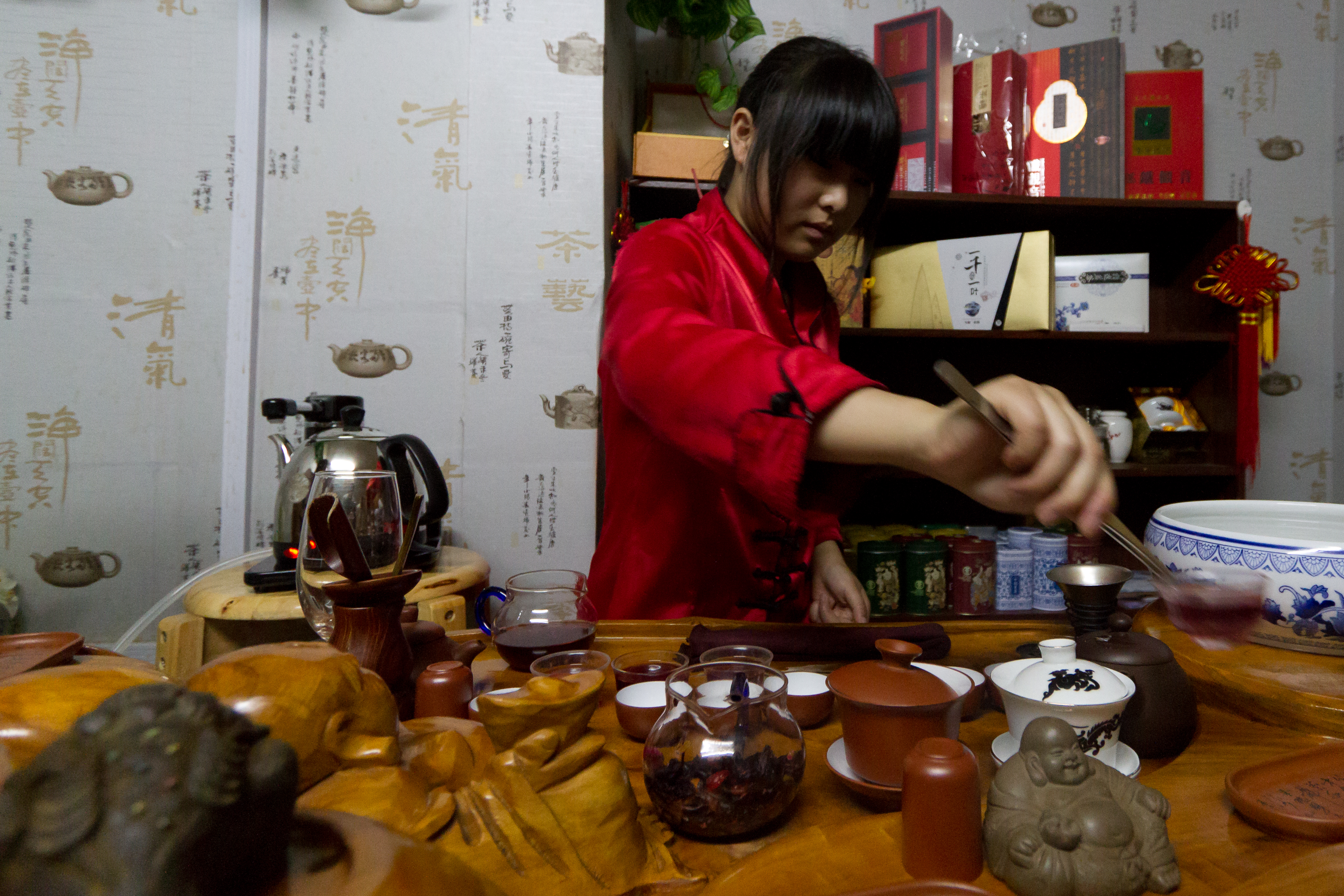
1. What a pot coaster really is: it is defined not by scale, but by how closely it serves one pot
In contemporary use, a pot coaster can first be understood as a small support object dedicated to the landing point of one pot. It is usually modest in size, and the object it serves is highly specific. It does not serve the whole set, and it certainly does not serve the whole table. It serves the active pot. Because its target is so specific, its scale, depth, edge, and material are more sensitive than many people assume. A cup saucer can belong to the drinking end, a pot stand can belong to the local working zone under the brewer, a tea boat can introduce a stronger sense of vessel-form and containment, while the pot coaster moves even closer to the simple but crucial act of letting one pot sit properly.
That helps explain why a pot coaster is often smaller than a pot stand, lighter than a tea boat, and more concerned than a saucer with the visual center of gravity of the main vessel. It is not trying to complete a local drainage system. It inserts a clear transition layer between the pot and the tabletop. In many small present-day tea settings, that transition is exactly what is needed. Without it, the pot often feels as though it is pressing directly onto the table. With it, the main vessel begins to feel genuinely seated. This is not merely visual. Visual stability is already a sign of movement stability, heat stability, and moisture stability.
That is why the pot coaster deserves its own article. Not because it is grand or historically dramatic, but because it is small enough to be ignored. The more the tea table shrinks toward modern everyday scale, the more meaningful such close single-pot support objects become. It does not solve large problems. It solves the small but crucial area directly under the pot, and that is often where tea-table order begins.
2. Why a pot coaster should not simply be treated as the same thing as a pot stand or tea boat
The pot coaster, pot stand, and tea boat are understandably mixed together because they overlap so heavily. All of them serve the main pot. All may support heat, receive some moisture, and imply a supporting relationship under the central brewing object. But if all three are flattened into one, their movement boundaries disappear. More precisely, the pot stand emphasizes functional position: it supports the pot and establishes a local work zone under it. The tea boat emphasizes a vessel category and shape language: it often behaves like a shallow dish, tray, or enclosed receiving object under the brewer. The pot coaster usually reduces the scale further and moves closer to the pot base itself, emphasizing the transition between one pot and the table.
In other words, the pot stand is closer to the name of a function, the tea boat to the name of a support vessel type, and the pot coaster to the closely fitted support layer right at the base of a single pot. Its working radius is shorter. Its visual and psychological effect is more concentrated. When you look at a pot coaster, the first question is whether the pot truly sits well. When you look at a pot stand, you are more likely to think about the local working zone beneath the brewer. When you look at a tea boat, you are more likely to see a small receiving vessel with stronger shape and enclosure.
This also explains why some objects may reasonably be called either a pot coaster or a pot stand. Market language is always messy. But once you return to movement logic, the difference in degree becomes visible: the closer the object sits to the base of one pot, and the more it emphasizes grounding and transition rather than local drainage, the closer it is to the logic of a pot coaster. The more it behaves like a small local work zone, the closer it comes to the pot stand. The more it emphasizes enclosure and vessel character, the closer it moves toward the tea boat.
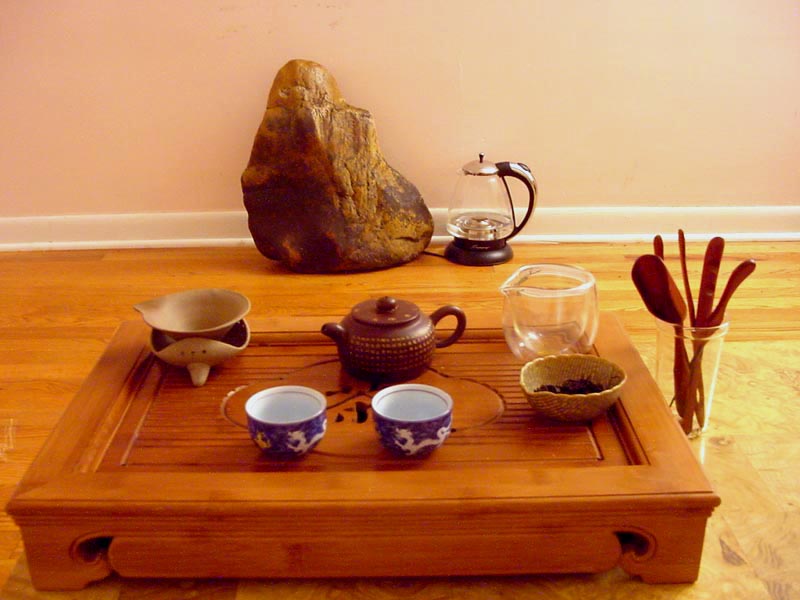
3. Why a pot coaster is not simply a larger cup saucer
At first glance, it may seem natural to think of a pot coaster as a cup saucer adapted for the teapot. After all, both separate heat from the table and give an object a resting point. In practice, however, they answer very different levels of use. A cup saucer belongs to the drinking end. It is light, easy to lift, and only occasionally deals with a little condensation or a small ring of liquid. A pot coaster belongs to the brewing end. It faces more heat, repeated return movements, a more obvious question of weight, and a much greater chance of small local moisture and drips.
That means the pot coaster must be steadier than a saucer and much more attentive to visual proportion under the vessel. A saucer can be thinner or lighter without causing much trouble. A pot coaster that is too thin, too slick, or too visually weak can make the whole pot seem unstable. The saucer handles a pause point. The pot coaster handles a center point. That is why many elegant saucer logics fail when enlarged under a teapot: they may remain pretty, but they do not truly support the working center of the tea table.
So the pot coaster is not a scaled-up saucer. It is another class of support object with a different level of operational intensity. Once that is understood, it becomes obvious why it should not be chosen only by matching style. It must also be judged by whether heat, moisture, weight, and edge are actually being handled well beneath the pot.
4. Why the pot coaster matters again on modern small tables and in dry brewing
At first glance, dry brewing seems as if it should make the pot coaster less important. If one avoids large wet-brewing gestures and does not rely on broad drainage systems, why add another object under the vessel? In practice, the opposite often happens. Because many tables today no longer depend on a large tray, even a little warmth, moisture, and movement under the pot becomes more visible. In the past, many small problems were absorbed by a larger system. Today, many people brew on desks, side tables, and narrow surfaces. The system gets smaller, and so does tolerance. That is exactly when the pot coaster becomes more important.
What it offers is a very low-cost but highly effective local buffer layer. The heat when the pot returns to its place, tiny drips from the spout, a little moisture under the base, or even small traces caused by quick hand movements can all be received, limited, and explained first by the coaster rather than immediately turning the tabletop into a problem area. That may sound minor, but it is precisely the ability many modern compact tea tables need most.
For that reason, the renewed usefulness of the pot coaster is not just a nostalgic detail. It is a structural consequence of smaller and lighter tea-table systems. The less the table depends on a large tray, the more this close-fitting support layer matters. It is not a decorative revival. It is a practical result of how contemporary tea tables have changed.
5. What makes a pot coaster genuinely good to use? Not only beauty, but steadiness, heat buffering, containment, and easy cleaning
Many people first choose a pot coaster by asking whether it looks elegant or whether it matches the pot. Those things are not irrelevant, but what really determines whether it survives long-term use is something more practical: is it stable, does it buffer heat, can it contain local traces, and is it easy to clean? Stability means that once the pot sits on it, the vessel feels grounded rather than floating. Heat buffering means it is not only decorative but truly separates the hottest contact point from the tabletop. Containment means small moisture and drip traces do not immediately escape. Easy cleaning determines whether the object remains in daily use or becomes something taken out only for photographs.
If the form is too flat and too shallow, it may look excellent but lose control of tiny water traces very easily. If it is too deep and too thick, the pot begins to look trapped inside a heavy miniature basin. Good pot coasters tend to find a balance between letting the pot feel seated and not visually dragging it downward. They may not need high walls, but they do need a clear landing point. They may not need to receive much liquid, but they should not let the smallest predictable problems spread instantly.
This also explains why pot coasters often need more restraint than people expect. Their task is not to compete with the main vessel, but to let it appear more complete. The more mature the coaster, the less it relies on excessive decoration and the more it relies on proportion, edge, and material to do the work.
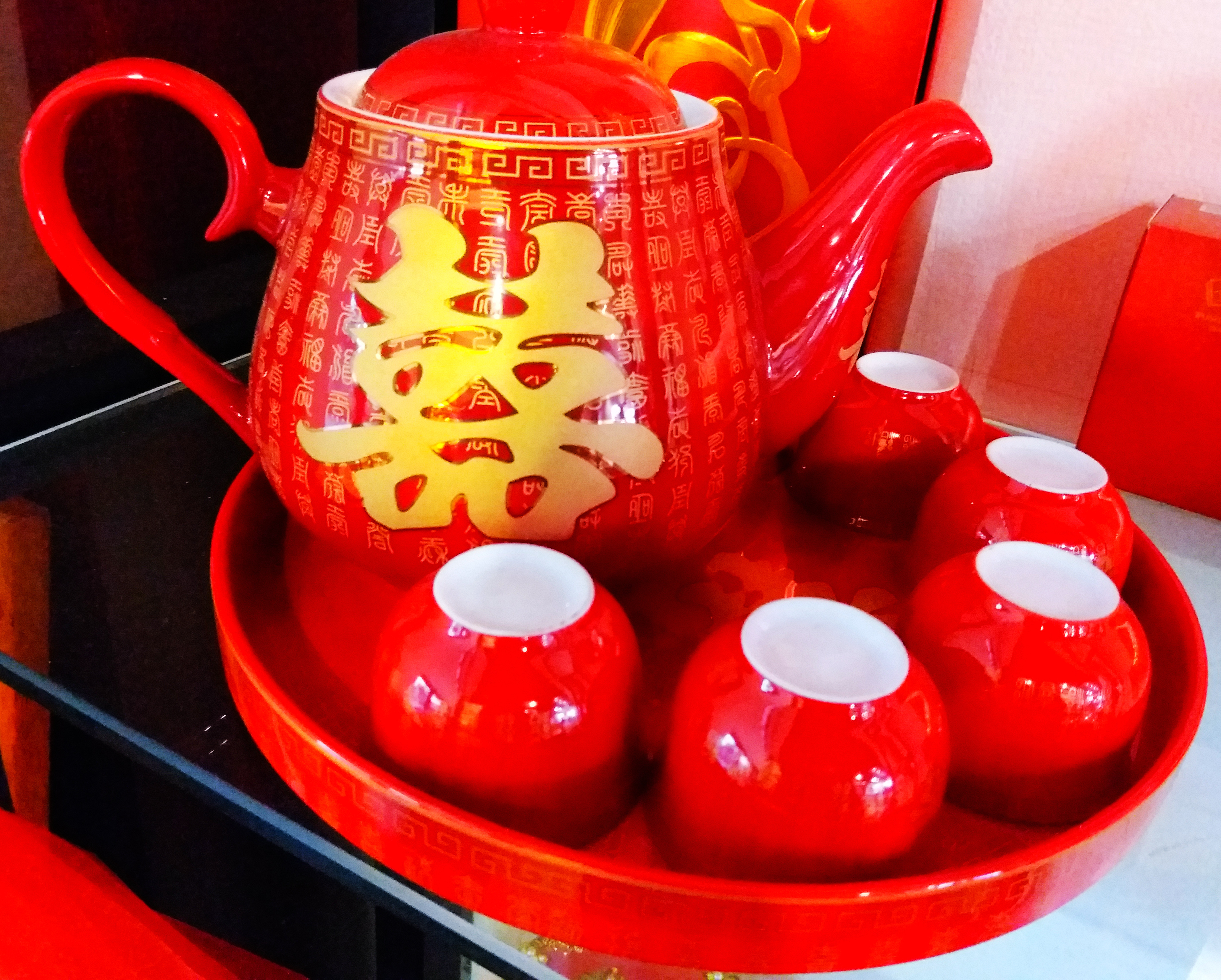
6. Why material directly changes the feeling of use
Public Chinese discussion often brings pot-coaster material into the language of style: porcelain feels cleaner, clay feels heavier, wood feels more natural, and metal feels sharper. But if we stop at style judgement, we still miss the point. Material really changes how heat, moisture, and traces are presented beneath the main vessel. Porcelain pot coasters usually feel cleaner and define the boundary more clearly. They also pair naturally with white porcelain, celadon, and other lighter tea-table systems, but they reveal water marks and tea stains more directly. Clay and rougher glaze families absorb use traces more quietly and often feel more settled, though if the glaze mood or mass is wrong they can make the whole pot feel too heavy and closed.
Wooden pot coasters have become popular in recent years because they fit the contemporary tea-table preference for naturalness, negative space, and softness. But once wood enters a world of repeated hot water and long-term moisture, drying speed, maintenance, odor, and durability become practical questions. Metal pot coasters are not impossible, but they can easily make the area under the pot feel too cold, too bright, or too industrial. In other words, material is not merely a style accessory. It decides whether the zone beneath the main vessel will be emphasized, softened, absorbed, or enlarged.
The mature way to choose is therefore not to ask only whether the object resembles a certain style. It is to ask whether it truly fits your rhythm of hot-water use, your cleaning habits, and the character of the main vessel. A pot coaster is a real working object. It has to live with the consequences of repeated use.
7. Common misunderstandings
Mistake one: a pot coaster is only a heat pad. Heat protection is certainly one of its basic functions, but that understanding is too narrow. It also shapes the landing point of the pot, the sense of weight, the local boundary, and minor local runoff.
Mistake two: a pot coaster is just another name for a pot stand or tea boat. They overlap heavily, but their movement radius is not identical. The pot coaster sits closer to the base of one pot and more strongly emphasizes the transition layer between vessel and table.
Mistake three: a pot coaster is simply a larger cup saucer. The saucer serves the drinking end; the pot coaster serves the brewing end. The former handles the resting point of a cup, while the latter handles weight, heat, and repeated return movements under the main vessel.
Mistake four: dry brewing does not need a pot coaster. In fact, the less a table depends on a large tray, the more it needs this close-fitting support layer, or else small problems become directly visible on the tabletop.
Mistake five: the more antique-looking and decorated the pot coaster, the more advanced it is. A pot coaster is first of all a working object. If the proportions are off, if it is too heavy, too slippery, or too hard to clean, visual atmosphere will not save it.
Why the pot coaster is still worth understanding seriously today
Because it forces us to admit something easy to overlook: tea-table order does not always begin with the biggest objects. It often begins with the smallest support relationships. Whether the main pot has truly taken its seat, whether the table really has a boundary, and whether heat and moisture have truly been settled are all questions that often gather in the thin layer beneath the pot. The pot coaster is small, but the reality it handles is central.
To understand the pot coaster is also to understand a mature object logic within Chinese tea practice: good objects do not always perform the most visible action, but they quietly gather the consequences most likely to get out of control. The pot coaster is more than a pad under the teapot because what it supports is more than the pot. It supports the layer of relationship between the main vessel and the tabletop that ought to be made clear.
Related reading: Why the pot stand matters again today, Why a tea boat is more than a stand under the teapot, Why a cup stand is more than a little disc under the cup, and Why a tea tray is more than a tray.
Source references: synthesized from public Chinese object references describing “supports for pouring vessels” as ways of letting a pot sit within a support and gain greater stability and formal completeness; public teaware entries describing tea mats / pot stands / tea boats as objects used to support the main pot, buffer heat, and receive small amounts of liquid; and the structure of this site’s existing articles on the pot stand, tea boat, cup stand, and modern dry-brewing table organization. The focus here is not on reconstructing one single classical definition, but on explaining the pot coaster’s real movement boundary on today’s tea table.