Teaware feature
Why a tea board is not just a simplified tea tray without drainage: tabletop boundaries, negative space, and its real division of labor with the tea tray, pot stand, and jianshui
When many people first hear the term tea board, they reach for an easy explanation: it is just a traditional tea tray with the drainage layer, water reservoir, and heavier structure removed, leaving behind a flatter, thinner, more photogenic board. That reading catches one surface fact, but misses the real change. The tea board does relate to a more restrained modern tea table with less visible water, less machinery, and less equipment weight. But it is not simply what remains after the tea tray has been weakened, and not every piece of wood or stone becomes a tea board just because teaware is placed on top of it. What makes the tea board real is not only what it lacks, but what it newly takes on. It compresses problems once absorbed by large drainage systems, heavier trays, or fully wet tea tables back into a smaller, more disciplined working platform that depends on clearer boundaries.
That is also why the tea board is caught between two common misunderstandings. One treats it as nothing more than a minimalist tea tray, a traditional system flattened into lifestyle aesthetics and photography. The other goes further and says it has no independent meaning at all, because any plank, board, or cloth under the teaware supposedly does roughly the same job. The first underestimates the tea board’s ability to reorganize movement and boundaries in the age of dry brewing. The second erases its structural value as a platform. What the tea board really handles is not large-scale drainage. It handles how the main brewing zone is framed, how local moisture is tolerated without spreading, how objects remain legible with fewer devices in play, and how the whole table can function at once as a working surface and an aesthetic surface.
Put differently, if the tea tray answers the question of how a whole tea table can bear a relatively wet brewing system, the tea board answers another question: once you no longer want the whole table to become a drainage field, where should the main brewing action land, how should the limits be drawn, how should negative space be kept alive, and how should local traces of water be contained? That question may sound smaller than the tea tray’s question, but it is not lighter. It demands sharper judgment about water paths, object count, movement density, and tabletop order. In that sense, the tea board is one of the clearest objects for revealing how mature a tea table really is.

1. What a tea board really is, and why it cannot be reduced to a tea tray without drainage
At the level of appearance, a tea board can indeed resemble some flatter tea trays: a defined supporting plane on which the main brewer, fairness pitcher, cups, pot stand, tea towel, and a few tools can sit. But the real issue is not resemblance. It is whether the tabletop logic is the same. A tea tray usually assumes a logic in which water may fall inside the tray, be received below, and be absorbed by a built-in system. A tea board assumes another logic: the whole table does not enter a large drainage mode, yet the main brewing actions still need a clearly bounded platform. The tray is closer to a containment system. The board is closer to a boundary system.
That is why the tea board is not an emptied tea tray. It is a platform re-established after the center of function has shifted. It no longer carries large-scale storage and drainage, but it carries the job of defining the main brewing zone more sharply. Which vessels belong on the board, which are better left off it, which gestures can happen there, which should be redirected toward the jianshui, shuifang, pot stand, or tea towel, which wet traces are acceptable, and which traces mean the edge has already been lost — the tea board answers all of these quietly. Because it does not rely on a heavy drainage structure for rescue, it demands clearer movement order from the beginning.
That is also why it fits so many of today’s smaller, quieter, cleaner tea tables. It does not want to convert the whole table into a water zone. It wants to draw a center that is clear without becoming bloated. The ideal center is not the biggest possible center, nor a theatrical one, but one that lets the main brewer truly settle, gives the fairness pitcher and cups an intelligible relationship, and allows the tea towel and jianshui to form a clean relay around the board without turning the whole table into equipment.
2. Why the tea board handles boundaries while the tea tray more often handles systems
These terms may sound abstract, but they are practical. A system means that once water falls, a lower cavity, drainage outlet, receiving layer, or reservoir can take over. The table itself does not have to suffer immediately. This is one of the tea tray’s great strengths. It swallows many local consequences that would otherwise feel awkward. In wetter brewing contexts, in denser movement patterns, and in setups where warming vessels or pouring over the pot happens often, the tea tray feels natural. It gives confidence because the structure itself is prepared to receive more water.
The tea board works in another direction. It does not swallow mistakes through structure. It reduces them through boundaries. It assumes the whole surface is not a small pool. It assumes not every action needs to happen on the central platform. Local moisture can exist — a little runoff from the spout, a little steam condensation, a little dampness under cups — but only in a local, controlled, non-expanding way. If you ask the tea board to behave like a large tray and handle heavy rinsing, broad splash, and drainage, the problem is not that the board is inferior. The problem is that it has been placed back inside the wrong system.
That is why mature use of a tea board usually means division of labor. The board establishes the center and the breathing room. The pot stand handles the concentrated hot and wet zone directly beneath the main vessel. The jianshui handles waste water. The tea towel repairs the edge. A tea tray tends to integrate more of these functions into one base structure. A tea board tends to distribute them, while making each boundary clearer. One works through integration. The other works through arrangement.
3. Why the tea board became important again in the age of dry brewing
On the surface, it may seem obvious that dry brewing should reduce the need for dedicated platforms. If the goal is less visible water, less rinsing over the pot, and less broad drainage, why not simply remove the tray altogether? The answer is that the less you depend on a large drainage structure, the more you need a small but explicit center. In the past, many forms of disorder could be swallowed by a large tray. Today, with lighter setups, fewer objects, and more negative space, even a little instability becomes visible very quickly. If the main brewer sits vaguely, if the cups lack a clear relation, if the fairness pitcher never finds a proper resting point, if the towel drifts, if local wetness keeps spreading across the table, those problems become painfully obvious on a clean modern surface.
The tea board offers a middle solution. It is not the same as placing everything directly on the naked table, and it is not a return to the full wet tray system either. It redraws the center so that even without a complete drainage tray, the table still has a clear main brewing platform. The main brewer, fairness pitcher, cups, pot stand, and towel no longer need to compete for legitimacy across the whole tabletop. They can establish relation inside one bounded field.
This also helps explain why the tea board often appears together with quieter tables, fewer objects, and stronger negative space. That is not merely an aesthetic pairing. Such tables need a platform that is modest but unambiguous. Without it, so-called negative space quickly slips into emptiness or looseness. With it, the space beyond the board becomes calm boundary rather than unorganized blankness.

4. Why the tea board is best understood together with the pot stand and jianshui
If you discuss the tea board in isolation, it becomes easy either to overestimate it or underestimate it. To overestimate it is to imagine a universal platform that can solve everything if it is beautiful and large enough. To underestimate it is to say that if the pot stand, jianshui, and towel still do work, then the board itself must be optional. The mature view sits between those two. The tea board matters precisely because it does not do everything alone. It rearranges the work more clearly.
Take the main brewing vessel. Even in a tea-board setup, the brewer often still needs a pot stand or another local receiving object beneath it. The board is responsible for the order of the central platform as a whole. It is not always the best surface for absorbing the most concentrated zone of heat, water, and repeated return. The pot stand is better at handling that small high-frequency wet-hot area. The jianshui, meanwhile, removes actual waste water, discarded rinse water, and cup-washing water from the platform logic. It takes away the water that must leave the center, preventing the tea board from being mistaken for a waste-handling device. The tea towel usually works as edge repair, pulling back the small traces that are still acceptable but should not continue to spread.
So the tea board does not replace the pot stand or the jianshui. It gives them a new position. It tells you where the main brewing zone is, where the pot stand should sit inside that high-frequency local field, how close the jianshui should be to remain convenient without breaking the center, and where the tea towel can stay without disturbing the platform visually. A truly good tea board does not make these objects compete for territory. It lets them relay work like parts of a composed system. The board may not do the largest amount of work itself, but it often decides whether the rest have clear coordinates at all.
5. Why the tea board is also a manager of negative space
When people discuss tea boards, they often focus on material, grain, price, and style while missing one of the most interesting layers: the tea board also manages negative space. In the tea-tray era, the table’s center was often occupied by a large function-heavy tray, so negative space mainly existed outside that tray. Once the platform becomes thinner, flatter, and lighter in the tea-board era, the relationship between emptiness inside and outside the board becomes much more sensitive. If the board is too large, it eats the breathing room and turns the table back into an equipment field. If it is too small, the vessels become cramped and the remaining empty area feels accidental rather than composed. A good tea board is not merely about whether the material is expensive. It is about whether it balances “objects need a place to land” and “the table needs to breathe.”
That is also why the tea board exposes proportion problems more quickly than the tea tray. It has no thick structure to create built-in visual authority and no drainage layer to justify itself as obvious infrastructure. It faces the question of weight relations directly: does the main brewer actually settle the board, or overpower it? Does the fairness pitcher float? Are the cups crowded or scattered? Is the space beyond the board calm or merely empty? When the proportions are wrong, the problem appears fast. So the beauty of a tea board does not come only from wood species, stone pattern, or finish. It comes from whether the board truly arranges the atmosphere of the table well.
This helps explain why experienced drinkers often ask not whether a tea board looks like an art object, but whether it makes the table feel like a real tea-working surface. Beauty matters, of course. But if beauty cannot build breathing room, center, and edge, then the object is moving closer to a display board than to a tea board.
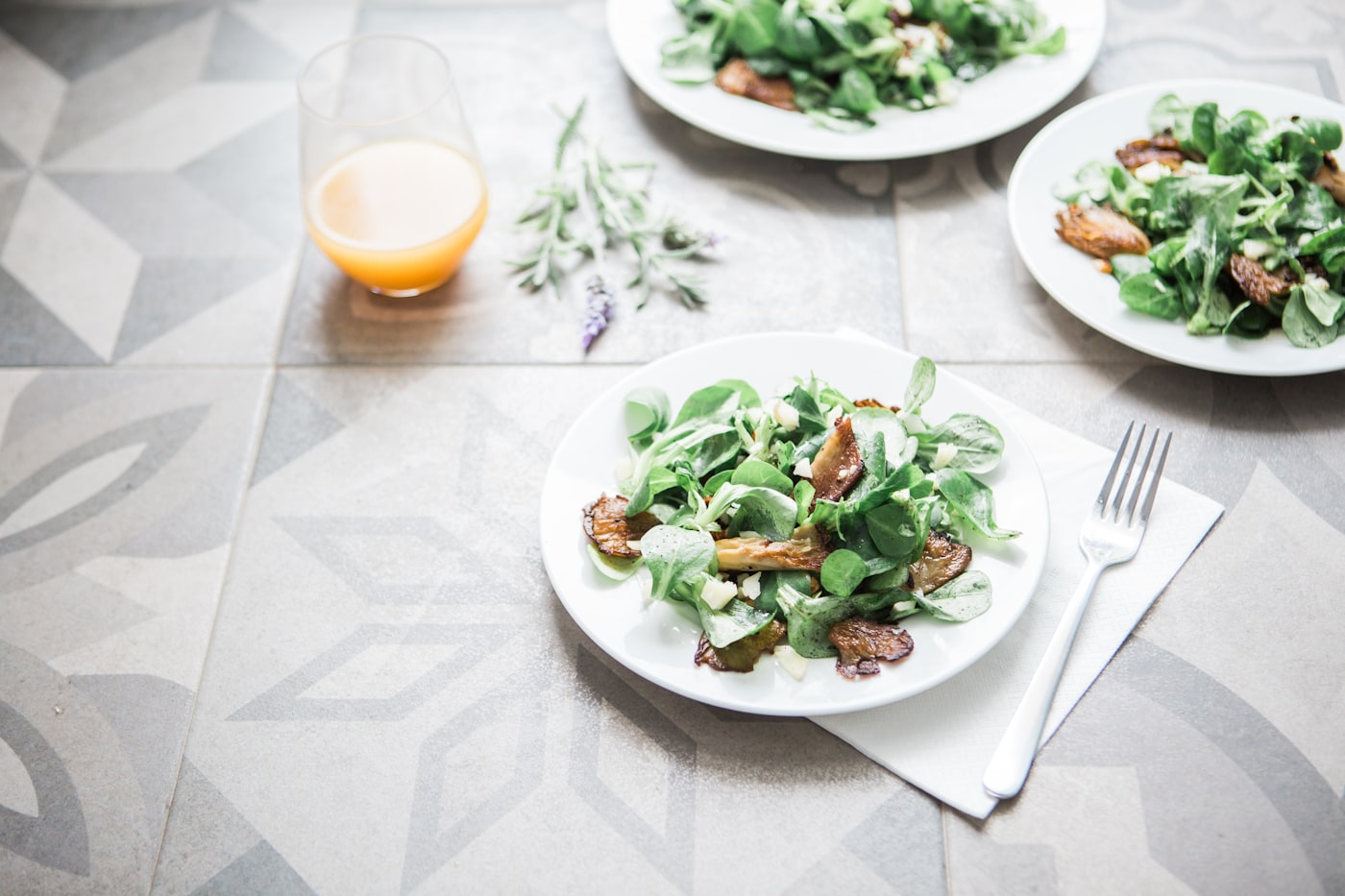

6. What kinds of materials and forms feel most like a tea board rather than an ordinary display board?
In publicly visible contemporary tea-table practice, tea boards are most often made from wood, bamboo, stone, and some composite materials. Material naturally changes atmosphere. Wood tends to feel warmer and easier to connect with everyday desks, tea tables, and lived spaces. Bamboo often feels lighter, cleaner, and more quietly literati in tone. Stone feels steadier and cooler, and often makes the platform read more clearly as a deliberate plane. Composite materials can sometimes be easier in maintenance and durability. But what makes something feel like a tea board is not the material label itself. It is whether the object can actually serve as a stable platform: whether the surface is level enough for the main brewer and cups to settle securely, whether the edge is defined without becoming showy, whether the proportion supports a convincing center, and whether maintenance does not make people avoid using it in real life.
Form matters just as much. A board that is too thick, too heavy, or too much like furniture risks sliding back toward the feeling of large equipment. A board that is too thin, too light, or too temporary can lose the sense of being a real platform. Good tea boards are often not the most complicated ones. They are the ones that immediately make the viewer understand where the objects are supposed to work. They should give the main brewer enough settledness, give the fairness pitcher and cups enough relational space, and leave room for the pot stand and tea towel to take part, rather than forcing everything into a photograph-style composition.
So a tea board is not just “anything flat.” Many things are flat. But an ordinary display board may not help movements become clear, objects become calm, or boundaries become real. The tea board is a directional plane, not just a load-bearing one.
7. Common misunderstandings about tea boards
Mistake one: a tea board is simply a minimalist tea tray. That is only half true. The tea board does belong to a world with less structure and less visible drainage equipment, but it is not an emptied tea tray. It is a platform that reorganizes the main brewing boundary for the dry-brewing era.
Mistake two: any board becomes a tea board once you place teaware on it. Not really. An ordinary board may support objects, but it may not establish a center, limit movement, arrange negative space, or coordinate relay objects. Without those capacities, it behaves more like a display surface than a tea board.
Mistake three: a tea board means absolutely no water may appear. Wrong. A tea board does not reject water in absolute terms. It accepts local, controlled, non-expanding dampness. Small traces from cup bases, steam, or spout runoff are still possible. What it rejects is the expectation of broad drainage behavior.
Mistake four: once you use a tea board, you no longer need a pot stand or jianshui. In fact the opposite is often true. Tea boards frequently need the pot stand, jianshui, and tea towel even more clearly, because the board itself handles platform and boundary rather than absorbing all local runoff and waste water alone.
Mistake five: tea boards are mainly about photos and appearance. They are easy to pull into aesthetic discussion, but what makes a tea board real is always work logic. Good looks without good logic reveal their weakness quickly in actual brewing.
Why is the tea board still worth understanding seriously today?
Because it stands exactly at a crucial turning point in the contemporary Chinese tea table. We no longer always want to depend on large drainage systems, heavy equipment feeling, and full wet-table logic to create order. But we also cannot really return to the state of casually putting tea tools somewhere and hoping the table will organize itself. The tea board is one of the key objects of that transition. It does not create order by swallowing large consequences. It creates order by defining center, boundary, and breathing room in advance. It asks the user for a clearer understanding of movement, water path, and vessel relation, and for that exact reason it reveals very quickly whether a tea table is mature or only looks clean.
To understand the tea board is also to understand an important path in the contemporary evolution of the Chinese tea table: function has not disappeared. It has been redistributed, rearranged, and resettled. The tea board is more than a tea tray without drainage because what it truly supports is not a weakened old system, but a more restrained, clearer, and more boundary-dependent tabletop way of working.
Related reading: Why a tea tray is not just a tray, Why the pot stand matters again today, Why jianshui became central again in the age of dry brewing, and Why the tea mat is more than a table cloth.
Source references: public Chinese-language teaware references explaining tea trays / tea supports as basic surfaces for holding vessels, catching runoff, and organizing a brewing tabletop; together with common contemporary Chinese tea-table discussions around dry brewing, negative space, main-brewing boundaries, and the division of labor between the pot stand and jianshui, reviewed and synthesized on 2026-05-09.