Green Tea Feature
Ziyang Maojian is more than “a famous tea from Shaanxi”: from Han River gorge mountains and tight downy strands to an unusually full, bright southern-Shaanxi green tea
If one were to list the Chinese green teas that are too often dismissed with a quick phrase like “a local famous tea,” Ziyang Maojian would deserve a much closer look. Public descriptions often begin with a standard set of keywords: produced in Ziyang, Shaanxi; grown in mountain and gorge environments along the Han River; tightly made, fine, downy strands; bright tender-green liquor; a fresh, sweet-returning taste. None of that is wrong. The problem is that these phrases too easily reduce the tea to a place name plus a handful of sensory adjectives. What actually matters is the way Ziyang Maojian holds together southern-Shaanxi mountain ecology, the Han River system, local tea-tree resources, a relatively fine-grained processing rhythm, and a cup profile that combines brightness with real inner substance.
It is especially interesting because it can indeed be placed inside the broad “Maojian” family, yet it does not simply behave like the better-known Xinyang Maojian or Duyun Maojian. Xinyang Maojian usually points readers toward northern early-spring sharpness, slender straight strands, and visible white down. Duyun Maojian is more strongly associated with curled tight strands, the “three greens with yellow showing” aesthetic, and the humid mountains of Guizhou. Ziyang Maojian, by contrast, often feels like a southern-Shaanxi answer in which the tea is tender without turning thin, bright without turning empty, and visibly downy without depending on down alone. That is why it deserves a full article of its own. It is not merely proof that Shaanxi also produces tea. It represents a complete green-tea route in its own right.
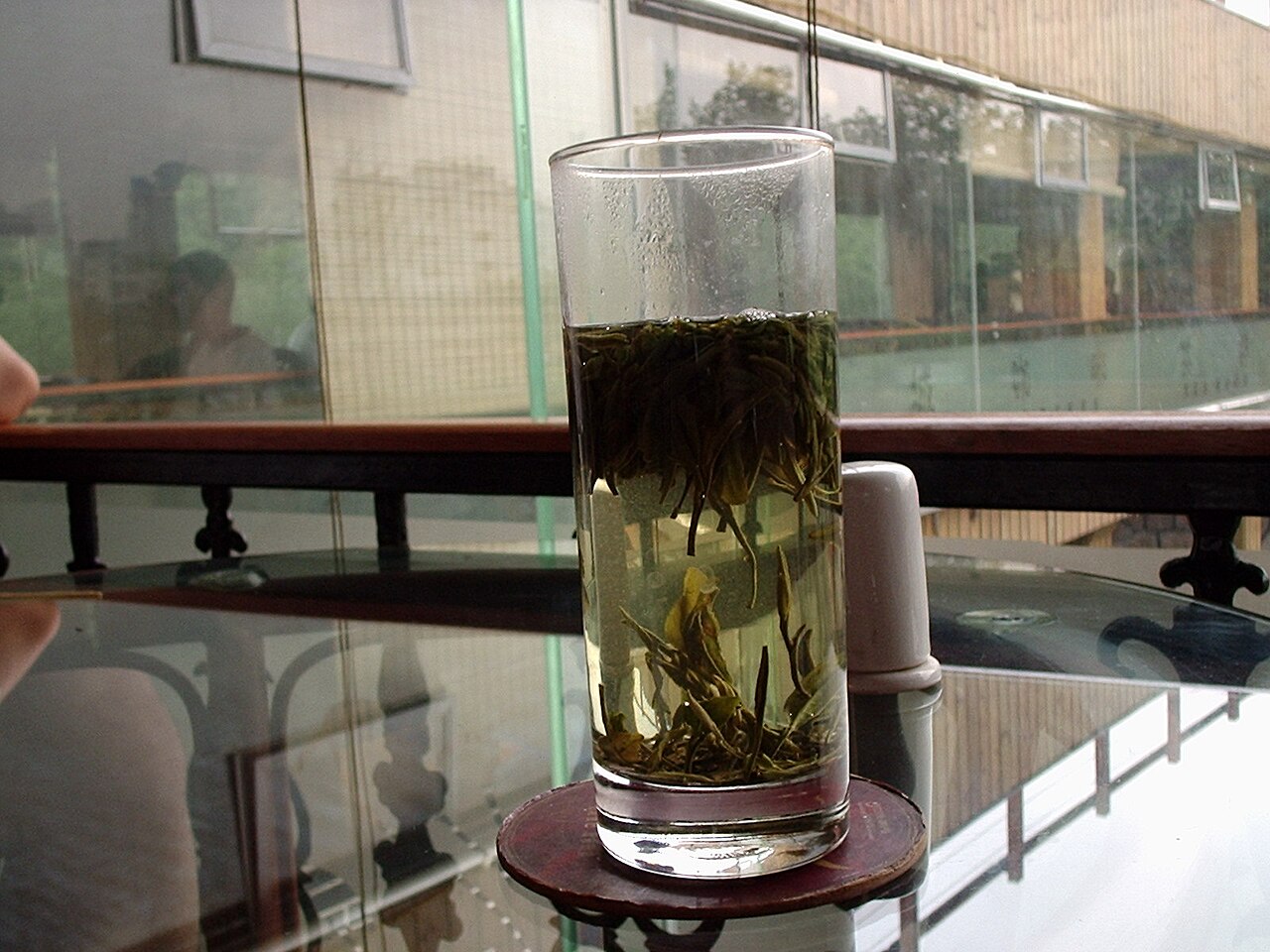
What kind of tea is Ziyang Maojian? Why should it not be reduced to a “Shaanxi version of Maojian”?
The first layer is simple enough: Ziyang Maojian is a Chinese green tea, and a classic example of the fine famous-green-tea tradition. Public material usually places it in the tea landscape of Ziyang County in Shaanxi, especially the near-mountain gorge areas along both sides of the Han River. The fresh leaves are commonly linked to local tea-tree resources such as Ziyang cultivars and Ziyang large-leaf populations, with an emphasis on robust tender buds and abundant fine down. In finished form, common descriptions stress tight rounded strands, fine but substantial appearance, evenness, visible down, and a bright green color, while the brewed tea is expected to show a lasting tender aroma, a bright tender-green liquor, and a taste that is fresh with returning sweetness.
Yet that basic definition is still not enough. The term “Maojian” is so broad that it can blur very different local teas into one category. For Ziyang Maojian, the name certainly points to tender material and visible down, but it does not mean that any fine, downy green tea can stand in for it. What actually makes it convincing is the way it combines southern-Shaanxi mountain ecology with a more rounded, tight, even strand aesthetic, and then turns that into a cup that feels clear and fresh without dissolving into thinness. It is not simply “a Maojian from Shaanxi.” It is a specific answer from southern Shaanxi on the map of Chinese green tea.
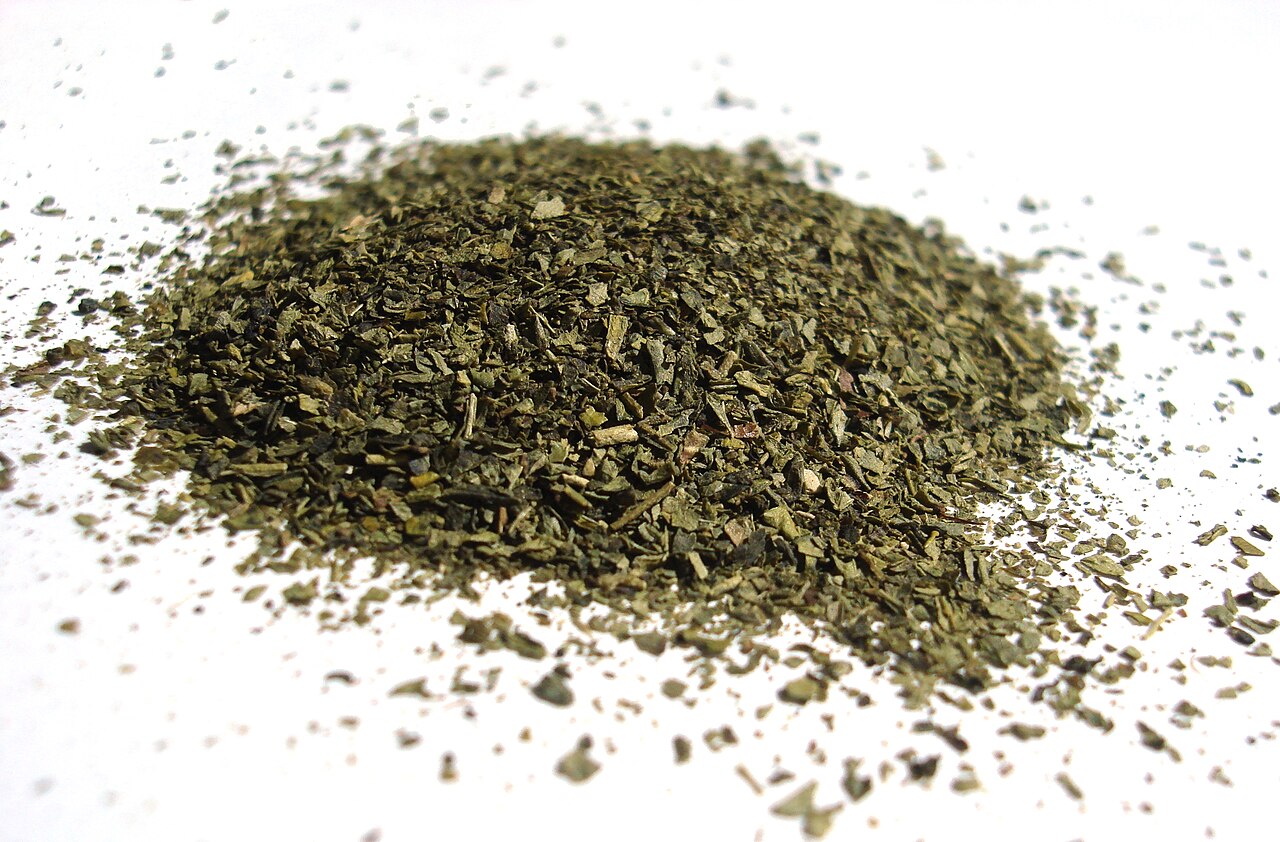
Why do so many descriptions immediately mention the Han River, gorge mountains, and acidic soils?
Because for Ziyang Maojian, origin environment is not decorative background. It is part of flavor. Public material repeatedly describes Ziyang in southern Shaanxi and the Ankang region as a tea area along the Han River, marked by near-mountain gorge terrain, layered hills, mist, relatively mild winters and summers, and soils formed from granite and gneiss, often slightly acidic and reasonably rich in minerals and organic matter. If this language is copied mechanically it can sound like generic tea marketing. But when read through the logic of fine green tea, it is clearly trying to explain why the area is suited to tender leaves that can become a bright, fresh, and structured tea rather than a merely thin one.
More importantly, the landscape language around Ziyang Maojian is not just another recycled version of “high mountains and mist.” Compared with many classic green-tea regions in the lower Yangtze, southern Shaanxi carries a stronger sense of gorge topography, river-system humidity, and an ecological position on the edge between northwest and more humid central-southern China. Readers do not need to memorize every geological detail. What they should understand is this: the freshness of Ziyang Maojian does not float in midair on bud tenderness alone; it is supported by the mountain-and-river ecology of the Han River basin. That is why its best examples often feel not only fresh in the first sip, but also capable of sustaining sweetness and a modest but real depth through the finish.
Why is its historical context worth mentioning? It is not just a newly packaged local specialty
The tea history of Ziyang is not recent. Public references often trace local tea culture back to earlier periods, noting that tea from southern Shaanxi entered tribute and broader circulation horizons in premodern times, and later became linked with local tea culture, tea-horse exchange systems, regional trade, and everyday drinking traditions. In a tea article, the main value of that history is not to manufacture a vague sense of age. It is to show that Ziyang Maojian does not grow out of modern packaging alone. It stands on a longer local foundation of growing tea, harvesting tea, processing tea, and moving tea through regional networks.
At the same time, “historical” should not be misunderstood to mean that today’s Ziyang Maojian existed unchanged for centuries. A better reading is that the Ziyang region has a long tea-growing base, while the modern standardized form of Ziyang Maojian emerged through the meeting of local tradition and modern fine-green-tea process logic. That balanced view matters. It prevents us from treating the tea either as an untouchable ancient relic or as a completely modern marketing invention. For Chinese tea writing, that kind of balance is usually more truthful than a simple claim that the tea “began in” some dynastic era.
How is it made? Why do public materials repeatedly mention ten processing steps?
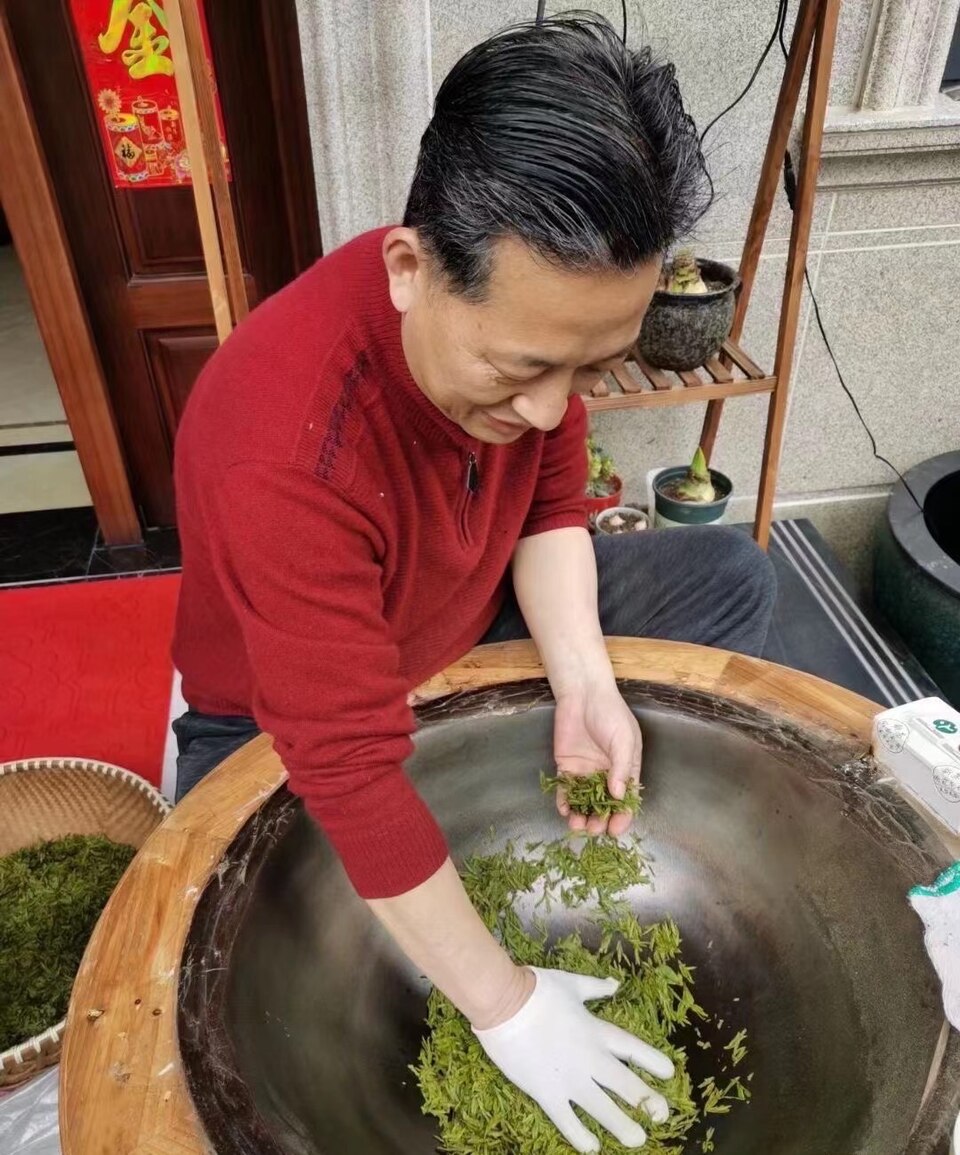
Public descriptions of Ziyang Maojian processing are notably specific. A common outline includes kill-green heating, first rolling, pan-frying the semi-shaped leaf, second rolling, first drying, strip-shaping, second drying, raising the down, full drying, and finishing fragrance—in other words, a ten-step process. To readers new to tea making, that can look like a formal checklist. What actually matters is that each step solves a different problem. Kill-green controls raw green odor. The rolling stages begin to build strand structure. Pan work and strip-shaping determine how mature and even the finished appearance becomes. The stage described as raising the down helps the tender leaf surface express its fine down naturally rather than turning muddy. Final drying and finishing decide whether the aroma is clear, the liquor stays bright, and the tea remains stable in storage.
This also explains why Ziyang Maojian cannot succeed on tender raw material alone. Tenderness is necessary, but if the process rhythm fails, the tea usually breaks in one of two ways. Either it tastes fresh but scattered, grassy, and hollow, or the heat becomes too heavy and the tea loses the living clarity expected of fine green tea. What is admirable about Ziyang Maojian is not that the process sounds complicated, but that the process must be carried out in a way that is ordered without becoming clumsy or obvious. When a good cup is brewed, the drinker usually does not first think, “what a complicated ten-step process.” Instead, they feel that the tea is rounded, tight, clean, bright, fresh, and sweet, which is exactly the sign that the process has disappeared into the result.
What exactly are we looking at in its appearance? Why does “tight rounded strands with visible down” matter?
If many green teas are introduced through visual terms like flat, straight, elegant, and tender, then Ziyang Maojian is more naturally approached through rounded, tight, fine, substantial, even, and visibly downy. The phrase “rounded and tight” matters because it warns readers not to judge the tea through Longjing’s flattened standard, nor through the needle-like expectation one might bring to some very slender green teas. Ziyang Maojian emphasizes whether the strands hold together, whether the body of the leaf looks stable, whether the down shows naturally, and whether the tea appears orderly rather than slack.
That appearance is not merely ornamental. Rounded tight strands usually imply a better match among leaf tenderness, rolling rhythm, strip-shaping, and drying completion. Visible down suggests an adequate tender-leaf base, but good visible down must sit on top of coherent strands and a clear liquor rather than replacing them. If a tea looks wildly downy but the strands are loose, the brew turns cloudy, the aroma floats away, and the liquor tastes empty, then the “Maojian” line has not actually been fulfilled. What gives Ziyang Maojian real identity is its ability to place down and structure in the same cup.

What does it actually taste like? Why does it often have more substance than people expect?
Many readers first encounter Ziyang Maojian through the phrase “fresh with returning sweetness,” and may therefore imagine a tea that is light, quick, and gone in an instant. In fact, good Ziyang Maojian is not empty. It should certainly be fresh, clear, and bright, but it should also have some content: the liquor should not feel like a thin layer of scented water. It should carry support and continuity, leaving behind a gentle but clear sweetness and salivation effect. That is one of the places where it separates itself from green teas that smell fresh but fall apart in the mouth.
Public descriptions often summarize the tea as having a lasting tender aroma, a bright tender-green liquor, and a taste that is fresh with returning sweetness. Translated into actual drinking experience, that means the hot aroma should be clean, tender, and plant-fresh without turning grassy or stuffy; the liquor should feel lively and bright without becoming rough; and the sweetness after swallowing should come naturally rather than only by contrast with bitterness. If a Ziyang Maojian delivers surface freshness but lacks clarity and sweetness in the finish, then the raw material or process probably did not fully support it.
How does it differ from Xinyang Maojian and Duyun Maojian?
This is one of the most useful comparisons to make clear. Compared with Xinyang Maojian, Ziyang Maojian also values tender leaves and visible down, but Xinyang usually leans more strongly toward slender straight strands, sharp early-spring mountain freshness, and a more pointed “bud-spear” impression. Ziyang Maojian’s strands are often somewhat more rounded, even, and substantial, and the cup can more easily give the impression that, beyond freshness, there is also a little more body. Compared with Duyun Maojian, Ziyang Maojian does not place as much emphasis on curled strand formation, the “three greens with yellow showing” visual system, or the curled fresh-thick expression associated with Guizhou’s humid mountain environment. In both appearance and taste, it often feels steadier, brighter, and less strongly shaped by the aesthetics of curled green tea.
That is exactly why Ziyang Maojian is not just “another Maojian article.” It helps readers understand that Maojian is not a single template. Even when different teas all begin with tender buds, visible down, and freshness, they can still develop completely different internal orders. Some prioritize straight elegance, some prioritize curling, some foreground high-mountain sharpness, while some—like Ziyang Maojian—aim for a more balanced mountain-green-tea structure with a little more weight behind the brightness. Its importance lies in making the southern-Shaanxi Maojian line visible rather than leaving it blank.
How should it be brewed to bring out its brightness and sweetness properly?
Ziyang Maojian works well in both a glass and a gaiwan. A glass is excellent for first encounters because you can watch the strands open and judge the brightness of the liquor directly; a gaiwan is better for examining aroma, body, and aftertaste in more detail. For most fine-grade Ziyang Maojian, a practical starting point is usually around 80°C to 85°C. It is not as fragile as the most delicate bud teas, but it still does not benefit from being blasted with boiling water and left to stew.
In a gaiwan, around 3 grams of tea for 100 to 120 ml of water is a comfortable baseline. Keep the first two infusions short—often around a dozen seconds is enough—then extend later rounds gradually according to the tea’s condition. When judging whether the brew is successful, the main point is not just whether the aroma seems high, but whether the liquor stays bright, whether the freshness really enters the water, whether the sweetness after swallowing feels natural, and whether the tail end becomes dull or muddy. The real charm of Ziyang Maojian lies in the continuity of clarity, freshness, cleanliness, and sweetness. Once overly high heat and long steeping force it into bitterness, its best qualities are the first things to break.

What are the easiest buying mistakes?
The first mistake is treating the tea’s selenium-rich regional reputation as the only doorway. Public material does indeed often mention selenium in the Ziyang area and link local tea to that feature, but selenium is not a substitute for judging the tea itself. Readers should still begin with the cup and leaf: are the leaves tender, are the strands orderly, is the aroma clean, is the liquor bright, is the taste fresh, and is the returning sweetness stable? The second mistake is to equate “more visible down” directly with “higher quality.” Down matters, but once strands are loose, aroma drifts, and liquor turns thin, visible down cannot rescue the whole tea.
The third mistake is to blur all southern-Shaanxi green teas into one category. Ziyang Maojian is worth a dedicated article precisely because it cannot simply be flattened into the phrase “green tea from southern Shaanxi.” It has its own production history, its own visual discipline, its own process rhythm, and its own cup structure. The more a buyer can judge in the order of origin, raw material, strand shape, liquor color, taste, and aftertaste, the less likely they are to be misled by single-point marketing language.
Why is this Ziyang Maojian article worth adding to the tea section?
Because it fills in a part of the Chinese green-tea map that is often neglected. The Han River basin in southern Shaanxi is not just a footnote that “also grows tea.” It can produce fine green teas with clear identity. This site already includes pages on Longjing, Huangshan Maofeng, Xinyang Maojian, Duyun Maojian, and Lushan Cloud Mist. Without Ziyang Maojian, however, the reader’s understanding of regional difference still leans heavily toward the better-known tea zones of Jiangnan, central China, and the southwest. Once Ziyang Maojian is added, Shaanxi stops being a historical side note and becomes a fully legible modern green-tea chapter.
More importantly, Ziyang Maojian is especially useful for teaching a more mature judgment: the value of fine green tea does not stand on “fresh” or “tender” alone. Truly good tea must align origin, raw material, process, appearance, liquor, and finish at the same time. Ziyang Maojian is exactly the kind of tea that does not look flashy, yet is excellent for training readers to understand what “overall completion” really means. Adding it to the tea section is not merely adding another local famous tea. It makes the internal layers of Chinese green tea clearer.
Source references
- Baidu Baike: Ziyang Maojian
- Cross-checked public Chinese-language material on Ziyang County’s Han River gorge tea environment, local tea-tree resources such as Ziyang cultivars and large-leaf populations, the ten-step process commonly used to describe Ziyang Maojian, and its characteristic tight downy appearance with bright tender-green, fresh sweet liquor.
- On-site image source log