Green Tea Feature
Mengding Shihua: why it is not just another Mengshan bud tea, but an independent entry into Tang famous-tea history, single-bud shaping craft, and Sichuan mountain green-tea aesthetics
When people write about Mengshan tea, they usually begin with Mengding Ganlu, and perhaps then move to Mengding Huangya. Mengding Shihua, by contrast, often sits in an awkward position. Its name sounds old, its history sounds prestigious, and public reference material regularly mentions it as a famous tea already noted in the Tang period. Yet in today’s writing and drinking culture, it is often reduced to one quick line: “one of the famous Mengshan teas.” That is not exactly wrong, but it is nowhere near enough. What makes Mengding Shihua worth a full article is not merely that it also belongs to the Mengshan world. It gathers several important threads into one tea: its place in Tang famous-tea history, its identity as a single-bud green tea, its craft logic of shaping immediately after kill-green followed by cooling, re-firing, and low-temperature drying, and a Sichuan mountain green-tea aesthetic that values straightness, clarity, and order rather than loudness.
It is especially easy to misread as either a close relative of Mengding Ganlu or a greener counterpart to Mengding Huangya. Neither reading is stable. It does share the same mountain background and the same emphasis on fine spring material, but the way it becomes itself is different. It is not a curled-strand Ganlu route, and it is not a yellow-tea route shaped by menhuang. Instead, it is a line that places clearer emphasis on fat single buds, flattened straight shaping, bright greenish liquor, and pure, fresh taste. That is why it is such a good fit for the tea section now: it fills the structural gap that “Mengshan tea is not only Ganlu and Huangya,” and it also reminds readers that the internal diversity of Chinese green tea goes far beyond different place names.
What kind of tea is Mengding Shihua? First of all, it is a single-bud green tea, not just a historic tea name
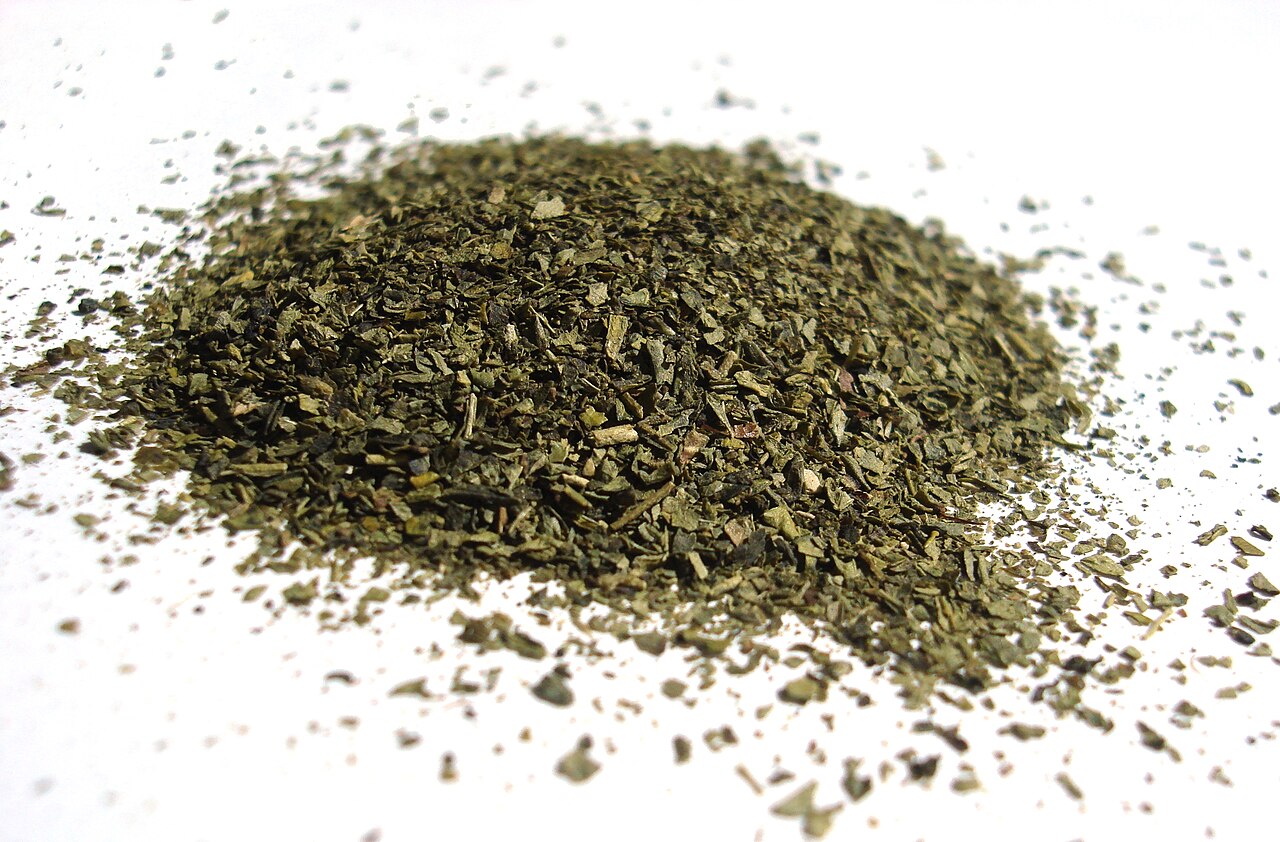
Mengding Shihua belongs to Chinese green tea. More specifically, it is a famous Mengshan green tea built around fat single buds as its core material, with flattened, straight, and even shaping as an important visual goal, and with pure aroma, fresh taste, and a bright yellow-green or clear greenish liquor as major points of judgment. That starting point matters. Once readers approach it first as “an old prestigious Tang tea name,” they can easily let historical aura replace actual judgment, as if an ancient reputation automatically guarantees the quality of the present cup. In reality, what makes Mengding Shihua worth writing about is that it is still a tea that can be brewed, judged, compared, and understood in concrete terms rather than merely admired as a historical label.
Its place within the Mengshan system is also revealing. Compared with Mengding Ganlu, it is not a curled-shape green tea route. Compared with Mengding Huangya, it is not a yellow-tea route of mellow softening. It places more explicit emphasis on a tea that is bud-led, straight, neat, and quietly fresh. Public Chinese sources often describe it as selecting sturdy single buds, shaping them immediately in the wok after kill-green, then letting them cool before re-firing and finishing with low-temperature drying. Those process clues already show that its goal is not the loudest aroma or the sharpest sensation. Its goal is to organize single-bud material into a green tea that feels calm, clean, and complete. That kind of tea exposes craft very directly: when well made, it feels clear, even, fresh, and clean; when poorly made, it turns scattered, stuffy, thin, or reduced to a pretty name with little cup substance.
Why is the Mengding origin background so important here?
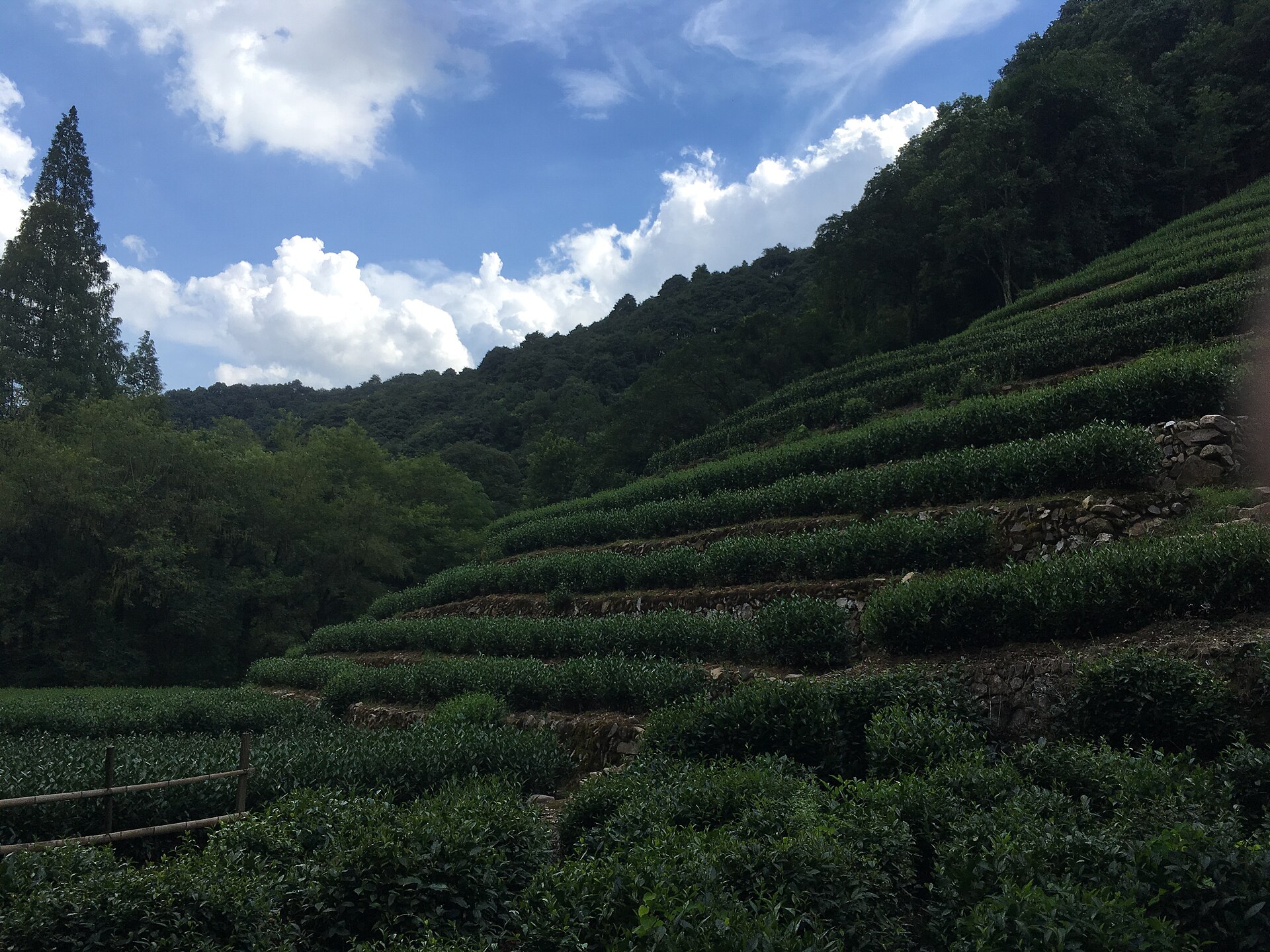
Mengding Shihua cannot be separated from the wider context of Mengshan tea. Public reference material repeatedly notes that Mengshan is one of China’s historically important famous-tea regions, and that teas such as Mengding Shihua, Mengding Ganlu, and Mengding Huangya all belong to this broader lineage. The most useful thing for readers to grasp is not simply that “Mengshan has a long history,” but that the same mountain landscape and the same spring resources can produce several distinct tea-category and craft expressions. Mengding Shihua is valuable precisely because it proves that point. It is not a marginal side note within Mengshan tea. It is one of the clearest examples showing that Mengshan does not produce only curled famous green tea or yellow tea, but also a single-bud, straight-shaped, quietly fresh green-tea route.
Origin matters here in at least two ways. First, it reminds us that Mengding Shihua is not an abstract process term that could be detached from Mengshan and still fully make sense. Second, it helps readers see that the “localness” of famous tea is not just a place-name bonus. It is the combined effect of raw-material rhythm, mountain climate, picking windows, and local making memory. Mengding Shihua depends on sturdy spring buds because of the actual conditions of Mengshan in spring and because of a local aesthetic of what this tea should become. Remove that mountain background and the tea is easily misread as just another generic bud-shaped green tea. Put it back into the Mengshan setting and it becomes a distinct tea with a clear birthplace and a clear craft target.
Why should it not be treated as only a Tang famous-tea story?
Mengding Shihua does indeed carry real tea-historical weight. Public materials often cite the passage in Tang Guo Shi Bu that refers to Mengding Shihua as one of the leading teas of the time, and later narratives also treat it as a tribute-grade treasure. All of this shows that Mengding Shihua is not a newly invented prestige name but a tea line with early visibility in China’s famous-tea tradition. The problem is that once we write it only as a “Tang famous tea,” it quickly turns into nothing more than a period story: old, famous, tribute, precious. That is the easiest kind of writing, but also the emptiest.
A more stable approach is to use its historical position as background for understanding the tea in the present, not as automatic proof of present quality. In other words, the Tang famous-tea identity explains why the name deserves attention, why it recurs in tea history, and why it occupies a place within the Mengshan system. But what decides whether today’s Mengding Shihua is actually convincing remains the same as with any tea: raw material, processing, and cup performance. Its history should not be romanticized into “ancient therefore superior.” It should be understood as “a tea line seen early, and still identifiable today through a specific craft and sensory direction.” Only then does the tea stay drinkable rather than becoming a concept.
How is Mengding Shihua made? Why are immediate shaping after kill-green, cooling, re-firing, and low-temperature drying so important?
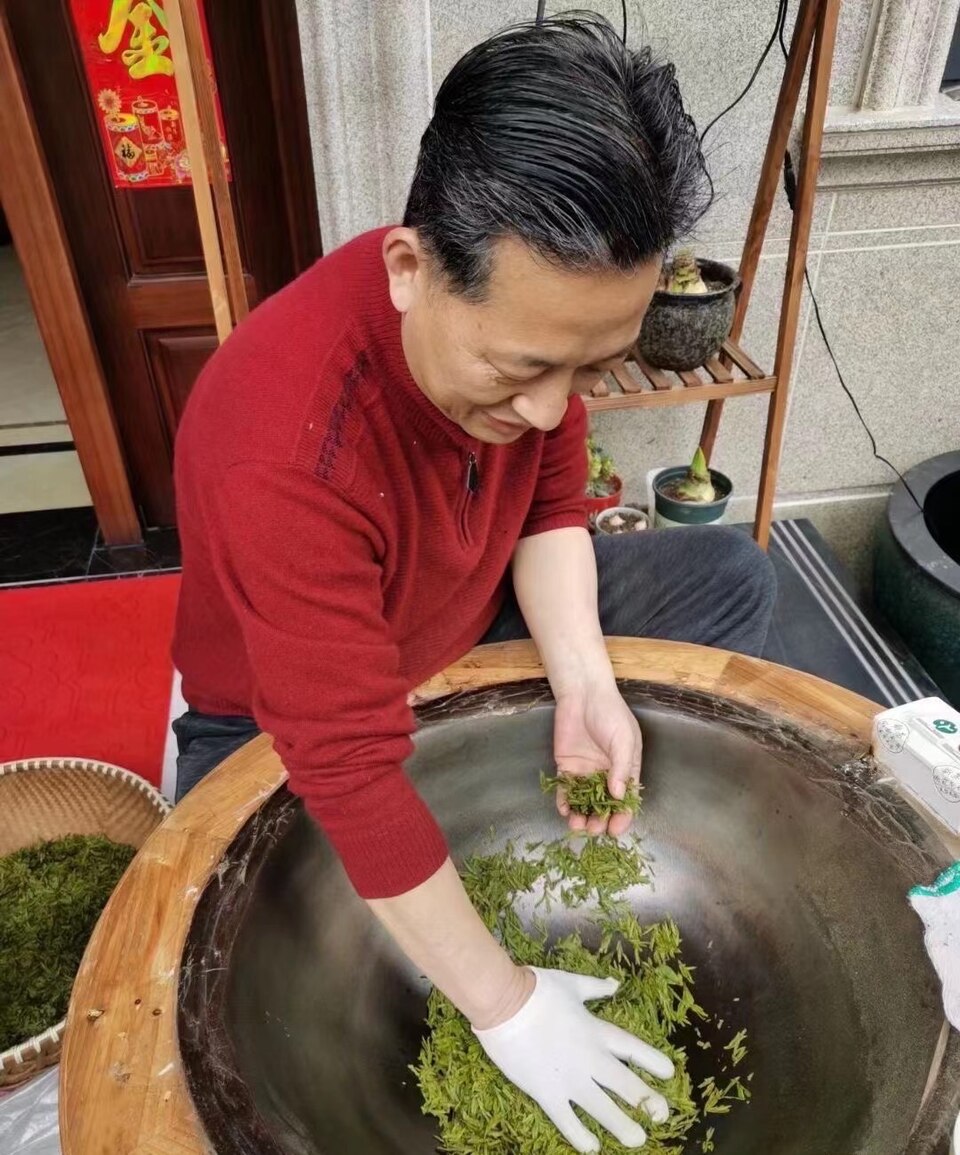
Public materials describe the process with reasonable consistency: the tender buds are kill-greened, shaped immediately in the wok, cooled, then re-fired and dried at lower temperature. If we only memorize those as terms, they say very little. What matters is the shared target. That target is very clear: to turn sturdy single buds into a flattened, straight, even, refreshing, and highly finished green tea. Kill-green must be clean enough to remove excessive green harshness and stabilize the leaves. Shaping must happen in time so that the buds acquire line and direction. Cooling and re-firing help rebalance internal and external moisture instead of forcing the tea all at once. Low-temperature drying then closes the process without leaving a heavy fire taste.
This craft logic tells us something important: Mengding Shihua does not win through brute-force aroma extraction. It wins by organizing single-bud material with discipline. And because of that, it is a tea of proportion. If kill-green is not clean, later shaping cannot rescue the cup from green roughness. If shaping is rushed, the buds become stiff, broken, or messy. If re-firing and drying are handled poorly, the tea may turn thin, floating, overly fiery, or lose the freshness it needed to keep. It looks quiet, but in some ways it is less forgiving than louder aromatic teas. The more a tea depends on neatness, freshness, and cleanliness, the less room it has to hide mistakes.
How is it different from Mengding Ganlu and Mengding Huangya? Why can they not be collapsed into one logic?
Once people see the shared word “Mengding,” they often compress several teas into one taste world. That is exactly the mistake worth avoiding. Mengding Ganlu is a curled famous-green-tea route, emphasizing tenderness, one-bud-one-leaf standards, curled shaping, fresh richness, and returning sweetness. Mengding Huangya is a yellow tea, with the logic of mellowing and softening through yellow-tea processing. Mengding Shihua differs from both because it moves more clearly toward single buds, flattened straightness, visible order, and clean freshness. It does not chase the curled lively structure of Ganlu, and it does not chase the warm mature softness of Huangya. Its expression is closer to “single-bud material arranged into something very clean, upright, and orderly.”
This difference is not only visual. It also changes the drinking experience. Ganlu often draws attention to lively curled buds and fresh rich texture. Huangya more easily communicates gentle warmth, yellow-tea smoothness, and a buffered finish. Shihua, by contrast, places more weight on bud order, aromatic purity, bright liquor, and a fresh yet tidy aftertaste. In other words, all three belong to the Mengshan tea world, but they do not share the same conclusions. Only by separating them can readers clearly see that shared origin does not mean shared flavor logic, and that bud material does not automatically point toward the same tea-category result.
Why does it emphasize single-bud material so strongly? Is finer and earlier automatically enough?
Public descriptions of Mengding Shihua repeatedly stress selected sturdy single buds, and that point is crucial. Because of its shaping goal, the tea cannot rely on mixed raw material and still stay convincing. If the buds are uneven, the finished tea will not look orderly. If they are too weak, the tea will not look upright and poised. If they are too old, the liquor loses the clean freshness and decisiveness expected of a single-bud green tea. So the single-bud standard is not decorative. It is a basic condition for the tea’s existence.
But if we simplify that into “the finer the bud, the better the tea,” we fall into another trap. Single buds are a prerequisite, not a conclusion. The real question remains: were those buds actually made well? Is the aroma clean? Is the liquor bright? Does the mouthfeel feel fresh without turning thin, sweet without turning empty? If a tea offers only pretty buds but drinks dull, scattered, or woody, then at most the raw material was expensive. It does not mean the tea itself succeeded. What makes Mengding Shihua difficult is that it leaves little room for disguise: high bud standards require equally high processing standards.
What aroma and flavor should Mengding Shihua have?
A good Mengding Shihua in ideal condition usually does not try to win through extroverted fragrance. Its strengths can be summarized more quietly as pure aroma, clear liquor, fresh taste, and a neat returning sweetness. The dry tea should show evenly formed buds, with lines that are straight without looking stiff, and a green or green-lustrous tone with the cleanliness one expects from a fine bud tea. Warm aroma often moves in the direction of fresh, pure, tender-leaf fragrance. Some batches may also carry a light gentle sweetness, but it is usually not a tea that competes through explosive floral perfume or strong roast notes. The important point is whether the aroma is clean and attached to the liquor rather than floating above it.
Once in the mouth, the ideal cup can often be described through a few linked traits: the opening has life, but not sharp aggression; the middle has some body, but not stuffiness; and the finish brings sweetness clearly, leaving the mouth clean rather than rough, blank, or overfired. It is not the type of green tea that grabs you through extremely high aroma. It is more like a tea that turns “order” itself into flavor. Poorer examples usually fail in familiar ways: aroma floats, liquor thins out, fire taste rises too much, green roughness remains, or the maker has over-prioritized visual beauty at the expense of actual substance. The quieter the tea, the higher its requirement for overall completion.
How should Mengding Shihua be brewed? Why is aggressive high temperature a bad fit?
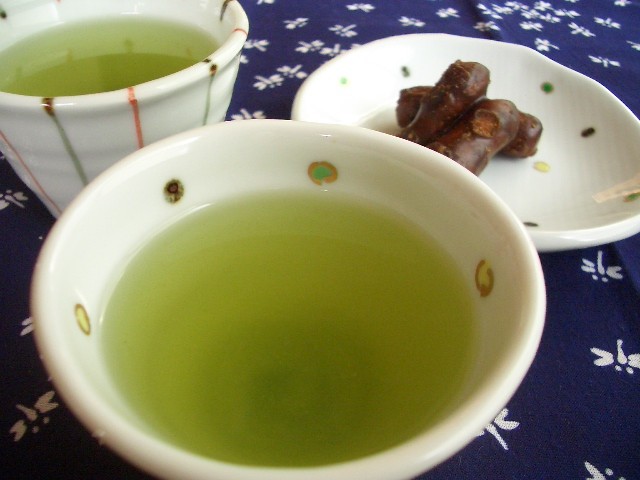
Mengding Shihua works well in either a glass or a gaiwan. A glass is helpful for observing bud opening, liquor brightness, and the overall cleanliness of the infusion. A gaiwan is better if you want to compare aroma and follow the changes from infusion to infusion more precisely. As a green tea built on tender single buds and quiet freshness, it usually does not respond well to immediate boiling-water treatment. A safer starting range is around 80°C to 85°C. Water that is too hot can easily destroy the very things the tea is trying to preserve—freshness, tenderness, and clean finish—leaving behind bitterness, fire taste, or hollowness.
In a gaiwan, around 3 grams of dry tea for 100 to 120 milliliters of water is a stable starting point. The first few infusions should not be held too long. Let the tea first explain its freshness and cleanliness, then adjust according to the actual sample. The point with Mengding Shihua is not whether it can be forced through many infusions, but whether the early and middle rounds are good enough: is the aroma pure, is the liquor bright, does the cup feel fresh and tidy, and is the returning sweetness natural? This is not a tea that benefits from rough extraction. A lighter, steadier hand is usually the best way to reveal what it actually does well.
What are the easiest mistakes to make when buying Mengding Shihua?
The first mistake is buying the tea as a historical name rather than as a present tea. In other words, the buyer trusts phrases such as “Tang famous tea” or “tribute tea” too much and forgets to judge the tea in front of them. History can explain why the tea is memorable, but it cannot take responsibility for the current batch. The second mistake is judging only by bud appearance. Mengding Shihua absolutely does care about single buds and visual order, but if the buyer stares only at whether the tea is straight, fine, and pretty enough, they can easily end up with something more suitable for photography than for serious drinking.
The third mistake is collapsing it into Mengding Ganlu or Mengding Huangya. The first is a curled green tea; the second is a yellow tea. Their goals are not the same as Shihua’s. If one uses the standards of those teas to judge Shihua, the conclusions will often be wrong. The fourth mistake is using “the louder the aroma, the higher the value” as the guiding principle. Much of Mengding Shihua’s sophistication lies precisely in not being loud. Its strength is often in purity, brightness, freshness, and clean finish. Anyone who chases only the first aromatic shock may miss the most mature part of what this tea is trying to say.
Why is this Mengding Shihua article worth adding to the tea section now?
Because the site already contains Mengding Ganlu and Mengding Huangya, but without Mengding Shihua the reader’s understanding of how many mature routes exist inside Mengshan tea is still incomplete. The value of Shihua is not merely that it adds yet another “Mengshan famous tea” page. Its value is that it clearly isolates a Mengshan line built around single-bud shaping green tea, a line that is often skipped over. It also helps readers understand Chinese green tea more precisely: green tea is not only the world of Longjing-style flattened pan-firing, Bi Luo Chun-style curls, or Maofeng-style open bud-and-leaf elegance. It also includes this kind of tea, where the focus falls on single-bud straightness, quiet freshness, and a very disciplined sense of completion.
Even more importantly, it is well suited for a bilingual mirror article. The Chinese version establishes the facts, structure, and judgment first. The English version then follows that same structure, only adding the explanatory framing needed for readers less familiar with terms such as Tang famous tea, single-bud green tea, shaping craft, and the distinction from Ganlu and Huangya. In that way, the two texts are not two different articles with different priorities. They are one article carried across two reading contexts. That is one of the main reasons it deserves to be part of the site now.
Source references
- Wikipedia (Chinese): Mengshan tea
- Baidu Baike: Mengshan tea
- General public Chinese-language reference material on Mengding Shihua’s Tang-era famous-tea position, single-bud production standard, immediate shaping after kill-green followed by cooling, re-firing, and low-temperature drying, and its typical sensory direction.