Green Tea Feature
Why Lushan Yunwu Is More Than “Good Tea Comes from High Mountains and Mist”: from Lushan’s foggy mountain terrain and later picking rhythm to a thick yet sweet cup
If there is one Chinese green tea especially easy to flatten into a slogan, Lushan Yunwu is near the top of the list. It seems to fit too neatly into a single sentence: high mountains, heavy mist, later picking, fat buds, richer taste, steady sweetness. Push that summary one step further and it becomes the familiar line that good tea comes from high mountains and mist. The problem is that this is not entirely wrong, but it erases what actually matters. Lushan Yunwu is not a tea that automatically becomes good simply because it grows on a mountain, sees a lot of fog, and carries the word “mist” in its name. What is really worth explaining is how mountain conditions, budding rhythm, picking standards, pan-fired shaping, and the final result of quiet aroma, thicker liquor, and stable returning sweetness are linked together step by step.
That is why Lushan Yunwu still deserves a fresh place in a serious tea section. Yes, it is a famous green tea, but its meaning is not fame alone. It is especially useful for helping readers understand a green-tea logic that is often oversimplified: not every green tea is trying to be earlier, lighter, thinner, and sharper than the next. Some classic mountain green teas come into focus precisely by moving at a later rhythm, building more depth, gathering in excess greenness, settling the aroma, and then letting mountain freshness and sweetness emerge more slowly. Lushan Yunwu expresses that logic unusually clearly.
What kind of tea is Lushan Yunwu? Why is it first of all a mountain green tea rather than only a scenic name?
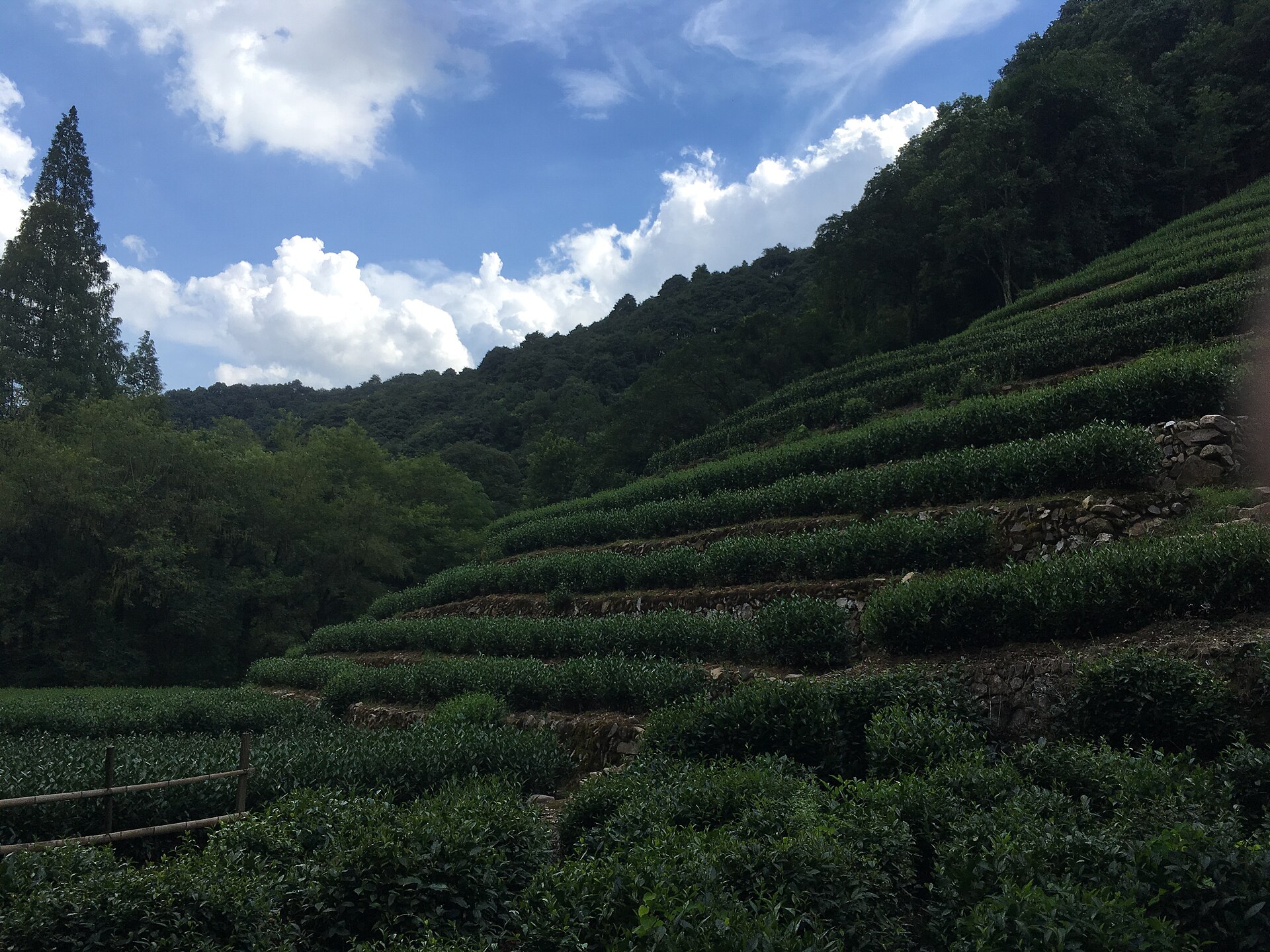
The basic frame is straightforward: Lushan Yunwu belongs to Chinese green tea, and its core origin is closely tied to mountain tea areas on Lushan in Jiangxi. Public reference material tends to repeat a stable cluster of features: higher elevation, frequent mist, later budding, fine tender raw material, stronger strips, visible down, bright liquor, quiet aroma, thicker taste, and a sweet smooth finish. Many first-time readers remember only the visible labels—Lushan, mist, mountain tea—but those labels alone do not explain the tea. “High mountain mist” describes environmental conditions. It does not by itself prove quality. The real question is whether those conditions are actually turned into a coherent finished tea.
In other words, the point of Lushan Yunwu is not poetic naming but whether it truly expresses the mountain-green-tea logic of slower growth, later budding, stronger internal accumulation, quieter aroma, and a cup with more structure. It is not primarily the kind of green tea that wins by being only ultra-early, ultra-light, and ultra-fragile. It still offers freshness and clarity, but not at the cost of body. Once that is understood, it becomes much easier to see why Lushan Yunwu cannot be explained away by a single line about misty mountains.
Why does the Lushan mountain setting need so much emphasis?
Because Lushan Yunwu is a result jointly formed by terrain and tea-making experience. Public materials repeatedly stress Lushan’s position near the Yangtze and Poyang Lake, its deep mountain relief, frequent mist, and cool humid conditions, with core tea areas often in relatively high mountain zones. Those details may sound like standard origin description, but what matters is their effect on the tea plant’s rhythm. Temperatures rise more slowly, so budding is later than in lower-altitude tea districts; picking windows move later as well. At the same time, heavy mist, strong diffused light, and relatively large day-night temperature swings can help preserve tenderness and support the accumulation of aromatic and taste-active compounds.
This also means Lushan Yunwu should not be read by the simple logic of whichever green tea is earliest, smallest, or most pre-Qingming. Part of its value lies precisely in its later rhythm. “Later” is not a weakness here. It is one of the conditions that makes the tea what it is. A harvest window from after Grain Rain into the period before Early Summer may sound late when compared with lower-altitude elite green teas, but for Lushan Yunwu it is normal and necessary. That timing helps it develop a thicker cup structure and makes phrases like “smooth, rich, and sweet” more than just promotional language.
Why is Lushan Yunwu so often described as a later-picked tea? Is that a disadvantage, or part of what makes it work?
This is one of the most important points to clarify. Many consumers have been trained by the modern spring-tea narrative to think that earlier always means better and more expensive. So when they see that Lushan Yunwu is often harvested from after Grain Rain into early summer, they instinctively assume it must rank below famous pre-Qingming greens. That is exactly the wrong conclusion. Lushan Yunwu is not later because it failed to be early. It is later because mountain Lushan warms more slowly and buds later by nature. It is not competing in the same time race as ultra-early lowland spring greens. It belongs to a different seasonal clock.
Because that clock is different, its aesthetic priorities are different too. It still values tender raw material, and public descriptions commonly stress standards such as one bud with one just-opened leaf, fairly even in length, while excluding purple buds, insect-damaged leaves, and rain-soaked material. But these standards do not exist only to create an especially tiny and delicate visual effect. They exist so that later processing can turn the leaf into a tea that is bud-heavy, leaf-fleshed, visibly downy, bright in liquor, and thick with stable sweetness. The “later” timing is therefore not a slide into coarser tea. It is part of the natural mountain rhythm that allows Lushan Yunwu to build more body without losing finesse.
How should the famous quality formulas around Lushan Yunwu be read?
Public reference descriptions often summarize Lushan Yunwu through phrases about stronger strips, green color with down, bright liquor, tender even leaves, lasting aroma, and a mellow sweet taste. Many readers see those formula-like phrases and stop there. A better method is to unpack them and ask whether they truly hold together in the same cup. “Strong strips” does not mean the leaf should simply look large or rough. It means the finished tea should not be weak, loose, or visually empty. “Green with visible down” is not a beauty contest over fuzz; it points to raw-material tenderness and to the completion of the shaping process. “Lasting aroma” should not mean aggressive aroma at any cost. It should mean aroma that rises clearly and also stays composed. “Mellow sweet taste” does not mean dull heaviness. It means real body with a finish that still clears and sweetens.
That is where Lushan Yunwu becomes truly interesting. The valuable examples are the ones where these qualities support each other rather than conflict. Many teas can look attractive as dry leaf but brew thin. Some can smell high and pretty but collapse into a hollow liquor. Others chase thickness so hard that they lose the brightness and mountain clarity green tea should still possess. The best Lushan Yunwu is worth attention because it can remain full without being stuffy, clear without turning thin, and sweet without feeling empty. That balance is what gives it its place among classic mountain greens.
Why is its aroma and taste so often described as quiet yet substantial?
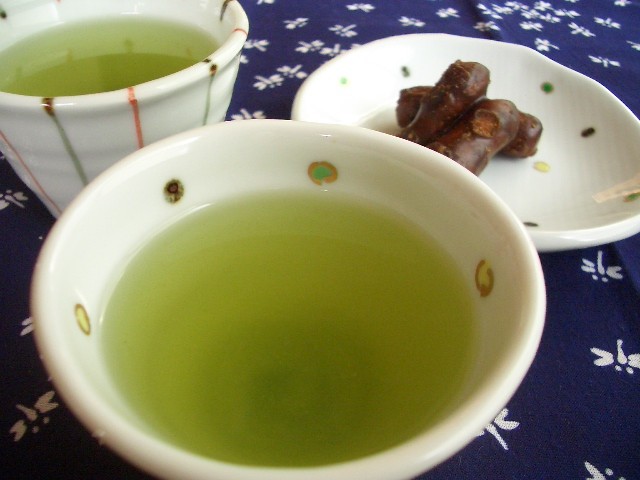
Because its charm does not depend on a single loud signature note. Public descriptions often use phrases like orchid-like quiet fragrance and thick sweet liquor. These can sound vague if treated only as literary praise, but in practical tasting terms they point to something specific. Lushan Yunwu’s aroma is not usually a violently explosive high fragrance. It tends to feel more settled—lifted enough to be clear, but gathered by mountain coolness and by pan-fired finishing so that it does not become overly sharp. At the same time, the liquor is not trying to win only through light spring freshness. It carries a slower-building thickness and sweetness.
That is why drinkers used to extremely airy green teas sometimes find Lushan Yunwu more substantial. That substance is not simply bitterness, not just fire, and not age. It is a kind of body developed through mountain conditions and a later spring rhythm. The opening may still show freshness and a little grip, but it usually turns relatively quickly toward aroma sinking into the liquor, a steadier body, and a more continuous returning sweetness. If a so-called Lushan Yunwu offers only floating freshness, it misses the point. If it offers only heavy dull thickness, it misses the point just as badly.
How is it different from more familiar green teas like Longjing and Huangshan Maofeng?
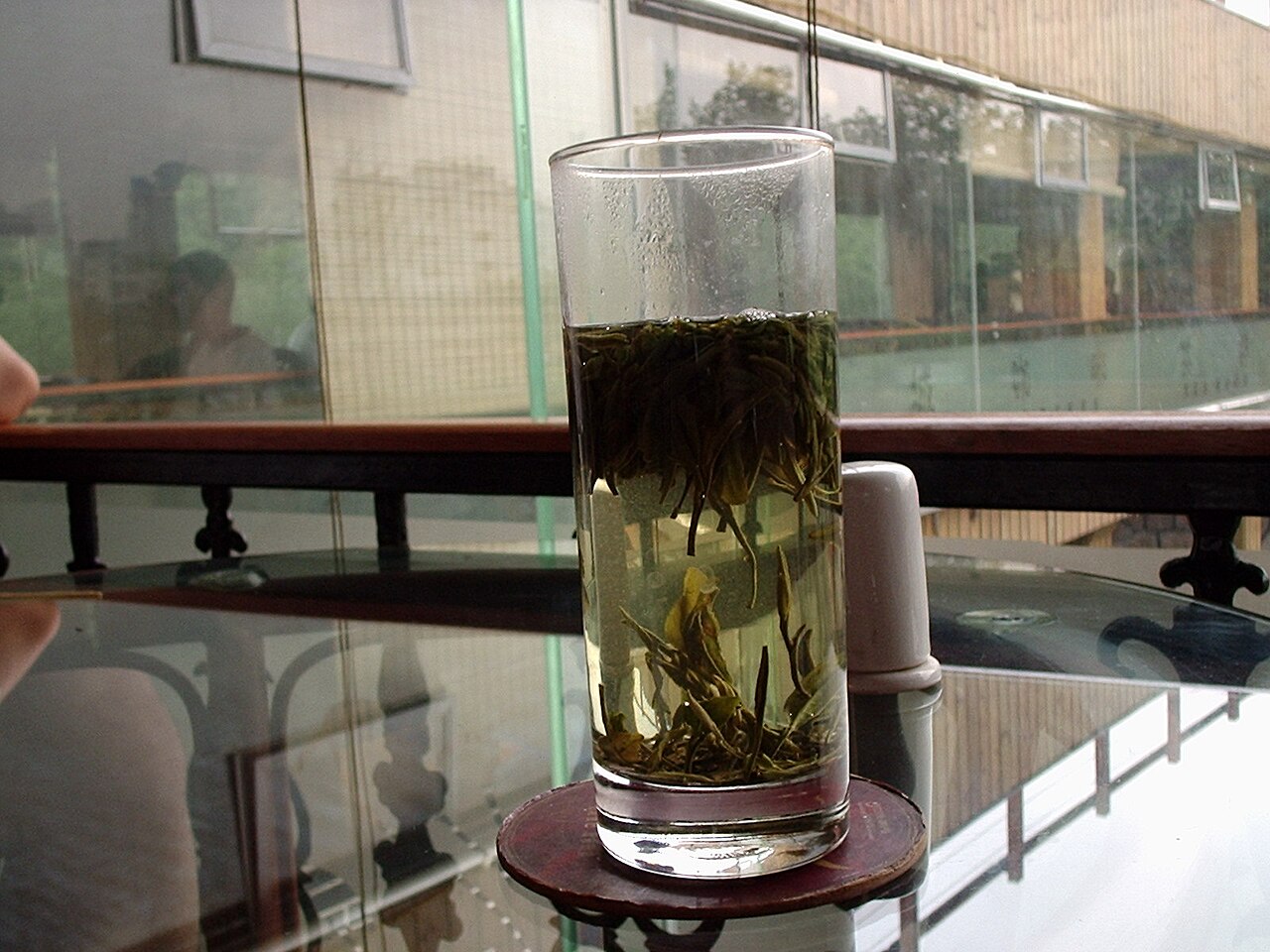
Placed back inside the internal map of Chinese green tea, Lushan Yunwu differs clearly from Longjing. Longjing represents a highly mature flattened pan-fired aesthetic: flat leaves, a clearly shaped wok-fired aromatic profile, and an overall style that feels neat, precise, and controlled. Lushan Yunwu belongs more obviously to a mountain strip-shaped green tea route. It does not depend on a flat shape, and it does not rely mainly on a single roasted-pan signature note. Instead it emphasizes fleshy buds and leaves, visible down, a quieter aroma, thicker liquor, and stable returning sweetness. Put simply, Longjing is a canonical elite green tea of order and refinement, while Lushan Yunwu is more of a mountain answer built through slower growth and later accumulation.
Compared with Huangshan Maofeng, the contrast is also instructive. Maofeng is easier to remember for its bud image, downy appearance, and graceful fresh mountain elegance. Lushan Yunwu often places more emphasis on the mellower thickness and steadier return that emerge from later mountain picking. One tends toward the language of grace, freshness, and suppleness; the other more often toward quietness, thickness, and sweetness. Both are mountain green teas, but they serve different aesthetic centers. That is exactly why Lushan Yunwu should not be judged by a single measure of ultra-early delicacy.
Where does processing matter? Why is mountain origin alone not enough?
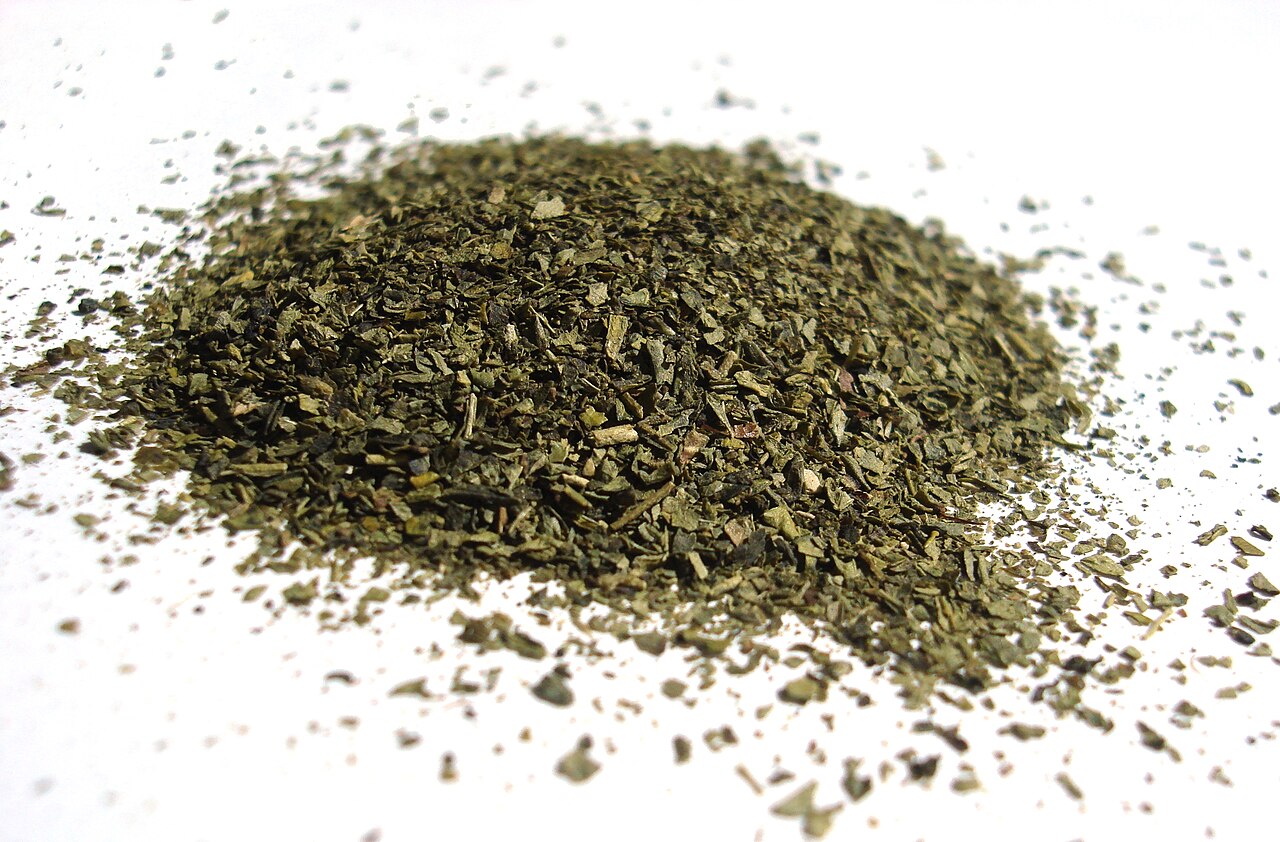
Origin matters greatly, but mountain origin never turns itself automatically into finished tea. Public descriptions of Lushan Yunwu processing often mention withering or resting the fresh leaf, fixing, shaking loose, rolling, second pan-firing, strip arranging, further tightening, bringing up the down, and final drying. Most readers do not need to memorize every step, but they do need to understand the shared purpose: how to remove excess greenness while keeping mountain freshness alive; how to tighten the strips and reveal the down; how to move aroma from fresh-leaf smell into finished-tea aroma; and how to produce a liquor that is bright but not hollow.
So Lushan Yunwu is not a case of “mountain leaves naturally taste good.” It still depends on clear technical judgment. If the fixing is off, green harshness remains. If rolling and shaping are weak, the finished leaf looks loose and the liquor feels empty. If the fire is too heavy, the mountain freshness and quiet fragrance become dull; if it is too light, the tea can feel underfinished. Truly good Lushan Yunwu should feel like a mountain green tea that has been carefully organized: raw material advantages preserved, technical handling present but not crude, and the final state of being clear yet full achieved in the cup itself.

How should Lushan Yunwu be brewed? Why should it not become a flat, stuffy cup?
For a tea like Lushan Yunwu, built from fine mountain buds and leaves but still carrying some structural depth, both a glass and a gaiwan work well. A glass is useful for watching the leaves open and reading liquor brightness; a gaiwan is better if the goal is to judge aroma settling into the water, the thickness of the liquor, and the shape of the return. A good starting point is around 3 grams of tea for 100 to 120 ml of water, with water around 80°C to 85°C. It is not that the tea can never take higher temperatures, but if one starts with near-boiling water and long steeps, the cup too easily turns dull and compressed, blunting the fragrance and sweet smoothness that should define it.
Well-made Lushan Yunwu actually rewards several infusions. The first rounds show whether the aroma is clean and the liquor bright; the middle rounds show whether there is body without roughness; and the later rounds show whether the return still holds the tea together. If a tea shows only a little freshness in the first sip and then turns thin, it is usually not a very good Lushan Yunwu. But a tea that becomes heavy, dull, and overfired is also off target. What makes Lushan Yunwu worth understanding is its ability to remain steady over multiple brews in a way that many green teas do not.
What are the most common buying mistakes today?
The first mistake is treating the word “mist” as an automatic quality bonus. The market is full of teas carrying mist-related names, and many buyers assume that if a tea says Yunwu it must be high mountain, tender, and superior. In reality, the name cannot replace origin or cup quality. The more useful questions remain the basic ones: is the source clear, are the buds and leaves even, does the dry tea look alive, is the liquor bright, is the aroma clean, and does the tea show both body and clarity?
The second mistake is forcing it into an early-picking-only logic. Lushan Yunwu is not a tea built mainly by being ultra-early, so judging it only by the standards of lower-altitude elite spring green tea often leads to misunderstanding. The third mistake is reading “thicker taste” as “the more bitter the better.” In Lushan Yunwu, thickness should mean mellow body and sweet body, not rough heaviness. A fourth mistake is treating it as merely a scenic tourist tea from Lushan. In fact, truly good Lushan Yunwu deserves to be judged as a serious coordinate within the system of Chinese mountain green tea.

Why is Lushan Yunwu worth adding to the tea section now?
Because it adds not just another famous green tea name but a highly representative mountain-green-tea logic. If Longjing helps explain how elite flattened pan-fired green tea works, and Huangshan Maofeng helps explain the graceful route of mountain bud green tea, then Lushan Yunwu supplies another equally important answer that is often reduced to cliché: high-mountain green tea is not only about being earlier and more delicate; it can also build quiet aroma, body, and returning sweetness through a later rhythm. It keeps the site’s green tea map from collapsing into a single aesthetic axis of early-spring tenderness.
More importantly, this is also a strong bilingual bridge article. Chinese readers often enter through Lushan, mist, the later picking window after Grain Rain, and the idea of quiet aroma with thicker taste. English readers are more likely to enter through mountain green tea, later spring picking rhythm, misty high-elevation terroir, and a liquor that is fuller yet still clear. As long as the English page stays strictly aligned with the Chinese source article in facts, structure, and conclusion, it can translate Lushan Yunwu into a genuinely useful explanation of Chinese mountain green tea rather than turning it into another tourism-and-scenery tea story.
Source references
- Baidu Baike: Lushan Yunwu tea
- Public Chinese reference material on Lushan Yunwu’s production geography, mist-heavy mountain climate, post–Grain Rain harvest window, fresh-leaf standards, and traditional pan-fired processing.
- Public descriptions summarizing Lushan Yunwu quality through stronger strips, quiet aroma, richer liquor, and stable returning sweetness.