Dark Tea Feature
Liu Bao tea is more than “the Guangxi dark tea with betel-nut aroma”: Wuzhou storage, farmhouse vs factory styles, and an entry into a mature post-fermented tea of wood, age, and cooling finish
Liu Bao tea is one of those Chinese teas that many people have heard of, but far fewer can explain clearly. First encounters usually begin with a cluster of keywords: Guangxi, Wuzhou, dark tea, betel-nut aroma, and aging potential. Push one step further, and the most common market summary becomes something like: “Liu Bao is a Guangxi dark tea with betel-nut aroma that gets better with age.” That is not entirely wrong, but it is far too thin. What actually makes Liu Bao worth understanding is not a single aroma label, and not just the phrase “old dark tea,” but the way it grows out of the local contexts of Wuzhou and Cangwu’s Liubao town through post-fermentation, storage, basket-packing, and the parallel existence of loose tea and compressed tea. The result is a tea that can carry woody notes, aged fragrance, betel-nut character, smooth texture, and often a noticeable cooling finish in the same cup.
It also deserves a place in the tea section because it occupies a crucial position on the map of Chinese dark tea. This site already has nodes such as pu-erh, fu brick tea, and the broader dark tea overview. But without Liu Bao, readers can too easily imagine post-fermented dark tea as only a Yunnan story or a Hunan story. Liu Bao supplies a third mature route. It does not depend on the visual drama of golden flowers like fu brick tea, and it does not organize itself primarily through mountain-origin storytelling in the way pu-erh often does. Instead, it builds its identity through Wuzhou-style storage experience, the memory of Liubao’s original place context, basket-tea tradition, and a distinctive expression of betel-nut aroma layered with wood and age.
What kind of tea is Liu Bao? Where does it sit within Chinese dark tea?
The first layer is simple and should be kept stable: Liu Bao belongs to Chinese dark tea. More specifically, it is a post-fermented dark tea centered historically on Guangxi’s Wuzhou region and the Liubao town context in Cangwu. Public reference material commonly describes it as using local large-leaf or otherwise suitable material and passing through steps such as kill-green, rolling, piling or wet-heaping, drying, and then later sorting, blending, steaming, compression, and storage. Traditional quality language often summarizes it with four characters roughly corresponding to “red, rich, aged, and mellow.” The wording may sound old-fashioned, but the basic direction is correct. This is not a tea that aims for sharp freshness. It aims for body, mature order, and a settled finish.
Its position inside dark tea is especially useful. If pu-erh tends to lead readers toward Yunnan, mountain origins, and raw-versus-ripe distinctions, and fu brick tea tends to lead toward compression, flowering, and golden-flower logic, Liu Bao’s strongest doorway is the Wuzhou-style experience of storage and the expression called betel-nut aroma. It is also a post-fermented tea. It can also be aged. It can also be boiled. But it does not become itself by copying pu-erh or fu brick tea. It has its own system. That is exactly why Liu Bao works so well as a standalone article: it reminds readers that dark tea is not a vague basket, but a map composed of different local crafts, different circulation histories, and different taste priorities.

Why are Wuzhou, Cangwu, and Liubao town mentioned so often together?
Because Liu Bao is not an abstract product name that can be understood fully outside its place context. Its historical identity has long been tied to Guangxi’s Wuzhou, Cangwu county, and Liubao town. Public references commonly describe it as a dark tea originally and primarily associated with Liubao town in Cangwu, Wuzhou, before later expansion into a broader Wuzhou production and industry zone. That point matters not only for authenticity claims, but because it explains that Liu Bao began as a tea grounded in a specific local experience rather than as a later marketing invention.
For a content site, the more interesting question is how place enters flavor. Liu Bao is tied not only to origin fields, but also to warm humid southern conditions, local storage culture, basket-packing tradition, and circulation history connected with Southeast Asian trade. Because of that, its storytelling naturally carries more of a sense of time and movement than many fine green teas. It is hard to explain it with only a standard line about mountain ecology. A more useful explanation is that Liu Bao compresses the tea-making and tea-storing experience of this southern Guangxi environment into a dark tea that can be aged, boiled, and repeatedly folded into everyday life. It is both a place tea and a circulation tea, both a mountain tea and a storage tea.
What is “betel-nut aroma” really supposed to mean? Why is it important, but also why should Liu Bao not be reduced to that phrase?
The most famous descriptive label attached to Liu Bao is betel-nut aroma. But this is also where one of the most common misunderstandings begins. Many readers hear the phrase and imagine the direct flavor of consumed betel products, or assume that Liu Bao must taste harsh, spicy, medicinal, or aggressively heavy. A more mature reading is different. In Chinese tea language, “betel-nut aroma” functions more like a conventional composite description. It often points toward some combination of aged wood, mature husk-like character, storage-developed fragrance, gentle medicinal associations, cooling sensation, and deep sweet mellowness. It does not simply mean “this smells literally like betel nut.”
Because the term is so memorable, it easily becomes the entire tea in people’s minds. As if any tea with betel-nut aroma automatically qualifies as fine Liu Bao, and as if the stronger that note is, the better the tea must be. But good Liu Bao never stands on one label alone. It has to do several things at once: the aroma must be clean, the liquor must have body, the aged note must not turn stuffy, the wood note must not become dry, the mouthfeel must stay smooth, and the finish should often leave a pleasant cooling sensation in the throat or mouth. If all that disappears and only “betel-nut aroma” remains as a slogan while the tea itself feels muddy or oppressive, then the framework has gone wrong.
How do woody notes, aged fragrance, medicinal hints, and cooling finish relate to each other?
When people talk about Liu Bao, they often pile together a group of recurring terms: woody notes, aged fragrance, betel-nut aroma, medicinal hints, and cooling sensation. These do often appear together, but that does not mean every Liu Bao must display all of them equally, or that the terms can simply replace one another. A better way to understand them is that they all point toward the mature aromatic world created by post-fermentation and storage, but each emphasizes something different. Woody notes suggest structure and base tone. Aged fragrance suggests composure and time. Medicinal hints point toward dry roots, herbs, or mature spice-like associations. Cooling sensation refers more to the bodily effect left in the mouth or throat after swallowing.
Mature tasting is therefore not a game of collecting vocabulary. It is a matter of seeing whether these elements can coexist without fighting. Good Liu Bao should have wood without roughness, age without stuffiness, recognizable betel-nut character without sharpness, and cooling finish without turning thin or irritating. The real accomplishment is often not that any single descriptor shouts the loudest, but that all of them finally settle into a liquor that feels smooth, full, clear, and coherent.
Why is Liu Bao so often described as “the older the better”? What does that really mean?
“The older the better” is one of the most common phrases attached to Liu Bao, but if left unexamined it can easily mislead beginners. The phrase only works when four things stand together: raw material, craft, storage, and time. Liu Bao can age well because it is already a tea that depends on post-fermentation and later-stage organization. Time can soften edge, round the structure, deepen the aroma, and allow bitterness and roughness to settle. But that only happens if the basic tea and the storage were sound to begin with.
So a more accurate sentence would be that good Liu Bao has strong aging potential under proper storage conditions. In reverse, if the base tea is thin, the process scattered, the storage too damp, or the warehouse conditions unstable, time may not rescue the tea at all. It may only enlarge the defects. This matters because one of the most common market mistakes is to treat “age” as a self-sufficient value indicator. Age is important, but it never means much unless it remains tied to storage quality, tea base, and how clean the tea tastes right now.
Why do terms like farmhouse tea, factory tea, loose tea, basket tea, and compressed tea confuse so many beginners?
Another reason Liu Bao can feel confusing is that it does not arrive through a single highly standardized market channel. Readers will meet expressions like “farmhouse tea” and “factory tea,” and they will also encounter loose tea, basket-packed tea, brick tea, cake tea, and other forms. To a beginner, that can create the impression that Liu Bao is unusually chaotic or somehow lacks standards. A more accurate reading is almost the opposite: Liu Bao preserves multiple parallel pathways precisely because its circulation history and drinking history are rich.
“Farmhouse tea” usually emphasizes smaller-scale making, local style, and a more direct mountain-and-handmade context. “Factory tea” usually emphasizes blending, standardization, stability, and long-term commercial circulation. These are not automatic rankings, but different ways of organizing tea. The same is true of loose tea versus basket-packed or compressed forms. Traditional basket-packed Liu Bao matters not only because it is picturesque packaging, but because the basket is tied to storage memory, circulation, and a whole historical way of understanding the tea. Compressed forms, by contrast, often fit modern transport, storage, and market needs more easily. Good writing should not force readers to pick a camp too soon. It should help them see that these splits show Liu Bao as a living system rather than a single template tea.

How is Liu Bao made? Why are post-fermentation and storage the heart of its identity?
The broad production outline usually given in public reference material runs like this: leaves are picked, then processed through kill-green, rolling, piling or wet-heaping, and drying to make rough tea, after which they may be sorted, blended, steamed, compressed, and stored. Details vary across factories, local traditions, and periods, but the core logic remains stable. Liu Bao is not a tea that is fully finished at the moment of initial making. It is a tea that writes later development into its own identity.
This is one of the biggest differences between Liu Bao and many fine teas that aim for immediate completion. In many categories, the tea is made, sold, and ideally drunk relatively soon. Liu Bao naturally allows time to continue participating. “Storage” here does not mean throwing tea into a warehouse and forgetting it. It means letting the tea continue to organize itself under reasonably suitable humidity, ventilation, and time. In an ideal case, the outcome is that stray rough notes fall away, the liquor becomes smoother, the aroma settles, cooling sensation grows clearer, and aged fragrance rises into place. That is why Liu Bao’s real problem is not age itself, but age that turns unclean. It is also why storage should not be mystified, as though darker, heavier, or damper always means better. The real standard is plain: does the tea actually become better to drink?
What should Liu Bao generally smell and taste like?
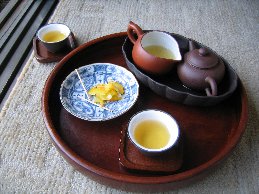
When a Liu Bao is well made and well stored, the common experience is something like this: the liquor is reddish, deep amber, or red-brown but bright; the aroma carries aged fragrance and woody notes; some examples also show a clearer betel-nut character and light medicinal associations; the mouthfeel is smooth; bitterness and astringency are not usually high; the body does not feel empty; and after swallowing, the mouth often retains a gentle sweetness and cooling sensation. This is usually not a tea that tries to win through explosive first impact. More often it reveals its order over time. The opening may not be loud, but the middle and later cups become steadier and steadier.
Bad versions fail in equally recognizable ways. Some have warehouse smell but no real aged fragrance. Some are dark in color but hollow in structure. Some smell “old” but taste stuffy and greasy. Others use the idea of betel-nut aroma to mask dirty, sour, sharp, or empty notes. In other words, Liu Bao is not a tea that can be faked through darkness plus age-language. On the contrary, it demands high overall completion. Truly good Liu Bao should make you feel two things at once: that it is mature, and that it is clean. If either is missing, the tea falls short.
How should Liu Bao be brewed? Why does it work in both a gaiwan and a boiling pot?
Liu Bao works well in a gaiwan, a small pot, a clay pot, and often in boiling. The reason is simple. It is not a tea that fears heat. On the contrary, serious heat often helps reveal its body, sweetness, and later-stage aromatic shape. For many examples, the most reliable sequence is to inspect the tea first in a gaiwan and then decide whether it deserves boiling. A gaiwan lets you see quickly whether the aroma is clean, whether the warehouse note is too heavy, whether the liquor turns muddy, and whether the structure collapses too soon after a few infusions.
In practical terms, 5 to 7 grams for a 100 to 120 ml gaiwan is a good starting point. Water can be near boiling. The early infusions should usually be quick, so that you judge cleanliness and structure first, then gradually lengthen later infusions. If the tea base is solid, boiling often enlarges Liu Bao’s most attractive qualities: sweetness becomes clearer, wood note steadier, body rounder, and in some examples the cooling finish opens more fully. But if the tea base is mediocre, boiling will reveal that too, through stuffiness, muddiness, mixed storage notes, or a lack of structure. So being “good for boiling” is not a magical quality. It is a bonus that good Liu Bao earns.
What is the biggest difference between Liu Bao, pu-erh, and fu brick tea?
All three are often thrown into a broad category of teas that are dark, ageable, and suitable for deeper brewing, so beginners easily blur them together. The clearest distinction lies first in narrative focus. Pu-erh most naturally invites discussion of Yunnan mountain origin, raw material grade, raw-versus-ripe distinction, and time-based transformation. Fu brick tea invites discussion of compression, flowering, golden flowers, and the craft and circulation contexts of Hunan and Jingyang. Liu Bao, by contrast, is most naturally understood through Wuzhou storage, betel-nut aroma, basket-tea tradition, and the order created by wood and age.
Their flavor structures differ as well. Pu-erh often leads attention toward structure, bitterness, returning sweetness, mountain distinction, or the fermentation feel of ripe tea. Fu brick tea often emphasizes floral-microbial fragrance, clean mellowness, and the identity created through flowering within a brick form. Liu Bao often emphasizes a kind of mature depth that settles downward without becoming oppressive: whether wood, age, betel-nut character, and cooling finish can coexist in balance. Writing these three teas separately is not only a matter of category management. It helps readers understand that post-fermented tea is not one straight line, but several local routes that all stand on their own.

What are the most common buying mistakes?
The first mistake is treating age as an absolute value. Liu Bao certainly has aging potential, but “old” only matters together with good storage, good base tea, and present-tense cleanliness in the cup. The second mistake is mystifying betel-nut aroma, as if the phrase itself automatically proves refinement. The better questions are: is this note clean, does it enter the water, and does it coexist with smooth body rather than stuffiness, dryness, or sourness?
The third mistake is confusing warehouse smell with aged fragrance. Proper Liu Bao storage should guide the tea toward greater smoothness, roundness, and clarity, not toward damp heaviness and mixed stale notes. The fourth mistake is assuming that all Liu Bao tastes basically the same. In reality, factory tea and farmhouse tea, lighter and heavier storage, loose and basket-packed forms, and different storage routes can all produce major differences. For readers, the most useful buying framework is not a slogan like “buy old, buy aromatic,” but a sequence of questions: first, is it clean? Second, does it have body? Third, how does the finish behave? Fourth, do you actually like the particular local expression this tea offers?
Why is this Liu Bao article worth adding to the tea section now?
Because it helps complete the site’s dark tea storytelling. If readers move from a general dark tea overview into pu-erh and fu brick tea only, they can easily assume that post-fermented tea means just a Yunnan route plus a Hunan route. Once Liu Bao enters the picture, the Guangxi–Wuzhou route becomes visible as a fully mature system of its own: still dark tea, still ageable, still concerned with later development, but organized through a different local history, different aromatic structure, and different storage culture. That makes the entire tea section more complete and more map-like, instead of just a set of isolated named-tea entries.
Even more importantly, Liu Bao is excellent for correcting two common misunderstandings. First, dark tea is not automatically dull, heavy, or muddy. Second, ageable tea in China is not reducible to pu-erh. Liu Bao explains the idea of clean maturity especially well. To write it clearly is not only to add another tea page. It is to show readers that some of the most rewarding Chinese teas are the ones that have learned how to carry time without losing clarity.
Source references
- Wikipedia: Liu Bao tea
- Baidu Baike: Liu Bao tea
- Public Chinese-language reference material on Liu Bao’s “red, rich, aged, mellow” profile, Wuzhou and Cangwu Liubao town context, betel-nut aroma, basket tea, wet-piling and post-fermentation, and storage-based maturation.