Green Tea Feature
Guzhang Maojian: why it is not just “another maojian” but an independent green-tea line from the Wuling Mountains
When many readers first see the name Guzhang Maojian, a very natural assumption appears immediately: if it is also called “maojian,” perhaps it can be understood as something broadly similar to Xinyang Maojian, just from a different place. That assumption is understandable, but if one stops there, one skips over almost everything interesting about the tea. Guzhang Maojian is certainly a maojian-style green tea, yet it is not simply “the Xiangxi version of Xinyang Maojian,” nor just a generic slender green tea from Hunan. What really makes it itself is the combination of humid Wuling Mountain ecology, local Xiangxi tea resources, a tight rounded straight and visibly downy dry-leaf style, a processing logic built around three frying stages and two rolling stages with careful line-shaping, and a cup profile that usually values sweetness, body, and endurance more than flashy sharpness.
In other words, Guzhang Maojian matters not because its name happens to contain the same last two syllables as another famous tea, but because it helps readers see a fact that is often overlooked in Chinese green tea: many teas that look similar in name are actually built on entirely different systems of geography, process, and taste. Xinyang Maojian is best understood through early spring timing, mountain provenance, brisk freshness, and yearly disputes over harvest truthfulness; Huangshan Maofeng through tender bud-leaf aesthetics, lifted aroma, and soft fresh richness; Guzhang Maojian through Wuling mountain air, neatly tightened strand-making, stable sweetness, and a cup that may not shout at first but becomes more convincing as the session continues. It does not carry the same national pop-cultural familiarity as Longjing, nor the same Huizhou aura as Huangshan Maofeng, but that is exactly why it works so well as a real knowledge article.
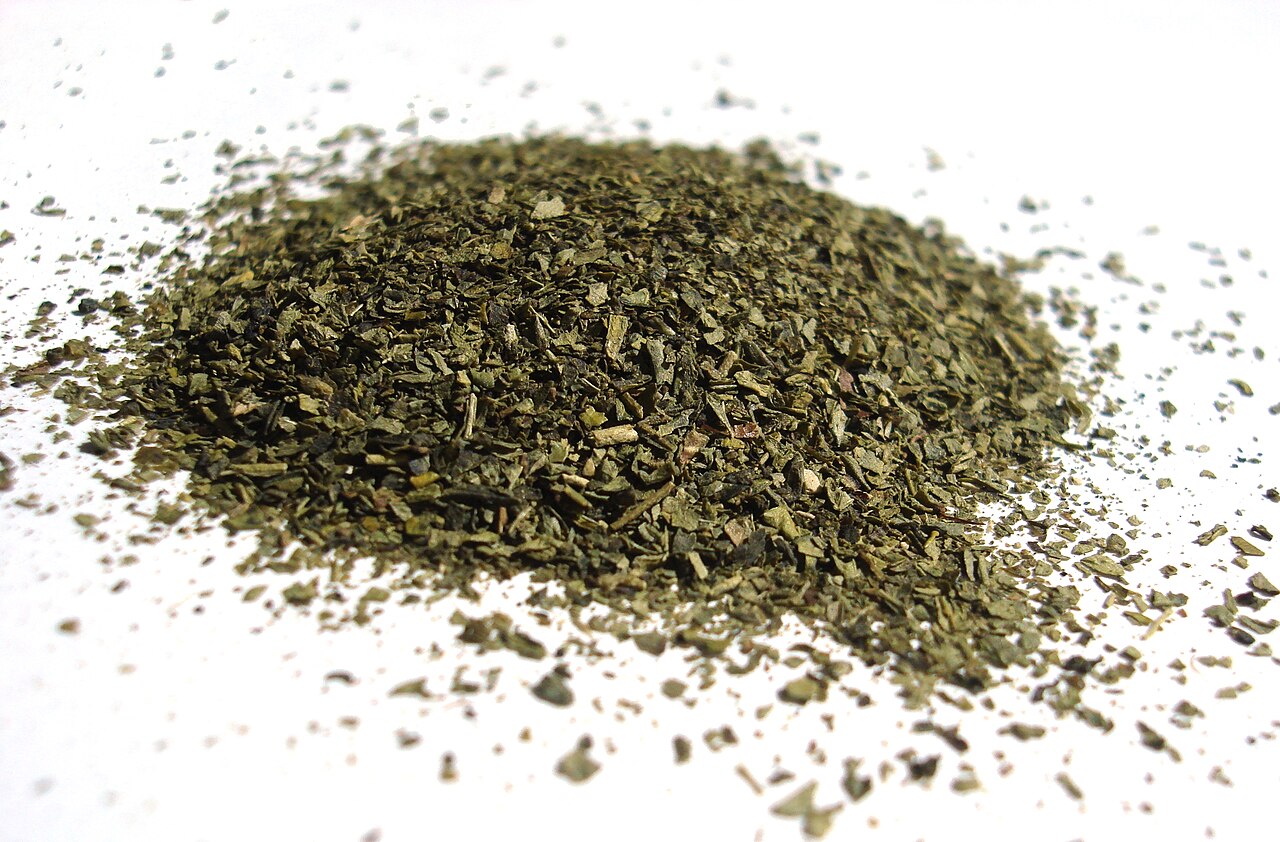
What kind of tea is Guzhang Maojian?
Guzhang Maojian belongs to the category of Chinese green tea, with its core origin in Guzhang County in Xiangxi, Hunan, within the broader Wuling Mountain zone. It is a classic maojian-style famous green tea: the finished leaf emphasizes tight fine rounded straight strands, visible tips, living green sheen, and visible down, while the brewed tea is expected to show a clear and pleasing aroma, a sweet-savory rounded mouthfeel, and relatively good endurance across multiple infusions. Public references often note its recognition in the modern national famous-tea system, which matters because it shows that Guzhang Maojian is not merely a local self-description, but a tea with a stable place in the broader Chinese green-tea map.
More importantly, although it is also called maojian, it does not share the same stylistic center as the more widely known Xinyang Maojian. Guzhang Maojian usually does not push “ultra-early spring, ultra-brisk sharpness, and extreme seasonal sensitivity” to the front. It tends instead to emphasize the balance between mountain ecology, tenderness of material, shaped strand form, sweetness, and endurance. The most useful way to understand it is as a Xiangxi mountain maojian that values line-shaping, mellow sweetness, and durable structure. Once that is clear, later questions about process, flavor, and buying judgment become much easier to place.
Why is Guzhang a suitable place for this kind of green tea?
Public materials repeatedly describe the production zone as part of the Wuling Mountain system: humid, mountainous, forested, rich in mist, with notable microclimatic variation and relatively gentle conditions for tender leaf growth. For tea, the value of this environment is not just the decorative phrase “high mountains and mist make good tea.” It means several more concrete things: leaf growth can remain comparatively steady, fine spring material is easier to preserve, humidity and diffused light may support cleaner aromatic expression, and forest-linked mountain soils can contribute to the kind of clear, mountain-air character that drinkers often recognize in the cup.
There is another reason this origin story is useful. Guzhang Maojian does not come prepackaged with the same overwhelming tourist symbolism as some other famous teas, so its geographical value is easier to read in the tea itself rather than in the landscape marketing around it. Many celebrated green teas are surrounded by so many iconic images and cultural slogans that readers remember the postcard before they remember the cup. Guzhang Maojian encourages a better habit: ask whether the material is tender enough, whether the strands are made well enough, whether mountain character actually enters the liquor, and whether sweetness and endurance remain stable. For a tea knowledge site, that is a real advantage.
What parts of its historical background are actually worth remembering?
The Guzhang area has a long tea history, and public references often cite early textual traces from pre-modern and imperial periods to show that the region has long belonged to the Chinese tea landscape. What readers need to keep from those references is not a memorized list of dates, but two more stable facts. First, Guzhang was not a place that suddenly invented tea identity in modern times; it has deep roots as a tea-producing mountain region. Second, the modern, more clearly defined identity of “Guzhang Maojian” as a famous tea took shape more fully within the later systems of branding, competition, and national recognition.
That pattern is common in Chinese tea history. A place may have grown tea for centuries, while the specific tea name recognized nationwide today often becomes fixed much later. Guzhang Maojian fits that pattern well. It draws legitimacy from an old Xiangxi tea background, but its present clarity also comes from twentieth-century and later evaluations, export history, branding, and geographic-indication logic. Readers therefore do not need to become trapped in the question of one absolute founding year. It is more useful to understand that the tea stands on both an old tea-region foundation and a later modern process of category-making.
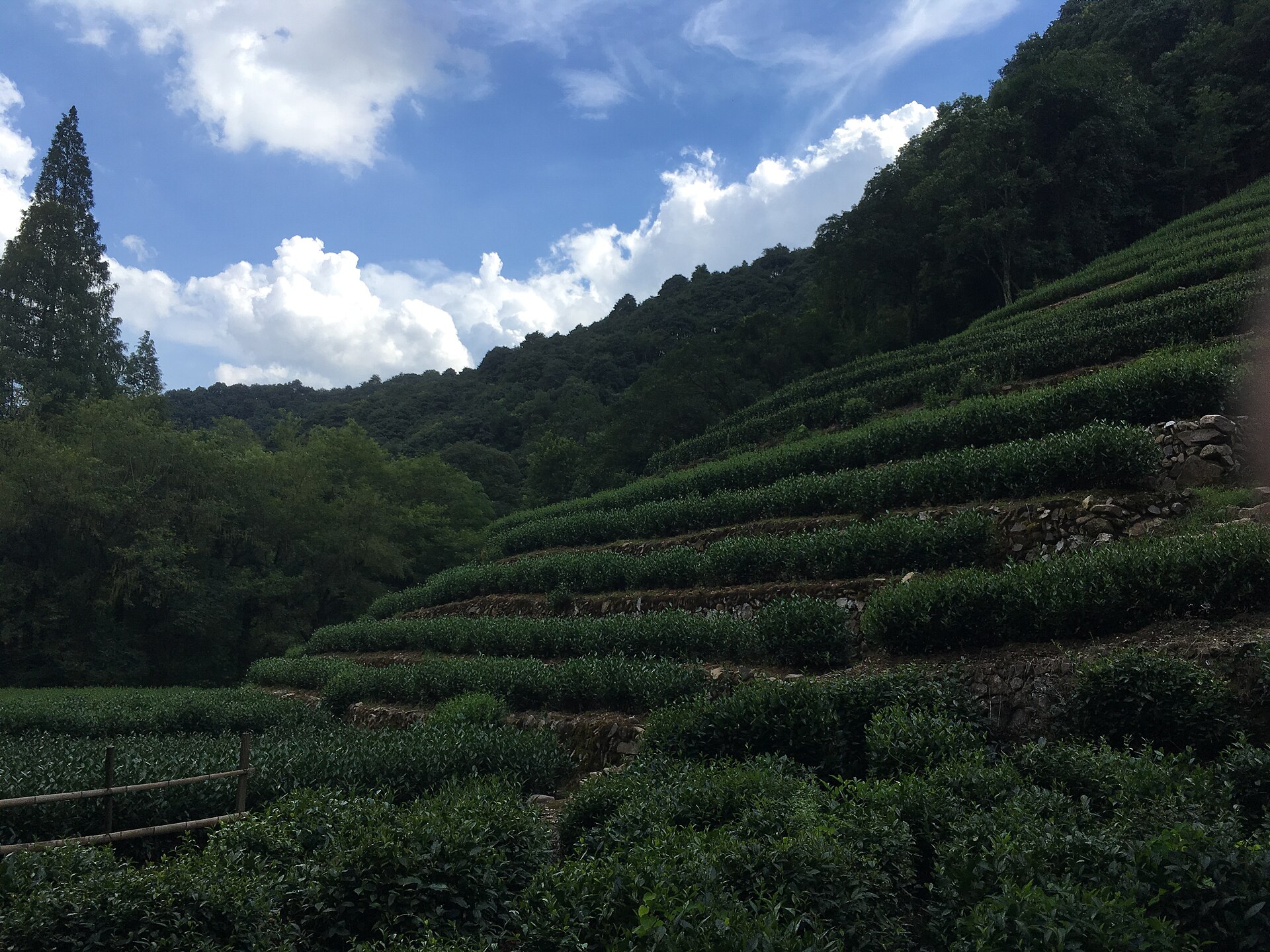
Why is its dry-leaf appearance so often described as “tight, fine, rounded, straight, downy, and elegant”?
Because in Guzhang Maojian, appearance is part of the process logic rather than decorative surface beauty. Public descriptions are very consistent: tight and fine strands, rounded and straight form, visible tips, sheen, and down. The most important words here are “rounded-straight” and “downy.” Rounded-straight means the shaping stage is not casual; the leaf has to be guided toward a compact, stable, linear form. Visible down means the material is tender and the process has not damaged the leaf too heavily or made it too dead.
This already sets it apart from Huangshan Maofeng. Huangshan Maofeng tends to emphasize the visual grace of tender buds and leaves with a softer, slightly looser elegance. Guzhang Maojian is more interested in disciplined strand formation. Compared with Xinyang Maojian, Guzhang Maojian’s public descriptions place especially stable weight on “rounded-straight,” “sweet-bodied,” and “durable.” That tells readers it is not trying only to be fresh or only to be early. It is trying to make appearance, liquor structure, and endurance stand together. For beginners, that is a useful observation point: the same word maojian does not guarantee the same aesthetic system.
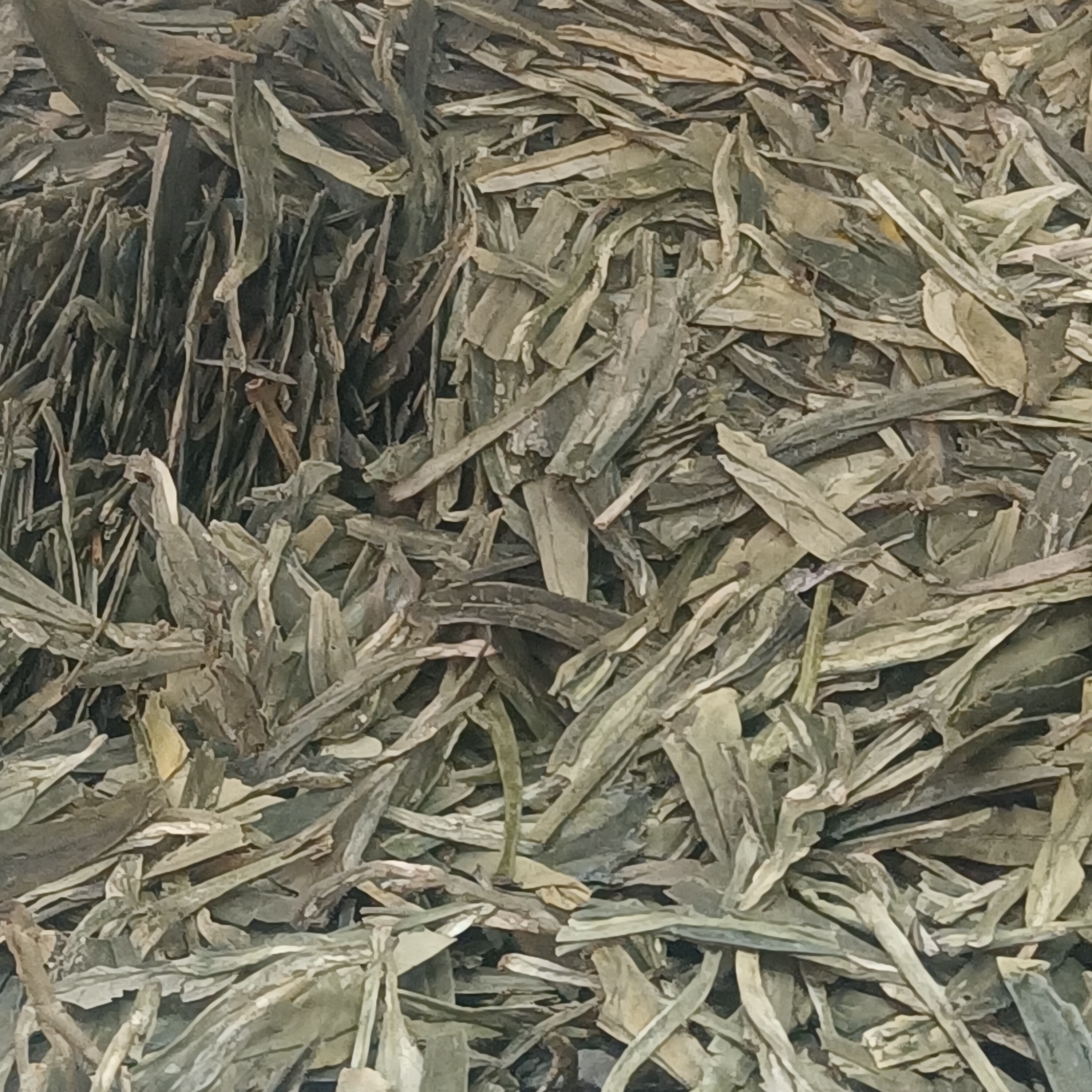
What do “three frying stages, two rolling stages, line-shaping, and hair-raising” actually tell us?
They tell us that Guzhang Maojian is not a tea that becomes good simply because the leaves are naturally tender. Public descriptions note a process involving three frying stages, two rolling stages, line-shaping, visible-down enhancement, and final settling. In more practical language, the tea has to be moved through several rounds of heating and handling so that the leaves become tight, stable, aromatic, dry enough, and visually alive at the same time. The most difficult part is not one single movement but rhythm: when to fix the leaf, when to enter the second heating stage, when to begin strand-forming, and when to finish the visible-down and settling work.
If that rhythm goes wrong, the results are very concrete. Start strand-forming too early and leaf juice can overflow, down becomes less visible, and the leaf darkens. Start too late and the strands cannot tighten properly. Use too much heat and tips may scorch; use too little and grassiness or unevenness remains. In short, Guzhang Maojian is good not because it happened to grow finely, but because fine material has been successfully organized through craft. The best examples rarely look exaggerated, and they do not explode in the cup either. Instead, they feel settled, smooth, layered, and increasingly convincing—the most reliable sign that the process was done well.
What does Guzhang Maojian actually taste like, and why do so many people call it durable across infusions?
If one had to summarize its ideal style in a single line, it would be something like this: the aroma is lifted but not floating, the liquor enters sweet, savory, and fresh, the return sweetness is clear, and the later infusions remain structured rather than collapsing. Its freshness is usually not as sharp or aggressive as some very early-spring green teas. Instead, it often feels like freshness wrapped in gentle body. That is also why some beginners may underestimate it at first. The first sip may not feel dramatically fragrant, but after several rounds, the liquor often becomes smoother, the mountain-air note steadier, and the sweetness in the throat more obvious.
Public references often emphasize that the tea is “durable for brewing,” and in this case that is not a cheap sales phrase. It does not mean the liquor still has color after repeated punishment. It means that after three or four infusions, the taste can still remain stable and convincing instead of shining only at the beginning and then collapsing immediately. That point matters because it helps readers distinguish between two different green-tea ideals: one that pursues brilliance, delicacy, and speed in the front part of the session, and another that seeks a more even and durable arc. Guzhang Maojian belongs much more clearly to the second.
What is most worth distinguishing between it, Xinyang Maojian, and Huangshan Maofeng?
Compared with Xinyang Maojian, the largest difference lies not in the shared word maojian but in the center of gravity. Xinyang Maojian more readily pulls readers into the language of early spring, seasonal timing, harvest date, mountain provenance, and brisk freshness. Guzhang Maojian speaks more through mountain ecology, rounded-straight shaping, mellow sweetness, and endurance. The first often leads to questions like “when exactly was it picked this year?” The second leads more naturally to “is the strand work correct, is the fire clean, and does the tea become smoother as it goes on?” Both can be fresh, but the freshness is organized differently.
Compared with Huangshan Maofeng, the distinction is also clear. Huangshan Maofeng tends toward tender-bud elegance, refined lifted aroma, and a softer, more graceful fresh-rich balance. Guzhang Maojian is usually more tightly structured in strand form, often with more mountain-style backbone and session durability. One might say that Huangshan Maofeng is a classic graceful bud-leaf green tea, while Guzhang Maojian is a rounded-straight, sweet-bodied, durable mountain maojian green tea. Set side by side, the internal diversity of Chinese green tea becomes much easier to see.
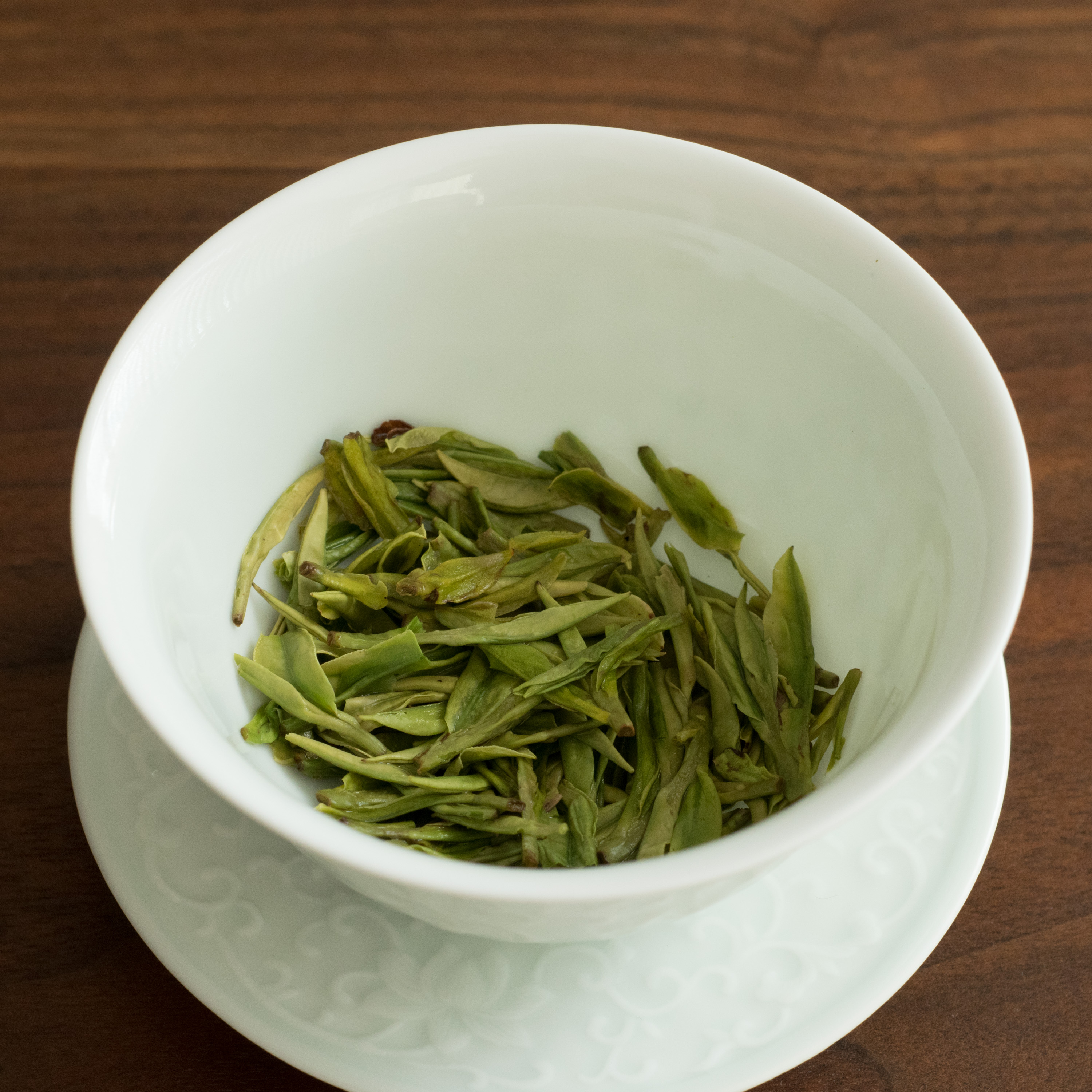
How should Guzhang Maojian be brewed, and why does it not suit excessive force or heat?
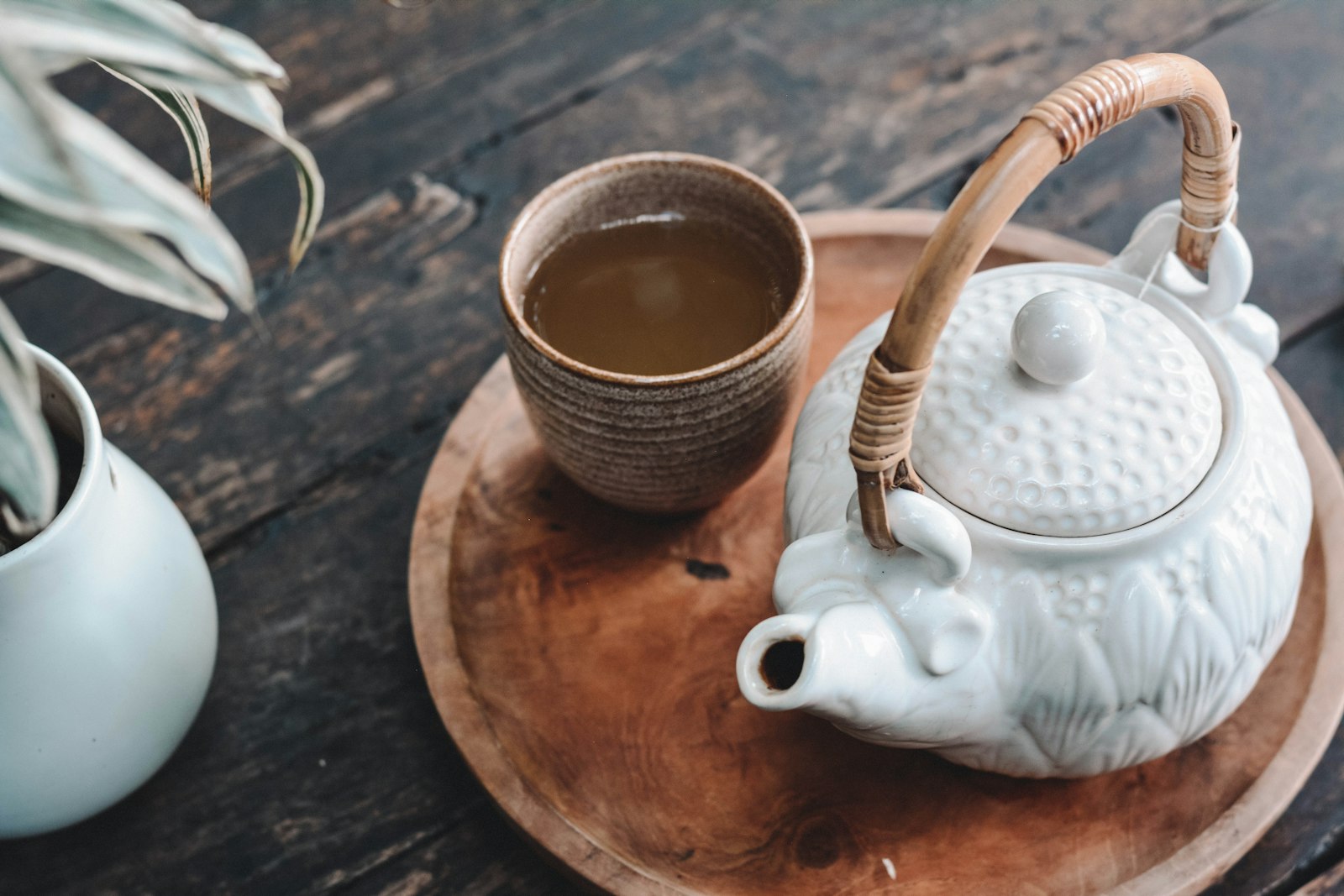
Guzhang Maojian works well in either a glass or a gaiwan. A glass is especially useful for first encounters because one can watch strand unfolding, visible down, and vertical movement. A gaiwan is better for careful comparison between samples. For most examples, a starting temperature around 80°C to 85°C is reliable. It usually does not benefit from immediate high-heat attack with boiling water. The reason is simple: what is most valuable in this kind of tender, downy green tea is clarity, sweetness, mellow body, and mountain cleanliness. If water is too hot or the early infusions are too long, those qualities flatten and bitterness or dryness move forward.
In a gaiwan, about 3 grams of tea for 100 to 120 ml of water is a manageable ratio. The first infusions do not need long steeping. First observe whether the aroma is clean and bright, then whether the liquor feels sweet-bodied rather than thin, and whether the later infusions keep giving a clear return sweetness. In a glass, one may also wet the leaves lightly first and then top up, letting the strands open more slowly. Guzhang Maojian’s real charm does not lie in brewing it “hard.” It lies in brewing it “smoothly”—smoothly enough that, after several cups, the tea still feels clear, orderly, and increasingly mountain-shaped rather than dull, rough, or woody.


What are the most common buying mistakes?
The first mistake is treating every tea with the word maojian in its name as though it should be bought according to the same expectations. Once that mistake is made, everything after it becomes distorted. A reader begins to demand from Guzhang Maojian what properly belongs to Xinyang Maojian, or reads it through the lens of Huangshan Maofeng’s softer elegance. The second mistake is paying attention only to visible down and tenderness while ignoring strand completion and liquor stability. Guzhang Maojian certainly values fine material and visible down, but if a tea has only the surface appearance of tenderness without sweetness, return, and endurance, it has not truly succeeded.
The third mistake is misunderstanding “durable” to mean “anything goes in brewing.” Real endurance depends on both material and craft. It does not mean that harsh, overextracted bitterness proves quality. The fourth mistake is being carried away entirely by history, awards, and geographic-indication prestige while forgetting to judge the tea itself. Those honors matter, but the real buying questions remain simple: are the dry leaves even and clean, are the strands convincing, is the aroma pure, is the liquor mellow and sweet, and does the tea collapse too quickly in the later rounds? In this kind of tea, details are exactly where price and true quality separate.
Why does Guzhang Maojian deserve a place in the tea section?
Because it fills a green-tea branch that many Chinese tea sites still underwrite too lightly: not every important green tea needs massive national pop visibility in order to be structurally significant. Some teas matter because they reveal the horizontal breadth of Chinese green tea more clearly. Guzhang Maojian is one of them. It brings the Xiangxi Wuling mountain expression into the site, showing readers that beyond Jiangnan, Huizhou, and southern Henan, western Hunan also holds a mature and coherent famous-green-tea line.
Even more importantly, it is highly useful for internal comparison with articles already on the site. Compared with Xinyang Maojian, it shows how two teas sharing the word maojian can still point in different directions. Compared with Huangshan Maofeng, it shows the difference between elegant bud-leaf green tea and more line-shaped mountain maojian logic. Compared with Longjing, it pushes readers further away from the misconception that Chinese green tea revolves only around flattened pan-fired bean-chestnut styles. On a bilingual site, this is especially valuable: English readers in particular are often tempted to treat all “maojian” as one generic label, and Guzhang Maojian is an excellent reminder that a shared pinyin word does not mean a shared tea reality.