Black Tea Feature
Why Yingde black tea is more than “Guangdong has black tea too”: from the 1959 trial run, Yunnan large-leaf roots and Yinghong No. 9, to a South China black tea model that works both with milk and as clear tea
Many people first encounter Yingde black tea through a simple reaction: so Guangdong also has a famous black tea. That reaction is not wrong, but it makes the tea too small. What really matters about Yingde black tea is not merely that black tea exists in Guangdong. It occupies a very distinctive place inside the Chinese black tea map. It is not one of those teas that depend mainly on a long classical lineage stretching back through famous imperial-era catalogues. It is instead a modern black tea sample that took shape quickly through the reconstruction of tea production, export strategy, cultivar work, and regional tea industry building in the People’s Republic era. Its fame is not ancient, but its system is clear. Its story is not held up mainly by legend, but by production history, cultivar structure, ecology, process direction, and market use.
That is also why Yingde black tea is easily miswritten in two ways. The first is to describe it as a “Guangdong Dianhong,” as if it were simply a South China copy of Yunnan large-leaf black tea. The second is to describe it as “a black tea made for milk and export,” as if its main function were only to be strong, dark, and useful in blended or milk-based settings. A more accurate reading is this: Yingde black tea is indeed closely tied to large-leaf material, export logic, black broken tea systems, and milk-tea compatibility, but it is not the servant of any one of those labels. It is a modern South China black tea model built out of warm humid ecology, hilly tea gardens, large-leaf introduction and improvement, parallel development of strip tea and broken tea, and successful regional branding.
What kind of tea is Yingde black tea?
Yingde black tea belongs to the Chinese black tea family, and more specifically it stands as a South China black tea representative built through large-leaf resources and the parallel development of modern congou-style strip tea and black broken tea. Today, when people say “Yinghong,” they usually mean black tea centered on Yingde in Qingyuan, Guangdong, and made through the modern Yingde tea-region system of cultivars and processing. Public materials repeatedly point to the successful 1959 trial production as a key moment, and that detail matters because it tells us how to narrate the tea properly: it is not simply a classical tea that survived naturally from old times, but a black tea identity that was deliberately organized, tested, and expanded in modern tea-industry construction.
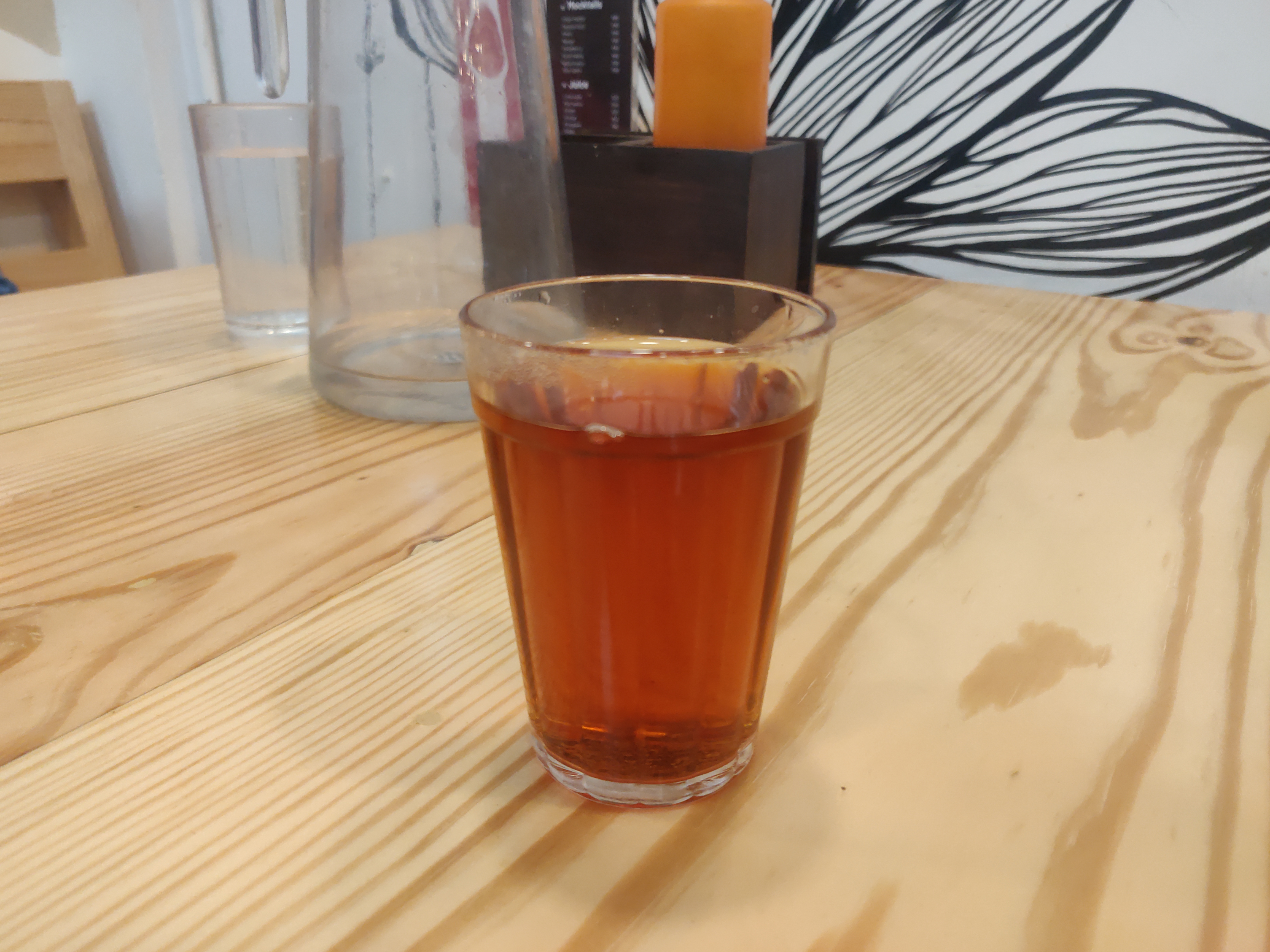
Its most recognizable traits are dark, lustrous leaf, a bright red cup, a taste often described as strong, rich, fresh, and brisk, and at the same time a clear sweetness and some degree of floral or sugar-toned aromatic lift. It is important here not to flatten the language. “Strong” does not automatically mean coarse. “Fresh and brisk” does not mean thin. A good Yingde black tea should be powerful without becoming dirty, thick without becoming dull, sweet without turning cloying, and lively without becoming rough. In other words, its strength lies not in pushing heaviness alone, but in organizing the force, freshness, and brightness of large-leaf black tea into a complete, repeatable, and highly usable product style.
Why is 1959 such a key date?
Because Yingde black tea’s modern identity was largely established from that moment onward. Local industrial material, encyclopedic references, and regional accounts consistently treat the successful 1959 trial production as one of the key starting points for Yingde black tea in modern tea history. This deserves emphasis because it determines the whole narrative frame. Yingde black tea is not the kind of tea that must be validated by tracing an uninterrupted line to some Tang or Song legendary record. It is a tea that was clearly built inside the modern Chinese tea system, with close ties to export demand, cultivar experimentation, technical institutions, and regional promotion. It therefore carries a very strong “modern tea industry project” character.
That does not make it less meaningful. It makes it more meaningful. Chinese tea history is not only a history of classical famous teas. It also includes a major modern history of reconstruction: which teas were reorganized through trade, technology, research, and branding in the twentieth century? Yingde black tea is one of the clearest examples. Its importance lies precisely in the fact that it was “modernly made” and made successfully—so successfully that many later readers forget it is a classic modern tea rather than an ancient one. Explaining this is far more useful than simply saying that Yingde black tea is famous.

How is it related to Yunnan large-leaf material and Yinghong No. 9?
Any serious discussion of Yingde black tea has to pass through cultivar history. Public materials commonly note that the tea’s early success was closely tied to the use and adaptation of Yunnan large-leaf material; later, the region also developed a more locally stabilized cultivar structure in which Yinghong No. 9 became especially prominent. The key point is not to memorize a cultivar list, but to understand why Yingde black tea leans toward the strength, briskness, brightness, and high extractive power often associated with large-leaf black tea. It was not built on the same small-leaf spring-green logic that shaped many Jiangnan teas. It was built on a cultivar system suited to making black tea—especially modern commercial black tea with force and efficiency.
That is also why Yinghong No. 9 later became such a visible name. It allowed Yingde black tea to move beyond being merely a local success that had once benefited from introduced large-leaf material, and to grow a more stable local identity marker of its own. A useful summary for readers today is this: Yingde black tea is not a tea name that stands on one single cultivar alone. It is a whole local system built around large-leaf black tea suitability. In that system, Yunnan large-leaf material provided important historical foundation, while Yinghong No. 9 gradually became one of the most recognizable contemporary symbols.
Why does South China’s warm humid ecology suit Yingde black tea so well?
Yingde lies in northern Guangdong, with hilly and mountainous terrain, abundant rain, warmth, humidity, and the acidic red and yellow soils repeatedly highlighted in public descriptions. Translated into plainer language, this is not an environment suited only to very light, fine, spring green tea logic. It is an environment very well suited to growing tea trees fast, vigorously, and with strong extractive potential, and therefore well suited to the material basis needed by large-leaf black tea. From the beginning, Yingde black tea could move relatively naturally toward a style of thick liquor, bright color, strong taste, and fast release.
But ecology is only the base, not the conclusion. Many regions are warm and rainy without producing a style as stable as Yingde black tea. What Yingde did especially well was to connect this South China ecological potential with modern black tea processing, cultivar screening, and commodity grading. In other words, climate and soil created potential, while the modern tea system organized that potential into a repeatable, recognizable, and marketable product style. Without that second step, “Yingde has good climate” remains only an empty sentence.
Why is Yingde black tea so often summarized as “strong, rich, fresh, brisk”? What do those words really mean?
The phrase “strong, rich, fresh, brisk” appears almost everywhere in descriptions of Yingde black tea, but it is easy to turn into formula language. More concretely: “rich” means the cup has extractive substance and does not feel hollow; “strong” means the taste has structural force and does not collapse easily in hot drinking, quick brewing, milk use, or larger cup formats; “fresh” means it is not only thick and sugary, but still retains some lift and brightness; and “brisk” means it should not feel muddy, stale, or oppressively heavy after swallowing. A really good Yingde black tea does not pull only the “strong” part upward. It keeps all four together.
That is also one reason it performs so well in the market. Many commercially successful black teas can enter mass-consumption settings simply by being rich and strong. But if a tea can also preserve freshness and briskness, it becomes much easier to establish itself at a higher level of drinking. Yingde black tea’s distinctiveness lies in the fact that it has long been more than just “a heavy black tea that can take milk.” Even while leaning toward strength, it tries to preserve brightness, liveliness, and sweet clarity. That makes it more drinkable than many people expect, and more suitable for clear comparative tasting.
What does it actually taste like in the cup?
A good Yingde black tea usually begins with dark, well-made dry leaf; once brewed, the liquor should be bright red and lively. The first impression is usually not that of a fragile floral tea, but of a black tea with real standing power: body, freshness, and unmistakable tea presence. But that force should not be rough. As the cup continues, sweetness should become clearer, floral notes, sugar tones, or ripe-fruit suggestions should rise more obviously through the middle section, and the finish should remain relatively clean rather than muddy or dragging. Its strength lies in being “powerful without being blunt,” not in being aggressive for its own sake.
Average or weak examples often fail in predictable ways. Some are only thick, without freshness, and feel dull. Some are dark in color but not bright, using color to imitate substance. Some smell aromatic from above but taste hollow in the mouth. Some perform adequately with milk, yet seem coarse and flat when drunk plain. That is why Yingde black tea, although often discussed in milk tea and blending contexts, should still be expected to stand up in clear drinking if it is genuinely good. Otherwise it is only a functional black tea, not a complete local black tea.

How does Yingde black tea differ from Keemun and Dianhong?
Once Yingde black tea is compared inside the larger Chinese black tea family, its place becomes much clearer. Compared with Keemun, Yingde black tea usually does not focus as strongly on fine, elegant, inward floral-woody aromatic layering, nor does it depend on the special “Keemun fragrance” type of composite fine aroma for its identity. Keemun often wins through line, refinement, and aromatic subtlety; Yingde more often wins through strength, brightness, briskness, and a more outwardly supported body. Both can be drunk plain, but they move in clearly different directions.
Compared with Dianhong, Yingde black tea is also not a simple copy. Both share kinship with large-leaf black tea logic, and both can show strong body and high extractive power. But Dianhong often leans more toward honeyed thickness, golden-tip aesthetics, and the atmosphere of Yunnan plateau large-leaf tea, while Yingde carries more of the brightness, briskness, and systematized consistency associated with a South China warm-humid black tea region. Put simply, Dianhong is more easily written as “the thickness and sweetness of plateau large-leaf black tea,” while Yingde is more easily written as “the brightness and strength of modern South China large-leaf black tea.” Those are not the same kinds of strength.
Why does it work both for milk tea and for clear drinking?
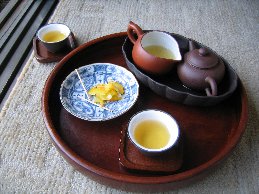
This is one of the most representative things about Yingde black tea. Because it already has enough strength, brightness, and sweet support of its own, it does not easily disappear when placed into milk tea, blending, or large-cup everyday settings. Modern tea consumption likes this kind of black tea that can “carry weight,” and that is one reason Yingde has remained popular for so long.
But if a Yingde black tea works only once milk, sugar, or blending is added, then it has not fully completed its local style. A truly good Yingde black tea should also stand in clear drinking: bright liquor, clean aroma, real entry force, then freshness and sweetness, and finally a clean mouthfeel rather than simple heaviness. In other words, it suits milk tea and blending not because it is crude, but because its structure is complete. Once that is understood, Yingde black tea no longer looks like a flattened industrial tea base, but like a real local black tea in its own right.
How should we understand the common market language around strip tea, broken tea, and golden-tip tea?
Public descriptions of Yingde black tea often mention strip tea, leaf tea, broken tea, fannings, dust, and golden-tip tea all at once. For beginners this can become confusing. A simpler way to understand it is this: Yingde black tea does not exist only as one premium strip-shaped tea. From the beginning it has been deeply tied to modern grading, export systems, and the parallel presence of congou black tea and black broken tea. So what appears in the market is not a single aesthetic, but a whole graded family built around different uses. Some forms are better for clear drinking, others for teabags, blending, or milk tea, and others clearly for gift or premium retail presentation.
“Golden-tip tea” points more toward a higher-end bud-leaf ratio and visually premium expression, while broken tea systems point more toward strength, efficiency, and application setting. These are not mutually exclusive truths. Together they tell us that Yingde black tea has always been a highly modern and highly systematized black tea category. Once this is understood, the more useful question is no longer “which one is the only real Yingde black tea?” but rather: which route inside the Yingde black tea system are we looking at, what use is it built for, and how well is that route completed?
What are the easiest mistakes when buying Yingde black tea?
The first is to assume that “redder color and heavier taste” automatically mean good Yingde black tea. A really good one should be bright red, not merely dark red; strong, rich, fresh, and brisk, not merely thick, bitter, and dull. The second is to judge it entirely through milk-tea logic. Being able to take milk is certainly a strength, but if the tea feels rough and hollow when drunk plain, that tells us it may be more functional than excellent. The third is to blur all “Guangdong black tea” together and treat it as Yingde black tea. Yingde has a distinct origin, system, and accumulation of brand identity.
The fourth is to treat Yinghong No. 9 as a universal answer. It matters greatly, but it does not replace real cup judgment. The real questions remain whether the aroma is clean, the liquor bright, the taste strong without turning dull, and the finish brisk. The fifth is to compare Yingde, Keemun, and Dianhong using a single aesthetic ruler. Keemun’s refinement, Dianhong’s honeyed thickness, and Yingde’s bright brisk strength are different routes by definition. If one compares only “which is more fragrant,” “which is sweeter,” or “which has more golden tips,” the most important part of Yingde black tea will often be missed.
Why does Yingde black tea deserve to be a key tea-section article?
Because it fills in the modern line of Chinese black tea history. The site already has many pieces that help readers understand classical famous teas, traditional mountain origins, and older craft logic. But without Yingde black tea, it becomes much harder to see that Chinese black tea did not grow only inside ancient catalogues. It was also reorganized in the mid-to-late twentieth century through research, cultivar work, export systems, and modern branding. Yingde black tea is one of the clearest examples of that process. It is not a “classical survival,” but a “modern formation.” That does not make it lighter. It makes it more revealing of how modern Chinese tea actually works.
It also naturally deserves a bilingual treatment. Chinese readers often enter through regional fame, the phrase “home of Chinese black tea,” or Yinghong No. 9. English readers are more likely to enter through strong Chinese black tea, tea with milk, export black tea, or modern Guangdong black tea. No matter which entrance is used, the core structure should stay identical: Yingde black tea is a modern Chinese black tea sample that rose quickly after 1959, depends on South China warm-humid ecology and a large-leaf cultivar system, takes “strong, rich, fresh, brisk” plus bright sweet liquor as its core style, and works both in milk/blending contexts and in clear drinking. As long as that spine stays aligned between Chinese and English, the page becomes a stable bilingual bridge rather than two unrelated articles.
Source references
- Chinese Wikipedia: Yingde black tea
- Baidu Baike: Yingde black tea
- Synthesized public regional industry and geographical-indication material covering the 1959 trial production, Yingde ecological conditions, the relationship to large-leaf material and Yinghong No. 9, the parallel strip-tea and broken-tea system, the “strong, rich, fresh, brisk” style line, and export-oriented applications.