Oolong Tea Feature
Baozhong is not just a “light fragrant oolong”: from Wenshan history and strip shape to bruising logic, floral lift, and aroma carried by the liquor
If Tieguanyin often serves as a drinker’s first image of southern Fujian rolled oolong, and if the broader oolong overview often carries the modern imagination of Taiwan tea as clear, lifted, floral, and polished, then Baozhong—especially the form most people now picture as Wenshan Baozhong—stands in a more delicate position. It is well known, yet often dismissed with the phrase “it’s just a lighter, more fragrant oolong.” It is representative, yet it does not always arrive with the same loud symbolic force as Tieguanyin or Wuyi rock tea. Its value is often not that it shocks on the first sip, but that it organizes floral lift and liquor texture into a fully coherent lightly oxidized strip-shaped oolong.
That is exactly why Baozhong deserves a full article of its own. At first glance it seems easy to explain: aromatic, lightly oxidized, strip-shaped rather than rolled into balls, and commonly grouped under the vague heading of “Taiwan fragrant oolong.” But those are only surface-level descriptions. Baozhong becomes important because it gathers several key questions in oolong into one place: where the name came from, why it carries both a Fujian background and a later Taiwan-based redefinition, why it remains a strip-shaped tea rather than a rolled one, why it is praised for floral aroma but cannot live on aroma alone, and why a good Baozhong must be judged by whether the fragrance actually enters the liquor, whether the liquor has enough inner structure, and whether the later infusions fall apart or stay composed.
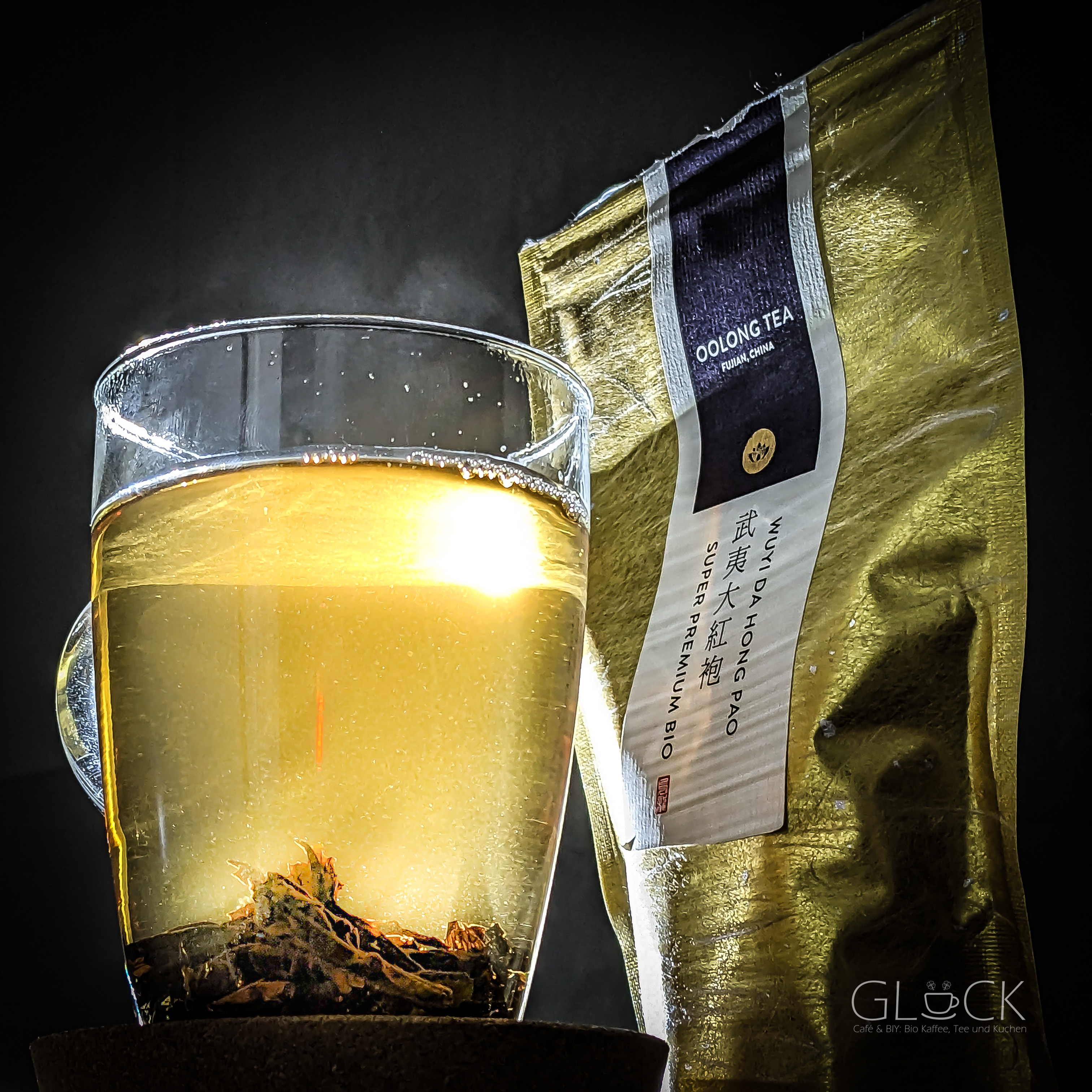
What kind of tea is Baozhong, and why is it both part of oolong and something often discussed on its own?
In the broad Chinese tea framework, Baozhong belongs to the oolong family, meaning it sits within the larger category of qingcha or blue-green tea. More specifically, when people now talk about “Baozhong,” they are often referring to the Taiwan route—especially associated with northern Taiwan and Wenshan—that emphasizes a strip-shaped form, light oxidation, and strong aromatic expression. The reason the name feels more layered than many straightforward tea labels is that from the beginning it was not only the name of one mountain, one cultivar, or one fixed finished product. It also carried meanings connected to packaging, trade circulation, processing method, and regional redefinition.
In other words, Baozhong is not a thin name reduced to flavor alone. It deserves separate discussion not only because Wenshan Baozhong is now widely treated as a major Taiwan tea, but because it sits at an especially useful explanatory point inside oolong knowledge. It helps readers understand how a lightly oxidized oolong can become complete rather than hollow. It shows that “fragrant” does not mean “weightless.” It relates both to older Fujian trade and processing history and to the later local shaping of tea identity in northern Taiwan. For newer readers, Baozhong is a particularly good branching point: from it one can understand lightly oxidized strip-style oolong more clearly, and one can also better see why Baozhong, Tieguanyin, Dong Ding, and high mountain Taiwan oolong should not be collapsed into one blurry idea.
Where does the name “Baozhong” come from, and why does it connect both Fujian and Taiwan history?
A common explanation in public sources is that the name Baozhong is linked to older packaging and trading practice: finished tea was wrapped into measured square packets, with the tea name and merchant mark printed on the outer layer, and “Baozhong” gradually became the label for a tea with a recognizable commercial and processing identity. This origin matters because it shows that Baozhong was never only a mountain-origin name. From the start it was entangled with markets, transport, finishing work, and packaging style. That already makes it different from many teas whose names rest almost entirely on place.
From there, Baozhong also became tied to the historical movement between Anxi and Fuzhou in Fujian and northern Taiwan. Publicly available references commonly note that Baozhong-style making is closely connected to the transmission of technique by Fujian tea merchants and tea makers, while the Taiwan version of Baozhong matured gradually from the late Qing into the Japanese colonial period, especially around Wenshan, Pinglin, Shenkeng, and Xindian in the greater Taipei region. For that reason, Baozhong should not be described as a tea that emerged in isolation inside Taiwan alone. But it is equally inaccurate to stop at the simple phrase “it came from Fujian.” The more precise understanding is that Baozhong carries a Fujian technical and trading background while also being re-formed and stabilized in northern Taiwan. Both layers matter.
Why did Wenshan Baozhong become the most representative modern image of Baozhong tea?
Because in contemporary tea language, Baozhong usually means Wenshan Baozhong first. Its representative status does not come only from name recognition on a map, but from the fact that it gathers the most recognizable traits of this tea route into one stable model: strip-shaped leaf, lifted floral aroma, light oxidation, bright liquor, and a sweet, smooth taste that is not heavy. The importance of “Wenshan” here is not simply that it marks a famous place. It marks the area that most successfully fixed the way modern drinkers imagine what Baozhong is supposed to be.
That is somewhat similar to the way Anxi shapes the image of Tieguanyin or Wuyi shapes the image of rock tea, but it is not exactly the same. Wenshan Baozhong is representative largely because it has become a stylistic standard. When people say what Baozhong should look and feel like, they usually mean that strip-shaped, lightly oxidized, floral-lifted expression associated with Wenshan. In that sense Wenshan Baozhong is not only a tea. It is also a measuring point. And precisely because it became that measuring point, readers need to avoid a common mistake: not every lightly oxidized floral oolong is “basically Wenshan Baozhong.” To understand Wenshan Baozhong properly is to see the specific craft and flavor logic that makes it distinct.
Why does Baozhong remain strip-shaped? The difference from rolled oolong is not just visual
One of Baozhong’s clearest visual traits is that it usually appears as a twisted strip rather than a tightly rolled ball. Many first-time drinkers treat this as a simple styling difference: one tea is rolled, the other is not. But in oolong, shape is never merely cosmetic. It is tied to shaping method, extraction rhythm, the way aroma is released, and even the way a drinker is supposed to “read” the tea in the cup.
The advantage of strip-shaped Baozhong is that the relationship between aroma and liquor often appears more directly, and the tea’s true completion is exposed earlier. Rolled oolongs, because the leaf is tightly wrapped and compressed, tend to unfold across several infusions; many details emerge step by step. Strip-shaped Baozhong, by contrast, often shows its aromatic direction, liquor framework, and bruising level relatively early. That means it is harder for the tea to hide behind shape or slow release. Good Baozhong will tell you quickly whether its floral aroma is clean, whether fragrance has actually entered the liquor, and whether there is enough sweetness and inner structure to carry that aroma. For that reason, strip form is not a decorative survival from the past. It is part of Baozhong’s style mechanism.
What is the core craft logic of Baozhong, and why does bruising almost determine whether it has a soul?
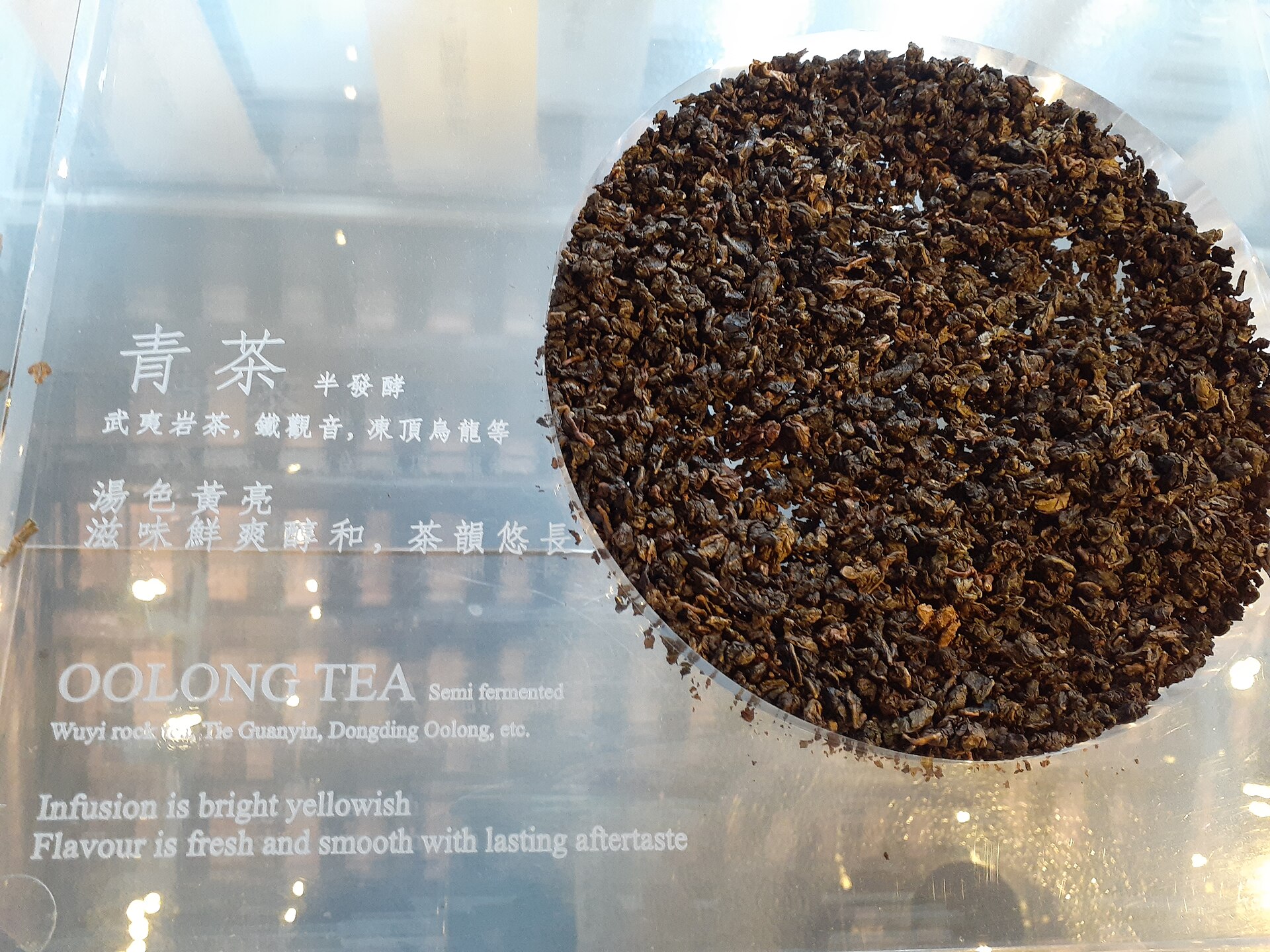
Baozhong is a lightly oxidized oolong, so its broad processing path includes withering, bruising and resting, fixation, rolling, and drying. As with many other oolongs, the most important step—and the one that most clearly separates better tea from weaker tea—is still the stage broadly described as doing qing, or bruising the leaf in a controlled rhythm. This is not one single action. It is a sequence of observation, movement, rest, and renewed judgment. The maker must decide when the fresh leaf has moved away from a raw green state and toward floral lift, gentle ripeness, and softness—then decide when to stop before the tea loses its life.
This is especially difficult in Baozhong because the tea aims to be “light” without turning “thin,” “clear” without becoming “floating,” and floral without becoming merely perfumed. If bruising is too light, the tea may show raw greenness, superficial fragrance, and a hollow mouthfeel. If bruising goes too far, Baozhong may lose the lifted delicacy that defines it and become dull, stuffy, or overly mature in feel. The real skill of Baozhong does not lie in making the tea as aromatic as possible. It lies in lifting aroma to exactly the right height while making sure it settles firmly into the liquor. The finest Baozhong is often not the one that smells the loudest in the lid. It is the one in which aroma, liquor, returning sweetness, and later-round composure never disconnect from one another.

Baozhong is often described as an aroma-driven tea, but is its quality really just about floral fragrance?
No. Baozhong certainly values aroma, and excellent examples often do show very clear, elegant, lifted floral notes. That is one reason the tea is easy to recognize and easy to love. But if Baozhong is reduced to “good because it smells nice,” then half of the tea has already been lost in translation. For any oolong, a big difference remains between smelling fragrant and actually becoming complete in the cup. One has to ask whether the fragrance is clean, natural, and integrated with the liquor rather than hovering only in the nose.
What makes Baozhong especially appealing is that it demands unity between floral fragrance and what Chinese drinkers often call “water aroma”—in other words, aroma that is carried by and inseparable from the liquor itself. This is not just a matter of saying “the tea liquor also smells a bit fragrant.” It means that aroma, mouthfeel, sweetness, and aftertaste travel on one line. Good Baozhong makes floral lift feel built into the tea’s texture: bright in the front, gently sweet in the middle, and still leaving a soft return in the finish. Weak Baozhong often fails in one of two ways: it smells beautiful but tastes empty, or it has some body but the aroma is coarse, dull, or muddy. So Baozhong is not a “tea perfume” style of oolong. It is a tea that tests whether aroma and liquor can truly become one thing.
What should Baozhong generally smell and taste like?
Good Baozhong usually shows a lifted, delicate, floral-leaning aromatic profile. Drinkers may associate it with orchid-like, gardenia-like, clear sweet floral notes, or a very light ripe-fruit impression, but the point is not to force every sample into one fixed flower name. The real question is whether the aroma feels clean, bright, natural, and unforced. In the cup, the ideal Baozhong is often bright and clear, smooth on entry, and neither watery nor oppressive. Its excellence usually does not come from great heaviness. It comes from maintaining order among lightness, softness, cleanliness, and fragrance.
If one breaks that drinking experience down further, good Baozhong tends to do several things at once: first, the opening aroma rises clearly without turning sharp; second, the middle of the cup receives and carries that aroma rather than letting it hover outside the liquor; third, the finish leaves a natural sweetness rather than collapsing the moment the headline fragrance fades. It differs both from roast-centered oolongs that rely more on structure and from rolled high mountain styles that open more slowly and roundly. Baozhong is more like a tea that demands clean lines: a line of aroma, a line of liquor, and a line of aftertaste, all fine but unbroken. High-quality Baozhong is often not aggressive. It is simply very clear and very composed.
How is Baozhong different from Tieguanyin and high mountain oolong? Why can’t they all be grouped as “fragrant oolong”?
This is one of the most important points in understanding Baozhong. Many drinkers place Baozhong, lighter-style Tieguanyin, and Taiwan high mountain oolong into one loose basket of “fragrant oolong” because all may show floral notes, relatively bright liquor, and a style not centered on heavy roast. But once one stops there, the real distinctions disappear. Baozhong is defined in part by strip shape, light oxidation, and the need to unify lifted aroma with liquor texture. Lighter-style Tieguanyin still usually belongs to the southern Fujian rolled-oolong logic of compression, ball shape, and gradual unfolding across multiple infusions. High mountain oolong often places stronger emphasis on mountain environment, altitude-driven freshness, sweetness, and a rounder internal structure that opens more slowly.
Put bluntly, Baozhong is not “Tieguanyin that was not rolled into balls,” and it is not “high mountain oolong from lower elevations.” It has its own standards. One cannot judge it only by asking whether it is aromatic. One must also ask whether the strip form supports the intended processing route, whether the liquor is clear without going empty, and whether the finish stays stable. Its difference from Tieguanyin often lies in how aroma is organized, how the leaf is shaped, and how the tea unfolds in time. Its difference from high mountain oolong often lies in the fact that it does not rely on the mountain-coolness plus ball-shaped slow-release model, but on the more direct and clearly drawn expression of a lightly oxidized strip-style oolong. If all of these teas are collapsed together, readers may assume that “fragrant” is merely one flavor axis, when in fact the underlying craft and aesthetics differ sharply.
How should Baozhong be brewed if the goal is to judge its real completion?
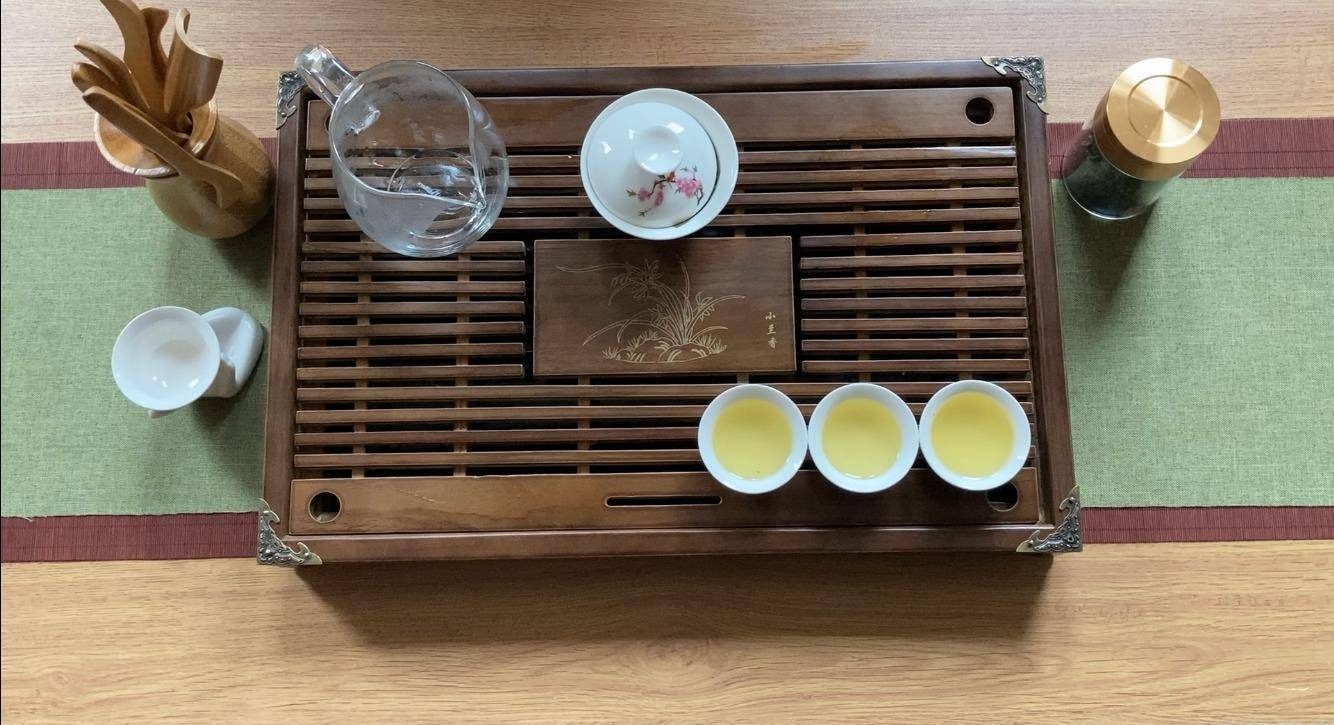
Baozhong works well in a gaiwan or small pot. The point is not ceremony for its own sake, but the fact that these vessels make it easier to judge whether the tea’s aroma and liquor are truly unified. In practice, around 5 grams of dry leaf for 100 to 120 milliliters of water is a reasonable starting point. Water close to boiling, or slightly below, often works well, with small adjustments made according to the tenderness and style of the leaf. Because Baozhong’s strip form tends to reveal information relatively early, the first few infusions should not be dragged too long. Let the tea show floral lift, clarity, and inner structure in sequence rather than forcing it into heaviness from the beginning.
The most important question in brewing Baozhong is not how spectacular the first infusion smells, but whether the tea falls apart between the early, middle, and later rounds. If the first cups show aroma but no body, completion is probably weak. If the middle cups still smell good but the liquor thins out, the tea lacks internal support. If the finish turns diffuse and leaves only empty sweetness, the tea is not truly whole. Baozhong is therefore best read across several infusions: does the fragrance enter the liquor, does the liquor carry it, and does the finish still gather itself? The best Baozhong is not a tea that peaks in the first infusion and survives on memory afterward. It becomes clearer as it is brewed, proving that it is light without being thin, aromatic without floating away.
What are the most common buying mistakes with Baozhong?
The first mistake is to equate stronger fragrance directly with higher quality. Baozhong absolutely values aroma, but more fragrance does not automatically mean better tea. Some samples smell dramatic, lifted, and attention-grabbing at first, but taste hollow and fade quickly. Those are not necessarily well-finished teas. The second mistake is to treat greener color and prettier strip shape as absolute proof of quality. Appearance matters, of course, but Baozhong has never been only about looking refined. The real question is whether that visual neatness turns into a liquor that is clean, sweet, and continuous.
The third mistake is to assume Baozhong is mainly a tea for smelling rather than a tea for serious drinking. In fact, Baozhong is one of the teas most damaged by being judged only through aroma. Its real skill lies in whether scent and liquor truly join. The fourth mistake is to treat all lightly oxidized Taiwan oolongs as interchangeable and ignore the differences between Baozhong, ball-shaped high mountain oolong, and other lighter Taiwan styles. The fifth mistake is to confuse “light” with “thin.” Great Baozhong is light yet articulate, light yet structured. Once these misunderstandings are removed, a drinker’s judgment becomes far more stable than the quick verdict of “it smells nice.”
Why does Baozhong deserve a dedicated place in the tea section now?
Because even if several major oolong routes are already visible in the tea section, the internal map of oolong still feels incomplete without Baozhong. Names like Tieguanyin, rock tea, and Dancong are so strong that readers can easily assume the oolong world is divided only into southern Fujian rolled tea, Wuyi strip tea, and highly aromatic Dancong. Baozhong provides another crucial node: it shows that a lightly oxidized strip-shaped oolong can have a full, rigorous, and highly typical expression of its own without being treated as a side note under some louder famous tea.
More importantly, Baozhong functions well as a connector inside the site’s oolong knowledge structure. It naturally answers back to the general oolong article, and it also creates useful lateral comparison with Tieguanyin and Taiwan high mountain routes. Through that comparison, readers can finally see why teas that all belong to oolong and may all show floral lift still separate into distinct branches with different shaping logic, drinking rhythm, and flavor priorities. Adding Baozhong to the tea section is not merely adding another famous tea article. It fills one of the most easily overlooked yet structurally important explanation points in the wider oolong map.
Source references
- Chinese Wikipedia: Baozhong tea
- Baidu Baike: Baozhong tea
- General synthesis of public Chinese-language tea references on the name origin of Baozhong, the Wenshan production context, lightly oxidized strip-style oolong processing, and sensory judgment.