Wuyi Rock Tea Feature
Why Baijiguan is so often misunderstood: not just a pale Wuyi tea, but one of the clearest expressions of freshness and returning sweetness among the famous Wuyi bushes
If Rougui, Shuixian, and the various famous cliff sites dominate most current online discussion of Wuyi rock tea, Baijiguan often sits in an awkward place. Almost everyone with some basic yancha knowledge has heard of it as one of the traditional Wuyi famous bushes, yet far fewer people have actually drunk it carefully, written about it carefully, or learned to distinguish it with confidence. Its name is memorable, even more legendary-sounding than many ordinary mingcong cultivars. Its shoots are visually distinctive too, often described as pale green with yellowish or even whitish tones. But once people move from recognition to buying and drinking, Baijiguan is often pushed into one of two bad simplifications: either it gets dismissed as merely a paler, lighter, weaker rock tea, or it gets inflated into a story-heavy rarity whose legend matters more than the cup. The real point is neither of those. Baijiguan is not just a name preserved by folklore, and it is not a tea that can be summarized away as simply “light.” What makes it worth studying is how, inside a Wuyi yancha world usually dominated by the sharpness of Rougui, the depth of Shuixian, and the composite prestige of Da Hong Pao, it opens a different path—clearer, fresher, sweeter, and therefore easier to misread.
That is also why Baijiguan deserves its own place in this tea section. It helps readers see something fundamental: Wuyi rock tea is not limited to one aesthetic built around heavier roast, deeper body, and obvious rocky force. Even within the traditional Wuyi famous-bush lineage, some teas are especially good at preserving freshness, brightness, and quick returning sweetness beneath the usual yancha craft logic. Baijiguan is one of the clearest examples of that route. Writing it properly does not just add one more famous-bush profile. It shows readers that yancha is not a single race toward darker, heavier, more expensive expression. Some famous bushes matter precisely because they demonstrate how a tea can remain vivid, clean, and sweet while still being unmistakably Wuyi rock tea.
What exactly is Baijiguan, and why does it look so unlike the “mainstream” idea of Wuyi rock tea?
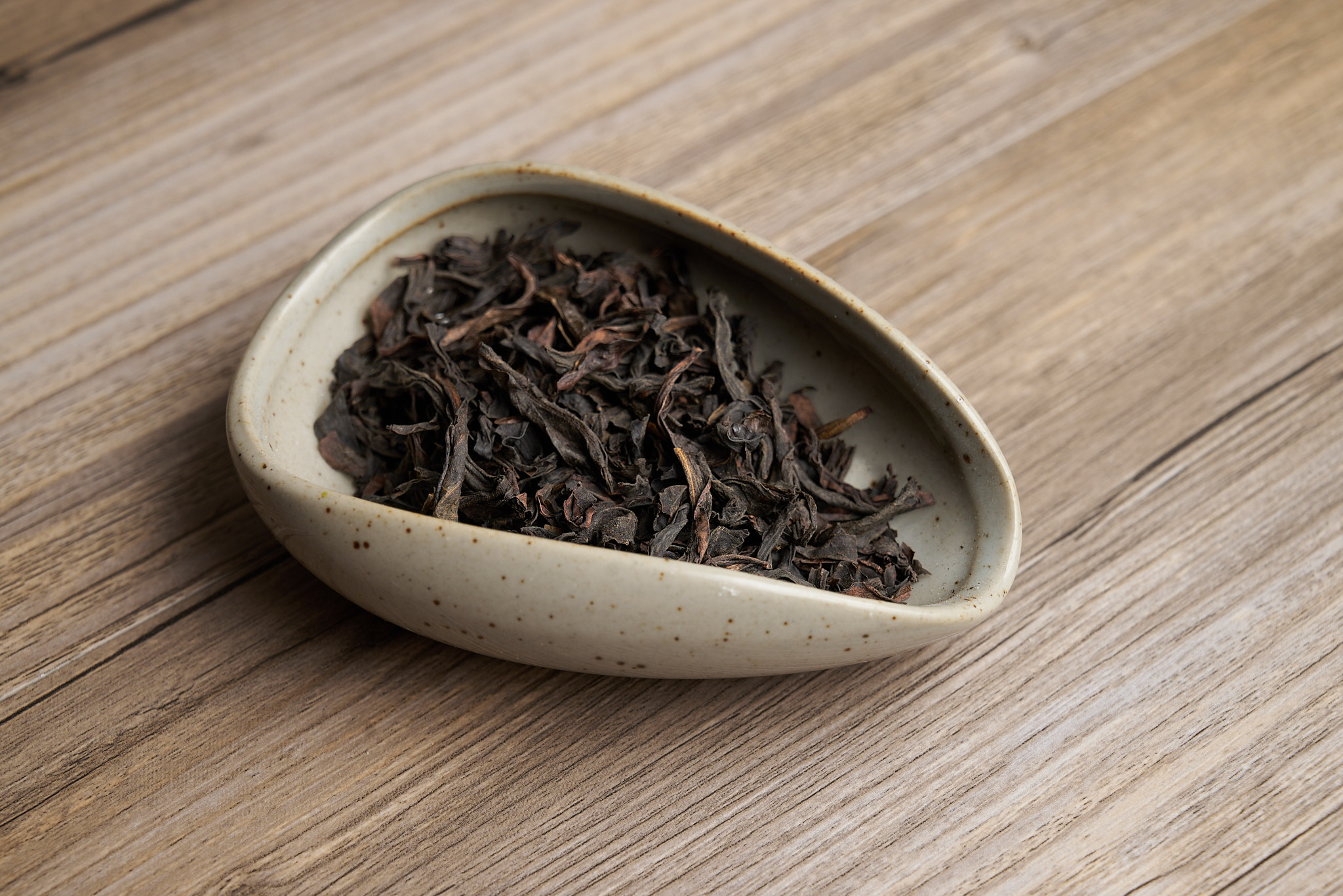
Baijiguan belongs to the Wuyi rock tea system as a traditional famous bush, often listed among the well-known historic Wuyi mingcong names and sometimes discussed alongside Da Hong Pao, Tie Luohan, Shui Jin Gui, and Ban Tian Yao. First and foremost, it is a Minbei oolong made within the standard Wuyi yancha craft framework, not some separate oddity outside rock tea processing. That point matters. It still depends on plucking, bruising, oxidation control, fixation, rolling, and roasting in recognizably Wuyi fashion. Its appeal also still depends on mountain site, roast handling, and aftertaste. It simply expresses those things in a way that looks lighter and brighter than what many readers expect from rock tea, so it is pushed toward the margins at first glance.
That sense of being “un-mainstream” begins with the plant itself. Public reference material repeatedly notes that Baijiguan’s new shoots and tender leaves are unusually pale, often light green with yellowish tones and sometimes with a distinctly whitish look at certain stages. That trait is part of why the name remained so visually persuasive over time. It is also considered a relatively late-sprouting cultivar, which pushes its harvest window later than many other well-known varieties. Inside the yancha world, that already places it at a slight angle to the familiar expectation of dark, deep, roasted power. Many beginners therefore mistake it for an underfinished tea or assume that its paler look means weak internal material. But that is exactly the misunderstanding worth correcting. Baijiguan is not unfinished. It simply aims for a different kind of completion—one built less on heaviness and more on freshness, sweetness, clarity, and continuity into the aftertaste.
Why is it called Baijiguan? Is the name about legend, or about the plant itself?
Like many traditional Wuyi famous bushes, Baijiguan carries a lot of legend. The Wuyi mingcong world is full of stories, and Baijiguan is no exception: cockscomb imagery, cave references, Daoist associations, old mountain anecdotes. These narratives remain alive in local culture and tourism. But if one turns any single story into unquestioned historical fact, the writing quickly loses discipline. A steadier interpretation is that the name has long been tied to the appearance of the shoots themselves. Public summaries usually explain that the pale, slightly yellowish young leaves and distinctive shoot form were thought to resemble the crest of a white rooster, hence the name. In other words, the tea’s naming history certainly carries cultural storytelling, but it is not a purely invented marketing label detached from the plant’s visible traits.
For an editorial site, the more useful framework is simple. First, Baijiguan is a stable traditional Wuyi name rather than a recently manufactured market concept. Second, its name is clearly linked to recognizable shoot and leaf features. Third, many folk narratives surround it, but no single legend should be written as uncontested fact when public accounts vary. That approach keeps the local cultural atmosphere without allowing folklore to overshadow the tea itself.
Why are Baijiguan’s leaves so pale and yellowish, and how does that shape the cup?
One of Baijiguan’s most striking traits is the unusual color of its shoots and young leaves. Public sources often describe them as pale green, slightly yellow, green tinged with white, or even distinctly yellowed at the newest stage, and they commonly explain this through a strong light-sensitive cultivar character. Ordinary readers do not need to memorize every technical term, but they do need one crucial point: Baijiguan’s pale, whitish, or yellow-green look is not evidence that something went wrong in processing. It is part of the cultivar’s identity. That matters because many people encountering Baijiguan for the first time immediately wonder whether the pale color means weak craft or incomplete finishing.
This trait also helps explain why Baijiguan so often leans toward freshness, sweetness, and a cleaner style of expression. Public summaries often mention relatively high amino-acid content and comparatively lower tea-polyphenol levels, and that picture matches how the tea is often experienced by drinkers. Good Baijiguan can feel quick in freshness, low in aggressive bitterness, and fast to return sweetness after swallowing. That does not mean it lacks yancha structure. It means its rock-tea emphasis falls on a different line. Instead of starting with weight and pressure, it often starts with clarity and freshness, then slowly pushes sweetness, resonance, and aftertaste upward from there.
What does Baijiguan actually taste like? Why do some people call it fresh while others say it is “not rocky enough”?
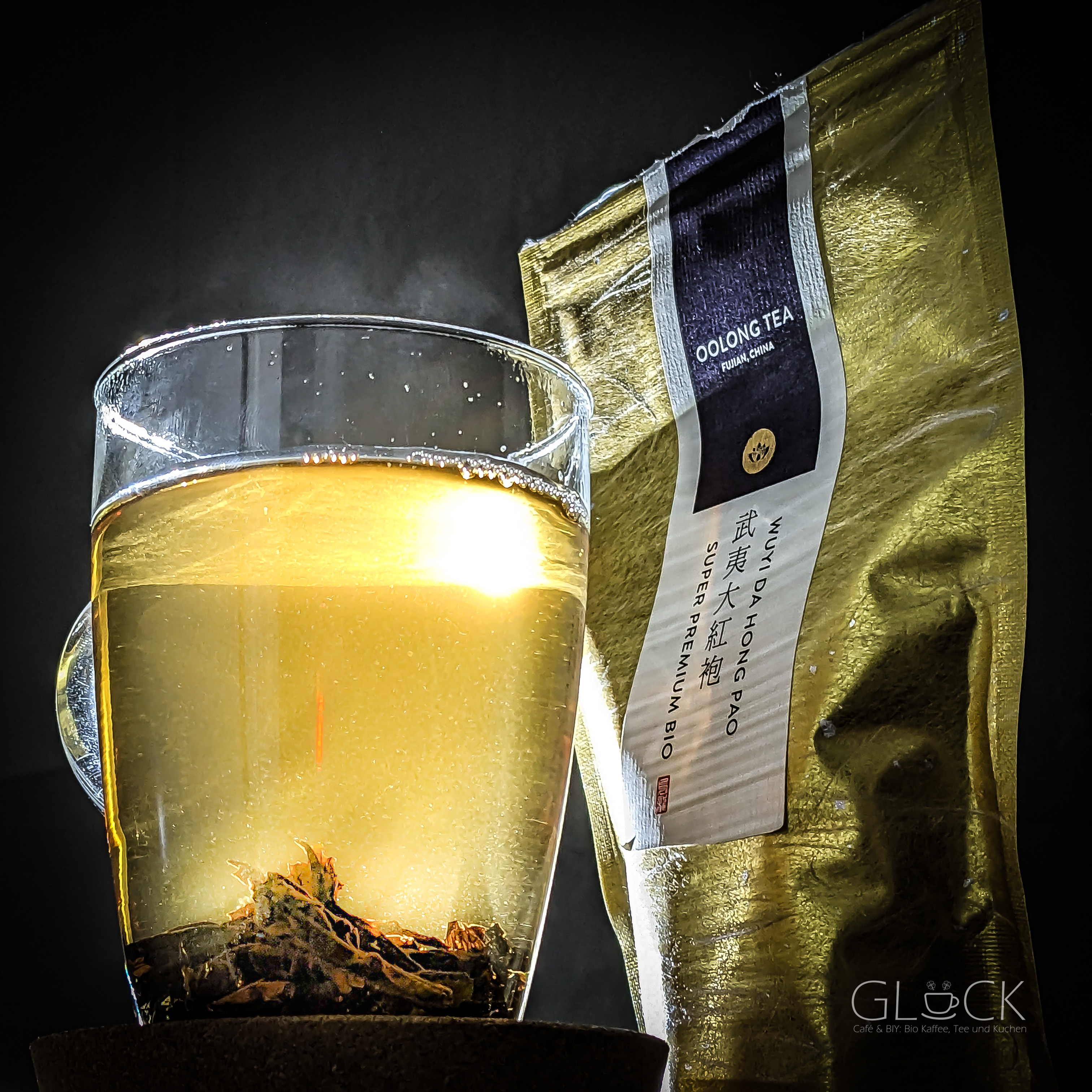
A well-made Baijiguan usually does not announce itself through explosive force. Its first impression is often one of cleanliness. It rarely attacks attention in the way top Rougui can, with sharp spice and obvious aromatic penetration, and it does not always unfold with the slow woody depth of mature Shuixian. Instead, its more typical strengths are fine, elongated aroma, bright orange-yellow liquor, a fresh and sweet entry, and a relatively quick rise of returning sweetness along the cheeks and gums. Within the Wuyi world, it is one of the famous bushes most likely to turn freshness itself into a point of identity.
That is also why it is so easily misunderstood as “not rocky enough.” Often the problem is not the tea but the drinker’s internal template for what yancha should be. Many people assume that only darker roast, heavier body, stronger wood notes, and deeper aftertaste qualify as real Wuyi rock tea. Baijiguan does not reject that structure so much as express it in a brighter, lighter, more transparent way. Good Baijiguan should not be merely pale. Its freshness should not feel empty, its sweetness should not feel like sugared water, and its body should not collapse into thinness. The right structure is something like “fresh first, then sweet; clear first, then long,” not “light at the beginning and gone immediately after.” If a sample gives only brightness and no depth, that is a weak tea—not evidence that the cultivar itself is inherently flimsy.
How does Baijiguan differ from Rougui and Shuixian?
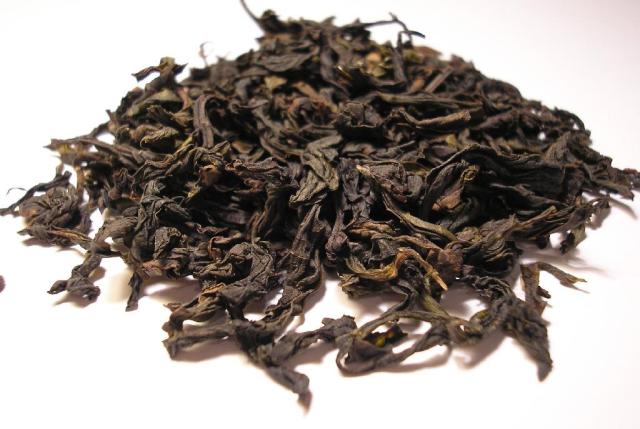
If Baijiguan is placed on a practical Wuyi tasting map, Rougui and Shuixian make the best contrasts. Compared with Rougui, Baijiguan usually has less aromatic aggression and less obvious front-stage expression. Rougui tends to establish itself quickly through lid aroma, spice, and early-cup intensity; Baijiguan is more likely to feel cleaner, finer, and less explosive while drawing attention to freshness and the connection into returning sweetness. Compared with Shuixian, Baijiguan usually has less woody heaviness, less bushy depth, and less of that slow thickening in the middle and late infusions. Shuixian often stores much of its drama in the back half; Baijiguan more often leads with brightness and quicker sweetness.
In that sense, Baijiguan can be read as one of the clearer-line famous-bush routes inside Wuyi yancha. It is not a lower-powered Rougui, nor is it a lighter imitation of Shuixian. It is a different plant personality altogether. If readers keep asking whether it smells enough like Rougui or feels thick enough like Shuixian, they will misjudge it from the start. The more useful question is whether it succeeds at freshness, sweetness, clarity, and length all at once, and whether that relatively bright profile still leaves enough structure and aftertaste to feel complete as rock tea.
Why does mountain site still matter so much? Is Baijiguan also tied to the inner-mountain logic of Wuyi?
Absolutely. Baijiguan may look fresher and lighter, but it still belongs squarely to the Wuyi rock tea world, and mountain site matters just as much for it as for Rougui or Shuixian. Public materials usually connect it to the inner-mountain or cliff-zone areas of Wuyishan, often mentioning places such as Yinping Peak, Bat Cave, or Huiyuan contexts in historical narrative. For general readers, the key point is not memorizing place names. It is understanding that Baijiguan does not become good everywhere in the same way. The better the mountain setting, the more clearly it can express the freshness, fine aroma, and quick returning sweetness that define its best versions. When site quality is weaker, or leaf material is less stable, Baijiguan can quickly feel light, scattered, and short, and then people wrongly conclude that the cultivar itself is weak.
This is one reason Baijiguan is harder to make and harder to buy well than many people assume. The more a tea depends on freshness and clarity, the more it needs clean underlying material and the less room it has for crude craft. Rougui can sometimes mask small weaknesses with aromatic drama, and Shuixian can sometimes hold itself together through body and roast. Baijiguan often has less tolerance. For it to succeed, site quality and processing need to cooperate cleanly. So although it is often described as a lighter-style tea, it is not at all an easy one.
How is Baijiguan picked and made? Why is it not simply a matter of using lighter roast?
Public references commonly describe Baijiguan as a relatively late-sprouting cultivar, with spring picking usually later than many other major Wuyi varieties and with leaves harvested around a small-to-medium open-face standard, often one bud with two or three leaves. That already tells readers something important: this is not a tea built purely on very tiny tender buds. Once it enters processing, however, it still follows core Wuyi logic. Bruising and oxidation control must remove raw greenness while preserving freshness. Fixation and rolling have to define the leaf. Roasting then determines whether the tea finishes as fresh and clear, or pale and empty. Many drinkers see the brighter style and assume Baijiguan must only be lightly roasted, or barely roasted at all. That is too crude. Baijiguan certainly cannot tolerate a roast that smothers its best freshness and sweetness. But if the roast is too light and too loose, it is equally likely to leave green notes, floating aroma, hollow liquor, and a weak finish.
So the real difficulty is not “light roast,” but “light roast with boundaries.” Good Baijiguan roasting should gather the freshness inward, organize the sweetness, and bring the clean aromatic line into the liquor rather than leaving it on the leaf surface. This is exactly where the tea overturns many lazy assumptions about yancha. Heavier fire is not automatically more skillful, and lighter fire is not automatically more refined. The question is whether roast helps the cultivar say what it is capable of saying. In Baijiguan’s case, that strength has never been brute force. It is the ability to make a clearer, fresher, sweeter line feel complete.
Why is Baijiguan both over-romanticized and often overlooked in the market?
Because it occupies two unstable positions at once. First, it has famous-bush status, an unusual name, and a rich halo of stories, so it is easy to romanticize. Once sellers begin emphasizing words like traditional mingcong, rarity, Daoist tea, old bushes, or inner-mountain core sites, Baijiguan becomes very easy to narrate upward. Second, its actual drinking style is not built around brute force, so many first-time drinkers feel underwhelmed if they expected instant drama. They then turn back toward the louder edges of Rougui or the heavier gravity of Shuixian. The result is a curious split: Baijiguan gets lifted very high in storytelling while being skipped over in real buying and drinking.
That tension is exactly why it needs editorial calibration. It should not be written as “the most legendary therefore the best,” but neither should it be reduced to “the cleaner and lighter therefore the weaker.” The more accurate frame is that Baijiguan is a cultivar with strong internal identity, low tolerance for bad craft, and a style that does not depend on obvious heaviness to prove itself. Once readers understand that, it becomes much easier to see why some drinkers become deeply loyal to it. Not because it is merely rare, but because it offers a refined freshness-based yancha aesthetic that few other famous bushes express in the same way.

How should Baijiguan be brewed so it does not end up tasting merely pale?
Baijiguan works especially well in a gaiwan when one wants to follow its development. Around 7 grams in a 110 ml gaiwan is a stable starting point. Water can be near boiling, but the first few pours should stay quick so the tea unfolds in order rather than being forced into bitterness or coarse texture. Because Baijiguan’s strengths lie in the balance of freshness, sweetness, clarity, and length, one of the worst ways to brew it is to oversteep it immediately and flatten that balance into roughness. When that happens, drinkers often conclude that Baijiguan proves its own weakness, when in fact the brewing method has destroyed exactly what it does best.
A better reading goes in stages. In the first two or three infusions, look for aroma that is clear but not floating, and liquor that is bright but not thin. In the middle phase, ask whether sweetness and returning salivation begin to rise. In the back half, ask whether the tea can remain clean. A good Baijiguan is not necessarily loud in every infusion, but it should keep delivering stable freshness and neat oral feedback. Its danger is not that it becomes too weak when handled gently. Its danger is that it becomes coarse when handled badly. Once the rhythm is right, it becomes a very good teacher of what fine yancha craft actually means: not large dramatic effects, but precise control.
What are the most common mistakes when buying Baijiguan?
The first mistake is treating famous-bush status as automatic proof of excellence. Baijiguan certainly is a famous bush, but famous-bush identity is not a guarantee of quality. The real determinants are still site, leaf integrity, whether bruising and roasting are coordinated, and whether the cup actually performs. The second mistake is reading pale leaf tone or brighter liquor as evidence of weak fire or weak substance. With Baijiguan, brightness is part of the cultivar and style. The key question is not whether it is light, but whether that lightness is clean, structured, and capable of real aftertaste. The third mistake is going too far in the opposite direction and calling any yellowish or lighter rock tea “Baijiguan.” The market likes to borrow famous-bush language, and Baijiguan is especially vulnerable to that habit. Reliable judgment still has to return to aroma line, liquor structure, and finish.
The fourth mistake is letting story replace the cup. Baijiguan carries many cultural narratives—Daoist tea, famous-bush legend, caves, historic plant lore, inner-mountain aura. These can absolutely enrich the background, but they should never stand in for drinking judgment. However powerful the story, if the liquor is only pale and empty, if the sweetness sits only on the surface, or if the aftertaste disappears immediately, then the tea has not earned the narrative. With a cultivar this easy to over-mythologize, the most useful discipline is also the simplest one: is the aroma clean, is the liquor bright without being thin, does freshness connect into sweetness, and does the finish remain calm and gathered rather than scattered?
Why is Baijiguan worth adding to the tea section now?
Because the site already covers stronger, more mainstream entry points into the Wuyi world, including a broader oolong overview and the more dominant logic of Rougui and Shuixian in Wuyi rock tea. Those pages help readers understand the main skeleton of yancha: mountain site, roasting, the sharpness of Rougui, the depth of Shuixian, and the language of famous cliff zones. But without Baijiguan, readers can still come away imagining Wuyi rock tea as a one-directional pursuit of more roast, more body, more density, and more prestige. Baijiguan fills in another important branch. It shows that within the same yancha system there is also a famous-bush expression built around freshness, brightness, quick returning sweetness, and fine aromatic line.
It is also naturally useful for bilingual structure. For Chinese readers, it corrects the tendency to flatten yancha aesthetics into a single heavy style. For English readers, it expands the Wuyi story beyond only the hottest names such as Da Hong Pao, Rougui, and Shuixian. Baijiguan matters because it reminds readers that Wuyi rock tea does not have only one face. The existence of Baijiguan proves that a mature tea system always contains quieter voices that are still fully worth hearing.
Source references: public summary material from the Baidu Baike entry on Baijiguan, together with public information on Wuyi rock tea and Wuyishan. This article uses a cautious fact frame: Baijiguan belongs to the traditional Wuyi famous-bush lineage and is associated primarily with the inner-mountain yancha area of Wuyishan; its pale yellow-green shoot character is one of its long-recognized cultivar traits; its spring harvest tends to come relatively late; and finished examples are often described with bright orange-yellow liquor and a fresh-sweet style. Public accounts of its legends and specific original bushes vary, so no single folk narrative is presented here as uncontested fact.