Research explainer
Does tea reduce protein absorption when you eat them together? It is better understood as binding and structural change, not protein being “locked away”
“Tannins in tea lock onto protein, so if you drink tea while eating protein-rich food, the protein won’t be absorbed well.” That line sounds neat because it starts from something real: tea polyphenols really do interact with proteins. The trouble is what gets built on top of that real starting point. Current evidence supports binding, complex formation, changes in mouthfeel, stability, precipitation behavior, and the accessibility of some compounds. It does not automatically support the popular leap that one cup of tea can make the protein in a normal meal almost pointless.
This topic gets exaggerated so easily because the word “binding” sounds dramatic. Once people hear that tea polyphenols bind proteins, they often imagine a simple scene: the protein is trapped, digestive enzymes cannot reach it, nutritional value collapses, and the meal’s protein was largely wasted. Real digestion is rarely that theatrical. Food entering the mouth, stomach, and small intestine goes through dilution, pH change, enzyme action, mechanical mixing, and repeated rearrangement inside a complex food matrix. In other words, tea-protein interaction is real, but what that interaction finally means inside the human body is much more complicated than the word “binding” alone suggests.
So the goal here is not to force a satisfying yes-or-no answer. It is to move the question back to a more honest level: what exactly happens when tea compounds and proteins meet? In which situations is the interaction more visible? Is the larger effect often on tea polyphenols themselves rather than on protein utilization? And for ordinary daily meals, is there any need to panic to the point of thinking tea must never be consumed near protein?

Research snapshot
Topic: tea polyphenols, tannins, and protein interaction, and what that means for everyday protein use Core question: when tea and protein are consumed together, does tea meaningfully reduce protein absorption, or is the effect better understood as binding, structural change, and shifts in compound accessibility? Who this is for: readers who keep hearing that tea blocks protein absorption, milk cancels tea polyphenols, or tea with dairy ruins the nutrition Core reminder: tea-protein binding is real, but that fact belongs to food-system interaction science; it should not be flattened into “normal dietary protein stops being absorbed.”
1. Start with the part that is true: tea compounds and proteins really do interact
There is little real dispute here. Whether the discussion uses the older word tannins or the now more common language of tea polyphenols, catechins, and theaflavins, these compounds can interact with proteins through non-covalent forces such as hydrogen bonding, hydrophobic interaction, and electrostatic effects. A 2025 review on milk in tea explicitly notes that strong interactions can occur between proteins and tea polyphenols, influencing polyphenol availability and changing the drink’s biological behavior. Older human-health reviews likewise described protein-binding as one of the major food-related features of tannin-like compounds.
This is also why we can feel something happening in real life. Add milk to tea and the astringency softens, the texture becomes rounder, the color and cloudiness change, and the drink behaves differently in the mouth. Pair a highly polyphenolic drink with a protein-rich food and the drying, gripping sensation may shift. None of that is mystical. It is normal food-system chemistry. The real issue is that a real change does not automatically mean a huge nutritional consequence.
The most common substitution in public discussion is to turn “can bind” into “therefore loses nutritional value.” Food nutrition does not work that cleanly. Proteins are not inert solids permanently sealed away, and tea polyphenols are not industrial glue. Once food enters the digestive tract, the environment keeps changing. Proteins continue to encounter stomach acid and proteolytic enzymes. So food-chemistry binding is the beginning of the story, not the final answer to whether human absorption is meaningfully impaired.
2. Why the claim sounds so plausible: feed studies and everyday eating often get collapsed together
The idea that tannins can reduce protein digestibility did not appear from nowhere. Earlier reviews really did summarize evidence from some experimental-animal and high-tannin feed contexts in which interactions between tannins, proteins, and enzymes were associated with lower intake efficiency, growth performance, or protein digestibility. Those studies matter in agriculture and feed science, because very high tannin exposure in some plant materials can genuinely become a nutritional problem.
The trouble begins when that evidence gets translated into “therefore drinking tea with eggs, milk, yogurt, or protein powder is also a bad idea for people.” At least three differences get skipped. First, many feed studies involve higher proportion, longer duration, and more concentrated tannin exposure than an ordinary cup of tea in a mixed human diet. Second, the experimental subjects, matrices, and total dietary structure are different. Third, reduced feed efficiency or animal performance does not automatically equal a clinically meaningful collapse in protein nutrition for ordinary people eating normal meals.
This is why the quick sentence “tannins affect protein absorption, so tea should not be consumed with protein-rich foods” is not a careful reading. A more accurate statement would be: in some high-tannin, specific-system settings, tannin-protein interactions can reduce digestive efficiency. That does not mean the same magnitude of problem exists in routine tea drinking with everyday mixed meals.
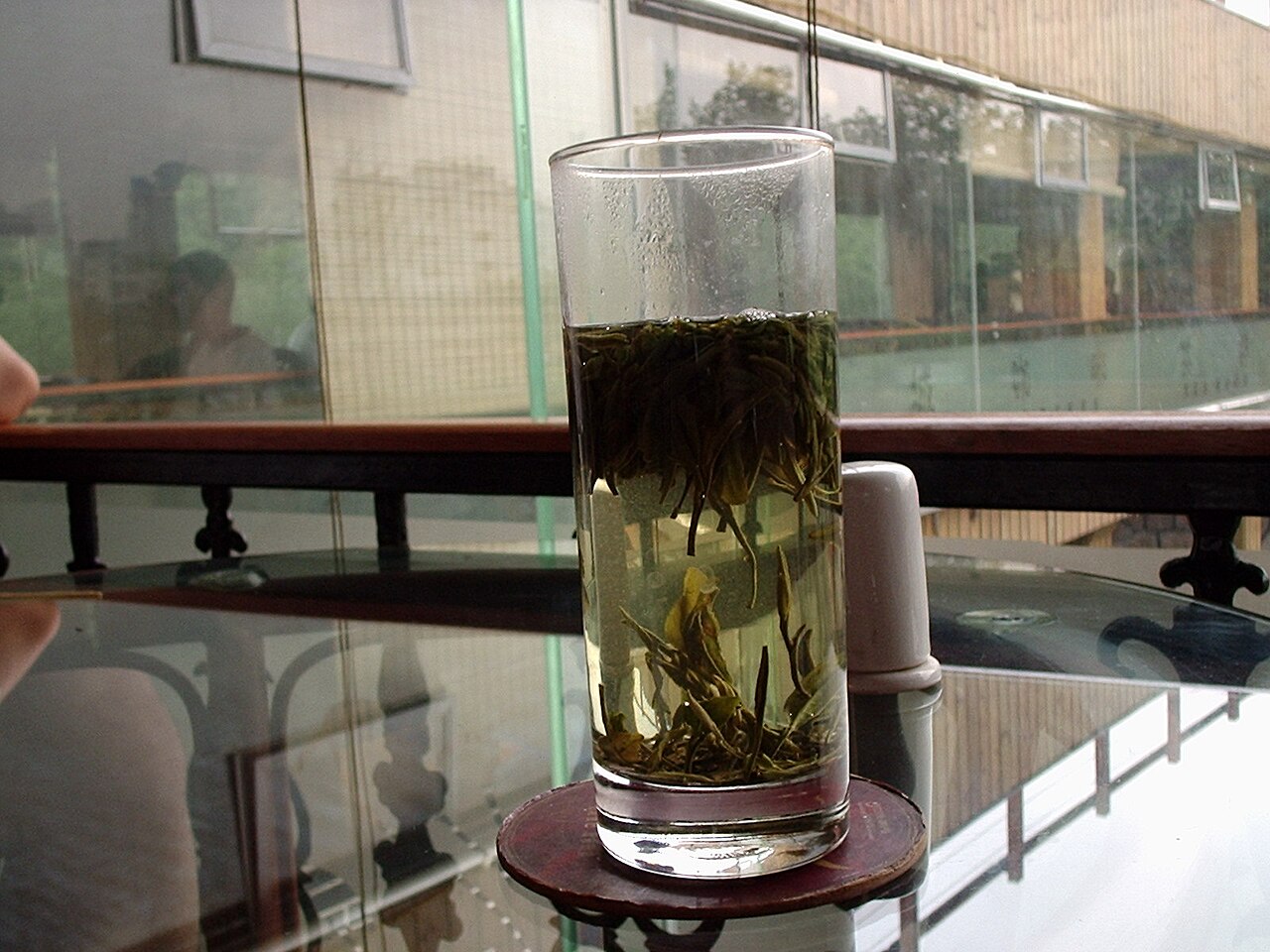
3. For ordinary readers, the key question is not “does binding happen?” but “how large is the effect afterward?”
This is the most important step in the whole discussion. If the question is merely whether tea compounds can bind protein, the answer is usually yes. But if the question is whether that makes a meal’s protein meaningfully fail to be used, the evidence is much less dramatic than popular claims suggest. Many reviews now focus more on how protein-polyphenol interaction affects polyphenol stability, release, antioxidant behavior, sensory characteristics, and digestive-system behavior. In other words, the more emphasized side of the interaction is often the polyphenol side, not catastrophic destruction of dietary protein use.
The 2025 milk-in-tea review is a useful example. It clearly says that strong protein-polyphenol interaction can reduce the availability of some tea polyphenols. But it also notes that milk proteins may help transport and carry catechins through digestion, which means the relationship is not just “add milk and everything is gone.” That complexity is exactly what public content likes to delete. Food-component interactions are not always simple, one-way, or all-or-nothing.
If you place protein back inside a real human diet, the picture becomes even clearer. Protein utilization is shaped by total intake, protein source quality, the whole-meal structure, gastrointestinal status, and the person’s own digestive context. Those variables are usually larger than the fact that tea happened to be consumed at the same time. Turning a secondary variable into the deciding factor is what makes this topic so misleading in public discussion.
4. When milk and tea meet, the clearest change is often in taste and polyphenol behavior—not protein being “ruined”
If you want the most defensible conclusion that fits both daily experience and the literature, it is probably this: the most obvious and reliable changes after adding milk to tea usually appear first in sensory behavior and in the way tea polyphenols perform. Astringency softens. Mouthfeel rounds out. Some antioxidant readouts shift. The system’s stability changes. These are phenomena you can see in experiments and feel in the cup.
By contrast, the next leap—“therefore the milk protein will be poorly absorbed”—is much less secure. Protein inside the body does not remain forever as the same intact complex it may have formed in the cup. It continues to move through gastric acidity and enzyme breakdown. So instead of picturing tea as permanently locking protein away, a better picture is this: tea compounds and proteins interact first, then digestion keeps rewriting that interaction, and the final result depends on concentration, ratio, matrix, digestive conditions, and individual context.
This also explains why both extremes are poor science: “milk in tea destroys tea nutrition,” and “tea destroys milk protein.” Both are too eager to turn a complex food system into a clean winner-loser story. The better reading is that they influence each other and change each other’s behavior, without necessarily canceling each other out.
I understand why the one-destroys-the-other story spreads so well. It is perfect for short video, comments, and shareable warnings. A single line like “don’t combine these, the nutrients fight each other” is easy to remember. But in nutrition, that kind of language is exactly what deserves suspicion. It gives the feeling of a practical zero-cost rule while replacing a complex reality with false certainty.
If you want language that sounds more like the literature, it would be something like this: tea and protein do interact; that interaction may alter some polyphenol availability and measured activity, and it also changes sensory features; but current information does not justify the stronger claim that ordinary dietary protein absorption is seriously destroyed by normal tea drinking.

5. So should tea be deliberately separated from eggs, milk, yogurt, or protein powder?
If we are talking about healthy adults, ordinary mixed meals, and normal tea-drinking concentrations, my answer is fairly restrained: there is usually no need to treat “tea and protein must be strictly separated” as a universal rule. Drinking tea with breakfast eggs, having tea after a meal, or consuming milk tea, light milk tea, or tea with dairy are not situations for which strong evidence supports the alarmist idea that the protein was “basically wasted.”
That said, some people do live in settings where marginal optimization matters more—high-level sports nutrition, clinical nutrition support, unstable gastrointestinal function, or very carefully timed supplementation strategies. In those situations, it can be reasonable to manage combinations and timing more tightly. But that is not because ordinary tea drinking is inherently dangerous. It is because those situations are already sensitive to many small variables. What should not happen is for niche optimization logic to become a blanket prohibition for everyone else.
For ordinary readers, the bigger questions are usually whether total protein intake is adequate, whether sources are diverse, whether the meal pattern is overloaded with highly processed sweet drinks, and whether the person actually feels digestive discomfort. Many people become intensely worried about whether tea blocks protein, while having no idea how much quality protein they actually eat in a day. That is a mismatch of priorities.
6. In practice, the clearer boundary is often iron—not protein
It is also worth noting that in nutrition discussions, tea’s interaction with minerals—especially non-heme iron—usually has a clearer evidence boundary than tea’s interaction with protein absorption. Tea polyphenols and iron absorption deserve more serious attention in some people and meal contexts, which is why more formal advice often warns those at risk of iron deficiency about using tea around iron-rich meals. By contrast, “tea seriously disrupts protein absorption” has not reached the same level of mature, broad public-health guidance.
That fact itself is informative. When a nutrient interaction is strong enough to justify wider public advice, it usually appears more clearly in guidelines, educational material, and clinical reminders. The reason protein stays more in the realm of internet repetition than formal warning is, in part, that the evidence reality is less absolute than the rumor suggests.

7. How should readers interpret the claim that tea affects protein absorption?
I would ask at least four questions. First, is the speaker talking about food chemistry interaction, or about strong evidence from ordinary human dietary use? Second, are they citing animal feed or high-tannin models, or everyday mixed meals? Third, are they describing “may affect some aspect of digestive efficiency,” or have they already inflated it into “the protein was basically wasted”? Fourth, are they ignoring concentration, ratio, total diet structure, and individual difference?
Once you ask those four questions seriously, most quick “nutrient conflict” claims lose their force. Good expressions usually admit that interaction exists, but stop short of disaster language. They admit complexity instead of rushing to build taboos. They explain the likely scale of effect in real diets rather than using the word “binding” as a scare tactic.
So the final judgment this article wants to leave with you is simple: tea polyphenols and proteins do interact, and that part is true; but turning that interaction directly into “drinking tea clearly impairs normal dietary protein absorption” is usually an overstatement. For ordinary meals, a more mature reading is that they can change each other’s behavior without creating a reason to treat every tea-plus-protein pairing as a mistake.
Research limits
- Much of the evidence on tea polyphenol, tannin, and protein interaction comes from in vitro work, food-chemistry studies, reviews, or specific models, and cannot be mapped one-to-one onto all real human eating contexts. - Some classic support for “tannins reduce protein digestibility” comes from animal feed or high-tannin exposure settings that differ substantially from ordinary tea drinking in mixed human diets. - Milk-tea interaction may appear in some studies as lower polyphenol accessibility and in others as altered transport, protection, or release patterns; the relationship is not purely one-way. - Current information does not justify compressing everyday tea drinking into the claim that it meaningfully destroys protein absorption. It is better understood as a complex food-system interaction problem.
What this means for ordinary readers
If you only want one safe sentence to remember, it is this: tea and protein can interact, but that does not mean the protein becomes “locked away” to the point of being almost unabsorbable. For ordinary diets, there is usually no need to treat tea and protein as combinations that must always be separated. What deserves priority instead is overall protein intake, total dietary structure, iron-risk context, and your own real digestive response.
Continue with Does tea affect iron absorption? The stronger concern is usually iron, not protein, Protein, lactose, and the health halo around light milk tea, and Tea polyphenols, catechins, and the antioxidant story: what is real and what gets overstated?.
Source references: Milk in tea: exploring the chemistry and biological activities, Tannins and human health: a review, and Polyphenols: Chemistry, bioavailability, bioactivity, nutritional aspects and human health benefits: A review.