Research explainer
Can tea really sharpen focus or protect against cognitive decline? The evidence on attention, theanine, caffeine, and cognition is more about “signals” than settled conclusions
“Tea feels steadier,” “tea is better for focus,” and “regular green tea drinking protects the brain” are all claims that travel extremely well. Their risk is not that research shows nothing at all. Their risk is that the literature usually offers something much narrower: partial, short-term, conditional positive signals. Once those signals are picked up by lifestyle content, functional-drink marketing, or wellness language, they are quickly rewritten as “tea naturally boosts cognition,” “drinking tea clearly helps prevent decline,” or “tea is better than coffee for long-term knowledge work.” The useful task is not to pick a side, but to separate short-term task performance, subjective experience, long-term observational associations, and causal evidence.
When people talk about tea and cognition, they are usually mixing together three very different questions. The first is whether, in the hour or two after intake, reaction speed, attention stability, or subjective alertness changes. The second is whether combinations of theanine, caffeine, and polyphenols may help explain why some people experience tea as a less jagged form of stimulation. The third is whether habitual tea drinkers are less likely to develop mild cognitive impairment or dementia in observational research. Once these three layers are not kept separate, it becomes very easy for content to slide from “there are some research signals” into “tea has already been shown to improve focus and protect the brain.”
This slide is common because both focus and brain protection are emotionally potent promises. One speaks to modern productivity anxiety. The other speaks to aging, memory, and fear of cognitive decline. Add terms like “theanine,” “antioxidants,” and “neuroprotection,” and many readers begin to feel that the conclusion must already be close to settled. But the research picture is rarely that neat. More often, it looks like this: some small-to-moderate differences in certain short-term tasks, some inverse associations in observational studies, and a great deal of uncertainty about how far those signals really travel.

Research snapshot
Topic: the strength and limits of evidence linking tea, theanine, caffeine, cognition, mood, and long-term cognitive impairment risk Core question: is tea mainly offering some short-term support in controlled tasks, or is it already strong enough to be framed as a real-world brain-protection strategy? Who this is for: readers who keep seeing claims that tea is steadier, green tea protects the brain, or theanine makes focus cleaner and more sustainable Core reminder: randomized trials do show some short-term positive signals, and observational meta-analyses do show inverse associations between green tea intake and cognitive impairment risk, but that is still far from proving that tea reliably protects cognition long term
1. Why is the “tea supports focus and protects the brain” story so easy to spread?
Because it answers two modern anxieties at once. Younger adults want alertness, concentration, and less emotional friction. Older adults worry about memory, decline, and keeping the mind from slipping too fast. Tea is also an unusually easy drink to market into this space: familiar, culturally friendly, available at many price points, and highly compatible with ritual. That makes it ideal for being framed as a gentle but long-term helpful answer.
The problem is that the smoother the story becomes, the more likely it is to blur evidence levels. A small improvement in a one-hour attention task becomes “better productivity.” An observational association becomes “prevents dementia.” A controlled experiment with theanine plus caffeine becomes “ordinary tea drinking works the same way.” When those substitutions stack up, tea stops being a drink worth studying and starts being cast as a nearly all-purpose brain-health solution.
So it helps to draw boundaries early. If you care about short-term focus, look first at randomized trials and task performance. If you care about long-term cognitive decline, look at observational studies and their limits. If you care about whether tea is already mature enough to be treated as a real-world brain-protection strategy, the answer is clearly not yet.
2. What do randomized trials actually show? Some short-term task outcomes do look better, but do not translate that into “tea makes you smarter”
A 2025 systematic review and meta-analysis in Nutrition Reviews brought together 50 randomized controlled trials and conducted at least one meta-analysis on 15 eligible studies. It was not asking whether tea is a magical cognitive protector. It looked at much narrower outcomes: whether tea, theanine alone, or theanine plus caffeine affected cognition, mood, and sleep in healthy participants. The picture it gives is much more restrained than the slogans circulating online.
The result most likely to be pulled into headlines is that theanine plus caffeine, compared with placebo, showed small-to-moderate differences in favor of the intervention for some cognitive and mood outcomes in the first two hours after intake. The second-hour digit vigilance task accuracy, attention switching task accuracy, and some overall mood measures leaned toward the theanine-plus-caffeine condition. Theanine alone also showed an advantage over placebo for first-hour choice reaction time. Read quickly, that can sound like a clean takeaway: this tea-related compound combination may help short-term focus.
But the more important half of the paper is the half popular content usually drops: the confidence intervals frequently highlighted uncertainty in both the direction and the magnitude of the observed differences. In other words, the study does not hand you a universal, settled story. It gives you a more limited one: some meaningful signals in certain controlled tasks, but nothing yet strong enough to be translated directly into a general efficiency myth for all everyday tea drinking. The authors also explicitly call for more research using actual tea beverages, or at least tea-equivalent bioactive doses, and for more work in free-living participants. That is a reminder that laboratory signal does not automatically equal all-day real-life focus.

3. Why does “theanine plus caffeine” keep coming up? Because it makes a beautiful mechanism story, and mechanism is not the same thing as an everyday conclusion
In public content, theanine plus caffeine is almost a perfect narrative package. Caffeine brings alertness; theanine softens the edge. It is memorable, attractive, and sounds as if science has fully signed off on it. Research language is more cautious. The review does suggest that theanine plus caffeine may outperform placebo on some attention-related tasks and some mood outcomes. That means the mechanism is worth studying. It does not mean the mechanism has already become an all-purpose daily conclusion.
It certainly does not mean that every ordinary tea beverage automatically reproduces the same combination, the same dose, the same timing window, and the same participant response. Supplement-style interventions, standardized doses, and controlled tasks are simply not the same as real-life tea preparation, concentration, drinking speed, empty-stomach status, sleep debt, and individual tolerance. There are too many missing steps between “promising mechanism” and “drink tea to enter a stable high-quality focus state.”
That is why I keep some distance from narratives about tea delivering a more refined or superior form of concentration than coffee. They often turn a plausible mechanism into an identity-shaped consumption conclusion. Mature research reading should do the opposite: first admit there are mechanism-level signals worth attention, then admit they are still nowhere near enough to hold up the exaggerated claim by themselves.
Put more bluntly, when people think they are discussing “tea versus coffee,” they are often actually discussing a whole bundle of experiences: jitter, steadiness, stomach comfort, emotional smoothness, task endurance, and whether the energy falls off sharply two hours later. Theanine plus caffeine is one possible entry point for explaining that bundle. It is not a master key that dissolves all context.
Once you notice that, many hot claims cool down fast. You can accept that some people genuinely prefer tea as a form of stimulation without pretending that research has already certified tea as naturally superior to every other caffeinated drink. You can accept that some controlled studies do show task differences without pretending that every person in everyday life will reproduce gains of the same size.

4. What about long-term “brain protection”? Observational meta-analyses do show inverse associations, but that is not the same thing as causation
If we shift from short-term attention tasks to longer-term cognitive outcomes, the picture changes again. A 2026 meta-analysis on green tea consumption and cognitive function included 18 observational studies with 58,929 participants. It reported that green tea intake was associated with a lower risk of cognitive impairment overall, with an odds ratio of 0.63 (95% CI: 0.54–0.73). Associations were also seen in dementia and mild cognitive impairment subgroup analyses, and the pattern looked stronger in Asian populations.
That is not an uninteresting result. It really does suggest that, in real-world population data, green tea drinking repeatedly appears alongside lower cognitive impairment risk. But this is exactly where careful reading needs to slow down. First, this is an observational meta-analysis, not a randomized trial. It can tell you that two things often appear together. It cannot easily tell you that one directly causes the other. Regular green tea drinkers may also differ in diet pattern, education, income, exercise, body weight, social life, overall health awareness, and access to care.
Second, the authors themselves note that larger-scale longitudinal studies are still needed to clarify dose-response patterns and long-term effects. So the steadier conclusion is not “green tea prevents cognitive decline,” but “green tea intake is observably associated with lower cognitive impairment risk, and that association deserves attention.” Turning association into causation is one of the most common and laziest jumps in health communication.
5. Why can’t short-term experimental signals and long-term observational associations be fused into one sentence saying “tea really boosts and protects cognition”?
Because they answer different questions. Short-term randomized studies ask whether certain tasks or subjective states change in the hour or two after intake under controlled conditions. Long-term observational research asks whether habitual differences in real populations co-vary with later cognitive outcomes. The first is closer to causality, but limited to short windows and narrow settings. The second is closer to real life, but much more vulnerable to confounding. Both matter. Neither licenses the sweeping conclusion that tea’s cognitive value has already been fully proven.
It is similar to saying that because one person’s glucose looks better shortly after exercise, and because physically active populations tend to have better long-term metabolic outcomes, a single run today therefore equals complete long-term metabolic protection. Evidence is layered. The more mature reading is the one that lets each layer answer only the question it is actually built to answer, instead of forcing all studies to serve one pretty slogan.
So the most defensible judgment here is surprisingly plain: for short-term attention and subjective state, some compound combinations do show meaningful positive signals; for long-term cognitive risk, green tea intake does show observational inverse associations; but at present no part of the evidence is strong enough to justify describing tea as a mature brain-protection strategy or a stable cognitive-enhancement tool.
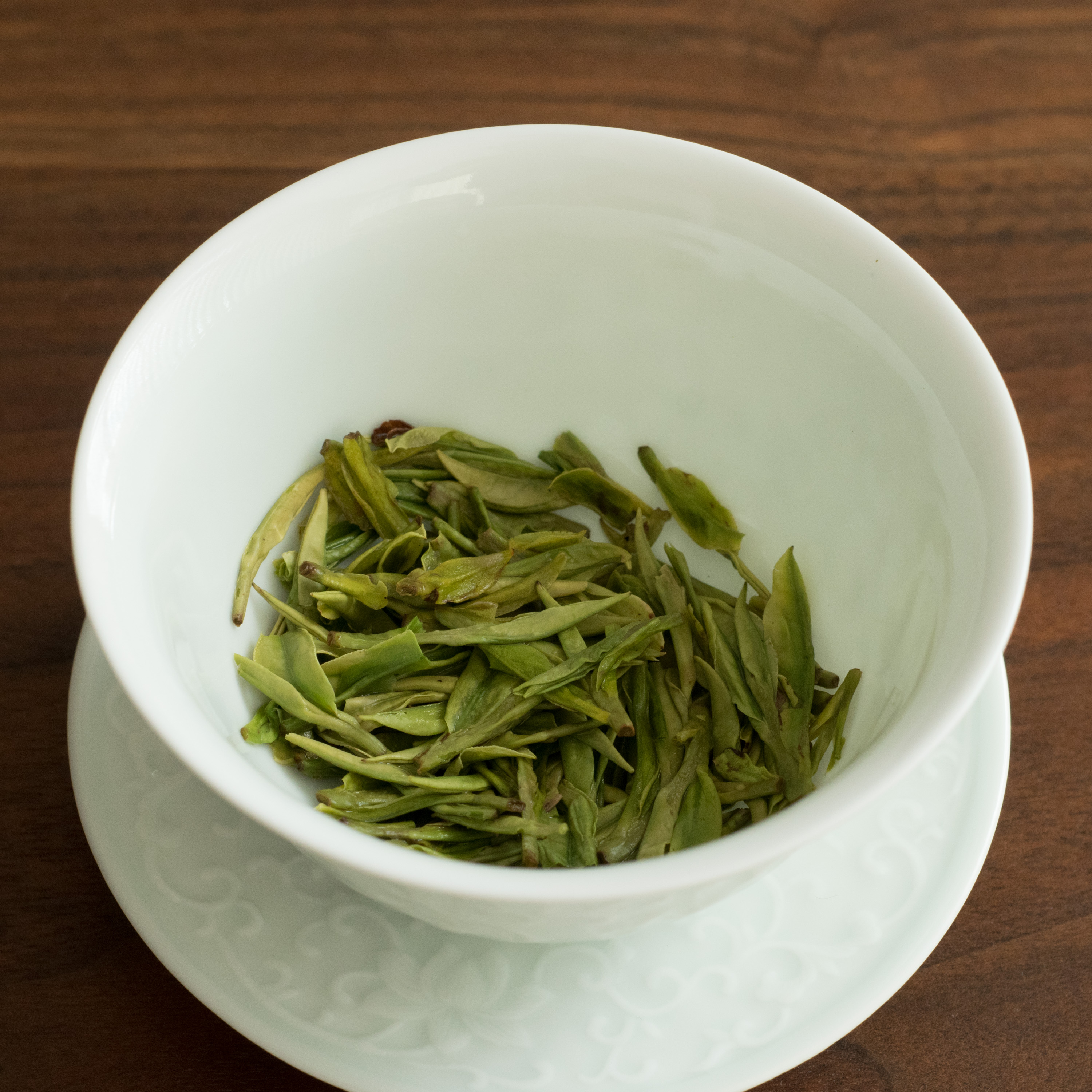
6. If we stop trying to turn tea into a miracle, what is its most realistic value in cognition and brain-health discussion?
I think tea’s most realistic value often lies not in “directly enhancing cognition like a drug,” but in being a relatively gentle, repeatable daily structure that can replace some higher-sugar or higher-burden drinks. That sounds less dramatic, but it is closer to real life. For some people, building a steadier rhythm of work, rest, and hydration can shape subjective attention, emotional fluctuation, and overall state in ways that matter.
This does not mean tea’s active compounds are irrelevant. It means not every real-world benefit should be force-translated into “tea chemistry has already completed the cognitive enhancement job.” Often, what changes lived experience is lower-burden substitution, steadier pacing, and fewer sharp peaks and drops—not one cup of tea acting like a functional medicine on its own. That interpretation is less marketable, but it is probably much closer to where tea actually sits in daily life.
That is also why I stay skeptical of content that frames tea as a secret weapon for knowledge workers or a foundational brain-protection system. Such content loves to take one potentially helpful variable inside a complex life structure and cast it as the protagonist. But cognition and brain health are never shaped by a single drink. Sleep, exercise, education, chronic disease burden, social activity, overall diet, stress management, and medical care each carry more weight than whether you drank tea today.
7. How should ordinary readers read claims like “tea improves focus” or “green tea protects the brain”?
I would start with five questions. First, is the claim about ordinary tea drinking, or about standardized extracts, supplements, or specific formulations? Second, is it about short-term task performance after drinking, or cognitive outcomes years later? Third, is the evidence from randomized trials, or from observational association? Fourth, are we looking at small, conditional differences, or signals strong enough to change real management decisions? Fifth, in your actual life, what is tea replacing, what is it accompanying, and what might it be hiding?
Once those questions are asked seriously, most content that treats tea as a universal cognitive key loses its shine. Research that actually deserves trust usually admits narrow time windows, narrow settings, limited samples, incomplete consistency, and the need for longer-term work. It also does not rewrite observational data as causation. By contrast, the content that loves to sound most certain is often the content that deletes those limits one by one.
So the real conclusion here is simple: tea is not irrelevant to cognition, but the current evidence is much closer to “there are positive signals in some short-term outcomes and some long-term observational patterns” than to “drinking tea will reliably improve focus and protect the brain from decline.” If you already like tea, it can fit inside a better daily rhythm. If you seriously care about brain health, the heavier priorities remain sleep, exercise, blood pressure, metabolic health, social engagement, overall dietary quality, and medical management when needed—not faith in a single beverage.
Research limits
- In randomized cognition and mood trials, many endpoints are short-term task outcomes or subjective scales, not long-term cognitive endpoints. - Research on theanine, caffeine, and tea beverages does not always use the same intervention form, so supplement findings cannot be automatically generalized to all ordinary tea-drinking situations. - Even when observational meta-analyses show lower cognitive impairment risk among green tea drinkers, lifestyle, socioeconomic status, and health-behavior confounding remain major concerns. - Positive signals do not equal mature causal evidence, and they certainly do not replace the importance of sleep, exercise, chronic-disease management, and overall dietary structure for brain health.
Practical meaning for readers
If you want the safest one-line takeaway, it is this: tea may offer a little help for short-term focus experience and some cognitive measures, and it may also be associated with lower cognitive impairment risk in long-term observational research—but do not mistake “there are signals” for “the matter is settled.” Reliable brain-health management has never been about betting everything on one drink.
Continue reading: Matcha, caffeine, and why some people find it steadier than coffee: a fuller guide, Theanine, functional tea drinks, and the “calm but focused” story, and Tea polyphenols, catechins, and the antioxidant story: what is real and what gets overstated?.
Sources: Effects of Tea (Camellia sinensis) or its Bioactive Compounds l-Theanine or l-Theanine plus Caffeine on Cognition, Sleep, and Mood in Healthy Participants: A Systematic Review and Meta-Analysis of Randomized Controlled Trials, The Association between Green Tea Consumption and Cognitive Function: A Meta-Analysis of Current Evidence, and Tea Consumption and Health Outcomes: Umbrella Review of Meta-Analyses of Observational Studies in Humans.