Why L-theanine keeps getting framed as “calm but not sleepy”: functional tea-drink hype, research limits, and how to judge it
Created: · Updated:
Illustrations on this page are locally produced editorial diagrams. They are kept because they fit the research logic well, but the English captions and alt text now explicitly describe the image content instead of silently relying on Chinese-language artwork.
Across the Chinese internet, functional tea-drink language has become much denser. L-theanine is now routinely used as a bridge concept between mood, focus, tea identity, and health-coded consumption. Some people frame it as a buffer against workday tension. Some frame it as the reason tea feels steadier than coffee. Some brands place it beside low sugar, real-leaf brewing, and “cleaner” ingredient stories to build a more intelligent-looking drink identity. This page does not treat L-theanine as a miracle ingredient. It puts the topic back into study conditions, actual beverage structure, and real consumer use.
“Calm but not sleepy” is an almost perfect modern slogan. It promises emotional softening without loss of sharpness. It sounds compatible with offices, commuting, studying, and the contemporary desire to manage stress without giving up productivity. That is one reason L-theanine works so well in tea-drink marketing and online discussion. It sounds scientific, it belongs to tea, and it appears to offer a middle road between stimulation and sedation.
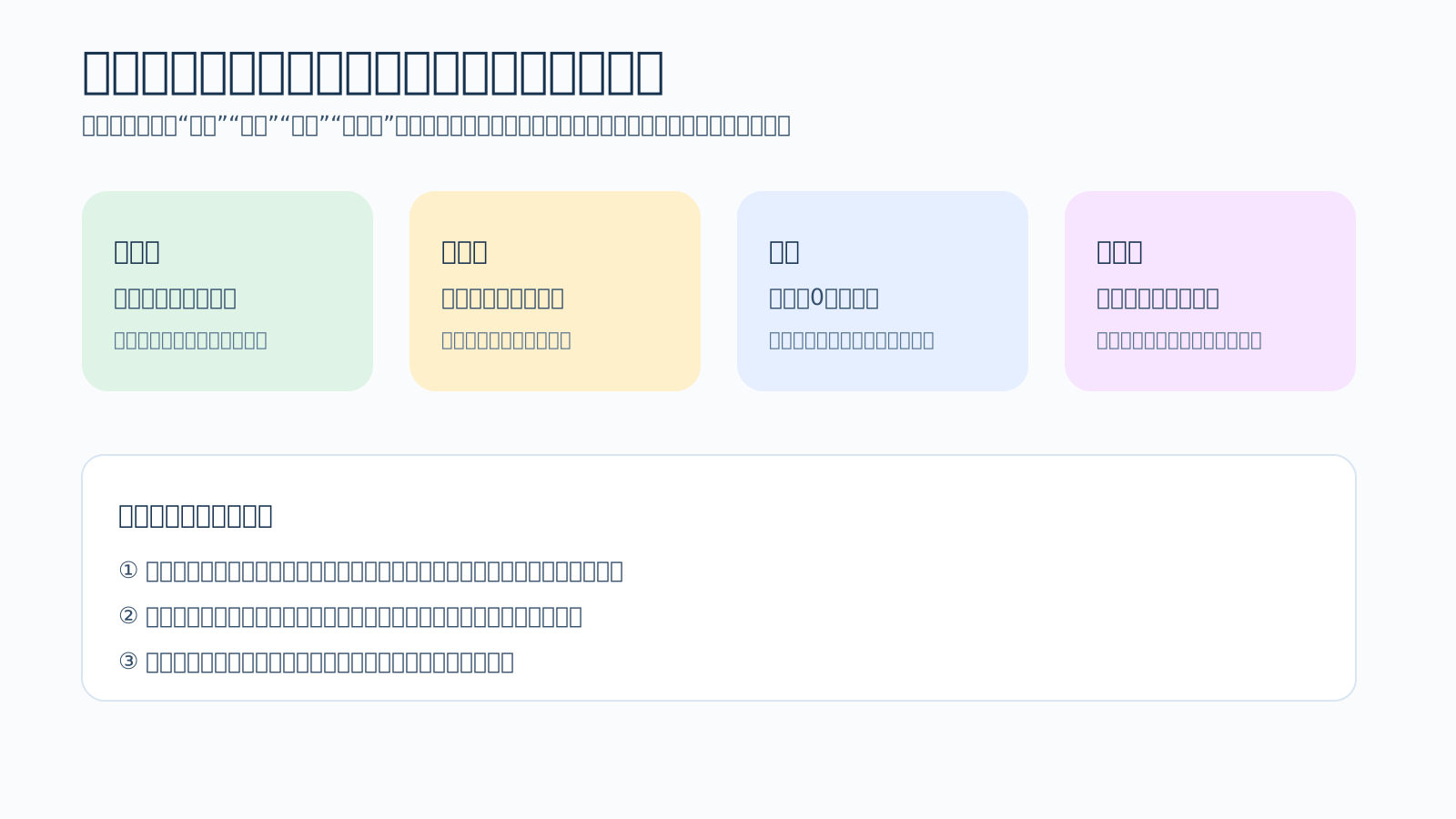
Research, however, does not hand over that slogan so easily. Scientists ask more conditional questions: what dose is being discussed, whether L-theanine is taken alone or together with caffeine, whether the study measures subjective tension, attention tasks, mood, sleep, or stress responses, and how tightly the experimental setting is controlled. Those details are less catchy than a slogan, but they decide how much of the slogan can actually hold.
“Calm but not sleepy” is attractive because it sounds like a compact formula for both productivity and emotional control. Research actually deals with something messier: dose, caffeine pairing, context, and subjective experience.
Topic: how L-theanine is discussed in modern tea-drink culture, functional beverage marketing, and research on calmness, focus, and caffeine interaction
Key issues: calmness, focus, pressure management, caffeine pairing, dose, commercial beverage structure, and functional-language inflation
Best for: readers who keep seeing “contains L-theanine,” “calm focus,” or “steadier than coffee” and want to know what those claims really mean
Core reminder: L-theanine is worth taking seriously, but the presence of the concept does not mean a specific commercial drink delivers a stable, meaningful, and broadly reproducible functional effect.
1. Why L-theanine has become such a useful hot-word right now
Because it fits a very specific modern gap. Consumers are not lacking “energy” language. Coffee, energy drinks, pre-workout logic, and productivity culture already dominate that territory. What remains more open is the desire for a state that feels manageable rather than aggressive: awake, but not overstimulated; emotionally steadier, but not dulled. L-theanine fits neatly into that space, especially when attached to tea rather than to overtly pharmaceutical or sleep-oriented language.
There is also a platform effect. Chinese internet culture increasingly trains people to read products through ingredient keywords. That pattern shows up in skincare, nutrition, supplements, and drinks alike. Once a technical-sounding word enters public vocabulary, it becomes a sorting tool. L-theanine is especially useful to tea brands because it supports several layers at once: it belongs to tea, which helps preserve a natural and tea-rooted identity; it has a research-facing background, which gives it more authority than vague mood language; and it sounds specialized enough to make a drink feel smarter than a generic refreshment.
That is why it is often bundled with other “good signals” rather than presented on its own. Low sugar, real tea base, fresh brewing, cleaner ingredient language, calm focus, office-friendly, commuter-friendly: one term adds scientific gloss, the rest add lifestyle coherence. The full package spreads extremely well.
2. The first misunderstanding to clear up: L-theanine is not simply a “drink this and get sleepy” ingredient
Many readers hear the word calm and immediately imagine sedation, drowsiness, or something close to a nighttime sleep aid. That framing is misleading. In research discussions, L-theanine is more often connected with stress response, subjective relaxation, tension, steadiness, or task-state experience than with directly pushing a person toward sleep.
This distinction matters because the internet tends to turn “calm” into a dramatic effect word. Study language is usually quieter. It often points toward more modest possibilities: in some settings, under some conditions, some participants may feel less tense, less jagged, or somewhat more balanced in task conditions. That does not mean L-theanine behaves like a daytime tranquilizer. Nor does it mean every tea drink with the word on the package will create a noticeable effect.
Getting this boundary right helps avoid two bad shortcuts. One is to treat L-theanine as a universal anti-stress key. The other is to avoid it because “calm” sounds incompatible with daytime performance. Both reactions move too fast. Research is usually asking narrower, more conditional questions.
In functional tea-drink language, L-theanine often appears beside calmness, focus, low sugar, and real tea base. Research does not automatically add those labels together and call the result a proven health conclusion.
3. What studies actually care about: dose, pairing, task context, and measurement—not slogans
Once you look at the research side, it becomes obvious that scientific curiosity and consumer curiosity are not the same thing. Consumers want to know whether it works. Brands want to say it is steadier, lighter, or smarter. Researchers care about experimental design: how much was given, whether it was paired with caffeine, what the observation window looked like, whether the outcomes were mood scales, cognitive tasks, physiological signals, or stress markers. In other words, L-theanine is studied conditionally, not magically.
That is one reason caffeine nearly always re-enters the conversation. Real tea drinking is rarely a pure L-theanine world. Many people experience tea through a combination of tea compounds, including caffeine. That leads to a more realistic and more interesting question: under some conditions, can L-theanine influence how caffeine-heavy alertness is experienced—perhaps through perceived tension, steadiness, or task-state quality? This question maps more closely onto lived tea experience than a blunt “does L-theanine work?” prompt.
But it is also the point where marketing likes to accelerate. Once the idea of synergy appears, it becomes tempting to imply that any tea drink containing both L-theanine and caffeine automatically delivers smoother focus. Studies do not justify that leap so cleanly. What they more often show is that, under some controlled conditions and doses, some differences may appear in some measures. That is not the same thing as proving a general commercial beverage advantage.
4. Why the ‘L-theanine + caffeine’ story feels so promising
Because it appears to combine two desirable modern functions. Caffeine stands for activation, wakefulness, initiation, and momentum. L-theanine stands for softening, steadiness, and reduced roughness. Place those ideas together and the consumer sees a very attractive state promise: I can stay productive without being hit too hard. For office workers, students, and anyone who needs long-form output, that promise is almost ideal.
The story is not completely invented either. Many people do genuinely feel that tea and coffee produce different kinds of alertness. Some describe tea as slower, steadier, or easier on the body. L-theanine therefore gets assigned a powerful explanatory role. The trouble is that lived experience is multivariable. Tea type, brew strength, drinking speed, fasting state, sugar, milk base, expectation, and caffeine tolerance all shape the final experience. A single-compound explanation is attractive precisely because it simplifies too much.
So the public power of the L-theanine-and-caffeine story comes from a mix of truth and compression. It captures part of a recognizable experience while inviting people to forget the rest of the system.
5. The most common functional-drink shortcut: from “contains” to “effective” to “good for frequent reliance”
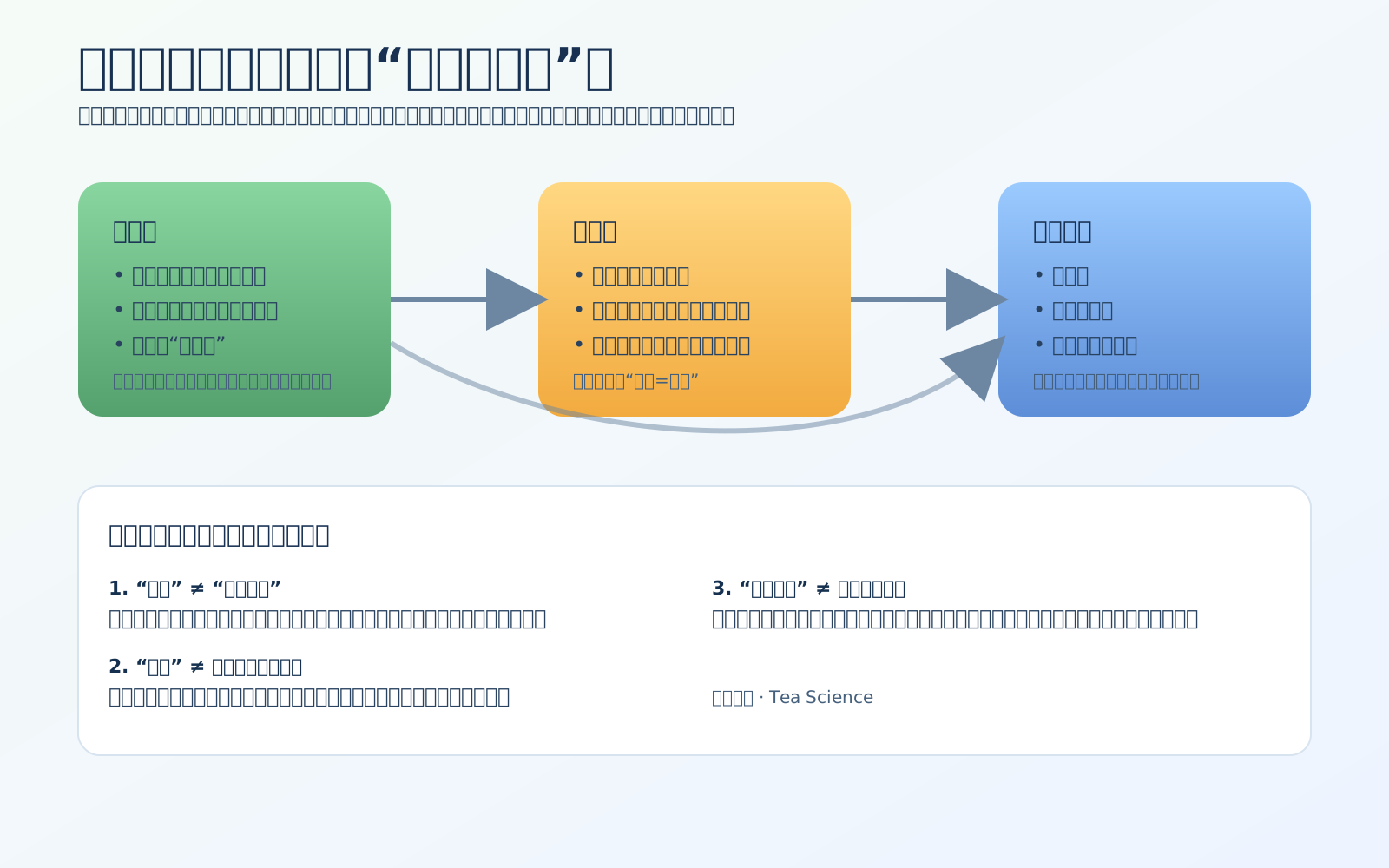
This is the jump worth watching most carefully. In many tea-drink and functional-beverage campaigns, the sequence runs very fast: first the product “contains L-theanine,” then it is implied to be calmer or steadier, and then the consumer is nudged toward reading it as a more intelligent drink to lean on repeatedly. Those are not small steps. They cross major evidence gaps.
“Contains” is presence language, not dose language, and certainly not effect language. Even if a drink truly includes L-theanine, more questions remain: how much, in what ratio to caffeine, and inside what full beverage structure? Is the smoother feeling truly about L-theanine, or is it partly about lower caffeine intensity, a softer flavor system, slower drinking pace, or even expectation effects triggered by the drink’s health-coded identity?
The jump from “effective” to “good for regular dependence” is larger still. A study showing that a compound may influence mood or task experience under specific conditions does not mean a branded drink has become a reliable everyday state-management solution. Consumers need something more useful than encouragement to outsource all mental regulation to a cup.
The easiest distortion in L-theanine talk is to translate “studied in the literature” directly into “this drink will definitely make you feel something meaningful.” Study conditions, actual formula content, and daily consumer experience are not interchangeable.
6. Why L-theanine gets packaged so easily with low sugar and real-tea language
Because together they build the modern tea drink’s ideal “light burden” identity. If a drink only claims stimulation, it competes directly with coffee and overtly functional beverages. Add low sugar and it starts to feel bodily cleaner. Add real tea base, real-leaf brewing, or ingredient transparency language and it begins to look closer to tea rather than to a generic flavor drink. Add L-theanine and the product can now present itself as tea-like, scientific, and emotionally intelligent all at once.
The problem is that labels do not validate one another automatically. Low sugar does not prove meaningful L-theanine functionality. Real tea base does not prove a drink is suitable for frequent use. And the presence of an L-theanine story does not excuse readers from judging the total structure. What often persuades consumers is not overwhelming evidence, but the stacking of several independently attractive signals. That stack is clever and culturally effective. It still needs to be taken apart.
In practice, the more elegantly a brand combines several right-sounding words, the more carefully a reader should separate them again.
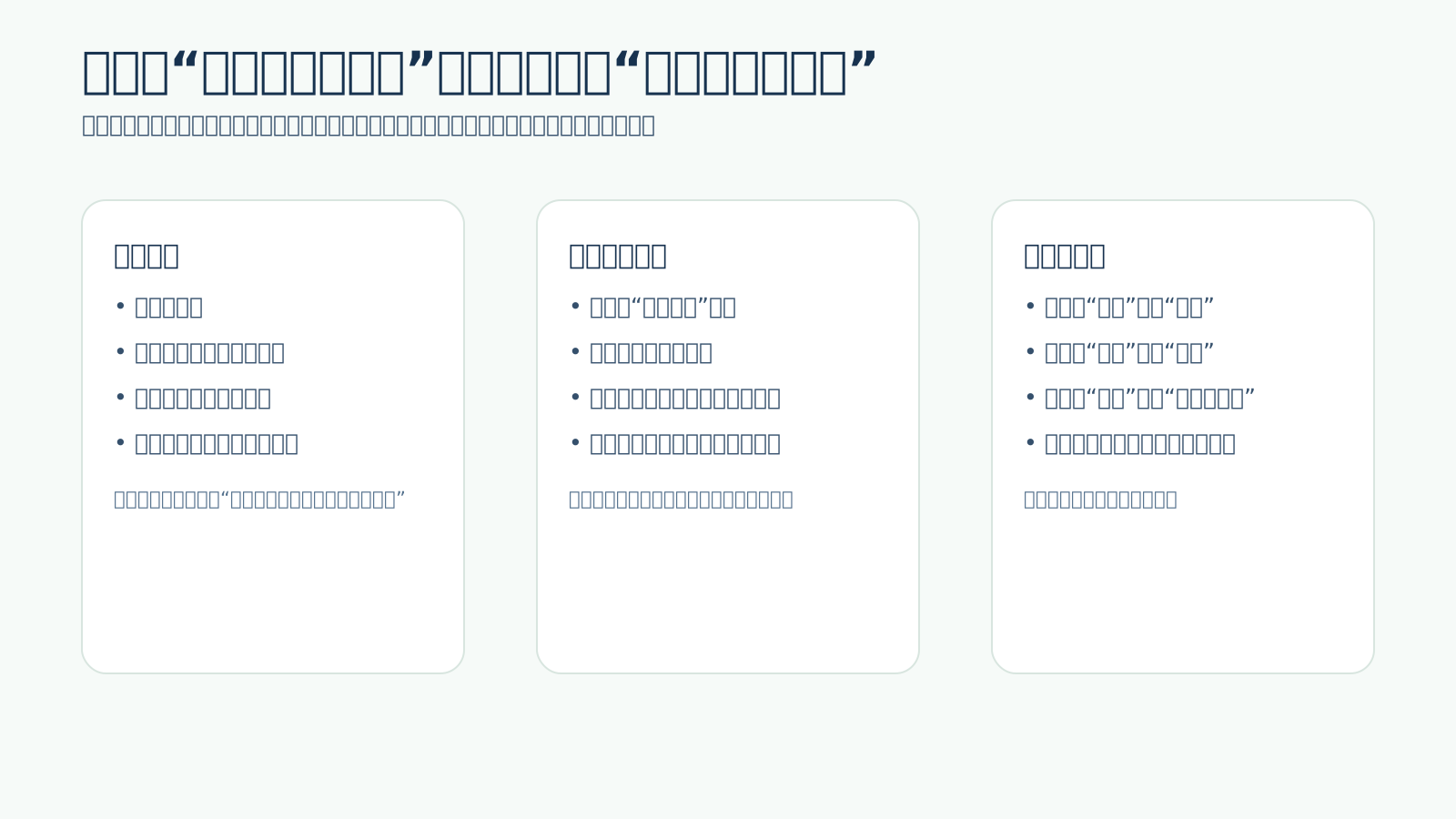
7. From a research-minded perspective, what should readers ask first?
First, what problem is this drink claiming to solve? Is it trying to soften caffeine roughness, build a smarter premium identity, or imply emotional support without saying much? If the problem statement is vague, the conclusion usually will be too.
Second, how much product information is actually available? Not every drink needs to read like a laboratory report, but if a brand uses functional ingredient language as a selling point while refusing to say anything concrete, that usually signals concept-first storytelling rather than research-first clarity.
Third, are you looking for a momentary feeling or a sustainable habit? Short-term feelings are highly subjective and easily shaped by flavor, environment, and expectation. Long-term habit is the stricter test: does this drink reduce burden or simply create a more acceptable way to rely on sweetened stimulation?
Fourth, what else in the beverage changes its meaning? Sugar, milk base, serving size, time of day, and fasting state do not stop mattering because one compound receives the headline.
Fifth, have you mistaken “steadier” for “therefore better for me”? This is one of the most common errors. Individual differences remain large. Some people really do prefer tea-like stimulation. Others may still react badly to certain strong tea bases or caffeine loads.
8. So is L-theanine worth serious attention? Yes—but only if it is read correctly
I do not think L-theanine should be dismissed as pure marketing fluff. The reason it keeps appearing in both research and consumer discussion is that it does point toward real questions worth following: why do some people experience tea as steadier than coffee, how might some compound combinations affect stress-state experience, and why are “calm focus” narratives so powerful in modern working life? Those are not fake questions.
But being worth attention is not the same thing as being available for careless exaggeration. A mature reading treats L-theanine as a useful clue rather than a finished answer. It can help us think about tea experience, functional-drink rhetoric, and the broader culture of state management. What it cannot do is automatically certify every drink that places the term on a menu or package.
If you want a better rule, use L-theanine as a prompt to keep asking questions rather than as a reason to relax your judgment. That gets you closer to research and closer to reality.
The important question is not whether L-theanine is magical. It is whether, under which conditions, and in what kind of full beverage structure it might alter subjective experience in a meaningful way.When calmness, focus, low sugar, and real tea base appear together, the best response is not immediate trust but slower separation of the claims.Study doses and controlled conditions should not be casually merged with commercial tea-drink messaging. Good judgment begins by preserving that gap instead of erasing it.
9. If you bring the question back to a real product, the first thing to judge is not the keyword but the whole formula structure
Once a functional claim leaves the literature, it becomes a product question. For most readers, the useful issue is not simply whether a brand mentions L-theanine, but what else arrives in the same cup. If a drink combines noticeable caffeine, a large serving, a strong sweetness design, a milk base, extra flavor architecture, and office-friendly narrative language, then its effect on your state is almost never being determined by one ingredient term alone. In practice, subjective experience is shaped by how the drink is built, how it is consumed, and in what setting it enters your day.
That is why I think L-theanine works best as a topic that must be judged inside the full beverage structure. Is the tea base still clear? How strong is the caffeine load likely to be? Do sugar, milk, toppings, or dessert-style flavor systems pull the drink back toward sweet-beverage logic? Is it helping you replace a heavier habit, or simply making an old dependence feel easier to justify? These questions are less glamorous than “this ingredient has studies behind it,” but they are far closer to useful real-life judgment.
The safest starting point is not to get hypnotized by the words L-theanine, but to inspect the whole drink: tea base, sweetness, serving size, transparency, and whether it is actually closer to tea or to a repackaged state-management beverage.
10. The most practical tool for readers is not belief in a hot-word but a small tolerance test of their own
If what you really care about is work-state quality rather than ingredient theater, the most useful method is simple: observe yourself carefully. Notice how you respond to tea drinks and caffeine under different times of day, fasting states, and product structures. Does the experience feel steadier, or only slower? Do you get palpitations, stomach irritation, an obvious later crash, or a tendency to keep ordering more? If a drink marketed around L-theanine makes it easier for you to drink two cups in a row, that may not be a lighter burden for you at all.
The best role of research is not to replace your observation but to sharpen it. It reminds you that subjective experience matters, but should not be mistaken for a universal rule; that hot concepts may point in the right direction while still dropping conditions; and that the meaning of a commercial drink always has to be read together with dose, frequency, and replacement logic. Keep those three things in view and you become much harder to drag around by a phrase as smooth as “calm but not sleepy.”
11. Conclusion: L-theanine can be a valuable entry point, but labels should not get the final word
L-theanine is a worthwhile research entry point because it connects real questions about tea experience, caffeine interaction, pressure states, and modern work culture. But it is not a label that lets any commercial tea drink pass inspection automatically. The safer reading is not to relax when you see the term, but to keep asking about total structure, product transparency, drinking frequency, and whether the beverage is helping you build a more mature habit or simply making an older dependence look cleaner.