History feature
Why Quechang Deserves to Be Rewritten into Chinese Tea History: It Was Not Just a Song-Liao, Song-Xia, or Song-Jin Border Market, but a Clear Sign of How Tea Moved from Local Goods into a Commodity the State Taxed, Restricted, Inspected, and Allocated Across Frontiers
When Chinese tea history is discussed today, the first things readers usually notice are still the most tangible ones: The Classic of Tea, whisked tea and tea whisks, stove-boiled tea, the Tea Horse Road, and the Wanli Tea Road. All of these matter. But if we push the conversation one step beyond flavor, objects, and roads, toward institutions and frontiers, we run into a harder and more easily overlooked word: quechang. Many readers first reduce it to “an old border market.” That is not wrong, but it is too light. What makes quechang worth rewriting into Chinese tea history is that it clearly reveals a larger shift: why tea moved from local goods into a frontier commodity important enough to be zoned, inspected, taxed, restricted, prohibited when necessary, and seriously managed by the state.
In other words, quechang was not merely a place-name cluster in frontier history, nor just a background term in diplomatic history. For Chinese tea history, it works more like an observation window. The moment a commodity begins appearing steadily inside quechang trade, that commodity is no longer just something grown, sold, and consumed in one region. It has entered a world of circulation that crosses regimes, borders, tax systems, checkpoints, and political boundaries. Tea deserves to be rewritten through quechang precisely because this is where another identity becomes unmistakably visible: not only a drink, but a commodity inside border institutions.
That is also why this article is not mainly interested in listing where every quechang was located. It is trying to answer three more important questions. First, why does quechang push tea into the foreground of institutional history? Second, why was tea treated inside these markets as a commodity requiring special management? Third, why does quechang help us see that tea tax, state control over tea, tea licenses, private tea smuggling, and the tea-horse trade are not scattered topics, but different links in one long institutional chain.

1. Why does quechang deserve its own place in Chinese tea history? Because the real issue is not whether tea reached the border, but why tea became worth placing inside border institutions at all
Many goods appeared in border exchange, but not all of them deserve separate historical treatment. The reason is simple. Some goods merely passed through frontier spaces incidentally. Others helped reshape how states understood frontiers, trade, taxation, and prohibition. Tea inside quechang belongs much more to the second category. Once the state was willing to let tea enter these markets, it was no longer treating tea as merely local consumption. It was treating tea as an object important enough to affect border trade order, tax income, frontier supply, and cross-polity exchange balance.
This matters enormously because modern readers often split tea history into two separate blocks. One block is literati culture, drinking methods, objects, and aesthetics. The other is tax law, monopoly policy, tea licenses, and agencies such as the tea-horse bureau. The value of quechang is that it reconnects those two blocks. Tea did not become a licensed, taxable, restricted, and anti-smuggling commodity out of nowhere. That happened because it had already entered a much larger circulation world. Quechang is one of the clearest frontier cross-sections of that larger world.
So quechang deserves separate treatment not because border markets sound exotic, but because they force a deeper question: why did tea move from local commodity to something close to the institutional core of frontier trade? Once that question is answered, many apparently separate issues—why permits mattered, why smuggling mattered, why regions were restricted, why frontier and interior prices diverged—begin to make much more sense together.
2. What exactly was quechang? Not an abstract “friendly exchange,” but an institutional trade space built out of borders, official inspection, taxes, prohibited goods, and designated routes
Today the word quechang is often told in a relatively neutral way, as if different regimes simply opened border trade windows and exchanged what each side needed. But from an institutional perspective, it was far more complex. A quechang was first a designated trading space inside a border regime. Second, it was a trading order woven together by officials, brokers, checkpoints, permits, documentary proof, taxes, and prohibitions. It did not mean “whoever has goods may sell them.” It meant that only at approved places, during approved periods, with approved goods, and through approved procedures, could certain commodities legally move across political boundaries.
That has major consequences. It means quechang was never a fully free market. Its existence already tells us that frontier trade was not being left alone. It had to be seen, recorded, inspected, taxed, graded, and in some cases restricted. Quechang was both an exchange channel and a filtering channel. What was allowed moved through it. What was not allowed could be stopped there. For tea history, this is especially important because it shows that tea did not simply pass across borders naturally. It was inserted into judgments about whether it could move, how much could move, who could carry it, by which route, with what permit, and within which regional boundary.
So the real importance of quechang in tea history is not that it proves ancient border trade existed. It proves that tea had already become important enough for the state to turn the border market itself into an institutional filter around it. Once a commodity is worth placing inside that kind of filter, the state is already looking at it differently. It is no longer just local produce. It has become something border institutions must take seriously.
3. Why did tea become important inside quechang? Because it combined stable demand, long-distance circulation capacity, and clear value as both tax source and frontier resource
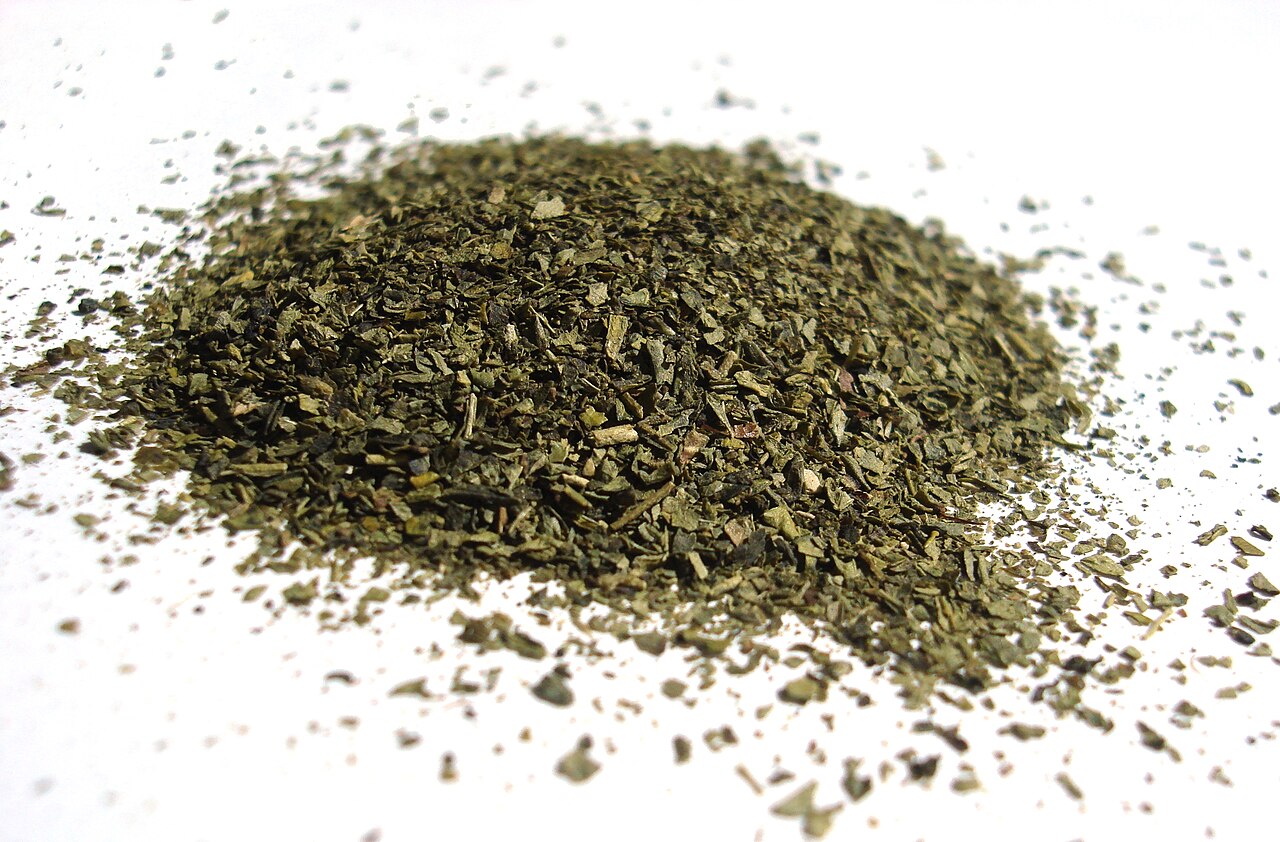
If tea had remained only a scattered local beverage, it might occasionally have appeared near the frontier, but it would not have been worth this level of state attention. What made tea heavy inside quechang was the convergence of three things. First, demand was stable. In many borderland and cross-regional circuits, tea was not a one-time curiosity but a repeatedly consumed commodity. Second, transport was organizable. Tea could be processed, compressed, packed, and moved in bulk over long distance. Third, revenue was legible. Once trade volume became large enough, tea had not only market value but tax value and frontier-policy value.
Once those three conditions came together, tea became very hard for the state to treat as ordinary local goods. It became a commodity worth managing. And “worth managing” was not an empty phrase. It meant concrete institutional actions: deciding which tea could enter the frontier, which tea needed permits, which taxes were due, which routes counted as legal, and which cross-border acts counted as smuggling. Quechang was one of the spaces where those actions became densest. In other words, tea was not accidentally present there. It was there because it had already become suitable for institutional management.
Put even more bluntly, the state did not place tea inside quechang because tea had culture, and not because tea tasted good. It did so because tea already looked like an important commodity: broad demand, long trade routes, visible price differentials, taxable potential, and frontier supply significance. Tea entering quechang means tea had become heavy enough to justify administrative cost.
4. Why does quechang help us reinterpret tea tax, monopoly policy, and tea licenses? Because border space makes it easiest to see that these are really different links in the same chain
If we look at tea tax, state control over tea, and tea licenses separately, they can easily feel like three parallel terms: one about taxation, one about monopoly or direct control, and one about documentary permission. But once quechang is added, the relation becomes far clearer. Tea tax answers why the state wanted revenue from tea. Monopoly policy answers why the state wanted stronger control over tea profit. Tea licenses answer how tea circulation could be made legible, passable, and checkable. Quechang is where that whole system actually landed in border practice.
Put differently, tea tax is the moment the state sees tea’s revenue value. Monopoly policy is the moment it tries to hold tea profit more directly. Tea licenses are the mechanism by which circulation becomes legal and traceable. Quechang is the frontier site where all of that stops being abstract. At quechang, the questions are immediate: is there a permit, has tax been paid, is this a prohibited good, is this out-of-zone movement, is this tea intended for the approved region? Those questions determine whether goods can trade, cross, or move onward.
This is exactly why quechang matters so much to Chinese tea history. It is the place where those institutions connect. If we write only tea tax, history risks becoming fiscal history. If we write only monopoly policy, it risks becoming a story of state control. If we write only tea licenses, it risks becoming documentary history. Add quechang, and we can finally see how institutions collide with roads, borders, merchants, goods, and demand, and are then executed, bent, evaded, and reorganized under real conditions.
5. Why does quechang also naturally lead to the problem of private tea? Because once legal border routes are tightly designated, the incentive to bypass them grows at the same time
Every institutional trading space has a shared feature: the more clearly it defines legal routes, the more clearly it also creates profit in detours. Quechang was no exception. Once the state required tea to enter through certain places, with certain paperwork, for certain destinations, and under certain tax rates, then out-of-market trade, cross-zone resale, permit-free movement, concealment, and smuggling immediately acquired value. So quechang and private tea smuggling are not unrelated topics at all. They are two sides of the same structure.
This does not mean quechang was ineffective. In fact, the clearer the legal path became, the more profitable off-path movement could become. The state wanted to make tea circulation visible and controllable through quechang. The market quickly began calculating shortages, high-price areas, heavy procedures, avoidable checkpoints, and alternative roads. The more important quechang became, the more sensitive private tea often became as well. That is precisely because tea had become something valuable enough for people to risk crossing institutional boundaries over it.
In other words, quechang is not the opposite of private tea. It is part of the logic that makes private tea intelligible. Without such clearly bordered legal trade spaces, much of what later counted as “private” would never have been defined so sharply. It was because the state drew legal routes so clearly that illegal ones became visible too. In tea history, this matters deeply. The more institutionalized tea became, the more friction grew between tea circulation and state governance.
6. Why are quechang and the tea-horse trade related but not identical? Because the first is the larger border framework, while the second is one especially intense resource-driven exchange within it
Many readers see border trade, tea, and exchange and immediately think of the tea-horse trade, then begin to treat quechang and tea-horse exchange as if they were the same thing. They are closely related, but not identical. The tea-horse trade emphasizes exchange structured around tea and horses, with military supply, frontier defense, and plateau demand behind it. Quechang is broader. It is the larger institutional border-trade space that could contain multiple goods and multiple trade purposes, with tea as one especially important category within it.
This distinction matters because if we write only the tea-horse trade, readers can easily reduce frontier tea history to the idea that tea was simply used to get horses. But once tea is put back into quechang, it becomes clear that tea’s frontier role was much wider. It was simultaneously a taxable good, a monopolized or restricted good, a permit-checked good, an anti-smuggling good, a frontier supply good, and one of the most price-sensitive commodities in border circulation. The tea-horse trade reveals tea’s resource side. Quechang reveals tea’s institutional side.
So quechang helps free the tea-horse trade from overly narrow narrative. Tea-horse exchange was not a heroic barter scene happening at the end of mountain roads. It was embedded inside a larger border institutional environment. Once quechang is understood, the tea-horse trade stops looking like a simple case of mutual need and begins to look like one highly intensified exchange pattern operating inside a prebuilt system of designated places, routes, and rules.
7. Why is the Song especially worth revisiting through quechang? Because the Song state depended heavily on finance, cared intensely about border order, and tea stood exactly where those pressures met
Quechang existed across more than one dynasty, but if we want to tell its tea-history significance seriously, the Song is almost impossible to avoid. The reasons are not mysterious. Song fiscal pressure was persistent, and border relations were complex. Trade, reciprocal markets, horse procurement, frontier defense, and tax extraction were tightly entangled. Tea stood precisely at the intersection of those pressures. It was both taxable and exchangeable, both urban-market goods and frontier supply goods, both commercial profit and border-policy resource.
That is why Song-era quechang reveals tea so clearly as an institutional commodity. By this point tea was no longer merely a local specialty. It was something the state had to calculate, permit, inspect, restrict, and protect against private diversion. Tea was valuable not just because people drank it, but because its value could be repeatedly calculated inside cross-border trade. And that value was not singular market price alone, but an overlap of tax value, frontier-trade value, exchange value, and governance value.
So revisiting Song tea history through quechang does more than add another technical term to the period. It helps explain why Song authorities kept strengthening tea’s institutional management. This was not because bureaucrats suddenly fell in love with paperwork. It was because tea had already become too important to remain in the category of ordinary local goods flowing however they pleased.
8. Why is quechang still worth rewriting today? Because it corrects the thin habit of writing tea history only as aesthetics and consumption, and puts tea back inside the real institutional world
Tea writing today very easily circles around aesthetics and consumption: which tea is more refined, which vessel is more beautiful, which space feels more atmospheric, which old story is most easily restaged. None of this is worthless. But if Chinese tea history is reduced to these dimensions alone, it becomes thinner and thinner. A topic like quechang pushes tea back into real history: tea was not only in the cup, but at the border; not only in literati notebooks, but in inspections, permits, prohibitions, and tax registers; not only in aesthetic discourse, but in trade routes, price differences, release procedures, and illegal crossings.
This is not an attempt to make tea history dry. It is an attempt to make it complete. A mature history of Chinese tea cannot stop at flavor, objects, and lifestyle. It also needs border trade history, tax history, circulation history, and the history of how states learn to see a commodity. The importance of quechang lies precisely in forcing us to admit again that tea became so important in Chinese history not only because it was worth drinking, but because it was worth managing.
In that sense, quechang may not be as romantic as The Classic of Tea, nor as visually attractive as the Tea Horse Road, but it may explain more than many prettier topics do. It places tea back at the intersection of border institutions and allows readers to see that tea tax, monopoly control, tea licenses, private tea, frontier demand, and mutual markets are really different faces of one historical structure. Once that becomes clear, Chinese tea history no longer remains a single light cultural line.
9. Conclusion: what quechang really reveals is not merely that ancient borders had markets, but why tea became heavy enough to be handled seriously inside border institutions
If this whole article had to be compressed into one shortest conclusion, it would be this: what matters most about quechang is not simply that it was a border market, but that it exposes tea’s changing historical status. Tea could begin as a local good, local produce, and everyday beverage. But once it possessed broad demand, long trade routes, visible tax potential, and sensitive frontier significance, it could no longer remain in that lighter position. The state would see it, restrict it, release it, tax it, inspect it, permit it, and reorganize border trade around it.
That is why quechang is not side background to tea tax, monopoly policy, tea licenses, private tea, and the tea-horse trade. It is one of the key spaces that allows those topics to connect. It tells us with unusual clarity that tea had become worth not only drinking, but checking, recording, permitting, passing, and prohibiting. Once that is understood, many apparently complex institutional arrangements in Chinese tea history become easier to follow. They did not appear from nowhere. They were built on the same premise: tea had become too important to remain only in the cup.
Continue reading: Why Tea Tax Deserves Its Own History, Why the Tea Monopoly Deserves Its Own Rewrite, Why Tea Licenses Deserve to Be Reconsidered, Why Private Tea Smuggling Was Never Fully Suppressed, and Why the Tea-Horse Trade Deserves to Be Reconsidered.
Source note: written from standard Chinese-language public historical summaries concerning Song-Liao, Song-Xia, and Song-Jin quechang markets, together with widely repeated descriptions of quechang as government-managed border markets where trade was inspected, taxed, prioritized, and restricted; also synthesized with this site’s existing related features on tea tax, state control over tea, tea licenses, private tea smuggling, and the tea-horse trade. The purpose here is to explain the significance of quechang for the institutional history of Chinese tea rather than reconstruct every location and tax detail line by line.