Fresh tea drinks feature
Why modern tea chains turned collaborations into a merch economy: what are people really queueing for beyond the drink?
If you still think China’s modern tea chains are mainly in the business of selling made-to-order drinks, a lot of store queues will look irrational. People are not always lining up because they are thirsty, and not always because a new formula is dramatically better than the old one. Very often they are lining up for something larger: a limited collaboration, a branded paper bag, a character cup sleeve, stickers, a display wall, a photograph that can be posted immediately, and the feeling of having caught a wave while it is still hot. At that point, a tea drink stops being only a beverage and starts functioning as a relatively affordable ticket into a fast-moving cultural event.
That helps explain why so much high-discussion Chinese internet talk around tea chains is no longer just about taste. The conversation is increasingly about whether a collaboration is worth chasing, whether the merch is complete, whether the bag is attractive enough, whether the chosen IP fits the audience, and whether the whole thing is sincere or just another cash-grab. Once collaborations move through official brand accounts, Xiaohongshu posts, short-video unboxings, Weibo discussion, and resale platforms, they stop being one-off promotions. They become a full consumption mechanism. Drinks, IP, mood value, scarcity, queue logic, photography, and low-threshold collectability get bundled together into something much easier to amplify than flavor alone.
1. Why collaborations stopped being an accessory and became the product logic itself
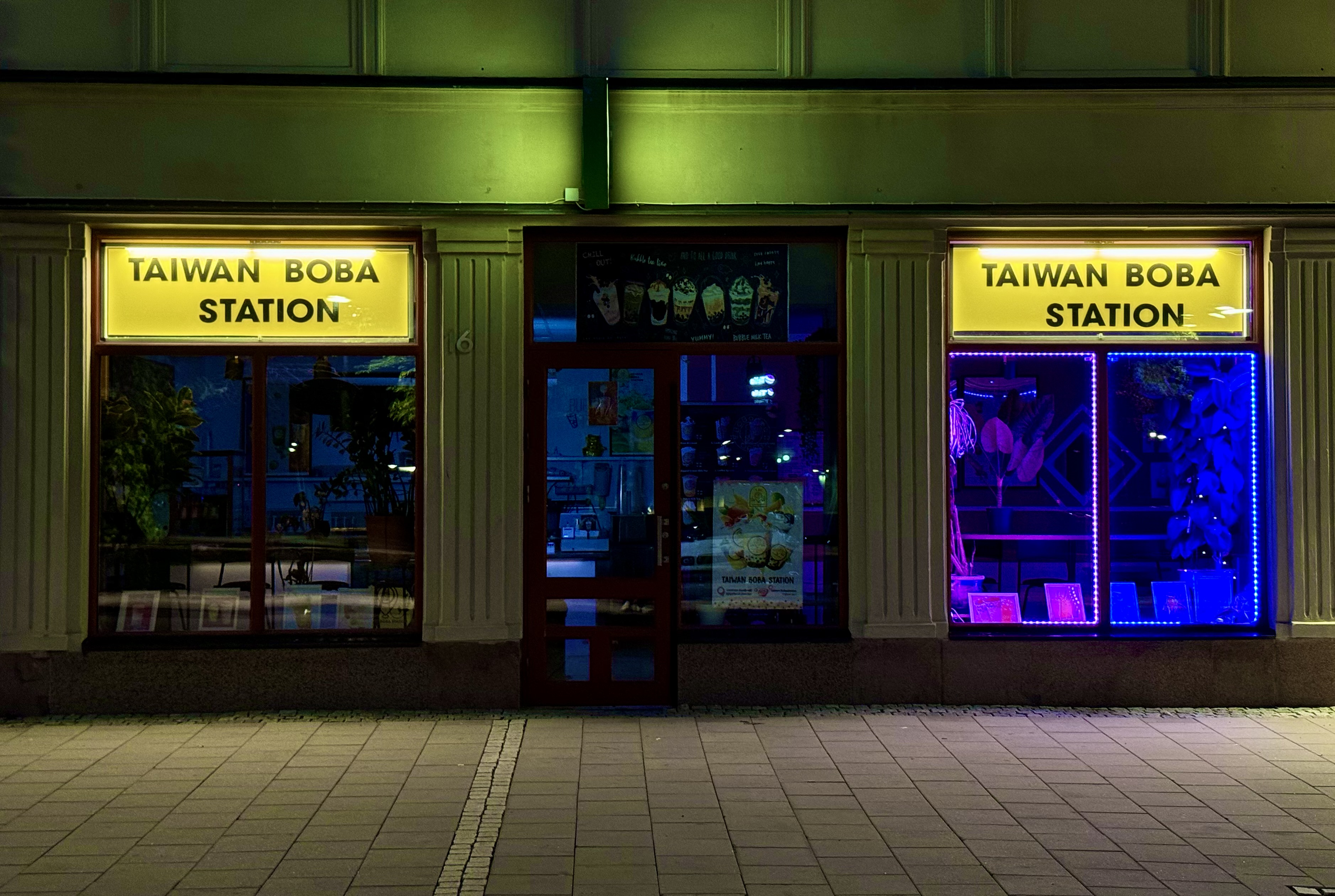
In an older marketing model, a collaboration often sat outside the product: a temporary wrapper, a guest logo, a campaign poster, a burst of attention, then back to normal. Modern Chinese tea chains pushed the mechanism further. They increasingly make the collaboration itself the reason to enter the store right now. In other words, the tie-in no longer behaves like extra decoration around an existing drink. It becomes the purchase trigger.
That shift makes sense in a high-frequency category. Tea-chain customers are already used to rotating through drinks across a week. A brand does not need to rebuild the habit from zero; it only needs to provide a stronger reason for why today’s choice should be this store, this drop, this limited window. Tea drinks also sit in a useful price zone. They are much cheaper than many premium collectibles, beauty launches, concert tickets, or designer goods, which means the cost of entering a hot cultural moment can feel low enough to justify impulse participation.
Just as importantly, fulfillment is fast. A person can see the announcement at lunch, visit a store after work, pick up the drink, photograph the packaging, post it online, and complete the entire cycle in a single evening. Few retail formats collapse online hype and offline redemption that quickly.
2. Why tea chains are especially suited to turning collaborations into a merch economy
A successful merch economy needs several conditions to align. The product has to be everyday enough, the price cannot be too punishing, distribution needs to be dense, packaging needs to be visually flexible, and the act of consumption needs to be visible enough to other people. Tea chains happen to satisfy almost all of those conditions at once. They are more flexible than bottled soft drinks, more repeatable than sit-down meals, and more physically expressive than many ordinary convenience purchases.
They also have a built-in set of merch carriers. Cups, sleeves, paper bags, tray holders, stickers, seals, and add-on packaging are not marginal details in this category; they are surfaces waiting to be designed. Once brands realize that these objects can carry characters, color systems, scarcity cues, and posting value, they stop treating them as disposable support materials. They become media objects.
This matters because tea-chain consumption is already socially visible. Drinks appear in offices, elevators, malls, train stations, hand-held street photos, short videos, and chat-group snapshots. Because the drink is seen, it can do communicative work. That makes it easier for a brand to justify spending design energy on objects that might otherwise look trivial.
3. People are often queueing less for taste than for portable participation
A useful way to read collaboration queues is to ask which part of the experience motivates action earliest. Flavor can only be judged after purchase. Packaging and merch can be judged as soon as the promotional image drops. This means taste is often the later layer, while visual and collectible promise supply the first push. Consumers are not irrational when they line up for that. They are responding to a structure in which the most legible value is front-loaded.
What they are really buying is a portable form of participation. Online trends move fast and disappear faster. A collaboration drink offers a way to materialize that fleeting excitement. A fan can carry the character on a bag, hold the cup in a photo, keep the sticker, show the sleeve to friends, or post proof that they got in before the wave cooled down. The object may be temporary, but the participation it certifies feels real while the trend is alive.
That is why even short-lived packaging can matter. A bag that gets thrown away tomorrow can still deliver social value today. For the brand, that short window is enough if it produces visibility, queues, posting volume, and renewed entry into the consumer’s decision cycle.
4. From sleeves to badges: why tea chains increasingly resemble low-threshold collecting systems
Traditional merch usually announces itself clearly as something to collect: figurines, blind boxes, cards, badges, plush toys, prints. Tea-chain collaborations work differently. They often lower collecting into a lighter, easier form. Instead of asking the customer to commit to a full collector identity, they offer a small object that feels collectible enough: a nicely designed paper bag, a character sleeve, a sticker set, a token card, a limited tray insert. The threshold is low, but the emotional mechanism is familiar.
This light-collection model fits dense urban life. Many young consumers do have collecting impulses, but not always the space, money, or long-term discipline for heavier collection hobbies. A collaboration drink offers a compact compromise: relatively affordable, easy to obtain, and emotionally rewarding almost immediately. The result is a kind of half-merch, half-memory object. Bags get flattened and saved. Sleeves get tucked away. Stickers migrate onto laptops and bottles. Unwanted drink portions may be forgotten, while the add-on materials keep circulating through gifting, swapping, or resale.
That tells us something important. The category is no longer merely “a drink plus some freebies.” It is increasingly designed around managing low-threshold collectability itself.
5. Why brands rely on collaborations more and more
From the brand side, the logic is straightforward. Attention is expensive, and generic product launches often struggle to cut through the noise. Tea chains operate in an overcrowded field: many stores, rapidly copied formulas, fast trend turnover, and consumers whose willingness to be surprised is finite. In such an environment, brands need a repeated reason for re-entry. Collaborations do that efficiently.
The category’s deeper advantage is that it can borrow emotional infrastructure from outside culture. An animation character, a game universe, a television property, a museum theme, a seasonal ritual, or a city landmark can instantly supply context that the tea brand does not need to build from scratch. The customer already understands why this thing matters. The brand only needs to convert that recognition into store traffic.
In effect, collaborations lower explanation costs. Instead of asking, “Why should I buy this drink today?”, the customer receives an easier answer: “Because this drop is attached to something I already care about.” For a high-frequency retail category, that is powerful.
6. The best collaborations sell three layers at once: beverage, identity, and social proof
A collaboration really works when three layers hold together. First, the drink cannot be actively disappointing. It does not need to revolutionize the category every time, but it needs to be sufficiently acceptable. Second, the collaboration target has to connect with the intended audience. Third, and often most importantly, the purchase must generate social proof. Holding it, posting it, commenting on it, or discussing stock levels should make the buyer feel placed inside a live public moment.
Many collaborations fail not because the drink is terrible, but because the latter layers collapse. The chosen IP may feel off. The design may look lazy. Distribution may be confusing. Stores may run out in ways that anger customers rather than excite them. Or the merch may feel so disconnected from the drink that consumers start wondering why they would not just buy official licensed products elsewhere.
Successful drops understand that the customer is not consuming only the final object. They are consuming the wait, the reveal, the unboxing, the comparison with friends, the posting sequence, and the shared sense that something was happening and they were inside it.

7. Why museum, city, and local-culture collaborations deserve special attention
Not all collaborations do the same cultural work. Entertainment IP tie-ins often rely on pre-existing fan energy. Museum, city, festival, heritage, and local-culture collaborations do something more complicated. They compete to show which brand can translate Chinese cultural material into something contemporary, visible, and easy to inhabit in everyday life.
This matters especially for tea chains because tea already carries older associations with place, season, ritual, and Chinese aesthetic language. That gives brands a richer field to draw from, but it also creates risk. It is easy to produce superficial “heritage styling” that reduces culture to decorative motifs. The more interesting collaborations do more than print a classical painting on a cup. They build some real point of contact with daily life: a city walk, a spring outing, a museum stop, a local memory, a seasonal ritual, or the neighborhood around the store.
When done well, such collaborations can have longer value than generic pop tie-ins because they do not only borrow heat; they teach the brand how to build its own cultural fluency.
8. Why consumers complain about cash-grab collaborations and still buy them
One of the most revealing things about collaboration tea culture is its open contradiction. Consumers often say, with some justification, that brands are obviously extracting hype value. They joke that the merch is the real product and the drink is only the access ticket. They criticize shallow design, low-quality freebies, or repetitive strategy. Yet many of the same consumers still track launches, compare stock, and show up.
This is not simple hypocrisy. It reflects a more contemporary consumer position: people understand that marketing is happening, but they do not automatically reject it if the emotional return is real enough. If the design is good, if the IP connection feels meaningful, if the bag photographs well, if the act of participation is enjoyable, then many consumers are willing to cooperate with the mechanism while still joking about it.
That creates a very modern form of half-ironic consumption. Buyers can be skeptical and enthusiastic at the same time. They can criticize the strategy while still feeling that the pleasure, social gain, or collectible satisfaction is worth it. For brands, that means audiences are not naive, but they are still available. Lazy execution is punished quickly precisely because the audience already knows the game.
9. Will collaborations eventually exhaust the category?
Yes, they can create fatigue. Too many drops and consumers stop caring. Weak partners and the brand looks directionless. Formulaic merch and the whole thing starts to resemble automated extraction. If drink quality keeps falling behind, collaboration logic starts to look like camouflage. Chinese internet discussion already contains all of these warnings.
But none of that means collaborations are about to disappear. The underlying structure still favors them. Brands need repeated entry points. Consumers want low-cost access to live cultural moments. Social platforms want visual content. Stores want a purchase that extends into discussion and repeat traffic. As long as those structural conditions remain, collaborations will stay. What changes is the level of craft required to make them work.
The future likely belongs not to collaboration as a lazy logo-swap, but to collaboration as a micro content project: visual identity, packaging logic, store displays, queuing design, distribution rules, and social-media afterlife all working together.
10. Why this deserves a place in the history of Chinese drink consumption
It would be a mistake to treat collaboration tea drinks as a passing gimmick with no larger significance. What they reveal is a distinctly contemporary beverage logic: something liquid, immediate, and perishable can be extended through packaging, merch, IP, and social visibility into a visible event. For older beverage industries, that is a very different worldview. Winning is no longer only about recipe and channel. It is also about becoming a fast, light, repeatable cultural distribution node.
Tea chains are unusually suited to this role because they combine the live, made-to-order feel of store retail with enough standardization to run coordinated national drops. They can draw on tea’s cultural language while still speaking through contemporary packaging and internet-native hype mechanisms. They are not the whole story of Chinese tea culture, but they are one of the clearest places to watch tea being reformatted for mass urban life.
So when young consumers queue outside a collaboration-heavy tea store, they are often not just buying relief from thirst. They are checking into a trend in physical form, buying mood value at a manageable price, topping up their social visibility, and carrying a piece of popular culture out in their hands. That is why modern tea increasingly looks like a merch economy, and why it deserves to be written into the wider history of Chinese drink consumption.
Related reading: The rise of Chagee, Why light milk tea returned to the center, Why fruit tea is back, and Why ingredient transparency became a selling point.
Source references: Jiemian-reposted discussion on tea collaborations and merch economy, Industry coverage on Gu Ming and high-heat IP tie-ins, The Paper on tea drink collaborations, merch, and youth mood consumption, Relevant CBNData consumer trend research.