Fresh tea drink observation
Why salted preserved lemon tea deserves its own 2026 feature: from Hong Kong salty lemon soda memory to a tea-drink branch that feels more de-greasing, sharper, and more state-focused than ordinary lemon tea
If ordinary lemon tea is already one of the most mature base solutions in 2026 tea drinks, then the next useful question is no longer whether brands still need lemon tea, but how they keep splitting the same line into more precise state-based answers. Salted preserved lemon tea is especially worth isolating in that process. It is not the same as the site’s earlier pieces on Hong Kong-style lemon tea’s return or electrolyte lemon tea. The first is about a high-frequency classic answer; the second is about hydration and state-repair language. Salted preserved lemon tea sits elsewhere. It takes the older Hong Kong salty lemon / salted lemon soda logic of cutting grease, sharpening the palate, and finishing more cleanly after heavy food, then translates that logic into the contemporary made-to-order tea menu. It is not simply a saltier lemon tea. It is a more specific answer to a practical question: once everyone already understands ordinary lemon tea, what can a store use to explain that this particular cup is better after a heavy meal, in muggy weather, or when the mouth and body both want something more exacting and corrective?
That is why it deserves a standalone drinks article. Many of today’s menu changes are converging toward the same direction: fewer vague grand trend words, more language tied to specific moments and specific bodily feelings. We have already seen that in the site’s discussions of post-meal tea drinks, tea drinks for spicy food, office survival drinks, and cooling-factor lemon tea language. Salted preserved lemon tea gains renewed value precisely because it sits at the crossing point of those lines. It has lemon tea’s mass recognizability, but pushes further toward “clean finish,” “pressing down heaviness,” and “waking the palate back up.” It carries regional memory, yet can still be repackaged as a very current high-frequency state drink.
Just as importantly, it is not a flavor invented out of nowhere. Its strength comes from the fact that consumers already hold a vague but stable mental model for it. Even if many people do not drink salty lemon soda all the time, they already sense that salted preserved lemon means something more heavy-duty, more heat-friendly, more suited to pressing down a greasy or overworked mouth. For stores, that half-familiar condition is ideal: they do not need to educate from zero, but they still gain enough difference to cut a more precise sub-branch out of the larger lemon-tea line.

What this article looks at
Core question: why salted preserved lemon tea deserves to be separated from ordinary lemon tea in 2026 Signals: Hong Kong salty lemon soda memory, stronger sea-salt and savory flavor lines, regional-ingredient storytelling, post-meal de-greasing use, heavy-food pairing, muggy weather, office and daytime repetition Who this is for: readers trying to understand why stores are seriously operating a lemon-tea branch that is saltier, more closing, and more state-corrective than generic fruit refreshment
1. Why is 2026 the moment when salted preserved lemon tea becomes worth splitting away from ordinary lemon tea?
Because ordinary lemon tea is already fully mature. It is one of the clearest base solutions in the tea-drinks market: large cup, sharp palate, acidic citrus aroma, commuting friendly, post-meal friendly, hot-weather friendly, delivery friendly, and easy to choose on days when the consumer does not want milk. The problem is exactly that maturity. Once everyone understands what ordinary lemon tea is for, stores can no longer extend the line simply by launching yet another lemon tea. They need finer state differences. In other words, the next step is no longer whether lemon tea still exists, but which kind of lemon tea belongs to which moment.
Salted preserved lemon tea answers that question very well. It points more clearly toward a specific set of moments: right after heavy food, during muggy weather, in an afternoon when the mouth feels coated, or when a person wants something that presses things back down and leaves a cleaner finish. Ordinary lemon tea can certainly serve those moments too, but salted preserved lemon tea states the case more sharply. Its point is not to make the drink more aggressive. Its point is to make “pressing down,” “closing,” and “waking up” more legible. That kind of legibility is especially valuable in 2026 because stores increasingly need specific reasons, not just generic refreshment claims.
The larger industry writing also supports that direction. In Hongcan’s reporting on a 2026 tea-drinks development report, salty milk tea rises in share, savory notes are being taken more seriously, and brands are also increasingly using regional ingredients to build differentiation. Put those lines together and the logic becomes clear. On one side, savory or salty flavor is no longer treated merely as gimmick. On the other, local and place-based ingredient memory is re-entering menus. Salted preserved lemon tea sits directly between those two shifts. It can borrow from the “salt leaves a stronger memory point” trend while also borrowing from the renewed translation of Hong Kong and Lingnan old tastes into contemporary tea-drink form.
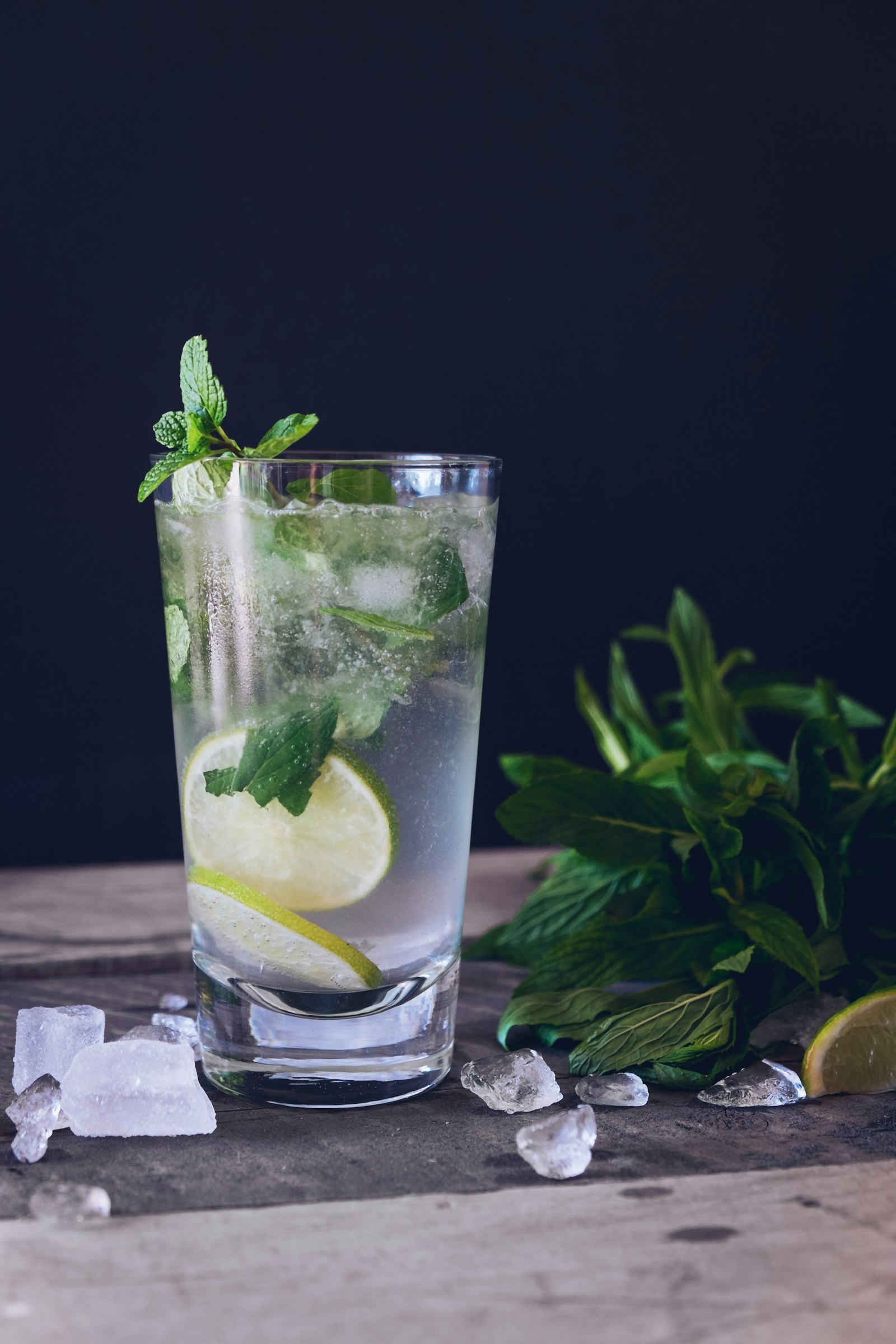
2. Salted preserved lemon tea is not really selling “salt,” but a cleaner finishing structure
Many people see the phrase “salted preserved lemon tea” and assume the appeal is novelty. It is not. What really makes it work is not the surprise that tea can turn salty. It is the way it reorganizes strengths that already belong to lemon tea: the acidic citrus lift remains, the tea base remains, the cooling structure remains, but the final stretch becomes cleaner, tighter, and better at handling the lingering oil, sweetness, spice, humidity, and dullness left in the mouth. In other words, it is not selling salt itself. It is selling the way salt helps lemon tea finish its job more decisively.
That matters especially for high-frequency products. High-frequency drinks do not need to produce theatrical shock every time. They need to make the consumer feel that the cup was smooth, correct, comfortable, and exactly right for today. Salted preserved lemon tea has a direct advantage here over many heavier fruit products. Many fruit-driven drinks are strongest at the front. Salted preserved lemon tea is stronger at the end. It does not inflate the cup through fruit flesh, dairy, or toppings. Instead, it works like a finishing move that makes the drink feel complete.
If I had to give the cleanest product judgment, it would be this: salted preserved lemon tea pushes ordinary lemon tea one step further from generic freshness toward a drink that feels specifically suited to correcting a certain state. It never leaves the larger lemon-tea family, but it changes the family from “everyone understands this” into “I know exactly when I should order this version.” That ability to move from general refreshment toward precise fit is one of the most important menu skills of 2026.

3. Why does it fit post-meal, spicy-food, and heavy-flavor moments especially well, rather than just functioning as a casual summer drink?
Because those moments need closure rather than more stimulation. After hotpot, grilled food, fried food, braised dishes, or spicy noodle meals, many consumers are not actually looking for a drink that continues the party. They are looking for a drink that shuts it down cleanly. Milk tea often presses inward too much. Heavy fruit tea can keep piling on sweetness and aroma. Pure tea is certainly clean, but for many consumers it can also feel too plain. Salted preserved lemon tea sits neatly in the middle: not empty like plain water, not burdensome like milk tea, and more obviously necessary than many lightly fruity drinks once the meal is over.
That is why it connects so naturally to the site’s earlier lines on post-meal tea drinks and tea drinks for spicy food. We have already seen that stores are more willing to build products that do not emphasize fullness but instead emphasize putting the mouth back into place. Salted preserved lemon tea is especially mature here because it grows out of a long-standing use logic: one cup after heavy food, one cup in hot weather, one cup when the mouth feels coated, one cup when the throat and palate want to be reset. The store’s job today is not to invent that logic from scratch, but to translate it into modern tea-drink language.
And because of that, it is often sturdier than many poster-led seasonal drinks. Poster-led drinks sell the question “do you want to try this once?” Post-meal, de-greasing, palate-reset drinks sell the question “do you need this today?” The second question usually builds a stronger long-term menu asset.
4. Why does it feel more like a “state drink” than a mere nostalgic drink, even compared with ordinary Hong Kong-style lemon tea?
Because ordinary Hong Kong-style lemon tea still tends to be understood as a classic base product: tasty, de-greasing, highly compatible, refreshing, and widely legible. Salted preserved lemon tea moves one step beyond that and gives the same basic logic a more explicit state vocabulary. It is not only Hong Kong, and not only classic. It is easier to frame as the cup for days when the person feels stuffy, coated, dulled, or in need of something more corrective. That shift from nostalgia tag to state tag matters a great deal.
The advantage of a state tag is that it gives an old taste a present tense. Nostalgia certainly has value, but nostalgia is usually better for occasional triggers, cultural content, or regional storytelling. A state tag is better for daily repetition. Consumers are unlikely to order from emotion every day, but they may well order repeatedly because “today I want something that presses the palate back into line.” Once stores understand that, they become more willing to place salted preserved lemon tea on the daytime main line rather than treating it as a retro side item with a Hong Kong filter.
That is why I read salted preserved lemon tea in 2026 not as simple retro return, but as the result of deeper menu subdivision. Stores are now most skilled not at inventing entirely new beverage universes, but at cutting already mature categories into more precise use cases: ordinary lemon tea, cooling-factor lemon tea, electrolyte lemon tea, hot lemon tea, Hong Kong-style lemon tea, and now salted preserved lemon tea. They all still look like lemon tea from a distance, but they no longer sell the same thing. Salted preserved lemon tea occupies the slot that is tighter, more palate-pressing, and more corrective than merely thirst-quenching.
5. Why does this line also fit the broader rise of sea-salt and savory flavor without feeling off-topic?
Because 2026 tea drinks really are taking savory or salty flavor more seriously. Industry reporting summarized by Hongcan notes that salty milk tea rose to 15.6% of sampled milk-tea launches in 2025, with brands actively using sea salt, salted dairy, and savory accenting to build memory points. The site has already traced that line in the rise of salty milk tea. That article was about dairy structures: why salt can reduce perceived sugary heaviness and add layered satisfaction inside milk tea. Salted preserved lemon tea is a different question: what happens when “salt” leaves milk and cheese and enters a lighter, more transparent lemon-tea structure? My answer is that it still works, and in some ways it works more maturely.
The reason is simple. In milk tea, salt often exists to hold sweetness down. In salted preserved lemon tea, salt exists more to make refreshment feel real and more exact. It does not mainly intensify the product’s body. It clarifies the drink’s ability to cut grease, wake the palate, press things down, and finish properly. Compared with milk tea, it offers less dense satisfaction and more state correction. Compared with ordinary lemon tea, it offers less generic freshness and more precision. That precision is what lets salted preserved lemon tea move from an “old taste variant” into a truly operable menu branch.
So the connection is not forced at all. If anything, salted preserved lemon tea shows that savory flavor has actually matured. A flavor direction only becomes real capability when it can enter multiple structures and perform different jobs. Salted preserved lemon tea shows that “salt” is no longer just a label for milk caps, milk tea, or cheese toppings. It can also function as a structural tool in lighter tea drinks.
6. Where are the boundaries of this trend?
First, salted preserved lemon tea is very easy to make as a conceptually correct but liquidly wrong product. The phrase itself is memorable and immediately suggests Hong Kong style, de-greasing use, old taste, hot weather, and a more mature finish. But if the tea base is weak, the lemon is not natural, the sweetness too high, or the salty impression only floats on the surface, the cup ends up feeling neither like classic lemon tea nor like a properly mature salted lemon structure. It just becomes a good name.
Second, it does not automatically equal healthier drinking. It is certainly easier to read as more daytime-friendly, more heat-friendly, and more like a light corrective beverage, but that is first a perceptual advantage, not a nutrition conclusion. Real burden still depends on sugar, cup size, base structure, and total formula. A store can use salted preserved lemon language to compete for the “this feels more reasonable today” position, but it cannot treat that language as automatic proof of lower burden.
Third, its hardest problem is scale. If handled too lightly, it collapses back into ordinary lemon tea. If handled too heavily, the product can turn stuffy, harsh, or oddly artificial. Its best state is actually very precise: the tea is still there, the lemon is still there, the salt does not steal the stage, but the drink’s closing and palate-pressing ability is clearer than in ordinary lemon tea. Once that balance breaks, the drink slides from mature branch back into gimmick.
7. Why does this belong inside the broader map of 2026 drinks shifts?
Because it shows that menus have entered a more exact operating phase. Stores are no longer only trying to invent endless new flavors. They are cutting already mature large categories into smaller sub-branches that are more frequent, more precise, and more commercially efficient. Ordinary lemon tea will certainly keep selling, perhaps even more than before. But the real question for deepening that line is whether stores can split “generic refreshment” into more specific reasons for drinking. Salted preserved lemon tea is exactly that kind of split: it rewrites ordinary lemon tea into the cup that is better after heavy flavor, better in muggy weather, and better when the palate needs pressing back into order.
That places it on the same map as many themes the site has been following over the past months: post-meal tea drinks becoming stable, spicy-food pairings being actively managed, office survival drinks, and hydration-coded menu language. Salted preserved lemon tea does not sit outside that picture. It simply makes the “palate reset, clean closure, de-greasing, and state correction” zone of the picture more concrete, more flavorful, and more rooted in place-based memory.
In the end, salted preserved lemon tea is worth writing about in 2026 not because it suddenly became completely new, but because it explains very clearly how the industry is maturing: from broad trends into finer segmentation, from vague refreshment into precise states, and from selling flavor alone into selling why this exact moment calls for this exact cup. If a drink can hold all three of those things at once, it stops being just a retro variation and becomes a real menu asset. Salted preserved lemon tea is beginning to look like exactly that kind of asset.
Continue reading: Why Hong Kong-style lemon tea became a high-frequency answer again, Why stores began seriously operating electrolyte lemon tea, Why post-meal tea drinks are becoming a stable occasion, Why tea drinks are getting better at receiving spicy-food scenes, and Why salty milk tea deserves its own 2026 feature.
Sources
- Hongcan: Beyond simply turning “salty” — is another 2026 tea-drink tailwind regional ingredients?
- Related in-site features on Hong Kong-style lemon tea, electrolyte lemon tea, post-meal tea drinks, spicy-food pairings, and salty milk tea (March-April 2026).