Fresh tea observation
Why tea chains in 2026 are separating “Cooling-Factor Lemon Tea” from “Sea Salt Electrolyte Lemon Tea”: how one lemon tea becomes two product languages of cooling wake-up and replenishment recovery
If the past two years have been about turning breakfast, office afternoons, after-meal moments, and the second cup into menu language, then another 2026 shift worth isolating is the way even a basic drink is being split into finer state-driven branches. CHAGEE placing “Sea Salt Electrolyte Lemon Tea” and “Cooling-Factor Lemon Tea” side by side on the same product page is a representative signal. Both are still lemon tea, but they are no longer selling the same thing. One emphasizes sea salt, electrolytes, hydration feel, and a summer recovery logic; the other emphasizes added cooling factor, sustained icy sensation, cooling wake-up, and instant refreshment. In other words, stores are beginning to distinguish more seriously between “this cup helps restore your state” and “this cup helps cool and wake you up right now.” That is not a trivial copy difference. It is a split in product language.
What matters is not that “electrolyte” or “cooling factor” are inherently new words. What matters is that they show fresh tea becoming more precise in how it reads moments of consumption. In the past, a lemon tea was commonly explained as tart, refreshing, palate-cleansing, suitable for summer, and easy to drink in a large cup. Those basic functions are still there. But stores are no longer satisfied with selling it as one broad category of “refreshing lemon tea.” They are reorganizing the same tea base, lemon, and cold sensation into two different bodily logics. One leans toward cooling, waking up, impact, and immediate lift. The other leans toward replenishment, recovery, hydration feel, and light restoration. The first is closer to “I am hot, stuffy, and need to wake up now.” The second is closer to “I feel a bit spent and want something that feels more like taking care of my state.”
That is why this is not just a renaming exercise. Stores are starting to treat “cooling feeling” and “replenishment feeling” as two independently manageable goods. In earlier menu writing, these sensations were often folded together into a large bag of words like refreshing, energetic, thirst-quenching, and summer-ready. By 2026, brands seem much more willing to separate them: why should one lemon tea make you think of sustained icy sensation, while another makes you think of sea salt and electrolytes? Because stores have realized that when people order, they do not only need flavor description. They need a more precise explanation of their current physical state.

What this article is looking at
Core question: why stores are splitting “cooling wake-up” and “replenishment recovery” into two languages for the same lemon-tea base Signals: CHAGEE’s “Sea Salt Electrolyte Lemon Tea” and “Cooling-Factor Lemon Tea,” sustained icy sensation, sea salt, electrolytes, hydration feel, cooling refreshment, state recovery, high-frequency summer cup formats For readers trying to understand how 2026 tea chains keep refining basic products into more precise menu grammar
1. Why are these side-by-side lemon teas worth isolating?
Because they place a distinction directly on the menu that used to exist only vaguely in consumer feeling. Tea chains have always made different styles of lemon tea: some more tart, some sweeter, some more floral, some more Hong Kong-style, some more delivery-friendly, some more obviously large-cup commuter drinks. But those differences were rarely organized into two sharply different bodily languages. Once “Sea Salt Electrolyte Lemon Tea” and “Cooling-Factor Lemon Tea” appear next to each other, the brand is effectively telling consumers: stop reading all refreshing lemon teas as the same thing. Are you ordering the one that helps restore you a little, or the one that cools and wakes you up immediately? Those are now two separate menu moves.
This matters especially for the drinks section because it shows basic beverages no longer being segmented only by flavor. They are also being segmented by how they handle bodily state. Earlier, we already saw brands write electrolyte lemon tea as a replenishment drink, and Hong Kong-style lemon tea as a high-frequency answer for palate reset, commuting, and heavy food. The new step is that even within one brand, on one product page, two lemon teas can now explicitly compete for different physical feelings. One competes for sustained icy sensation and quick wake-up. The other competes for sea salt, electrolytes, hydration feel, and summer recovery. That means the store is not just trying to sell more lemon tea. It is trying to occupy two different high-frequency moments more precisely.
So the real thing to observe is not that there are two new names. It is that stores are becoming better at capturing how consumers describe themselves internally. Consumers may not articulate it that neatly, but the distinction is real: am I overheated and dull and do I need a quick wake-up, or am I tired and slightly depleted and want something that feels more restorative? Brands are now using product language to say that on the consumer’s behalf.
2. Why does “cooling factor” sell cooling wake-up rather than ordinary refreshment?
Because the phrase “cooling factor” is clearly about a sensation pathway, not about flavor alone. CHAGEE describes the drink with phrases like added cooling factor, cooling feeling entering the body, sustained icy sensation, and opening up an energetic summer. The focus is not sea salt, not hydration, and not nutritional explanation. It is cooling wake-up, quick impact, and an immediate physical lift. That pushes the drink away from “this lemon tea tastes good” and toward “I need something faster and more direct right now.” It resembles what convenience-store mint candies, cooling drinks, and icy gum have long done: not build complex structure, but intervene in the current state through a very clear sensory hook.
That is different from ordinary refreshment. Ordinary refreshment is a broad judgment: not greasy, transparent, suited to summer. “Cooling factor” is more specific. It points to the bodily route after the first sip—how coolness enters the mouth, the nose, and even the imagined throat sensation, and how it pushes dullness and stuffiness outward a little. Because that language is so direct, it works especially well in short-decision moments: after leaving the subway, after walking in the sun, in muggy weather, during a blunt afternoon slump, or any time someone wants a drink that feels effective immediately. In those moments, the consumer is not looking for replenishment theory. They are looking for faster sensory feedback.
In product terms, Cooling-Factor Lemon Tea is really selling “immediate lift.” It is not hard stimulation like coffee, and it is not the blunt force of a functional energy drink. It offers a lighter feeling, closer to the mouth and body being quickly opened up. When fresh tea writes that feeling into the menu, it shows stores no longer want to sell only “cold.” They want to sell “cold with direction.”
3. Why does “sea salt electrolyte” sell replenishment recovery rather than ordinary lemon tartness?
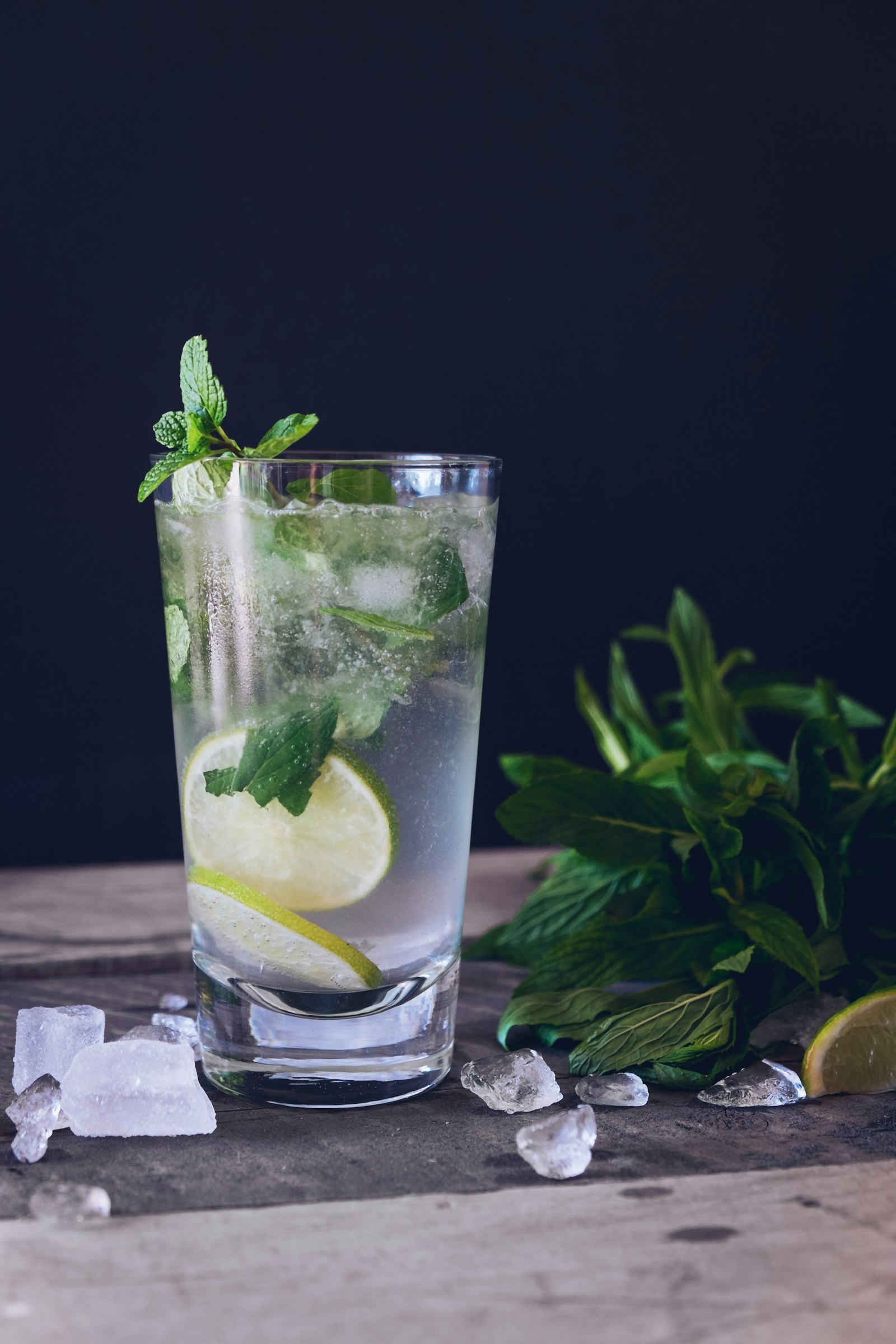
Because “Sea Salt Electrolyte Lemon Tea” is already written directly into replenishment language. CHAGEE’s description explicitly says that sea-salt elements are specially added to replenish electrolytes and open up an energetic summer, while still preserving the tart-sweet, lightly salty, refreshing, transparent structure of lemon tea. That creates a strong contrast with Cooling-Factor Lemon Tea. One emphasizes sustained icy sensation and cooling impact. The other emphasizes sea salt, electrolytes, hydration feel, and recovery. One is saying “cool down.” The other is saying “get yourself back together a little.”
That second move fits perfectly into 2026’s language of high-frequency state drinks. It is not really trying to become a full functional beverage, nor to educate consumers into carefully calculating nutrition. It is offering an easier everyday reading: today is hot, I walked a lot, I feel a little flattened, I want something that feels more like a reasonable support move. What the store is really managing is not a medical hydration plan, but the consumer psychology of “this cup does not feel like pure indulgence—it feels like I’m lightly taking care of myself.”
That is also why Sea Salt Electrolyte Lemon Tea is better suited to moments that are not only about quick refreshment. After long movement in hot weather, after exercise, after being outdoors, or during the point in the afternoon when air-conditioning and fatigue have dragged the body down, consumers still want freshness. But they do not necessarily want something that only hits the head. They want something that feels a little more like bringing themselves back into line. That is exactly where sea-salt-electrolyte language becomes useful.
4. Why do stores need to separate “cooling feeling” from “replenishment feeling” instead of keeping them in one big word cloud?
Because even though both demands happen in summer and can both be expressed through lemon tea, they are not the same consumer psychology. When someone is overheated, irritated, and stuffy, what they want most is something that feels effective immediately, so “cooling factor” works better. But when someone is tired, slightly depleted, wants a little support, and does not want to drink something that feels too industrial or too much like sports fuel, “sea salt electrolyte” becomes the more natural language. In the past, brands often packed those feelings together into words like thirst-quenching, refreshing, energetic, and summer-ready. That touched everything lightly, but not precisely. Separating them now means stores are mature enough to know that consumers will respond to finer explanation.
There is also a commercial advantage. This split lets one basic product system stretch into two different menu positions. Cooling-Factor Lemon Tea is better as an impulse order for “I want to cool off right now.” Sea Salt Electrolyte Lemon Tea is better as a state-management order for “I should drink something a bit more reasonable today.” One enters through emotion and sensation. The other enters through self-care and permission. They both sell lemon tea, but they perform different work on the menu.
Put more directly, stores are beginning to understand that consumers are segmented not only by taste, but also by bodily narrative. In the past, differences were pushed into sweetness levels, ice levels, tea bases, and toppings. Now brands are saying some of it earlier, at the naming layer. Once the product name helps the consumer explain themselves first, ordering becomes easier.
5. Why is this shift especially important for 2026 drinks menus?
Because store competition in 2026 is increasingly not about inventing an entirely unseen flavor, but about writing high-frequency states more finely and more accurately. We have already seen breakfast logic, second-cup logic, after-meal logic, office logic, low-sugar language, lower-caffeine perception, and hydration feel all entering menus. Now even a seemingly basic lemon tea can split further into two branches—cooling wake-up and replenishment recovery. That shows drinks menus becoming even more scene-based and body-based. Brands are not only selling a beverage. They are competing for the right to explain what someone should drink in a given state.
And lemon tea is especially suited to carry this shift. It already has tart aroma, palate-cleansing ability, visual brightness, large-cup friendliness, delivery friendliness, and commuting friendliness. That makes it a natural vehicle for state language. Cooling factor makes it behave more like an answer for quickly opening the body up. Sea salt electrolyte makes it behave more like an answer for gently bringing the body back into balance. It is already a high-frequency product. Once finer scene explanation is added, it becomes even easier to turn into a long-term menu asset.
That also explains why we keep seeing branches built around lemon tea, hydration feel, state recovery, and hot-weather solutions. These are not isolated launches. They are competing for different squares on the same map: heat, stuffiness, fatigue, dullness, long walks, long sun exposure, afternoon drag, or the need for a big delivery cup that feels alert but not too heavy. The more finely those squares are divided, the more stably stores can capture high-frequency demand.
6. What moments suit each of these two languages best?
Put simply, Cooling-Factor Lemon Tea fits moments when the consumer wants to feel something right away, while Sea Salt Electrolyte Lemon Tea fits moments when the consumer wants something that feels more reasonable across the whole day. The first is more of a short, quick-entry answer: after leaving the subway, with sun on the face, in a muggy afternoon, after heavy food when the mouth wants a quick reset, or during work when the body needs to brighten up immediately. The second is more of a daytime recovery answer: after being outdoors, after exercise, after walking a lot, during extended humid heat, or in the afternoon when the consumer does not want another heavy drink but still wants a little replenishment-coded psychological comfort.
Of course, real consumption overlaps. These are not medical categories. But that is not the point of the split. The point is to let the consumer move faster from a vague sensation to the cup that feels more correct for the moment. A person may not literally say “I need electrolytes right now,” but they may feel “I should drink something a bit more restorative.” They may not say “I need sustained icy sensation,” but they may feel “I need something colder and quicker to wake me up.” Turning those vague intuitions into orderable language is exactly what menu ability means.
And that also suggests that drinks menus are increasingly behaving like state-retrieval systems. Consumers are not first thinking of tea category and then of flavor. They are first thinking about what state they are in and how they want it adjusted, then looking for the nearest match. The pairing of Cooling-Factor Lemon Tea and Sea Salt Electrolyte Lemon Tea is a very visible display of that change.
7. Where are the limits of this trend?
First, finer language does not mean the product automatically works. If Cooling-Factor Lemon Tea only sounds cold but does not actually deliver a distinct sensation pathway, consumers will quickly read it as just another iced lemon tea. If Sea Salt Electrolyte Lemon Tea is only concept and does not support its claims with a mild salinity, a coherent replenishment feeling, and a recovery structure, it too will collapse into “ordinary lemon tea with a new script.” State drinks are even less forgiving than flavor drinks when the copy overpromises, because consumers buy them to solve a real moment.
Second, this kind of segmentation is easy to imitate. Once phrases like sustained icy sensation, sea salt electrolyte, hydration feel, and cooling wake-up are used everywhere, what remains decisive is execution: whether the tea base is clean, whether the lemon aroma feels natural, whether sweetness and salinity finish properly, and whether the drinking experience actually supports the written promise. Words are easy to copy. Product completion is not.
Third, it does not mean consumers will accept endless layers of bodily language. If the segmentation becomes too fine, too fragmented, or too obviously pseudo-functional, the menu starts feeling strained. Effective segmentation must rest on distinctions consumers can already vaguely feel. Cooling down a little and replenishing a little are both real intuitions. That is exactly why this pair works.
8. Why is this worth continuing to track?
Because it shows that the next step for tea chains in 2026 is not only inventing new flavors. It is reorganizing existing basic categories around everyday bodily experience. Lemon tea is the perfect example. It is already mature, already high-frequency, already mass. Yet brands can still carve out new entry points from it. That means the industry is nowhere near the point where “basic categories are fully written.” If anything, it is entering a stage where basic categories are being actively reorganized.
That matters for the drinks section because long-term repeat purchase is often driven not by the flashiest new cup, but by these increasingly fine, increasingly everyday stable answers. Today stores separate cooling factor from sea salt electrolyte. Tomorrow they may split other basic categories into even more “better for this exact moment” branches. The brands that can write those branches most accurately, make them most convincingly, and explain them most smoothly are the ones most likely to win high-frequency consumption.
In the end, the significance of this pair is not simply that it consists of two lemon teas. Its significance is that it shows fresh tea beginning to split “the same kind of refreshment” into different bodily narratives, and “the same kind of good taste” into different state solutions. Once stores start operating those fine distinctions seriously, the menu stops being only a flavor list and starts becoming a map of everyday states.
Continue reading: Why tea chains in 2026 are seriously building electrolyte lemon tea drinks, Why Hong Kong-style lemon tea became a high-frequency answer again, Why tea drinks in muggy weather increasingly stress state correction, and Why tea drinks increasingly behave like office replenishment.
Sources
- CHAGEE | Vitality fruit tea series
- Related in-site features on electrolyte lemon tea, Hong Kong-style lemon tea, muggy-weather tea drinks, and office replenishment (March–April 2026).