Ready-made tea drinks
Why Perilla Lemon Iced Tea Is Moving from Regional Flavor Cue to Tea-Drink Frontline in 2026: From a “More Herbal, Cooler Lemon Tea” to a Refreshing Branch for After Meals, Heavy Food, and Summer-Night Walks
If you scan tea-drink menus in late spring and early summer 2026, the changes worth writing about are less and less about “yet another fruit” and more about which flavors that once lived in regional foodways, table herbs, or small flavor cues are being rewritten as proper menu lines. Perilla is a good example. It is not a new ingredient, and it is not the first time it has appeared alongside lemon and tea. What matters is that in 2026 perilla is being reorganized into a much clearer tea-shop language. It is no longer just a restaurant-side garnish, a regional hint, or a stray “herbal note” in a drink name. It is starting to be written as a branch of refreshment that is cooler, more edged, and more suited to after-meal and evening occasions than ordinary lemon tea. What perilla lemon iced tea is selling now is not novelty. It is a more specific answer to a market where plain “refreshing” has already become too generic.
This is worth discussing on its own because the refreshing-drinks market already has more than enough lemon. Over the last few years, lemon tea has been written into a very mature format: brisk, hydrating, de-greasing, transparent, large-cup, commuter-friendly, hot-weather-friendly, delivery-friendly, and easy to reorder often. The problem is that once every chain can say all of that, “refreshing lemon tea” quickly starts sounding the same everywhere. The next round of competition is no longer just about who can make it tarter, bigger, or cheaper. It is about who can make lemon tea feel more specific without losing its high-frequency drinkability. Perilla matters because it offers exactly that distinction. It does not make lemon tea heavier. It makes it feel more dimensional, a little cooler, and more like refreshment with a herbal edge in the air around it.
More importantly, perilla is not arriving out of nowhere. It naturally connects with several drinks lines already visible on the site. It belongs with the language of “cooling-factor” lemon tea, because its coolness is softer and more East Asian in feel than a straightforward mint-like chill, and because it can coexist with the tea base. It also belongs with after-meal tea drinks and post-spicy-food drinks, because the herbal edge of perilla and the acidity of lemon suit de-greasing, palate reset, and a cleaner finish. It even touches night-oriented tea drinks and small-cup formats, because this kind of gentle herbal brightness can work especially well in the evening, on summer nights, and in moments when people want something fresh but not just another plain lemon-water-style tea.

1. Why is 2026 the moment when perilla starts moving from a regional flavor cue to the tea-drink foreground?
Because refreshing products have entered a second stage of competition. The first stage was about pulling tea drinks away from heavy milkiness and high-sugar instant gratification, and toward drinks that felt cleaner, lighter, truer to fruit, shorter in ingredient lists, and clearer in tea-base identity. That stage is already quite mature. By 2026, chains need to answer a different question: once everyone can make a decent refreshing drink, who can give “refreshing” a more recognizable personality? That is where ingredients like perilla become valuable. It is not as functionally overdefined as lemon, not as dark and dense as grape, and not as naturally soft-sweet as peach. Perilla sits in a special place: familiar enough to feel readable, but not yet written into a dead-end script; linked to regional food memory, but not trapped by it; capable of joining narratives about palate cleansing, cooling, and post-meal relief without turning into the blunt directness of pure mint.
Another point is often underestimated: perilla’s education cost is not actually that high. For many Chinese consumers, perilla is not an unknown ingredient. Even if not everyone can describe its flavor precisely, many people already know that it belongs somewhere around cold dishes, pickled things, fish, regional snacks, summer, and herbal aroma. That means chains do not need to spend enormous effort explaining what perilla is. They only need to explain why perilla makes sense in this lemon tea now. In a crowded refreshing-drinks market, ingredients that feel distinctive without demanding too much consumer education are exactly the ones that can be pushed forward again.
More concretely, perilla is worth writing about in 2026 not because it changed, but because menu language has matured enough to handle it. A few years earlier, dropping perilla into a mass tea-drink product could easily have felt too niche, too culinary, or too tied to regional limited-edition logic. But now chains are fluent in ideas like tea base, cooling feel, after meals, heavy-food occasions, nighttime, and lighter small-cup drinking. Perilla has finally found a narrative environment where it can be read as part of a mature menu system rather than as a random odd ingredient.

2. What is perilla lemon iced tea actually selling today? Not novelty, but a more contoured kind of refreshment
Many people see perilla and immediately think “unusual.” But the versions of perilla lemon iced tea that truly stand up in 2026 are not built around unusualness itself. What they really sell is a finer distinction within refreshment: a bit more herbal edge than ordinary lemon tea, a little more cooling after-image in the mouth than a straight fruit-acid route, something softer than lemon-only brightness, and something more repeatable than a heavy sweet fruit tea. In other words, it does not work because people say, “Wow, perilla in a tea drink.” It works because people think, “Why does this feel cleaner, more dimensional, and more suitable after food than regular lemon tea?”
That matters a lot. One problem with the previous wave of mass fruit teas was that many drinks looked clear and light, but in practice still relied on sugar, acid, and fruit aroma for quick gratification. In the end they were just another form of sweetened water in a transparent cup. Consumers today are increasingly clear that they do not want only a bright first sip. They also want a drink that still makes sense by the later sips. Perilla suits this need because it does not thicken a drink the way heavy fruit purées do, and it does not push the product into a hard functional-health register either. It behaves more like a thin but effective aromatic shadow between tea and lemon, making the whole drink feel more designed.
That is also why the versions that really work usually do not push perilla too aggressively. It is better when the drink first reads as cooler, cleaner, and more after-meal-friendly, and only then lets the drinker notice that this is not ordinary lemon tea. If perilla’s aroma overpowers the tea base and lemon from the start, consumers can quickly read it as too culinary, too pickled, or too unfamiliar as a herb. Held at the edge, though, it stops feeling odd and starts feeling memorable in a way that encourages repeat drinking.
3. Why does perilla work especially well with lemon and clean tea bases instead of trying to be the whole point by itself?
Because perilla’s strongest ability is not to become the absolute star. It is to help lemon tea move from linear refreshment into layered refreshment. Lemon is naturally very good at waking up the palate, lifting acidity, and creating immediate alertness. But it also has an obvious risk: done poorly, it can become too sharp, too straight, too close to a functional hydration drink, or too dependent on sugar to smooth itself out. What perilla adds is exactly what this line needs most. It gives lemon a softer edge, so the acidity feels not just sour but herb-breathed. It also helps the tea base feel more like a structure rather than just liquid background.
This is why perilla works better in mass tea drinks than many more forceful herbs. Western herbs like rosemary or thyme may be recognizable, but they can quickly pull a drink too far toward savory cuisine, aromatic spice, or restaurant flavor logic. Perilla, in a Chinese consumption context, feels more like a food-adjacent herbal freshness. Next to lemon, it does not destroy the drink’s everyday quality. Instead it makes the whole cup feel like something that grew naturally out of East Asian daily flavor memory. For chains, that is crucial: this is not just importing “an herb,” but introducing a herbal logic that is easier to localize and easier to normalize.
Perilla also works especially well with green tea, light-fragrance oolong, and gentle jasmine-leaning bases. Its role is not to create thickness. It is to refine the outline. If the tea base is too heavy, perilla disappears. If the tea base is too empty, perilla feels like a floating surface note. A tea base that is clean without being hollow lets perilla stay where it should: noticeable, but never shouting its own name all the way through. For a 2026 tea-drinks market that keeps talking about the return of tea character, that relationship is highly valuable.
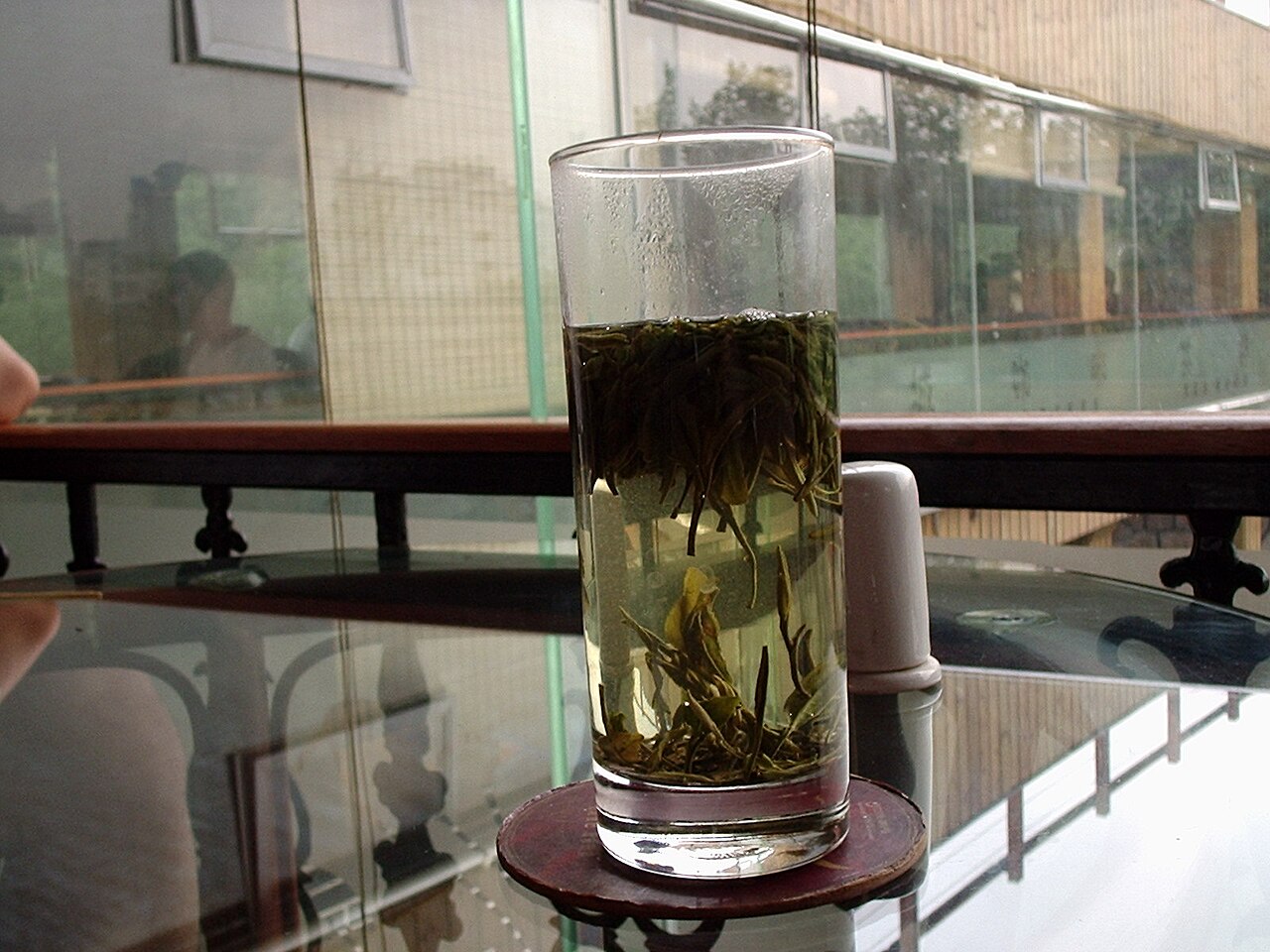
4. Why does it fit occasions like after heavy food, post-dinner walks, and small summer-night drinks so well?
Because perilla naturally suits the idea of a finishing drink. Lemon tea is already good after meals and in de-greasing occasions, but ordinary lemon tea often reads as more daytime, more hot-weather hydration, and more immediate awakening. Once perilla enters the cup, the drink moves a little further toward a feeling of gently resetting the mouth after eating. Especially after spicy, grilled, oily, salty, or heavily seasoned food, what consumers often want is not another strong-flavored drink, but something that quietly clears the palate without turning dull. Perilla fits that position very well.
This ties directly into the site’s earlier discussions of after-meal tea drinks and drinks after spicy or heavy food. Chains increasingly understand that a post-meal drink does not have to be creamy comfort. It can also be a more collected, more palate-resetting kind of closure. Perilla lemon iced tea arguably does this better than standard lemon tea because its herbal edge makes the whole drink feel more like a sensory reset and less like another cold sour-sweet beverage.
That also helps explain why it feels especially right in the evening and at night in summer. At midday, people often want direct thirst-quenching and alertness. Later in the day, many people do not want something too loud, too sharp, or too stimulating, but they still want a bit of flavor, a bit of emotional texture, and a bit of “the day is not quite over yet.” Perilla lemon iced tea sits there neatly. It is not heavy enough to feel like dessert. It is not purely functional enough to feel like a supplement drink. It has aroma, but not the kind that explodes out of sweetness. It feels more like a summer-night drink that gently settles downward.
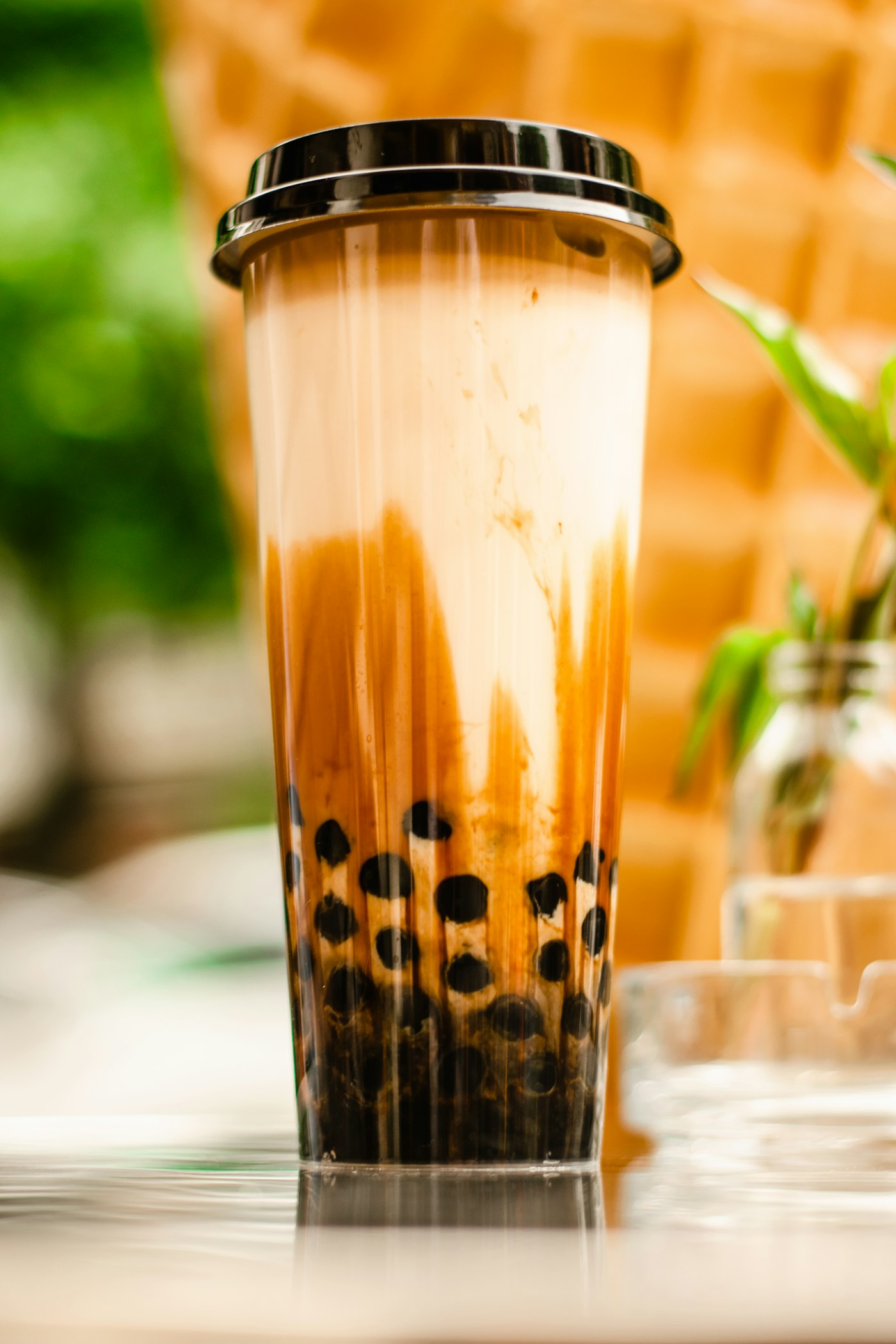
5. How does it relate to ordinary lemon tea, mint lemon drinks, and preserved-lemon routes? Not replacement, but re-division of labor
Perilla lemon iced tea is not here to replace mainstream lemon tea. More accurately, it helps repartition the lemon-drink family. Ordinary lemon tea still makes the most sense for daytime, hydration, commuter routines, and broad high-frequency appeal. Mint lemon formats are better for more explicit, more direct cooling impact. Salted or preserved lemon styles are better for stronger Hong Kong-style familiarity, older-school de-greasing logic, and more overtly food-linked flavor memory. Perilla lemon iced tea fits a different slot: stronger herbal edging, a softer finish, more affinity with after-meal and summer-night moments, and a personality that feels more shaded than standard lemon tea. It is not the most mass-market cup, but it may be one of the most useful for helping chains write lemon drinks with more internal layering.
That matters in a mature market. Mature markets are not short on new products. They are short on meaningful differentiation. If every lemon-adjacent product says only “refreshing, de-greasing, hot-weather essential, larger cup is better value,” consumers eventually choose mostly by brand and convenience. The value of perilla lemon iced tea is precisely that it helps chains split an over-mature macro category into a more stylistically distinct sub-branch.
Put differently, perilla is not a universal blockbuster key. It is a flavor tool especially well suited to enriching menu hierarchy. It may never be as high-frequency as standard lemon tea, as direct as mint, or as instantly coded as salted lemon. But that is exactly why it works as proof that a chain can say, “We do not just make lemon tea. We can give lemon tea different personalities.”

6. Where are the limits of this trend? Perilla does not automatically mean refinement
First, the easiest mistake is ending up with a drink whose name sounds more convincing than its actual taste. Perilla comes with regional and herbal memory, so it is easy for naming and copywriting to make it sound richer than it is. But if the tea base is unclear, the lemon too sharp, the sweetness poorly controlled, and the perilla only a floating top-note label, the whole drink collapses into a case where the concept works better than the cup. The versions that really stand up today are usually the ones where perilla is not over-pushed, lemon does not stab the palate, and the mouth still feels clean at the end.
Second, perilla can become too culinary. That is not the ingredient’s fault but a matter of balance. If handled too heavily, consumers start reading it as cold-dish herb, pickled-food herb, or savory garnish rather than herbal coolness inside a tea drink. For it to work in a mass tea format, chains need to remember that perilla is not the main dish. It is not about dragging kitchen flavor into the cup. It is about keeping a trace of food-world realism while letting the drink still read primarily as a tea drink.
Third, its occasions are attractive but not universal. Perilla works especially well for after meals, post-heavy-food moments, evenings, nighttime, walks, lighter small cups, and consumers who want a cleaner finish. It is not automatically the best answer for every hydration need, hard thirst-quenching moment, office pick-me-up, or strong functional-demand occasion. In other words, its strength lies partly in not being universal. Chains that understand that can write it more precisely. Chains that try to make it do everything usually wash out its personality instead.
7. Why does this deserve a place in the site’s ongoing 2026 drinks map?
Because it once again shows that tea-drink upgrading today increasingly looks less like inventing an entirely new taste and more like giving familiar flavors from Chinese food memory a clearer place in the cup. Perilla is not unknown. What matters in 2026 is not that perilla exists, but that it is finally being written with precision: which tea bases it suits, which dayparts it belongs to, which sweetness levels make sense, which post-meal states it can serve, and what kind of mood it answers. Once chains start seriously answering those questions, ingredients stop being mere components and start becoming supports for full product narratives.
Seen alongside existing articles on the site, the logic becomes clearer. Cooling-factor lemon tea language shows that brands are seriously splitting “coolness” into finer shades rather than just adding more acidity. After-meal tea drinks shows that tea drinks are competing for lighter post-meal occasions. Night-oriented tea drinks shows chains trying to win less heavy nighttime consumption. Small-cup formats shows how a drink is becoming more and more like a small action inside daily rhythm. Perilla lemon iced tea stands exactly where those lines cross: not the most essential cup, perhaps, but one of the best expressions of how chains are writing “refreshing” in a more mature way.
At bottom, what perilla lemon iced tea reveals is a new set of consumer demands for refreshing drinks: not just brightness, but contour; not just coolness, but something that still feels like tea rather than flavored water; not just hot-weather suitability, but fit for a specific moment. As long as those three conditions hold, perilla will not remain a brief novelty. It will remain a drinks sub-branch worth tracking on menus.
Continue reading: Why brands are seriously splitting the “cooling factors” inside lemon tea, Why after-meal tea drinks are becoming a stable occasion, Why tea drinks are competing for the cup after heavy and spicy food, Why tea drinks are becoming more night-oriented, and Why tea drinks are moving toward smaller cups.
Sources and references
- Baidu Baike | Perilla
- The Paper | Reporting related to perilla in regional food and dining culture, useful for understanding the ingredient’s place in Chinese-language consumer context
- A synthesized observation of Chinese-language internet and ready-made tea menu discourse in late spring and early summer 2026 around perilla, lemon tea, herbal cooling feel, after-meal drinks, post-heavy-food occasions, and summer-night light drinking.