Fresh tea observation
Why loquat iced tea deserves a place in 2026 fresh tea: from late-spring lightness and low-acid fruit aroma to a made-to-order style that reads more like a palate-finishing fruit tea than a high-sugar hit
If you scan tea menus in late spring and early summer 2026, one shift becomes increasingly clear: the fruits most worth writing about are not always the ones that are most sour, most sweet, most intense, or easiest to turn into oversized seasonal hits. The more interesting fruits are often the ones that let a cup of tea become more precise, more stable, and more time-of-day specific. Loquat is one of those subjects. It is obviously not the fruit most likely to create a social-media visual explosion, but it has a combination that few fruits can offer at once: relatively low acidity, gentle aroma, a lightly soothing impression, strong seasonality, and no need for heavy pulp or high sugar to justify itself. That is why loquat iced tea deserves a serious place in the drinks archive in 2026. It is not here to create a moment of noise. It is here to help brands rewrite fruit tea into something better suited to late spring and early summer, after-meal palate finishing, small-cup light drinking, and a tea-like rather than sugar-water-like cup.
This topic connects naturally to several lines already established on the site. It belongs with fruit tea’s return to the front stage, because loquat shows that fruit tea has not been displaced by heavier dairy lines, but is continuing to search for more specific texture positions. It belongs with small-cup logic, because loquat is not ideal for a crude “bigger is better” juice-style format, and is much better suited to a restrained small iced tea. It also belongs with after-meal tea drinks, because one of loquat’s best qualities is its ability to write a gentle palate-finishing effect into fruit tea instead of chasing only first-sip impact.
More importantly, loquat shows how product rewriting works in a mature market. The task is not to find ever more dramatic fruits. It is to rearrange what a fruit does inside the cup. Loquat does not make a drink louder. It makes it smoother, lighter, and a little more seasonally precise. In 2026, that role is valuable precisely because consumers have already tried too many fruit teas built around high acidity, loud aroma, heavy sweetness, and strong stimulation. They are increasingly able to tell the difference between excitement and drinkability, between photo-friendly and reorder-friendly. Loquat iced tea belongs much more to the second side of that distinction.

1. Why loquat in particular deserves to be watched as a fruit-tea branch in 2026
Because it fills a slot that is relatively scarce in today’s fruit-tea system. Much of the recent fruit-tea update cycle has centered on fruits that are sharper, louder, and easier to turn into immediate pleasure: lemon for wake-up and de-greasing, grape for darker density, white peach for soft sweetness and pale spring-summer dreaminess, lychee for floral-fruit aroma and summer-night atmosphere, bayberry for intense seasonal sweet-sour force. Loquat is not the kind of fruit whose role is naturally written in bold. Its acidity is lower, its color is not explosive, and its aroma is not a strong frontal attack. Instead, it offers a softer, rounder, more restrained fruit profile. Precisely because it does not come with an over-fixed role, brands have more room to position it carefully in 2026.
The place loquat is best suited to occupy is the more refined end of gentle fruit tea. “Gentle” here does not mean boring or empty. It means not relying on sharp acidity, heavy sweetness, or strong pulp to dominate the whole drink. Instead, loquat offers a flatter, calmer fruit curve that supports the tea base, so what the consumer gets is a cup where fruit is clearly present, but the pace is smoother and the finish is cleaner. For consumers already tired of every fruit tea trying to be louder and more stimulating than the last, that calmness becomes content in itself.
There is another advantage that is easy to overlook: loquat carries strong seasonality in Chinese cultural memory, but its education cost is low. It is not an unfamiliar fruit, and brands do not need to spend much energy explaining what it is. Consumers already know it belongs broadly to the late-spring and early-summer window, and they already understand that it is not as sharp as lemon, not as thick as mango, not as dark as grape, and not as dreamily soft as peach. It occupies a very clear position of “familiar, but not over-written.” In a mature market, ingredients like that are ideal for more precise product rewriting.
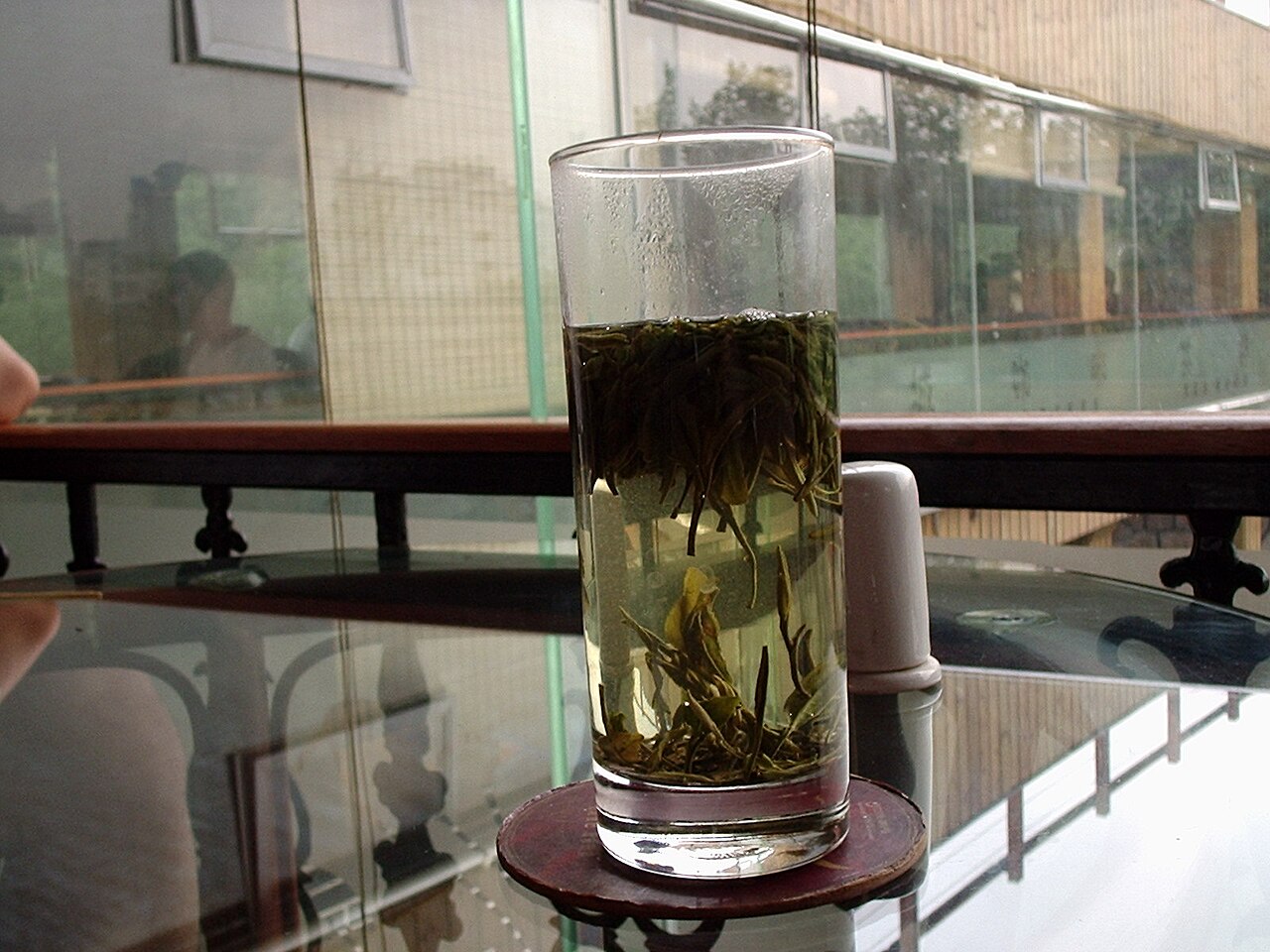
2. What does loquat iced tea really sell today? Not high-sugar satisfaction, but a light and palate-finishing experience
When many fruits enter fresh tea, the easiest selling points to amplify are sweetness, aroma, pulp, or visual drama. Loquat is better suited to something else. What it can really sell is a fruit-tea experience that feels lightly soothing, smooth, and quiet. “Lightly soothing” here is not a health claim. It is a concrete sensory impression: the drink is not sharp, not pushy, and does not force all attention onto the fruit. Instead, a gentle fruit tone spreads across a clear tea base, rounding the edges of the whole cup.
That is also why loquat works especially well as an after-meal fruit tea. Highly acidic fruits are good at opening the palate and waking people up quickly, but they can also push the drink too far toward stimulation. Loquat behaves differently. It is more like a cup that slowly helps the mouth step back from oil, sugar, or heaviness after a meal. It may not be the most energizing cup, but it can be one of the most stable. For stores increasingly interested in matching products to more specific occasions, that steadiness is more valuable than raw impact.
If many fruit teas are still trying to make the first sip work, loquat is closer to a drink that wants the last sip to work too. It cannot depend only on the freshness of the opening. The whole cup has to stay balanced: the tea base cannot be too weak, or only a vague fruit aroma remains; sweetness cannot be too heavy, or it collapses into an ordinary sweet fruit tea; and the iced feeling cannot be too aggressive, or the fruit’s finer outline disappears. In other words, loquat iced tea really sells a restrained kind of completeness rather than a piled-on kind of satisfaction.
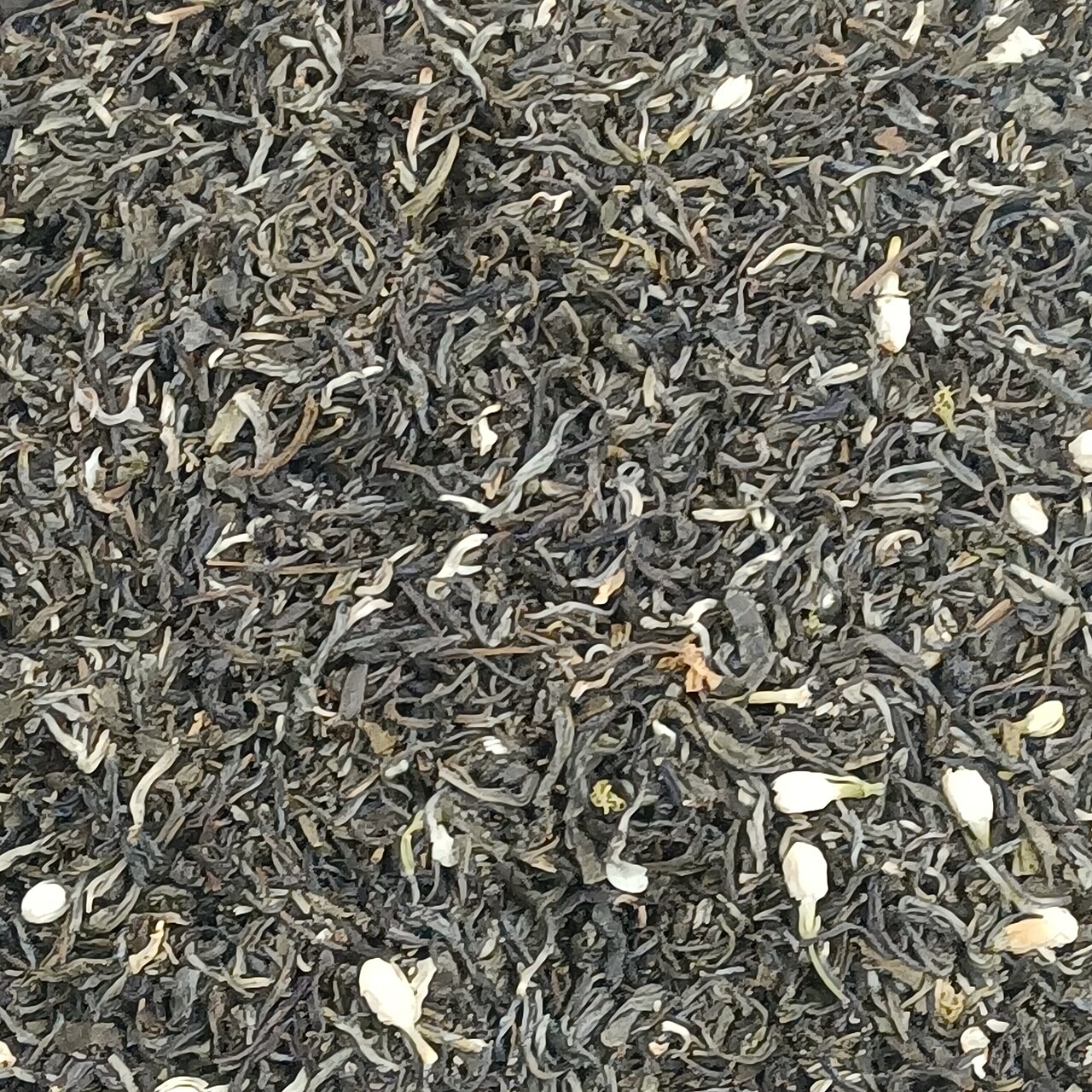
3. Why does loquat work especially well with jasmine green tea and light-fragrance oolong?
Because loquat’s strongest ability is not to steal the whole stage, but to make the tea base easier to read as a whole. Fruits like mango, pineapple, and passion fruit can become the only lead the moment their ratio rises a little. Loquat’s fruit tone is less aggressive. It behaves more like a thin but continuous aromatic layer on the surface of the tea, letting the consumer notice fruit first and return to the tea afterward. That order matters a lot for a fruit-tea market that is increasingly serious about tea character returning to the foreground.
It works especially well with jasmine green tea, fresh green tea, light-fragrance oolong, and floral-leaning oolong styles. These tea bases are already built around clarity, brightness, transparency, and lift rather than roast or heaviness. When loquat stands beside them, it does not drag the cup toward dense juice logic. Instead, it helps create a structure of fruit first, tea after, and a clean finish. For the 2026 direction of fruit tea that wants to read more like tea, that structure is more durable than thick pulp and sugar-led aroma.
That is why loquat is best understood as a fruit that helps tea character move further to the front, rather than a fruit that suppresses tea. It is not ideal for fighting over every bit of attention. It is ideal for softening the cup, making it more fine-grained, and giving it the airy quality of late spring and early summer. That relationship between fruit and tea is already a little more mature than the simpler “fruit as spectacle” model.
4. Why is it especially suited to late spring, after meals, evening, and small-cup light drinking?
Because loquat carries a very clear sense of timing. It is not a blazing midsummer fruit that demands strong hydration and intense acidic cooling, and it is not a cold-season fruit that naturally suits thick dairy structure. It fits the border between late spring and early summer, when the weather is warming but consumers are not yet fully in “the colder and sharper the better” mode. In that phase, people are more open to a cup that is lighter, softer, lower in burden, but still not empty. Loquat fits that place extremely well.
It is also why it works so well in the after-meal slot. After-meal drinks do not always need to be strong. Often consumers simply want the mouth to settle, the mood to relax, and a cup that is not heavy or noisy but still feels considered. Loquat iced tea can do exactly that. It does not push acidity to the front the way lemon tea does, and it does not deliver the stronger satisfaction logic of milk tea. It is closer to a drink that helps someone move from “I just finished eating” to “now I feel better.”
That also explains why it is more convincing than many hot fruit teas in a small cup. Small-cup logic is not just about shrinking volume. It is about rewriting a drink as a light everyday action: ordering one after a meal, buying one during a walk, or grabbing one in the afternoon when energy dips. Loquat’s style makes it more persuasive in exactly those moments. What it sells is not overabundance, but the feeling of being just enough. In a 2026 menu system that is growing more precise, that sense of “just right” looks much more like a lasting asset than a loud oversized launch.

5. How does it relate to lemon, white peach, and lychee fruit teas? Not replacement, but redistribution
Loquat iced tea is not here to replace those more mainstream fruit teas. More accurately, it is helping redistribute roles. Lemon is better for wake-up, de-greasing, cooling, and stronger functional demand. White peach is better for softness, gentle sweetness, pale color, and spring-summer tenderness. Lychee is better for floral-fruit aroma, summer-night feeling, and emotionally warmer small sweet cups. Loquat is better for something else: lower acidity, gentle smoothness, a clean finishing structure, and a cup that reads more like tea than juice. It may not be the most eye-catching option, but it is very likely to become the drink consumers remember as quietly comfortable.
That matters a lot in a mature market. The real problem of sameness is not that everyone uses the same fruit. It is that everyone uses different fruits to say the same few things. As long as every fruit tea can only be described as “refreshing, real fruit, low burden, good for summer,” consumers eventually order mostly by brand habit and location. Loquat matters because it helps brands split light fruit tea into a finer, steadier branch centered on finish, tea character, and occasion. What it adds to the menu is not another layer of noise, but another layer of order.
So loquat is not a universal blockbuster key. It is a fruit especially useful for tuning the structure of a menu. It does not have lemon’s frequency, white peach’s universal ease, or lychee’s instant atmosphere-writing power. But that is exactly why it suits brands that no longer want to compete only through the most obvious fruit choices. In a 2026 drinks archive, those fruits that represent a menu becoming one step more mature are often more worth documenting than short-term heat.

6. Where are the limits of this trend? Loquat does not automatically equal sophistication
First, the easiest way to ruin loquat is to make it too thick in the name of making it feel substantial. Its real value lies in lightness and finish. Once the cup is loaded with too much fruit puree, too much cream cap, too much syrup, or overly heavy toppings, it slides from clear fruit tea into muddier sweet-drink territory, and its stylistic advantage disappears.
Second, it is also easy to make it too empty. Many stores hear “light,” “gentle,” and “low acid,” then keep thinning the drink until only a vague aroma and a lot of ice remain. That kind of product photographs well, but it does not invite repeat purchase. For loquat iced tea to truly hold up, it has to preserve the tea base, preserve some finishing structure, and preserve a clean tail in the aftertaste. Otherwise it remains only a seasonal-sounding name, not a complete beverage.
Third, loquat’s timing and style are both very specific, and that is both its strength and its limit. It does not naturally fit every scene. Extreme heat hydration, fast de-greasing after very oily or spicy food, and strong daytime office wake-up moments are still better served by lemon, salted preserved lemon, sour plum, or more direct palate-clearing lines. Loquat is better at entering life gently rather than dominating every need. Brands that understand that can write it accurately; brands that try to make it universal usually drain away its character.
7. Why does this belong inside the continuing changes of the 2026 drinks section?
Because loquat iced tea shows again that today’s fresh-tea upgrade increasingly looks less like “inventing a brand-new flavor” and more like “writing a familiar but underwritten position clearly.” Loquat is not unfamiliar. What is new is not that it can appear in a drink, but that it is finally being placed in the right role: late spring and early summer, lower acidity, clear tea base, after-meal finishing, and small-cup light drinking. Once those conditions stand together, loquat stops being a decorative seasonal fruit and becomes a sustainable menu branch.
If you connect it with earlier pieces on the site, the logic becomes clearer. Fruit tea’s return shows lighter fruit tea continuing to rewrite itself. Small-cup logic shows stores increasingly focused on light-action consumption. After-meal tea drinks shows consumers taking different time slots more seriously. Loquat iced tea sits right at the intersection of those lines. It does not have the loudest explosive force, but it may be one of the cups that best represents a menu becoming more precise, more scene-specific, and more tea-forward.
At bottom, what loquat iced tea reveals is a new consumer standard for fruit tea: the drink cannot only be refreshing; it has to have structure. It cannot only be fruity; it has to preserve tea. It cannot only suit the first sip; it has to suit the whole cup. As long as those three demands remain true, loquat will not be only an occasional late-spring name. It will remain a drinks branch worth tracking.
Related reading: Why fruit tea returned to the front stage of fresh tea, Why tea drinks are becoming smaller in cup logic, Why after-meal tea drinks are becoming a new time-slot business, and Why lychee iced tea returned to center stage in 2026.
Sources
- CHAGEE official site | fruit tea series
- Guming official site
- Synthesized observation based on late-spring and early-summer 2026 Chinese internet and chain-tea menu language around lower-acid fruit tea, seasonal fruit, small-cup light drinking, after-meal consumption, and clear tea-base expression.