Fresh tea observation
Why tea chains in 2026 are seriously building low-burden large-cup iced tea: from commute takeaway and afternoon refill to made-to-order tea turning big volume into an all-day menu line
If the past two years of new tea have already turned the breakfast cup, the second cup, the after-meal cup, office refills, and the muggy-weather cup into increasingly fine menu language, then another 2026 shift worth isolating is the serious rise of low-burden large-cup iced tea. This is not just a matter of making cups bigger, and it is not a dressed-up version of cheap upsizing. Tea chains are increasingly reorganizing large volume, clear tea bases, lighter dairy, fewer toppings, takeaway durability, commute-friendliness, afternoon refill logic, and delivery stability into one all-day drink line. What they are selling is not simply “more,” but “something easier to keep drinking through a longer stretch of the day.”
What matters here is not that Chinese consumers suddenly discovered big cups this year. What matters is that made-to-order tea is, for the first time, writing “large cup” more systematically as a state label rather than only a size label. Tea shops always sold larger sizes, but they often functioned as price anchors, promotions, or default specs for certain classics. By 2026, the logic is clearly changing. More and more drinks are being designed from the beginning around the idea of a large cup with low burden. The goal is not to make the consumer feel they got extra quantity. It is to make them feel that this cup can stay reasonable from now into the next stretch of the day.
Behind that is a more serious understanding of high-frequency consumption. During the day, consumers do not always need a drink that is rich, complete, and reward-coded. Many times they simply need something that can accompany commuting, meetings, desk work, post-lunch delivery, the dull afternoon, or the trip home. Low-burden large-cup iced tea works because it has more content than water, less weight than milk tea, less fatigue than heavy fruit tea, more freshness than bottled tea, and more everyday softness than hard functional drinks. It sits right in the middle of those choices.
What this article is looking at
Core question: why tea chains in 2026 are seriously building “low-burden large-cup iced tea” Signals: Oriental iced tea, lemon tea, large-format refreshing fruit tea, lighter dairy, fewer toppings, clearer tea bases, commute takeaway, afternoon refills, delivery durability, all-day occasions, frequency competition For readers trying to understand why new tea is increasingly organized not only by “milk / fruit / tea” but by how long a drink can accompany your day
1. Why does low-burden large-cup iced tea move from edge option to menu line in 2026?
Because tea shops are becoming more serious about competing for the right to occupy long daytime stretches, not only the moment of purchase. Many earlier hits were especially good at delivering first-sip, first-look, and first-moment impact: thicker dairy, more elaborate toppings, fuller fruit, and stronger seasonal spectacle. That approach has not disappeared, but it is increasingly difficult to use it alone to support all-day, high-frequency, low-barrier repeat purchase. As consumers become more sensitive to sugar, heaviness, fatigue, and post-drink burden, shops have to solve a more practical question: if the user already drank something earlier today, or still has to work, commute, eat, sit for hours, and keep moving, are they still willing to pick up another drink—or even slowly finish one large cup?
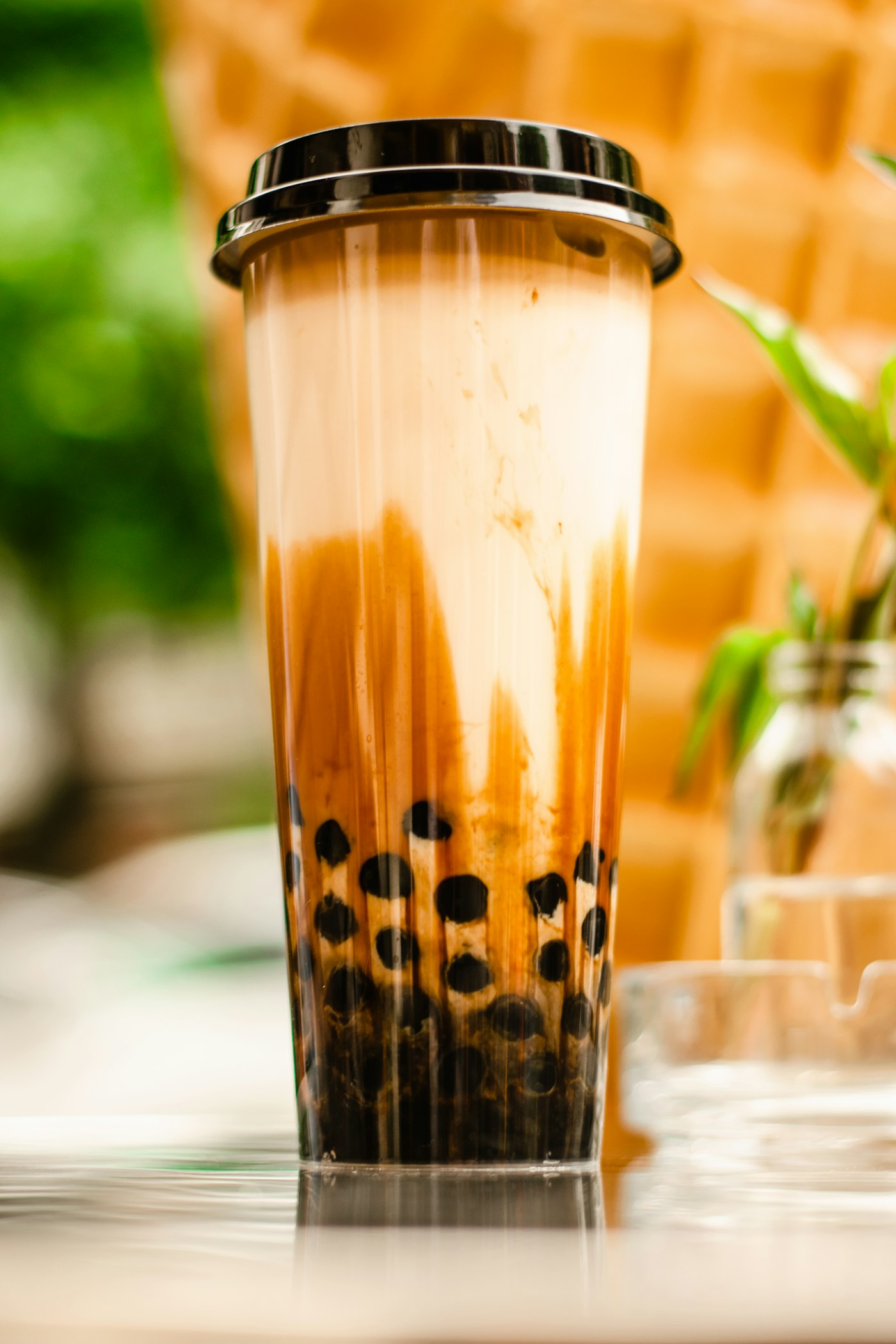
Large-cup iced tea is especially suited to that problem. It naturally fits cold drinking, takeaway, walking, desk-side sipping, and slower consumption. As long as the structure stays clear enough, it does not push the body and mood toward “that’s enough” as quickly as milk tea can. And unlike bottled ready-to-drink tea, it still preserves a sense of store-made freshness and deliberate purchase. In other words, it is not a cheap substitute. It is a more day-compatible made-to-order format.
That is why “large cup” in 2026 increasingly reads like a product logic rather than a volume adjustment. What brands really want to build is not “200 ml more,” but a drink that can reasonably occupy a longer duration, more small nodes, and more emotional fluctuations in the day. Once products are organized by time and frequency rather than only flavor and novelty, large format stops being a specification issue and becomes a structural one.

2. What these drinks really sell is not “bigger and cheaper,” but a structure that is easier to live with for longer
This has to be stated clearly: low-burden large-cup iced tea may borrow a little from value perception, but value is not its core appeal. Its core appeal is drinkability over time. A truly good large-cup iced tea does not deliver full satisfaction in the first three sips and then turn the rest of the cup into a chore. It shifts the center of the drink toward something you can keep sipping, something whose middle section does not grow tiring, and something whose ending still closes cleanly. That is a very different ambition from drinks that rely on impact. It is not trying to make every sip feel maximal. It is trying to make the whole cup remain reasonable.
That sense of long-term drinkability matters because large cups naturally expose product flaws. Sweetness, heaviness, artificial aroma, thinness in the back half, unstable fruit acidity, or astringent tea bases can all be tolerated more easily in smaller formats. Once the volume expands, those flaws become much harder to hide. That is exactly why a tea chain that seriously builds large-cup iced tea has to be more structurally honest: the tea base has to be cleaner, sweetness has to stay controlled, toppings cannot take over, dairy cannot dominate, and the drink has to remain balanced even after dilution, time, and slower consumption.
In that sense, what low-burden large-cup iced tea really sells is control over the whole duration of the cup. The consumer is not buying a bigger hit. They are buying longer acceptability. The shops that can do that well are the ones most likely to win a place on office desks, in delivery orders, on subway commutes, and in the dull hours of the afternoon.
3. Why do clearer tea bases and fewer dairy-and-topping layers become key to this line?
Because once a large cup wants to enter high-frequency use, it has to reduce complexity. Many heavier drinks work in smaller cups because they allow a short burst of emotional consumption. A large cup behaves more like a companion product. It has to stay with the consumer longer. At that point, overly strong dairy, too many toppings, or an overloaded fruit-puree feel all make the drink feel less like company and more like drag.
That is why a visible tea base matters so much. It is not because every consumer suddenly wants to return to pure tea. It is because a clean tea base gives the large cup a stable skeleton. It lets the drink retain readable content even as ice melts, temperature rises, and the drinking rhythm stretches out. Lighter dairy and fewer toppings work by the same logic. They are not there to perform restraint. They are there to make long-duration drinking possible.
That is also why Oriental iced tea, lemon tea, large-format lighter fruit tea, and clearer low-sugar fruit-tea structures feel especially active in 2026. They are not simply lighter. They are better suited to large cups. They are not simply thinner. They are more capable of surviving slower drinking. Tea shops are starting to make “holds up better over time” into something worth building and naming.
4. Why is this line especially suited to commuting, afternoon refills, and delivery?
Because all those scenes require roughly the same thing: the drink cannot take up too much of the person. During a commute, the consumer already has a bag, a phone, a route, and body temperature to deal with. They need something that does not demand too much attention but can keep providing a little clarity and release. During an afternoon refill, the consumer has often already had coffee, eaten lunch, or entered work mode. They do not necessarily want a reward drink. They want something that does not interrupt the day. In delivery, the logic gets even more practical. By the time the drink arrives, time has already passed. The products that survive best are usually not the ones that depend most on immediate first-sip drama, but the ones with stable structure that still taste reasonable after waiting.
Low-burden large-cup iced tea fits those positions especially well. It has enough volume to cover more time, enough freshness to justify itself easily, enough made-to-order quality to distinguish itself from convenience retail, and yet not so much heaviness that it requires a dedicated indulgence slot. It can move into the time gaps that do not naturally belong to “now I want milk tea.”
That is also why it belongs on the same map as the site’s earlier features on large commuter cold tea, the second cup, office replenishment, and the muggy-weather cup. This is not an isolated flavor trend. It is a cup-format logic that reconnects multiple high-frequency scenes.
5. Why does this also show tea shops moving back into bottled tea, convenience-store cold shelf, and coffee-alternative territory?
In the past, if consumers wanted something they could keep sipping slowly, something not too heavy, something easy to carry, a lot of that demand naturally flowed toward bottled unsweetened tea, convenience-store cold-shelf drinks, coconut water, or simply iced Americano. Made-to-order tea could catch some of that demand, but not always consistently, because many store-made drinks were still built around immediate gratification. The rise of low-burden large-cup iced tea shows tea shops seriously trying to recover that territory. If the consumer wants made-to-order freshness but also wants something lighter, longer-lasting, and easier on the body, why shouldn’t that need be solved at a tea shop?
This is highly efficient for tea shops. They do not need to become functional-drink brands, and they do not need to become bottled standard products. They only need to make made-to-order drinks more suitable for being held over time. The consumer still receives something with store identity and freshness, but reads it partly through the same frame used for bottled tea and cold-shelf drinks: today I need something that can stay with me for a while.
That is why low-burden large-cup iced tea is such an important 2026 line. It may not be the most theatrical. But it behaves like the basis of a stable business. It shortens the awkward distance that used to exist between “made-to-order” and “high-frequency.”
6. Where are the limits of this trend?
First, a large cup does not automatically mean high frequency. If the structure is wrong, volume simply magnifies the flaws: too sweet becomes cloying, too thin becomes boring, artificial aroma becomes more obvious, and overreliance on ice becomes emptier. Second, low burden does not mean no content. If brands interpret “lighter” as merely “weaker,” consumers quickly feel they bought stretched-out mediocrity rather than a smarter daytime drink. Third, this category can become homogeneous very fast. Once everyone is talking about commuting, takeaway, drinkability, and freshness, what remains decisive is still the tea base, sweetness management, finish, and stability over time.
So the hotter this line gets, the more it tests product honesty. It is not facing festival consumption or novelty consumption. It is facing ordinary daily consumption. And daily consumption has surprisingly little patience for drinks that are not terrible but also not worth buying again. Truly high-frequency products are not sustained by copy alone. They are sustained by how little effort it takes to pick them up again and again.
That is exactly why I think low-burden large-cup iced tea is worth tracking more than many one-off trending items. It may not create a search spike every time, but it is very likely to keep reshaping the stable sales structure of tea shops.

7. Why does this belong inside the continuing changes of the 2026 drinks section?
Because it shows again that new tea competition is shifting from “who can make the newest flavor” toward “who can write themselves into a whole day of consumer life.” From breakfast, the second cup, office use, after-meal scenes, and muggy weather to electrolyte lemon tea, cooling-factor logic, coconut-water tea drinks, and commuter cold tea, brands are becoming better at tying drinks to concrete dayparts. Low-burden large-cup iced tea is especially representative because it connects volume, structure, rhythm, scene, and repeat-purchase motivation all at once.
It deserves a separate article not because the phrase “large cup” is new, but because tea shops are, for the first time, more openly acknowledging that consumers do not always want to be impressed. Very often, they just want to be carried through the day a little more smoothly. The brands that can turn that smoothness into a stable product are the ones most likely to capture the quiet but critical share of daytime frequency.
In the end, shops are not only competing over a bigger cup. They are competing for the right to explain why “this is the right thing to drink through this stretch of today.” That is why low-burden large-cup iced tea matters. It translates that sentence more steadily than many flashier launches ever can.
Continue reading: Why large commuter cold tea is spreading, Why tea chains are seriously competing for the second cup, Why tea drinks increasingly behave like office replenishment, and Why CHAGEE turned Oriental iced tea into a dedicated series.
Sources
- CHAGEE | Oriental iced tea series
- CHAGEE | Vitality fruit tea series
- Related in-site features on large commuter cold tea, the second cup, office replenishment, muggy-weather drinks, Oriental iced tea series logic, and electrolyte lemon tea (March–April 2026).