Teaware feature
Why the tea cup is not just the final container that gets tea into the mouth: form, wall thickness, rim shape, capacity, and the last rewrite of taste
When people talk about Chinese teaware today, attention still tends to settle first on the main brewing vessel: whether the brewer is a gaiwan or a teapot, whether the material is white porcelain or Yixing, whether the pour is quick, whether aroma is gathered, whether the table feels orderly. By comparison, the tea cup is often pushed to the end of the chain, as if the tea has already been made, already been decanted, already been stabilized, and all that remains is to find some small object to drink it from. That understanding is too shallow. Anyone who keeps drinking carefully for long enough eventually discovers that the tea cup is not a mere finishing vessel. It is the closest object to the mouth, the nose, the hand, and the body’s timing memory. It often decides whether a tea will finally be judged as soft or tight, thin or thick, bright or dull, open or gathered. The main brewer decides how tea is made. The cup decides how tea finally enters you.
That is exactly why Chinese-language discussion in recent years has stopped being satisfied with questions like which cup is prettier or which one looks more elevated. The questions have become more specific: why does the same tea seem looser in a slightly more open cup? Why does one cup make the first sip feel gentler while shortening the finish? Why does a thicker wall make the whole drink feel delayed by half a beat? Why can some people explain tea more clearly with an ordinary small white cup than with a more theatrical vessel? Questions like these show that more drinkers are recognizing the tea cup as an active instrument rather than a replaceable endpoint.
That is why the tea cup deserves its own full article. It may look ordinary, but it stands on a crucial line of transition. On one side it receives liquor from the fairness pitcher. On the other it meets the mouth, the nose, the hand, and the pause after swallowing. It still belongs to the vessel system, yet it is already almost inside bodily judgment. You can say it is less dramatic than a main brewing vessel, but its effect is often harder to escape, because what finally enters the mouth is not the gaiwan or the fairness pitcher. It is tea reorganized one last time by the cup.

1. What is a tea cup, and why is it not a name too broad to matter?
In the broadest sense, a tea cup is obviously just a cup for tea. But the moment you return to a real tea table, that definition becomes inadequate. “Holding tea” is only its lowest function, not its full role. This site already has separate entries for the tea tasting cup, the aroma cup, the host cup, and the cup stand. That alone shows that “a small cup used for drinking tea” is not a flat category. Different cups do different work. Some emphasize standard judgment, some preserve aroma briefly, some stabilize the host’s own drinking line, some serve shared rounds, and some simply try to carry liquor cleanly into the mouth without adding too much drama.
So this general tea-cup article is not here to relist every cup form. Its purpose is to explain why the most ordinary-looking drinking vessel keeps getting subdivided in Chinese tea culture. The reason is simple: it is too close to the body. Because it is so close, its interference with the final result is unusually direct. The main brewing vessel performs front-end processing. The tea cup performs the final rewrite. Any small shift — a slightly more open rim, a slightly thicker wall, a slightly narrower center, a slightly larger capacity, a slightly different base height, a cup that is just a little too hot to hold — can be amplified through the nose, lips, tongue, hand, and pace of drinking. That amplification is real, and it is exactly why the tea cup cannot stay forever at the crude level of “they’re all just cups.”
In other words, the tea cup deserves serious attention not because it is symbolically grander than other wares, but because it is the most intimate. You may never care about kiln pedigree or pot classification, but if you drink tea attentively long enough, the cup will eventually teach you the same lesson: tea does not simply enter the mouth “as it is.” It passes through one last stage of arrangement first.
2. Why does the tea cup determine the path of entry, not just the final result?
When people describe a cup, they often say things like “this one feels softer,” “this one gathers aroma,” “this one shows more sweetness,” or “this one gives better liquor texture.” Those phrases are not wrong, but they often describe only the conclusion, not the path. The tea cup changes the route first. Where does the liquor touch first? Does the flow spread immediately or arrive as a tighter stream? Does heat strike the tip of the tongue quickly or get slowed by rim and wall? Do the lips meet a thin edge or a heavier one? At the moment of lifting the cup, does the nose receive a lifted surface aroma or a warmer, more gathered scent held inside the cup? None of that is abstract. These stages accumulate until they become the final language of “softer,” “tighter,” “thicker,” or “brighter.”
So the tea cup is not a static container. It is a passage. The main brewing vessel generates tea liquor. The cup arranges the route by which that liquor enters the body. Once the route changes, the result cannot remain exactly the same. An open cup tends to release aroma sooner and create a more outward first impression. A more gathered rim tends to hold heat and fragrance closer to the center, making the first sip feel more concentrated. Thin walls reduce the barrier between tea and lips, while thicker walls often slow the pace and stabilize the movement. Tiny differences in shape are often rewriting this entry path the whole time.
That is why anyone who drinks seriously almost never treats the cup as a negligible accessory. It may not have the stage presence of the main brewer, but it is deeply involved in the final judgment.
3. Why does cup shape directly affect aroma and texture judgment?
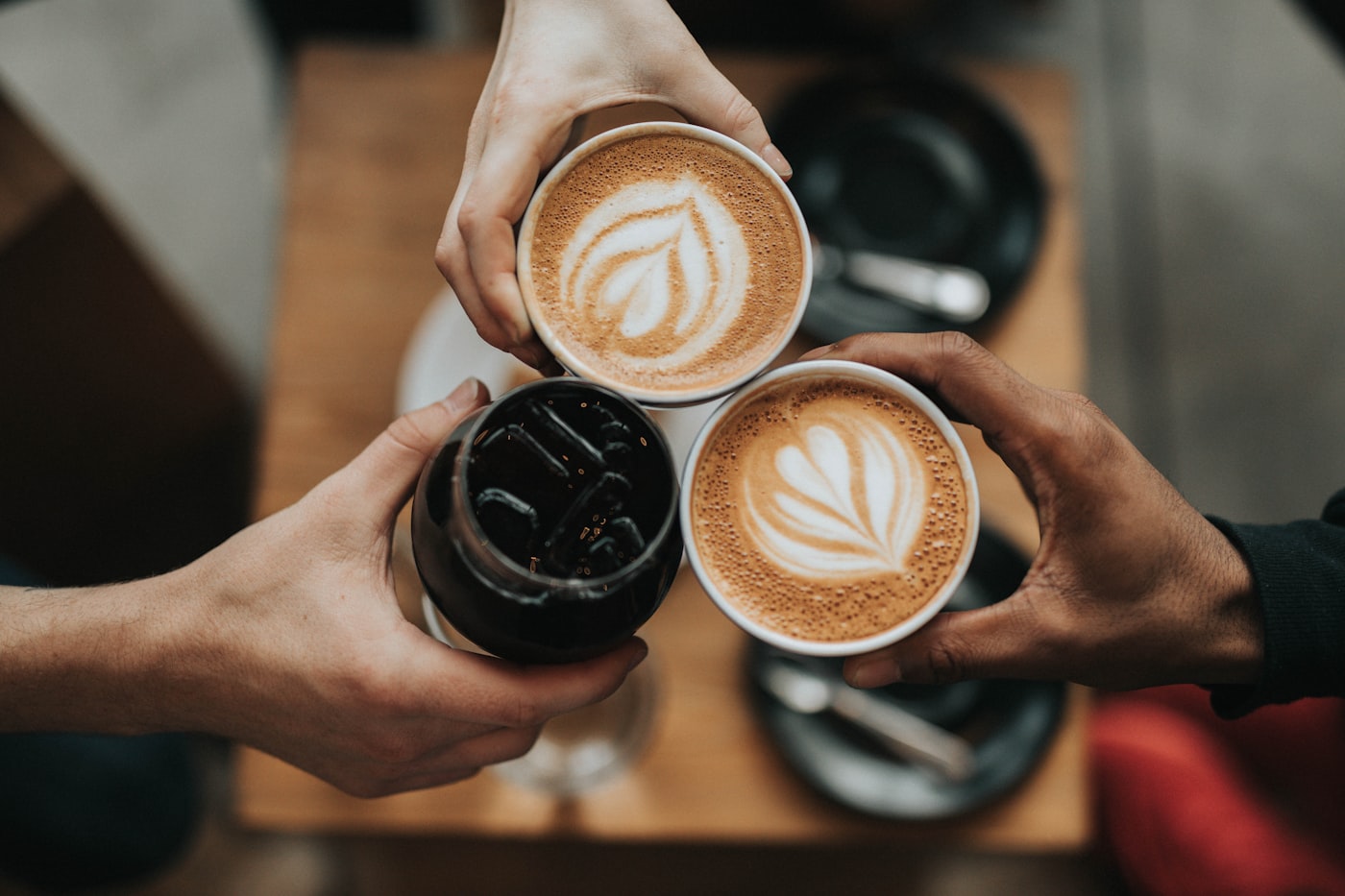
Recent Chinese tea discussion has become increasingly interested in cup form for a reason. Cup form is one of the most easily overlooked and most suddenly powerful parts of drinking. Open rims, straight rims, slightly gathered rims, shallow bodies, deeper bodies, straight walls, and rounded bellies all reorganize aroma and liquid differently once real drinking begins. A more open cup lets aroma rise and disperse faster, often making tea feel brighter and more exposed. A slightly gathered rim tends to keep hot aroma hovering within the cup center, which can make the tea feel tighter, more focused, and more internally gathered. This is especially obvious with high-aroma teas such as oolong, yancha, and dancong.
The effect does not stop at aroma. Form also changes how liquor spreads through the mouth. A shallower, more open cup often lets tea reach the front of the tongue faster, sharpening first impressions. A deeper or slightly more gathered form concentrates flow and can make body feel more compact. These are not earth-shaking transformations, but on a table where similar actions are repeated again and again, small differences become cumulative. They slowly push the whole reading of the tea in one direction or another.
That is why cup form is not just design play. It is not there merely to resemble a flower, an old bowl, or an antique outline. It is doing real work: deciding how aroma arrives, how liquid spreads, how heat meets the mouth, and therefore how judgment forms.
4. Why does wall thickness change pace rather than just hand feel?
Many beginners hear phrases like “thin cups feel livelier” or “thicker cups feel steadier” and assume they belong to vague tea mysticism. In fact the mechanism is quite concrete. Wall thickness changes the speed of heat transfer first. A thin cup delivers heat to lips more quickly and makes liquor feel more direct, which often helps some teas appear fresher, brighter, or more immediate. At the same time, excessive heat, rough edges, or instability can also be exposed more quickly. A thicker wall slows that contact, making the drinking motion calmer and slightly more buffered. Some roughness may feel softened, but some brightness may also be reduced.
So thickness really changes the time-sense of drinking. Thin cups make a sip feel like an event that happens immediately. Thick cups create a layer of delay. For green tea, white tea, and lighter oolongs that depend on freshness and lift, thinner cups often deliver strengths more clearly. For teas where steadiness, body, and inward concentration matter, slightly thicker cups can sometimes support the reading better. This is not mysticism. Heat path changes pace, and pace changes judgment.
That is also why many drinkers eventually develop a preferred daily cup feeling. Some prefer thinness because it feels direct and unmediated. Others prefer a little more wall because it slows things down and matches their natural drinking rhythm. You are not merely touching a cup. You are assigning tempo to tea.
5. Why is capacity one of the easiest parts of a tea cup to get wrong?
When choosing tea cups, many people look first at shape and glaze while treating capacity as a secondary detail, as if “roughly enough” were good enough. In reality capacity is one of the most common mistakes. It does not merely decide how much liquid the cup holds. It decides what rhythm one round of poured tea becomes. Small cups divide each round into clearer short segments, making comparison denser and memory more precise. Larger cups stretch each round into a longer and more continuous drinking span. Both logics are valid, but they are not the same thing.
So cups are not more professional simply because they are smaller, nor more comfortable simply because they are larger. If a cup is too small, shared rounds can become overly fragmented, and both host and guests may finish before a clear sensory judgment forms. If it is too large, the round drags. In gongfu contexts especially, a single round can begin to split internally as temperature and time shift inside the cup itself. The fairness pitcher may have preserved simultaneity, but an oversized cup can start to undo it.
That is why cup capacity must match not just personal taste but also brewing rhythm, number of drinkers, fairness pitcher size, and whether the point is comparative judgment or longer accompaniment. Many people think they bought the wrong pot. Often the real problem is that the cups quietly pushed the whole table into the wrong pace.

6. Why does the tea cup also decide the drinking center of the tea table?
People often assume that only the main brewer determines the center of the table. In fact the main brewer determines the center of action, while the tea cup often determines the center of drinking. Once the liquor enters cups, attention naturally shifts from the brewing zone to the drinking zone. Whether that zone feels calm, scattered, clear, or messy depends heavily on how the cup system works. If cups are too varied, too decorative, or too visually noisy, the drinking area can feel like a display zone under constant interruption. If cups are too flattened into sameness, individual position and judgment focus may become blurred. Even introducing a clearly defined host cup can alter the logic of the whole table.
That is why the tea cup, though small, often determines whether a table is oriented toward sharing, judgment, presentation, or solitary immersion. The main brewing vessel makes the tea. The cups receive the result and decide how that result is distributed into bodies, in what rhythm, and with what sensory shape. In that sense, the cup is not merely an endpoint. It is the drinking interface of the whole table.
7. Common misconceptions about tea cups
Mistake one: the tea cup is only the final vessel, so its effect must be minor. In reality it is one of the hardest effects to escape, because it is closest to the lips, nose, hand, and final sensory judgment.
Mistake two: if a cup looks good, the rest does not matter. Beauty matters, but rim shape, wall thickness, capacity, center of gravity, and heat path all keep rewriting the drinking experience. A photogenic cup can still be awkward in daily use.
Mistake three: smaller automatically means more professional. Small cups do have real rhythmic advantages, but only if they match drinker count, brewing logic, and fairness pitcher scale.
Mistake four: all small white porcelain cups behave more or less the same. Similar color does not mean similar work. Rim openness, wall thickness, interior depth, and base structure are enough to push the same tea toward very different readings.
Mistake five: once the main brewing vessel is chosen well, cup influence can be ignored. The main brewer decides the front end. The cup decides the last mile. Ignoring that last mile means seeing how tea is made but not how tea is actually drunk.
Why does the tea cup still deserve its own serious article today?
Because it is so ordinary, and for that exact reason so easy to flatten. In tea discussion, the vessels with the richest stories are easiest to remember, while the vessels closest to the body are easiest to underrate. Real tea experience often works in reverse. What you finally remember about a tea may not be the price of the pot or the beauty of the gaiwan, but whether the sip felt gathered or loose, thin or thick, bright or dull, whether aroma remained after setting the cup down, whether sweetness rose, and whether the pace felt right. In all of that, the tea cup is deeply involved.
To understand the tea cup is to understand one simple but crucial fact: tea does not leap directly from the fairness pitcher into judgment. There is still an interface between those two moments, and that interface is working on your body in real time. It may not create structure where none exists, but it can absolutely amplify what is already there. It may not rewrite results as dramatically as a main brewing vessel, but it can tilt results continuously and reliably. That combination — specific, intimate, high-frequency influence — is exactly why the tea cup deserves to be pulled out of the category of “just a small cup” and talked through properly.
Related reading: Why the tea tasting cup deserves serious attention again, Why the aroma cup appears with the tasting cup, Why the host cup is more than a slightly larger personal cup, and Why the cup stand is more than a minor cup accessory.
Source references: Baidu Baike: Tea cup, Wikipedia: Tea cup, Wikipedia: Tea set.