Black Tea Feature
Why Zhengshan Xiaozhong Should Not Be Reduced to “Smoked Black Tea”: from Tongmuguan origin and pinewood firing to longan-like liquor, a clearer reading of early Chinese black tea
In much of the English-speaking tea world, Lapsang Souchong is almost shorthand for “pine-smoked black tea.” That impression is not entirely wrong, but it narrows Zhengshan Xiaozhong too much. Once only the smoke remains, everything else gets flattened with it: Tongmuguan origin, Wuyi highland ecology, the tea’s position in the early history of Chinese black tea, the process logic behind pinewood firing, and the rounded sweet structure that Chinese tea writing often summarizes as a “longan-like liquor.” The result is a flavor label instead of a complete tea tradition.
The Zhengshan Xiaozhong worth writing properly is not first of all “a tea with a dramatic taste.” It is a tea formed by Tongmuguan and its surrounding high-mountain ecology, local caicha small-leaf tea resources, black-tea oxidation logic, and the older tradition of pinewood firing. It can certainly show pine smoke and woody fire notes, and in the modern market it can also appear in lighter-smoked or even unsmoked forms. But all of that should remain inside the same factual frame: the core of Zhengshan Xiaozhong was never simply smoke. Its core is the way mountain origin, firing, oxidation, sweetness, and liquor texture are organized into a black tea structure that is rare but instantly memorable.
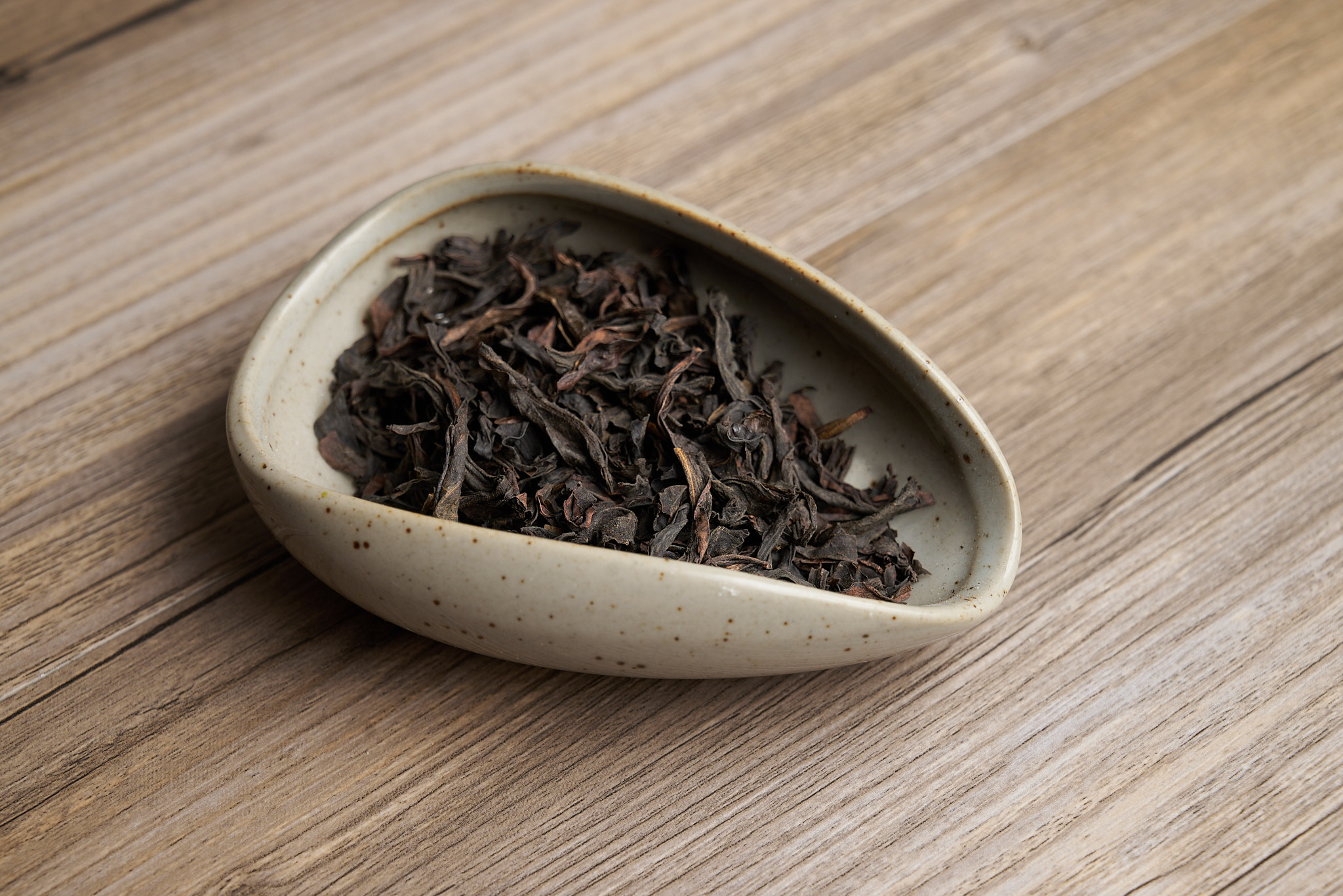
What kind of tea is Zhengshan Xiaozhong, and why is its place in Chinese black tea history so high?
Zhengshan Xiaozhong belongs to the xiaozhong branch of Chinese black tea, and it is one of the most important teas in the early formation history of Chinese black tea. Public historical writing includes legendary versions, local versions, and more cautious scholarly summaries, but the more stable consensus is clear enough: it is deeply tied to the high mountain tea areas around Tongmuguan in Wuyi, and it stands as one of the early mature source lines in both Chinese black tea process history and export memory. In other words, its importance does not need to rest entirely on the slogan “ancestor of black tea.” It is already early enough, complete enough, and historically legible enough to show how Chinese black tea was made and how it was first remembered outside China.
The word zhengshan here is not just a commercial claim of “authenticity.” In the more stable Chinese reference frame, it points to the core route formed by Tongmu and nearby high mountain areas with comparable ecology and traditional process continuity. And xiaozhong is tied to local caicha small-leaf tea resources and historical naming systems. It should not be simplistically read as “low grade” or “coarse leaf.” Once souchong is mechanically forced into Western leaf-grade imagination, people quickly end up assuming that Zhengshan Xiaozhong is little more than rough material covered by smoke. That is the wrong reading. What actually makes the tea work is fit between material and mountain origin, continuity of process, and a finished style with a very clear direction.
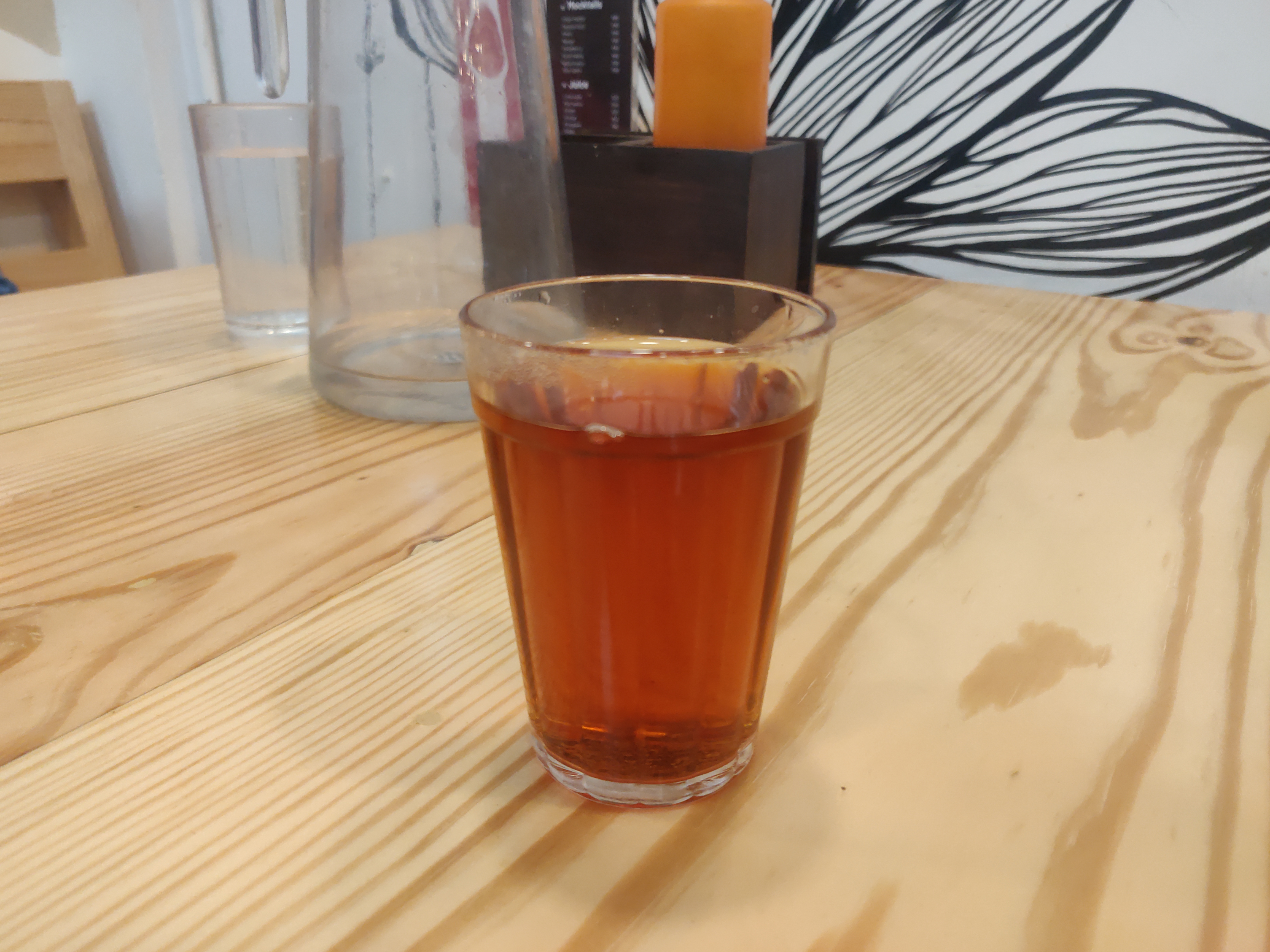
Why does Tongmuguan need to be emphasized so often?
Because Zhengshan Xiaozhong is first of all a mountain tea. Tongmuguan sits in the broader Wuyi protected highland environment: high elevation, heavy forest cover, high humidity, frequent mist, and a much more demanding ecology than many lower black tea zones. These conditions shape a tea that does not depend on a flat, easy aromatic brightness. Instead, the local material more readily develops a mountain-rooted sweetness, enough substance to take fire handling well, and enough softness in the cup to hold structure after firing. That is why pine smoke in Zhengshan Xiaozhong is not just an external effect. It works because it locks into the material itself.
This is also why the tea is such a good reminder that “core origin” is not always decorative map information. In some famous teas, origin is the condition that allows the style to exist at all. Remove Tongmuguan and the Wuyi high-mountain setting, leave only phrases like pine smoke, longan sweetness, and red liquor, and one may still make something similar. But that does not guarantee a convincing Zhengshan Xiaozhong. Its biggest danger is not the obviously fake copy. It is being diluted into a broad and vague category of smoky black tea.
Is “smoked” really the essence of Zhengshan Xiaozhong?
Yes and no. Yes, because traditional Zhengshan Xiaozhong really has long been tied to pinewood firing and a clear pine-smoke profile. Many Chinese public references note that the traditional route develops pine smoke, dried-longan-like sweetness, and a warm sweet finish through this process, and this was one of the main reasons it entered European and English-language tea memory so early. Ignore that, and the tea’s historical profile is damaged.
But its essence cannot be only smoke. If the smoke is separated from black tea sweetness, smooth liquor, and Wuyi mountain support, then what remains is only a striking but shallow external effect. In truly strong traditional examples, smoke is not something slapped on top. It is organized into the whole tea. The opening may carry clean fire notes and pine smoke, the middle can move into ripe-fruit sweetness, woody sweetness, and a rounded water texture, and the finish should close cleanly rather than turning charred, dry, or scratchy. So with Zhengshan Xiaozhong, the real question is not simply whether there is smoke. The real question is how smoke and tea become one structure.
What is the relationship between pinewood firing and “longan-like liquor,” and why are they so often mentioned together?
This is one of the best entrances into the tea. Many people remember it first for pine smoke. But once they drink more carefully, they begin to notice what Chinese tea writing often calls a “longan-like liquor” or a dried-longan sweetness. This is not an added flavor, and it is not just decorative language. It points to a combined impression made from oxidation maturity, fire handling, woody sweetness, ripe-fruit sweetness, and a fuller rounded liquor texture. Public descriptions also use phrases like dried longan, honeyed date, or related terms, but they are all trying to say the same thing: the sweetness here is not a thin sugary sweetness. It carries ripe-fruit weight, woody sweetness, and a thicker water feel.
That is exactly why smoke alone is not enough. Without that longan-like sweet and rounded base, the smoke becomes sharp, floating, and dry. But if the tea has only sweetness and loses its proper fire handling and mountain tension, it becomes an easy but unremarkable sweet black tea. What makes Zhengshan Xiaozhong genuinely rare is the way it can gather forest fire character, wood notes, ripe-fruit sweetness, black tea body, and high-mountain Wuyi feeling into one cup.
Why are so many “unsmoked” versions common now?
Because tea taste changed, and so did the drinking context. More domestic Chinese drinkers now want to read Tongmuguan material sweetness, cleaner fruit notes, and a smoother water path more directly, without strong smoke covering everything. As a result, unsmoked or lightly smoked Zhengshan Xiaozhong has become much more common in recent decades. These teas are not completely separate inventions. They still stand on the same material and process tradition, but they reduce the stronger smoked expression and shift the center toward a cleaner, sweeter, more immediately drinkable style.
That does not mean the traditional smoked route is obsolete. A more accurate statement is that Zhengshan Xiaozhong now exists in both a traditional pine-smoked route and a lighter-smoked or unsmoked route, each serving a different sensory priority. The former emphasizes historical continuity and Wuyi pine-fire expression. The latter emphasizes mountain sweetness and a smoother liquor more directly. The real judgment is not which one sounds more modern. It is whether each style is complete within its own route. A light-smoked version should not merely be weak, and a traditional smoked version should not simply be aggressive. Both should still return to the same center: mountain origin, oxidation, sweetness, and liquor structure remain intact.

How is it different from Keemun and Dianhong?
When Zhengshan Xiaozhong is placed back into the internal map of Chinese black tea, its differences become very clear. Compared with Keemun, Zhengshan Xiaozhong places more weight on Wuyi mountain origin, pine-fire traces, and the older xiaozhong black tea route. It usually feels deeper and more marked by fire handling. Keemun, by contrast, leans toward a more refined and tidier floral-fruit-wood balance. Compared with Dianhong, Zhengshan Xiaozhong usually has less overt honey force and less broad large-leaf thickness. Its power is more inward. It comes from mountain origin, firing, sweetness, and a woody structural line rather than from simple richness alone.
This is why the tea is so important on a map of Chinese black tea. It is not just the rough earlier stage before Keemun, and it is not simply another strong-flavored modern black tea. It is a fully independent Wuyi route: historically exportable, but still strongly marked by local mountain ecology and process logic. It could be remembered by the West, but it still has to be read again inside Chinese tea geography and craft terms.
Why is the tea often remembered more vividly in English than in everyday Chinese writing?
Because English-language memory of Lapsang Souchong is unusually visual: smoky, pine-smoked, campfire, resinous, savory. These words make it easy to place the tea inside winter drinking, fireplaces, breakfast tea, savory food, and even cocktails. Chinese everyday writing often knows the tea is important, but still tends to stop at short labels like “smoky” or “ancestor of black tea.” So an odd split appears: English readers may remember its drama without understanding its mountain and historical context, while Chinese readers may know its status without really reading why it works.
That is why bilingual writing matters here. The point is not to let the English article drift into a completely separate Western story. The point is to carry the Chinese factual spine across intact: Tongmuguan, mountain origin, the balance of smoke and sweetness, longan-like liquor, and the coexistence of traditional smoked and unsmoked styles. Otherwise English readers remain stuck with “that cool smoky tea,” and Chinese readers remain stuck with slogans.
How should Zhengshan Xiaozhong be brewed, and why does it suit both clear drinking and larger Western-style cups?
If the goal is to judge a tea seriously, a gaiwan, a small pot, or another small-volume setup is the most revealing. Around 3 to 5 grams for 100 to 120 ml of water is a useful starting point, with water usually around 90°C to 95°C. The first infusion does not need to be overlong. Let smoke, sweetness, and liquor texture appear one after another. Traditional smoked examples in particular should not be heavily stewed from the start, or char, dryness, and woody roughness become exaggerated and hide whether the tea has a truly clean sweet base underneath.
At the same time, one reason the tea survived so well in English-speaking culture is that it still keeps its shape in larger cups and more Western brewing contexts. Clear pine-smoke identity, woody notes, and ripe-fruit sweetness mean that it can still hold itself in larger mug brewing, with breakfast foods, with savory food, and even with milk. But “able to work there” does not mean “only meant for that.” Truly good Zhengshan Xiaozhong is still most rewarding when drunk clear, where one can see whether smoke and sweetness are balanced, whether the firework is clean, and whether mountain character remains in the finish.
What are the easiest mistakes when buying Zhengshan Xiaozhong?
The first mistake is treating heavier smoke as the only sign of authenticity. Smoke that is too sharp, too charred, or too dry often points to poor fire handling rather than higher quality. The second mistake is treating “completely unsmoked” as automatically more modern and therefore superior. The unsmoked route can be excellent, but only if it still carries the sweetness, smoothness, and mountain support expected from the Tongmuguan line instead of becoming a generic sweet black tea. The third mistake is assuming that every product labeled Lapsang Souchong or Zhengshan Xiaozhong is basically the same thing. Today the differences among international commodity naming, domestic style naming, core-origin expression, and imitation styles can be very large.
The fourth mistake is judging only by dry leaf aroma. Zhengshan Xiaozhong especially demands that one ask whether the smoke really falls into the water. It is easy for dry leaf to smell smoky. The difficult part is whether, once brewed, the smoke is clean, the sweetness keeps up with it, and the finish still returns to smoothness and clarity. A fifth mistake is ignoring the tea’s relationship with food and context. Many samples feel too fiery if gulped alone on an empty stomach, but become much more complete with bread, butter, nuts, savory snacks, or smoked foods. That does not make it less Chinese. It helps explain why it has endured across tea cultures.



Why does it deserve to be a core entry in the site’s black tea section?
Because it fills one of the source lines that Chinese black tea coverage cannot do without. If Keemun helps readers understand how Chinese black tea connected to late Qing trade, blending systems, and a refined black tea aesthetic, then Zhengshan Xiaozhong adds the earlier Wuyi xiaozhong route, the pinewood firing tradition, the Tongmuguan mountain story, and the line through which Chinese black tea was first remembered by the wider world. Without it, the black tea section is not structurally complete.
More importantly, Zhengshan Xiaozhong is naturally a bilingual bridge article. Chinese readers often arrive through Tongmuguan, xiaozhong black tea, longan-like liquor, and smoked tradition; English readers often arrive through Lapsang Souchong, smoked black tea, and culinary tea language. As long as the English page stays aligned with the same factual frame and structural spine as the Chinese source article, it can serve both Chinese tea knowledge and English-language search interest without turning into a completely different essay.