Fujian black tea feature
Why Zhenghe Gongfu deserves its own entry: not a Fujian substitute for Keemun, but a classic Minbei black tea that explains big-leaf, small-leaf, blending, and the so-called violet aroma
If Zhenghe Gongfu is mentioned only briefly inside the larger map of Chinese black tea, readers are left with a vague impression: a Fujian gongfu black tea, historically exported, and often grouped with Tanyang Gongfu and Bailin Gongfu. That is not wrong, but it misses why the tea is worth a full article. Zhenghe Gongfu occupies a distinctive place within the Fujian black-tea world. It combines the mountain ecology of northern Fujian with an older gongfu black tea logic centered on finished balance rather than a single flashy parameter. It preserves both a “big tea” pathway associated with Zhenghe Dabai and related larger-leaf material, and a “small tea” pathway associated with local smaller-leaf material. It can be written historically, but it also holds up in the cup.
That is why it belongs in the tea section as its own canonical entry. The site already has a broader black tea overview, which helps readers understand the naming split between Chinese red tea and English black tea, the historical weight of Lapsang Souchong, and the modern premium reimagining represented by Jin Jun Mei. But if the story stops there, Fujian black tea still appears overly simplified, as if it consisted of famous extremes plus a vague middle ground. Zhenghe Gongfu fills that middle ground. It does not rely on smoke the way Zhengshan Xiaozhong does, nor on bud-heavy luxury signaling the way Jin Jun Mei does. Instead, it represents an older, more complete gongfu black tea aesthetic built on coordination, blending, and finished form.
What kind of tea is Zhenghe Gongfu, and where does it sit within Fujian black tea?
Zhenghe Gongfu is a traditional Fujian gongfu black tea produced in and around Zhenghe County in northern Fujian. Public reference material commonly places it alongside Bailin Gongfu and Tanyang Gongfu as one of the three major Minhong gongfu black teas. That classification matters because it shows that Zhenghe Gongfu is not a recent branding invention. It is a stable member of the older Fujian black-tea lineage. More importantly, it represents a mature northern Fujian route: mountain-grown leaf, strip-shaped gongfu black tea, careful refining and grading, and a long relationship with export markets.
This is not quite the same as modern tea storytelling built around one mountain, one cultivar, one flavor tag. Older gongfu black tea logic often cared more about finished completeness: how the leaf materials support one another, how aroma and liquor are stabilized, and how thickness and fragrance can coexist. Zhenghe Gongfu is especially useful because it shows what it means to make a traditional black tea into a complete tea, not merely an eye-catching one.
Why is it often described as one of the finer Fujian gongfu black teas?
Traditional descriptions often present Zhenghe Gongfu as one of the more highly regarded Fujian gongfu black teas, sometimes emphasizing its mountain character. That judgment is not just praise language. It points to at least three things. First, Zhenghe sits in a hilly mountain environment linked to the Wuyi range, with cloud cover, rain, forested slopes, and relatively suitable temperatures for building aromatic detail and a sustained sweet aftertaste. Second, the tea historically developed a strong finished-product logic: not simply making black tea, but making a polished black tea through grading, refining, and, when appropriate, blending. Third, in the era of export tea, it was indeed recognized as a tea of strong quality and market value.
So “fine” here is not an empty price word. It is closer to a traditional integrated evaluation: ecological base, workable raw material structure, and processing that can hold together aroma, body, liquor color, and endurance. This way of judging tea is worth recovering because modern premium talk can become too dependent on surface markers such as how many golden tips are visible or how luxurious the packaging looks.
Why are the terms “big tea” and “small tea” so important here?
This is the part readers should not skip. Public descriptions of Zhenghe Gongfu often distinguish between two raw-material routes: da cha, or “big tea,” commonly associated with Zhenghe Dabai and other larger-leaf material, and xiao cha, or “small tea,” associated with local smaller-leaf material. At first glance that may sound like a simple botanical distinction. In practice it signals two partially different flavor directions.
The big-tea route more easily supports stronger body, fuller liquor, and a more imposing structure. The small-tea route more easily supports finer strip shape, subtler aroma, and a lighter aromatic precision. Traditional Zhenghe Gongfu does not necessarily treat these routes as rivals. Rather, classic gongfu logic often lets the big tea contribute body while the small tea contributes fragrance, with refining and proportion used to create a more complete final tea.

Does blending mean the tea is less pure or less refined?
This is one of the easiest modern misunderstandings. Many contemporary readers hear the word “blend” and immediately think “not pure,” “not premium,” or “not single-origin.” That reaction makes sense inside some modern specialty markets, but it does not fit older Chinese gongfu black tea very well. In the traditional gongfu context, blending is often not a shortcut but a craft skill. In a tea like Zhenghe Gongfu, blending can be a deliberate way to balance thickness, fragrance, liquor color, endurance, and aftertaste.
In other words, the older question is not “Is it as single as possible?” but “Does the finished tea stand up?” If big-leaf material gives only body and no fine aroma, the result can feel blunt. If small-leaf material gives only aroma and no frame, the result can feel thin. Zhenghe Gongfu’s classic logic is to bring those lines together. That is a different value system from today’s single-tree or single-garden rhetoric, but it is not inferior. It often represents a more mature export-era black tea craft mentality.
Why is Zhenghe Gongfu so often linked to a “violet aroma”?
Traditional descriptions frequently say that Zhenghe Gongfu has a rich fragrance with a faint resemblance to violet. That phrase sounds literary and is easy for marketing to overuse, so it needs careful handling. It does not mean the liquor smells exactly like perfume or like a single floral note in isolation. Rather, in stronger examples of Zhenghe Gongfu, aroma is not only sweet, roasty, or sugary. It may also carry a higher, cleaner, more lifted floral edge with a slightly cool contour, and older descriptive language often borrowed the term “violet” to point drinkers toward that sensation.
Because this is a subtle aromatic idea, Zhenghe Gongfu is easy to describe badly. If the phrase is used too lightly, it becomes empty sales language. If used too literally, it misleads readers into expecting an overt floral black tea. A more accurate explanation is this: one of the tea’s strengths is its ability to keep a fine, elevated aromatic thread above a thicker red-tea structure, and that thread is sometimes summarized through the traditional shorthand of “violet aroma.” It is a reading cue, not a mechanical standard answer.
How should its liquor and mouthfeel be understood in the cup?
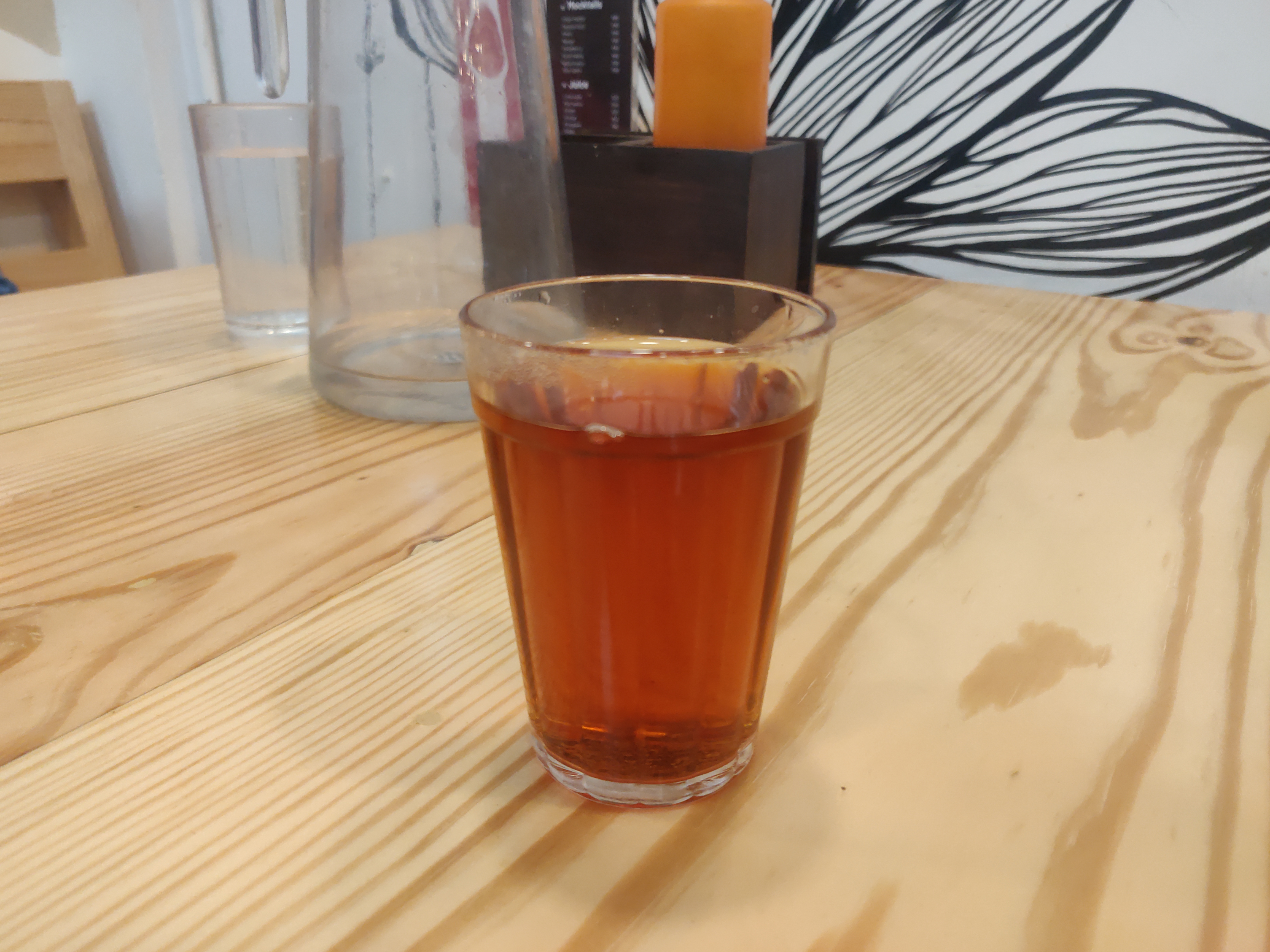
Most public descriptions summarize Zhenghe Gongfu as having stout and weighty strip-shaped leaf, dark glossy color, visible golden tips, a rich aromatic profile, bright red liquor, full taste, and a long returning sweetness often linked to mountain character. In practical tasting terms, that means more than memorizing adjectives. Bright red liquor should feel clear and lively rather than dull or muddy. Fullness should mean volume and body rather than heaviness or bitterness. Long aftertaste should mean sweetness and clarity that continue to rise after swallowing, not a single quick flash of sugar-like sweetness.
If a supposed Zhenghe Gongfu feels only heavy but not bright, only sweet but not structured, or only aromatic but hollow in the liquor, it is probably not showing the tea at its best. Ideally, the front of the cup offers fragrance, the middle has body, and the back continues into sweetness and mountain resonance. It does not need the extreme finesse of some contemporary premium bud black teas, but it should not collapse into crude heaviness either. At its best, Zhenghe Gongfu is thick without dullness, fragrant without drift, and sweet without becoming sticky.
If Zhenghe, Bailin, and Tanyang are all Minhong gongfu black teas, why separate them?
Because belonging to the same larger family does not make them interchangeable. Bailin Gongfu is often remembered for a finer strip, more visible hairy buds, and a lighter, fresher small-leaf elegance. Tanyang Gongfu carries its own historical export associations and eastern Fujian context. Zhenghe Gongfu stands out because it retains a more visible big-tea/small-tea/blending logic and because mountain ecology plays a stronger role in its traditional quality descriptions.
Put more simply: Bailin Gongfu is easier to remember through finesse and bud character, Tanyang Gongfu through export reputation and eastern Fujian black-tea history, while Zhenghe Gongfu is best remembered as a northern Fujian mountain black tea completed through the cooperation of body and fine aroma. Its identity is less about one dramatic tag and more about integrated finish. That makes it harder to summarize in one slogan, but more rewarding to explain well.
Why does its history matter?
The historical importance of Zhenghe Gongfu is not that it is merely “old.” It is that it clearly connects mountain tea production in Fujian, modern export trade, and later cycles of decline and recovery. Public material indicates that by the late Qing period Zhenghe black tea had already entered active commodity circulation, exporting through ports such as Fuzhou and Quanzhou to overseas markets. By the mid-twentieth century, Zhenghe still maintained notable tea houses, output, and export activity. Later, market shifts reduced its prominence, and only in the twenty-first century did it gradually recover as a named product again.
That arc matters because it shows Zhenghe Gongfu is not a newly invented “heritage tea” created only for present-day local branding. It genuinely belonged to the older export black-tea network. It was once active, then weakened, then rebuilt. That trajectory differs from the more globally legendary narrative around Lapsang Souchong and also from the explicit modern invention narrative around Jin Jun Mei. Zhenghe Gongfu stands for another common Chinese tea story: mature tradition, export presence, decline, and reconstruction.
Why does this article fit naturally into the site’s existing black tea structure?
Because it complements the existing black tea overview. The overview establishes the large frame: why Chinese calls the category red tea, how Zhengshan Xiaozhong enters world tea history, and how Jin Jun Mei reflects modern premium refinement. Without Zhenghe Gongfu, though, Fujian black tea still appears to have only two exaggerated poles: the most historical and smoky, and the most modern and bud-driven. Zhenghe Gongfu restores the more settled middle of traditional gongfu black tea.
It helps readers see that Fujian black tea is not only a set of legends and star products. There is also an older, more systematic way of making black tea in which finished balance matters deeply. For readers who want to understand Chinese black tea rather than just recognize famous names, this is exactly the missing piece.

How should Zhenghe Gongfu be brewed so it does not become a cup with only strength and no nuance?
Zhenghe Gongfu responds well to a gaiwan or small pot that lets the drinker follow several infusions. Around 5 to 6 grams in a 110 ml gaiwan is a stable starting point. Water can be near boiling, since it is a strip-shaped gongfu black tea and generally tolerates high temperature. But the early infusions should not be oversteeped. If brewed too long from the start, body comes out before the aromatic line has had space to open, and the tea can appear merely strong rather than layered.
A better rhythm is to use the first infusions to judge whether the aroma is clear rather than floaty, and whether there is indeed some fine elevated floral suggestion. The middle infusions should show whether the liquor has real body and whether sweetness is rising. Later infusions should answer whether the aftertaste, mountain feel, and endurance remain intact. It is not a black tea that must be brewed weak to seem elegant, nor one that proves itself only when made very strong. Its balance point lies between those extremes: substantial without stiffness, fragrant without looseness.
What are the most common mistakes when buying it?
The first mistake is to treat all Fujian gongfu black teas as if they taste the same. Many product pages say only “Minhong,” “gongfu black tea,” or “mountain black tea,” which can blur important distinctions. The second mistake is to over-literalize the idea of “violet aroma,” expecting an obvious perfumed floral note like a scented tea. In reality, Zhenghe Gongfu is often better when the aromatic line is fine, clean, and stable rather than exaggerated. The third mistake is to assume blending automatically means lower quality. For a traditional gongfu black tea, the opposite may be true: successful blending can be a sign of real finishing skill.
A fourth mistake is to judge too much by golden tips alone. That visual language is more useful for some modern bud-centered premium black teas than for Zhenghe Gongfu. Visible golden tip can be present, but the more important questions remain whether the strip shape is orderly, whether the liquor is bright, whether the aroma is steady, whether the taste is full yet lively, and whether the returning sweetness lasts. For this tea, appearance is an entry point, not the conclusion.
Why add Zhenghe Gongfu to the tea section now?
Because it makes the Fujian black-tea story more complete, and it also makes the logic of traditional Chinese gongfu black tea more complete. It reminds readers that black tea is not divided only between smoky legend and bud-heavy luxury. There is also a third line: older, more integrated, and more concerned with finished coordination. Zhenghe Gongfu stands at an important point along that line. It helps Chinese readers recover the idea that blending is not automatically a flaw, and it helps English-language readers understand that Chinese black tea does not always build value through a single loud flavor tag.
Most importantly, it works structurally with what is already on the site. A reader can enter through the general black tea article, then come here and begin to see how Chinese black tea differentiates internally: some teas build identity through smoke and historical drama, some through buds and modern premium refinement, and some through a traditional gongfu ideal of finished completeness. Zhenghe Gongfu belongs to the third group, and that may be the least often explained one.
Source references: publicly available reference summaries on Zhenghe Gongfu from Baidu Baike and related publicly accessible materials on Zhenghe tea production and Minhong gongfu black tea. This article uses a cautious factual frame: Zhenghe Gongfu belongs to the traditional Fujian gongfu black tea system and is commonly grouped among the three major Minhong gongfu teas; its core production zone lies in Zhenghe and nearby mountain areas of northern Fujian; traditional descriptions distinguish between big-tea and small-tea raw-material pathways, with refining and blending used to complete the finished style; the finished tea is commonly described as weighty and glossy in dry leaf, bright red in liquor, full in taste, and fragrant with an often-cited faint violet-like aromatic suggestion. Specific dates, modern brand valuations, and folklore claims are not treated here as unquestioned conclusions.