Oolong Tea Feature
What Shuixian tea really is: from Wuyi Shuixian and northern Fujian Shuixian to southern Fujian Shuixian and Zhangping compressed tea cakes, how one name split into several very different oolong paths
In Chinese tea, “Shuixian” is one of the names most likely to confuse a new reader immediately. You see Shuixian in Wuyi rock tea shops, in northern Fujian oolong references, in southern Fujian tea talk, and then again in Zhangping as small compressed tea cakes. These are related, but they are not just the same tea made in different places. The real difficulty, and the real fascination, is this: Shuixian is at once a tea cultivar name, a branch of finished oolong styles, and a shared entry point into several regionally different tea traditions.
If Shuixian is reduced to “an oolong with orchid fragrance,” almost everything important gets lost. What matters is how the same underlying cultivar developed very different personalities in different production systems. In Wuyi, it can move deep into the world of rock tea, roast logic, rock character, and old-bush storytelling. In the broader northern Fujian strip-style oolong world, it keeps a more traditional identity built around thickness, orchid fragrance, durability, and classic leaf-and-edge evaluation. Once it moves south into Yongchun and Zhangping, it is reinterpreted again through southern Fujian oxidation practice, pressing, roast style, and local drinking habits, becoming something rounder, softer, often more floral, and in Zhangping’s case structurally tied to a compressed tea-cake form.
Is Shuixian first a cultivar or first a finished tea? Why is the name so easy to misunderstand?
The first useful distinction is between cultivar and finished tea. Shuixian is, before anything else, a historically influential tea cultivar system. Public reference material commonly traces important source lines to the Jianyang and Jian’ou area of northern Fujian, from which it later spread into other tea regions and into several different finished oolong styles. In other words, Shuixian does not automatically mean one fixed tea product. It is better understood as a powerful base material with a strong structural identity of its own.
Confusion follows naturally once that cultivar is planted widely and then deeply reshaped by different local processing systems. When someone says “Shuixian,” a Wuyi rock tea drinker may imagine old-bush Shuixian, wood tone, mossy character, and roast. A broader northern Fujian oolong reader may think first of strip form, orchid fragrance, thickness, and the traditional “three red, seven green” leaf-bottom reading. A southern Fujian drinker may jump directly to Yongchun or Zhangping Shuixian. A single name covering so many finished directions tells us both how adaptable the cultivar is and how necessary it is to explain it in layers.
Why is Shuixian especially well suited to oolong production? What does the cultivar give the finished tea?
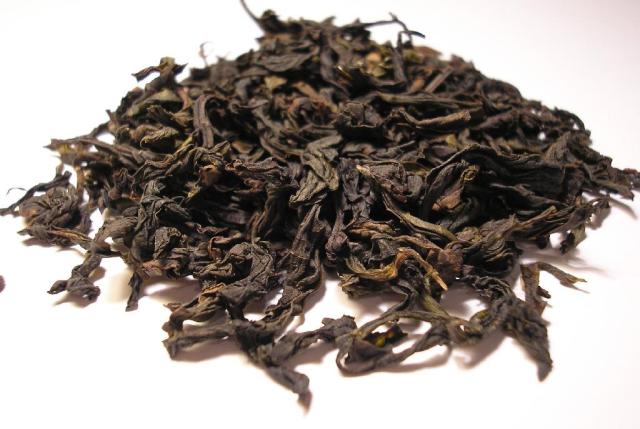
Reference descriptions of Shuixian repeatedly emphasize several traits: thicker and larger leaves, stronger stems, higher water content, tolerance for oxidation handling, tolerance for roast, and good endurance over multiple infusions. Put together, those traits already explain why Shuixian fits the oolong category so well. Oolong is not a tea type built only on tenderness and immediate freshness. It asks the leaf to move through withering, shaking, fixation, rolling, and roasting in a comparatively complex rhythm. A cultivar with thick flesh, strong internal reserves, and structural resilience naturally handles that sequence well.
This is also why Shuixian rarely succeeds as a merely airy or superficial tea. Even when made in a lighter direction, it usually carries more body and frame than many smaller-leaf aromatic teas. Once roast and post-roast settling are handled well, it can support real thickness, sweetness, and later-session extension. So Shuixian matters not only because it can smell good, but because it can hold aroma, liquor, and fire together in a more complete structure.
What is northern Fujian Shuixian, exactly? Is it the same thing as Wuyi Shuixian?
Strictly speaking, Wuyi Shuixian is a major branch within the broader northern Fujian Shuixian tradition, not a totally separate species of tea. Public descriptions often use “northern Fujian Shuixian” to mean strip-style oolong made from Shuixian cultivar material according to northern Fujian processing logic. “Wuyi Shuixian,” by contrast, refers to Shuixian as it lives inside the Wuyi rock tea system, where mountain site, roast, rock character, and old-bush storytelling become far more central to the way the tea is read.
So the two are continuous, but differently weighted. The continuity lies in the cultivar base: thick leaves, long fragrance, full taste, good roast tolerance, and strong endurance. The difference appears once that base is placed inside Wuyi. There, the reader’s attention shifts away from “this is a strip-style oolong” toward questions of site, firework, old-bush identity, and whether the bush character really stands up. The material foundation remains related, but the reading method changes sharply.
Why did Wuyi Shuixian develop the old-bush direction with such unusual prestige?
Because Shuixian is especially capable of carrying the deeper effects of bush age, mountain site, and roast. Many Wuyi cultivars are site-sensitive, but Shuixian often makes tree-age narrative feel more believable in the cup. “Old-bush Shuixian” is not just about old plants in an abstract sense. It refers to a fuller tasting experience: wood tone, mossy suggestion, bark-like depth, hidden orchid base, a damp forest feeling, and a slower, deeper, steadier return of sweetness and throat presence than one often gets from younger material.
That said, the phrase is also easy to abuse. A truly convincing old-bush Shuixian should not simply look darker or sound more impressive in the sales story. It should behave more calmly and deeply in the cup. Its aroma should not hover only at the lid. The liquor should move downward with weight, and the finish should not collapse quickly. Many market teas borrow the old-bush label to raise expectation, while the actual tea offers only heavier roast and a stiffer mouthfeel. That is exactly why the topic matters: tree-age language is useful, but the final judgment still has to return to the cup.
If we leave old-bush talk aside, what is the main flavor coordinate of ordinary Wuyi Shuixian?
The shortest answer is that Wuyi Shuixian is usually calmer, deeper, and heavier than Rougui. Rougui often pushes spice, aromatic tension, and early-session attack more clearly to the front. Shuixian tends to place more of its force in the middle and later parts of the session, where orchid undertones, mature-fruit suggestions, woodiness, liquor depth, and throat feel begin to gather.
This is one reason many rock tea drinkers start by being attracted to Rougui and later return to Shuixian. Shuixian is not always the most explosive first sip, but it often becomes the most complete tea across a session. Firework links more easily to fragrance, fragrance links more easily to liquor, and the liquor links more easily to a deeper finish. That total sense of completion is one of its real strengths in the Wuyi system.
How did southern Fujian Shuixian emerge, and why is it linked to Yongchun and Zhangping?
Public reference material commonly describes Shuixian as moving southward from northern Fujian into Yongchun during the mid-19th century and then spreading further into the southern Fujian tea world. The exact year matters less than what happened afterward. Once Shuixian entered southern Fujian, it did not remain just “that northern strip-oolong material.” It was reinterpreted through a different local framework of oxidation, shaping, roast, and daily tea use.
This point matters because many readers unconsciously treat southern Fujian Shuixian as a weaker copy of the northern style. It is better understood as a new regional branch. Southern Fujian already had its own strong oolong logic, with different emphasis in handling, aroma expression, and drinking habit. Once Shuixian entered that system, it was not merely duplicated. It was translated. That is why Yongchun Shuixian and Zhangping Shuixian can feel rounder, softer, more overtly floral, and shaped by a somewhat different balance of processing and roast than the classic Wuyi version.
What role does Yongchun play in this southern branch?
Yongchun is best understood as a major relay point and re-localization node in the southward life of Shuixian. Public standalone material on Yongchun Shuixian is not especially abundant, but the broader historical thread is clear enough: Yongchun not only received the Shuixian cultivar, but also reembedded it into a local southern Fujian oolong environment with its own cultivation and processing habits. That is why any serious mention of southern Fujian Shuixian eventually circles back to Yongchun.
From a reader’s point of view, Yongchun matters not because it always has the loudest market name today, but because it shows what really changes when a cultivar moves between regions. The identity card does not change first; the mode of expression does. Once in Yongchun, Shuixian no longer behaves like a simple copy of Wuyi rock tea. It absorbs local judgment, local roast taste, and local patterns of use, shifting toward a more southern Fujian kind of floral, smooth, and rounded presence. That transformation is one of the most interesting historical lessons hidden inside the name.
Why does Zhangping Shuixian deserve its own discussion? Because it pushes the idea of Shuixian-style transformation almost to an extreme
If Wuyi Shuixian pushes the cultivar toward rock tea depth, Zhangping Shuixian pushes it along another finished-tea path altogether. Its most obvious feature is, of course, the tea cake. Public reference material commonly treats it as one of the rare, even singular, compressed forms within the oolong world. The interesting point is not just that it is pressed, but how pressing changes the reader’s whole expectation of what an oolong can look and feel like.
Most people imagine oolong as loose strip tea opening gradually in a gaiwan. Zhangping Shuixian combines oolong with pressing into a small square cake, and not as mere visual novelty. It forms a full regional style: it keeps the cultivar’s orchid fragrance, thicker leaf base, durability, and sweetness, but adds shaping, pressing, roast, and storage relationships that change how the tea unfolds. It looks like a small cake, yet drinks as oolong. That makes it unusually distinctive in the Chinese tea map.
How does the flavor of Zhangping Shuixian tea cake differ most clearly from Wuyi Shuixian?
The real difference is not just “one is pressed and one is not,” but that the stylistic center of gravity changes. Wuyi Shuixian usually emphasizes site, roast, bush character, and depth. Zhangping Shuixian more often emphasizes high floral fragrance, fine and smooth liquor, the stability created by compressed shaping, and the way the tea behaves over time. Public references frequently describe it through orchid fragrance, delicacy, liveliness, and endurance. That is not the same emphasis as the woody, mossy, old-bush, fire-and-rock axis that dominates much Wuyi Shuixian discussion.
In other words, Wuyi Shuixian pushes Shuixian toward a deeper, firmer, more site-and-fire-centered expression. Zhangping Shuixian pushes it toward a softer, more floral, more shape-defined and storage-aware expression. Both can have body. Both can have floral notes. Both can be durable across infusions. But the origin of that body, the placement of that fragrance, and the processing logic behind the durability are different. Once readers understand this, they stop collapsing all Shuixian into one imagined tea.
Why is Shuixian so often described as having “orchid fragrance”? Is that a reliable idea?
It is reliable if understood carefully. “Orchid fragrance” does not mean every Shuixian smells like the same flower perfume, nor that it must present the sharpest and highest top-note floral burst. In many tea references, the phrase works more as an experienced-based category: a clean, long, floral-leaning aromatic direction that remains connected to the tea liquor rather than floating separately above it. It is a direction of reading, not a rigid scent template.
That is exactly why the same “orchid” description can still produce very different drinking experiences in Wuyi Shuixian, broader northern Fujian Shuixian, and Zhangping Shuixian. In Wuyi, the orchid base is often buried deeper and must be read together with fire, wood, and bush character. In Zhangping, the floral aspect may stand more obviously forward. In other southern styles, it may feel cleaner, gentler, and rounder. So instead of using orchid fragrance as a final label, it is better to treat it as a base language that each region rewrites differently.
How should Shuixian be brewed if you want to see which branch it belongs to?
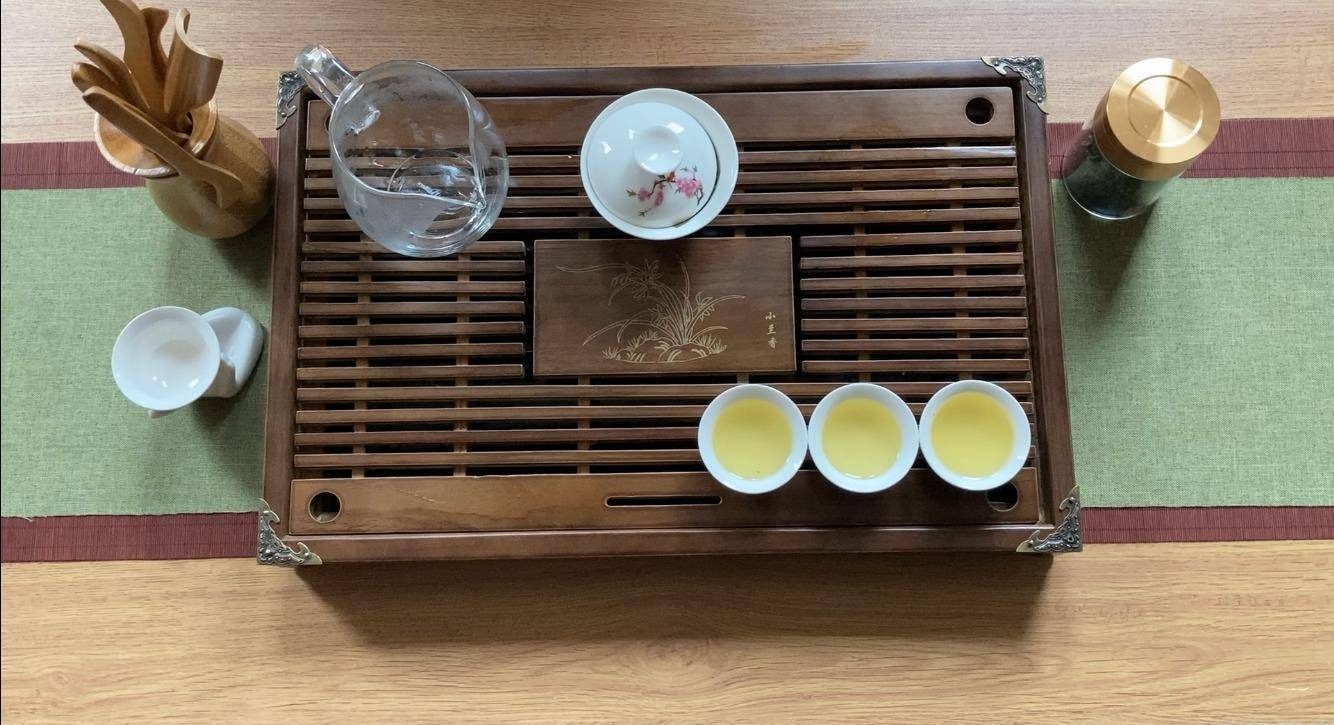
For most strip-style Shuixian teas, small gaiwan or small pot brewing with high heat, many infusions, and fairly brisk pours is much more revealing than mug-style long soaking. What you need to read is not just aromatic height, but the tea’s movement across several infusions. A practical starting point is 5 to 8 grams for a 100–110 ml gaiwan, with water near boiling. Keep the early rounds quick and lengthen gradually according to how the tea behaves. That makes it easier to see whether the tea is leading from the front or building from the back, and whether the fragrance remains outside the liquor or has actually settled into it.
Zhangping Shuixian tea cakes add another layer: they need time to open. Because the tea is compressed into small cakes, the first few rounds are often both extraction and structural loosening. That means patience matters. Do not begin by forcing it with long heavy steeps, which can pull roast and bitterness forward too quickly. Good Shuixian, whether from Wuyi or Zhangping, should ultimately show one thing: aroma, liquor, and return are not three separate performances, but one connected line.
What are the most common buying mistakes with Shuixian?
The first mistake is trusting the name without asking about region and process. Buying “Shuixian” without clarifying whether it is Wuyi Shuixian, broader northern Fujian strip-style Shuixian, southern Fujian Shuixian, or Zhangping Shuixian tea cake means the question itself was framed too loosely. The second mistake is treating orchid fragrance as automatic proof of quality. Shuixian does often lean floral, but good Shuixian must connect fragrance, liquor, and finish. Surface aroma without durability or returning sweetness is rarely enough.
The third mistake is taking “old bush” as a universal answer for Wuyi Shuixian. Old-bush tea deserves respect, but not blind faith. The fourth is reducing Zhangping Shuixian to its compressed shape and ignoring the real point, which lies in the relationship among oxidation, shaping, roast, and later development. A fifth mistake is using one standard for all Shuixian teas. Some people demand old-bush Wuyi depth from Zhangping tea cakes; others judge Wuyi Shuixian unfairly because they are expecting the smoother and more floral behavior of southern styles. But these are not supposed to be identical. They are one root with different branches.
Why does Shuixian deserve to stand as a main trunk article in a tea site?
Because it captures one of the most interesting truths in Chinese oolong tea: one cultivar does not automatically equal one flavor, and the same base material can be reshaped by geography, process, and local tea culture into several distinct finished identities. That lesson cannot be fully taught by writing only Rougui, Tieguanyin, or Zhangping Shuixian as isolated pages. Only when Shuixian is pulled out as a larger line do the relationships among those branches become visible.
For site structure, the article is useful in both directions. One side links naturally to Rougui and Shuixian in Wuyi rock tea and deeper Wuyi material. The other side opens toward future standalone work on Zhangping Shuixian, Yongchun Shuixian, northern Fujian oolong history, and oolong oxidation craft. It functions both as an educational entry and as the center of a topic cluster. Rather than being only another tea-name explainer, Shuixian becomes a map that leads readers from “what is this tea called?” to the much more interesting question of why the same name can develop such different destinies.

