Black Tea Feature
Why Jin Jun Mei should not be reduced to a “bud-only black tea”: Tongmuguan xiaozhong lineage, golden tips, honeyed fruit sweetness, and the modern premium black tea imagination
Many people remember Jin Jun Mei through two labels first: it is a bud tea, and it is an expensive black tea. Neither label is false, but both are too thin. Once only “all buds,” “golden tips,” and “premium” remain, the tea is too easily turned into a luxury commodity story rather than understood as a black tea with a clear lineage, a clear process direction, and a very specific modern context. What really deserves explanation is that Jin Jun Mei did not appear out of nowhere. It is first rooted in the Tongmuguan xiaozhong black tea tradition, and only then does it push bud material, golden-tip aesthetics, honeyed sweetness, floral-fruit lift, and a more modern premium style into the foreground.
That is also why Jin Jun Mei is best read inside the larger question of how Chinese black tea was rewritten in modern times after Zhengshan Xiaozhong. It is not simply a slightly finer or more expensive version of traditional xiaozhong. It changed what many consumers imagined when they thought of the Tongmuguan route. The Wuyi–Tongmuguan system, people learned, did not have to lead only toward pine smoke, longan-like liquor, and traditional smoked xiaozhong. It could also lead toward a cleaner, sweeter, finer, more floral-fruit, bud-centered premium black tea expression. Jin Jun Mei clearly belongs to the Zhengshan Xiaozhong family line, but it is not the same cup wearing a new label. Nor is it identical with the many generic bud black teas that appeared elsewhere. Its mountain and lineage coordinates still matter.
That is why two lazy readings should be avoided. The first is to write it off as “a costly bud tea,” as if its main content were rarity and price. The second is to describe it as “unsmoked Zhengshan Xiaozhong,” as if it were nothing more than traditional xiaozhong minus pine smoke. A better understanding is this: Jin Jun Mei is a black tea route built on the Tongmuguan xiaozhong background, using single buds or very high-tenderness bud material, and emphasizing honeyed sweetness, floral-fruit lift, smooth liquor, and a modern premium sensibility. It is neither a total break with tradition nor a simple copy of it. It is a highly visible contemporary rewrite.
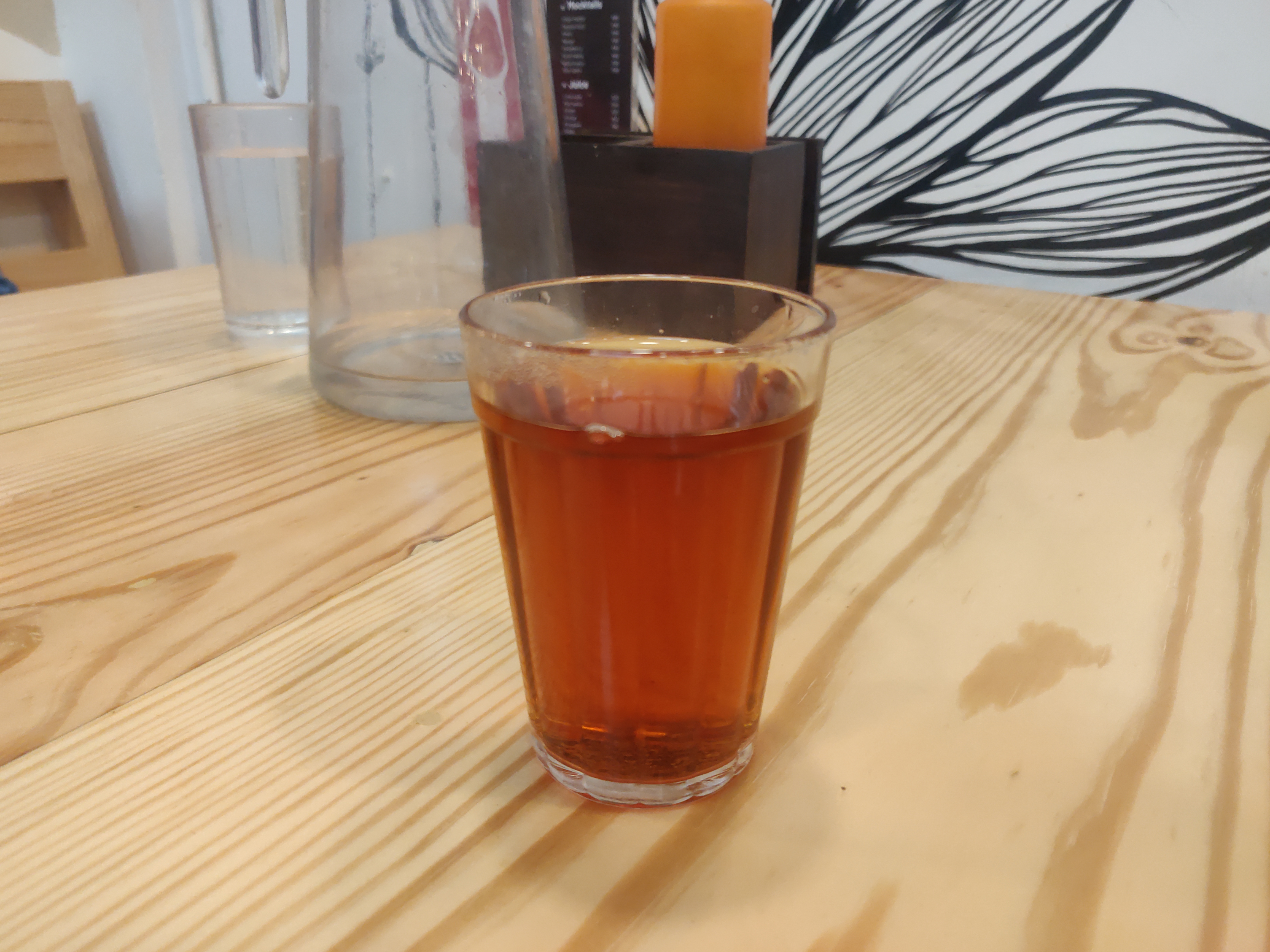
What kind of tea is Jin Jun Mei, and how is it related to Zhengshan Xiaozhong?
Jin Jun Mei is a Chinese black tea, and more specifically it should be understood inside the Tongmuguan xiaozhong black tea lineage. Public materials commonly note that it emerged in the early twenty-first century through adjustments made on the basis of traditional Zhengshan Xiaozhong craft, using much higher-tenderness raw material, especially buds. In other words, it is not a completely unrelated new black tea category. It grew out of the xiaozhong system itself.
That relationship matters enormously. If Jin Jun Mei is detached from the xiaozhong lineage, it becomes too easy to imagine it as a generic “premium bud black tea template” that could just as well come from anywhere. But that is not what gives it its identity. Its real importance is not only that it is made from buds. It is that it represents a bud-centered, premium, sweeter, cleaner expression built on the Tongmuguan xiaozhong black tea background. It inherits the Wuyi xiaozhong judgment of mountain origin, oxidation, firing, and sweetness, but it shifts the visible emphasis away from pine smoke and toward bud material, golden-tip appearance, honeyed sweetness, floral-fruit aroma, and a finer liquor texture.
Why are buds so central, and what do they actually change?
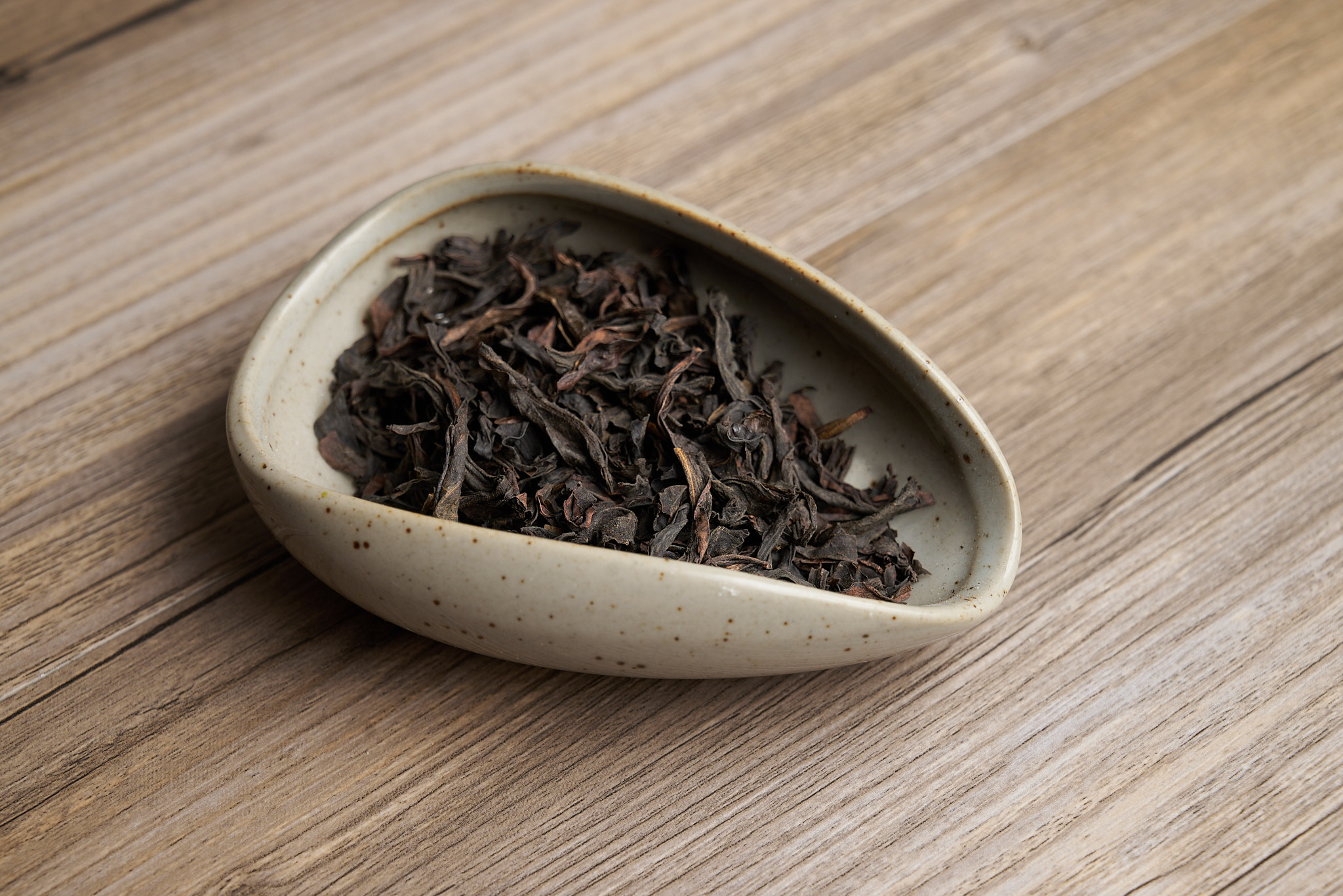
The most immediately visible feature of Jin Jun Mei is its extremely high bud content, often accompanied by obvious golden tips. That of course relates directly to tenderness of raw material. Unlike more traditional xiaozhong black teas, which can remain convincing with one-bud-several-leaf structures or somewhat more mature picking, Jin Jun Mei pushes material selection very far forward: finer, earlier, and more concentrated into highly tender spring buds. This does not merely create a more refined appearance. It changes the whole center of gravity of the cup.
Bud-led construction usually shifts the tea toward a finer, lighter, sweeter, cleaner expression with lower coarse astringency and more room for honeyed sweetness, floral-fruit lift, and smooth liquor. That is different from the more classical xiaozhong route that may emphasize wood, firing traces, longan-like depth, smoke, or a more obviously structured mountain black tea skeleton. At the same time, buds changed the visual language of premium black tea. Jin Jun Mei taught many consumers to read “visible golden tips, neat fine strips, bright liquor, smooth sweet entry” as a premium black tea aesthetic in its own right.
Why does it look “golden”? Where do the golden tips come from?
The name Jin Jun Mei is powerful partly because of the visual pull of the word jin, gold. It does not mean the tea is literally gold-colored overall. Rather, extremely tender buds, after withering, rolling, oxidation, and drying, often show a mixed pattern of dark body and golden or amber tip exposure. Public descriptions frequently treat this as one of the tea’s main identifying features. For ordinary drinkers, the practical meaning is simple: because the buds are so tender and the surface down is so fine, the finished black tea more easily shows golden tip contrast against darker strips.
But this also needs restraint. First, more gold does not automatically mean better tea. Over-chasing a “very golden” look can distort judgment, because appearance never replaces structure, cleanliness, aroma, and liquor quality. Second, golden tips do not automatically equal premium quality. They are a visible result of tenderness and processing, but they cannot replace mountain origin, craft skill, and full flavor completion. The “gold” is best treated as an entrance clue, not as the whole answer.
Why is Jin Jun Mei so often described as honeyed, floral-fruit, sweet, and smooth?
Because that is exactly where it most clearly separates itself from traditional smoked xiaozhong. Its signature strength is not heaviness, intensity, or obvious fire impact. It is clean sweetness, light honeyed lift, floral-fruit aroma, and a very smooth liquor texture. In a good sample, the aroma does not need to be aggressive. Instead it often leans toward honey sweetness, ripe-fruit impressions, light floral lift, and fine woody sweetness, while the cup moves toward clarity and softness rather than force.
This also helps explain why the tea became such a powerful symbol of the modern premium black tea imagination in China. It fits contemporary ideas of refinement almost perfectly: elegant appearance, bright liquor, smooth entry, obvious sweetness, low harshness, and no dirty or overfired edge. It is not a weak tea. It simply keeps its strength in a finer register. For drinkers who do not enjoy heavy smoke, strong fire, or thicker wood-heavy black teas, Jin Jun Mei is one of the most accessible entries into the Tongmuguan black tea world.
So what is the deepest difference between Jin Jun Mei and traditional Zhengshan Xiaozhong?
The deepest difference lies in expressive priority. Traditional Zhengshan Xiaozhong, especially in clearly smoked routes, gives more weight to pine-fired smoke, woodiness, longan-like liquor, mountain structure, and a more classical oxidation-and-fire balance. Jin Jun Mei shifts the foreground toward bud material, honeyed sweetness, floral-fruit lift, smooth liquor, and a modern clean premium sensibility. It does not deny the xiaozhong tradition. It rearranges what stands in front and what recedes behind.
That is why Jin Jun Mei should never be understood as simply “xiaozhong without smoke.” If smoke were removed but the tea lacked finer buds, cleaner aroma, more precise sweetness, and a smoother, more delicate liquor body, it would not automatically become Jin Jun Mei. The tea is not created by subtraction alone. It is created by a whole set of raw-material and process decisions moving together. Zhengshan Xiaozhong and Jin Jun Mei are like two generations of the same family: the bloodline is clear, but their aesthetic programs are different.

Why did Jin Jun Mei become such a strong symbol of “premium black tea” in the modern Chinese market?
Because it aligns almost perfectly with several things modern consumers are easily persuaded by. First, bud material naturally creates an impression of scarcity and higher picking cost. Second, the golden-tip appearance is photogenic and instantly recognizable, which makes it unusually strong in visual marketing. Third, the flavor profile is not harsh or heavy; it is sweet, clean, smooth, and accessible, making it ideal for gift culture, business settings, and newer black tea drinkers. Fourth, it is still linked to Tongmuguan, Wuyi, and the xiaozhong black tea lineage, so it has both visible luxury and narratable origin.
But that also means it is easy to mythologize. A great deal of market language implies that as long as a tea is all buds, very golden, and very expensive, it is automatically great Jin Jun Mei. A more mature judgment is colder: the tea really does represent a successful modern rewrite of Chinese black tea into a premium register, but that does not mean every golden-tip bud black tea is Jin Jun Mei, nor that higher price, finer buds, and more gold automatically produce better tea. It deserves respect not because of myth alone, but because it genuinely made one modern black tea route unusually clear.
How should Jin Jun Mei be brewed, and why does it not usually need aggressive handling?
Jin Jun Mei can be brewed in a gaiwan, a small pot, or even a glass, but if the goal is to judge completion seriously, a small gaiwan of around 100 to 120 ml is often best. A useful starting point is 3 to 5 grams of tea with water around 90°C to 95°C, adjusted according to preference and leaf quantity. The first infusion does not need to be pushed hard. Let sweetness, aroma, and smoothness open gradually. What is most worth seeing in this tea is usually not whether it can withstand heavy stewing, but whether the early and middle infusions remain clean, fine, sweet, and smooth.
If handled too aggressively—with hotter water, longer steeps, or a brute-force pursuit of strength—the tea can lose what makes it most attractive. Honeyed sweetness turns blunt, smoothness flattens out, floral-fruit notes are suppressed, and bitterness or dry woodiness may rise. This is not a black tea that wins through hardness. It wins through precision. For that kind of tea, gentler and steadier brewing that lets several infusions reveal their layers is usually closer to the truth than squeezing all possible concentration out at once.
What are the easiest buying mistakes?
The first is treating “more golden” as the only standard. Golden tips certainly matter, but if the strip shape is loose, the aroma floats, the liquor feels hollow, or the sweetness is dull, visible gold alone means very little. The second is treating “all buds” as automatic proof of premium quality. Bud material implies tenderness and cost, but not automatic completion. The real difficulty is whether such tender raw material can still become a black tea with clean aroma, natural sweetness, a liquor that does not collapse, and a finish that does not fall apart.
The third is treating every bud-style black tea as Jin Jun Mei. Today there are many products that imitate its appearance and its market story, but mountain origin, craft logic, lineage, and actual completion vary greatly. The fourth is treating high price as a substitute for sensory judgment. Jin Jun Mei often does cost a lot, but price only indicates market positioning, not cup quality. The fifth is forgetting its relationship to Zhengshan Xiaozhong and writing it as an isolated “hit tea.” Once that happens, one loses the key coordinate needed to understand why it stands and why it differs from other bud black teas.
Why does this Jin Jun Mei article deserve a place in the tea section now?
Because the site already has Zhengshan Xiaozhong, but without Jin Jun Mei one crucial piece of the story is still missing: how the xiaozhong black tea line was rewritten in contemporary times, and how it moved from traditional smoke and longan-like structure toward a bud-led, premium, sweeter, cleaner expression. Jin Jun Mei is not merely a footnote to Zhengshan Xiaozhong. It is one of the clearest cases for understanding how tradition gets rewritten inside a modern tea market.
More importantly, it naturally works as a bilingual bridge entry. Chinese readers often arrive with impressions of golden tips, all-bud picking, and premium black tea. English readers are more likely to arrive through the idea of a premium bud black tea. From either direction, the core structure should stay the same: it grows out of the Tongmuguan xiaozhong system, rewrites the expressive center through bud material, and ends up as a modern black tea route defined by honeyed sweetness, floral-fruit lift, and smooth bright liquor. As long as both language versions stay anchored to that spine, the page becomes a stable bilingual reference rather than two unrelated articles.
Source references
- Cross-checked public Chinese-language reference material on Jin Jun Mei’s relationship to Tongmuguan, the Zhengshan Xiaozhong lineage, bud-material characteristics, honeyed floral-fruit style, and its formation in the modern tea market.
- Wikipedia (Chinese): Jin Jun Mei
- Wikipedia (Chinese): Zhengshan Xiaozhong