Flower Tea Feature
Jasmine tea is more than “a very fragrant flower tea”: tea base, scenting, reprocessed-tea identity, and the full logic of Chinese jasmine tea
If one only looks at mass-market impressions, jasmine tea is one of the easiest Chinese teas to “recognize” and one of the easiest to undervalue. Many people smell it once and know what it is. They take one sip and say, “that is jasmine tea.” As a result, it often gets placed in an overly lightweight category, as if it were simply a strongly floral everyday tea with a relatively low technical threshold. But once it is returned to a more serious Chinese tea framework, that understanding becomes far too shallow. Jasmine tea is not simply a matter of dropping flowers into tea, and it is not just green tea with floral aroma attached on top. It is a mature reprocessed-tea route that includes tea-base selection, blossom-release timing, scenting judgment, refiring, the question of whether the fragrance has entered the bones of the tea, and whether the liquor itself still stands up.
That is exactly why jasmine tea belongs in the tea section rather than being treated only as a familiar lifestyle drink. It helps readers understand a crucial fact: the complexity of Chinese tea does not come only from cultivars, mountains, roasting, and oxidation, but also from how reprocessing can truly work another plant’s fragrance into tea itself. On this route, flowers are not the main character to the point of driving tea away, and tea is not a mere background carrier of scent. The best jasmine tea seeks something harder: tea as the frame, flowers as the spirit, aroma entering the tea rather than floating above it. Once that is written clearly, a reader’s map of Chinese tea becomes much more complete.
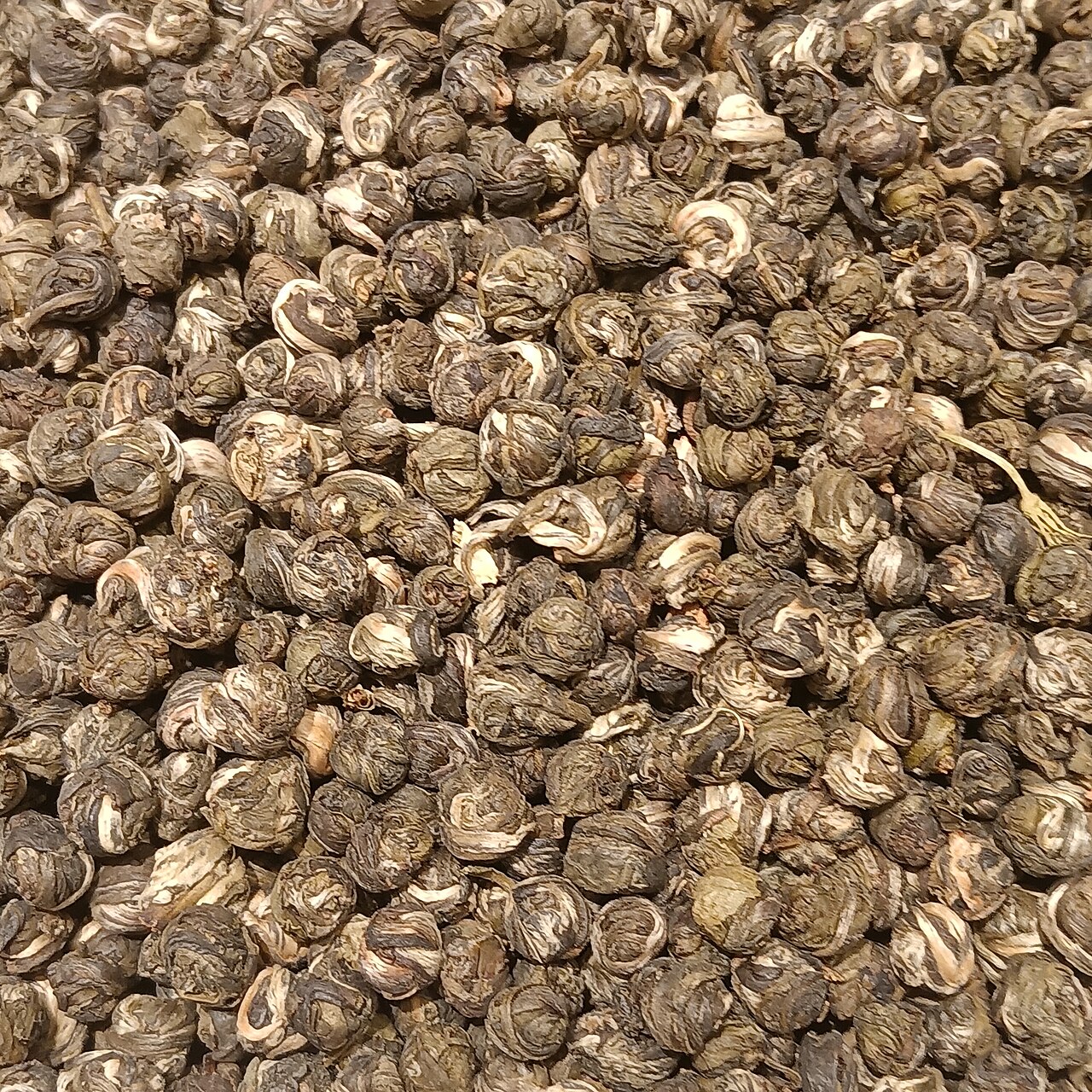
What kind of tea is jasmine tea, and why should it first be understood as a reprocessed tea?
It helps to clarify the identity first. Jasmine tea belongs to flower tea, and at the same time to the category of reprocessed tea in the broader Chinese tea system. That means it is not some entirely separate species floating outside the six major tea families. It is built on an existing tea base. Public reference descriptions often define it simply as tea processed together with jasmine blossoms so that the finished tea carries both tea flavor and floral aroma. That definition sounds straightforward, but it hides an important judgment standard: the quality of jasmine tea can never be judged by floral fragrance alone. What matters is whether, after fragrance enters the tea, the result is still a complete tea.
This is also why jasmine tea should not be reduced to “green tea with jasmine flavor.” Many market examples do use green tea as the tea base, but using green tea as base material does not mean the finished tea should still be judged as if it were simply green tea plus scent. Once it enters the logic of scenting, the evaluation system changes. One can no longer ask only whether it is fresh enough, tender enough, or green enough. One must also ask whether the fragrance floats, whether the liquor collapses, and whether aroma and body remain linked after several infusions. In other words, jasmine tea is not a tea hidden under flowers. It is a tea that has been rebalanced through reprocessing.
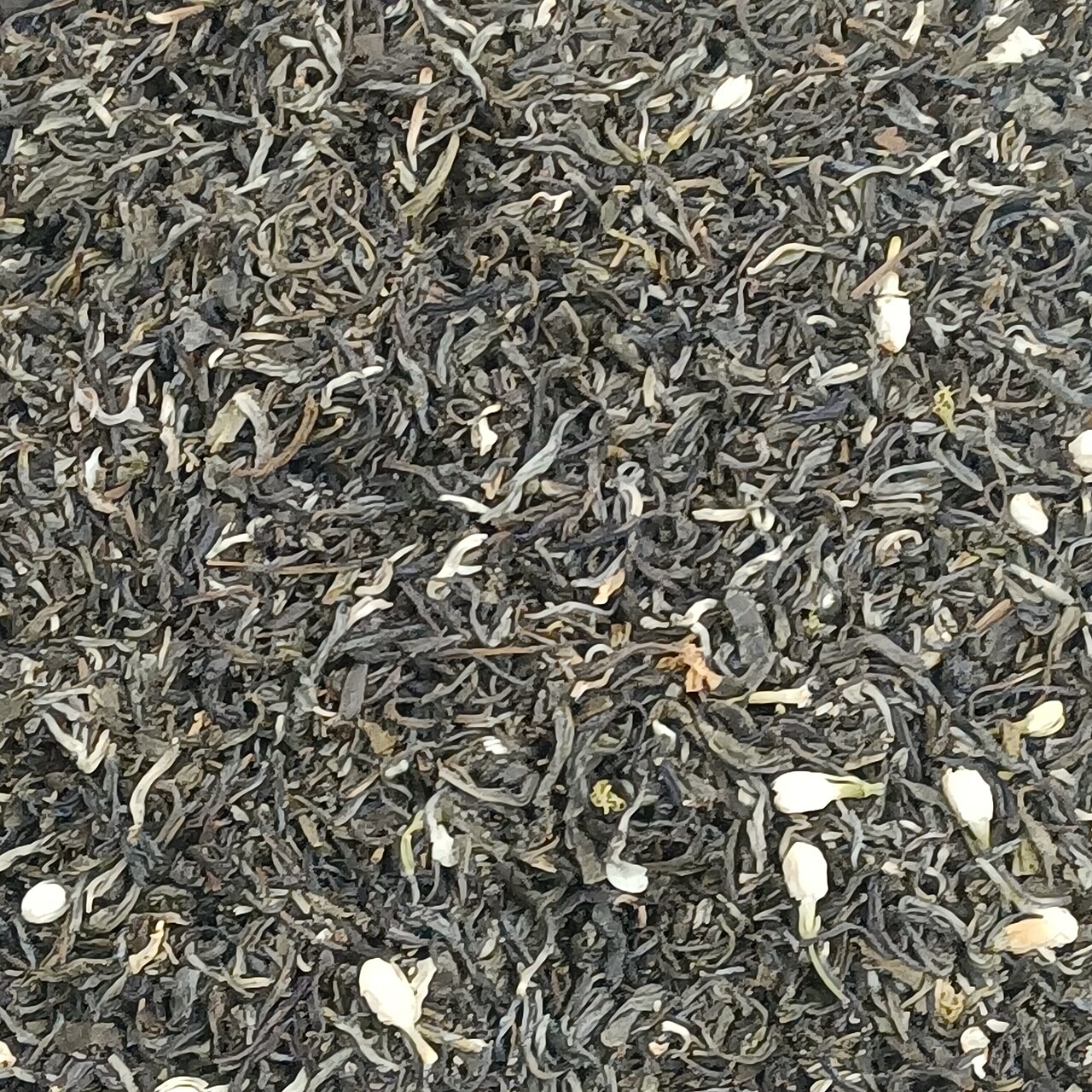
Why does the tea base almost determine the upper limit of jasmine tea?
The easiest beginner mistake is to focus entirely on the flowers. It is tempting to think that if the blossoms are fragrant enough, fresh enough, and plentiful enough, the tea must naturally be good. In reality, more mature judgments usually begin with the tea base. Scenting is never just laying aroma over the leaf surface. It requires the tea base to absorb, receive, and transform the fragrance released by blossoms as they open. If the base is too thin, too loose, too coarse, or too mixed, then once fragrance is added the likely result is not elegance but floating perfume, stuffiness, or a tea that smells vivid yet drinks hollow.
That is why serious jasmine tea has never really followed the logic that flowers cover the tea. The tea must first be able to carry the fragrance. This is also why mature traditions often stress that tea provides the bones. If the structure is weak, the aroma scatters. If the structure is too hard or rough, the aroma cannot fully enter. The ideal result is a tea base that is clean and stable, yet still open enough to absorb and hold fragrance, so that the final tea smells fresh and lively, drinks with real body, and leaves sweetness after swallowing. The flowers may attract attention first, but the tea base is the beam holding the house up.
What is scenting actually doing? Why is it not one-time flavoring but a full set of timing judgments?
The core craft of jasmine tea is scenting. In simple terms, tea base prepared to the right state is combined with jasmine blossoms that are still closed or just about to open, allowing the tea to absorb aroma at the point when the flowers release it most strongly. After that come flower separation, sorting, and refiring. On the surface this sounds like little more than “letting tea absorb fragrance,” but the real difficulty is timing: when the flowers open, when the fragrance peaks, when the tea has absorbed enough, when the flowers must be removed, and when refiring should lock the result in. None of that is governed by a dead formula.
For that reason, scenting is not simply about “making tea smell like jasmine.” It is about “making aroma become part of the tea.” Traditional higher-grade routes often speak of repeated scenting rounds. The point is not to stack fragrance higher and higher in a crude way, but to let it enter the tea body in layers, so that the final result carries floral liveliness without becoming a shallow perfume product. Good scenting creates a cup in which aroma, liquor, and finish belong together. Poor scenting creates exactly the opposite: fragrance exploding above a collapsed body, or a tea that opens loud and then becomes stuffy and empty after a few infusions.
Why do people say that good jasmine tea should let you see tea leaves but not flowers?
Because that phrase points directly to the dividing line between high-level jasmine tea and merely surface-level “floral tea.” For beginners, visible blossoms left in the finished tea can feel like proof of authenticity. But in mature craft traditions, what matters is not how many flowers remain in the product. Once the blossoms have released their aroma, the fragrance should remain in the tea while the flowers themselves step back. In other words, what reaches the drinker should still be tea, only now tea that stably carries jasmine fragrance.
Behind this is a very clear aesthetic logic. Jasmine tea is not trying to let you “see flowers.” It is trying to let you “drink flowers through tea.” You do not need to count petals in the cup. Instead, you should encounter a natural, clean, persistent jasmine presence in the steam, in the sip, and after swallowing. That is why high-level jasmine tea fears exactly the style that makes the fragrance too sharp, too greasy, or too perfume-like, as if scent had simply been pasted onto the leaf. Its real refinement lies in the fact that aroma does not leave the tea body, and the tea body is not erased by aroma.
Where is the real boundary between jasmine tea and green tea?
Many discussions of jasmine tea instinctively drag it back into a green-tea frame, and that is understandable, because the most common tea bases do indeed come from green tea. But the evaluation priorities of the finished tea are not the same. Green tea emphasizes the direct preservation of brightness, freshness, and spring sharpness. Jasmine tea, by contrast, introduces floral aroma on top of the tea base and reorganizes the relationship among aroma, liquor, and aftertaste. The first route wants to establish the native taste of tea as directly as possible. The second wants to create a new balance without destroying tea’s own foundation.
This means one cannot simply use green-tea standards to judge jasmine tea. It is not a matter of greener being better, sharper being better, or stronger freshness automatically signaling higher quality. For jasmine tea, what often matters more is whether the fragrance is clean, whether the liquor can carry it, whether the finish is sweet and moist, and whether the tea remains ordered over several infusions. If one judges it only through a green-tea lens, it becomes easy to mistake “very loud aroma with very weak liquor” for a good tea, while missing the more mature examples whose fragrance is vivid but not aggressive and whose liquor remains complete.
Why is Fuzhou so important in the story of jasmine tea?
When speaking about Chinese jasmine tea, Fuzhou is almost impossible to avoid. Public references widely treat it as one of the major origin points and core traditional production contexts of jasmine tea. That is not just regional self-promotion. Fuzhou long formed a stable system in which flowers and tea could meet: a river-and-sea urban environment, the long coupling of jasmine cultivation with tea work, a scenting tradition built around the release of fragrance at night, and a wider city culture shaped by these rhythms. In 2014, the Fuzhou Jasmine and Tea Culture System was listed by the FAO as a Globally Important Agricultural Heritage System. In 2022, Fuzhou jasmine tea scenting craft entered UNESCO’s Representative List of the Intangible Cultural Heritage of Humanity as part of China’s traditional tea-processing techniques and associated social practices. Taken together, these milestones show that Fuzhou matters because it organized flowers, tea, craft, and urban life into a coherent whole.
At the same time, it is important to say clearly that jasmine tea is not only a Fuzhou story, and a general jasmine tea feature should not collapse into a Fuzhou-only article. A better framing is this: Fuzhou represents one of the most mature and structurally complete main lines within the wider Chinese jasmine tea tradition. It helps readers build a framework for judgment: what it means for tea to be the bones, flowers the spirit, scenting not to be artificial flavoring, and aroma to land in the liquor. If the site already has a dedicated Fuzhou jasmine tea article, then a broader jasmine tea overview becomes even more useful, because the overview builds the framework while the Fuzhou page shows that framework at work in one concrete city and craft tradition.
What should good jasmine tea actually smell and taste like?
If one had to reduce the standard to a single sentence, then mature jasmine tea should usually be fresh and lively in aroma without becoming flashy, clear and moist in liquor without becoming thin, and sweet-clean in the finish without becoming greasy. When smelled hot, the jasmine aroma should rise naturally—fresh, clean, alive, not stuffy or muddy. Once in the mouth, the liquor should be able to catch and hold that fragrance, rather than letting aroma float above an empty tea. After swallowing, there should be a clean, moist sweetness and a relaxed openness, not merely a forceful but short-lived floral impression.
Different grades and different forms of jasmine tea will of course vary in strip shape, curl, intensity, and general style. Some are more delicate, some more everyday, some more obviously built through repeated scenting. But mature examples tend to share a few traits: the aroma is not dirty or cloudy, the liquor is not watery, the finish is not sour or greasy, and after several infusions the tea still feels ordered. One quickly realizes that jasmine tea is not really judged by a single data point. It is judged by completion. That is why it may seem friendly and familiar, yet actually demands a high level of judgment from the maker.
How should jasmine tea be brewed if you want to see whether the fragrance has really entered the tea?
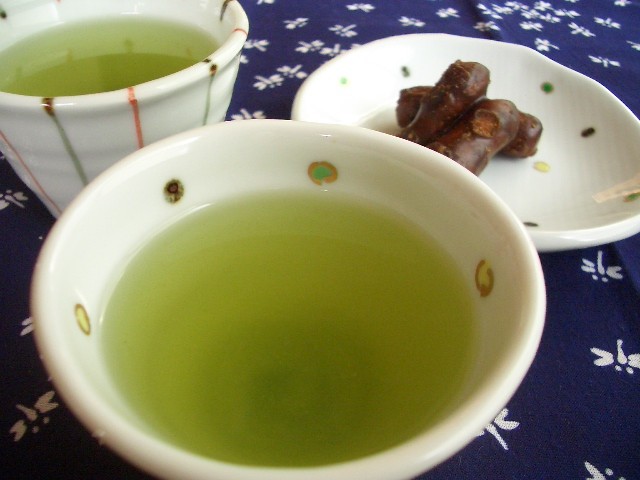
Jasmine tea works well in either a gaiwan or a glass. A glass makes it easy to observe shape and leaf expansion. A gaiwan is better for judging the relationship between aroma and liquor from infusion to infusion. As a flower tea that relies on the tea base to carry scent, it does not do well when brewed with too little leaf until it tastes empty, nor when it is oversteeped until only heavy floral force remains. A steadier approach is usually to use the kind of hot water commonly used for green tea and flower tea, adjusting by vessel and material, first looking at whether the opening aroma is clean and lively, and then at whether the middle of the liquor carries real sweet, moist support.
In a gaiwan, a smaller vessel often makes it easier to see whether the tea is all aroma on the surface or whether the fragrance has truly entered the liquor. The first few infusions do not need to be long. The key things to watch are these: first, whether the hot aroma is clean and lively; second, whether the first sip immediately shows clear moist sweetness; third, whether the fragrance remains steady over several infusions or falls away quickly; and fourth, whether the aftertaste is open and clean or stuffy and sticky. Truly good jasmine tea should become clearer the more it is brewed, not peak in the first dramatic impression and then leave behind only a hollow shell of fragrance.
What are the most common buying mistakes?
The first mistake is taking “the more fragrant, the better” as the only standard. Aroma can be high and lifted, but if it turns sharp, floating, or greasy while the liquor beneath it has no support, that usually does not signal high quality. The second mistake is treating visible flowers as a guarantee of quality. As noted above, high-level jasmine tea is judged by whether the fragrance entered the tea, not by whether many blossoms remain in the finished product. The third mistake is ignoring the tea base and treating jasmine tea as a purely aromatic product. If the tea base is poor, even lively scenting work rarely produces a complete result.
The fourth mistake is collapsing all jasmine tea into one vague category and failing to distinguish between mature traditional routes and faster, more surface-level commercial ones. The value of jasmine tea lies precisely in the fact that it does not stop at “making something taste of jasmine.” It asks aroma, liquor, sweetness, and cleanliness to stand together. If one buys only by asking “is it fragrant enough?”, then the truly worthwhile examples are easy to miss.
Why is this jasmine tea overview worth adding to the tea section now?
Because it fills a part of the Chinese tea map that is often hidden behind the illusion that “everyone already knows it.” Looking upward, it helps readers understand that flower tea and reprocessed tea are not marginal add-ons but complete technical branches. Looking downward, it can naturally guide readers toward the more specific Fuzhou jasmine tea case. More importantly, it shows that tea complexity does not live only in mountains, cultivars, roasting, and age. It also lives in how the fragrance of another plant can, over time, enter tea and change the way tea presents itself.
If the site already has strong lines for green tea, white tea, yellow tea, and oolong, then a general jasmine tea article should not be missing. Without it, the site’s Chinese tea structure will naturally tilt toward teas more easily framed as “pure tea,” while underplaying the importance of reprocessed tea in both Chinese daily life and craft history. To explain jasmine tea well is not merely to add one flower-tea entry. It is to make the overall map of Chinese tea more complete.